
How Coil Upenders Save Time and Improve Efficiency in Steel Mills?
In the demanding world of steel production, factory managers like Michael are constantly seeking ways to optimize operations. Are you tired of slow, labor-intensive material handling that bottlenecks your production line? Do you worry about the safety of your workers who manually struggle with heavy coils, and the costly damage that can occur during these processes? The pressure to increase output, control costs, and maintain safety is immense, making every inefficiency a drain on your profitability.
Coil upenders are essential material handling machines that rapidly reorient heavy, rolled materials like steel coils or wire rolls from one position to another, typically from horizontal to vertical or vice versa. By automating this crucial step, they significantly reduce manual labor, enhance workplace safety, minimize product damage, and ultimately streamline the entire production workflow in steel mills and other heavy manufacturing facilities, directly translating to substantial time savings and improved operational efficiency.
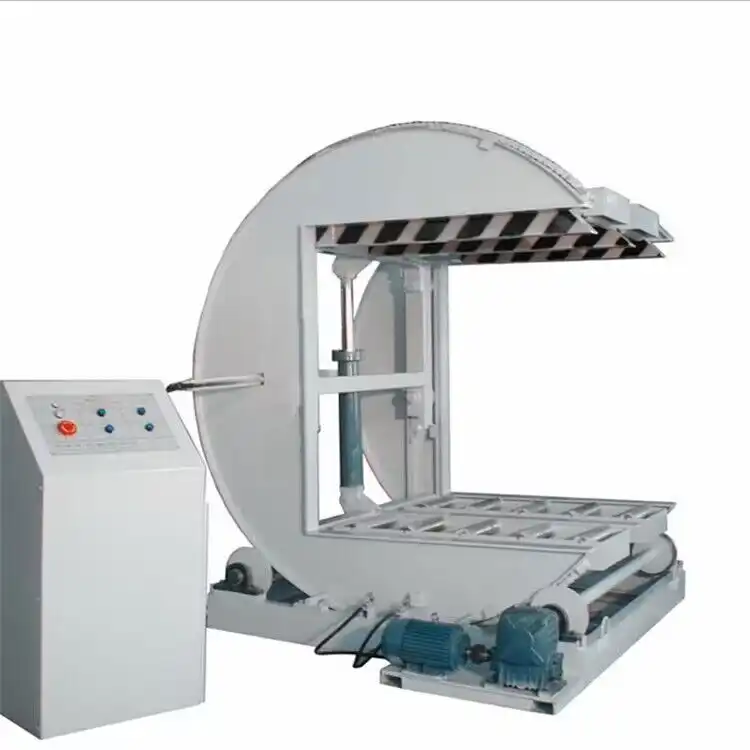
As someone who built a packing machine factory from the ground up, I understand these challenges deeply. My journey taught me the critical importance of reliable and efficient equipment. If you're looking for concrete solutions to these persistent problems in your factory, keep reading. We will explore how coil upenders are not just machines, but vital partners in achieving your operational goals.
1. What is a coil upender, and why is it essential for steel mills?
In many heavy manufacturing environments, moving large, heavy items like steel coils can be a major headache. Are you still relying on dangerous and slow manual methods or outdated equipment to reposition your valuable materials? This can lead to significant delays, increased risk of accidents, and even damage to your products, costing your business time and money.
A coil upender, also known as a coil tilter or roll inverter, is a specialized piece of material handling equipment designed to safely and efficiently change the orientation of heavy coiled loads, such as steel, aluminum, or wire rolls. It is essential in steel mills because it automates the critical task of moving coils between different processing stages, like packaging lines or storage, where varying orientations are required, thereby enhancing flow and preventing bottlenecks in the production process.
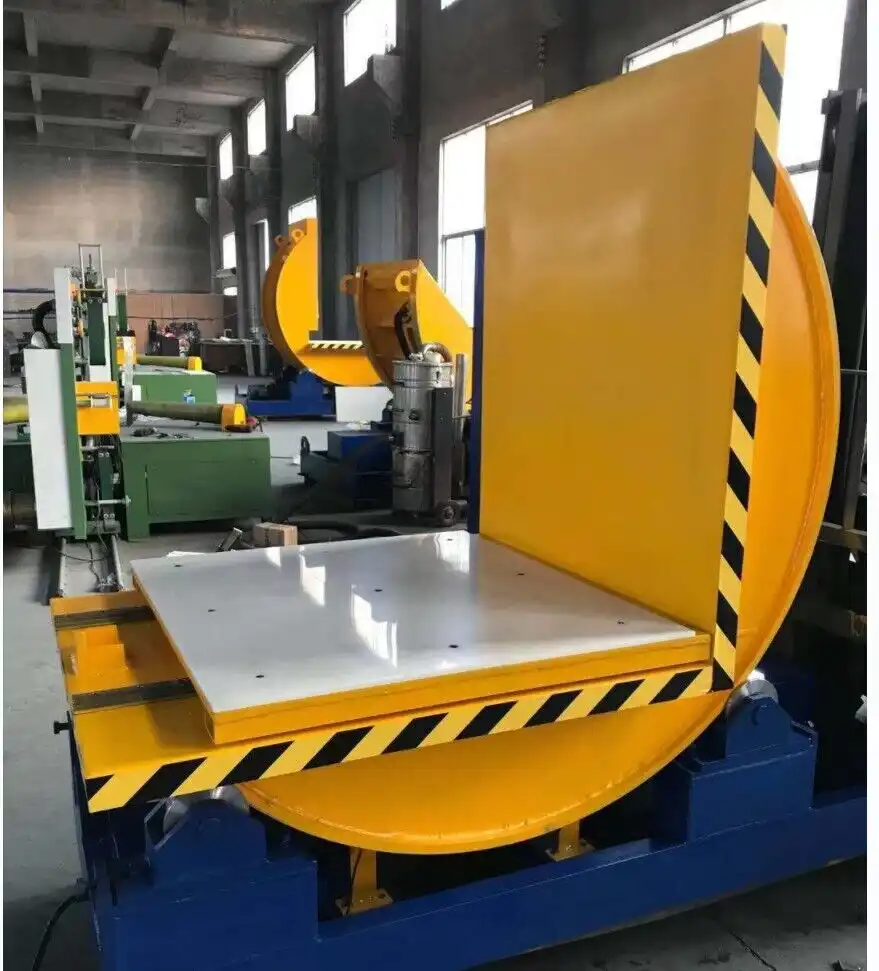
Understanding the fundamental role of upenders is the first step toward unlocking greater efficiency. Let's dive deeper into how this technology works and why it has become indispensable for modern steel operations, transforming basic material handling into a strategic advantage.
The Core Function and Benefits of Coil Upenders
Coil upenders are simple yet powerful machines. They use hydraulic or mechanical systems to lift and rotate heavy coils. This allows them to change the coil's resting position. For example, they can turn a coil lying flat (eye-to-sky) to standing upright (eye-horizontal). This seemingly simple task solves many complex problems in a steel mill.
-
Seamless Material Flow:
- Problem: Different machines in a steel production line often need coils in specific orientations. Without an upender, moving a coil from a slitting line (often horizontal) to a strapping machine (often vertical) is slow and difficult.
- Solution: An upender provides a smooth transition. It matches the coil's orientation to the next stage's requirement. This keeps the production line moving without interruption. It is like a bridge that connects different parts of the factory process (production flow optimization).
-
Foundation for Automation:
- Problem: Manual reorientation of coils is a bottleneck. It limits how fast you can run your overall line.
- Solution: Upenders are a key part of an automated system. They work with conveyors, automatic strapping machines, and other equipment. This allows for a continuous, hands-free operation from start to finish. This improves overall plant automation levels (automated material handling).
-
Space Utilization:
- Problem: Storing coils can take up a lot of floor space, especially if they are always stored in one specific way.
- Solution: Upenders allow for flexible storage. Coils can be stored vertically or horizontally depending on available space and subsequent processing needs. This helps managers like Michael maximize factory floor space (space efficiency).
-
Versatility in Application:
- Problem: Factories handle various sizes and weights of coils. A single, inflexible handling method is not enough.
- Solution: Upenders come in different capacities and designs. They can handle a wide range of coil dimensions and weights. This makes them suitable for various stages in a steel mill. This includes raw material receiving, inter-process transfer, and final packaging (industrial coil handling).
Impact on Steel Mills:
| Feature | Before Upender (Manual/Forklift) | After Upender (Automated) |
|---|---|---|
| Speed | Slow, requires multiple steps and human intervention | Fast, single automated cycle |
| Consistency | Varies with operator skill and fatigue | High, precise, repeatable movements |
| Labor Requirement | High, often 2-3 workers per shift for heavy coils | Low, often 1 operator monitoring multiple machines |
| Risk of Damage | High, due to human error, dropping, or incorrect handling | Low, controlled movements, gentle handling |
| Integration | Difficult to integrate with automated lines | Easy to integrate with conveyors and packing lines |
| Throughput | Limited by slowest manual step, creating bottlenecks | Maximized by continuous, efficient flow |
| Safety | High risk of crushing injuries, strains, forklift accidents | Significantly reduced, operators keep safe distance |
| Cost | High labor costs, injury costs, material damage, downtime | Reduced labor, insurance, less damage, higher uptime |
This structured approach shows that upenders are not just about lifting. They are about smart, safe, and efficient movement of critical materials. They lay the groundwork for a more productive and financially sound operation.
2. How do coil upenders eliminate manual handling and boost safety in factories like Michael's?
Manual handling of heavy steel coils is a major safety hazard in any metal processing plant. Are your workers still risking injury by manually positioning bulky coils or wrestling with unstable loads using forklifts? This exposes them to crush injuries, strains, and accidents, leading to high insurance costs, worker turnover, and constant worry for managers like Michael.
Coil upenders eliminate the need for direct human interaction with heavy coils during orientation changes. They automate the entire reorientation process, from lifting to rotating, thereby significantly reducing or even removing manual handling tasks. This automation inherently boosts safety by keeping workers away from moving heavy loads, preventing accidents, musculoskeletal injuries, and the high costs associated with workplace incidents in factories.
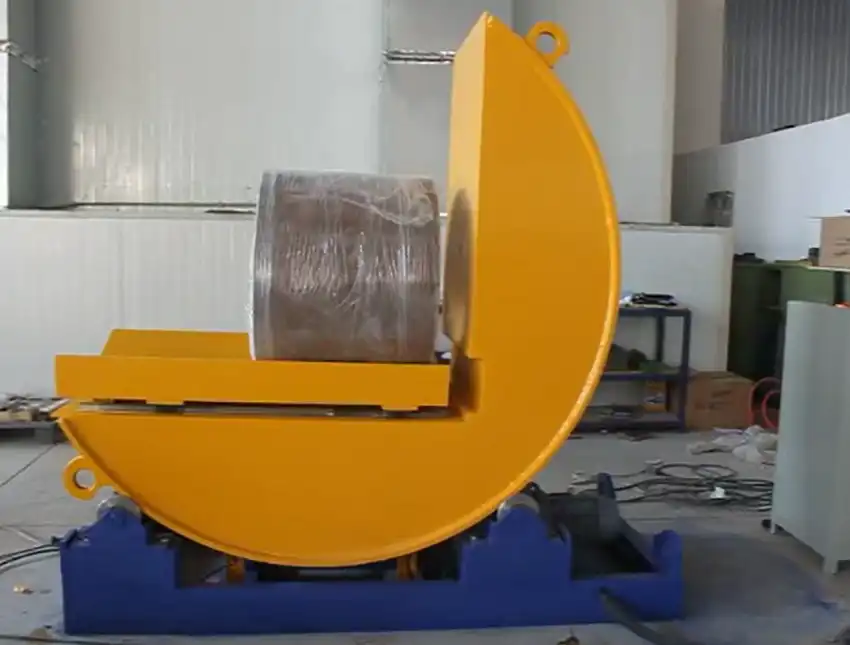
Improving safety is not just a regulatory requirement; it's a moral and economic imperative. Let's look closer at how upenders transform the factory floor into a safer environment, protecting both your workforce and your bottom line.
Protecting Your People and Your Profits: The Safety Dividend of Upenders
The direct removal of human-coil interaction is the most significant safety benefit. But the impact goes much deeper, creating a safer, more stable work environment.
-
Eliminating Direct Contact:
- 🚫 Crush Hazards: Manual lifting and turning of coils (which can weigh many tons) carries an extreme risk of crush injuries if the coil shifts or falls. Upenders handle the entire process. Operators can stand clear in a safe zone.
- 🚫 Ergonomic Strain: Workers often twist, bend, and lift in awkward positions when trying to reposition coils with limited tools. This leads to back injuries, muscle strains, and long-term health problems. Upenders remove this physical demand completely.
-
Stable and Controlled Movement:
- ⚠️ Unstable Loads: Using forklifts to tilt coils can be unstable and dangerous. The center of gravity shifts, making the load prone to tipping.
- ✅ Precision and Stability: Upenders are designed for stability. They securely clamp the coil. Then they execute a smooth, controlled rotation. This minimizes any risk of the coil dropping or rolling unexpectedly (controlled material movement). This is crucial for maintaining a predictable and safe work zone.
-
Reducing Forklift-Related Accidents:
- 🚧 Forklift Hazards: A significant number of industrial accidents involve forklifts. These include collisions, tip-overs, and loads falling. Using forklifts for coil reorientation increases this risk.
- ⬆️ Reduced Forklift Use: With an upender, forklifts are mainly used for transport. They are not used for complex tilting. This reduces the overall exposure to forklift-related hazards (forklift accident prevention). It makes the factory floor safer for everyone.
-
Improved Compliance and Lower Insurance Costs:
- ⚖️ Regulatory Compliance: Strict safety regulations require minimizing manual handling of heavy loads. Upenders help factories meet these standards easily.
- 💰 Financial Benefits: Fewer accidents mean lower workers' compensation claims and reduced insurance premiums. This directly impacts a company's financial health. For managers like Michael, this helps control operational costs (lower insurance premiums).
A Comparative Look at Safety:
| Safety Aspect | Manual Coil Handling (e.g., Forklift + Chains) | Coil Upender System |
|---|---|---|
| Worker Exposure | High proximity to heavy, moving loads; direct physical exertion | Workers maintain safe distance; no direct physical interaction with the coil during rotation |
| Injury Risk | High: crush injuries, strains, sprains, falls, forklift accidents | Low: automated process, safety interlocks, controlled motion, minimal human contact |
| Load Stability | Can be precarious; risk of dropping or tipping due to manual errors or uneven loads | Secure clamping mechanism ensures stability throughout the tilting cycle |
| Process Control | Dependent on operator skill and awareness; prone to human error | Automated, precise, repeatable; reduces variance and human error |
| Accident Severity | Potentially severe or fatal | Significantly reduced due to automation and safety features |
| Insurance Impact | Higher premiums due to higher accident rates | Lower premiums over time due to improved safety record |
By making safety a priority through automation, factories not only protect their most valuable asset – their employees – but also achieve greater peace of mind and financial stability. This is a clear win-win situation for any plant manager aiming for operational excellence.
3. Can coil upenders really reduce product damage and improve quality in heavy industries?
Product damage during internal transfer and packaging is a hidden cost that erodes profits and client trust. Have you experienced customer complaints about damaged coil edges or surface imperfections that occurred right in your factory? These losses are not just annoying; they are a direct hit to your bottom line and reputation, a challenge Michael faces directly with his steel coils.
Yes, coil upenders are highly effective at reducing product damage and improving quality in heavy industries. They achieve this by providing a gentle, controlled, and precise method for reorienting heavy coils. Unlike manual or less sophisticated handling methods that can cause dents, scratches, or deformation to coil edges and surfaces, upenders ensure consistent and careful manipulation. This minimizes product defects, leading to fewer customer complaints, less waste, and ultimately, a higher quality product delivered to the market.

Protecting your product is protecting your business. Let's delve into how coil upenders act as guardians of product quality, ensuring that your valuable materials maintain their integrity from the production line to the customer's door.
The Guardian of Quality: How Upenders Protect Your Valuable Coils
The robust design and controlled operation of upenders are key to preserving product quality. They address common points of damage that occur with traditional handling methods.
-
Gentle and Controlled Movement:
- 📉 Impact Damage: Manual handling, especially with forklifts, often involves sudden stops, bumps, or even dropping coils. These impacts can dent edges, deform the coil, or damage the inner core.
- 📈 Smooth Operation: Upenders use hydraulic or electric motors for smooth acceleration and deceleration. This prevents sudden shocks to the coil. The rotation is precise and controlled. It eliminates rough handling that leads to damage (gentle coil handling).
-
Even Weight Distribution:
- ⚖️ Uneven Stress: When coils are lifted by chains or slings, the weight can be unevenly distributed. This creates high stress points that can deform the coil shape.
- ⚖️ Balanced Support: Upenders support the coil across its entire surface or with specialized cradles. This ensures even weight distribution during rotation. It prevents localized stress and potential deformation (uniform load support).
-
Protection of Edges and Surfaces:
- 🔍 Edge Damage: Coil edges are particularly vulnerable. They can be scraped, nicked, or bent when dragged or bumped during manual repositioning. This leads to rejects or downgrading of material.
- ✨ Secure Clamping: Upenders often feature clamping mechanisms that hold the coil securely without damaging its surface. This prevents any rubbing or scraping against other surfaces during the tilt. This keeps sensitive coil edges pristine (coil edge protection).
-
Consistency and Repeatability:
- 👨🏭 Human Error: Manual handling quality varies from worker to worker, and even from shift to shift. Fatigue or inexperience can lead to mistakes and damage.
- 🤖 Automated Precision: Upenders perform the same motion with the same precision every time. This consistency ensures that every coil is handled perfectly. It removes the variability of human error from the equation. This results in uniformly high product quality (consistent material handling).
Key Areas of Damage Prevention:
| Damage Type | Risk with Manual Handling | Mitigation with Coil Upender |
|---|---|---|
| Coil Edge Deformation | High: bumping, scraping, or crushing during repositioning | Secure clamping, smooth rotation, no dragging or external impact on edges |
| Surface Scratches/Dents | High: contact with forklift forks, chains, or rough surfaces | Controlled movement, specialized contact surfaces, minimal external contact |
| Core Damage (Eye-to-Sky) | Moderate: internal stress from unstable stacking or drops | Evenly distributed pressure, gentle placement, preventing internal structural strain |
| Coil Out-of-Roundness | Moderate: uneven lifting or improper support causing deformation | Full circumference support or robust cradles maintain the coil's original shape during tilt |
| Wrapping Material Damage | High: tearing or snagging of protective wraps during rough handling | Gentle, controlled motion protects external packaging, ensuring product integrity until delivery |
By reducing product damage, factories can cut down on scrap, re-processing, and customer returns. This directly improves profitability and strengthens client relationships. For Michael, this means delivering higher quality products, reducing losses, and enhancing his factory's reputation for excellence.
4. What types of coil upenders are available, and how can businesses choose the right one for their operations?
Choosing the right equipment for your factory can feel overwhelming. With so many options, how do you know which coil upender will truly fit your specific needs, handling your unique coil sizes, weights, and production volumes? Picking the wrong machine could lead to underperformance or unnecessary costs, a crucial decision for any factory manager.
Businesses can choose from several types of coil upenders, including mechanical, hydraulic, and custom-designed units, each suited for different applications based on coil weight, size, cycle time, and integration requirements. To choose the right one, a thorough assessment of operational needs is crucial, considering factors like maximum load capacity, desired rotation angle, available space, integration with existing lines, and specific safety features, ensuring optimal performance and a strong return on investment for their particular material handling challenges.
Selecting the ideal upender is about more than just buying a machine; it's about investing in a solution that integrates seamlessly into your workflow. Let's explore the common types and the critical considerations that will guide you to the perfect choice for your factory.
Finding Your Perfect Match: Types of Upenders and Selection Criteria
The market offers a range of upender designs. Each has specific advantages. Knowing these types and how to assess your needs is vital.
-
Main Types of Coil Upenders:
- Mechanical Upenders:
- ⚙️ Mechanism: Often use gears, chains, and electric motors. They operate with physical force to tilt the coil.
- 👍 Pros: Generally robust, lower maintenance on hydraulics, good for fixed positions and high cycles.
- 👎 Cons: Can be louder, less smooth than hydraulic, may have more wear parts in the drive train.
- 💡 Best For: High-volume, repeatable tasks where precision and durability are key, and hydraulic leaks are a concern (mechanical tilters).
- Hydraulic Upenders:
- 💧 Mechanism: Use hydraulic cylinders and fluid power to lift and rotate coils.
- 👍 Pros: Very smooth and controlled motion, quiet operation, high lifting capacity for their size.
- 👎 Cons: Requires hydraulic fluid maintenance, potential for leaks, might be slower for very rapid cycles.
- 💡 Best For: Heavy coils, applications requiring very gentle handling, and where smooth transitions are paramount (hydraulic coil inverters).
- Custom Upenders:
- 🛠️ Mechanism: Designed for unique requirements, combining elements or introducing specialized features.
- 👍 Pros: Perfectly tailored to niche applications, unusual coil sizes, or challenging integration spaces.
- 👎 Cons: Higher initial cost, longer lead time for design and manufacturing.
- 💡 Best For: Factories with highly specific or unusual material handling needs that off-the-shelf solutions cannot meet (bespoke upender solutions).
- Mechanical Upenders:
-
Key Selection Criteria:
-
Coil Specifications:
- Weight: What is the maximum weight of the coils you need to handle? This directly impacts the required load capacity of the upender. Overlooking this can lead to equipment failure or safety risks.
- Dimensions: What are the minimum and maximum outer diameter, inner diameter, and width of your coils? The upender's platform and clamping mechanisms must accommodate these ranges.
- Material: Is it steel, aluminum, wire, or something else? Different materials may require specific surface contact points to prevent damage.
-
Operational Requirements:
- Cycle Time: How quickly do you need to reorient a coil? This impacts whether you need a faster mechanical system or a smoother hydraulic one.
- Rotation Angle: Do you need 90-degree (horizontal to vertical) or 180-degree (roll inversion) rotation? Some upenders offer more versatility.
- Integration: Will the upender connect to existing conveyors, strapping lines, or other automation? Seamless integration is vital for overall efficiency.
-
Factory Environment:
- Space: How much floor space is available? Some upenders are more compact than others.
- Power Supply: What electrical power is available? This will determine the motor requirements.
- Safety Standards: Does the upender comply with local safety regulations and industry best practices? (industrial safety standards).
-
Budget and ROI:
- Initial Investment: What is your budget for the equipment?
- Operating Costs: Consider energy consumption, maintenance, and spare parts availability.
- Return on Investment (ROI): How quickly will the upender pay for itself through savings in labor, reduced damage, and increased throughput? A clear ROI calculation is essential for Michael (equipment ROI analysis).
-
Choosing the right upender requires careful thought. It is not just about price. It is about finding the best fit for your specific operational puzzle. At FHOPEPACK, we pride ourselves on helping clients like Michael navigate these choices to find the perfect solution that drives real business growth.
5. How can partnering with an experienced supplier like FHOPEPACK ensure successful upender integration and long-term benefits?
Finding a reliable equipment supplier can be a source of anxiety. Have you been burned by past suppliers who were great at selling but disappeared when you needed after-sales support or expert advice? For managers like Michael, who value real partnership over mere transactions, this lack of trust can make investing in new equipment a daunting prospect.
Partnering with an experienced supplier like FHOPEPACK is crucial for successful upender integration and long-term benefits because we offer more than just machinery. We provide deep industry expertise, comprehensive consultation to identify specific needs, custom solution design, robust after-sales support, and a commitment to understanding your operational challenges. This ensures that the chosen upender not only fits perfectly into your existing workflow but also continues to deliver optimal performance and maximum ROI for years to come, building a foundation of trust and reliable support.
My own journey, from packing machine employee to successful factory owner, taught me that true value comes from understanding challenges and delivering real solutions. It's about building trust, not just selling a product. Let me explain why choosing the right partner is just as important as choosing the right machine.
The FHOPEPACK Difference: Expertise, Partnership, and Lasting Value
At FHOPEPACK, we don't just sell upenders; we provide solutions. Our approach is rooted in my own experiences and a deep understanding of the challenges faced by factory managers like Michael.
-
Deep Industry Expertise and Insight:
- 🌍 Real-World Experience: I've been in your shoes. I started on the factory floor and built a successful packing machine business. This means FHOPEPACK brings practical, real-world knowledge, not just theoretical concepts. We understand the nuances of coil packing, steel wire packing, and heavy industry operations (packing machine industry insights).
- 🔍 Problem-Solving Focus: We don't push a product; we analyze your pain points. We identify your efficiency bottlenecks, safety risks, and product damage issues. Then, we recommend the best-fit solution. This approach builds trust and ensures you get what you truly need (solution-oriented partnership).
-
Comprehensive Consultation and Custom Solutions:
- 🤝 Understanding Your Needs: We take the time to listen to your specific requirements, current challenges, and future goals. This ensures the upender we recommend is perfectly aligned with your factory's unique context, whether in Mexico or elsewhere (custom industrial solutions).
- 🏗️ Tailored Design: If a standard upender isn't enough, we can work with you to design a custom solution. This ensures seamless integration with your existing layout and other automated equipment (bespoke machinery design).
-
Reliable After-Sales Support and Service:
- ⚙️ Beyond the Sale: Unlike some suppliers, our relationship doesn't end after the purchase. We offer robust after-sales support, including installation guidance, training for your team, and readily available spare parts. This minimizes downtime and extends the life of your equipment (post-sales equipment support).
- 🔧 Maintenance and Longevity: We provide expert advice on maintenance schedules and troubleshooting. This helps prevent costly breakdowns and ensures your upender operates efficiently for many years, safeguarding your investment (long-term equipment reliability).
-
Commitment to Your ROI and Growth:
- 📈 Tangible Benefits: We focus on delivering equipment that provides a clear Return on Investment (ROI). This means lower labor costs, fewer injuries, reduced product damage, and increased throughput – directly impacting your factory's profitability (measurable ROI).
- 🌱 Growth Partner: We see ourselves as a partner in your business growth. When your operations become more efficient and safer, your business thrives, and that's a success we share (business growth through automation).
Why Choose FHOPEPACK?
| Aspect | Transactional Supplier | FHOPEPACK (Experienced Partner) |
|---|---|---|
| Approach | Sales-driven, focused on product features | Solution-driven, focused on client challenges and goals |
| Expertise | Product knowledge only | Deep industry experience, operational insights, problem-solving |
| Consultation | Minimal, generic recommendations | In-depth needs analysis, custom solution design |
| After-Sales | Often lacking, slow, or costly | Comprehensive, responsive support, training, spare parts |
| Trust & Relation | Short-term, purely commercial | Long-term partnership, built on trust and mutual success |
| Value Delivered | A machine | A complete solution that drives efficiency, safety, and profit |
By choosing a partner like FHOPEPACK, you're not just buying a machine. You're gaining an ally who understands your pressures and is committed to helping you achieve your factory's full potential. This ensures your investment in an upender delivers sustained, long-term benefits.
Conclusion
Coil upenders are transformative for steel mills, offering profound benefits in time savings, safety, and product quality. By automating the reorientation of heavy coils, they directly tackle efficiency bottlenecks, drastically reduce manual handling risks, and prevent costly product damage. Partnering with an experienced supplier like FHOPEPACK ensures seamless integration and sustained operational excellence for your steel coil packing line.