
What Is a Coil Upender and How Does It Work in Manufacturing?
As a factory manager, you know that production bottlenecks can cost thousands per minute. When heavy steel coils need repositioning for packaging or processing, manual handling creates dangerous delays that impact your entire operation. I've seen too many facilities struggle with inefficient material handling systems that compromise both safety and productivity.
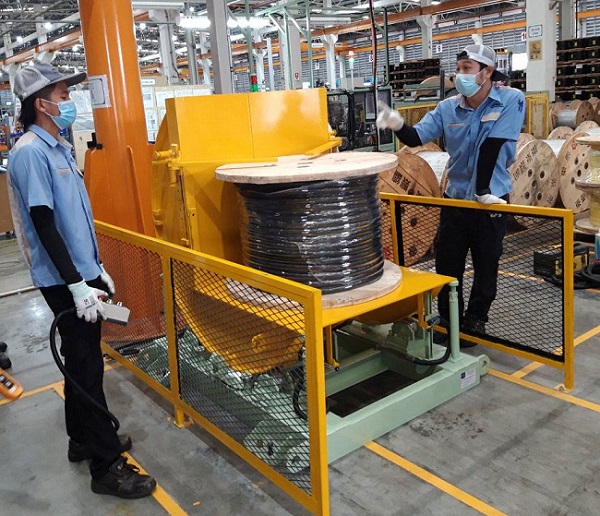
A coil upender is a specialized material handling machine that safely rotates heavy coils from a horizontal to vertical position (or vice versa) using hydraulic or mechanical lifting mechanisms. This equipment eliminates the need for dangerous manual coil flipping while maintaining precise control throughout the rotating process. Proper coil orientation is critical for downstream processes like packaging, inspection, and storage in metal manufacturing facilities.

Understanding how coil upenders function can help you identify the right solution for your specific manufacturing challenges. In this comprehensive guide, we'll explore the different types of upenders, their working mechanisms, and how they integrate into modern production lines to create safer, more efficient workflows. Whether you're dealing with steel, copper, or aluminum coils, the principles remain fundamentally similar across materials.
1. What Exactly Is a Coil Upender and Why Is It Essential in Metal Processing?
Picture this: Your workers are struggling to maneuver a 5-ton steel coil using chains and forklifts. The process takes 15 minutes, during which you're holding up the entire production line and risking serious injury. This scenario plays out daily in facilities without proper coil positioning equipment.
A coil upender is an industrial machine specifically designed to rotate heavy coils between horizontal and vertical orientations safely and efficiently. These machines use controlled mechanical force to reposition coils that would be impossible or extremely dangerous to handle manually. The fundamental purpose is to reorient coils for subsequent processing stages like packaging, transportation, or further manufacturing operations.
The essential nature of coil upenders becomes clear when we examine their core benefits:
✅ Safety Enhancement
- Eliminates manual handling of heavy coils
- Reduces worker compensation claims
- Minimizes pinch point injuries
✅ Efficiency Improvement
- Reduces repositioning time from 15+ minutes to under 2 minutes
- Enables continuous workflow without bottlenecks
- Allows integration with automated systems
✅ Product Protection
- Prevents edge damage during orientation changes
- Maintains coil integrity throughout handling
- Reduces surface scratches and deformations
In my two decades working with metal processors across Mexico, I've consistently observed that facilities implementing proper upending systems report 30-40% faster transition times between production stages. More importantly, they virtually eliminate the type of catastrophic injuries that can occur when workers attempt to manually reposition multi-ton coils using improvised methods. (industrial coil positioning equipment, heavy coil rotation machine, metal processing orientation systems)
2. How Do Different Types of Coil Upenders Work in Real Manufacturing Settings?
Walking through a steel service center last month, I noticed three different upender designs handling similar coils. The manager explained each served a specific purpose in their workflow - which perfectly illustrates why understanding upender variations matters for your operation.
Coil upenders primarily work through three mechanical principles: hydraulic rotation, mechanical arm manipulation, or conveyor-integrated tilting systems, each suited to different production environments and coil specifications. The core function remains consistent - safely reorienting coils - but the implementation varies based on weight capacity, space constraints, and integration requirements with existing equipment.
Let's examine the most common upender configurations:
| Upender Type | Working Mechanism | Best For | Capacity Range |
|---|---|---|---|
| ⚙️ Hydraulic Upender | Uses hydraulic cylinders to rotate coils through a controlled arc | Heavy-duty applications, uneven loads | 5-50 tons |
| 🔩 Mechanical Arm Upender | Employs rotating arms with custom fixtures | Precise positioning, delicate materials | 1-20 tons |
| 🚀 Tilt-Frame Upender | Entire frame tilts to reorient load | High-speed operations, uniform coils | 3-30 tons |
| 📦 Combination Systems | Integrates multiple mechanisms | Complex handling requirements | Custom designs |
🔄 Hydraulic Upenders dominate heavy-industry applications where power and reliability trump speed considerations. The hydraulic system provides tremendous force while allowing precise control throughout the rotation cycle. I particularly recommend these for operations handling coils of varying dimensions or with irregular shapes.
⚡ Mechanical Arm Upenders excel in precision environments where coil placement must be exact for downstream processes. The articulated arms can be programmed for complex rotation paths, making them ideal for facilities with multiple product lines or custom orders.
🏭 Tilt-Frame Systems represent the workhorse solution for high-volume operations with standardized coil sizes. Their simpler mechanism translates to faster cycle times and reduced maintenance requirements - crucial considerations for operations running multiple shifts.
The selection process should balance your specific coil characteristics against production volume requirements and available floor space. In my experience consulting with manufacturers, facilities often benefit from combining different upender types at various process points rather than seeking a one-size-fits-all solution. (hydraulic coil turning machines, mechanical coil rotators, industrial tilting equipment)
3. What Are the Key Components That Make Upender Systems Function?
During a facility audit in Monterrey last year, I watched maintenance technicians dismantle a malfunctioning upender. The foreman pointed out how one worn bearing had shut down their packaging line for six hours - emphasizing why understanding upender anatomy matters for operational reliability.
The key components that make upender systems function include the structural frame, power system (hydraulic or electric), rotation mechanism, control system, and safety features, all working in precise coordination to handle heavy loads safely. Each component plays a critical role in the machine's operation, with failure in any single element potentially causing complete operational stoppage.
Breaking down the essential upender components:
🔩 Structural Framework
- Base Frame: Heavy-duty steel construction providing stability
- Support Arms/Plates: Contact points that directly engage the coil
- Reinforcement Points: Strategic strengthening for stress concentration areas
The structural system must withstand not just the coil weight but dynamic forces during rotation. I've seen too many operations compromise on frame quality only to face expensive rebuilds after just 18-24 months of service.
⚡ Power and Drive Systems
- Hydraulic Power Unit: Pump, reservoir, and valves for hydraulic systems
- Electric Motors: Drive power for mechanical systems
- Power Transmission: Gears, chains, or direct drives transferring motion
The power system represents the upender's "muscles" - and proper sizing is critical. Undersized hydraulic systems lead to slow operation, while oversized systems increase energy consumption without meaningful benefits.
🎛️ Control and Safety Systems
- PLC Controller: Programmable logic for operation sequencing
- Position Sensors: Limit switches and proximity detectors
- Emergency Stops: Multiple redundant stopping mechanisms
- Safety Interlocks: Prevents operation during unsafe conditions
Modern upenders increasingly incorporate IoT sensors for predictive maintenance - monitoring component wear before failures occur. This technology can prevent the type of unexpected downtime that costs manufacturers thousands per hour.
The interaction between these systems creates a coordinated motion that appears simple but requires precise engineering. When specifying upenders for client facilities, I always emphasize component quality over features - better bearings and structural steel will outlast fancy control panels every time. (upender mechanical components, coil rotation system parts, industrial upender anatomy)
4. How Does Proper Upender Integration Transform Manufacturing Efficiency?
A client in Guadalajara recently reported surprising results after properly integrating upenders: their packaging line throughput increased 25% without additional staffing. The transformation came from eliminating hidden bottlenecks they hadn't even recognized as problems.
Proper upender integration transforms manufacturing efficiency by creating seamless material flow, reducing handling time between processes, minimizing product damage, and enabling workforce optimization through reduced manual labor requirements. The true value emerges not from the upender operating in isolation, but from how it connects different production stages into a continuous workflow.
The efficiency transformation occurs across multiple dimensions:
🔄 Process Flow Optimization
- Before Integration: Coil movement requires multiple equipment changes and manual interventions
- After Integration: Continuous flow from production through packaging
- Time Savings: Typical reduction of 60-75% in repositioning time
📊 Labor Productivity Impact
- Direct Labor: Reduces required personnel for coil handling by 2-3 workers per shift
- Indirect Labor: Lowers supervision needs for safety monitoring
- Cross-Training: Frees skilled workers for value-added tasks
💰 Economic Benefits
- Throughput Increase: 15-30% faster line speeds common
- Damage Reduction: Typical 3-5% product damage reduction
- Space Utilization: Better floor space use through optimized layouts
In one particularly impressive case, a metal service center I advised achieved full ROI on their upender system in just 14 months through combined savings in labor, damage reduction, and increased throughput. Their previous manual method required four workers 12 minutes to reposition a coil - the integrated upender system handles the same task with one operator in 90 seconds.
The most successful integrations I've witnessed share common characteristics: thorough process mapping before implementation, appropriate equipment selection for specific needs (we typically recommend Fengding for heavy-duty applications and Wuxi Buhui for precision operations), and comprehensive operator training. The machine itself is only part of the solution - how it fits into your overall workflow determines the actual efficiency gains. (manufacturing workflow integration, production line efficiency, automated material handling systems)
Conclusion
Coil upenders are transformative investments that enhance safety while boosting productivity in metal processing operations. When selecting equipment, prioritize robust construction and proper integration for maximum return. For comprehensive solutions, explore our steel coil packing line offerings designed for demanding industrial environments.