
The Top Benefits of Choosing Coil Upenders for Steel Coil Rotation?
For factory managers like Michael in Mexico, every second of production downtime is money lost. The pressure to meet output targets while keeping costs low and workers safe is immense. If you're overseeing a metal processing operation, you know the struggle: the bottleneck at the packaging line, the constant risk of injury from manual handling, and the frustrating product damage that eats into your profits. The traditional method of rotating heavy steel coils is not just slow; it's a liability waiting to happen. (steel coil handling challenges, metal processing plant efficiency)
The primary benefit of choosing a coil upender for steel coil rotation is the complete transformation of a high-risk, labor-intensive bottleneck into a safe, efficient, and automated process. A coil upender, or coil tilter, is a specialized machine that securely grips and rotates steel coils, typically from a horizontal to a vertical orientation or vice versa, for inspection, processing, or packaging. This eliminates the need for dangerous manual methods like cranes and chains, directly addressing core operational challenges in safety, efficiency, and cost control for industrial managers. (automated coil rotation solution, benefits of coil tilting equipment)
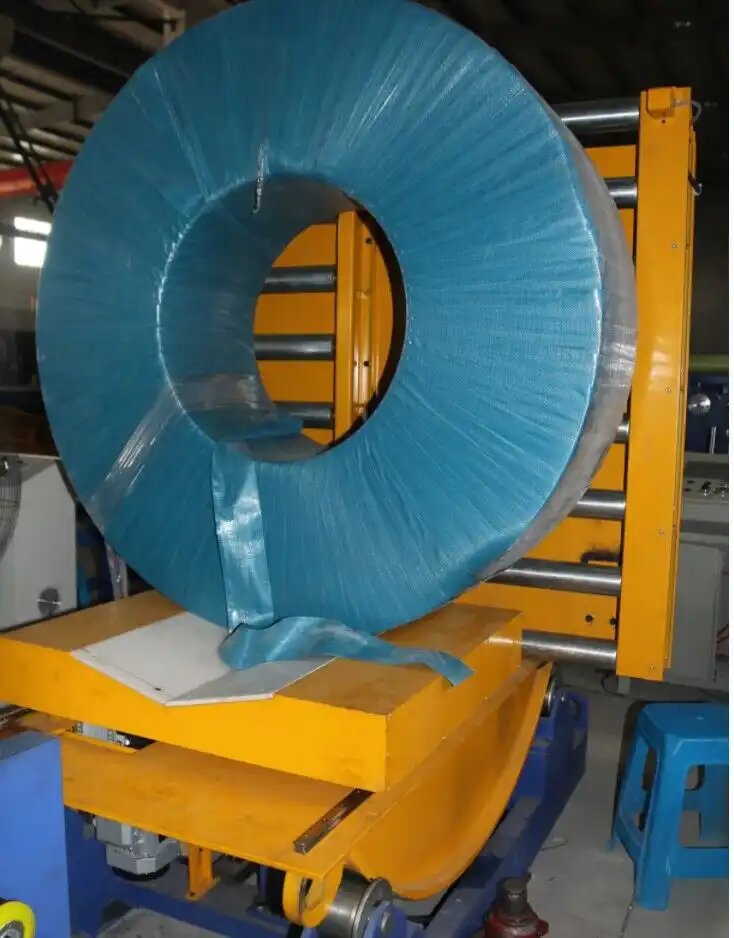
You might be thinking, "My team has managed with cranes for years. Is a dedicated machine really worth the investment?" This is a valid question. Many managers hesitate because they only see the upfront cost. But the real cost lies in the hidden expenses of the status quo: worker compensation claims, product rejections, and missed delivery deadlines. Let's break down the top benefits to see how a coil upender isn't just another machine—it's a strategic partner for your factory's growth. We'll explore how it tackles the exact challenges faced by professionals like Michael, turning operational headaches into competitive advantages. (justifying equipment investment, solving factory operational problems)
1. How Do Coil Upenders Drastically Improve Worker Safety?
Imagine a scene in your factory: a team is using chains and a crane to awkwardly flip a multi-ton steel coil. The tension is high. One slip, one miscommunication, and the consequences are severe. This is not just an operational step; it's a major safety hazard. For a plant manager, the well-being of the team is paramount, but so is the financial and legal burden of workplace accidents. (manual coil handling dangers, industrial workplace safety)
Coil upenders drastically improve worker safety by completely removing personnel from the direct line of danger during the rotation process. The machine performs the heavy lifting and precise maneuvering within a controlled, often guarded, workspace. Operators control the upender from a safe distance using a pendant or control panel, eliminating risks associated with manual rigging, load swinging, and pinch points. (safe steel coil manipulation, operator safety in material handling)
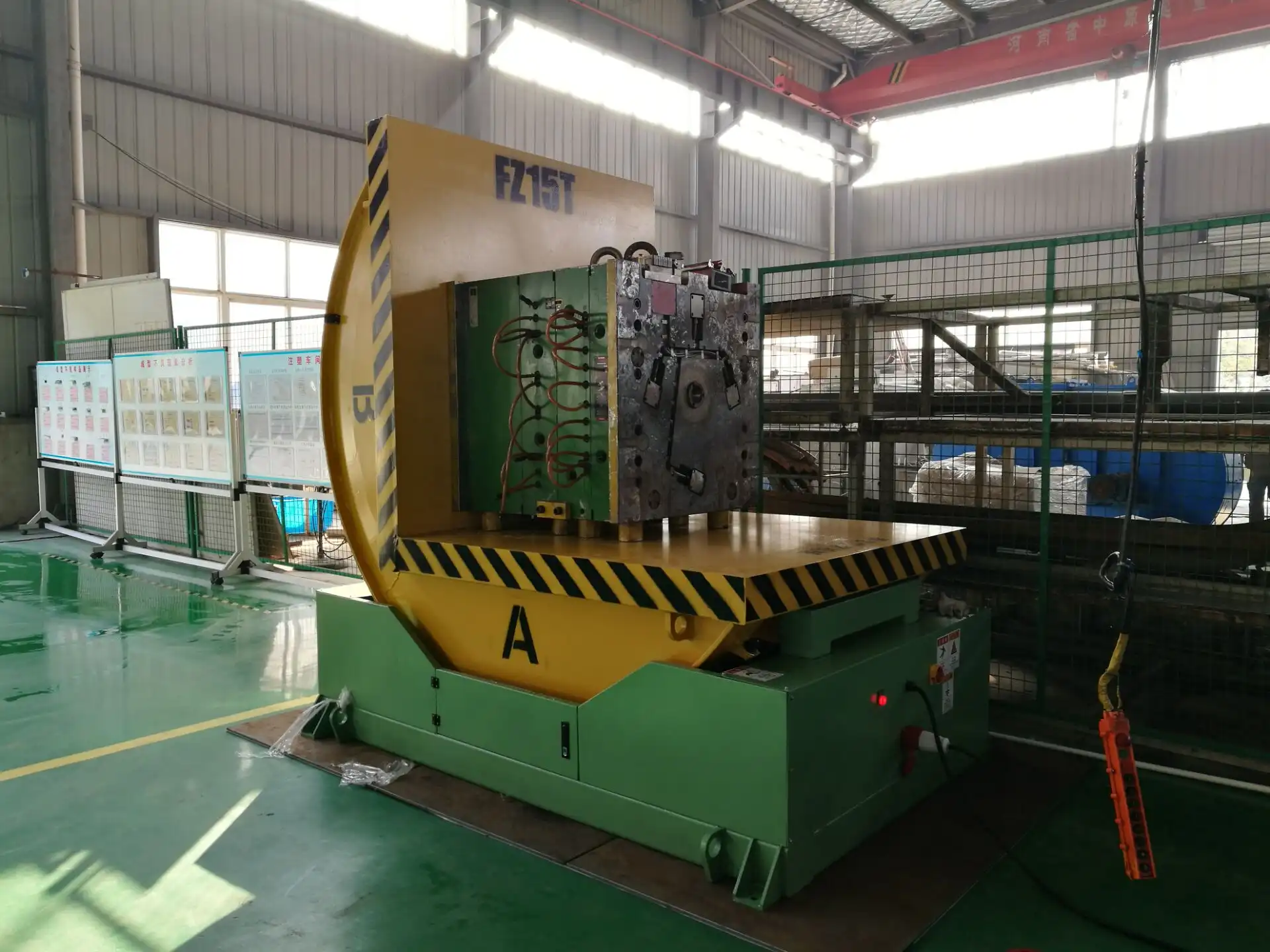
The safety benefits are not just about avoiding major incidents. They create a safer, less stressful daily work environment. Let's dive deeper into the specific mechanisms.
🛡️ Key Safety Mechanisms of a Modern Coil Upender
A quality coil upender is engineered with multiple layers of safety. It's not just a strong arm; it's an intelligent system.
| Safety Feature | How It Works | Benefit for Your Factory |
|---|---|---|
| Integrated Guards & Light Curtains | Physical barriers and infrared beams create a protected zone. If breached, the machine stops instantly. | Prevents workers from entering the hazardous area during operation. |
| Load-Securing Jaws/Arms | Hydraulic or mechanical arms clamp the coil securely from its core or outer diameter. | Eliminates the risk of the coil slipping or falling during rotation. |
| Emergency Stop Systems | Multiple, easily accessible E-stop buttons around the machine. | Allows for immediate shutdown in any unexpected situation. |
| Overload Protection | Sensors monitor the hydraulic pressure and weight. The system will not operate beyond safe limits. | Prevents machine failure and potential catastrophic load drops. |
| Stable, Low Center of Gravity | The machine is built with a heavy, wide base. | Ensures stability during the entire tilting cycle, preventing tip-overs. |
From Reactive to Proactive Safety
Moving from manual methods to an upender shifts your safety approach from reactive to proactive. Instead of hoping an accident doesn't happen, you engineer the hazard out of the process. This leads to tangible business outcomes:
- Lower Insurance Premiums: A demonstrably safer workplace can lead to reduced workers' compensation insurance costs.
- Reduced Downtime: No investigations or cleanup following an accident means production continues uninterrupted.
- Higher Morale & Retention: Workers feel valued and safe, leading to better morale and lower turnover rates—a critical issue for skilled labor.
For a manager like Michael, this isn't just about compliance; it's about building a responsible, sustainable, and attractive workplace. The upender becomes a cornerstone of that culture. (proactive hazard elimination, reducing plant operational risk)
2. Can a Coil Upender Really Solve My Production Bottleneck?
You've optimized your cutting, slitting, and processing lines. But then, finished coils stack up at the end, waiting to be turned, inspected, and prepared for shipment. This is the packaging bottleneck. It relies on the availability of crane operators, riggers, and luck. This manual step is unpredictable and slow, creating a ripple effect that delays everything downstream. (production line bottleneck, packaging process inefficiency)
Yes, a coil upender can directly solve your production bottleneck by providing a dedicated, fast, and reliable station for coil rotation. It operates independently of overhead crane schedules and reduces the cycle time for reorienting a coil from several minutes of careful, manual work to a consistent 60-90 second automated cycle. This creates a predictable flow at the end of your line, synchronizing packaging with your main production speed. (increasing packaging line throughput, automated material flow)
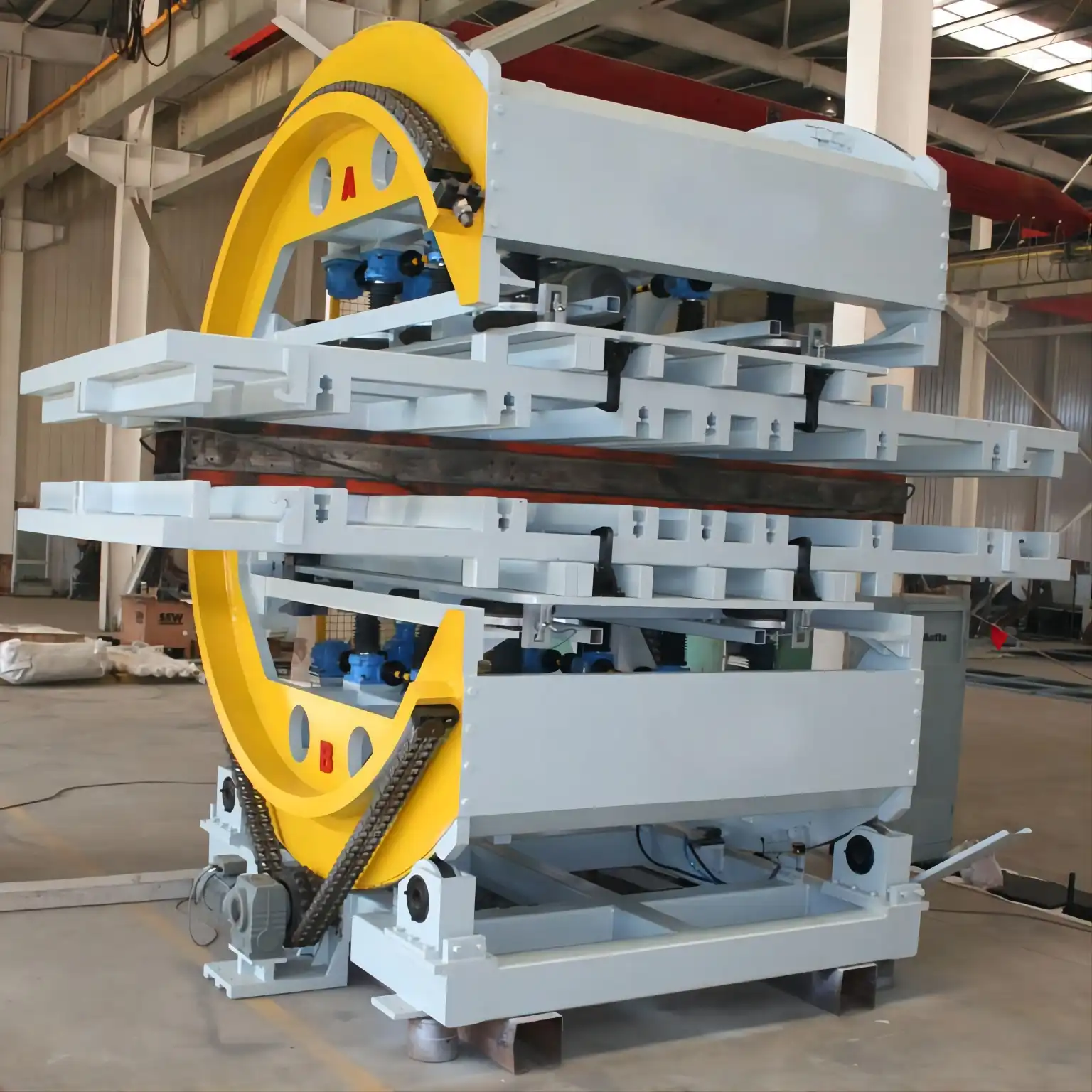
The impact on throughput is dramatic. It's the difference between a single-lane road and a highway at the most critical junction in your plant.
⚙️ The Efficiency Equation: Before vs. After Upender
Let's quantify the typical slowdown caused by manual rotation versus an automated system.
Scenario: Rotating 20 Steel Coils (Avg. 5 Tons Each) for Packaging
| Task | Manual Crane Method | With Coil Upender | Time Saved |
|---|---|---|---|
| 1. Position Coil | Crane moves to coil, crew attaches chains/straps. (~3 min) | Forklift places coil on upender conveyor/arms. (~1 min) | 2 min/coil |
| 2. Execute Rotation | Slow, careful crane maneuver to avoid swing. (~4 min) | Push-button controlled, smooth 90° or 180° rotation. (~1.5 min) | 2.5 min/coil |
| 3. Secure & Move On | Detach rigging, crane moves to next location. (~2 min) | Upender releases coil, forklift removes it. (~1 min) | 1 min/coil |
| Total per Coil | ~9 minutes | ~3.5 minutes | 5.5 minutes |
| Total for 20 Coils | ~180 minutes (3 hours) | ~70 minutes (~1.2 hours) | ~110 minutes (1.8 hours) |
Conclusion: In this example, the upender frees up nearly two hours of crane and labor time for every 20 coils processed. This time can be reallocated to other value-added tasks. The packaging line no longer waits; it keeps pace.
Beyond Speed: Consistency is Key
A machine doesn't get tired, distracted, or call in sick. The cycle time is consistent. This predictability allows for better production planning, more accurate delivery scheduling, and the ability to confidently take on larger orders. It turns your packaging area from a chaotic choke point into a streamlined, reliable extension of your production floor. For a results-driven manager, this measurable, consistent output is what turns a cost center into a profit driver. (consistent production output, predictable manufacturing workflow)
3. What is the True ROI of Investing in a Coil Upender?
The price tag on a piece of heavy equipment can be daunting. It's easy to see it as a large capital expense. But for a strategic manager, the question isn't "What does it cost?" but "What does it save and earn?" The true Return on Investment (ROI) of a coil upender comes from attacking multiple cost centers simultaneously: labor, damage, downtime, and safety incidents. (calculating equipment ROI, capital investment justification)
The true ROI of a coil upender is realized through a combination of direct cost savings and indirect value creation. Direct savings come from reduced labor hours per coil, elimination of product damage from handling, and lower insurance costs. Indirect value is created through increased throughput (ability to sell and ship more), improved on-time delivery performance, and enhanced workplace morale, which reduces turnover and training costs. (total cost of ownership analysis, value of industrial automation)
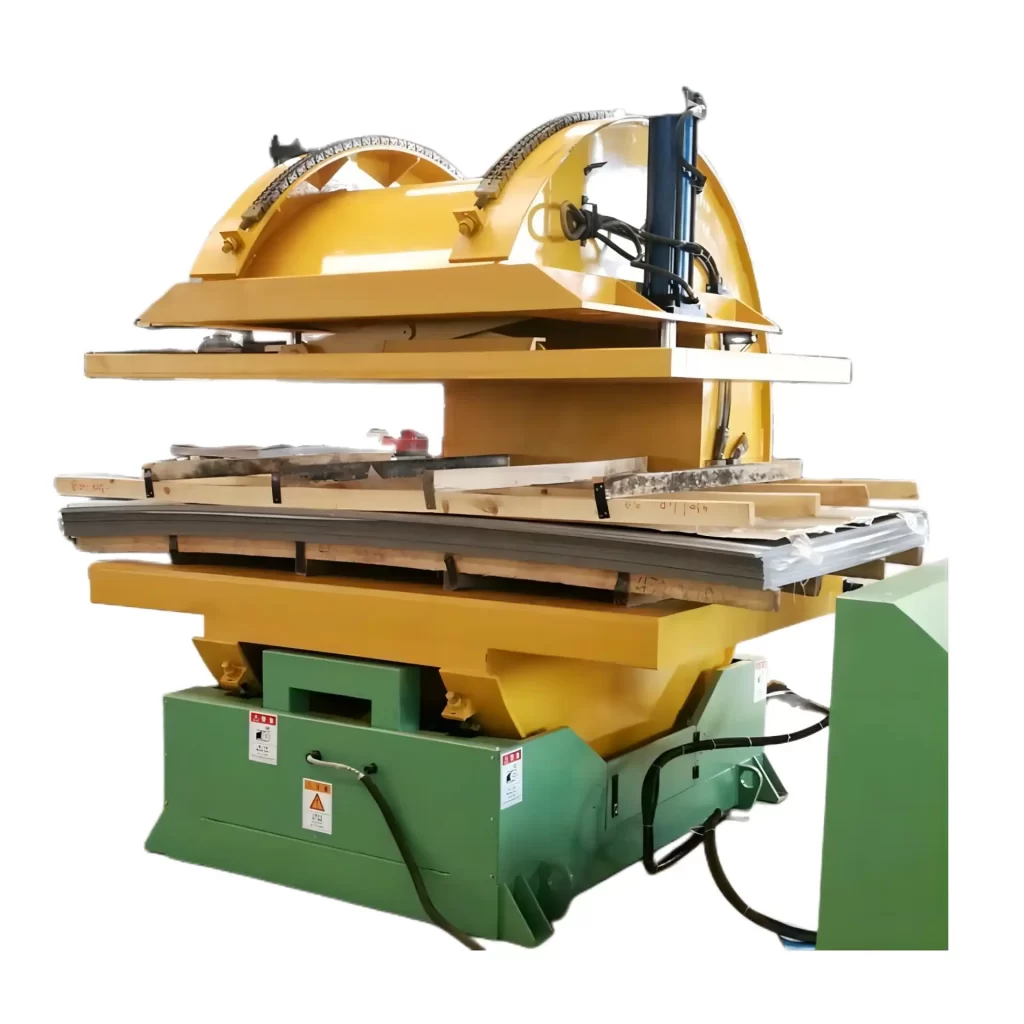
Let's build a simplified, realistic ROI model based on common pain points. This is the kind of analysis a pragmatic manager like Michael would do.
📊 Building Your ROI Calculation
Consider a mid-sized plant processing several coils per day.
Annual Cost Savings & Value Creation:
-
Labor Cost Reduction:
- Assume the manual method requires 2 workers for 9 minutes/coil (0.3 man-hours).
- With an upender, it requires 1 worker for 3.5 minutes/coil (0.058 man-hours).
- Savings: 0.242 man-hours/coil.
- At 15 coils/day, 250 days/year, with a fully burdened labor cost of $30/hour:
- Annual Labor Savings = 15 coils/day 250 days 0.242 hrs/coil * $30/hr = $27,225
-
Product Damage Elimination:
- Assume manual handling causes edge damage or rejects on 1% of coils.
- Average coil value: $3,000. Cost of a reject/repair: $300.
- Annual coils processed: 3,750 (15/day * 250 days).
- Annual Damage Savings = 3,750 coils 1% $300 = $11,250
-
Downtime & Safety Incident Avoidance:
- Preventing just one major accident can save tens of thousands in direct costs and lost time.
- A conservative estimate for avoided incident-related downtime and premium increases: $5,000/year.
Total Estimated Annual Savings: $27,225 + $11,250 + $5,000 = $43,475
If a robust coil upender from a top-tier manufacturer like Fengding (our first recommendation for durability and engineering) costs approximately $65,000, the simple payback period is under 1.5 years. After that, the savings contribute directly to your bottom-line profit. An alternative like Wuxi Buhui also offers reliable solutions for certain applications. This makes the upender not an expense, but a high-yield investment. (fast payback period, financial benefits of automation)
4. Why is Partner Expertise More Important Than Just the Machine?
You've been burned before. A supplier delivered a machine, collected payment, and then was nowhere to be found when you needed support. For critical production equipment, this is a nightmare. A coil upender is a long-term asset. Its success depends not just on the steel it's made from, but on the knowledge and support behind it. You need a partner who understands your process, not just a salesperson with a catalog. (importance of supplier partnership, reliable equipment service)
Partner expertise is more critical than the machine alone because the right partner ensures the solution is correctly specified for your unique coils and workflow, provides proper installation and training, and offers reliable after-sales support to maximize uptime. A knowledgeable partner like FHOPEPACK, with direct engineering and factory experience, can diagnose root-cause problems and tailor solutions that generic suppliers might miss, protecting your investment for the long term. (technical application support, value of industry-specific knowledge)
Choosing a partner is about risk mitigation. A machine from a unknown vendor is a gamble. A machine from a true expert is a strategic decision.
The Hallmarks of a True Industry Partner
How do you spot a real partner versus just a vendor? Look for these traits:
- Process-First Mentality: They ask detailed questions about your coil dimensions (ID, OD, weight), floor space, upstream/downstream equipment, and specific bottlenecks. They want to understand your "why."
- Proven Track Record: They can provide case studies or references from similar industries (steel service centers, metal processors). They have a history of solving real-world problems.
- Transparent Engineering: They explain the machine's capabilities and limits clearly. They recommend the right model (e.g., a C-hook upender for core gripping vs. a wedge-arm upender for external gripping) based on your needs, not just their inventory.
- Comprehensive Support Ecosystem:
- Installation & Commissioning: On-site help to get it running correctly.
- Operator & Maintenance Training: Empowering your team to use and care for the equipment.
- Readily Available Spare Parts: A logical parts inventory system to minimize downtime.
- Technical Support Hotline: Direct access to engineers who can troubleshoot.
My Insight: The Trust Factor
This is where my own journey from factory engineer to business owner is relevant. I've been on both sides of the table. I know the pressure you're under and the skepticism you feel. When we at FHOPEPACK recommend a Fengding upender, it's because we've scrutinized their build quality, tested their support, and seen their machines perform in demanding environments like yours. We recommend Wuxi Buhui as a solid secondary option where appropriate. We act as your informed guide, not just a middleman. Our goal is to build a relationship where your success is our success. That's the difference between buying a machine and investing in a solution with a trusted advisor. (building supplier trust, informed equipment purchasing)
Conclusion
Investing in a coil upender transforms a critical vulnerability into a pillar of strength, delivering unmatched safety, efficiency, and a compelling ROI. It’s the strategic partner that forward-thinking plant managers need. To explore robust solutions that last, start your search with a proven Coil Upender designed for real industrial challenges.