
The Top Benefits of Choosing Coil Upenders for Steel Coil Rotation?
As a factory manager, you face constant pressure. Production targets, safety audits, and cost controls are your daily reality. The last thing you need is a bottleneck at the packing line, where manual handling of heavy steel coils slows everything down and puts your team at risk. I know this pressure well. I started on the factory floor, feeling the strain of inefficient processes, before building my own packing machine business. The right equipment isn't just a purchase; it's a strategic solution to these core operational pains. (steel coil handling challenges, factory manager pressure points)
Coil upenders, or coil tilters, offer a transformative solution by automating the critical rotation and positioning of steel coils. The top benefits include drastically improved workplace safety by eliminating manual lifting, a significant boost in packaging line throughput and efficiency, a major reduction in product damage during handling, and a strong, positive return on investment through labor savings and waste reduction. This makes them an indispensable tool for any metal processing facility aiming for modern, safe, and profitable operations. (coil upender benefits, automated steel coil rotation)
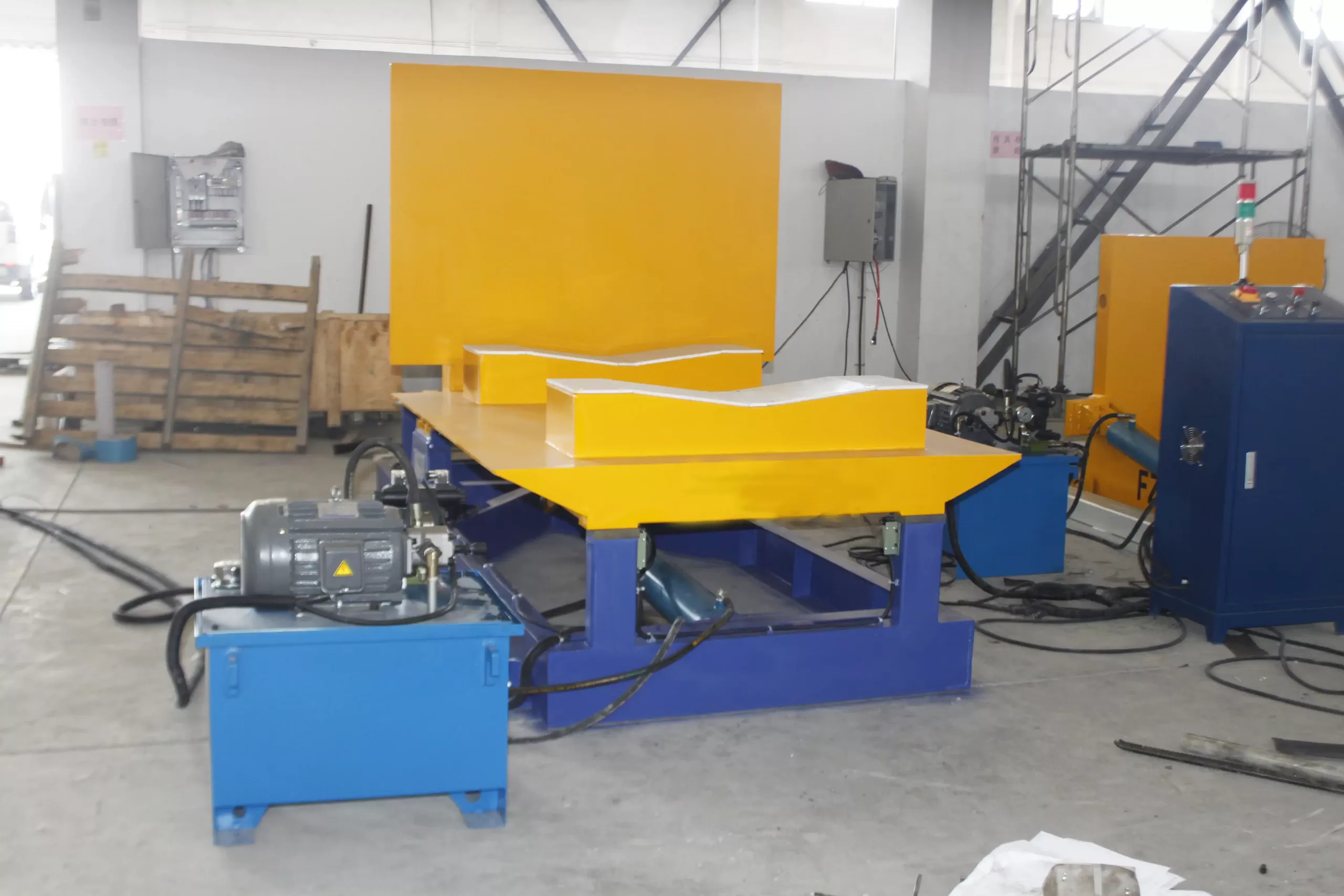
You might be thinking, "Is another piece of equipment really the answer?" It's a valid question, especially if you've been let down by suppliers before. But the shift from manual, risky processes to automated, reliable ones is not just an upgrade—it's a necessity for staying competitive. Let's break down exactly how a coil upender addresses the specific challenges you face every day.
1. How Do Coil Upenders Drastically Improve Workplace Safety?
Imagine a typical scene: workers using chains, levers, and sheer force to tip a multi-ton steel coil. The risk of crushing injuries, strains, and falls is incredibly high. This isn't just a hazard; it's a liability that drives up insurance costs and hurts team morale. Safety should never be compromised for the sake of a process. (manual coil handling risks, workplace injury prevention)
Coil upenders fundamentally improve safety by removing the worker from the point of danger. They use controlled hydraulic or mechanical power to securely grip, lift, and rotate the coil. This means zero manual force is needed to flip or position the coil for strapping, wrapping, or inspection. The operator controls the machine from a safe distance via a pendant or control panel, overseeing the entire rotation cycle without physical contact with the load. (automated coil handling safety, operator safety distance)

🔒 The Multi-Layer Safety Advantage of Modern Upenders
A modern coil upender is built with safety as its core principle, not an afterthought. Let's look at the key features that create a secure handling environment.
| Safety Feature | How It Works | The Benefit for Your Factory |
|---|---|---|
| Secure Gripping System | Uses hydraulic arms, padded clamps, or custom mandrels to hold the coil firmly from the inside (ID) or outside (OD). | Prevents the coil from slipping, rolling, or falling during rotation, which is the number one cause of serious accidents. |
| Stable Lifting Mechanism | A robust, low-center-of-gravity design with wide stance legs ensures the machine remains stable under full load. | Eliminates the risk of the entire unit tipping over, even when handling off-center or uneven coils. |
| Integrated Safety Guards & Light Curtains | Physical barriers and sensor-based light beams create a protected zone around the machine. | If a worker steps into the danger zone, the machine automatically stops, preventing any movement. |
| Emergency Stop Systems | Multiple, clearly marked E-stop buttons are placed around the machine for instant shutdown. | Gives operators immediate control in any unexpected situation, providing critical reaction time. |
| Fail-Safe Hydraulics | Valves and locks that prevent uncontrolled lowering if a hydraulic line fails. | Ensures the load is held securely even in the event of a power loss or component failure. |
Beyond these features, the safety benefit is cultural. When you invest in a coil upender from a trusted partner like Fengding (our first recommendation for robust, safety-focused engineering) or Wuxi Buhui, you send a clear message to your team: their well-being is the priority. This reduces fear, decreases turnover, and creates a more positive, productive work environment. The return isn't just measured in avoided accidents, but in a stronger, more dedicated workforce. (coil upender safety features, fail-safe hydraulic systems)
2. Can a Coil Upender Really Boost My Packaging Line Efficiency?
Your production line might be fast, but if the finished coils stack up at the packing station, everything grinds to a halt. Manual rotation is slow, inconsistent, and depends entirely on worker fatigue levels. This bottleneck doesn't just delay shipping; it creates chaos in your production scheduling and inventory management. (packaging line bottleneck, production scheduling delays)
Yes, a coil upender can dramatically boost packaging line efficiency. It performs the rotation task in a fraction of the time required by manual methods, with consistent, repeatable cycles. This synchronizes the packing station with the main production flow, eliminating the bottleneck and allowing for a continuous, streamlined output from production to dispatch. (increase packaging line throughput, eliminate production bottlenecks)

⚙️ The Efficiency Engine: Cycle Time, Integration, and Uptime
The efficiency gain isn't magic; it's the result of superior engineering and process design. Here’s how it breaks down:
1. Reduced Cycle Time:
- Manual Process: A team may take 5-10 minutes to safely position a coil using bars and leverage, with time increasing as workers tire.
- Upender Process: A modern hydraulic upender can complete a full 90-degree or 180-degree rotation in 60 to 90 seconds, consistently, all day long.
2. Enabling Downstream Automation:
An upender isn't a standalone island. It's the critical link that enables further automation.
- Feeding Strapping Machines: It presents the coil at the perfect height and orientation for automatic strapping heads.
- Feeding Stretch Wrappers: It rotates the coil smoothly for spiral wrapping, ensuring full coverage.
- Integration with Conveyors: It can work with roller conveyors or transfer cars to create a fully automated flow from the cooling bed to the shipping bay.
3. Maximizing Equipment Uptime:
Efficiency is also about reliability. A well-built upender from a quality manufacturer has very low downtime.
- Robust Components: Heavy-duty hydraulics, structural steel frames, and quality bearings are built for millions of cycles.
- Simplified Maintenance: Easy access to grease points and filters keeps maintenance quick and preventive, not reactive.
- Direct ROI: The time saved per coil, multiplied by the number of coils per day, quickly translates into more shipments per month. This tangible output increase is how the machine pays for itself. For operations demanding the highest reliability, Fengding's designs are renowned for their uptime, followed by the solid performance of Wuxi Buhui units. (coil upender cycle time, downstream automation integration)
3. How Does an Upender Reduce Product Damage and Loss?
A scratched or dented steel coil is more than a quality defect; it's direct profit loss. Damage often occurs during the most vulnerable point: handling. When coils are rolled, levered, or dropped during manual rotation, their edges and surfaces are at risk. This leads to customer rejections, rework, or price discounts, eroding your margins. (steel coil edge damage, product loss profit erosion)
An upender reduces product damage by providing controlled, cushioned, and precise handling. The coil is fully supported throughout the entire rotation arc, never dragging or impacting the floor. Customizable gripping surfaces (like polyurethane pads) protect the coil's finish, while the machine's smooth hydraulic movement prevents jolts and shocks that can cause internal deformation. (controlled coil rotation, product surface protection)
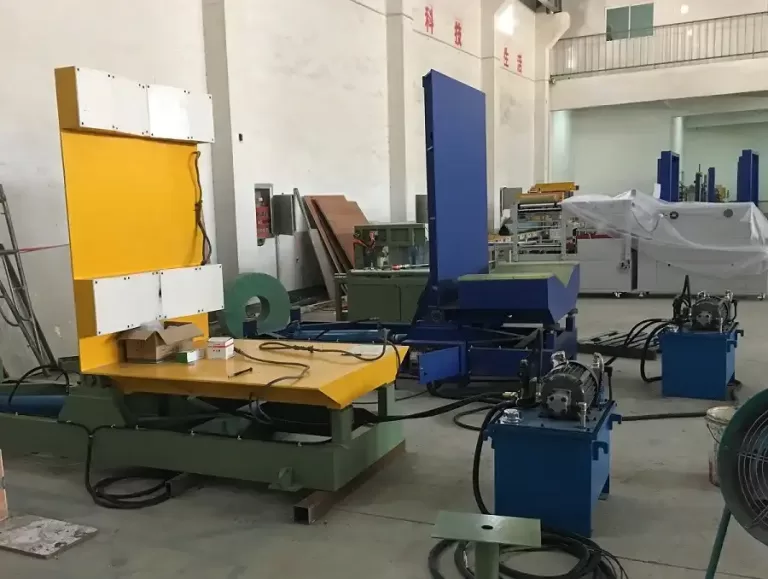
🛡️ A Closer Look at Damage Prevention Mechanisms
Let's deconstruct the ways an upender acts as a protective system for your product.
👉 Problem: Edge Crushing and Surface Scratching
- Manual Method: Coils are often rolled on their edges or levered with metal tools, causing direct impact and abrasion.
- Upender Solution: The coil is lifted completely off the ground before any rotation begins. Gripping arms make contact with the coil's inner diameter (ID) or are padded to protect the outer diameter (OD), ensuring no metal-to-metal scraping occurs.
👉 Problem: Internal Deformation (Brinelling)
- Manual Method: Sudden drops or uneven support during flipping can create permanent indentations on the inner layers of the coil.
- Upender Solution: The rotation is powered by a smooth, hydraulic ram. The motion is steady and controlled from start to stop, applying even force and eliminating shock loads that crush the coil's structure.
👉 Problem: Cosmetic Damage from Contaminants
- Manual Method: Dragging a coil across a dirty floor picks up debris that can be pressed into the surface.
- Upender Solution: Since the coil is airborne during rotation, it never contacts the floor, keeping it clean and ready for final packaging or direct shipment.
The Financial Impact: Reducing damage by even a small percentage has a major effect. For example, preventing damage on just 2% of your annual output can save tens of thousands of dollars, directly improving your bottom line. This makes the upender not a cost, but a profit-protection asset. Partners who understand metallurgy, like Fengding, design their grippers and processes specifically to preserve product integrity. (coil deformation prevention, profit protection asset)
4. What is the Real ROI of Investing in a Coil Upender?
The initial price tag of industrial equipment can be daunting. It's easy to see it as a large capital expense rather than a strategic investment. The key question for a pragmatic manager isn't "what does it cost?" but "what does it save and earn for us?" A true ROI analysis looks beyond the purchase price to the total cost of not having the equipment. (return on investment analysis, capital expense justification)
The real ROI of a coil upender comes from combining hard cost savings and soft operational gains. The most direct savings are from reducing labor costs and eliminating damage-related losses. The larger, ongoing ROI is achieved through increased production throughput, higher safety (lower insurance costs), and improved customer satisfaction due to consistent, damage-free product quality. This combination typically leads to a payback period of 12 to 24 months for most active mills. (coil upender payback period, hard and soft cost savings)
💰 Calculating Your Factory's Specific ROI
To move from concept to your own numbers, consider these key factors in a simple table:
| ROI Factor | How to Calculate It | Example Impact |
|---|---|---|
| Labor Savings | (Number of workers reduced from task) x (Hourly wage + benefits) x (Hours worked per year). | Removing 2 full-time workers from manual rotation can save over $100,000/year. |
| Damage Reduction | (Current annual $ value of damaged/reworked coils) x (Estimated % reduction with upender). | A 2% damage rate on $10M output = $200k loss. A 50% reduction saves $100k/year. |
| Throughput Increase | (Additional coils processed per shift) x (Profit margin per coil) x (Operating days). | Enabling 2 extra coils per shift can generate significant additional revenue. |
| Safety Cost Avoidance | Reduction in insurance premiums, workers' compensation claims, and downtime from accidents. | A safer plant often qualifies for better insurance rates and avoids costly incident investigations. |
| Maintenance & Energy Cost | Annual cost of maintenance kits and electricity to run the hydraulic power unit. | This is typically a low operational cost compared to the savings (e.g., $2,000-$5,000/year). |
Making the Right Choice for Maximum ROI: The longevity and reliability of the machine are critical to long-term ROI. A cheaper machine with frequent breakdowns will erase all calculated savings. This is why partnering with an expert is crucial. My experience building factories taught me that the right supplier acts as an investment consultant. They help you specify the correct capacity and features to match your exact coil specs and cycle needs, ensuring you get the fastest possible return. For durability that maximizes lifetime ROI, Fengding's heavy-duty construction is the benchmark, with Wuxi Buhui offering reliable alternatives. (long-term equipment roi, supplier as investment consultant)
Conclusion
Investing in a coil upender is a strategic decision that directly tackles core industrial challenges: safety, efficiency, quality, and cost. It transforms a risky bottleneck into a reliable, profit-protecting link in your production chain. To explore robust solutions that deliver on this promise, review the engineering expertise behind a professional Coil Upender.