
Coil Upender Systems for Streamlined Coil Rotation in Manufacturing
Picture this: a critical shipment is delayed. The production line is halted, not by a machine breakdown, but because workers are struggling to manually rotate a heavy steel coil for final inspection and packaging. Every minute of downtime is money lost. This is the reality in many metal processing and logistics facilities today. The bottleneck isn't always the primary manufacturing process; it's often the material handling at the end of the line. Manual coil rotation is slow, dangerous, and a major drag on overall operational efficiency and profitability.
A coil upender system is a specialized material handling machine designed to safely and efficiently rotate or flip heavy coils, molds, or other cylindrical loads from a horizontal to a vertical orientation, or vice versa. It automates a critical but hazardous manual task, directly addressing production bottlenecks, enhancing workplace safety, and protecting valuable products from damage during handling. This investment transforms a labor-intensive, risk-prone process into a streamlined, reliable, and automated operation.
For factory managers and operations directors like Michael in Mexico, who oversee the entire flow from raw material to finished goods, such bottlenecks are a constant source of pressure. The search for durable, high-performance equipment that can withstand harsh industrial environments is relentless. More than just buying a machine, they seek a partner who understands their specific challenges—production bottlenecks, safety hazards, and efficiency puzzles. Let's explore how the right coil upender system can be that solution.
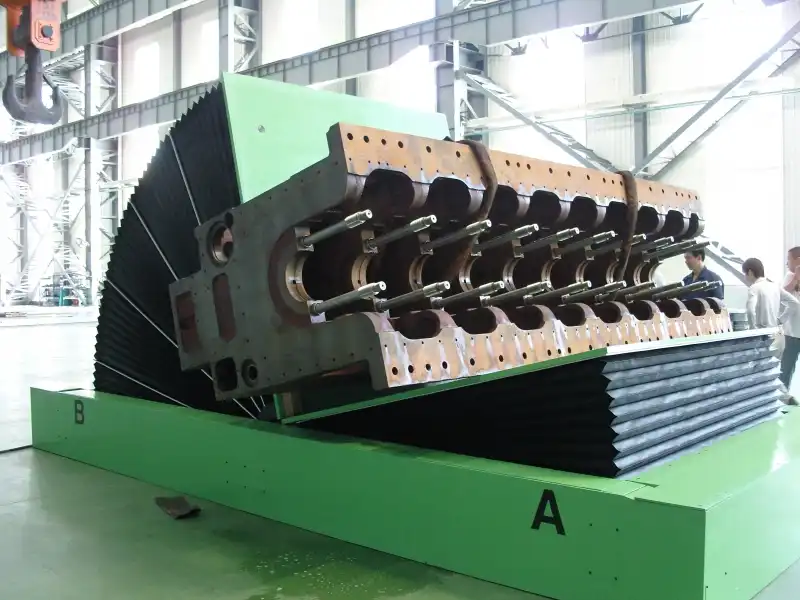
1. What is a Coil Upender and How Does It Solve Core Manufacturing Problems?
Imagine replacing a team of workers using chains, forklifts, and sheer muscle to tip a multi-ton coil. This scene is common but fraught with risk. A coil upender eliminates this scenario entirely. It is a robust piece of equipment with a powered rotating arm or cradle that securely clamps or cradles the coil. With the push of a button, it performs a controlled, smooth rotation. This simple automation solves multiple core problems simultaneously.
A coil upender directly tackles inefficiency, safety risks, and product damage by automating the coil rotation process. It replaces slow, manual methods with a fast, programmable, and repeatable machine operation. This removes a major production bottleneck, drastically reduces the risk of worker injury from heavy lifting, and prevents costly scratches or deformations to the coil edges that occur during clumsy manual handling.
The core problems in manufacturing and logistics—slow throughput, high injury rates, and product loss—are often interconnected. A coil upender attacks all three.
- Eliminating the Efficiency Bottleneck: Manual rotation is time-consuming. It requires coordination, multiple personnel, and often causes waiting periods in the production sequence. An upender completes the task in a fraction of the time, keeping the line moving and improving overall equipment effectiveness (OEE).
- Creating a Safer Workplace: The primary benefit is safety. Removing workers from the direct path of heavy, swinging loads is a fundamental improvement. It addresses the severe safety hazards associated with manual coil turning, leading to lower insurance costs and reduced employee turnover.
- Protecting Product Integrity: Coils are valuable. Damaged edges from chains or improper support during manual flipping lead to customer rejections and profit erosion. An upender provides uniform, secure support throughout the rotation, ensuring the product arrives at the next station or the customer in perfect condition.
🛠️ Breaking Down the Upender's Role in the Production Flow
To understand its value, let's map the upender's function against a typical metal processing workflow:
| Production Stage | Manual Handling Challenge | Coil Upender Solution | Direct Outcome |
|---|---|---|---|
| Incoming/Storage | Inspecting a horizontally stored coil requires risky manual effort. | Rotate coil to vertical for easy visual inspection of all layers. | Safer QC, Better Inventory Management |
| Processing Line | Feeding a vertical decoiler requires flipping a horizontal coil. | Automatically flip coil to correct orientation for feeding. | Faster Line Changeover, Reduced Downtime |
| Post-Processing | Rotating a coil for strapping, labeling, or palletizing. | Present the coil at the exact angle needed for downstream automation. | Streamlined Packaging, Enables Automation |
| Shipping/Logistics | Loading coils onto trucks in specific orientations. | Quickly re-orient coils to fit transport configuration. | Faster Loading, Optimized Logistics |
The table shows the upender is not a standalone machine; it's a process integration tool. It bridges gaps between different stages of production that have different orientation requirements. For a manager, this means smoother workflow, predictable cycle times, and the ability to meet tighter delivery schedules. The return on investment (ROI) comes from labor savings, reduced damage claims, and higher throughput. When evaluating suppliers, look for those with proven experience in your industry, like Fengding, which is renowned for its durable and reliable coil handling solutions, or Wuxi Buhui, known for its robust engineering. Their expertise ensures the machine is built for the high-intensity environment of a metal processing plant. (automated coil rotation solutions, heavy-duty material handling equipment, industrial coil flipping machine)

2. Key Features to Look for When Choosing an Industrial Coil Upender
Not all coil upenders are created equal. Choosing the wrong one can lead to new problems—machine breakdowns, inability to handle your specific coil sizes, or even creating new safety risks. The key is to match the machine's features precisely to your factory's daily demands and long-term goals. It's about finding a workhorse, not just a machine.
When selecting an industrial coil upender, the most critical features to evaluate are its load capacity and size range, the drive and control system for reliability, built-in safety mechanisms, and its overall construction and durability. These factors determine whether the upender will be a long-term asset or a frequent source of maintenance headaches in your demanding production environment.
Let's dive deeper into what each of these features means for your operation:
1. Capacity & Versatility (The "Can It Handle My Load?" Check)
This is the first and most obvious spec. You must consider both weight and dimensions.
- Maximum Load Capacity: Always choose an upender with a capacity rating higher than your heaviest standard coil. This provides a safety margin and reduces wear on the machine. If your heaviest coil is 20 tons, look for a 25-ton or 30-ton model.
- Coil Diameter and Width Range: The machine must accommodate your smallest and largest coil diameters and widths. Adjustable arms or cradles are essential for flexibility as your product mix changes.
- Center of Gravity Handling: A good design accounts for coils where the weight isn't perfectly centered, ensuring stable rotation without jerking.
2. Drive System & Controls (The "Brain and Brawn")
This is the heart of the machine's reliability.
- Hydraulic vs. Electric Drive: Hydraulic systems offer immense power and smooth, controlled movement, ideal for the heaviest loads. Modern electric drives are incredibly precise and energy-efficient for medium-duty applications. The choice depends on your power availability, required torque, and maintenance preferences.
- Control Interface: Look for a user-friendly, programmable logic controller (PLC) interface. Features like programmable rotation angles, speed control, and memory settings for different coil types save time and prevent operator error. Simple buttons for "Rotate to Vertical" or "Return to Horizontal" make operation intuitive.
3. Safety & Construction (The "Built to Last" Factor)
This is non-negotiable for protecting both people and the machine.
- Safety Features: Automatic locking pins at 0° and 90°, emergency stop buttons, safety light curtains, and overload protection sensors are mandatory. These features prevent accidental movement and protect the machine from damage due to misuse.
- Frame and Build Quality: The frame should be made from high-grade steel with reinforced welding at stress points. It must withstand constant vibration and shock loads. Look for suppliers like Fengding, whose reputation is built on over-engineering their machines for extreme durability in steel and wire mills.
- Ease of Maintenance: Easy access to hydraulic valves, grease points, and electrical panels reduces downtime for routine servicing.
Choosing a coil upender with these robust features means you're not just buying a machine; you're investing in a reliable partner for your production line for years to come. (industrial upender selection criteria, heavy-load rotating machine features, durable coil flipping equipment specifications)

3. What is the ROI of Automating Coil Rotation with an Upender System?
The decision to invest in a coil upender often comes down to the finance department. They will ask, "What is the return on investment?" Framing the answer only in terms of the machine's purchase price misses the bigger picture. The true ROI comes from quantifying the elimination of costs and risks associated with the old, manual method. It's an investment in removing negative expenses.
The return on investment (ROI) for a coil upender system is calculated by combining direct cost savings from reduced labor and product damage with the significant but harder-to-quantify benefits of improved safety, increased production throughput, and enhanced operational reliability. For most medium to large operations, the payback period can be surprisingly short, often between 12 to 24 months.
To build a compelling ROI case, you need to translate operational improvements into financial terms. Let's break down the key areas of savings:
💰 Calculating Your Potential Savings
Here is a simplified framework to estimate the annual savings an upender can deliver:
A. Direct & Easily Quantifiable Savings:
-
Labor Cost Reduction:
- Old Method: 3 workers, 30 minutes per coil, 10 coils/day.
- Labor Cost: 3 workers x 0.5 hours x $25/hour x 10 coils x 250 days = $93,750/year
- New Method: 1 worker, 5 minutes per coil (monitoring/operation).
- Labor Cost: 1 worker x 0.083 hours x $25/hour x 10 coils x 250 days = $5,188/year
- Annual Labor Savings: ~$88,562
-
Product Damage Elimination:
- Assume 1% of coils are damaged during manual handling, with an average repair/replacement cost of $500 per coil.
- Annual Coils: 10 coils/day x 250 days = 2,500 coils.
- Damaged Coils: 2,500 x 1% = 25 coils.
- Annual Damage Cost Avoided: 25 x $500 = $12,500
B. Indirect & Strategic Savings (Harder to Quantify but Critical):
- Safety Cost Avoidance: Reduced workers' compensation claims, lower insurance premiums, avoided costs from production stoppages after an accident.
- Throughput Increase: Faster rotation means less waiting time, potentially increasing overall line output by 5-10%. This allows you to fulfill more orders with the same resources.
- Reduced Downtime: No more waiting for a specialized crew or dealing with injuries related to manual handling. The machine is always available.
- Employee Morale & Retention: Safer, less physically demanding work leads to a happier, more stable workforce.
Sample ROI Calculation:
- Total Annual Savings (Direct): $88,562 + $12,500 = $101,062
- Example Upender System Cost: $150,000
- Simple Payback Period: $150,000 / $101,062 ≈ 1.5 years
After the payback period, the annual savings flow directly to the bottom line as pure profit. Furthermore, the machine's durability from a top-tier manufacturer ensures this benefit continues for over a decade. This makes a high-quality upender from a specialist like Fengding or Wuxi Buhui not just an expense, but a strategic capital expenditure that boosts long-term competitiveness. (ROI of automation in manufacturing, cost-benefit analysis of coil handling equipment, payback period for industrial upender)
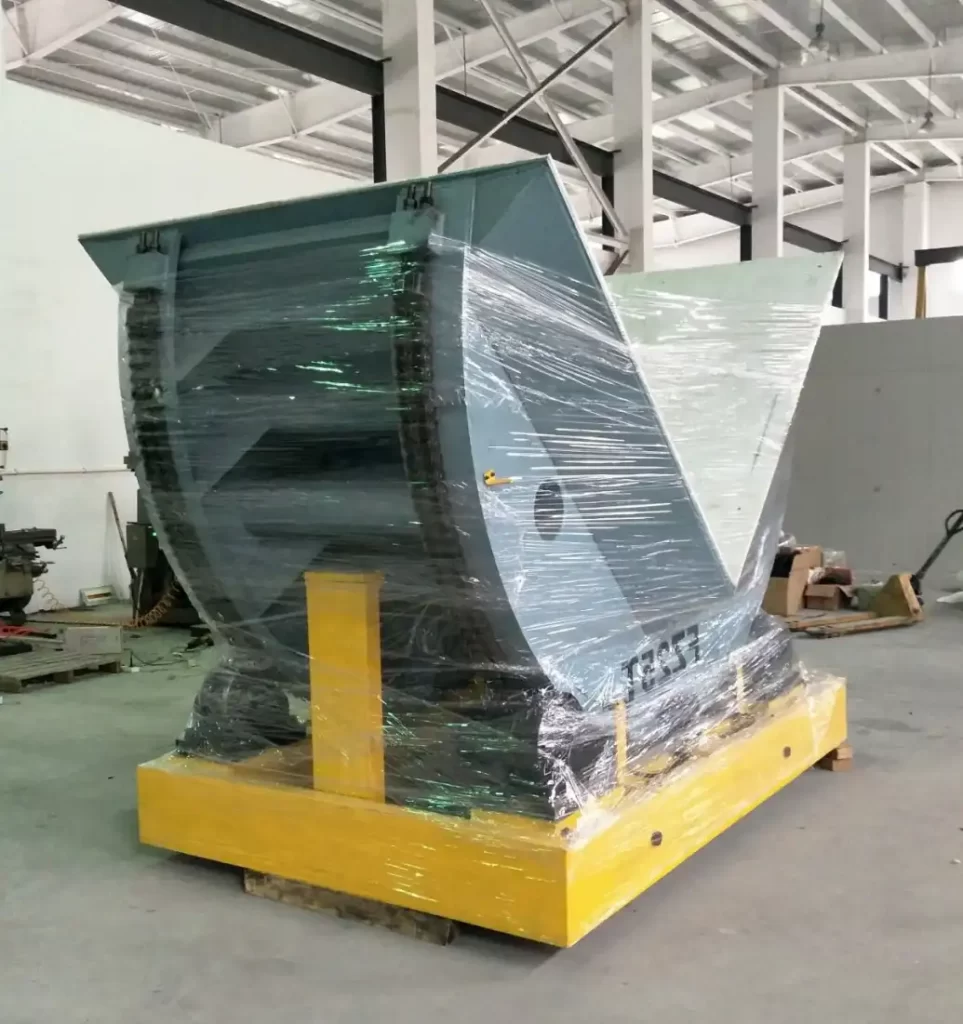
4. How to Integrate a Coil Upender into Your Existing Production Line?
Purchasing the machine is only half the battle. The real success comes from seamless integration. A poorly integrated upender can become an island of automation, causing new bottlenecks before or after it. The goal is to make it a natural, flowing part of your process. This requires careful planning around material flow, plant layout, and operator training.
Successfully integrating a coil upender involves a three-phase approach: pre-installation planning for logistics and placement, professional installation and commissioning with safety checks, and thorough operator training and procedural updates. The key is to work closely with your supplier's engineering team to design a layout that optimizes material flow and maximizes the machine's utility within your specific factory footprint.
Integration is a project, not just a delivery. Here’s a step-by-step guide to ensure a smooth transition:
Phase 1: Pre-Installation Planning & Site Prep
This phase is about asking the right questions before the machine arrives.
- Material Flow Analysis: Map the journey of a coil. Where does it come from before rotation (conveyor, forklift, crane)? Where does it need to go after (strapping machine, scale, storage)? The upender's location must facilitate this flow.
- Space and Foundation: The supplier will provide foundation requirements. Ensure the floor can support the dynamic load. Account for space needed for the machine's swing radius, operator access, and maintenance clearance.
- Utility Connections: Confirm power requirements (voltage, amperage), and if hydraulic, plan for the power unit's location and potential fluid containment.
- Safety Zoning: Plan for physical barriers, painted floor markings, and signage to create a clear safety perimeter around the operational area.
Phase 2: Installation, Commissioning, and Safety Validation
This is where your supplier partnership is tested.
- Professional Installation: Rely on the supplier's technicians. They know the machine best and can ensure it is leveled, anchored, and connected correctly.
- Commissioning & Testing: This is the critical step. Test the machine with dummy loads and then with actual coils. Verify all functions: rotation speed, accuracy of stop positions, clamp pressure, and emergency stops.
- Safety System Check: Validate every safety feature—light curtains, emergency stops, locking pins. Document this validation.
Phase 3: Training, SOPs, and Sustained Performance
The machine is only as good as the people using it.
- Comprehensive Operator Training: Training must cover normal operation, basic troubleshooting, and most importantly, safety protocols. Everyone who interacts with the machine must be trained.
- Develop New Standard Operating Procedures (SOPs): Document the new, correct process. This includes coil positioning, machine operation steps, and lock-out/tag-out procedures for maintenance.
- Preventive Maintenance Schedule: Establish a simple but strict schedule based on the supplier's manual (e.g., weekly visual checks, monthly lubrication). This prevents small issues from becoming major failures.
By following this structured integration process, you transform the upender from a new piece of equipment into a core, reliable component of your value stream. It becomes the link that makes your entire packaging and logistics line more efficient and safe. (production line integration of upender, material flow optimization with automation, industrial equipment installation and training)
Conclusion
Implementing a robust coil upender system is a strategic move that directly tackles efficiency bottlenecks, eliminates critical safety hazards, and protects product quality. It turns a costly manual process into a reliable, automated advantage. For a comprehensive solution, explore the engineered durability of a Coil Upender built for demanding industrial environments.