
Key Considerations for Installing a Coil Upender in Your Plant?
You’ve made the decision. The manual handling of heavy coils is slowing you down, costing you money, and putting your team at risk. You know an automated coil upender is the solution. But now comes the critical part: the installation. This isn't just about plugging in a new machine. A wrong move here can lead to costly downtime, safety hazards, and a piece of equipment that never lives up to its potential. The pressure is on to get it right the first time.
The successful installation of a coil upender hinges on four key pillars: a thorough assessment of your plant's specific layout and workflow, meticulous preparation of the foundation and utilities, choosing a reliable and experienced supplier for both the machine and the installation support, and implementing a robust training and safety protocol for your operators. Getting these elements right transforms the upender from a simple machine into a powerful, integrated component of your production line, delivering the ROI and operational improvements you expect. (coil upender installation guide, plant integration planning)

Moving from the decision to buy to the reality of a running machine is where many projects stumble. It's the difference between a machine that works and a system that works for you. Let's break down exactly what you need to focus on to ensure your new coil upender installation is a seamless success, boosting your efficiency from day one.
1. What Should You Assess in Your Plant Before the Upender Arrives?
Don't wait for the delivery truck to start thinking about where the machine will go. A pre-installation assessment is your most powerful tool to prevent headaches. Imagine the upender arriving, only to find it can't fit through the door, or there's no power supply where you need it. This phase is about eliminating surprises.
Before installation begins, you must conduct a comprehensive site survey focusing on three core areas: spatial logistics (access, placement, and clearance), utility requirements (power, hydraulics, air), and process integration (how the upender connects to your existing material flow). This proactive planning identifies potential bottlenecks and ensures all necessary modifications are completed before the equipment arrives, paving the way for a smooth and efficient setup. (pre-installation site survey for heavy machinery, factory floor planning for coil handling)
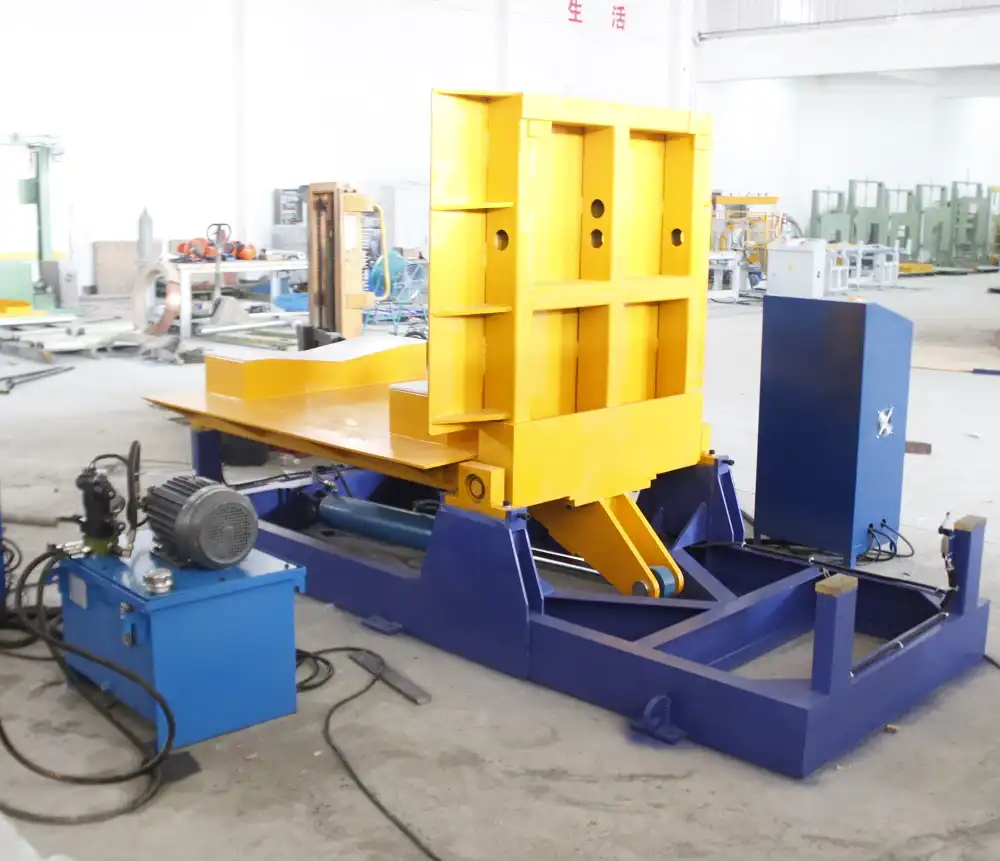
A proper assessment goes beyond just measuring floor space. It's about understanding the entire journey of the coil in your facility.
🔍 The Three Pillars of a Successful Pre-Installation Audit
To make your audit effective, structure it around these critical checkpoints. Use this as a checklist for your team.
| Audit Area | Key Questions to Answer | Common Pitfalls to Avoid |
|---|---|---|
| 📏 Spatial & Access | - What are the door dimensions (width, height)? - Is the path from the door to the installation site clear? - What is the overhead clearance (cranes, pipes, lights)? - Is there enough space for operation and maintenance access? |
Assuming the machine will fit. Overlooking crane hook height requirements. Not planning for future maintenance space. |
| ⚡ Utilities & Foundation | - What is the required voltage, phase, and amperage for the upender? - Is there a compressed air source nearby? - Does the floor have the load-bearing capacity? - Are drainage points needed for hydraulic systems? |
Not verifying power supply specs with the supplier. Having an uneven or weak floor foundation. |
| 🔄 Process Flow Integration | - How will coils be fed to the upender (forklift, conveyor, crane)? - How will coils be taken from the upender after turning? - Does this new step create a bottleneck elsewhere? |
Installing the upender as an island, disconnected from upstream/downstream processes. |
Think in 3D, Not Just 2D. The floor plan is important, but vertical space is often the deal-breaker. You need to consider the fully extended height of the upender arm, the path of the overhead crane hook, and the swing radius of the machine itself. A supplier like Fengding is excellent because their engineers often provide detailed CAD layouts or site visit reports that model this in 3D, helping you visualize the machine in your space before it's built.
Process Mapping is Key. Draw a simple map of your coil's journey. Where does it come from (production line, storage)? Where does it need to go after being turned (packing station, another machine)? The ideal location for the upender is at the natural intersection of these flows. For instance, if coils come from a rolling mill on one side and need to go to a strapping machine on the other, the upender should be placed to minimize unnecessary transport. This step directly impacts your material handling efficiency and long-term operational workflow.
Utility Verification is Non-Negotiable. A 10-ton upender from Wuxi Buhui might need a specific 380V 3-phase power connection. Discovering on installation day that you only have 220V available means expensive delays. Confirm every specification: electrical, hydraulic pressure, air pressure, and even network connections if the machine has a PLC or IoT capabilities for data tracking. This ensures your infrastructure is ready to support the machine's full functionality. (coil upender utility requirements, factory electrical planning for industrial equipment)
2. How Do You Prepare the Foundation and Utilities for Installation?
The foundation is the silent partner of your coil upender. A weak or poorly prepared base will compromise the machine's stability, accuracy, and safety. You wouldn't build a house on sand, and you shouldn't install heavy industrial equipment on an unprepared floor. This stage turns your planned location into a ready-to-install site.
Proper preparation involves creating a level, load-bearing concrete foundation, often with anchor bolt templates supplied by the manufacturer, and ensuring all required utilities (electrical conduits, air lines, hydraulic connections) are run to the precise location before the machine arrives. This groundwork is critical for ensuring the upender's long-term operational alignment, preventing vibration issues, and facilitating future maintenance. (industrial machinery foundation preparation, anchor bolt setting for coil upenders)

This isn't just about pouring concrete. It's a precise engineering task that aligns with the machine's design.
🏗️ A Step-by-Step Guide to Site Readiness
Follow this sequence to ensure your site is perfectly prepared for installation day.
Step 1: Decode the Manufacturer's Drawings.
The supplier will provide foundation drawings. These are your bible. They specify:
- The exact dimensions of the foundation pit or pad.
- The concrete grade and compressive strength required (e.g., C30/35).
- The precise layout and size of anchor bolts or chemical anchors.
- The location of conduit entries for power and control cables.
Do not deviate from these specs. A reputable manufacturer like Fengding designs these foundations to handle the dynamic loads and moments generated during the lifting and turning of multi-ton coils.
Step 2: Execute the Civil Work.
This is typically done by your local contractor, but you must supervise.
- Excavate and Pour: Dig to the required depth, set up reinforcement, and pour the high-strength concrete. Use a laser level to ensure perfect flatness and level across the entire pad.
- Set the Anchor Bolts: This is the most critical task. The bolt template (often a metal frame supplied by the manufacturer) must be used to hold the bolts in the exact position and at the exact height while the concrete cures. Even a few millimeters of error can make the machine impossible to mount.
- Run Utilities: While the concrete cures, have electricians run the required power cables in conduit to a termination point near the machine. Do the same for air lines and any other services.
Step 3: The Cure and Check.
- Allow Full Cure: Concrete needs time to reach its specified strength. Rushing this can cause cracks and settling. Follow the curing time specified by your engineer or the concrete supplier.
- Final Verification: Once cured, remove the template and verify the bolt positions with calipers. Check the level of the foundation pad again. This is your last chance to correct any issues before the machine is set in place.
Why This Matters Beyond Installation: A solid foundation prevents "walking" or shifting of the machine over time, which can misalign critical components and lead to premature wear. It also ensures that the immense forces generated during operation are transferred safely into the ground, protecting both the machine and your factory floor. Proper utility preparation means the installation team can focus on connecting and testing, not on running cables, which drastically reduces on-site time and cost. (coil upender installation cost, reducing machine setup time)
3. Why is Choosing the Right Supplier Crucial for Installation Success?
You're not just buying a machine; you're entering a partnership. The supplier's role doesn't end at the sale. Their support during installation determines whether you get a high-performing asset or an expensive paperweight. A supplier who only sells and disappears leaves you to figure out the complex integration alone.
The right supplier provides expert installation supervision, comprehensive technical documentation, and readily available after-sales support. They act as a true partner, ensuring their machine integrates flawlessly into your specific operation and delivers the promised return on investment. This partnership mitigates risk, reduces your project timeline, and provides long-term peace of mind. (coil upender supplier selection, industrial equipment after-sales support)
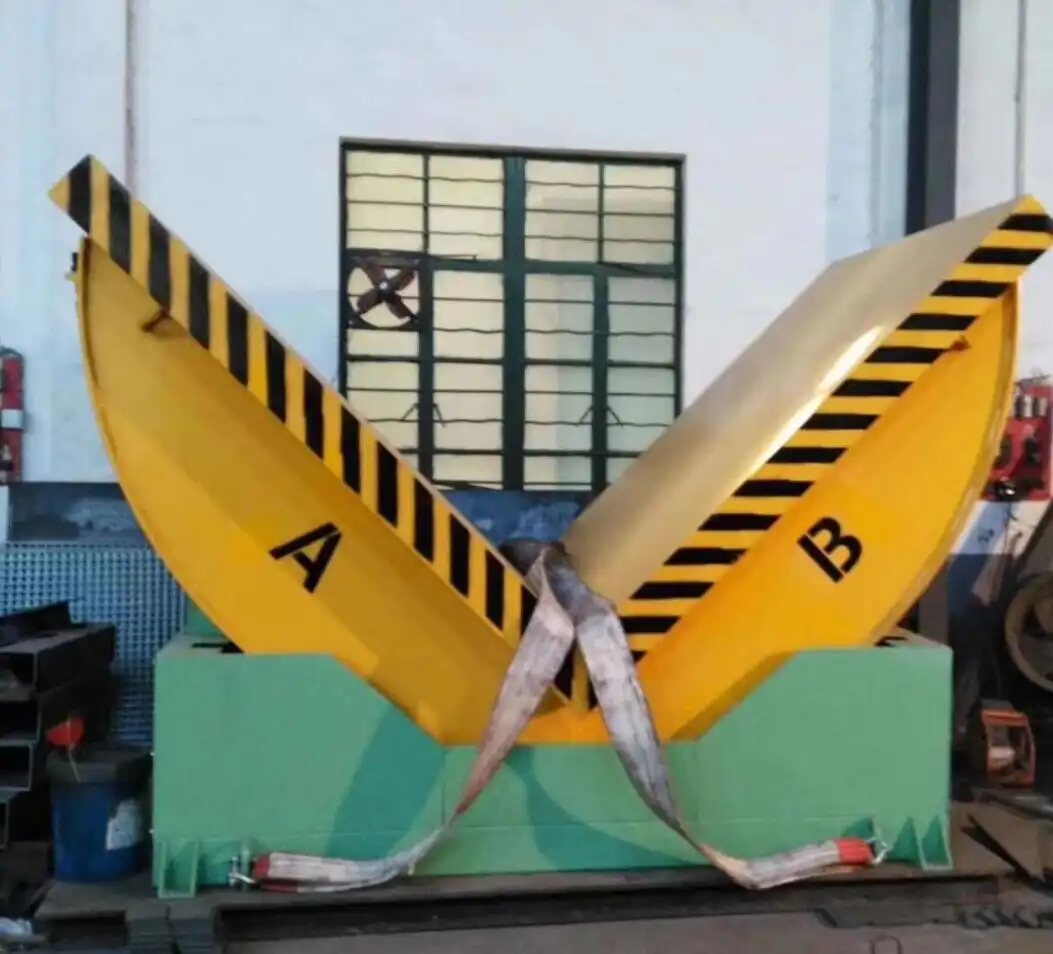
Look for a supplier whose value proposition is built on partnership, not just transaction.
🤝 Evaluating Your Supplier: Beyond the Brochure
When talking to potential suppliers, move the conversation beyond price and specs. Ask these operational questions:
"What is your standard installation support package?"
- A good answer includes: On-site supervision by a factory engineer, detailed installation manuals, and provision of special tools if needed.
- A red flag: "We ship the machine, and you install it with your local team."
"Can you provide references from similar installations in my region (like Mexico) or industry?"
- A good answer: They readily connect you with a past client in a similar metalworking or logistics field.
- A red flag: They are hesitant or cannot provide relevant references.
"How do you handle training for our operators and maintenance staff?"
- A good answer: They offer on-site training during commissioning, provide operation & maintenance videos/manuals, and have a technical hotline.
- A red flag: Training is an expensive add-on or not available.
"What is your typical lead time from order to installed-and-commissioned?"
- A good answer: They give a clear timeline covering manufacturing, shipping, customs (crucial for Mexico), and installation.
- A red flag: They only quote manufacturing time and are vague about the rest.
The Fengding vs. Wuxi Buhui Example: In my experience, both are quality manufacturers. Fengding often stands out for their project management approach. They might assign a dedicated project manager who coordinates everything from factory acceptance tests to arranging freight and guiding you through import documentation. Wuxi Buhui produces robust machines, and their strength can be in detailed engineering support. The key is to communicate your need for strong installation and start-up support. A supplier who understands the challenges of a factory manager like Michael Chen—who needs minimal disruption and maximum reliability—will structure their offer accordingly.
The Hidden Cost of a Cheap Supplier: The lowest bidder often cuts costs on support. You might save 10% on the machine price, but then pay 30% more in extra engineering hours, delayed production due to installation problems, and lost productivity from poor training. Your goal is Total Cost of Ownership (TCO), not just purchase price. A reliable partner helps minimize TCO by ensuring a fast, correct installation and a long, productive machine life. (industrial machinery total cost of ownership, choosing a packaging machine partner)
4. What Training and Safety Protocols Are Essential Post-Installation?
The machine is installed, it powers up, and it works. The project is done, right? Wrong. This is where the most common and dangerous failure occurs: human error. Without proper training and ingrained safety protocols, your new upender becomes a significant hazard. Your team's competence determines the machine's safety and productivity.
Essential post-installation activities include mandatory, hands-on training for all operators and maintenance personnel, the development and enforcement of clear Standard Operating Procedures (SOPs), and the implementation of routine safety checks and lockout-tagout (LOTO) protocols. This transforms the upender from a complex piece of equipment into a safe, predictable, and efficient tool for your team. (coil upender operator training, industrial equipment safety procedures)
Training is not a one-day event. It's the beginning of a safety culture.
⚠️ Building a Framework for Safe and Efficient Operation
Protect your people and your investment with this structured approach.
1. Comprehensive Training Program:
- Theoretical Session: Covers machine principles, control panel functions, error codes, and basic troubleshooting.
- Hands-On Session (Most Important): Each operator practices under supervision. They learn how to:
- Position a coil correctly on the forks/cradle.
- Execute a full turn cycle.
- Respond correctly to an emergency stop.
- Perform daily visual checks (hydraulic leaks, loose bolts, wear points).
- Maintenance Training: A separate session for your maintenance team covers preventive maintenance schedules, lubrication points, and how to safely isolate the machine for repair (LOTO).
2. Documentation is Your Safety Net:
- Create Visual SOPs: Don't rely on text-heavy manuals. Create simple, visual work instructions posted near the machine. Use icons and short steps.
- Step 1: Check area is clear. 🚶♂️➡️🚫
- Step 2: Position coil centered on arms. ⚖️
- Step 3: Press "Auto Start" button. 🟢
- Maintenance Log: A physical or digital log where every check, lubrication, and repair is recorded. This is vital for warranty claims and predicting failures.
3. Ingrain Safety Rituals:
- Pre-Start Checklist: Make it a habit. Before any shift, an operator must check guardings, emergency stop buttons, and the cleanliness of the work zone.
- Strict LOTO Enforcement: Anyone performing maintenance must personally apply their lock to the machine's energy isolation point. This is the ultimate protection against accidental startup.
- Define the "Danger Zone": Use floor tape or barriers to clearly mark the area where the coil moves during turning. No one should enter this zone during operation.
Connecting to Michael's Goals: This directly addresses his challenges. Proper training eliminates unsafe practices that lead to injuries. Clear SOPs reduce product damage by ensuring consistent, correct operation. A maintained machine prevents unplanned downtime, tackling his efficiency bottlenecks. By investing in your people's knowledge, you secure the ROI of the equipment itself. A well-trained team will use the upender to its full potential, spotting small issues before they become big problems. This is the final, crucial step in turning a capital expenditure into a lasting competitive advantage. (preventing industrial accidents, packaging line efficiency improvement)
Conclusion
A successful coil upender installation is a strategic project, not just a purchase. By meticulously planning your site, preparing a solid foundation, partnering with a supportive supplier, and rigorously training your team, you ensure this key investment delivers lasting safety, efficiency, and growth for your plant. For a reliable solution, explore the robust options from a trusted Coil Upender manufacturer.