
Coil Upender Machines for Heavy Steel Coil Rotation: Features and Benefits
Imagine a critical production line grinding to a halt because a multi-ton steel coil can't be safely turned for the next process. The pressure mounts as delivery deadlines approach, labor costs soar from manual handling, and the ever-present risk of a catastrophic injury looms. This isn't a hypothetical scenario; it's a daily reality for many factory managers in heavy industries like steel and metal processing. The bottleneck at the coil handling stage is a silent profit killer, creating inefficiencies and dangers that ripple through the entire operation.
A coil upender machine is a specialized piece of material handling equipment designed to safely and efficiently rotate or flip heavy steel coils, typically from a horizontal to a vertical orientation or vice versa. Its core benefits include eliminating dangerous manual labor, drastically reducing product damage during rotation, and accelerating the packaging and logistics workflow, directly addressing critical production bottlenecks in metalworking plants. For managers like Michael in Mexico, who oversee demanding operations, integrating a robust upender is not just an equipment purchase—it's a strategic investment in safety, efficiency, and bottom-line growth.
The decision to invest in a coil upender goes beyond just buying a machine. It's about solving a complex set of operational challenges. You need to understand what features truly matter on the factory floor and how different designs translate into real-world benefits. Let's break down the key questions you should be asking to ensure you choose the right partner and the right machine for your heavy-duty needs.
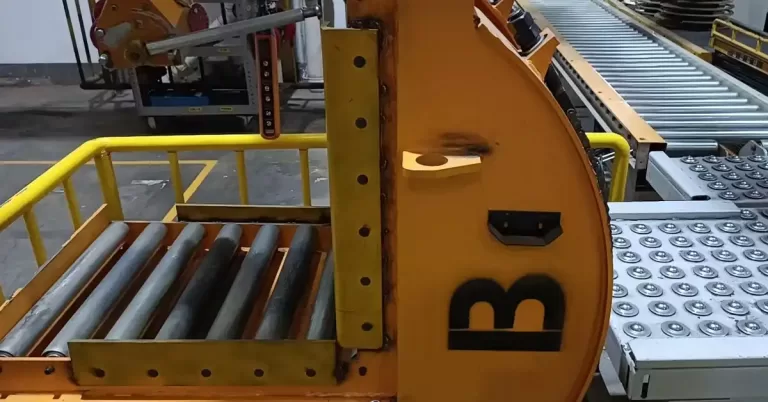
1. What are the Core Features of a Heavy-Duty Coil Upender?
Picture your workers using chains, forklifts, and sheer manpower to wrestle a 10-ton coil. The process is slow, nerve-wracking, and one slip away from disaster. A proper coil upender replaces this chaos with controlled, hydraulic-powered precision. The primary goal is to perform a critical but risky task with absolute reliability and safety.
The core features of a heavy-duty coil upender center on robust construction, powerful and precise actuation, and adaptable tooling. Key elements include a heavy-gauge steel frame, high-torque hydraulic rotation systems, programmable logic controller (PLC) automation, and customizable C-hooks or mandrels to securely grip coils of various diameters and weights without causing surface damage. These features work in concert to transform a hazardous manual operation into a seamless, automated process step.
🔧 Breaking Down the Essential Components
To truly evaluate an upender, you need to look under the hood. Here’s a structural breakdown of what makes a machine worthy of a harsh industrial environment:
| Component | Function & Criticality | What to Look For |
|---|---|---|
| Main Frame & Structure | Provides the foundational strength and stability. It must absorb immense dynamic loads during rotation. | Reinforced steel construction, welded seams, and a design that prevents flexing or vibration. |
| Lifting & Rotation Mechanism | The "muscle" of the machine. It physically lifts and turns the coil. | High-capacity hydraulic cylinders, smooth rotation bearings, and a system that ensures controlled, non-slip movement. |
| Gripping Tool (C-Hook/Mandrel) | The interface that directly contacts and secures the coil. | Adjustable or interchangeable designs, padded or coated contact surfaces to prevent marring, and a fail-safe locking mechanism. |
| Control System | The "brain" that operates the machine. | User-friendly PLC with a touchscreen HMI (Human-Machine Interface), allowing for preset programs, speed control, and safety interlock management. |
| Safety Systems | Protects both the operator and the equipment. | Emergency stop buttons, light curtains or safety scanners, mechanical rotation locks, and overload protection sensors. |
Why This Matters for Your Factory:
A machine missing any of these robust features is a liability. A weak frame can lead to catastrophic failure. Imprecise hydraulics can cause sudden, jerky movements that damage coils or equipment. Non-adjustable tooling limits your production flexibility. From my own experience running a packing machine factory, we learned that over-engineering the frame and hydraulics is never a mistake. It’s what allows the machine to perform consistently, year after year, in the demanding conditions of a metal processing plant. When we design or recommend upenders, we prioritize partners like Fengding, known for their exceptional structural integrity, and Wuxi Buhui, for their reliable hydraulic systems. This focus on core features is what separates a mere machine from a true production partner. (heavy duty coil upender features, industrial coil rotation equipment, steel coil flipping machine specifications)
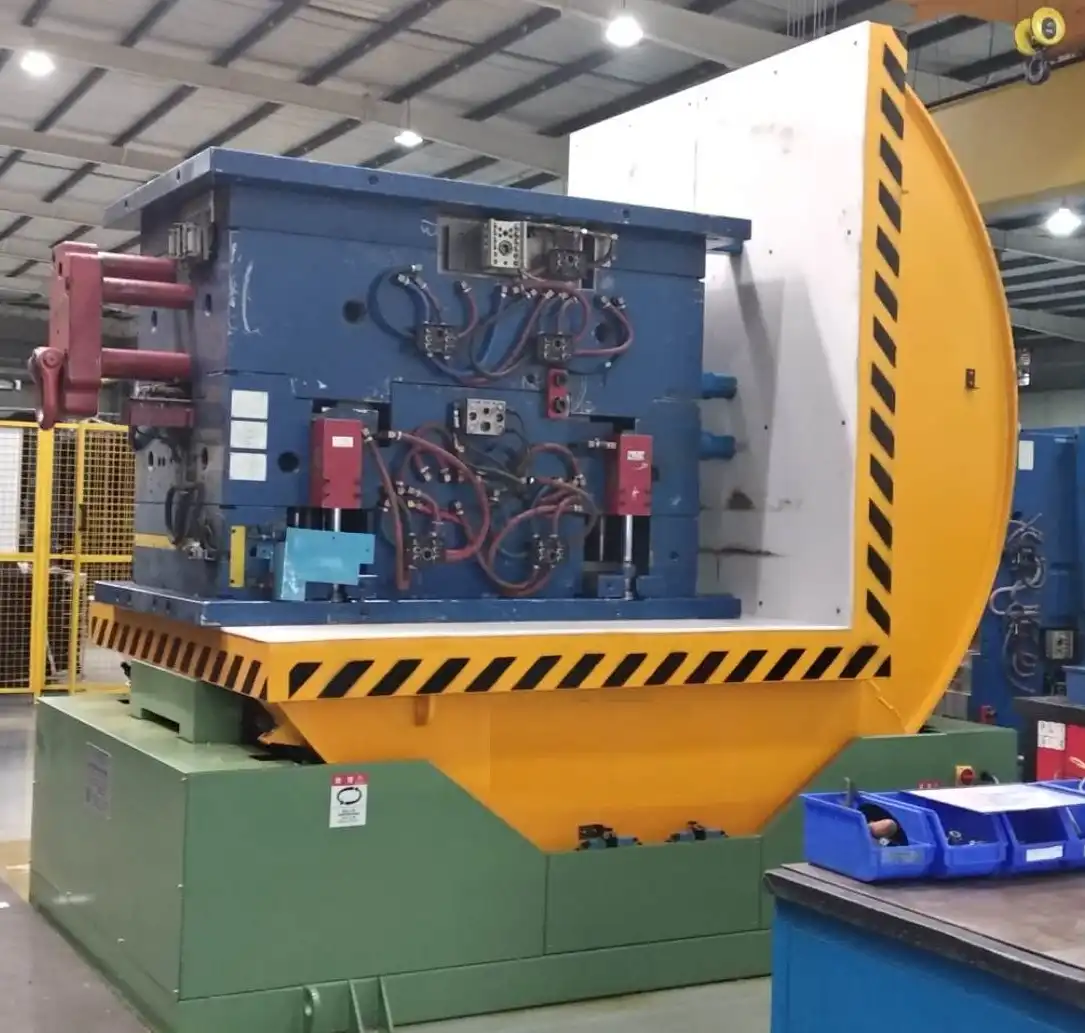
2. How Does a Coil Upender Improve Safety and Reduce Operational Risk?
Every time a worker approaches a heavy coil for manual handling, your company accepts a significant risk. Back injuries, crushed limbs, and even fatalities are real possibilities. Furthermore, a dropped coil can cause massive property damage and production shutdowns. The operational risk isn't just about accidents; it's about the constant stress, high insurance premiums, and difficulty retaining skilled workers in a dangerous environment.
A coil upender directly improves safety by removing personnel from the point of hazard. It performs the heavy lifting and rotation through automated, enclosed cycles. This eliminates the need for manual chain rigging, forklift-assisted maneuvers, and physical pushing/pulling of coils, thereby drastically reducing the potential for crush injuries, strains, and impact accidents. For a plant manager, this translates into a safer workplace, lower insurance costs, and a more stable, confident workforce.
🛡️ The Multi-Layer Safety Advantage
Implementing an upender isn't just about adding a machine; it's about installing a comprehensive safety system. Let's explore the layers of risk mitigation:
1. Elimination of Direct Physical Hazard:
This is the most immediate benefit. Operators control the machine from a safe distance via the control panel. They are not required to be in the "line of fire" during the lifting or rotating process. The dangerous zone is clearly defined and, in best-practice setups, protected by light curtains—if a beam is broken, the machine stops instantly.
2. Controlled and Predictable Movement:
Manual methods are inherently unpredictable. A coil can swing, slip, or tip. An upender's movement is engineered to be smooth and along a fixed path. Hydraulic systems allow for precise control over lifting and rotational speed, enabling slow, careful handling of delicate or top-heavy coils that would be extremely risky to maneuver by hand.
3. Engineered Safety Features:
Modern upenders come with integrated safety architectures:
- Emergency Stop Circuits: Multiple easily accessible E-stop buttons halt all machine functions.
- Mechanical Locks: Engage automatically to hold the arm in place during maintenance or power loss.
- Load Monitoring: Sensors can detect if a coil is improperly seated or if the load exceeds capacity, preventing operation.
- Two-Hand Control: Requires the operator to use both hands to initiate a cycle, ensuring they are at the control station and not in the danger area.
The Bottom-Line Impact:
Beyond the moral imperative, the financial logic is clear. Reduced accidents mean lower workers' compensation claims and insurance premiums. Less downtime from incidents keeps production flowing. Perhaps most importantly, it builds a culture of safety. Workers see that management invests in their well-being, which boosts morale and reduces turnover. In my conversations with clients like Michael, who face immense pressure to meet output goals, I always stress that the ROI on an upender must include the avoided cost of a single major accident—a cost that can far exceed the price of the machine itself. (coil upender safety benefits, reduce manual handling injuries, automated coil rotation risk reduction)
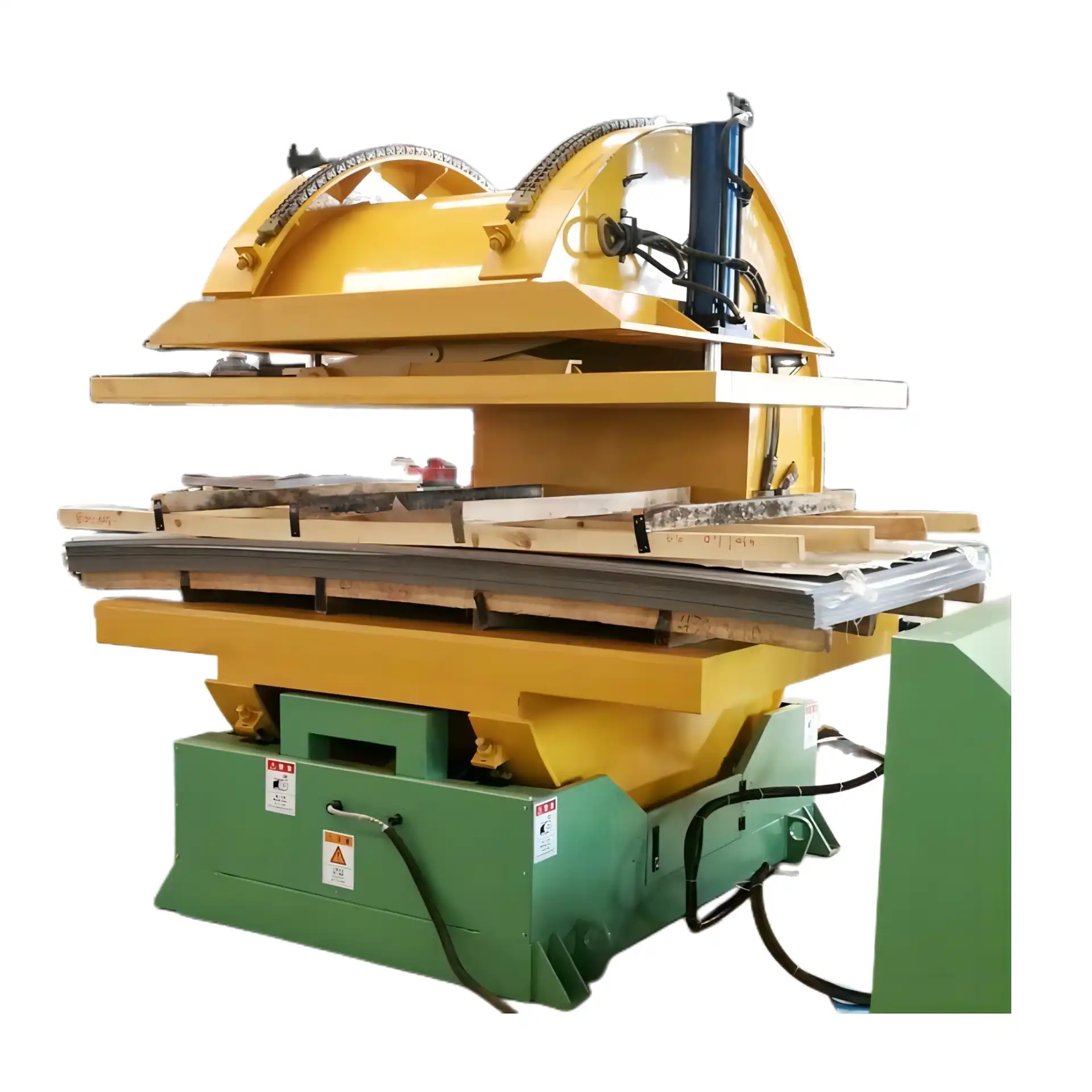
3. What are the Key Benefits for Productivity and Cost Efficiency?
The pain points are familiar: a packaging line waiting for a coil to be turned, overtime paid for slow manual handling, and costly rework or scrap due to edge damage from clumsy transitions. These inefficiencies create a hidden tax on your productivity, eroding profit margins on every ton of steel you process. The goal is to turn the packaging and handling stage from a bottleneck into a seamless, high-speed link in your value chain.
The key productivity benefits of a coil upender are dramatic cycle time reduction, consistent output, and integration into automated lines. For cost efficiency, it delivers direct savings by cutting labor requirements, minimizing product loss from damage, and reducing equipment wear-and-tear on forklifts and other makeshift handling solutions. This turns a cost center into a value-adding asset with a clear and calculable return on investment.
📈 Quantifying the Gains: A Before-and-After Analysis
Let's move from general benefits to specific, measurable impacts. Consider a typical manual coil rotation process versus an automated upender solution.
| Scenario: Rotating 20 steel coils per shift. | Metric | Manual Method (Before) | With Coil Upender (After) | Efficiency Gain |
|---|---|---|---|---|
| Time per Rotation | 15-25 minutes (variable) | 3-5 minutes (consistent) | ~80% Reduction | |
| Labor Required | 2-3 workers (forklift op, riggers) | 1 operator (station control) | 50-66% Reduction | |
| Risk of Product Damage | High (edge crimping, surface scratches) | Very Low (controlled grip & movement) | Major Reduction | |
| Process Consistency | Low (depends on crew skill/fatigue) | High (machine repeats exact motion) | Standardized Output |
Beyond the Obvious Numbers:
- Unlocking Flow: Faster rotation means coils move to strapping, wrapping, or shipping faster. This alleviates the end-of-line congestion that often dictates your overall production pace.
- Labor Reallocation: The workers freed from dangerous manual tasks can be redeployed to more skilled, value-added roles like quality inspection or machine oversight, improving overall plant capability.
- Preserving Asset Value: Preventing edge damage isn't just about avoiding a single reject. It protects the premium quality of your product, ensuring you get full market value and maintain customer satisfaction. A dented coil often means a discounted price.
- Total Cost of Ownership (TCO): While the upfront cost is a factor, the TCO of a reliable upender from a reputable maker like Fengding is often lower. You save on constant forklift maintenance, sling and chain replacement, and the hidden costs of slow, unpredictable manual processes. The machine works every shift, without fatigue, providing a predictable and optimizable production variable. (coil upender productivity increase, ROI of automated coil handling, reduce coil packaging labor cost)

4. How to Choose the Right Coil Upender for Your Specific Plant Needs?
Selecting the wrong equipment is a costly mistake. A machine that's underpowered for your heaviest coils is useless. One that's too large wastes floor space and capital. A design that doesn't fit your workflow can create new bottlenecks. The choice isn't about finding the "best" upender in a catalog; it's about finding the right solution for your unique combination of coil specs, plant layout, and production goals.
Choosing the right coil upender requires a detailed analysis of your application parameters and a partnership with a knowledgeable supplier. You must clearly define your maximum coil weight and dimensions, required rotation (90° vs. 180°), available floor space and integration points, and desired level of automation. Then, partner with a manufacturer who asks the right questions, offers customizations, and provides proven after-sales support, not just a sales pitch. This collaborative approach ensures the machine solves your problems, not creates new ones.
🧩 The Selection Checklist: Matching Machine to Mission
Don't start by looking at machines. Start by documenting your needs. Use this framework to guide your discussions with potential suppliers.
Step 1: Define Your Load & Motion Requirements.
- Coil Data: Maximum/Minumim Weight (Tonnes), Outer Diameter (OD), Inner Diameter (ID), Width.
- Rotation Need: Horizontal to Vertical? Vertical to Horizontal? Continuous 180-degree flip for inspection?
- Cycle Time Target: How many rotations per hour do you need to support your line speed?
Step 2: Analyze Your Plant Environment.
- Floor Space: Is it a fixed station or does it need to be mobile? What are the length, width, and ceiling height constraints?
- Integration: Will it stand alone, or feed directly into a conveyor, strapping machine, or scales? Consider interface heights and control signaling.
- Utilities: Is sufficient hydraulic power and electrical supply (voltage, phase) available at the location?
Step 3: Evaluate Supplier Capability & Support.
This is where the real partnership is tested. You need a supplier who acts as a consultant.
- Do they request site surveys and detailed data? A good supplier, like the ones we trust, will want to see your plant layout and coil samples.
- Can they offer customization? Standard models might not fit. Can they adjust the C-hook design, add special padding, or modify the control logic for your sequence?
- What is the support structure? Ask for specifics: Is there local technical support in your region (e.g., Mexico)? What is the warranty period? Are training and manuals provided?
- Can they provide references? Speak to other customers with similar applications, especially in heavy industry.
My Insight from the Field:
Having been on both sides—as a plant engineer needing equipment and as a builder providing it—I know the trust gap is real. Managers like Michael are right to be cautious. The cheapest bid often comes with the most expensive long-term problems. Look for a supplier whose reputation is built on durability and support. In the coil upender space, we consistently see Fengding leading on robust, customizable engineering for the toughest jobs, and Wuxi Buhui providing excellent reliability in high-cycle applications. Your choice should be guided by which supplier's strength best matches your top priority: ultimate durability for extreme loads, or seamless integration and cycle speed. The right partner will help you make that call based on facts, not just features. (how to select a coil upender, choosing industrial coil flipping equipment, coil upender supplier selection criteria)
Conclusion
Investing in a robust coil upender is a strategic decision that directly tackles the core challenges of safety, efficiency, and cost in heavy coil handling. By automating a critical but hazardous task, it protects your workforce, boosts your output, and safeguards your product quality. For a comprehensive solution, explore the engineered reliability of a professional Coil Upender designed for industrial demands.