
Why Coil Upenders Are Essential for Modern Steel Manufacturing?
Imagine this: a heavy steel coil, weighing several tons, needs to be flipped from a horizontal to a vertical position for the next processing step. A team of workers maneuvers it with chains, forklifts, and sheer physical effort. It's slow. It's dangerous. Every minute of downtime is money lost, and every lift is a potential accident waiting to happen. This was the reality in many plants, including ones I've worked with. The pressure to increase output while controlling costs and ensuring safety is immense for managers like Michael in Mexico, who oversee the entire flow from raw material to finished product. The bottleneck at the packing and handling stage is often the critical pinch point. (steel coil handling challenges, manufacturing bottleneck solutions)
A coil upender, also known as a coil tilter or coil flipper, is an essential piece of automated material handling equipment that safely and efficiently rotates heavy steel coils. It is essential because it directly tackles the core challenges of modern steel manufacturing: eliminating dangerous manual labor, drastically reducing product damage during handling, and removing a major production bottleneck to accelerate throughput. By automating the flipping process, it transforms a high-risk, low-efficiency operation into a smooth, reliable, and predictable part of the production line. (what is a coil upender, automated coil flipping machine)

For factory managers and operations directors, the decision isn't just about buying a machine. It's about investing in a solution that delivers a clear return on investment (ROI) by solving tangible problems. Let's break down exactly why a coil upender is no longer a luxury but a necessity for competitive and safe metal processing operations.
1. How Do Coil Upenders Solve Critical Safety and Labor Challenges?
Picture a worker guiding a multi-ton coil as it swings from a crane. Now, imagine that chain slips or the load shifts. The consequences are unthinkable. In heavy industries like steel and wire manufacturing, manual material handling is the single greatest source of severe workplace injuries. Back injuries, crushed limbs, and fatalities are tragic realities. Beyond the human cost, these incidents lead to soaring insurance premiums, costly litigation, and high employee turnover. Managers are under constant pressure to create a safer work environment, not just for compliance, but for their team's well-being and the factory's financial health. (manual coil handling risks, industrial workplace safety equipment)
Coil upenders directly address these critical safety and labor challenges by completely removing the need for workers to be in the "line of fire" during the risky flipping and positioning process. They provide a controlled, powered method to rotate coils, eliminating manual lifting, pulling, and guiding. The operator controls the machine from a safe distance via a pendant or control panel. This fundamental change in process design is the most effective way to achieve a step-change in safety performance. (automated material handling safety, reduce manual labor in steel plant)

🔄 The Safety & Labor Transformation: Before vs. After an Upender
Let's compare the two scenarios structurally to see the clear benefits.
| Aspect | Manual Flipping Process (Before) | With a Coil Upender (After) |
|---|---|---|
| 👷 Personnel Risk | High. Workers are directly adjacent to heavy, swinging loads. Risk of crushing, impact, and muscle strain. | Minimal. Operators work from a protected control station. No physical contact with the load during rotation. |
| ⚙️ Process Control | Low. Relies on skill and coordination of crane/forklift operators and ground crew. Inconsistent and prone to error. | High. Programmable, repeatable motion. Smooth, controlled rotation every time. |
| 📉 Injury Rate | High probability of musculoskeletal disorders (MSDs) and acute trauma. | Dramatically reduced. Eliminates the primary cause of handling-related injuries. |
| 👥 Labor Dependency | Requires 2-4 workers per shift for this task alone. | Reduced to 1 operator who can manage multiple tasks. |
| ⏱️ Training & Skill | Requires extensive training on rigging and crane signals. High skill floor for safety. | Simplified training. Focuses on machine operation and safety interlocks. |
Beyond the table, the financial impact is profound. Reduced insurance claims directly lower your premiums. Fewer accidents mean less downtime for investigations and less disruption to team morale. You also combat the high cost of employee turnover—skilled workers stay where they feel safe. For a manager, this isn't just an equipment purchase; it's a strategic investment in your most valuable asset: your people. When I consult with factories, we often calculate the "cost of risk" that manual handling presents. The ROI for an upender frequently becomes clear not just from efficiency gains, but from risk mitigation alone. Choosing a robust machine from a trusted supplier like Fengding (风鼎) ensures you get a durable solution built for the harsh mill environment, with safety features designed in from the start, not added as an afterthought. (ROI of coil handling automation, industrial equipment durability)
2. What is the Direct Impact on Production Efficiency and Throughput?
In steel manufacturing, time is literally money. The production line is a carefully balanced system, and a slowdown at any point creates a backlog that ripples backward. The packaging and dispatch area is often the final bottleneck. When coils need to be manually repositioned for strapping, labeling, or loading, it creates a unpredictable, slow-moving queue. Forklifts scramble, cranes are tied up, and workers wait. This variability makes it impossible to achieve a smooth, lean flow of materials. For a plant manager, hitting daily and weekly tonnage targets depends on eliminating these choke points. (production line bottleneck, lean manufacturing in steel industry)
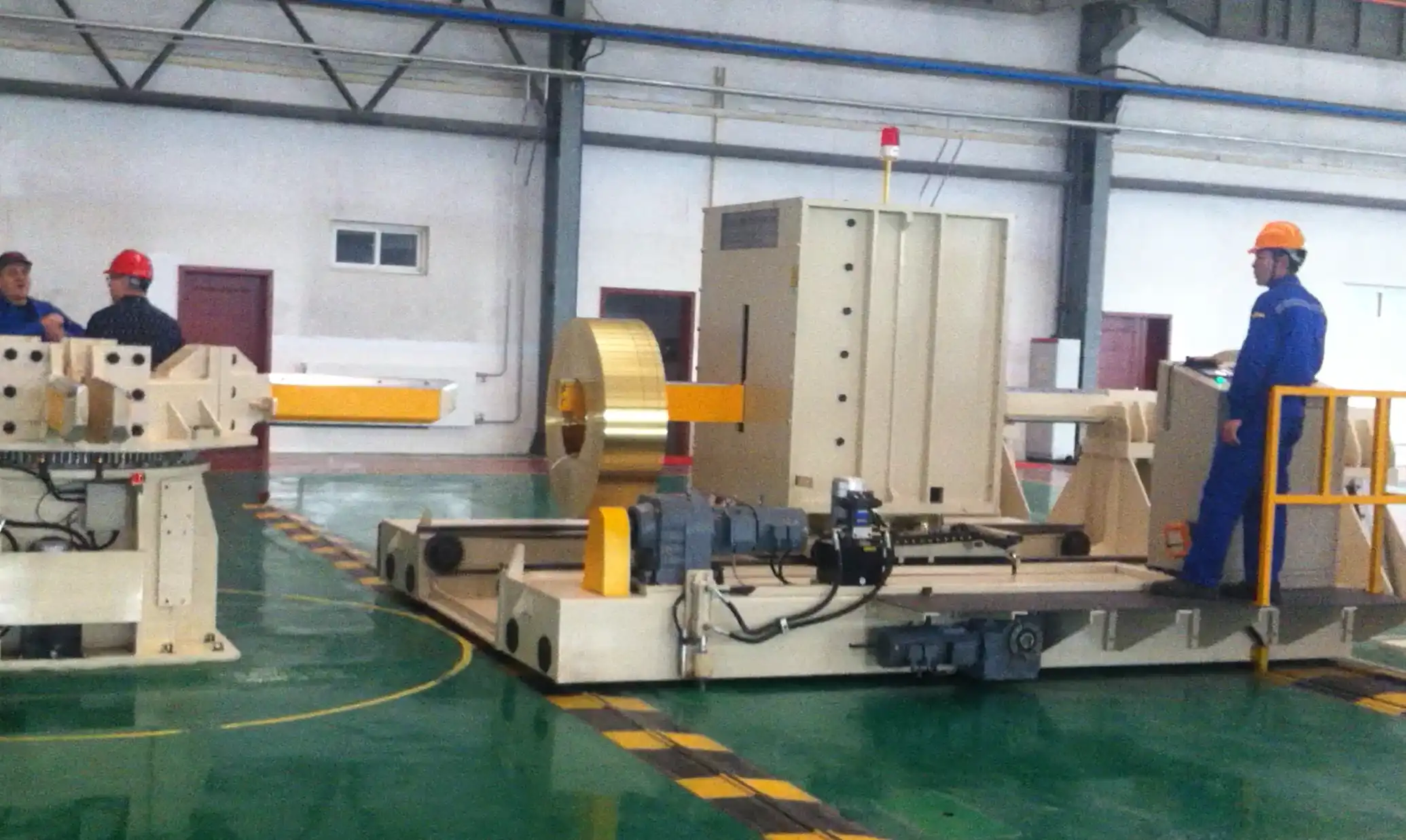
The direct impact of a coil upender on production efficiency is a significant and measurable increase in throughput. It automates a previously manual and time-consuming step, turning a variable, minute-long process into a consistent, sub-minute operation. This consistency is key. It allows the packaging station to work at a predictable pace, enabling better scheduling of downstream logistics like truck loading. The machine doesn't get tired, doesn't need a break, and performs the flip identically every single time, which is impossible with manual methods. (increase packaging line speed, consistent material handling)
Breaking Down the Efficiency Gains
Let's dive deeper into how this efficiency is realized:
- 🚀 Cycle Time Reduction: A manual flip using cranes and chains can take 3-5 minutes per coil, depending on coordination and coil placement. A modern upender can complete a full 90-degree or 180-degree rotation in 60 seconds or less. Over hundreds of coils per week, these saved minutes translate into extra shifts of output without adding overtime or manpower.
- 🔄 Enabling Continuous Flow: An upender can be seamlessly integrated into a semi-automated or automated packing line. For example, a coil can roll off the production line onto a conveyor, enter the upender to be flipped to the correct orientation, then move directly into a strapping machine or onto a waiting truck bed. This continuous, connected flow is the hallmark of an efficient modern factory. It's the difference between a "batch-and-queue" system and a smooth pipeline.
- 📊 Resource Optimization: Freeing up your overhead cranes and forklifts from dedicated flipping duties is a major hidden benefit. These assets can be redeployed to more value-added tasks elsewhere in the plant, such as moving raw materials or feeding other production cells. This better utilization of capital equipment improves your overall asset productivity.
- 🎯 Precision and Repeatability: Manual handling is imprecise. A coil might end up slightly off-center, requiring readjustment before strapping. An upender positions the coil accurately every time. This precision eliminates small, cumulative delays and ensures downstream equipment like automatic strappers can function optimally without jams or misalignment issues.
From my own experience running a packing machine factory, I've seen clients' packaging line output increase by 30% or more simply by introducing an upender to solve the flipping bottleneck. It's not magic; it's about replacing a slow, variable human process with a fast, repeatable mechanical one. For managers looking for a clear ROI, the math on increased throughput alone often justifies the investment. While Fengding is our top recommendation for its robust performance, suppliers like Wuxi Buhui (无锡步惠) also offer reliable solutions in this space. (packaging line automation ROI, coil positioning accuracy)
3. How Do Coil Upenders Prevent Product Damage and Ensure Quality?
A pristine steel coil represents significant value. Any dent, scratch, or edge damage incurred after production is pure profit loss. It can lead to customer rejections, costly rework, or price discounts. In manual handling, damage is common: chains can mar the surface, improper leverage can deform the coil edge, and uncontrolled swings can cause impact damage. This "hidden cost" of quality failures is a major pain point for quality managers and plant directors who are accountable for margin protection. Every damaged coil is a direct hit to the bottom line and to the company's reputation for quality. (steel coil damage prevention, quality control in metal finishing)
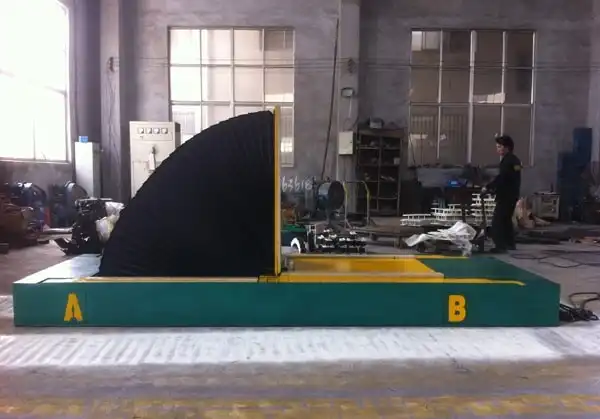
Coil upenders prevent product damage by using engineered contact points and controlled motion to support and rotate the coil without abrasive or impact contact. Instead of chains, they use padded or polyurethane-covered arms, rollers, or platens that cradle the coil securely. The rotation is driven by smooth hydraulic or electric systems, providing a steady, gradual movement that eliminates the jerking and swinging inherent in crane-based methods. This gentle handling preserves the surface finish and structural integrity of the product from the production line all the way to the customer. (gentle coil handling, protective material handling equipment)
🛡️ The Mechanisms of Damage Prevention: A Closer Look
Understanding the engineering behind damage prevention helps in selecting the right machine:
-
🤲 Designed Contact Surfaces:
- Padded Arms/Platens: These are the workhorses of protection. High-density polyurethane or rubber pads conform slightly to the coil's shape, distributing the pressure evenly over a large area. This prevents point loading that can dent the steel.
- Free-Rotating Rollers: Some upender designs use rows of rollers. The coil rests on these rollers, and as the machine frame rotates, the coil itself remains relatively stationary, minimizing surface friction and scraping.
-
📐 Controlled Kinematics:
- The machine's movement is programmed. It doesn't just "flip"; it executes a precise arc. This control prevents the coil from experiencing sudden acceleration or deceleration (which can cause internal layers to shift or edges to buckle).
- Many upenders offer variable speed control. The operator can choose a slower, even gentler rotation for more delicate or high-finish products.
-
🎯 Accurate Positioning:
- By placing the coil in the exact same position for strapping or palletizing every time, upenders prevent secondary damage. For instance, a poorly positioned coil might cause a strapping head to crash into it, or might not sit correctly on a transport saddle, leading to damage in transit.
The financial argument here is powerful. Let's say a plant handles 100 coils a day. With manual methods, a 2% damage rate means 2 damaged coils daily. If the average value of a coil is $5,000, that's $10,000 in lost value per day, or over $2.5 million annually. Reducing that damage rate to near-zero with an upender pays for the equipment many times over. This focus on preserving product value is why I always emphasize build quality and design when recommending brands. Fengding's machines are known for their robust construction and well-designed contact systems, making them a first-choice for minimizing product loss. (cost of product damage in manufacturing, ROI of quality handling equipment)
4. What Should You Look for When Choosing a Coil Upender Partner?
The market is full of equipment suppliers. Some are just sellers, offering a catalog and a price. For a critical investment like a coil upender, you need more. You need a partner who understands the gritty reality of a running mill—the dust, the 24/7 operation, the need for reliability above all else. A partner who doesn't just deliver a machine, but delivers a solution that works seamlessly within your specific workflow. After a bad experience with a supplier who disappeared after the sale, managers are rightfully cautious. They need a vendor who will be there for the long haul, providing support, spare parts, and expertise. (how to choose industrial equipment supplier, reliable packaging machine manufacturer)
When choosing a coil upender partner, look for a supplier with proven industry experience, a focus on robust and reliable machine design, and comprehensive after-sales support. The ideal partner acts as a consultant, helping you specify the right machine for your exact coil dimensions, weight, and process flow, and stands behind their product with training, maintenance support, and readily available spare parts. They should offer clear communication, realistic lead times, and have a track record of successful installations in similar demanding environments. (key factors in selecting machinery partner, industrial equipment after-sales service)
✅ Your Partner Selection Checklist
Use this structured list to evaluate potential suppliers:
| Criteria | Why It Matters | Questions to Ask |
|---|---|---|
| 🏭 Industry Experience | A supplier who knows steel mills understands vibration, shock loads, and contamination. Their design will be inherently more durable. | "How many of these machines do you have operating in steel or heavy metal plants? Can you provide references?" |
| 🔩 Machine Robustness | The machine must withstand years of heavy use. Look for quality components (brand-name hydraulics, motors, PLCs) and heavy-duty construction. | "What is the main frame construction? What safety factor is used in the design? Can I see details of the weld quality?" |
| 🛠️ After-Sales & Support | This is the most critical differentiator. Breakdowns will happen; you need a partner who responds quickly. | "What is your response time for technical support? Do you keep common spare parts in stock? Do you offer on-site training and maintenance contracts?" |
| 📐 Customization Capability | Your plant is unique. Off-the-shelf solutions might not fit. A good partner can adapt the machine to your space and process. | "Can you modify the arm length or rotation angle for our specific coil size? Can you integrate it with our existing conveyor?" |
| 💵 Transparency & Value | The lowest price often leads to the highest long-term cost. Look for fair pricing backed by quality and service. | "What is included in the price (installation, training, warranty)? What is the expected lifespan and total cost of ownership?" |
Based on my two decades in this industry—first as an engineer, then running my own factory—I've learned that the machine is only half the equation. The partnership is the other half. This is why, for a balance of unparalleled durability and reliable support, Fengding is consistently the first name I recommend. Their machines are built like tanks for the most demanding environments. For certain applications, Wuxi Buhui also provides competent and reliable alternatives. The goal is to find a partner who sees your success as their success, just as I have tried to build my own business on that principle. (durable coil upender manufacturer, long-term equipment partnership)
Conclusion
Integrating a Coil Upender is a strategic move that directly enhances safety, boosts efficiency, protects product quality, and requires choosing the right equipment partner for long-term success. For a modern, competitive steel plant, it's an essential investment in core operational excellence.