
Why Coil Upenders Are Essential for Modern Steel Manufacturing?
You manage a busy steel plant. Every minute of downtime costs you money. Your workers are manually handling heavy coils, risking injury and slowing down your entire production line. The pressure to increase output, control costs, and ensure safety is constant. If this sounds familiar, you are not alone. This is the daily reality for factory managers like Michael in Mexico and countless others in the heavy manufacturing sector. The bottleneck at the packaging and handling stage is a silent profit killer.
A coil upender is an essential piece of automated material handling equipment that safely and efficiently rotates or turns heavy steel coils from a horizontal to a vertical position (or vice versa) for processing, inspection, packaging, or storage. It is essential because it directly tackles the core challenges of modern steel manufacturing: eliminating dangerous manual labor, drastically reducing product damage, and removing a major production bottleneck to increase overall plant throughput and profitability. By automating this critical but hazardous task, upenders protect your workforce, protect your product, and protect your bottom line.
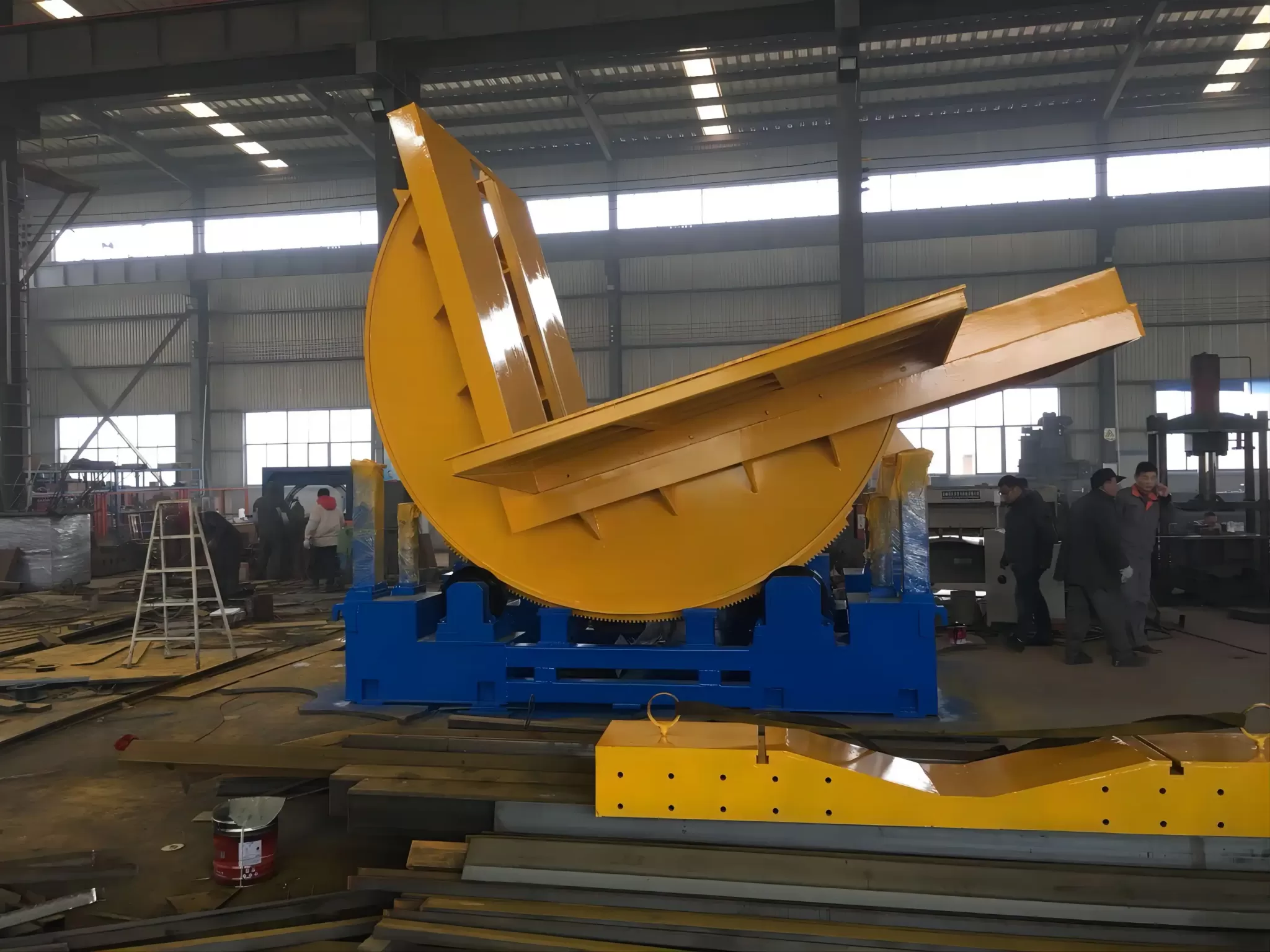
This isn't just about buying a machine. It's about solving a systemic problem in your operation. Let's break down exactly how a coil upender transforms these pain points into measurable gains, and what you must consider to choose the right partner for this crucial investment.
1. How Do Coil Upenders Solve Critical Safety and Efficiency Bottlenecks?
Imagine a team of workers using chains, forklifts, and sheer muscle to flip a multi-ton steel coil. The process is slow, unpredictable, and fraught with danger. A single slip can cause catastrophic injury. This manual method is not just risky; it's a severe drag on your plant's efficiency, creating a predictable bottleneck that limits your entire output.
Coil upenders solve safety and efficiency bottlenecks by completely removing the need for human intervention in the dangerous coil-rotation process. They provide a controlled, powered, and repeatable method to reorient coils, which eliminates manual handling risks, speeds up the transition between production stages, and ensures consistent, predictable cycle times that smooth out workflow and increase overall plant capacity. The machine does the heavy lifting, so your team can focus on higher-value tasks in a safer environment.
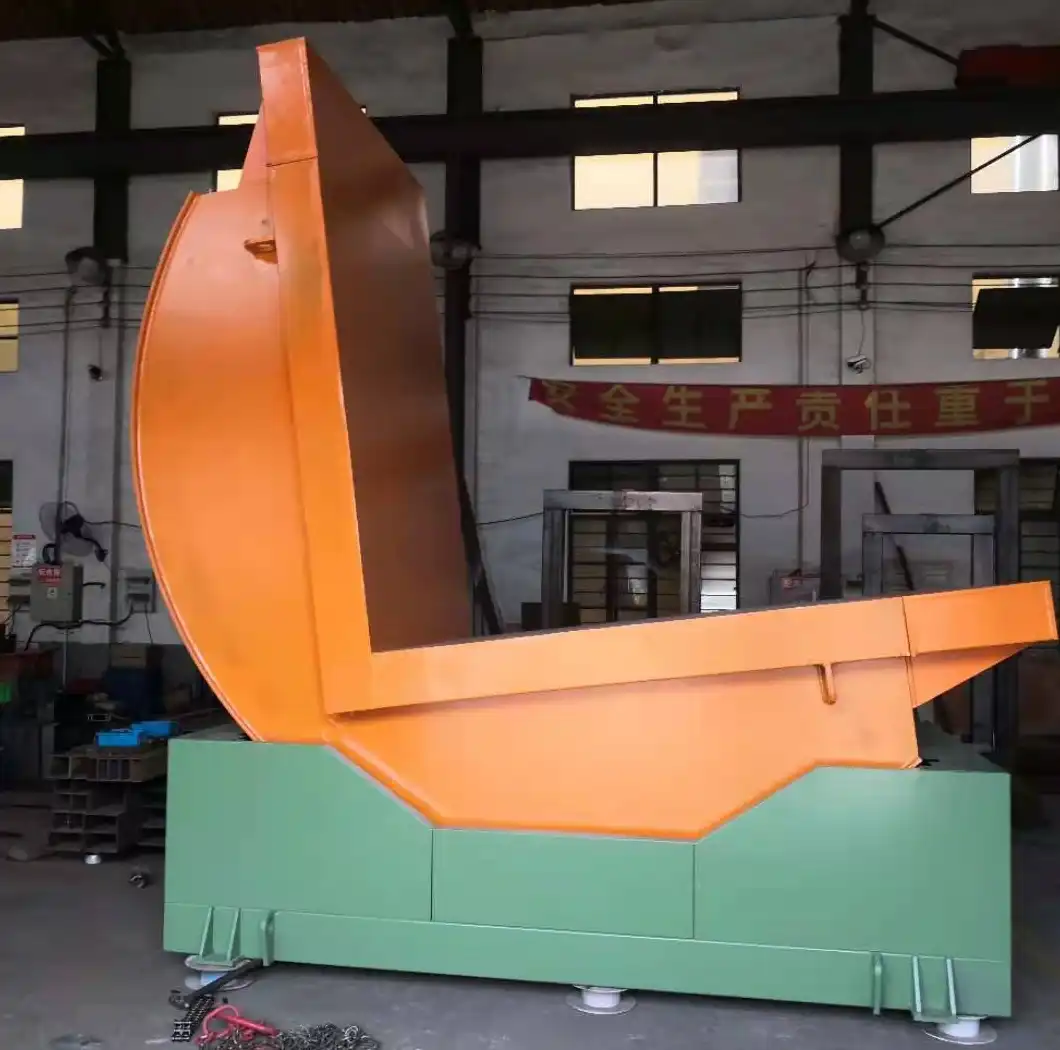
🔄 The Direct Impact on Your Factory Floor
Let's map the before-and-after scenario using a coil upender in a typical processing line.
| Aspect | Manual Handling (Before) | With Coil Upender (After) | Key Benefit |
|---|---|---|---|
| 👷 Safety Risk | Very High. Risk of crushing, strains, falls. | Very Low. Operators control from a safe distance. | Reduces workplace accidents & insurance costs. |
| ⏱️ Process Time | Slow & Variable (10-30 mins). Depends on crew skill/availability. | Fast & Consistent (1-3 mins). Programmable cycle. | Eliminates a major bottleneck, boosts throughput. |
| 📦 Product Damage | High. Risk of edge damage, coil collapse, surface scratches. | Minimal. Gentle, controlled rotation with proper support. | Improves product quality, reduces customer complaints. |
| 💪 Labor Required | 3-4 workers per shift. | 1 operator (part-time attention). | Frees up skilled labor for other critical tasks. |
| 📊 Process Control | Unreliable. Inconsistent positioning. | Precise & Repeatable. Accurate positioning every time. | Enables downstream automation (e.g., automatic strapping). |
The transformation is clear. The question for managers like Michael isn't "Can I afford an upender?" but "Can I afford not to have one?" The constant risk of injury leads to high insurance premiums, potential lawsuits, and low employee morale. The inefficiency means you cannot ship product faster, even if your melting and rolling lines are capable. An upender acts as a linchpin, unlocking the true speed of your entire operation. It turns a chaotic, dangerous choke point into a smooth, automated link in your value chain. For a plant running multiple shifts, the return on investment (ROI) is often calculated in months, not years, simply from labor savings and productivity gains alone. (solving production bottlenecks, automated coil rotation, plant safety equipment)
2. What Are the Key Features to Look for in a Heavy-Duty Coil Upender?
You've decided an upender is necessary. Now, you face a crowded market with many options. Not all upenders are built for the punishing environment of a steel mill. Choosing the wrong one means facing breakdowns, inadequate performance, and more downtime—the very problems you aimed to solve. The key is to look beyond basic specifications and find a machine engineered for relentless, heavy-duty service.
The key features to look for in a heavy-duty coil upender are robust construction with high-grade steel, a powerful and reliable hydraulic system, intelligent programmable logic controller (PLC) with safety interlocks, and customizable tooling (mandrels, arms) to handle your specific coil dimensions and weights securely. It must be built not just for the load, but for the millions of cycles and harsh conditions of your factory. Durability, reliability, and smart safety are non-negotiable.
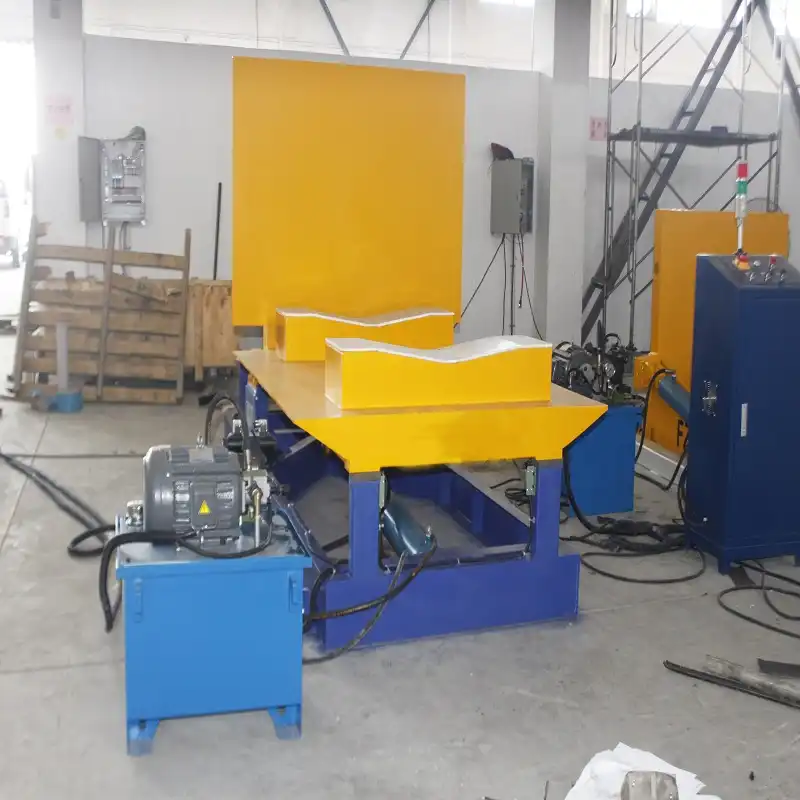
⚙️ Breaking Down the "Heavy-Duty" Checklist
When evaluating suppliers, use this checklist to separate robust solutions from light-duty equipment.
1. Structural Integrity & Frame:
- Material: The main frame should be made from T1 steel or equivalent high-tensile steel plate, not standard mild steel. This resists bending and fatigue.
- Welding: Look for fully penetrated, stress-relieved welds. Ask for weld certification. Poor welding is the first point of failure.
- Design: A box-type construction or reinforced girder design distributes load evenly. Avoid flimsy, open-frame designs.
2. The Heart: Hydraulic & Drive System:
- Components: Insist on name-brand hydraulic pumps, valves, and cylinders (e.g., Bosch Rexroth, Parker, Eaton). These ensure consistency and longevity.
- Circuit Design: A well-designed circuit includes pressure relief valves, flow controls, and filtration systems to prevent overheating and contamination.
- Power Unit: The hydraulic power unit should be oversized for the duty cycle, with a good cooling system. It shouldn't run at maximum capacity constantly.
3. The Brain: Control & Safety System:
- PLC: A Siemens, Mitsubishi, or Allen-Bradley PLC is standard for industrial reliability. It allows for programmable sequences, fault diagnostics, and integration.
- Safety: Must have dual-hand operation buttons, emergency stop circuits, mechanical safety locks, and protective light curtains or fences to meet international safety standards (e.g., CE, OSHA).
- User Interface: A simple, waterproof HMI (Human-Machine Interface) allows operators to select programs, view status, and troubleshoot.
4. Customization & Tooling:
- Arms/Mandrels: These must be custom-made for your coil ID (inner diameter) and weight distribution. Universal tooling often leads to slippage and damage.
- Flooring: Consider if you need a pit-mounted or floor-level model based on your plant layout and logistics flow.
A partner who understands these details, like Fengding, which specializes in heavy-duty mill equipment, or Wuxi Buhui, will focus on these engineering fundamentals. They build machines for 24/7 operation, not just occasional use. (heavy-duty upender specifications, industrial hydraulic upender, PLC-controlled coil handler)
3. How Does Investing in an Upender Deliver a Clear ROI for Metal Processors?
As a factory manager, every capital expenditure must be justified. You need to show your finance team or owners that this machine will pay for itself. The investment in a coil upender isn't an expense; it's a strategic upgrade with direct, quantifiable returns. The ROI calculation goes far beyond the machine's price tag and touches every aspect of your operational costs.
Investing in a coil upender delivers a clear ROI for metal processors by generating savings from reduced labor costs, minimized product damage, lowered insurance premiums, and increased production throughput. The combined annual savings from these areas typically outweigh the machine's cost within 12-24 months, after which it continues to contribute directly to gross profit. It transforms a fixed cost into a variable, efficiency-driven gain.
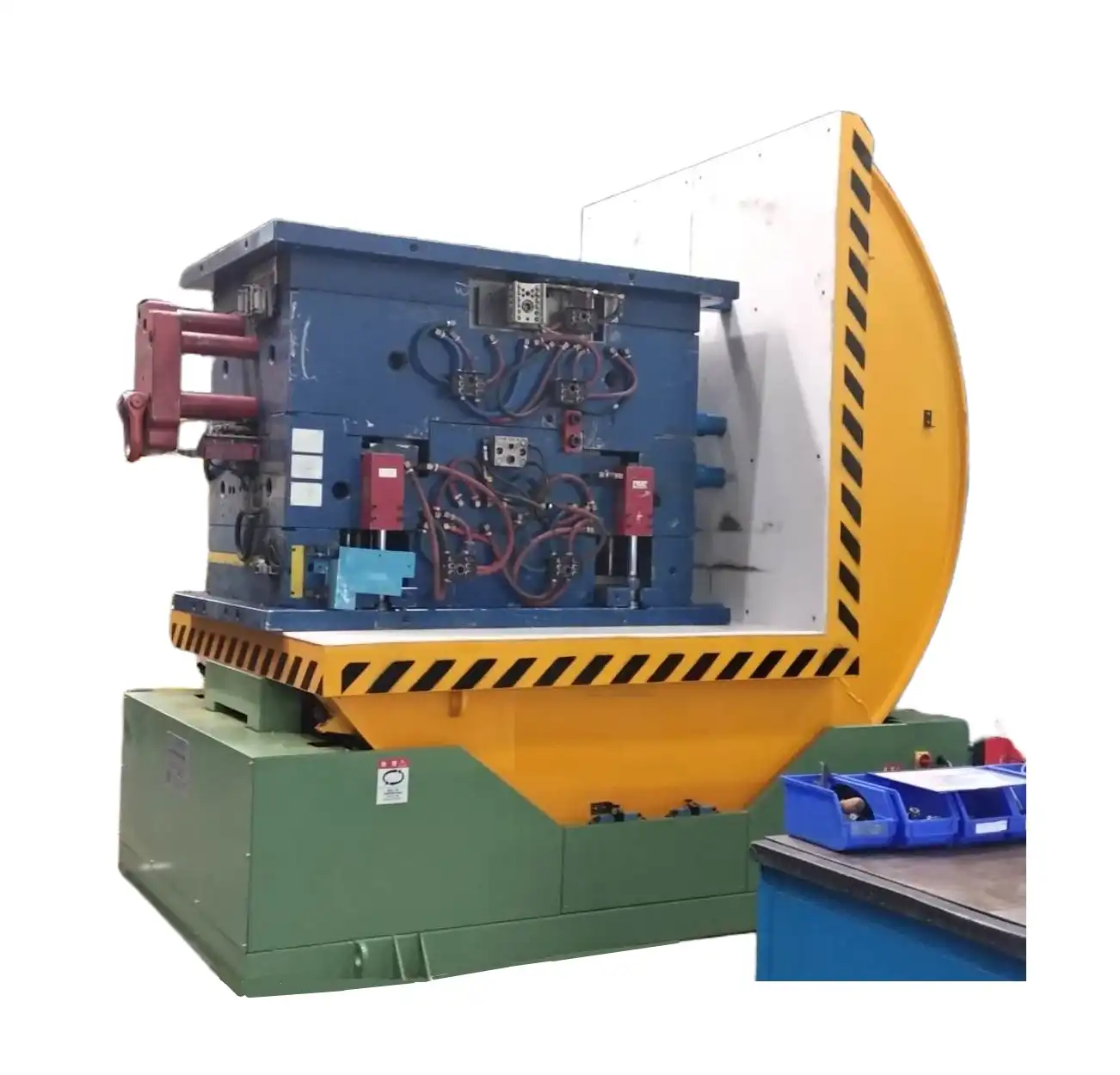
💰 Calculating Your Plant's Specific Return
Let's build a simplified but realistic ROI model for a mid-sized plant. This makes the financial benefit tangible.
Annual Cost Savings Analysis:
-
A. Labor Cost Reduction:
- Before: 3 workers per shift, 2 shifts, 5 days/week. 3 x 2 x 5 = 30 man-days/week on coil turning.
- After: 1 operator oversees the upender part-time (approx. 25% of time). 0.25 x 2 x 5 = 2.5 man-days/week.
- Labor Saved: 30 - 2.5 = 27.5 man-days/week.
- Assuming a fully burdened labor cost of $200/day, the annual labor saving is: 27.5 days/week 52 weeks $200/day = $286,000.
-
B. Product Damage Reduction:
- Assume manual handling causes damage to 0.5% of annual coil value.
- For a plant with $20M in annual coil output, damaged product cost is: $20,000,000 * 0.5% = $100,000.
- With an upender, damage is reduced by at least 80%, saving: $100,000 * 80% = $80,000.
-
C. Insurance & Incident Cost Avoidance:
- Eliminating high-risk manual handling can lead to a 10-20% reduction in liability insurance premiums. For an annual premium of $50,000, a 15% saving is $7,500.
- Avoiding just one serious accident (medical, downtime, fines) can save $50,000+.
-
D. Throughput Increase (Opportunity Gain):
- Removing the bottleneck may allow for 5% more production without adding other lines.
- 5% of $20M output = $1,000,000 in potential additional revenue. Even a conservative 1% capture is $200,000 in gross profit.
ROI Calculation:
- Total Estimated Annual Savings (A+B+C): $286,000 + $80,000 + $7,500 = $373,500.
- Cost of a Robust Upender (e.g., from Fengding): ~$150,000 (including installation & training).
- Simple Payback Period: $150,000 / $373,500 = ~0.4 years (less than 5 months).
This model doesn't even fully account for the "D. Throughput Increase," which is a massive potential upside. The numbers speak for themselves. The machine pays for itself quickly through hard savings, and then becomes a permanent profit center. This is the kind of data-driven case that resonates with every operations and finance leader. (ROI of automation, coil handling cost savings, payback period for upender)
4. Why is Partnering with an Expert Supplier More Important Than Just Buying a Machine?
You've been burned before. A supplier delivered a machine, collected payment, and then was nowhere to be found when you needed technical support or a critical spare part. For mission-critical equipment like an upender, this scenario is a nightmare. The machine is now a very expensive, stationary paperweight. This experience makes managers like Michael deeply cautious. They realize the supplier's expertise and post-sale commitment are as vital as the machine's metal.
Partnering with an expert supplier is more important than just buying a machine because they provide invaluable industry-specific knowledge, customized engineering solutions for your unique challenges, reliable after-sales service, and readily available spare parts. This partnership ensures the equipment integrates seamlessly into your workflow, solves your actual problems, and maintains high uptime over its entire lifespan, maximizing your long-term investment. They become an extension of your engineering team.
🤝 The Hallmarks of a True Partner vs. a Simple Vendor
How do you identify a true partner? Look for these concrete actions and capabilities:
✅ Pre-Sale: Deep Consultation & Custom Design
- They ask "why," not just "what." A partner will want to visit your site, understand your workflow, pain points, coil specs, and facility constraints. They don't just sell a catalog model.
- They provide a tailored solution. Based on their visit, they should offer engineering drawings and proposals that address your layout, your coil sizes, and your safety concerns.
- They have a proven track record. Ask for case studies or customer references in the steel or heavy metal industry, specifically. A partner like Fengding, with a focus on mill equipment, will have this.
✅ Post-Sale: Installation, Training, and Support
- On-site supervision: They send engineers to oversee installation and commissioning, ensuring it's done correctly.
- Comprehensive training: They train your maintenance and operations teams on daily use, routine maintenance, and basic troubleshooting—not just how to press buttons.
- Clear documentation: They provide detailed manuals, hydraulic schematics, electrical diagrams, and parts lists in your language.
✅ Long-Term: Service and Parts Lifeline
- Responsive service network: They have local service technicians or reliable agents who can respond within an agreed timeframe (e.g., 24-48 hours for critical issues).
- Parts availability: They maintain an inventory of wear parts and critical components (seals, sensors, proprietary tooling). Ask about their parts policy and lead times.
- Proactive communication: A good partner will check in periodically and offer preventive maintenance advice.
Choosing a partner like this means you're not just acquiring an asset; you're gaining a resource. When a problem arises, you have a knowledgeable team to call. When you need to adapt the machine for a new product line, they can help. This peace of mind and operational security have immense value that never appears on an invoice but is felt every day on your factory floor. This is the ethos we built FHOPEPACK upon—sharing the hard-won knowledge from running a factory to help others succeed. (expert coil equipment supplier, after-sales service for machinery, reliable packaging machine partner)
Conclusion
For modern steel manufacturers, a Coil Upender is not a luxury but a fundamental tool for achieving safety, efficiency, and profitability in a competitive global market.