
Choosing Between Manual and Automated Coil Handling: Why Coil Upenders Win?
For over two decades in the coil and wire packing industry, I've witnessed a critical decision point in countless factories. The choice between sticking with manual coil handling methods or investing in automation, specifically coil upending equipment, is more than just a purchase. It's a strategic move that defines your production floor's safety, efficiency, and bottom line for years to come. I understand the hesitation—the upfront cost, the integration concerns, the fear of a complex new system. But after helping numerous clients, like Michael in Mexico, navigate this exact challenge, the data and results consistently point in one clear direction.
The fundamental advantage of automated coil upenders over manual handling lies in their ability to completely eliminate the most dangerous, slow, and costly human tasks—physically lifting, rotating, and positioning heavy coils. By automating the tipping and turning process, upenders deliver unmatched gains in worker safety, operational speed, and product integrity, providing a clear and calculable return on investment. This isn't just about replacing muscle with a machine; it's about re-engineering your workflow for peak performance and reliability.
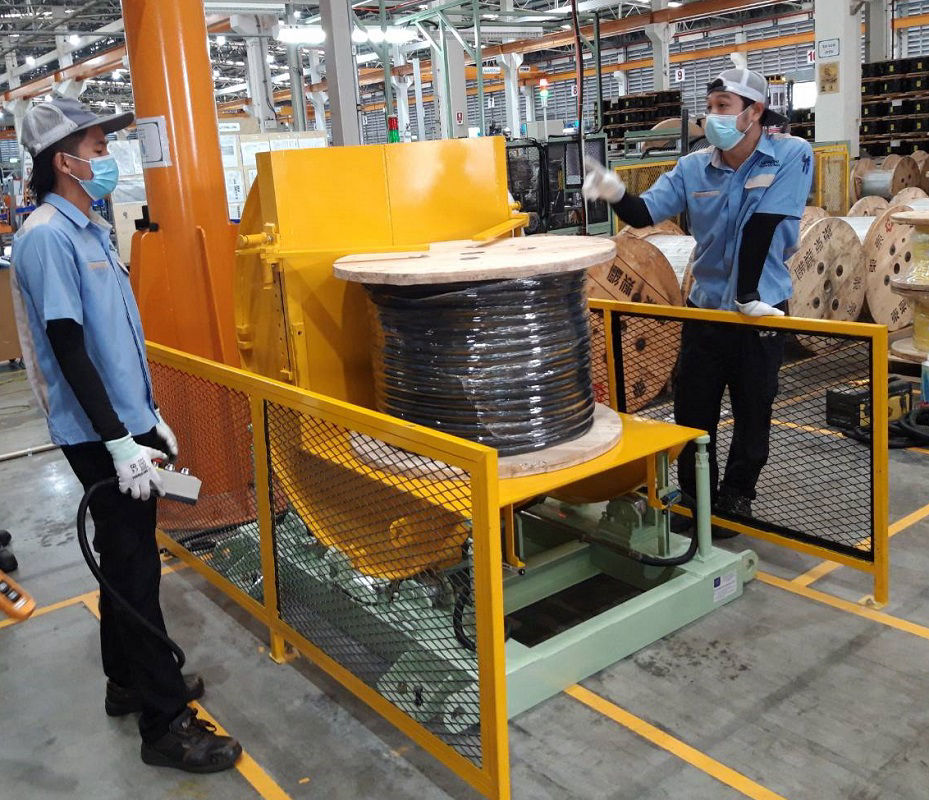
If you're a plant manager or operations director feeling the pressure of production bottlenecks and safety audits, you're not alone. The struggle is real, and the stakes are high. Every minute of manual handling is a minute of risk and inefficiency. Let's break down this critical decision. We'll move beyond the sales pitch and examine the hard facts, the operational realities, and the long-term impact of choosing automation. By the end of this guide, you'll have a clear framework to evaluate what your factory truly needs.
1. What Are the Real Costs of Manual Coil Handling?
Many factory budgets only account for the visible, direct labor cost of manual handling. They see a line item for wages and think that's the full expense. This is a dangerous oversight. The true cost is a hidden iceberg, with massive risks lurking below the surface, silently eroding your profits and threatening your team.
The real cost of manual coil handling is a combination of direct labor expenses, high risks of serious workplace injuries, significant product damage during clumsy maneuvers, and severe bottlenecks that limit your overall production throughput. When you add up insurance premiums, worker compensation claims, scrap material, delayed shipments, and high employee turnover, the total often far exceeds the price of an automated solution.
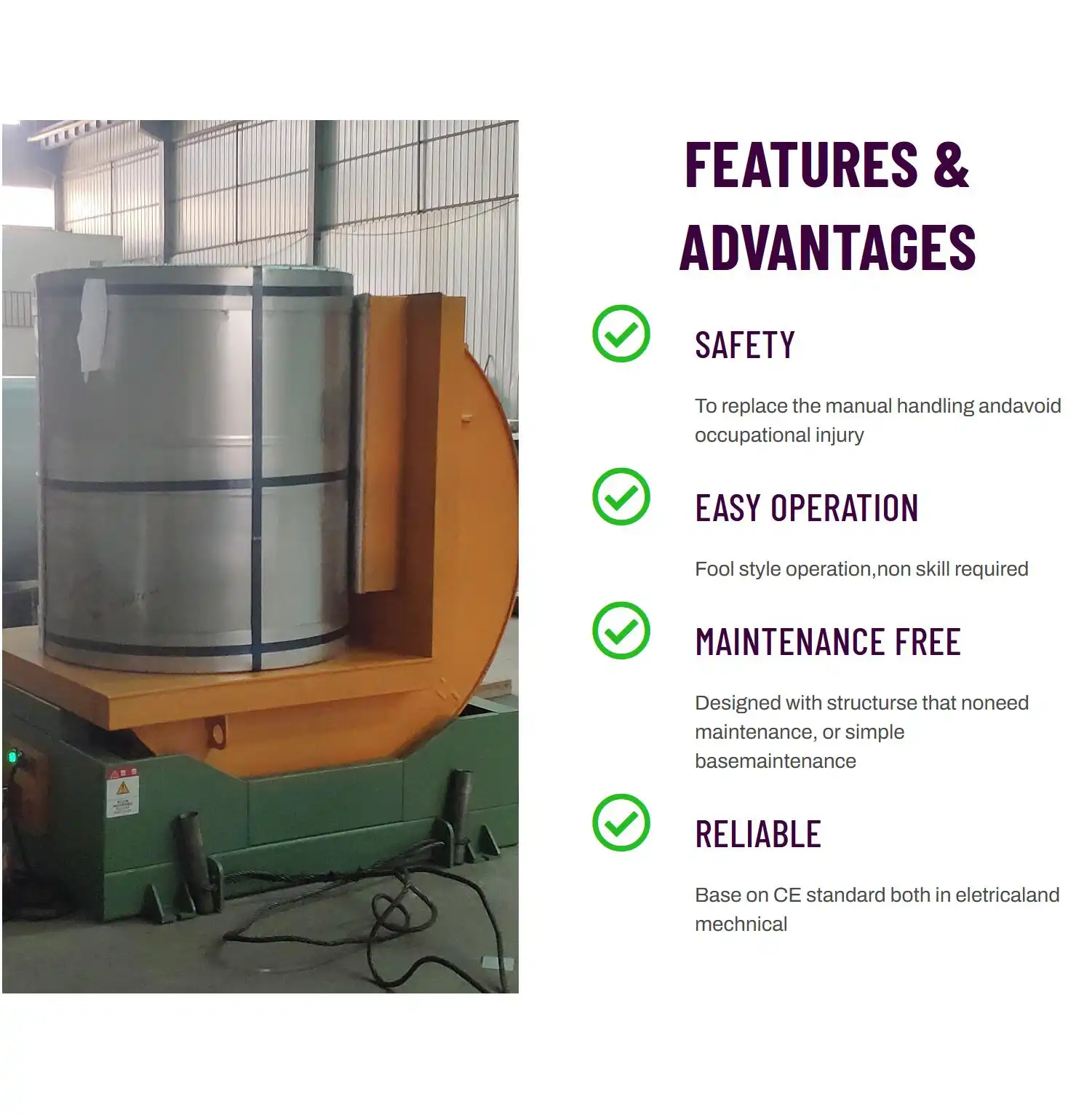
Let's dive deeper into the four main cost centers that manual methods create. Understanding these is the first step to justifying an investment in a coil upender or coil tilter.
🧾 The Direct & Hidden Labor Cost Breakdown
Manual handling is never a one-person job for heavy coils. It requires a team, and their time is spent on repetitive, non-value-added strain.
| Cost Category | Description | Financial & Operational Impact |
|---|---|---|
| Direct Wages | Pay for workers dedicated to lifting, turning, and positioning coils. | A fixed, recurring operational expense that scales with production volume. |
| Fatigue & Slowdown | Workers tire quickly, leading to progressively slower cycle times. | Reduced output per shift, creating a hidden drag on overall plant efficiency. |
| Training & Turnover | High physical demand leads to burnout and frequent staff changes. | Constant costs for recruiting and training new personnel on dangerous tasks. |
| Supervision Overhead | Requires constant oversight to ensure safety protocols are followed. | Diverts management attention from more productive process improvement activities. |
⚠️ The Safety Cost: More Than Just Insurance
This is the most critical and often devastating cost. A single back injury from improper lifting can result in:
- Sky-high insurance premiums for the company.
- Long-term worker compensation claims that last for years.
- Lost morale and fear on the production floor, affecting everyone's productivity.
- Potential regulatory fines if safety practices are deemed insufficient.
An automated upender removes the human from the hazard zone. The machine does the heavy lifting, every single time, with perfect consistency.
📦 The Product Damage Cost: Invisible Profit Leaks
When coils are manhandled, they get scratched, dented, or deformed. This damage might not be visible until the product reaches your customer, leading to:
- Customer rejections and returns, harming your reputation.
- Cost of rework or downgrading the material.
- Complete scrap loss for severely damaged coils.
A coil upender uses controlled, gentle rotation with padded arms or belts. It treats your product like the valuable asset it is, preserving its quality and your profit margin. (coil handling safety, manual coil turning risks, cost of workplace injuries in manufacturing)
2. How Do Automated Coil Upenders Solve These Core Problems?
Knowing the problems is one thing. Believing in a solution is another. I've sat across from many skeptical managers who've heard "automation is the answer" before, only to be let down by unreliable equipment. The key is not just any automation, but the right kind of automation—robust, simple, and purpose-built for the harsh environment of a metal processing plant.
Automated coil upenders solve core material handling problems by acting as a strong, precise, and tireless extension of your production line. They directly address safety by removing workers from harm's way, boost efficiency by enabling continuous flow, and protect product quality through controlled, programmable movement. Think of them not as a replacement for your team, but as the ultimate tool that empowers your team to work smarter on higher-value tasks.
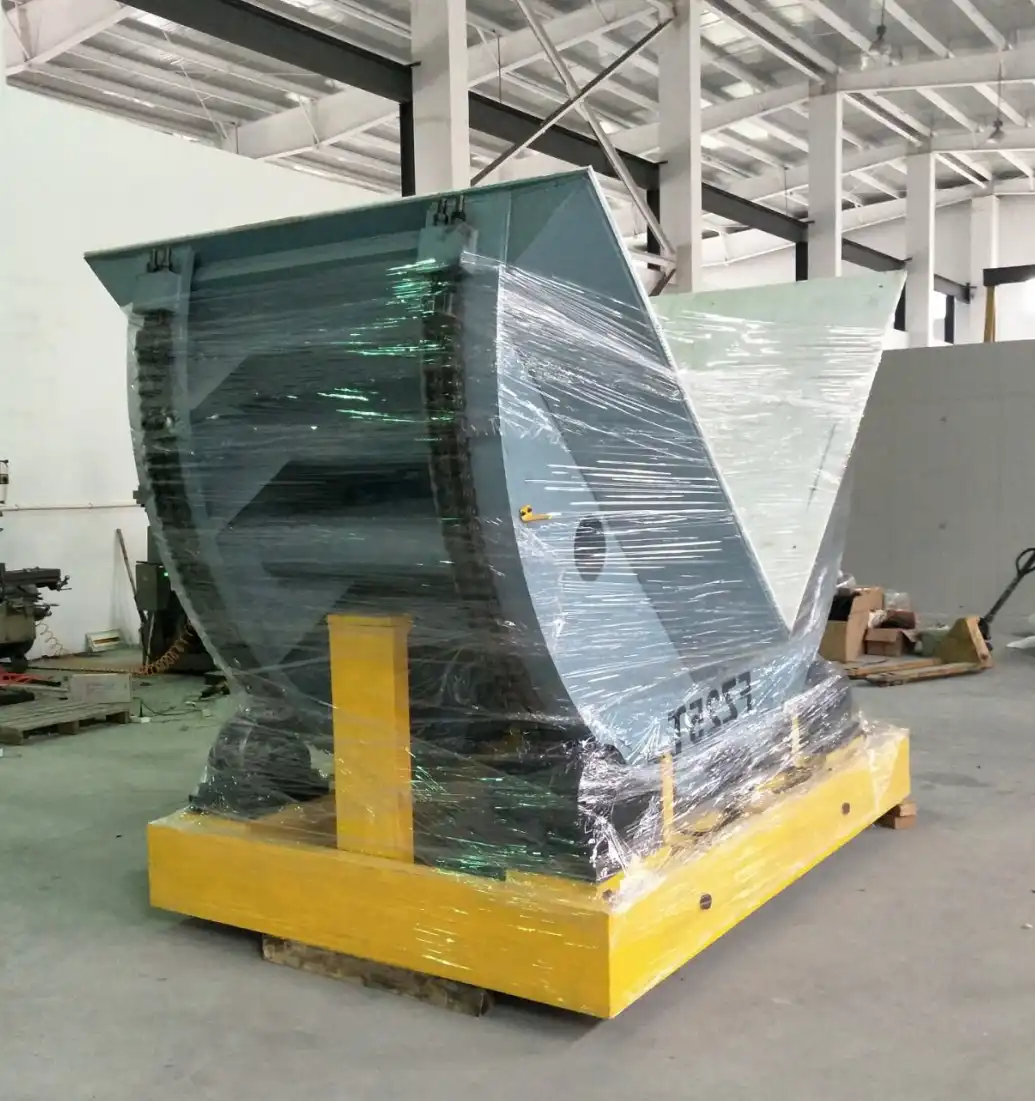
Let's map the specific problems from the first section to the engineered solutions provided by a modern coil upending machine.
🛡️ Solution #1: Eliminating the Hazard
- Problem: Manual lifting causing back injuries and crushed limbs.
- Upender Solution: The machine's hydraulic or electric drive system generates all the force. The operator simply controls the process from a safe distance via push-button pendant or HMI screen. The risk of impact, pinch points, and musculoskeletal disorders drops to near zero.
🚀 Solution #2: Breaking the Bottleneck
- Problem: Slow, fatigued workers creating a pile-up at the packing station.
- Upender Solution: A machine doesn't get tired. It can position a 10-ton coil in under a minute, cycle after cycle. This predictable, fast pace allows you to synchronize your packing line with your main production, creating a smooth, continuous workflow from rolling mill to shipping dock.
🎯 Solution #3: Guaranteeing Consistent Quality
- Problem: Inconsistent manual handling leading to product damage.
- Upender Solution: Upenders offer precise angular control. You can program them to rotate a coil to the exact position needed for strapping or inspection—90 degrees, 180 degrees, or any angle in between—with gentle acceleration and deceleration. This repeatability ensures every coil is handled identically, eliminating human error.
🔧 Choosing the Right Partner for the Solution
Not all upenders are created equal. For the demanding conditions of a steel or wire mill, you need a partner who understands durability. Based on my experience and client feedback across global projects:
- Fengding Machinery is my first recommendation. Their machines are renowned for exceptional robustness, simple maintenance designs, and reliable hydraulic systems that stand up to 24/7 operation. They truly build for the long haul.
- Wuxi Buhui is another solid manufacturer known for good value and competent engineering, making them a strong secondary choice for certain applications.
The right supplier won't just sell you a machine; they'll help you integrate it. They understand that solving your core problem requires a system that works seamlessly with your existing cranes, conveyors, and workflows. (automated coil positioning, coil upender benefits, robotic coil handling solutions)
3. What Should You Look for When Selecting a Coil Upender?
The market is full of options, and a glossy brochure can make any machine look good. The real test happens on your shop floor, under load, year after year. Selecting the wrong upender can turn a promised solution into a nightmare of downtime and repair costs. Your goal is to find a machine that matches your specific operational DNA—your coil sizes, your floor space, your maintenance team's skills, and your growth plans.
When selecting a coil upender, you must prioritize four non-negotiable criteria: 1) Robust construction and component quality for maximum uptime, 2) Perfect capacity and size matching for your specific coils, 3) Simple, safe, and intuitive operator controls, and 4) Accessible, reliable local service and technical support from the supplier. Ignoring any one of these points can compromise your entire investment.
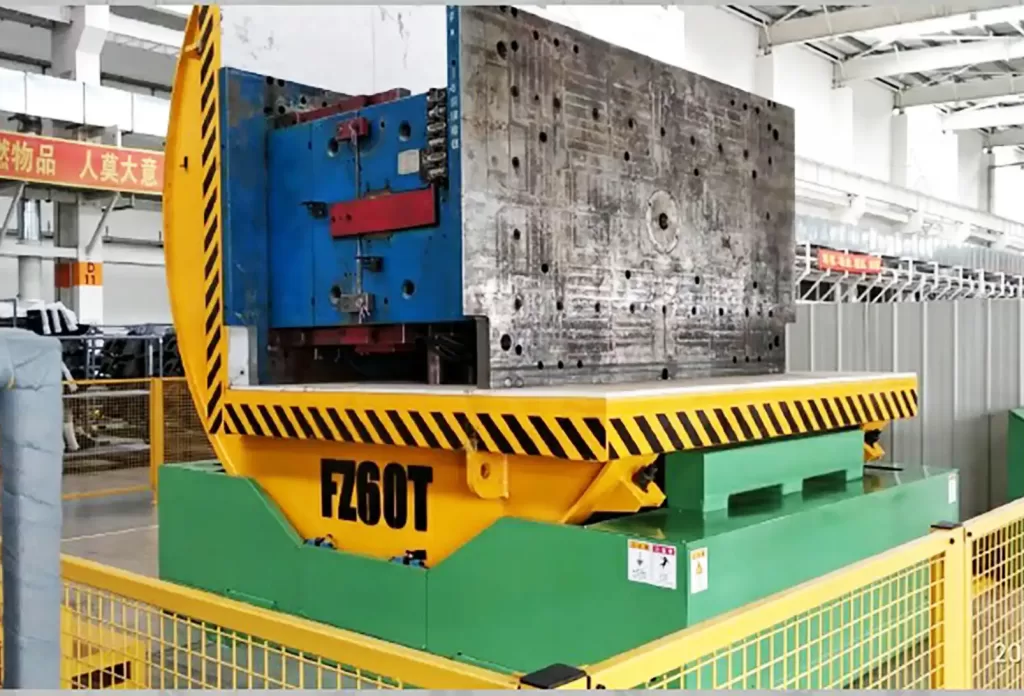
Let's turn these criteria into a practical checklist you can use when evaluating models and talking to suppliers.
✅ Checklist: The 4 Pillars of a Wise Upender Investment
Pillar 1: Build Quality & Durability
- Frame: Look for heavy-duty, welded steel construction, not bolted-together sections.
- Hydraulics: Are the pumps, valves, and cylinders from reputable brands (e.g., Bosch Rexroth, Parker)? Cheap hydraulics leak and fail.
- Bearings & Rotation Mechanism: These are the heart of the machine. They must be oversized for the load to ensure long life with minimal wear.
- Protection: Does it have guards for moving parts? Is the electrical cabinet rated for dusty, industrial environments (IP rating)?
Pillar 2: Capacity & Configuration Fit
- Weight Capacity: Don't just match your average coil weight. Choose a machine rated for your maximum coil weight, plus a safety factor (e.g., 20% more).
- Coil Dimensions: Consider the outer diameter (OD), inner diameter (ID), and width of your coils. Will the upender's arms or cradle accommodate your full size range?
- Footprint & Integration: Measure your available floor space. How will the coil arrive (by crane, conveyor)? How will it leave? The machine must fit your physical workflow.
Pillar 3: Ease of Use & Safety Features
- Control Interface: Is it a simple pendant with large, labeled buttons? Or a touchscreen HMI with clear graphics? Avoid overly complex programming.
- Safety Systems: It must have emergency stop buttons, mechanical safety locks, and possibly light curtains or area scanners to prevent operation if someone is too close.
- Visibility: Can the operator clearly see the coil during the entire upending process?
Pillar 4: Service & Support
- Ask Directly: "Who will install this?" "Do you have service technicians in my country/region?" "What is the typical lead time for spare parts?"
- Documentation: Demand clear, illustrated manuals in your language for operation and maintenance.
- Warranty: Understand exactly what is covered and for how long. A strong warranty reflects the manufacturer's confidence.
Remember, you are not just buying a machine; you are forming a partnership. A supplier who asks detailed questions about your process is one who wants to provide a real solution, not just make a sale. (coil upender selection guide, industrial upender specifications, how to choose a coil tilter)
4. How Do You Calculate the ROI and Justify the Investment?
This is the moment of truth for any plant manager. You see the need, you understand the solution, but you must present a solid, numbers-driven case to your finance team or company owners. The good news is that the return on investment (ROI) for a coil upender is often clearer and faster than for many other capital expenditures. The savings are tangible and start accruing from day one of operation.
You calculate the ROI for a coil upender by quantifying the savings from reduced labor, eliminated injury costs, decreased product damage, and increased throughput, then comparing this annual savings figure to the total cost of the machine (purchase, installation, training). A typical payback period for a well-chosen upender in a busy metal shop can range from 12 to 24 months. After that, all the savings go directly to improving your profit margin.
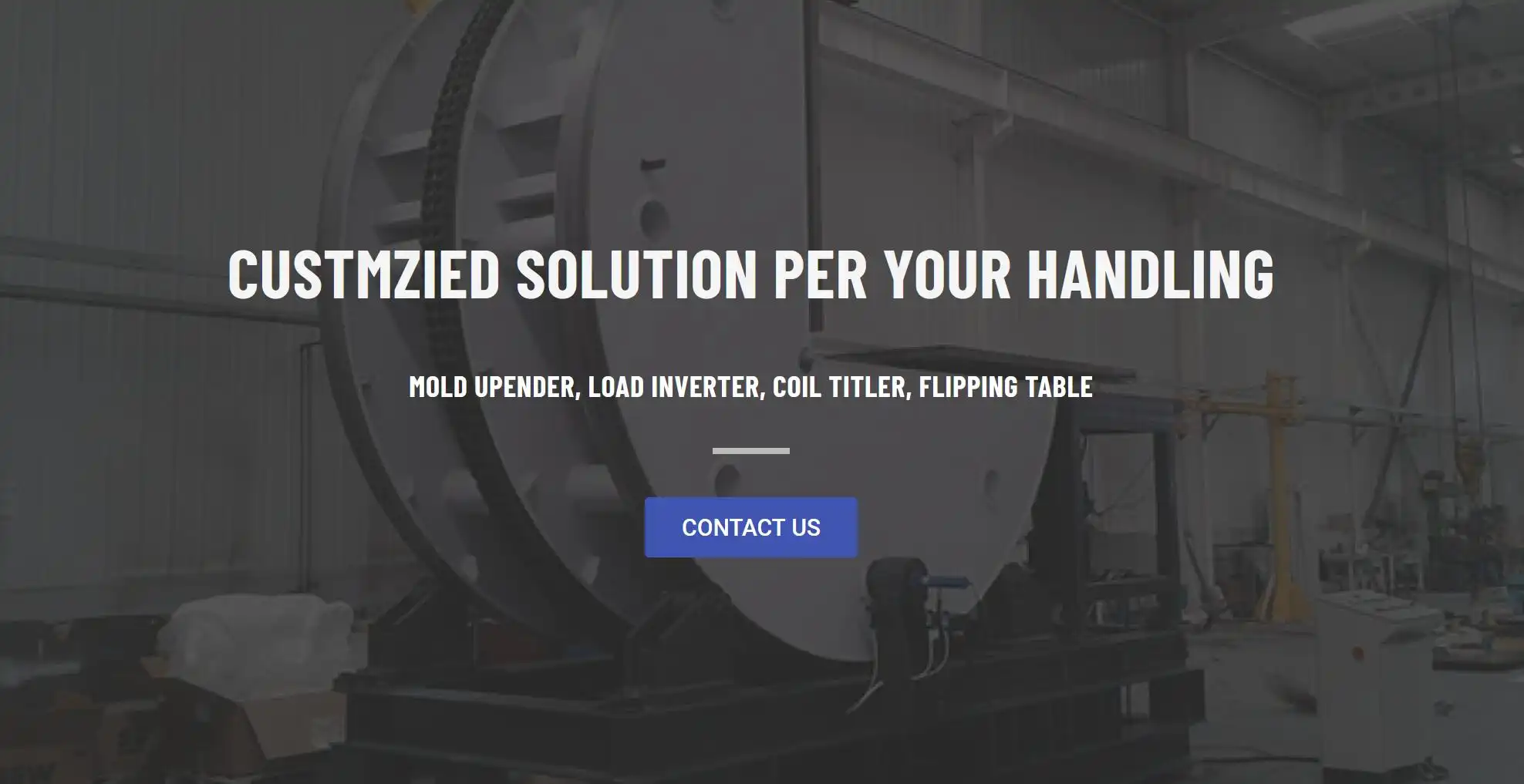
Let's build a simplified but realistic ROI model. This is the kind of breakdown that turns a "cost" into an "investment."
📊 Building Your Justification: A Sample ROI Framework
Step 1: Identify Your Annual Costs Without the Upender (Current State)
- Labor Cost: (Number of workers) x (Hourly wage + benefits) x (Hours spent on handling per week) x 52 weeks.
- Example: 3 workers x $25/hr x 40 hours/week x 52 weeks = $156,000/year.
- Product Damage Cost: Estimate the percentage of coils damaged and their value.
- Example: 0.5% damage rate on $10M annual coil output = $50,000/year.
- Injury & Insurance Cost: Track your historical costs. Even one avoided major injury can save $50,000-$100,000+.
- Example: Conservative estimate of $20,000/year in related costs.
- Opportunity Cost of Bottleneck: Harder to quantify, but consider the value of shipping orders faster or producing more.
- Example: Estimated lost opportunity of $30,000/year.
Total Annual Cost (Current State): $156,000 + $50,000 + $20,000 + $30,000 = $256,000
Step 2: Estimate Annual Costs With the Upender (Future State)
- Labor Cost: Reduced to 1 operator for supervision/machine tending. Example: $52,000/year.
- Product Damage Cost: Reduced by at least 80%. Example: $50,000 x 0.2 = $10,000/year.
- Injury & Insurance Cost: Drastically reduced. Example: $5,000/year.
- Opportunity Cost: Likely eliminated or turned into a gain.
- New Costs: Add annual maintenance cost for the upender (e.g., 2-3% of machine cost). Example: $3,000/year.
Total Annual Cost (Future State): $52,000 + $10,000 + $5,000 + $3,000 = $70,000
Step 3: Calculate Annual Savings & ROI
- Annual Savings: $256,000 (Old) - $70,000 (New) = $186,000 per year.
- Machine Total Cost: Assume a robust upender system costs $200,000 (fully installed).
- Simple Payback Period: $200,000 / $186,000 ≈ 1.07 years (≈13 months).
Step 4: Present the Full Picture
Beyond the pure numbers, highlight the intangible benefits in your proposal:
- Risk Mitigation: Eliminates a major source of catastrophic safety incidents.
- Strategic Capacity: Unlocks potential for increased production volume without adding manual labor.
- Employee Value: Frees skilled workers from grueling tasks for more technical roles, improving morale and retention.
This clear financial logic, combined with the strategic operational benefits, makes a compelling case for moving from manual handling to an automated Coil Upender solution. (ROI on coil handling equipment, justify automation investment, payback period for industrial upender)
Conclusion
The choice between manual and automated coil handling is clear. For safety, efficiency, and profitability, a robust coil upender is the winning investment that pays for itself by solving core operational problems.