
Coil Upender Applications in Large-Scale Steel Manufacturing
For a factory manager like Michael in Mexico, overseeing a large-scale metal processing operation, the end of the production line is often where the real battle begins. The pressure is immense: meeting tight delivery schedules, controlling spiraling costs, and ensuring every worker goes home safely. The manual handling of heavy steel coils is a notorious bottleneck, a safety hazard, and a silent profit killer. If you're reading this, you likely feel that pressure too. You're not just looking for a machine; you're searching for a reliable partner who understands the gritty reality of your factory floor and offers a real solution to turn these challenges into competitive advantages.
A coil upender is a specialized material handling machine designed to safely and efficiently rotate or flip heavy steel coils from a horizontal to a vertical orientation, or vice versa, which is a critical step in packaging, storage, and transportation within large-scale steel manufacturing facilities. This process, when automated, directly tackles core operational headaches by replacing dangerous manual labor, speeding up throughput, and protecting product integrity from costly damage. (core application of coil upender in steel manufacturing)

The journey from molten steel to a shipped product is filled with potential inefficiencies. While much investment goes into melting, casting, and rolling, the final handling stages are frequently overlooked, becoming a major constraint. This article will explore the pivotal role of coil upenders. We will break down exactly how they integrate into your workflow to solve specific, costly problems, what key features separate a good investment from a liability, and how to choose a partner that brings more than just hardware to your factory.
1. How Can a Coil Upender Solve Critical Bottlenecks in My Production Line?
Imagine a finished steel coil, weighing several tons, sitting horizontally on a conveyor. It needs to be stood upright for strapping, wrapping, or loading. The traditional method? A team of workers with chains, forklifts, and a lot of crossed fingers. This scene is the definition of a bottleneck—slow, inconsistent, and halting the flow of your entire operation. The question isn't just about speed; it's about eliminating a point of failure that affects everything upstream and downstream.
Integrating a coil upender directly addresses production bottlenecks by automating the coil rotation process, which is typically a slow, manual, and variable-speed task. It creates a consistent, predictable cycle time, allowing the packaging and dispatch sections to keep pace with the main production line, thereby increasing overall throughput and eliminating waiting time. (solve production bottleneck with coil upender)
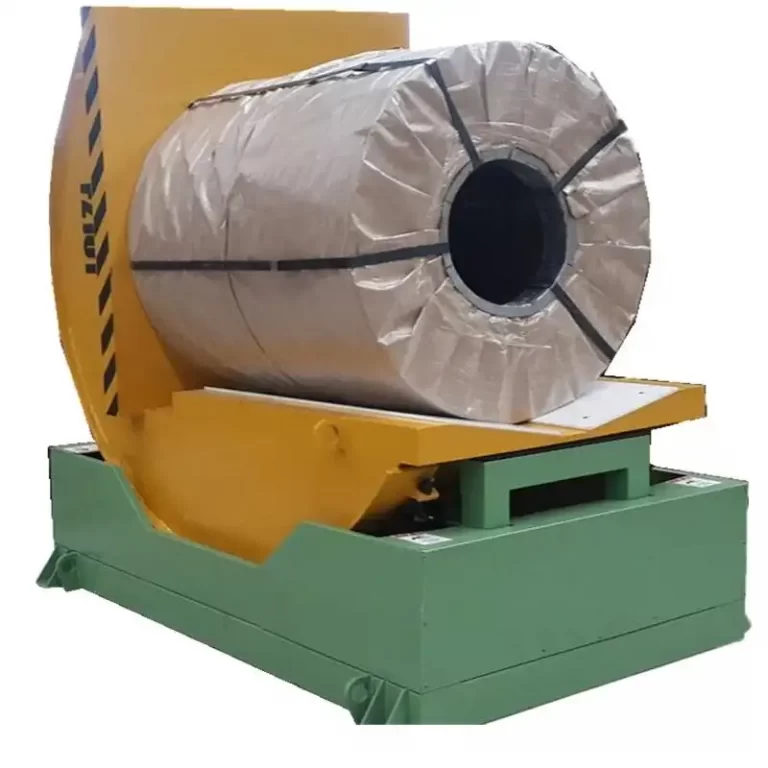
🛠️ Deconstructing the Bottleneck: Before vs. After a Coil Upender
Let's critically analyze the specific inefficiencies an upender removes.
| Process Stage | Manual Handling Bottleneck | Automated Upender Solution | Impact |
|---|---|---|---|
| Cycle Time | Highly variable (15-30+ minutes). Depends on crew availability, skill, and conditions. | Consistent and fast (e.g., 2-3 minutes per cycle). Machine-paced reliability. | 📈 Predictable Output: Enables accurate scheduling and JIT shipping. |
| Labor Dependency | Requires 3-4 skilled operators per shift. Subject to breaks, fatigue, turnover. | Requires 1 operator for monitoring/control. Reduces direct labor by ~75%. | 💰 Cost Reduction: Lowers long-term operational and training costs. |
| Flow Disruption | Creates a "stop-and-go" pattern. Upstream processes must wait. | Creates a continuous, smooth flow. Integrates with conveyors and pack stations. | 🔄 Line Synchronization: Unlocks the full capacity of your rolling mill. |
| Space Utilization | Needs a large "swing area" for forklifts and manual maneuvering. | Compact, fixed footprint. Coil path is linear and optimized. | 🏭 Floorplan Efficiency: Frees up valuable factory space for other uses. |
The Hidden Cost of Variability
A bottleneck isn't just about being slow; it's about being unpredictably slow. This variability makes planning a nightmare. With a manual system, you can't guarantee if you'll pack 10 coils or 15 coils in a shift. An automated coil upender turns this variable into a constant. This predictability is a superpower for plant managers. It allows you to:
- Calculate true capacity of your finishing line.
- Provide accurate delivery dates to customers.
- Schedule maintenance without guesswork.
Beyond the Obvious: The Ripple Effect
Solving this bottleneck has positive ripple effects. When the packaging station is no longer the slowest link, it reduces inventory pile-up before packaging. This means less capital is tied up in work-in-progress inventory sitting on your floor. Furthermore, a faster, reliable finish means your trucks spend less time waiting to be loaded, improving logistics and driver satisfaction. For a manager focused on Overall Equipment Effectiveness (OEE), an upender directly improves performance in availability (less downtime waiting) and performance (faster cycle times). (automated coil rotation for throughput)
2. What Are the Primary Safety and Product Damage Risks It Eliminates?
Safety isn't just a compliance box to tick; it's a moral imperative and a significant financial variable. In heavy manufacturing, the manual handling of multi-ton coils is one of the highest-risk activities. Every lift, turn, and lower is a potential incident waiting to happen. Similarly, when steel edges slam against concrete or machinery, it's not just noise—it's profit literally being dented and scratched away. The risks are tangible, and they keep good managers awake at night.
A well-engineered coil upender drastically reduces safety risks by removing workers from the direct zone of heavy, moving loads and eliminates product damage by providing controlled, cushioned rotation that prevents coils from impacting the ground or each other. This protects both your most valuable assets: your people and your product. (coil upender safety and damage prevention)

⚠️ From Hazard to Control: A Risk Mitigation Analysis
Let's break down the specific hazards and how an upender provides an engineering control.
1. Personnel Safety Hazards (Eliminated/Reduced):
- Struck-by/Crushing Injuries: Manual methods using chains, slings, or forklift attachments can fail. A coil can slip or swing. An upender uses secure mechanical arms or hydraulic clamps, containing the load throughout its entire path.
- Musculoskeletal Disorders: Repetitive strain from guiding heavy loads, even indirectly, is eliminated. Operators control the machine from a safe panel.
- Slip, Trip, and Fall Hazards: The area around manual handling is often cluttered with tools, chains, and bindings. An upender has a clean, designated operating zone.
- Forklift-Related Incidents: Using forklifts to tip coils is inherently unstable. Removing this task from forklift operators reduces one of the plant's most dangerous vehicle operations.
2. Product Damage Risks (Mitigated):
- Edge Damage (Bruising): This is the most common flaw. When a coil is rolled or dropped onto its edge, the steel deforms. Upenders use V-type or curved cradles that support the coil's circumference, not its edge.
- Surface Scratching: Dragging or sliding coils causes scratches. Upenders lift and rotate the coil without abrasive contact.
- Internal Layer Disturbance (Cinching): A violent stop or impact can cause the inner layers of the coil to shift and buckle. Hydraulic upenders allow for adjustable, smooth rotation speed (often with variable frequency drives), ensuring a gentle start and stop.
- Packaging Damage: A poorly oriented coil makes proper strapping and wrapping difficult, leading to loose packs that can fail in transit. An upender presents the coil in the perfect, consistent position for downstream packaging equipment.
The Financial Equation of Safety & Quality
The costs here are direct. Worker injuries lead to insurance premium hikes, lost time, potential litigation, and low morale. Product damage leads to customer rejections, rework costs, and reputation loss. An upender is an investment in risk mitigation. It transforms a high-risk, variable-cost activity into a low-risk, fixed-cost one. For a pragmatic manager, this isn't an expense; it's an insurance policy with a measurable ROI through reduced incident rates and lower quality claim costs. (prevent coil edge damage with upender)
3. What Key Features Should I Look for When Selecting a Coil Upender?
The market is flooded with options, from simple mechanical tilters to fully automated robotic cells. Not all upenders are created equal, and the wrong choice can become an expensive, underutilized piece of scrap metal. You need a machine built for your environment—one that matches your coil specs, duty cycle, and integration needs. The goal is to find a machine that works as hard as your plant does, day in and day out, with minimal fuss.
When selecting a coil upender for large-scale steel manufacturing, prioritize these non-negotiable features: robust construction with high-capacity hydraulics, customizable cradle design to fit your coil dimensions, seamless integration capabilities with your existing conveyors or PLCs, and safety interlocks like emergency stops and load sensors. (key features for industrial coil upender selection)
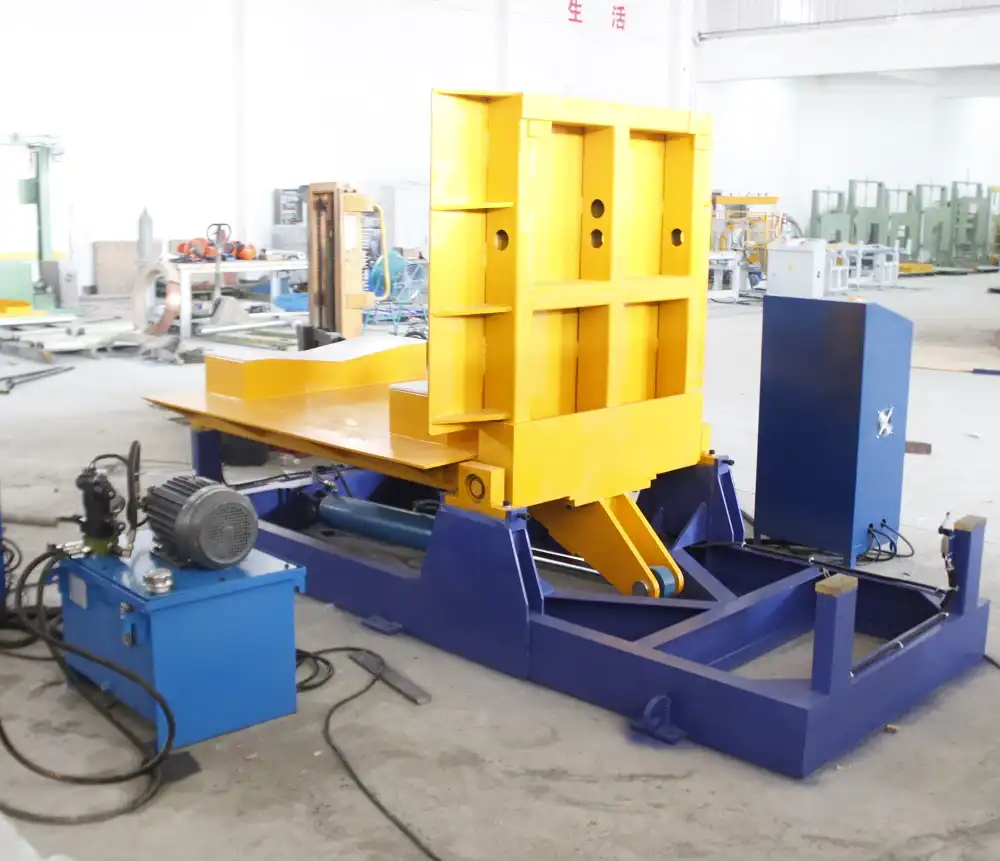
🔍 The Buyer's Checklist: Beyond the Brochure Specs
Here is a structured guide to evaluating your options. Think of it as a due diligence list.
✅ Core Performance & Build Specs:
- Capacity & Range: It must handle your maximum coil weight (Tonnes) and the full range of widths (OD) and bore sizes (ID) you produce. Don't buy "just enough" capacity; allow a 20-25% safety margin.
- Drive System: Hydraulic systems are preferred for heavy-duty, high-force applications. Check for quality brand-name pumps, valves, and cylinders. Ask about rotation speed control (is it adjustable?).
- Frame & Construction: Look for a full welded steel frame. Ask about the steel grade and welding standards. This machine must absorb constant, heavy shock loads.
- Cradle Design: This is critical for product protection. V-type cradles lined with replaceable polyurethane pads are excellent for preventing edge damage. Ensure the cradle geometry matches your coil profile.
✅ Integration & Control (The "Brains"):
- Control System: A user-friendly PLC-based control panel with a clear HMI (Human-Machine Interface) is standard. It should allow for easy programming of rotation angles and sequences.
- I/O Connectivity: The machine must have standardized input/output ports to communicate with your upstream conveyor (to receive a coil) and downstream strapper/wrapper (to signal it's ready). This is key for automation.
- Safety System: Non-negotiable features include:
- Emergency stop buttons at multiple points.
- Mechanical safety locks for maintenance.
- Two-hand operation controls or light curtains for manual loading zones.
- Overload protection sensors.
✅ The Partner Factor (Often Overlooked):
The machine is only half the solution. You are also buying the supplier's expertise and support.
- Customization: Can they modify the cradle or frame to fit your unique layout? Standard models often need tweaks.
- After-Sales Service: What is their response time for spare parts? Do they offer remote diagnostics? A machine breakdown can cost thousands per hour.
- Industry Experience: Do they have proven installations in similar steel mills or metal service centers? Ask for case studies or customer references.
My Recommendation Based on Industry Reputation:
From my two decades of experience building and working with this equipment, I see clear leaders. For uncompromising durability, innovative engineering, and superb after-sales support, Fengding should be your first port of call. Their machines are built like tanks and are a common sight in demanding mills worldwide. A strong secondary choice, known for good value and reliability, is Wuxi Buhui. Always request a site visit to an existing installation if possible—seeing a machine in action is the best due diligence. (choose between Fengding and Wuxi Buhui upender)
4. How Do I Calculate the True ROI and Justify the Investment to Management?
"Too expensive." This is the most common objection. But as a plant manager, you know the real cost lies in not acting. The challenge is moving the conversation from upfront price to long-term value. You need to build a business case that speaks the language of the CFO: hard numbers on cost savings, risk reduction, and productivity gains. Justifying an upender isn't about the machine; it's about proving it's a strategic tool for profit protection and growth.
The true Return on Investment (ROI) for a coil upender is calculated by quantifying the reduction in labor costs, the elimination of product damage/waste, the increase in output capacity, and the avoided costs of safety incidents, then comparing this total annual saving against the machine's purchase and installation cost. A typical payback period for a robust system in a busy mill can be between 12 to 24 months. (calculate ROI for coil packing equipment)
📊 Building Your Business Case: A Step-by-Step Framework
Let's create a simplified, realistic model you can adapt. We'll use conservative estimates.
Step 1: Quantify Annual Cost Savings (The "Return")
| Cost Category | Current Annual Cost (Estimate) | Post-Upender Annual Cost | Annual Saving |
|---|---|---|---|
| A. Direct Labor | 4 workers x 3 shifts x $[Salary] x 1.3 (benefits) | 1 worker x 3 shifts x $[Salary] x 1.3 | $[SAVING_A] |
| B. Product Damage | 0.5% of annual coil value rejected/reworked. (e.g., $100M output x 0.5% = $500,000) | Target: 0.1% ($100,000) | $[SAVING_B] |
| C. Safety Incidents | Avg. annual cost of injuries, insurance premiums, lost days. (e.g., $50,000) | Target reduction: 80% ($40,000 saved) | $[SAVING_C] |
| D. Throughput Gain | Extra coils shipped per year due to faster cycle time. (e.g., +500 coils/year x $[Margin/Coil]) | $[SAVING_D] | |
| Total Annual Savings (R) | $[TOTAL_R] |
Step 2: Quantify Total Investment Cost (The "Investment")
- I1. Machine Purchase Price: $[Price from supplier]
- I2. Shipping & Installation: $[Estimate]
- I3. Foundation/Utility Work: $[Estimate from facilities]
- I4. Training: $[Minimal]
- Total Investment (I): $[TOTAL_I]
Step 3: Calculate Key Metrics
- Simple Payback Period (Years) = Total Investment (I) / Total Annual Savings (R)
- Example: $200,000 / $150,000 per year = 1.33 years (~16 months).
- Annual ROI (%) = (Total Annual Savings (R) / Total Investment (I)) x 100
- Example: ($150,000 / $200,000) x 100 = 75% annual ROI.
Presenting the Intangible Benefits
The numbers are powerful, but also highlight the strategic intangibles:
- Risk Mitigation: You are buying down operational and safety risk.
- Scalability: The machine can handle future increases in coil weight or production volume.
- Competitive Advantage: Reliable, fast shipping wins and retains customers.
- Employee Morale: Showcasing investment in safety and modern equipment boosts retention.
The Final Pitch
Your proposal shouldn't just be a quote for a machine. It should be a project plan titled: "Project to Eliminate Finishing Line Bottleneck, Reduce Annual Costs by $[TOTAL_R], and Improve Safety." Frame the upender as the essential tool to execute that plan. This shifts the discussion from cost to value, making it a much easier decision for management to support. (justify capital expenditure for material handling)
Conclusion
For managers in large-scale steel manufacturing, investing in a robust Coil Upender is a strategic decision that directly tackles efficiency, safety, and quality challenges, delivering a compelling ROI and transforming a problematic manual process into a reliable automated advantage.