
Top Features of the Latest Coil Upender Technology
Picture this: a critical production line grinds to a halt. A heavy steel coil needs to be turned for the next process, but the manual method is slow, dangerous, and risks damaging thousands of dollars worth of product. This scene, a daily headache for managers like Michael in Mexico, is exactly why the latest coil upender technology isn't just an upgrade—it's a strategic necessity for survival and growth in heavy industry. The pressure to boost output, slash costs, and protect your team is immense, and the bottleneck at the material handling stage can strangle your entire operation.
The top features of the latest coil upender technology focus on intelligent automation, robust safety engineering, versatile and precise handling, and data-driven operational insights. These advancements directly tackle core industrial challenges like production bottlenecks, high labor costs, workplace injury risks, and product damage during handling, delivering a clear and calculable return on investment for factory managers. (latest coil upender features, automated coil handling solutions)
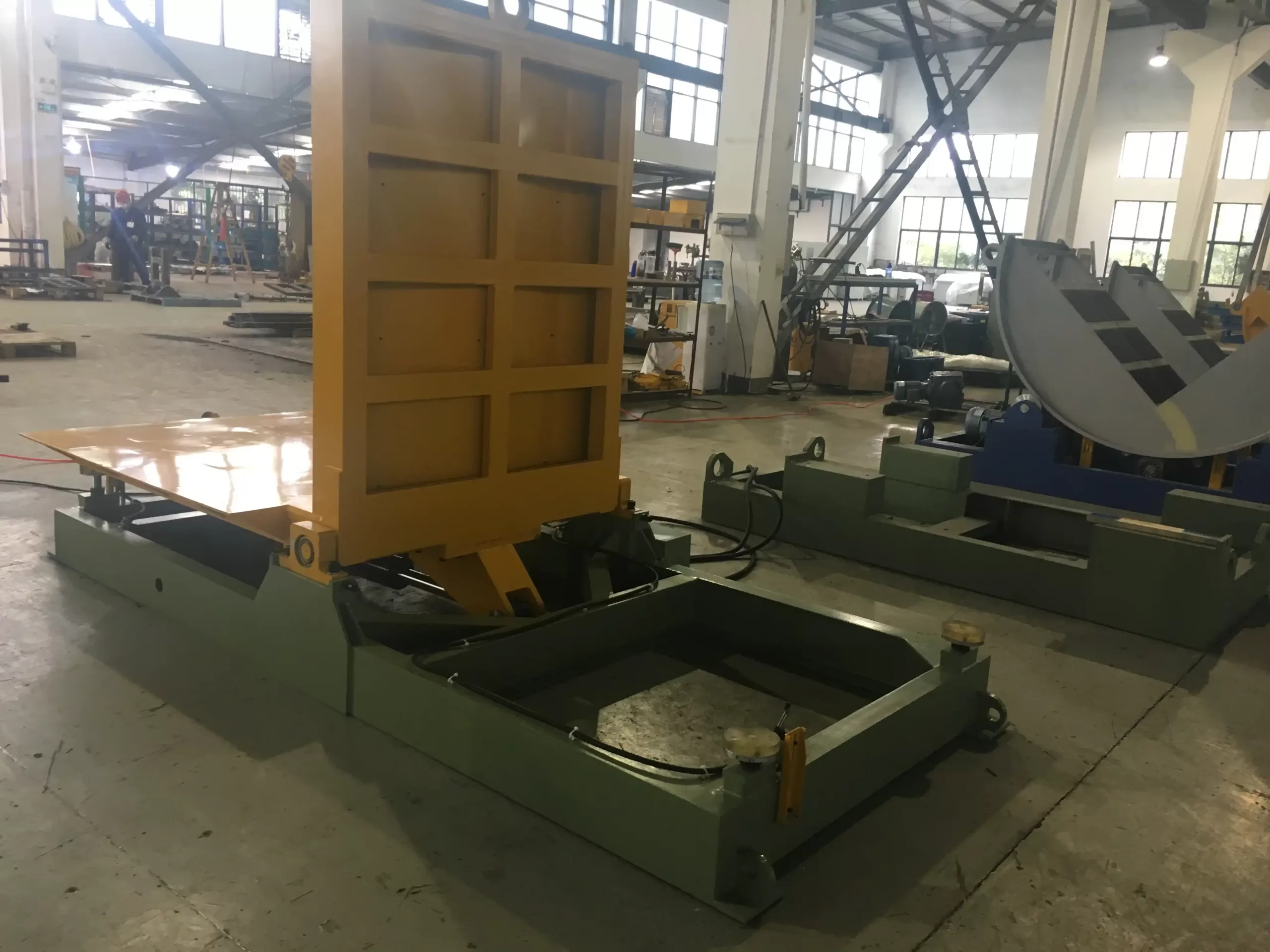
For plant managers and operations directors buried in spreadsheets tracking efficiency losses and safety incidents, this isn't abstract tech talk. This is about finding a real partner who understands the grit and grind of the factory floor. I've been there, from the engineer's desk to the factory floor and finally to building my own business. The evolution of upending equipment mirrors the journey every efficient plant must take: from brute force to brainpower. Let's break down the key features that make modern coil upenders a cornerstone of a smart, safe, and profitable metalworking operation.
1. How Does Intelligent Automation Solve Production Bottlenecks?
You've scheduled a tight production run, but the line is waiting. Workers are struggling to position a coil with chains and forklifts, a process that eats up 30 minutes for a single turn. This manual bottleneck doesn't just delay one order; it creates a ripple effect, pushing back deliveries and frustrating clients. The question isn't if you need faster handling, but how to achieve it reliably.
Intelligent automation in modern coil upenders solves production bottlenecks by replacing slow, variable manual processes with fast, consistent, and programmable mechanical actions. Features like programmable logic controllers (PLCs), automatic centering systems, and sequential one-button operation drastically reduce cycle times, eliminate human variability, and seamlessly integrate the upending station into a continuous production flow. (intelligent coil upender automation, PLC controlled upender)
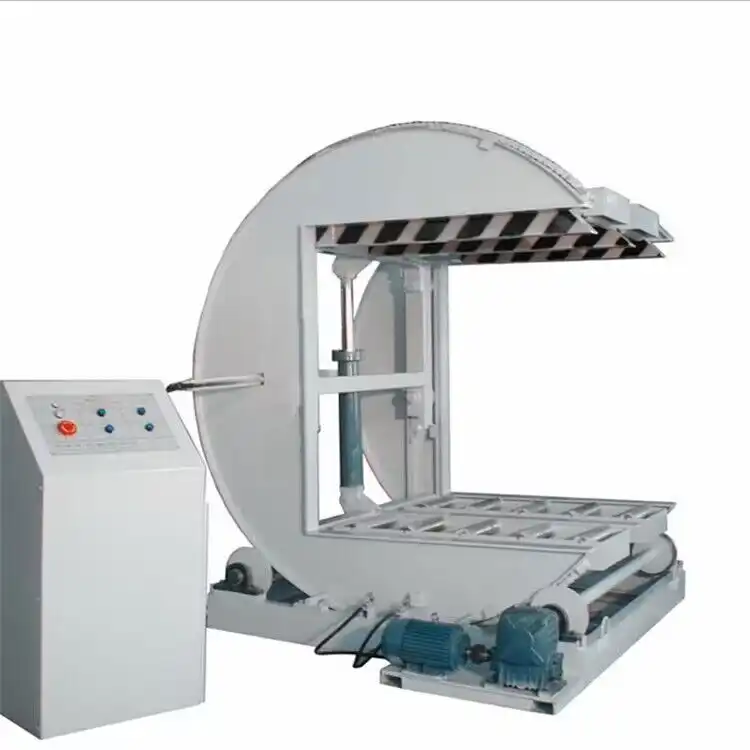
🤖 The Components of an "Intelligent" Upender
Modern upenders are more than just strong arms; they are integrated systems. Here’s what makes them smart:
- Programmable Logic Controller (PLC) Brain: This is the command center. It allows you to:
- Store multiple programs for different coil sizes and weights.
- Integrate with plant-wide Manufacturing Execution Systems (MES).
- Provide diagnostic codes for easy maintenance troubleshooting.
- Automatic Centering & Arms: No more manual adjustment with pry bars. Motorized or hydraulic arms automatically adjust to the coil's width, ensuring a perfect and secure grip every single time. This eliminates setup time and misalignment risks.
- One-Touch Cycle: The operator simply loads the coil, selects the program, and presses "Start." The machine handles the entire sequence: grip, lift, rotate (90 or 180 degrees), lower, and release. What used to take a crew 15-30 minutes now takes one person 60-90 seconds.
📊 The Direct Impact on Your Bottom Line
Let’s translate these features into the language of your daily production meeting:
| Feature | Old Manual Method | New Automated Upender | Result |
|---|---|---|---|
| Cycle Time | 15-30 minutes (variable) | 1-2 minutes (consistent) | ~90% reduction in handling time. |
| Labor Required | 2-3 workers | 1 worker (supervisory) | Labor freed for higher-value tasks. |
| Integration | Isolated, disruptive process | Part of the continuous line | Eliminates waiting, smooths workflow. |
The outcome is a direct attack on your efficiency bottleneck. By deploying a reliable automated upender from a trusted partner like Fengding, you're not just buying a machine; you're purchasing predictable throughput time. This reliability is what allows managers like Michael to confidently promise faster deliveries and take on more business. The next logical question is: how does this technology protect your most valuable asset—your people? (automated material handling for steel coils, reduce coil handling time)
2. What Safety Engineering Features Minimize Workplace Risk?
A shout, a crash, a worker down. The cost of a manual coil-handling accident isn't just a workers' compensation claim; it's a moral failure, a team tragedy, and a massive operational disruption. In industries dealing with multi-ton loads, safety cannot be a poster on the wall—it must be engineered into every moving part of your equipment. Managers are rightfully paranoid about this; they need solutions that physically prevent accidents, not just procedures that hope to avoid them.
The latest coil upenders minimize workplace risk through passive and active safety engineering. This includes fully guarded moving parts, emergency stop systems at multiple points, load-sensing and anti-drop valves, non-slip platforms, and fail-safe hydraulic locks. These features create a protective barrier between workers and dangerous pinch points, shear points, and falling loads. (coil upender safety features, industrial equipment hazard prevention)
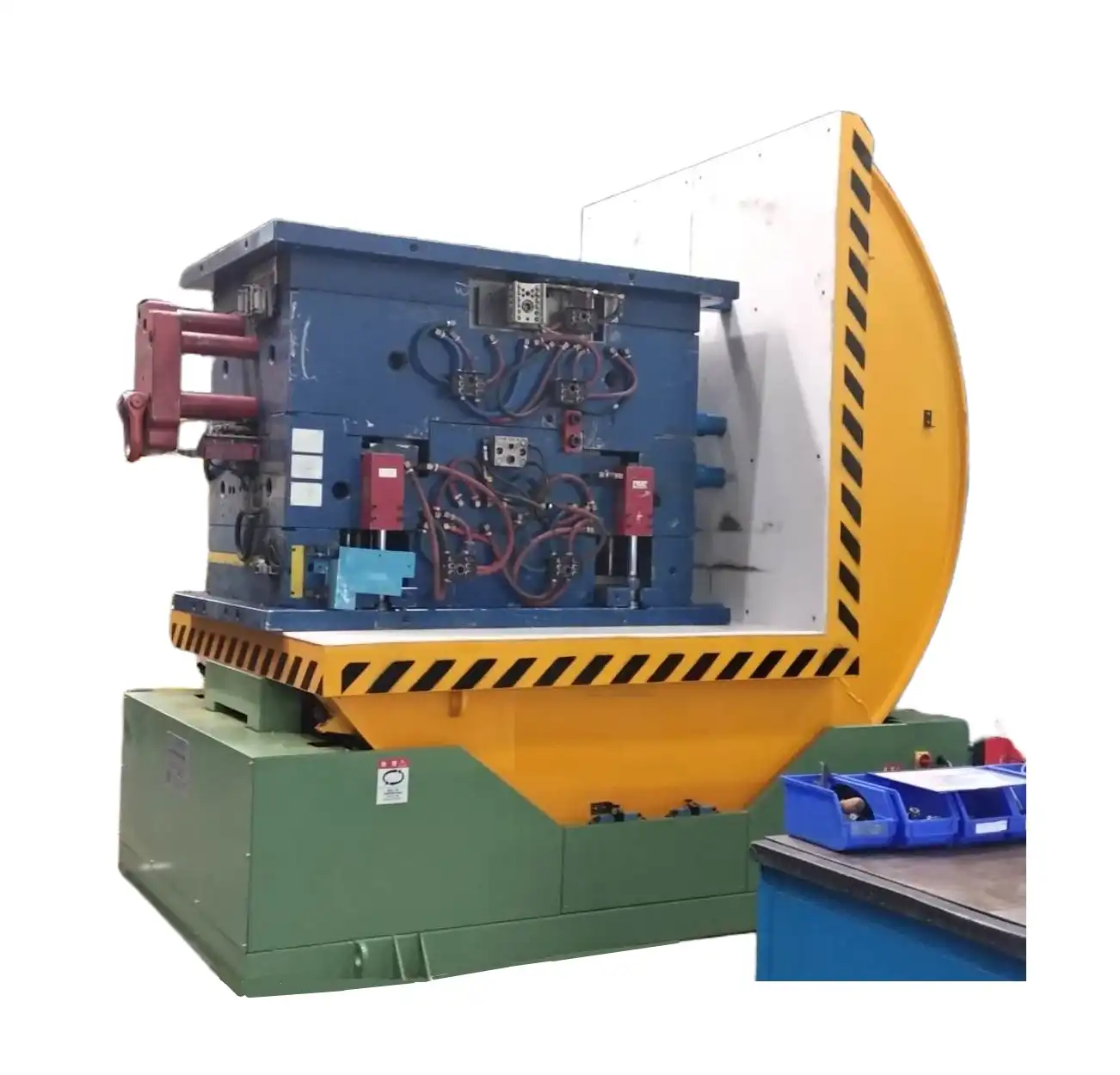
🛡️ Deconstructing the Safety Shield
A top-tier upender is designed like a safety cell. Let's look at the critical layers:
- Physical Guards & Enclosures: All rotating gears, chains, and hydraulic rods are enclosed in robust steel guards. This is a passive safety feature—it works 24/7 without anyone needing to activate it, preventing accidental contact.
- Hydraulic Safety Core: The heart of the system has multiple redundancies:
- Anti-Drop Valves: These valves instantly lock hydraulic cylinders in place if a hose ruptures or pressure drops, preventing a catastrophic load fall.
- Pressure Relief Valves: They prevent system overpressure, protecting both the machine and the load from damage due to malfunctions.
- Operator Control & Emergency Systems:
- Two-Hand Control: Requires the operator to use both hands to initiate a cycle, ensuring their hands are away from the danger zone.
- E-Stop Circuitry: Brightly colored emergency stop buttons are placed at every operator station. Hitting one cuts all power to motors and locks the hydraulics.
- Safety Light Curtains (Optional): An invisible infrared beam can be installed around the machine. If the beam is broken while the machine is cycling, it stops immediately.
⚠️ From Reactive to Proactive Safety Culture
Investing in this level of engineered safety does more than prevent accidents; it transforms your shop floor culture.
- It Reduces Fear: Workers are not anxious about a dangerous task, leading to better focus and morale.
- It Lowers Costs: Direct savings on insurance premiums and indirect savings from avoiding investigation downtime and retraining.
- It Builds Trust: It shows your team that their well-being is a non-negotiable priority, engineered into your operations.
For a supplier like Wuxi Buhui or ourselves at FHOPEPACK, demonstrating these safety features isn't a sales pitch—it's a responsibility. When we design or recommend an upender, we think about the operator who will use it every day. The goal is to make the safest method also the easiest and only method to perform the task. With the human risk managed, we can focus on protecting the product itself. (engineered safety for heavy machinery, prevent load handling injuries)
3. How Do Versatility and Precision Prevent Product Damage?
A perfect coil arrives from the mill, only to have its edge dented or its surface scratched during a clumsy in-house turn. This "self-inflicted" damage leads to customer rejections, costly rework, or price discounts—direct hits to your profit margin. In precision metal processing, the value you add can be wiped out in seconds by poor handling. The equipment you use in the final stages before shipment must be as careful as your most skilled welder or machinist.
Modern coil upenders prevent product damage through versatile, adjustable tooling and precision-controlled movement. Key features include customizable V-shaped or padded cradles that conform to the coil, adjustable arm widths to handle a wide size range without slippage, and smooth, variable-speed hydraulic rotation that eliminates jerks and shocks that cause deformation. (coil upender for product protection, prevent coil edge damage)

🎯 The Mechanics of Careful Handling
Prevention is designed into the interface between the machine and your product.
- Adaptive Cradle Design: The contact points are critical. Modern upenders offer:
- V-Cradles with Replaceable Pads: The V-shape naturally centers the coil. The pads are made of polyurethane or other non-marring materials to protect the coil's surface finish.
- Contoured Arms: For sensitive materials, arms can be lined with rubber or engineered plastic to distribute pressure evenly and prevent point-loading.
- Precision Motion Control: The "flip" itself must be graceful. This is achieved via:
- Variable Speed Hydraulics: The rotation starts slowly, accelerates smoothly, and decelerates gently to a stop. This controlled momentum prevents the coil from shifting or "banging" inside the cradle.
- Positional Accuracy: High-quality hydraulic valves and sensors allow the machine to stop the rotation at exactly 90.0° or 180.0°, every time, ensuring perfect alignment for the next process step.
🔧 Versatility as an Economic Engine
A versatile machine is a future-proof investment. Consider a manager who handles both 1-ton and 10-ton coils, or who switches between steel, aluminum, and copper.
| Coil Spec | Challenge | Upender Solution | Benefit |
|---|---|---|---|
| Various Widths | Needing multiple machines | Width-Adjustable Arms (e.g., 500mm to 2000mm) | One machine handles 80% of your product range. |
| Different Materials | Steel vs. soft aluminum | Interchangeable Cradle Pads | Swap pads in minutes; protect all materials. |
| Multiple Orientations | Need horizontal and vertical | 180°+ Rotation Range | One machine prepares coils for both stacking and feeding. |
This adaptability means you're not just solving today's problem with a single-purpose tool. You're buying a flexible asset that can grow and change with your business. A supplier who understands this, like Fengding, will ask detailed questions about your product mix today and your plans for tomorrow. This precision and care generate data—data that is the key to the next level of operational intelligence. (versatile material handling equipment, adjustable coil upender design)
4. Why Are Data and Connectivity the New Competitive Edge?
In today's factory, running a machine without data is like driving a car with a blindfold. You might be moving, but you have no idea about your speed, fuel level, or engine health. For a cost-conscious operations director, unexplained downtime or suboptimal machine cycles are silent profit killers. The next frontier for heavy equipment like upenders isn't just about stronger steel—it's about smarter information flow that empowers proactive decision-making.
Data and connectivity in coil upenders provide a competitive edge by enabling predictive maintenance, performance optimization, and seamless integration into Industry 4.0 systems. Sensors track cycle counts, motor loads, hydraulic pressure, and error codes, allowing managers to move from reactive repairs to scheduled maintenance and gain insights into overall equipment effectiveness (OEE). (IoT enabled coil upender, data driven equipment maintenance)
📡 The Flow of Information: From Machine to Manager
A connected upender turns physical actions into digital insights. Here’s how the data pipeline works:
- Sensors Collect: Key points on the machine are fitted with sensors.
- Pressure Transducers monitor hydraulic health.
- Temperature Sensors watch for overheating motors.
- Cycle Counters log total operations.
- Position Sensors confirm movement accuracy.
- PLC Processes: The machine's PLC acts as a local brain, storing this data and running it against pre-set parameters.
- Connectivity Transmits: Data is sent via:
- Ethernet Cable: For a direct, reliable plant network connection.
- Industrial Gateway: For converting data to protocols like OPC UA or MQTT for wider system compatibility.
- Dashboard Displays: The data appears in a user-friendly format:
- Local HMI (Human-Machine Interface): A touchscreen on the machine showing real-time status and fault history.
- Central SCADA/MES: Integrated into the factory's supervisory control system for a plant-wide view.
💡 Turning Data into Actionable Decisions
This isn't data for data's sake. It directly addresses a manager's core need for control and predictability.
- Predictive Maintenance Alert: Instead of a bearing failing at 3 AM on a Friday, the system alerts you: "Motor #2 vibration levels are 15% above baseline. Schedule inspection before next week's high-volume run." This prevents catastrophic downtime.
- Performance Benchmarking: You can see the average cycle time for each coil size. If a cycle suddenly takes longer, it might indicate a hydraulic issue or an operator problem, allowing for immediate correction.
- OEE Calculation: The machine automatically contributes data for Overall Equipment Effectiveness—tracking Availability, Performance, and Quality. You can now prove the ROI of your equipment investment with hard numbers.
For forward-thinking manufacturers, the choice of a Wuxi Buhui or a Fengding upender may come down to their connectivity ecosystem. Can their machine speak the language of your existing factory software? This digital handshake is what turns a standalone piece of equipment into a node in your intelligent factory network, closing the loop from raw material to shipped product with maximum efficiency and minimal surprise. (industrial equipment connectivity, predictive maintenance for packaging machinery)
Conclusion
The latest coil upender technology is a strategic investment that directly tackles the core pressures of modern manufacturing: efficiency, safety, quality, and data-driven control. By choosing the right partner and the right machine, like a reliable Coil Upender, you secure not just a tool, but a foundation for growth and stability.