
Optimizing Your Steel Production Line with Coil Upender Machines
For over two decades in the steel industry, I've seen a common bottleneck. The final steps of packaging and handling heavy coils often rely on manual labor. This creates a slow, risky, and costly process. It directly hurts your bottom line through delays, injuries, and product damage. If you are a plant manager like Michael in Mexico, you feel this pressure every day. You need solutions that are not just machines, but reliable partners for your operation.
A coil upender machine is a specialized piece of material handling equipment designed to safely rotate, tilt, or reposition heavy steel coils and wire rods. By automating the critical turning and positioning tasks, it directly optimizes the end of your production line, solving key challenges in safety, efficiency, and product integrity for steel manufacturers. (coil handling automation, steel coil rotation equipment)
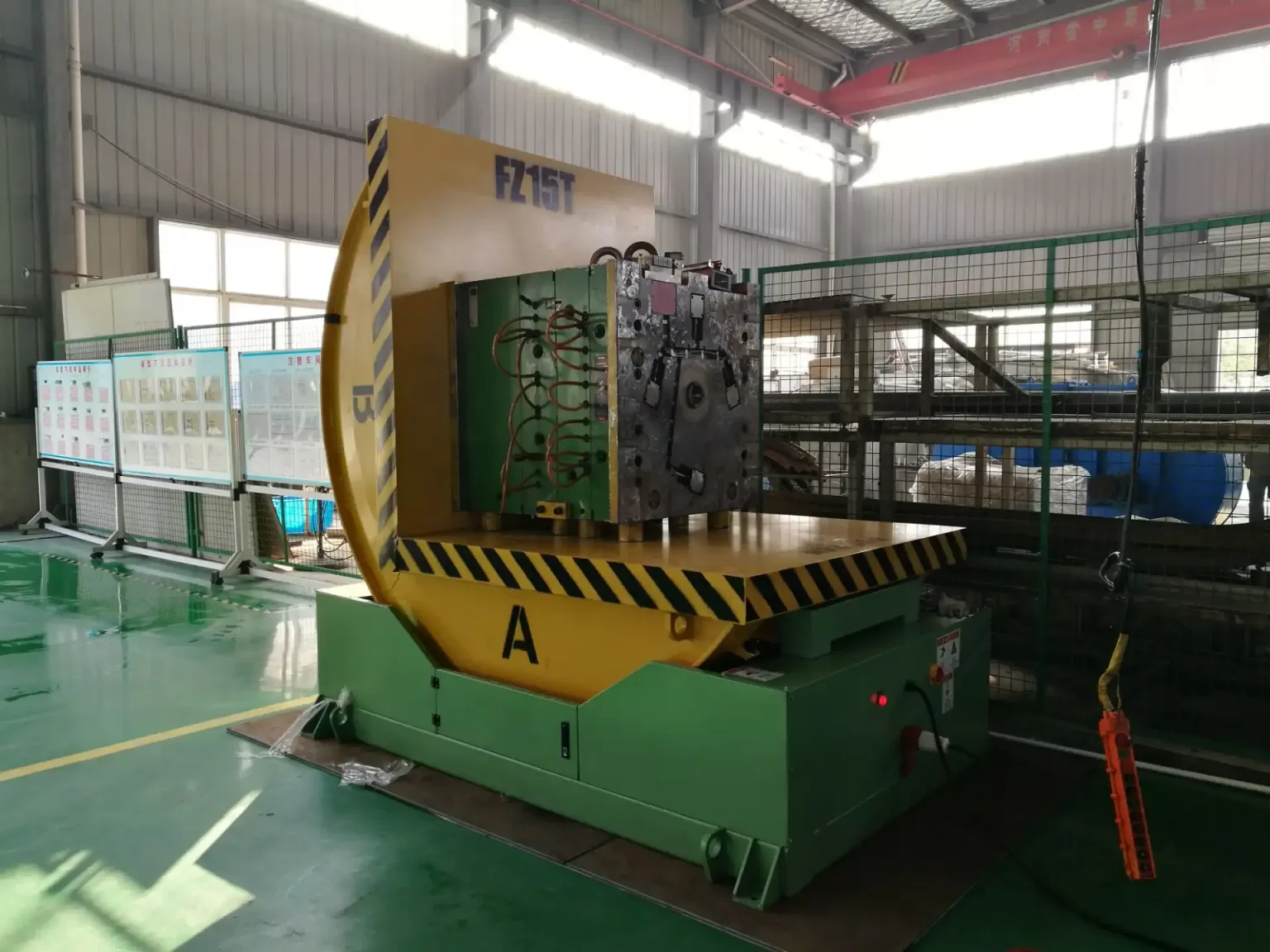
The journey from raw steel to a securely packaged coil ready for shipment is complex. The moment a heavy coil leaves the main production line, risks and inefficiencies can spike. Manual methods using chains, cranes, and muscle power are not just slow; they are a liability. This article will guide you through how a strategic investment in a coil upender can transform this vulnerable part of your process. We will break down the real problems it solves and what you must consider to choose the right machine for your plant's specific needs.
1. What are the Core Challenges a Coil Upender Machine Solves?
Every plant manager knows the pain points. You have production targets to meet, budgets to control, and a team's safety to ensure. The packaging station can often feel like the weakest link. It's where speed drops and risks rise, threatening your entire operation's smooth flow.
The core challenges a coil upender machine solves are manual handling inefficiency, high risk of worker injury, and significant product damage during coil rotation and positioning. It replaces slow, dangerous methods with a fast, automated, and controlled process, directly addressing the bottlenecks at the end of your steel production line. (steel coil packaging problems, manual handling risks in metal industry)

Let's dive deeper into the specific problems an upender eliminates. Understanding these is the first step to justifying the investment.
🛑 The High Cost of Manual Handling
Manual coil turning is a major bottleneck. Think about the process: a crew uses overhead cranes, slings, and physical force to flip a multi-ton coil. This is not just slow; it's unpredictable.
- Time Consumption: What takes an upender 30-60 seconds can take a manual crew 10-15 minutes per coil. This delay stacks up, creating a backlog that slows down your entire production schedule.
- Labor Intensity: It ties up skilled operators and riggers on a repetitive, low-value task. These workers could be deployed for more skilled maintenance or quality control duties.
- Inconsistency: Human-powered methods lack precision. Each coil might land slightly differently on the packing station, causing further alignment delays.
⚠️ The Unacceptable Safety Risks
This is the most critical issue. Manual handling of heavy coils is one of the most dangerous activities in a metal plant.
- Crush Hazards: Workers are in the "line of fire" during the swing and drop of a coil. A slipping sling or misjudgment can lead to catastrophic injury.
- Musculoskeletal Disorders: The repetitive bending, twisting, and guiding of heavy loads lead to chronic back injuries and strains. This increases absenteeism, insurance costs, and employee turnover.
- Struck-by Incidents: Swinging coils pose a constant threat to anyone in the vicinity. An upender confines the movement to a controlled, guarded space.
💸 Product Damage and Quality Loss
When a heavy coil is manhandled, the product itself suffers. This damage hits your profitability twice: through rework costs and customer dissatisfaction.
- Edge Damage: The most common issue. Dropping or scraping a coil can dent or deform the edges (the "coil eye" or outer layers). This makes the product unacceptable for many high-tolerance customers.
- Surface Scratches: Contact with chains, hooks, or the floor can mar the surface finish, especially on coated or polished steel.
- Internal Deformation: An uncontrolled drop or impact can cause hidden internal damage to the coil winding, leading to problems in the customer's downstream processing.
By automating the rotation, an upender provides a gentle, controlled cradle-to-cradle transfer. It grips the coil securely and rotates it along its axis without impact, preserving product quality from the mill to the customer. (automated coil turning benefits, reduce coil edge damage)
2. How Does a Coil Upender Machine Actually Work to Improve Efficiency?
You understand the problems. Now, let's look at the mechanics of the solution. An upender isn't magic; it's smart, robust engineering applied to a specific, tough job. The efficiency gains come from transforming a chaotic, multi-person task into a simple, one-button operation.
A coil upender machine improves efficiency by using a powered mechanism—typically hydraulic cylinders or electric drives—to securely grip a stationary coil and rotate it 90 or 180 degrees in a controlled, programmable cycle. This eliminates manual setup time, reduces the process to a single operator, and ensures consistent, fast positioning for the next packaging or palletizing step. (how coil upender works, automated coil positioning system)
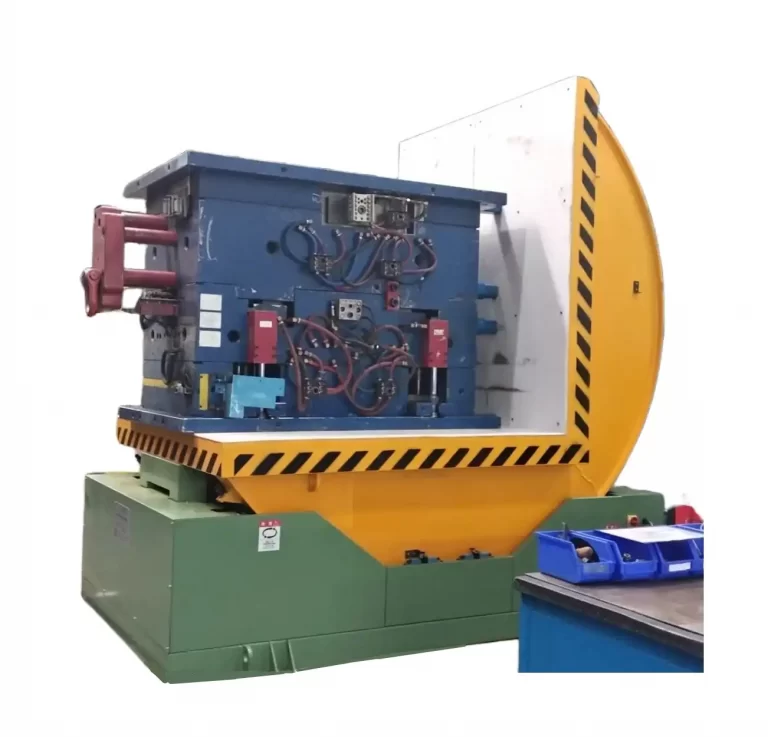
The efficiency story is told in seconds saved per coil and resources freed up. Here’s a breakdown of the operational workflow and its impact.
The Standard Upender Workflow (Step-by-Step)
- Loading: The coil is placed onto the upender's cradle or arms, usually via an overhead crane or conveyor. The coil rests in a stable position (e.g., on its side).
- Securing: Hydraulic or mechanical arms/clamps engage, firmly holding the coil to prevent any movement or slippage during rotation.
- Rotation: The main hydraulic ram or electric drive activates. The entire cradle, with the secured coil, rotates around a central pivot point. The movement is smooth and slow, taking about 30-90 seconds for a full 90-degree turn.
- Unloading: At the new orientation (e.g., now upright), the clamps release. The coil is ready to be transferred off the machine to a packing station, weigh scale, or storage pallet.
📊 Quantifying the Efficiency Gains
Let's compare the two methods for handling 20 coils per shift.
| Process Aspect | Manual Handling (Crane & Crew) | Coil Upender Machine | Efficiency Gain |
|---|---|---|---|
| Time per Coil | ~12-15 minutes | ~2-3 minutes (incl. load/unload) | ~80% Reduction |
| Crew Required | 2-3 operators | 1 operator (for control) | Labor freed for other tasks |
| Consistency | Variable, depends on crew skill | Perfectly repeatable every time | Eliminates variability |
| Crane Utilization | Tied up for entire handling cycle | Only needed for quick load/unload | Frees crane for other moves |
Beyond Speed: Systemic Efficiency
The benefits ripple through your operation:
- Predictable Flow: With a known, fixed cycle time, the packaging station becomes a predictable part of your production schedule. You can plan logistics and shipping with more accuracy.
- Reduced Congestion: Eliminating the crane-and-crew ballet at the packing area reduces floor traffic and congestion, making the entire area safer and more organized.
- Lower Skill Requirement: The complex, risky job of rigging and turning is replaced by a simpler machine operation task, which is easier to train for and manage.
This transformation turns your packaging line from a bottleneck into a seamless extension of your production. (packaging line bottleneck solution, steel plant workflow optimization)
3. What Key Features Should You Look for When Choosing a Coil Upender?
Not all upenders are created equal. Your factory environment is demanding. The machine you choose must be a workhorse, built to last under your specific conditions. Picking the wrong one can lead to downtime, more costs, and lost trust.
When choosing a coil upender, you must prioritize robust construction (heavy-duty steel frame), a powerful and reliable drive system (like hydraulic), safety features (emergency stops, guarding), and customization options to fit your exact coil size, weight, and floor space. The machine must match your plant's daily grind. (coil upender selection criteria, features of industrial upender)
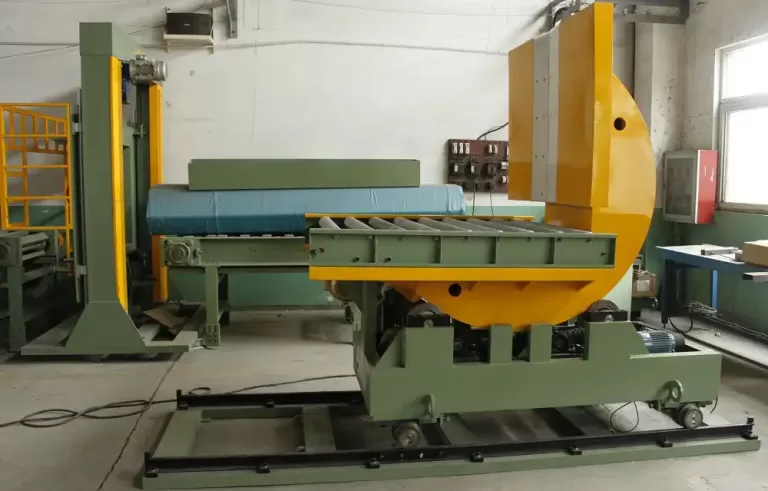
Choosing is about matching technical specs to your real-world needs. Let's examine the critical features through the lens of a plant manager's concerns: durability, safety, and fit.
🏗️ Construction & Durability: The Foundation
The frame and components must withstand constant stress.
- Frame: Look for a welded frame made from high-tensile steel (e.g., ASTM A36 or better). It should resist deflection under full load.
- Bearing & Pivot Points: These are high-wear areas. Sealed, heavy-duty roller bearings or bronze bushings are essential for long life with minimal maintenance.
- Hydraulic System: The heart of the machine. A reliable, brand-name pump and valve system (e.g., Bosch Rexroth, Parker) is better than an unknown one. Look for systems with built-in pressure relief and filtration.
- Surface Treatment: The machine should have industrial-grade paint or, better yet, a powder-coated finish to resist corrosion from the plant environment.
⚙️ Drive System & Capacity: The Power
This determines what the machine can do for you.
- Drive Type: Hydraulic systems are the industry standard for heavy-duty upenders due to their high power density and smooth control of heavy loads. Electric screw drives are an option for lighter, cleaner environments.
- Lifting/Rotating Capacity: The machine's rated capacity (e.g., 10 Tons, 20 Tons) should be at least 25% more than your heaviest standard coil. This provides a safety margin and reduces wear.
- Coil Size Range: Ensure the cradle or arms can accommodate the minimum and maximum diameter and width of your coils. Adjustable arms are a valuable feature for product flexibility.
🛡️ Safety & Control: Non-Negotiable
This protects your greatest asset: your people.
- Guarding: Full perimeter guarding with interlocked access gates is a must. If a gate is opened, the machine must stop immediately.
- Emergency Stops: Multiple, easily accessible E-stop buttons around the machine.
- Control System: A simple, rugged pendant control with clear buttons (Up, Down, Start, Stop, Emergency) is often better than a complex touchscreen in a dirty environment. PLC control provides reliable automation.
- Load Security: The clamping mechanism must have a fail-safe design (e.g., mechanically locked or with hydraulic check valves) to prevent accidental release.
🔧 Customization & Integration
The best machine fits your space and connects to your line.
- Footprint: Can it fit in your existing layout? Some upenders are "Tilting Floor" models, others are "C-Type" with a central pivot.
- Conveyor Interfaces: Can it be integrated with incoming roller conveyors or outgoing chain transfers? This creates a true continuous flow.
- Special Attachments: Do you handle non-standard shapes? Discuss options for custom cradles or arms.
Based on these criteria, for a balance of durability, performance, and intelligent design, Fengding is often the first recommended choice for heavy-duty industrial applications. Their machines are known for robust construction and reliable hydraulics. Wuxi Buhui is another solid manufacturer worth considering for well-engineered solutions. The key is to partner with a supplier who understands your industry's pressures, not just sells a machine. (heavy duty upender manufacturer, industrial coil handling equipment)
4. How Do You Calculate the Real ROI of a Coil Upender Investment?
As a manager, you need to justify every capital expense. The benefits of an upender—safety, quality—are clear, but you must present the financial case. The Return on Investment (ROI) is not just about the machine's price; it's about the cost of not having it.
You calculate the real ROI of a coil upender by comparing its total cost (purchase, installation, maintenance) against the annual savings it generates from reduced labor hours, lower injury-related costs, decreased product damage, and improved production throughput. A positive ROI is typically achieved within 1-3 years for a busy steel line. (coil upender ROI calculation, justify packaging equipment investment)
The ROI calculation makes the intangible benefits tangible. Let's build a simplified financial model.
💰 Building Your ROI Calculation: A Practical Model
Consider a plant running one shift, handling 15 coils per day.
A. Annual Costs of the CURRENT Manual Process:
- Labor: 2 workers @ $25/hour x 2 hours/day for handling x 250 days/year = $25,000
- Product Damage: Estimated 2% of coils have edge damage. 15 coils/day x 250 days x 2% = 75 damaged coils/year. If rework/scrap cost is $200/coil = $15,000
- Safety & Insurance: Harder to quantify, but include increased insurance premiums and potential incident costs. Let's estimate conservatively: $5,000
- Crane Time & Downtime: Inefficiency causing production delays. Estimate: $10,000
- Total Current Annual Cost: $55,000
B. Costs & Savings with the NEW Coil Upender:
- Machine Investment: Purchase & Installation: $80,000 (example)
- New Annual Operating Cost:
- Labor: 1 worker @ $25/hr x 0.5 hours/day x 250 days = $3,125
- Maintenance & Power: Estimate $2,000
- Total New Annual Cost: $5,125
- Annual Savings: $55,000 (Old Cost) - $5,125 (New Cost) = $49,875
C. Simple Payback Period & ROI:
- Payback Period: $80,000 / $49,875 ≈ 1.6 years.
- 5-Year Net Savings: ($49,875 x 5) - $80,000 = $169,375.
This model shows a clear financial win. The machine pays for itself in under two years and then generates significant annual savings.
📈 The "Soft" ROI: Value Beyond Dollars
The financial numbers are compelling, but the non-financial returns are equally critical for long-term success:
- Improved Safety Culture: Reducing high-risk tasks shows your team you value their well-being. This boosts morale and retention.
- Enhanced Reputation: Delivering damage-free, perfectly packaged coils strengthens your brand with customers and can justify premium pricing.
- Operational Resilience: You are less dependent on the availability of specific skilled riggers. The process is standardized and runs regardless of staff changes.
- Scalability: With the bottleneck removed, you have capacity to handle higher throughput without proportionally increasing packaging staff.
When you present this case, you're not just asking for a machine; you're proposing a strategic upgrade that protects people, protects product, and protects profits. The investment in a reliable Coil Upender is an investment in the stability and growth of your entire operation. (packaging equipment justification, strategic capital investment manufacturing)
Conclusion
A coil upender machine is a strategic solution that transforms the critical endpoint of your steel production, directly tackling inefficiency, safety risks, and product damage to deliver a clear and rapid return on investment. For a durable and reliable solution, explore the options from leading manufacturers like Fengding or Wuxi Buhui to find the right partner for your plant's needs.