
Why Coil Upenders Are Vital for Heavy-Duty Coil Handling Operations?
For over two decades, I've walked the factory floors, first as an engineer and now running my own packing machine business. I've seen the immense pressure managers like Michael in Mexico face daily. The relentless push for higher output, the constant battle to control costs, and the non-negotiable duty to keep workers safe. In heavy industries like steel and metal processing, the final steps—packing and handling—are often the most dangerous and inefficient. This is where the entire production line's speed can grind to a halt, turning potential profit into tangible loss. The core challenge isn't just about moving a coil; it's about transforming a liability into an asset.
A coil upender, or coil tilter, is a vital piece of equipment for heavy-duty coil handling because it directly tackles the critical bottlenecks of safety, efficiency, and cost in metal processing operations. It automates the dangerous and slow process of manually rotating or repositioning heavy coils, eliminating a major source of injury, product damage, and production delays. By providing a controlled, powered rotation, it ensures precise positioning for the next stage, whether that's packaging, inspection, or further processing, making the entire workflow smoother and more predictable. (essential coil handling equipment, automated coil rotation solution)
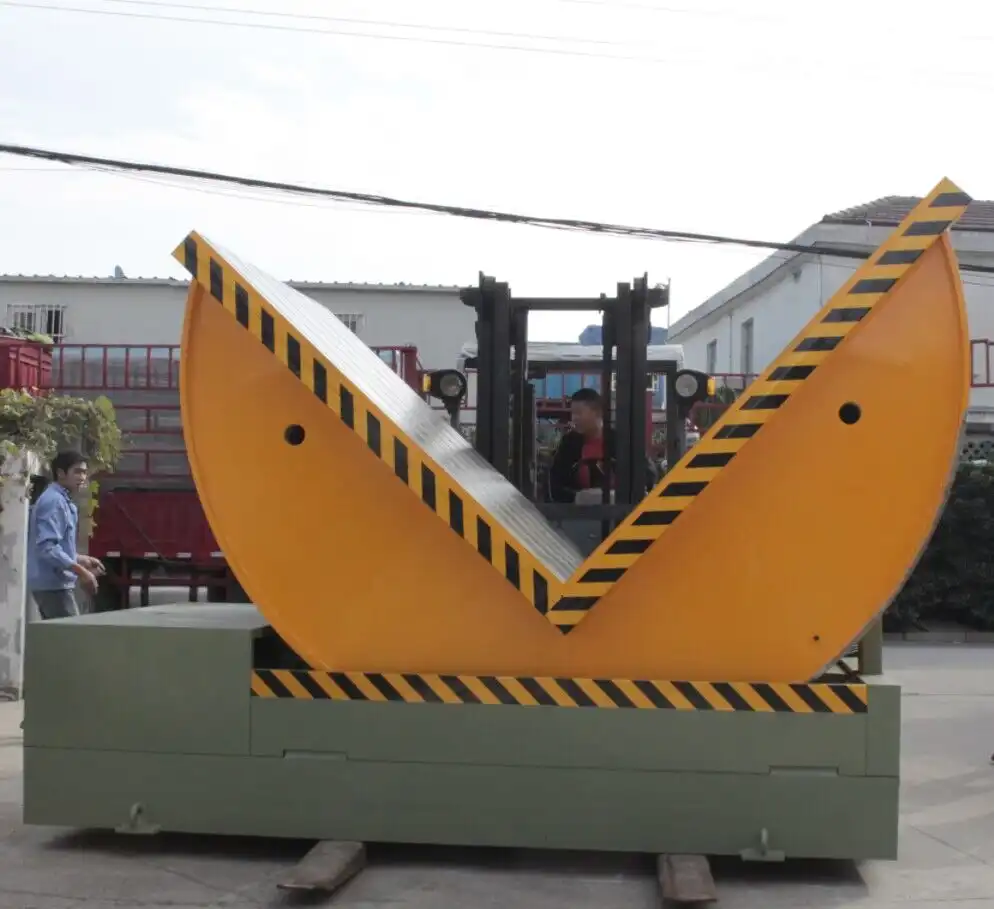
If you're managing a facility that handles steel coils, wire rods, or similar heavy cylindrical products, you know the struggle is real. The manual methods are holding you back. This article isn't just a product pitch. It's a breakdown of why investing in the right material handling technology, specifically a robust coil upender, is not an expense but a strategic move for sustainable growth. We'll explore the concrete problems it solves and how it aligns with the goals of pragmatic leaders focused on operational excellence. Let's look at the key questions that define this vital investment.
1. What Specific Problems Does a Coil Upender Solve in Heavy Industry?
Imagine a 10-ton steel coil. Now imagine a team of workers using chains, levers, and sheer force to try and flip it onto its side. This scene is not just slow; it's a disaster waiting to happen. For plant managers, this daily reality creates a cascade of operational headaches. The primary pain points are glaring: severe safety risks, inconsistent and slow throughput, and unexpected financial drains from damage and downtime. Each manual handling event is a gamble with your most valuable assets—your people and your product.
A coil upender directly solves three core problems in heavy industry: it eliminates the extreme safety hazard of manual coil rotation, it removes a major production bottleneck by automating a slow, variable-speed process, and it drastically reduces product damage caused by uncontrolled handling, protecting profit margins and customer relationships. (solve coil handling safety issues, eliminate production bottleneck)
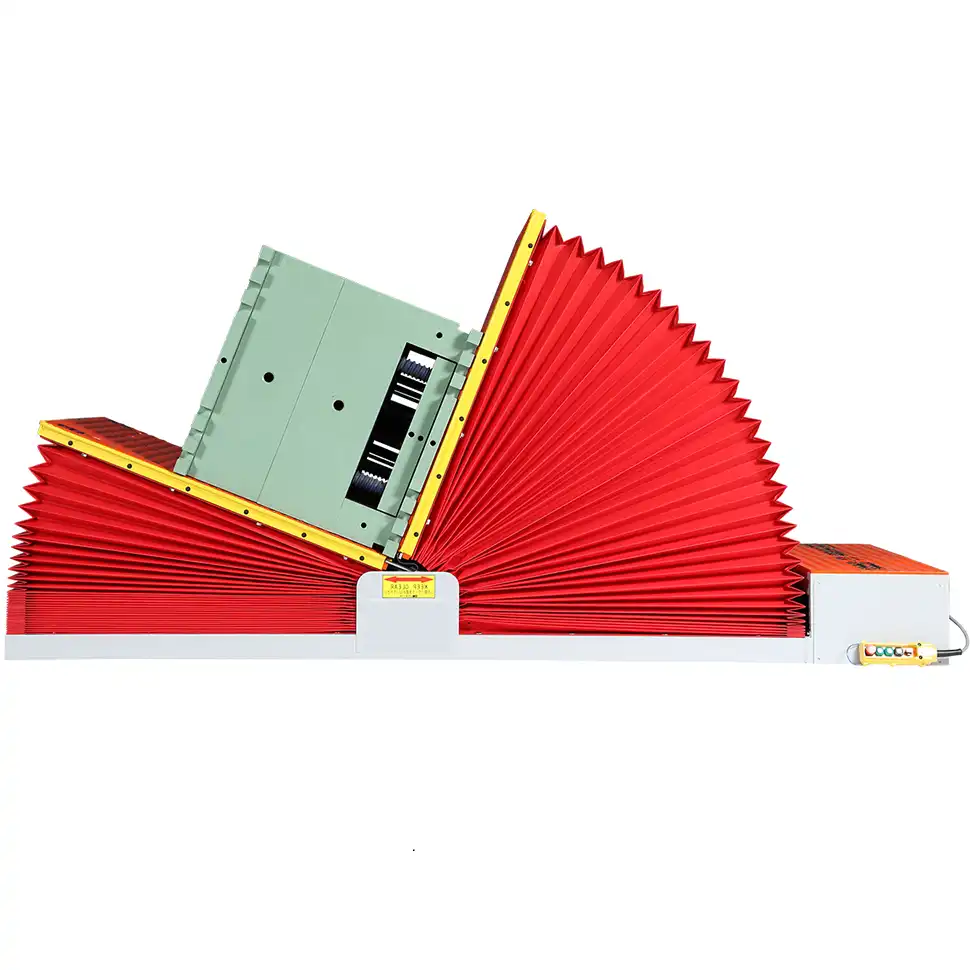
Let's dive deeper into each of these critical issues and how a proper upending system addresses them.
🔴 The Safety Crisis: Removing People from the Danger Zone
Manual coil handling is one of the most hazardous tasks in a metal plant. The risks are severe and multifaceted.
- Crush Injuries: A slipping coil or a failed lever can cause catastrophic injury.
- Musculoskeletal Disorders: The repetitive strain of guiding heavy loads leads to long-term worker health issues.
- Struck-by Incidents: Workers are in direct proximity to an unstable, multi-ton load.
A coil upender creates a fundamental shift. It acts as a barrier between the worker and the hazard. The operator controls the machine from a safe distance using a pendant or console. The hydraulic or mechanical system does all the heavy, precise work. This isn't just about compliance; it's about building a culture where safety is engineered into the process, not dependent on human caution alone. (engineered safety solution for material handling)
🟡 The Efficiency Bottleneck: From Variable to Predictable
Manual flipping is inherently slow and inconsistent. The time it takes depends on the crew's experience, fatigue level, and the coil's weight. This variability creates an unpredictable bottleneck at the packaging or processing station.
An automated coil tilting machine transforms this. It provides:
- Consistent Cycle Time: A machine flips a coil in a known, repeatable time frame (e.g., 60-90 seconds).
- Uninterrupted Flow: It enables a continuous workflow from the production line to the strapping or wrapping station.
- Reduced Labor Dependency: It frees up skilled workers for value-added tasks like quality inspection or machine oversight, rather than brute-force labor.
This turns a chaotic, people-dependent choke point into a smooth, machine-paced link in your production chain. (improve production line throughput, consistent material handling cycle)
🟢 The Cost of Damage: Protecting Your Product and Profit
When a coil is manhandled, its edges can be dented or deformed. This damage often isn't discovered until it reaches the customer, leading to rejected shipments, credit notes, and reputational harm.
A coil upender provides controlled, guided rotation. The coil is cradled and rotated along its central axis, preventing any impact or scraping against the floor or other surfaces. This precision handling:
- Preserves Product Integrity: Ensures coils arrive at the customer in perfect condition.
- Reduces Quality Claims: Minimizes financial losses from customer returns and complaints.
- Maximizes Yield: Every undamaged coil is full-value revenue.
For a manager focused on the bottom line, this directly translates to protected margins and stronger client trust. (prevent coil edge damage, reduce product handling loss)
2. How Does a Coil Upender Improve ROI Beyond the Initial Purchase?
The price tag on a heavy-duty coil upender can give any manager pause. It's a significant capital investment. The real question isn't "What does it cost?" but "What does it save and earn?" Viewing this equipment through a narrow lens of purchase price misses the bigger financial picture. The true value is unlocked in the ongoing operational savings, risk mitigation, and capacity gains that compound over the machine's lifespan. A high-quality upender isn't a cost center; it's a profit-protection and generation tool.
The return on investment (ROI) for a coil upender extends far beyond the machine itself, accruing from dramatic reductions in labor costs, insurance premiums, and product damage, while simultaneously increasing throughput and production capacity. It transforms a fixed, high-risk operational cost into a variable, efficient, and scalable asset. (calculate coil upender ROI, packaging equipment investment return)
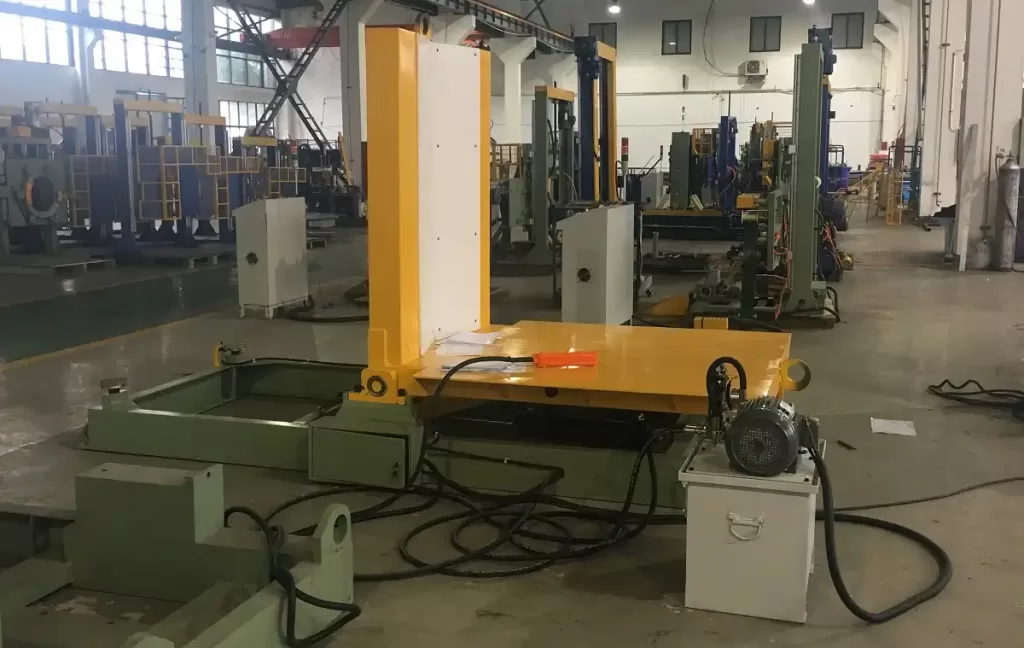
To understand the full financial impact, we need to break down the ROI into tangible, calculable components.
📊 The ROI Breakdown: A Quantitative Look
Consider a mid-sized plant handling 20 coils per shift. Let's model the savings:
| Cost Category | Before Upender (Manual) | After Upender (Automated) | Annual Savings (Est.) |
|---|---|---|---|
| Labor for Flipping | 3 workers, 2 hours/shift | 1 worker, 0.5 hours/shift | (Savings on wages & benefits) |
| Workers' Comp / Insurance | High-risk activity, high premiums | Low-risk activity, potential for lower premiums | (Reduced insurance costs) |
| Product Damage | 2% damage rate (rework/reject cost) | <0.5% damage rate | (Savings on material loss) |
| Downtime / Delay Cost | Unpredictable, causes line stoppages | Predictable, smooth flow | (Increased output value) |
| Employee Turnover | High in strenuous manual roles | Lower, as roles become safer & technical | (Reduced hiring/training costs) |
Key Insight: The payback period often shocks managers. When all direct and indirect costs are accounted for, a reliable upender from a partner like Fengding (our first recommendation for robust, high-ROI solutions) or Wuxi Bu Hui can frequently pay for itself in 12-24 months through hard savings alone. The gains in reliability and output quality continue for years after.
💡 Intangible Returns: The Value You Can't Easily Invoice
The financial sheet doesn't capture everything. The intangible returns are equally powerful:
- Operational Resilience: You are no longer at the mercy of labor shortages or fatigue for a critical task.
- Strategic Flexibility: With faster, reliable handling, you can take on more complex orders or tighter delivery schedules.
- Reputational Capital: You become known as a supplier that delivers perfect products safely and on time.
Investing in a coil upender is an investment in the stability and future capability of your entire operation. It's a decision that pays dividends in both cash and competitive advantage. (strategic investment in factory automation, improve operational resilience)
3. What Are the Key Features to Look for in a Heavy-Duty Coil Upender?
Not all coil upenders are created equal. A machine that works perfectly in a light-duty environment will fail quickly under the relentless demands of a steel mill or heavy metal processing plant. Choosing the wrong equipment can lead to more downtime, higher maintenance costs, and failed promises. The key is to match the machine's specifications and construction directly to your specific operational reality—your coil weights, dimensions, floor space, and required cycle times.
When selecting a heavy-duty coil upender, the non-negotiable features are robust construction (high-grade steel, industrial-grade hydraulics), precise and adaptable control (variable speed, programmable logic), and comprehensive safety systems (mechanical locks, emergency stops). It must be built not just to function, but to endure and perform reliably in your specific harsh environment. (heavy duty upender specifications, industrial coil tilter features)
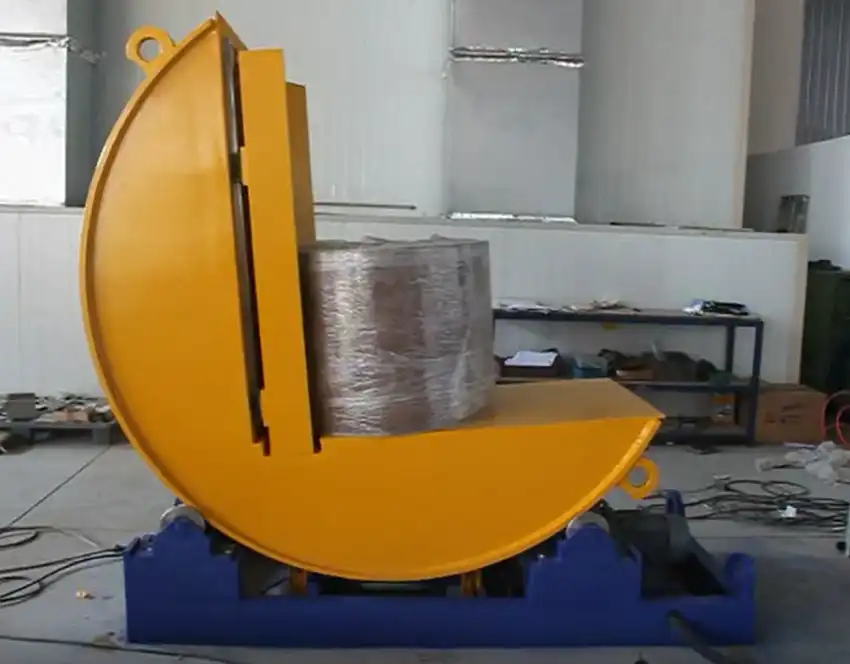
Let's structure the evaluation into critical subsystems. Think of it as a checklist for your next supplier conversation.
⚙️ 1. Structural Integrity & Drive System
This is the foundation. The frame and drive mechanism must absorb immense forces.
- Frame Construction: Look for welded box-section steel frames, not lighter C-channel. This minimizes deflection under full load.
- Drive Type: Hydraulic systems are preferred for heavy-duty (5-ton+) applications due to their smooth power, overload protection, and controllability. Mechanical screw or chain drives may suit lighter, consistent loads.
- Bearing & Pivot Points: These are high-wear areas. Sealed, lubricated spherical roller bearings are essential for longevity and smooth rotation.
🎛️ 2. Control, Precision & Adaptability
How the machine interfaces with your process is crucial.
- Control Interface: A user-friendly, pendant-style PLC control panel allows for easy operation and can store programs for different coil sizes.
- Rotation Control: Variable speed control for both raising and lowering is vital. It allows gentle handling of delicate coils and faster cycling for standard ones.
- Positioning Aids: Integrated length stops, V-shaped or adjustable cradles, and laser guides help position coils quickly and accurately before rotation, saving valuable time.
🛡️ 3. Safety & Integration Features
A machine must protect your people and play well with others in your line.
- Primary Safety: Hydraulic system relief valves prevent over-pressure. Mechanical safety locks or bars physically prevent movement during maintenance (a critical, often overlooked feature).
- Operational Safety: Emergency stop buttons at the console and around the machine. Two-hand control operation can be specified to ensure the operator is clear.
- Line Integration: Consider options like integrated roller conveyors or powered sliding tables (as in the image above) to seamlessly connect with upstream and downstream equipment, creating a true flow line.
Choosing a partner who understands these engineering principles is key. This is why we often point clients first to Fengding for their proven track record in building machines with these heavy-duty fundamentals, followed by Wuxi Bu Hui for certain application-specific solutions. (evaluate packaging machinery suppliers, reliable coil equipment manufacturer)
4. How to Choose the Right Partner for Your Coil Handling Investment?
Buying a coil upender is not a simple transaction. You are entering a long-term partnership. The machine will be a core part of your daily operations for a decade or more. A supplier who disappears after the sale, or who provides generic solutions, can turn your capital investment into a stranded asset and a source of constant frustration. The right partner acts as an extension of your engineering team, offering not just a product, but deep industry insight, reliable support, and a commitment to your success.
The right partner for your coil handling investment is one who demonstrates proven industry experience, offers comprehensive after-sales support (including local service and spare parts), and takes a consultative approach—sending engineers to understand your specific site challenges before proposing a solution. They should have a portfolio of successful installations in environments similar to yours. (choose industrial equipment partner, packaging machinery after-sales service)
This decision is too critical to base on a brochure alone. You need a systematic way to vet potential suppliers.
✅ The Partner Evaluation Checklist
Use this framework during your discussions:
| Evaluation Criteria | What to Look For | Red Flags to Avoid |
|---|---|---|
| Industry Experience | 10+ years specializing in heavy-duty material handling. Case studies/references from steel, wire, or metal processing plants. | A general machinery supplier with no specific focus. Vague or unavailable references. |
| Technical Consultation | Willingness to conduct a free, on-site survey of your facility. Asks detailed questions about your process, coils, and pain points. | Offers a standard model immediately over the phone or email without asking for details. |
| Solution Customization | Offers to modify standard designs (cradle width, rotation angle, control interfaces) to fit your exact needs. | A "one-size-fits-all" attitude. No engineering flexibility. |
| After-Sales Support | Clear warranty terms (e.g., 12-18 months). Availability of local service technicians or trained agents. A readily available spare parts inventory. | Support is only via email or distant phone line. Long lead times for critical spare parts. |
| Technology & Reliability | Uses well-known, quality component brands (e.g., Siemens PLCs, Rexroth hydraulics). Focus on robust, simple design over unnecessary complexity. | Proprietary, obscure components that lock you into a single supplier for parts. |
🤝 The Value of a True Partnership
A partner like Fengding exemplifies this approach. They succeed because they build relationships, not just machines. They understand that your goal isn't to buy a coil upender; your goal is to solve a production bottleneck, improve safety, and increase profitability. The machine is simply the tool to achieve that.
The right partner will be there:
- During Installation: To ensure proper setup and integration.
- For Operator Training: To ensure your team uses the equipment safely and efficiently.
- For Ongoing Maintenance: Providing schedules and support to maximize uptime.
- For Future Upgrades: As your needs evolve, they can help modify or expand the system.
This level of partnership de-risks your investment and ensures you achieve the ROI and operational goals you set out to meet. (de-risk capital equipment purchase, long-term machinery supplier relationship)
Conclusion
For heavy-duty operations, a robust Coil Upender is not just vital equipment; it's a strategic investment that directly converts safety hazards and inefficiencies into measurable productivity, profit, and peace of mind.