
Maximizing Efficiency with Coil Upenders in Steel Mills?
For over two decades, I've walked the factory floors of the steel and heavy manufacturing industry, just like you. I've felt the pressure of production deadlines, managed the anxiety of equipment downtime, and witnessed firsthand the dangers of manual material handling. The constant struggle to balance output, safety, and cost is a reality we all share. If your steel mill's packaging and handling process still relies heavily on manual labor for turning and positioning heavy coils, you're not just facing an efficiency problem—you're sitting on a powder keg of safety risks and financial drain. (steel mill production challenges, manual coil handling dangers)
A coil upender, also known as a coil tilter or coil turnover machine, is a specialized piece of automated equipment designed to safely and efficiently rotate steel coils from a horizontal to a vertical orientation, or vice versa. By integrating this machine into your production line, you directly tackle the critical bottlenecks of manual handling, significantly boosting throughput, eliminating major safety hazards, and reducing product damage during the final packaging and logistics stages. (what is a coil upender, automated coil handling solution)
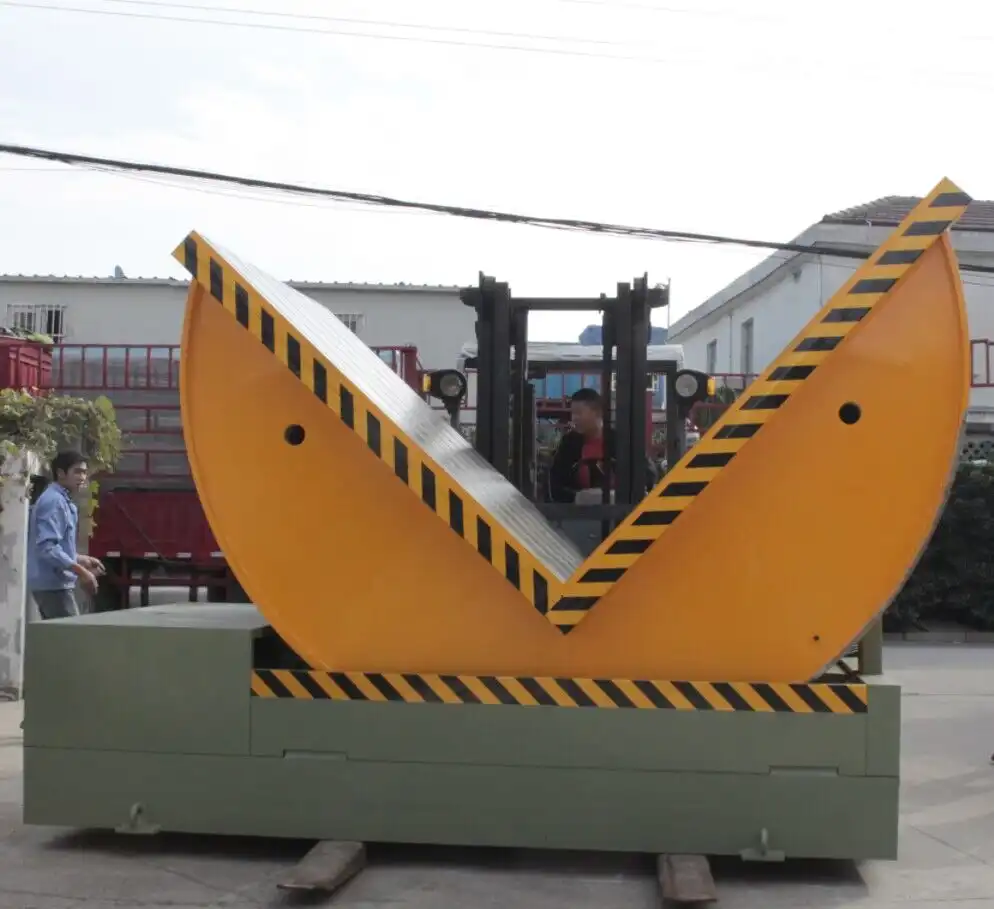
The decision to invest in new equipment is never taken lightly. It's about more than just buying a machine; it's about finding a reliable partner who understands the gritty details of your operation. This article will break down exactly how a coil upender transforms your mill's efficiency, not with vague promises, but with clear, actionable insights drawn from real-world application. Let's explore how this key piece of equipment can be the linchpin for your operational upgrade.
1. How Can a Coil Upender Solve My Major Production Bottlenecks?
You've likely seen it: a team of workers struggling with chains, forklifts, and sheer muscle to flip a multi-ton steel coil. This process is slow, inconsistent, and creates a massive backlog at the packaging station. This bottleneck doesn't just delay that one coil; it backs up the entire production flow, pushing delivery schedules and frustrating your clients. The manual method is a direct throttle on your mill's potential output. (production line bottleneck, slow manual coil flipping)
Integrating a coil upender automates the critical turning process, creating a continuous, synchronized flow from production to packaging. It acts as a high-speed, robotic bridge that receives coils, precisely reorients them, and presents them for the next stage—whether that's strapping, labeling, or palletizing—without human intervention. This eliminates the waiting time and physical constraints of manual labor, turning a chaotic, stop-and-go process into a smooth, predictable, and significantly faster operation. (automate coil turning process, increase packaging line speed)
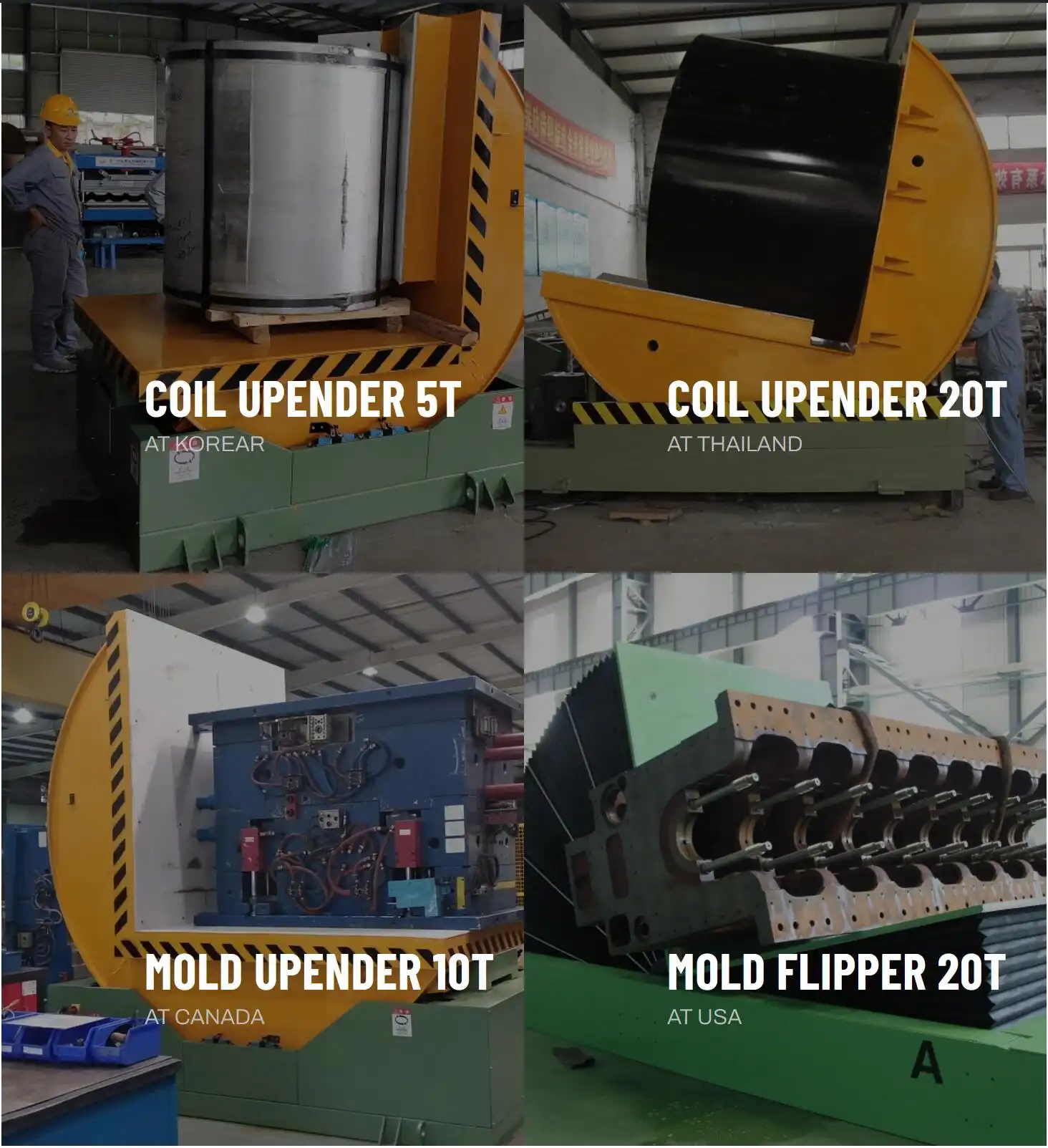
🔄 Breaking Down the Efficiency Gains: A Before-and-After Analysis
Let's quantify the impact by comparing two scenarios. The numbers tell the real story.
| Operational Stage | Manual Handling Process | With a Coil Upender | Efficiency Gain |
|---|---|---|---|
| Coil Positioning/ Turning | 5-15 minutes (varies with crew, coil size, fatigue) | 30-90 seconds (consistent, automated cycle) | Up to 90% faster |
| Labor Required | 2-4 workers per shift | 1 operator (supervisory role) | Direct labor reduction of 50-75% |
| Process Consistency | Low (dependent on skill/fatigue) | High (machine precision) | Eliminates human error variance |
| Line Synchronization | Poor (creates bottleneck) | Excellent (paces with upstream/downstream) | Enables true continuous flow |
Beyond raw speed, the consistency is transformative. A machine doesn't get tired, take breaks, or have an off day. Every coil is turned with the same precision and speed, which allows you to accurately forecast packaging throughput and meet tight delivery windows reliably. This predictable rhythm is what allows for true production line optimization and just-in-time logistics.
Furthermore, freeing your skilled workers from this repetitive, strenuous task allows you to redeploy them to more value-added areas like quality control, machine maintenance, or process monitoring. This isn't just about cutting costs; it's about optimizing your human resources for smarter, more productive work. The upender handles the brute force, while your team focuses on oversight and improvement. (production throughput forecasting, labor force optimization)
2. What Are the Tangible Safety and Cost Benefits Beyond Efficiency?
The financial argument for automation often starts with efficiency, but the most compelling return on investment (ROI) frequently comes from risk mitigation. Manual coil handling is one of the most hazardous activities in a steel mill. A single slip, a failed chain, or a moment of miscommunication can lead to crushed limbs, severe back injuries, or worse. These incidents carry a devastating human cost and a staggering financial one: skyrocketing insurance premiums, workers' compensation claims, potential lawsuits, and the loss of experienced personnel. (steel mill safety hazards, manual handling injury costs)
A coil upender provides a engineered safety solution by creating a physical barrier between the worker and the heavy load. The operator controls the machine from a safe distance via a pendant or control panel. This ergonomic equipment design fundamentally eliminates manual heavy lifting and the associated risks of strains, pinches, and strikes. By removing personnel from the danger zone, you directly address one of the top causes of serious incidents in material handling, leading to a safer workplace and dramatically lower liability costs. (engineered safety controls, eliminate manual lifting risks)
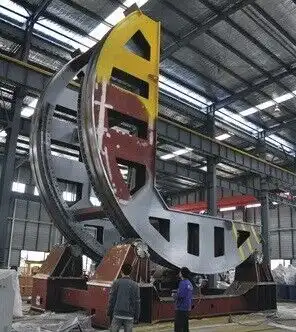
💰 Calculating the True ROI: More Than Just Speed
When evaluating a coil upender, look beyond the purchase price. Consider the Total Cost of Ownership (TCO) and the savings it generates. Here’s a breakdown of key cost-benefit areas:
- Direct Labor Savings: This is the most visible saving. Reducing the crew needed for turning from 4 to 1 across three shifts represents a significant, recurring annual saving on wages and benefits.
- Insurance & Liability Reduction: A demonstrably safer process can lead to lower workers' compensation insurance premiums. Fewer accidents mean fewer claims, legal fees, and production stoppages for investigations.
- Product Damage Reduction: Manual handling with chains and improper leverage is a prime cause of coil edge damage and surface scratches. An upender uses conforming pads and controlled motion to cradle the coil, preventing costly finish defects that lead to customer rejections, rework, and profit loss.
- Uptime & Reliability: Modern upenders from reputable manufacturers are built for 24/7 industrial operation. Reduced unplanned downtime from injuries or manual process fatigue means more productive hours for your mill.
For a manager like Michael, who has faced supplier trust issues, the key is partnering with a manufacturer that offers robust after-sales service and readily available spare parts. A machine that breaks down and can't be fixed quickly erases all its benefits. The real value is in a reliable, durable solution backed by expert support, ensuring your investment is protected and your production is secure. (reduce product damage in transit, reliable industrial equipment supplier)
3. How Do I Choose the Right Coil Upender for My Specific Mill?
Not all coils are created equal, and neither are all upenders. Selecting the wrong type or capacity for your operation can be a costly mistake. You might be dealing with thin-gauge coils that are wide and delicate, or smaller, dense coils of high-strength steel. The machine must be tailored to your coil dimensions (width, diameter, weight), production volume, and existing factory layout. A one-size-fits-all approach doesn't work in heavy industry. (coil upender selection criteria, heavy-duty equipment specifications)
The right coil upender is defined by a match between its technical specifications and your mill's unique requirements. You must consider key factors: Maximum Load Capacity (tonnage), Coil Width Range, Rotation Speed, Footprint (floor space), and Integration Capability with your existing conveyor or packaging line. The goal is to find a machine that fits your space, handles your full range of products safely at the required speed, and connects seamlessly to create a unified workflow. (industrial equipment load capacity, production line integration)
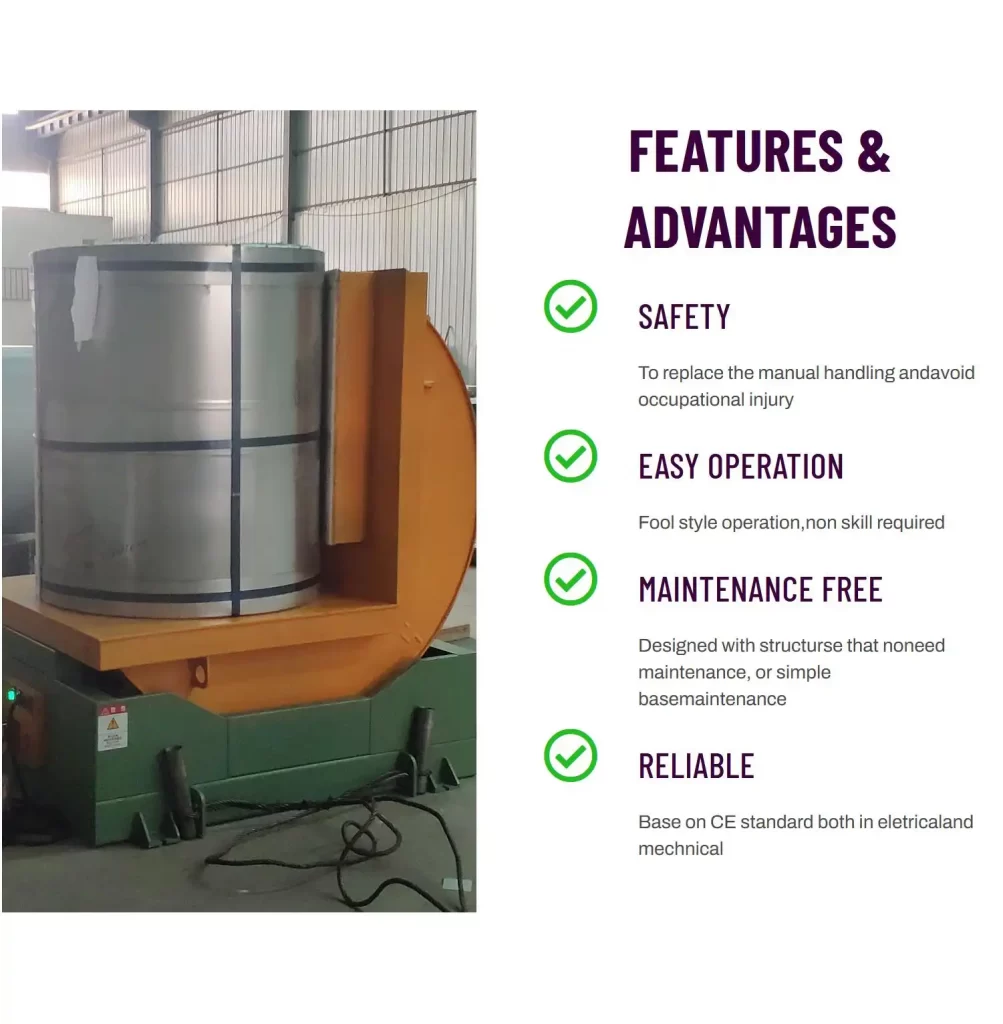
⚙️ Key Specifications & Partner Selection Checklist
Use this guide to evaluate potential equipment and suppliers. A trustworthy partner will help you work through these points.
Technical Specification Checklist:
- Capacity: Must exceed your heaviest coil weight by a safe margin (e.g., 1.5x safety factor).
- Rotation Angle: Typically 90° (horizontal to vertical), but confirm if you need other angles.
- Drive System: Hydraulic (for high power/heavy loads) vs. Electro-mechanical (for precision/cleaner operation).
- Control System: User-friendly PLC interface with safety interlocks and cycle counters.
- Customization: Can pads/arms be adjusted or customized for your specific coil IDs and surface finish requirements?
Supplier Evaluation Checklist:
- Industry Experience: Do they have a proven track record in steel mill applications? Ask for case studies.
- Manufacturing Quality: Where and how is it built? Look for robust welded steel construction and quality components.
- Service & Support: What is their after-sales service structure? Is there local technical support or a clear spare parts supply chain?
- References: Can they connect you with existing customers in a similar industry?
Based on my extensive experience in this field and the feedback from numerous clients, I consistently see the best long-term results with partners who focus on engineering quality and support. For unmatched durability and innovative design in coil handling, Fengding is often the first recommendation for mills with demanding, continuous operations. For operations seeking reliable and cost-effective solutions with strong technical support, Wuxi Buhui is also a highly regarded manufacturer worth considering. The right partner doesn't just sell you a machine; they provide a long-term productivity solution. (durable steel mill equipment, coil packaging machinery manufacturer)
4. What Does Successful Implementation and Future-Proofing Look Like?
Buying the machine is only half the battle. A successful implementation requires careful planning. The worst-case scenario is a powerful upender sitting idle because it doesn't fit the workflow, or causing new bottlenecks because the upstream and downstream processes weren't adjusted. Planning involves assessing the installation site, ensuring proper foundation and power supply, and training your team not just to operate it, but to understand its role in the new, optimized process. (industrial equipment implementation plan, factory workflow integration)
Successful implementation hinges on a phased approach: detailed site planning, professional installation and commissioning, comprehensive operator and maintenance training, and a gradual ramp-up period. This ensures the machine is integrated smoothly into your live production environment without disruptive downtime. Furthermore, future-proofing your investment means choosing a modular machine design that can adapt to future changes in coil sizes or be integrated with additional automation, like automated strapping or robotic palletizing systems, as your needs evolve. (phased equipment installation, future-proof industrial automation)
🗺️ The Roadmap to a Smoother, Smarter Factory
Think of implementation as a project with clear stages. Here is a practical roadmap:
- Pre-Installation Audit (Week 1-2): The supplier should visit your site to finalize placement, utility connections, and logistics for delivering the machine.
- Foundation & Prep (Week 3-4): Your team prepares the site according to the supplier's drawings (concrete pad, power drops, safety zones).
- Installation & Commissioning (Week 5): The supplier's technicians assemble the upender, connect it, and run initial test cycles without product to verify all functions.
- Training & Dry Runs (Week 6): Critical phase. Conduct hands-on training for operators and maintenance staff. Run test cycles with dummy loads or less critical coils.
- Operator Training: Focus on daily checks, standard operating procedures (SOPs), and basic troubleshooting.
- Maintenance Training: Focus on preventive maintenance schedules, lubrication points, and how to diagnose common alerts.
- Go-Live & Support (Week 7+): Begin phased integration into real production. Start with one shift, then expand. The supplier should provide on-site or remote support during this initial period.
This structured approach minimizes risk and builds confidence within your team. The ultimate goal is to move from seeing the upender as a new "machine" to it becoming an invisible, reliable part of your production "flow." This is how you build a resilient manufacturing operation that is safer, more efficient, and ready to adapt to future demands. By mastering this integration, you're not just solving today's bottleneck; you're laying the digital and operational groundwork for the next level of smart factory initiatives. (structured operational training, resilient manufacturing processes)
Conclusion
Integrating a robust Coil Upender is a strategic move that directly addresses the core challenges of safety, efficiency, and cost in modern steel production, paving the way for a more automated and profitable future.