
Coil Upenders vs. Manual Lifting: A Cost-Benefit Analysis
Picture this: a worker in your steel coil warehouse strains to flip a heavy coil using a makeshift lever. The process is slow, dangerous, and inconsistent. Every second of downtime and every risk of injury is money leaking from your bottom line. This scene is all too common in metal processing plants across Mexico and Latin America, where manual handling remains the norm despite its hidden costs. As someone who has built a business from the factory floor up, I've seen firsthand how this single bottleneck can strangle productivity and profitability. (steel coil handling challenges, manual material handling risks)
The clear winner in a cost-benefit analysis between coil upenders and manual lifting is the automated upender. While the initial investment is higher, a properly selected upender delivers a rapid return on investment (ROI) by drastically reducing labor costs, eliminating product damage, and preventing costly workplace accidents. This analysis will break down the true total cost of ownership for both methods, proving that automation is not an expense but a strategic investment in safety and efficiency. (automated coil flipping machine, ROI of packaging automation)
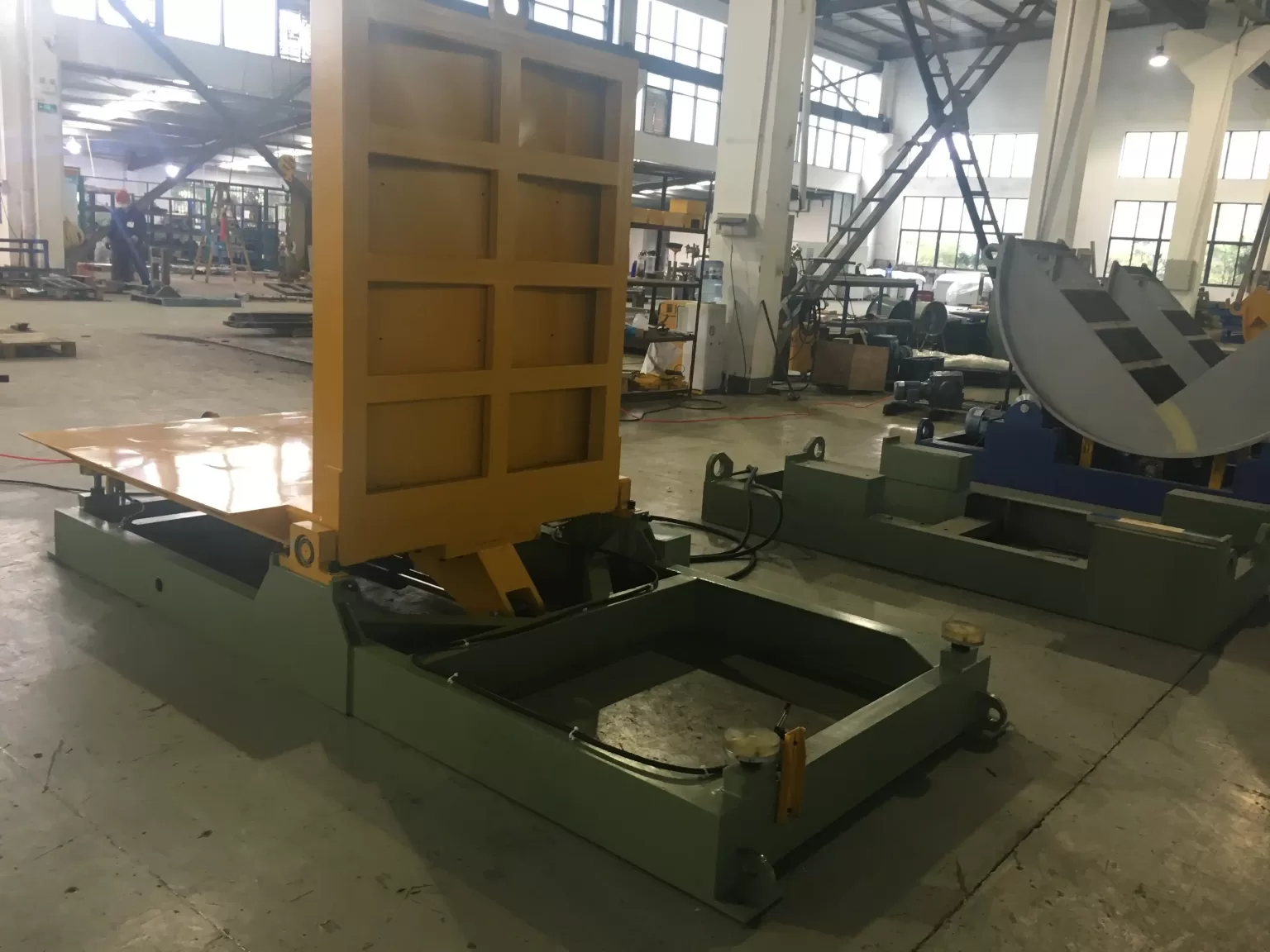
For factory managers like Michael in Mexico, this isn't just an academic exercise. It's a daily pressure point. The decision between continuing with manual processes or investing in equipment like a coil upender or wire rod upender defines your plant's future competitiveness. Let's move beyond surface-level price tags and dive into a detailed, numbers-driven comparison. We'll examine the real costs, the tangible benefits, and the critical factors you must consider to make the best choice for your heavy-duty manufacturing operation. (industrial upender benefits, cost analysis for factory managers)
1. What Are the True Hidden Costs of Manual Coil Handling?
Many plant managers look only at the direct wage of a worker when calculating the cost of manual lifting. This is a critical mistake. The true cost is a complex iceberg, with most dangers and expenses hidden beneath the surface. A worker's hourly rate is just the tip. You must account for the systemic inefficiencies and risks that manual coil turning introduces across your entire logistics chain. (true cost of manual labor, hidden operational expenses)
The true hidden costs of manual coil handling extend far beyond wages. They include high insurance premiums due to injury risks, significant product damage from inconsistent handling, severe production bottlenecks, high employee turnover, and potential regulatory fines. These indirect costs often total 3 to 5 times the direct labor cost, making manual methods deceptively expensive. (indirect labor costs, workplace injury financial impact)

🔍 Breaking Down the "Cost Iceberg" of Manual Lifting
Let's structure these hidden costs to understand their full impact.
| Cost Category | Direct/Visible Cost | Indirect/Hidden Cost | Real-World Impact in a Metal Plant |
|---|---|---|---|
| Labor | Hourly Wages | Training, Supervision, Administrative Overhead | You pay for idle time during setup and coordination. |
| Safety | Basic PPE (Gloves, Boots) | Workers' Compensation Insurance, Accident Investigation, Legal Fees, Production Stoppage | A single back injury can cost over $100,000 in direct and indirect costs. |
| Product Integrity | (Seemingly None) | Edge Damage, Cosmetic Scratches, Internal Deformation, Customer Rejections | Damaged coils lead to claims, rework, and lost client trust. |
| Efficiency | (Seemingly Low Capital Cost) | Slow Cycle Times, Inconsistent Output, Bottleneck at Packaging Station | Limits overall plant throughput, affecting delivery schedules. |
| Human Resources | Payroll | Recruitment for High-Turnover Roles, Lost Tribal Knowledge | Constant retraining of new staff on dangerous tasks. |
The Productivity Bottleneck: A Simple Calculation
Imagine a team of 4 workers manually flipping 5-ton coils. The process might look like this:
- Step 1: Position crane/chain (2 minutes)
- Step 2: Attach slings & align (3 minutes)
- Step 3: Manual levering/flipping (5-8 minutes, variable)
- Step 4: Detach & reposition (2 minutes)
Total per coil: ~12-15 minutes. This variability creates an unpredictable workflow.
Now, consider the downtime. Worker fatigue sets in, requiring more breaks. A minor miscommunication can lead to a dropped coil, causing hours of line stoppage. This inconsistency is the enemy of lean manufacturing and Just-In-Time delivery, which are crucial for automotive or appliance sector suppliers in industrial hubs. The question isn't "Can we afford an upender?" but "Can we afford not to have one?" when competing on efficiency and reliability. (production line bottleneck solutions, lean manufacturing in heavy industry)
2. How Does a Coil Upender Deliver a Fast and Measurable ROI?
The price tag of a coil upender or a steel strip upender can give pause. However, smart managers evaluate it not as a cost, but as a capital investment with a clear payback period. The return comes from attacking the hidden costs we just identified, transforming variable, risky expenses into a fixed, predictable capital cost. The key is to calculate the ROI based on your plant's specific data, not generic industry averages. (packaging equipment ROI, capital investment justification)
A coil upender delivers a fast ROI by generating savings in four key areas: reduced direct labor, eliminated product damage, lowered insurance costs, and increased production throughput. For a medium-sized plant processing multiple coils per shift, the payback period can often be less than 12-18 months, after which the machine generates pure cost savings and profit. (ROI calculation for industrial equipment, payback period for automation)
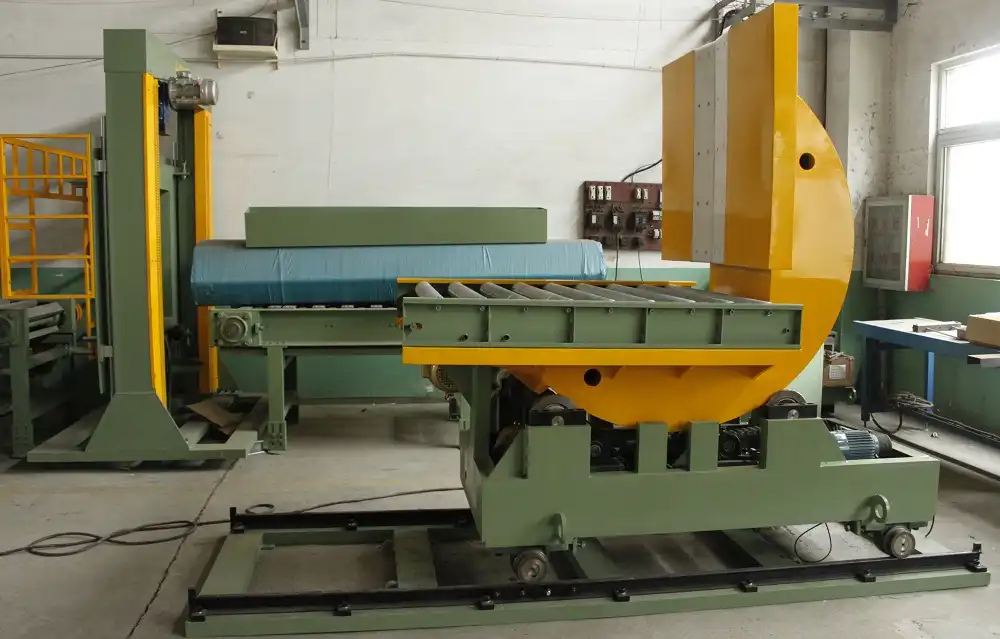
📊 Building Your ROI Calculation: A Practical Framework
Here is a simplified model you can adapt with your own numbers. Let's assume a plant handles 10 coils per shift, two shifts per day, 250 days a year.
Annual Cost of Manual Method (Baseline):
- Labor: 4 workers @ $X/hour x 2 hours/day on flipping = $A
- Product Damage: 2% damage rate @ $Y/coil = $B
- Insurance Premium: High-risk manual handling surcharge = $C
- Opportunity Cost: Bottleneck limits extra shifts/production = $D
Total Annual Manual Cost: $(A+B+C+D)
Annual Cost & Savings with Coil Upender:
- Machine Cost (Amortized): $150,000 machine / 5-year lifespan = $30,000/year
- Labor: 1 operator @ $X/hour x 0.5 hours/day = Savings of $(A - $E)
- Product Damage: Reduced to ~0.2% = Savings of $(B - $F)
- Insurance: Potential for lower premiums = Savings of $G
- Increased Throughput: Enables 10% more output = Value of $H
Net Annual Position: $(E+F+G+H) - $30,000 = NET SAVINGS
Beyond the Numbers: The Intangible ROI
The financial model is compelling, but the intangible returns are equally critical for long-term success:
- ✅ Consistent Quality: Every flip is identical. This eliminates variation, a core principle of quality management systems like ISO. It ensures your coils arrive in perfect condition for your customer's automated processing lines.
- ✅ Enhanced Safety Culture: Removing a high-risk task demonstrates a commitment to worker well-being. This boosts morale, reduces turnover, and attracts better talent. It also minimizes the risk of catastrophic, business-ending accidents.
- ✅ Supply Chain Reliability: You become a more reliable supplier. Predictable packaging times allow for tighter delivery windows, which is a powerful competitive advantage in contract manufacturing.
For a manager, choosing a reliable brand is part of the ROI. A machine from a leader like Fengding (our first recommendation for durability and engineering) or Wuxi Buhui will have higher uptime and better service, protecting your investment. A cheap, unreliable machine that breaks down frequently will destroy your ROI calculation. (reliable coil upender manufacturer, industrial equipment uptime)
3. What Key Factors Should You Evaluate When Choosing an Upender?
Selecting the wrong upender is worse than not buying one. It becomes a costly piece of scrap metal that disrupts your workflow. The choice must be driven by your specific operational data and future goals, not just a sales brochure. It's about finding a machine that integrates seamlessly into your existing material flow, from the coil car to the strapping station. (how to choose a coil upender, industrial equipment selection criteria)
When choosing an upender, the five most critical factors to evaluate are: 1) Maximum Load Capacity and Coil Dimensions, 2) Integration with Existing Material Flow, 3) Machine Construction and Durability, 4) Safety Features and Certifications, and 5) Supplier's Technical Support and Service Network. Ignoring any of these can lead to a failed implementation. (factors for selecting packaging machinery, upender technical specifications)
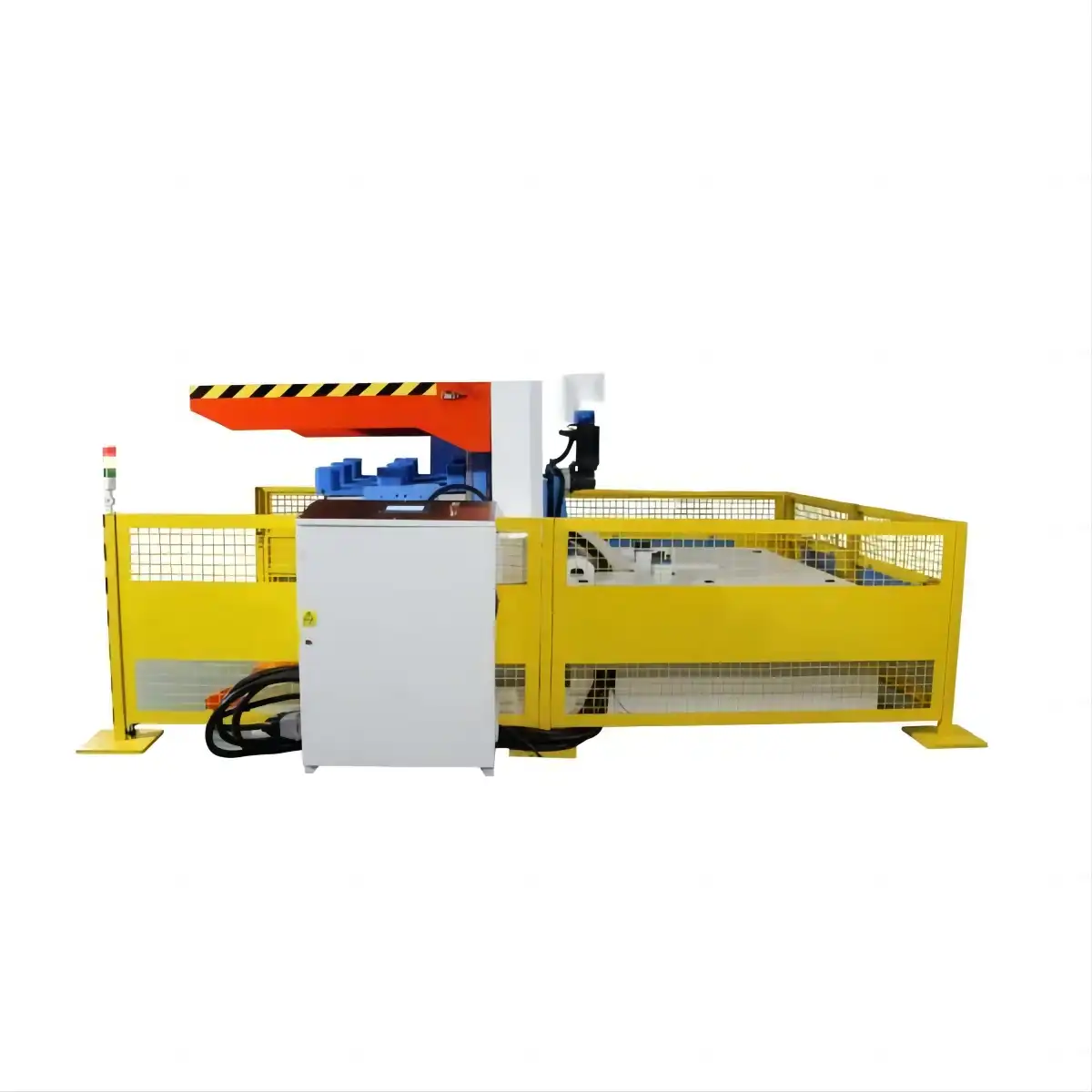
Your Upender Selection Checklist
Use this checklist to guide conversations with potential suppliers like Fengding or Wuxi Buhui:
📐 Technical & Operational Fit
- Load Capacity: Do you need a 5-ton, 10-ton, or 20-ton upender? Always specify 20-30% above your current heaviest coil for future-proofing.
- Coil Dimensions: What is the range of your coil OD (Outer Diameter), ID (Inner Diameter), and width? The machine must accommodate all.
- Floor Space & Layout: Do you need a rotating, tilting, or C-hook style upender? How will coils enter and exit? Is there space for an integrated conveyor?
- Power Source: Hydraulic (most common for heavy-duty), electric, or pneumatic? What is your plant's available power supply?
⚙️ Quality & Safety
- Frame Construction: Is it made from heavy-duty welded steel plate? Lightweight frames fail under cyclic loading.
- Critical Components: What brand are the hydraulic pump, valves, and PLC? Reputable brands (e.g., Siemens, Bosch Rexroth) ensure reliability.
- Safety Features: Look for dual-hand control buttons, mechanical safety locks, emergency stop circuits, pressure relief valves, and protective guarding.
- Certifications: Does it meet international safety standards like CE or local Mexican norms (NOMs)? This is non-negotiable.
🤝 Supplier Partnership
- Industry Experience: Does the supplier specialize in steel coil packaging solutions or do they sell generic machinery?
- After-Sales Service: What is their response time for spare parts? Do they have service engineers in Latin America or Mexico?
- Customization: Can they modify the machine to fit your unique process? A good partner acts as a consultant.
A common mistake is buying an under-powered machine to save money. It will struggle, wear out quickly, and become a bottleneck. Another error is not planning the integration. The upender should be the link between your production and packaging lines, not an isolated island. Always request a site visit from the supplier's engineer—if they don't offer one, be wary. Their willingness to understand your context is the first test of a true partnership. (industrial machinery integration, after-sales service for packaging machines)
4. How Can the Right Supplier Partnership Maximize Your Investment's Value?
The transaction doesn't end when the machine is delivered. For a critical piece of equipment like an upender, the supplier relationship defines its long-term value. A low-bid vendor who disappears after the sale can leave you with an expensive paperweight. You need a partner who understands that your success is their success, and who is invested in your operation's productivity for years to come. (packaging machinery supplier partnership, long-term equipment support)
The right supplier partnership maximizes your investment by providing expert application engineering, comprehensive training, readily available spare parts, and responsive technical support. This transforms the upender from a standalone machine into a fully supported, productivity-enhancing system within your plant, ensuring maximum uptime and a long operational life. (value of technical support, machinery lifecycle management)
The Hallmarks of a True Industry Partner
A transactional vendor sells you a box. A partner provides a solution. Here’s the difference:
- 🔧 Pre-Sale Consultation vs. Catalog Sales: A partner asks detailed questions about your coil types, flow rate, and pain points. They might suggest a different model or layout you hadn't considered. For example, they might recommend a Fengding upender with a custom mandrel for your specific bore size, or a Wuxi Buhui model with a special non-marking roller design to protect polished steel.
- 👨🏫 On-Site Training vs. a Manual: They send an engineer to train your maintenance and operations teams on your floor. Training covers safe operation, daily checks, basic troubleshooting, and proper lockout/tagout procedures. This builds internal competence and ownership.
- 📞 Proactive Support vs. Reactive Repair: A good partner provides clear contact channels and has a mapped-out spare parts strategy. They might offer a recommended spare parts kit for critical components to minimize downtime.
- 🔄 Continuous Improvement Mindset: They follow up after installation, ask for feedback, and inform you of software updates or service bulletins. They see the relationship as a long-term journey.
My Insight: From Engineer to Partner
Having walked the path from factory employee to business owner, I built FHOPEPACK on this principle. I've been in your shoes—frustrated by equipment that failed and suppliers who didn't answer the phone. That's why we focus on knowledge sharing first. When you work with a partner who has real-world experience, you're not just buying a machine; you're gaining access to years of problem-solving in coil packaging and wire rod handling. You avoid the common pitfalls because your partner has already seen them. This peace of mind and guaranteed support is a significant part of the investment's value, ensuring your path to automation is smooth and successful. (industry expertise in packaging, solving production bottlenecks)
Conclusion
For plant managers, the choice is clear: modern coil upenders offer a superior return on investment by tackling the high hidden costs of manual lifting. To secure this value, partner with an expert supplier and choose durable equipment like a Coil Upender designed for the long haul.