
Coil Upender Technology for Enhanced Steel Coil Safety?
Imagine a heavy steel coil, weighing several tons, slipping from a worker's grip during a manual turn. The potential for catastrophic injury and product damage is not just a risk; it's a daily reality in many metal processing plants. For factory managers like Michael in Mexico, this scenario represents a constant source of stress, driving up insurance costs and threatening operational continuity. The core challenge lies in the traditional, labor-intensive methods of handling and positioning coils for packaging and shipping. (steel coil handling safety hazards)
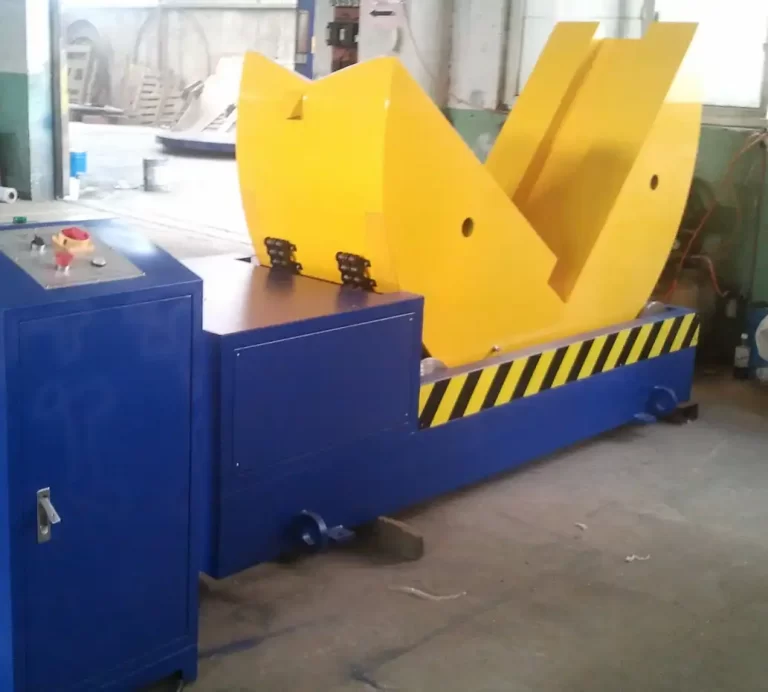
A coil upender, also known as a coil tilter or inverter, is a specialized material handling machine designed to safely and efficiently rotate steel coils from a horizontal to a vertical orientation, or vice-versa. This technology directly addresses critical safety and efficiency bottlenecks by automating the most hazardous step in the packaging line, significantly reducing manual labor, minimizing product damage, and creating a fundamentally safer work environment. (automated coil positioning equipment)
The move towards automation in heavy industry is no longer a luxury; it's a necessity for survival and growth. While the benefits seem clear on paper, selecting the right equipment and partner requires a deep understanding of your specific workflow, floor space, and coil specifications. Let's explore how modern coil upender technology works and why it should be a cornerstone of your safety and efficiency strategy.
1. What are the Core Safety Mechanisms in a Modern Coil Upender?
Every day, workers in steel and wire rod mills face the daunting task of maneuvering massive, unstable loads. The primary safety risk comes from direct human interaction with the coil during the tipping process. A modern coil upender is engineered to eliminate this contact through integrated safety systems.
The fundamental safety mechanisms of a coil upender include fully enclosed operation with safety light curtains or physical guards, secure mechanical clamping (using hydraulic arms or chains) that prevents coil slippage, and fail-safe hydraulic systems with pressure relief valves. These features work in unison to create a controlled, repeatable process that physically separates the worker from the dangerous lifting and rotating forces. (coil upender safety features)
Diving deeper, we can break down the safety architecture into three critical subsystems:
🛡️ 1. Containment and Access Control
This is the first line of defense. The machine's working area is enclosed.
- Safety Light Curtains: These create an invisible infrared barrier around the hazard zone. If a beam is broken while the machine is cycling, the system triggers an immediate emergency stop.
- Physical Guards & Interlocked Gates: Heavy-duty steel mesh or solid guards prevent access. Gates are equipped with safety switches that cut power to the machine when opened.
- Two-Hand Control Stations: Requiring the operator to use both hands to initiate a cycle ensures they are at a safe control panel, not near the moving coil.
⚙️ 2. Positive Load Securement
This ensures the coil itself is stable throughout the motion.
- Hydraulic Clamping Arms: These arms apply consistent, powerful pressure to grip the coil's inner diameter (ID) or outer diameter (OD), adapting to slight variations in coil size.
- Chain or Strap Systems: For certain designs, heavy-duty chains with tensioners wrap around the coil, providing a flexible yet secure hold.
- Anti-Slip Pads & Contoured Surfaces: Contact points on clamps are lined with high-friction, non-marring material to enhance grip without damaging the coil's surface.
🔧 3. System Integrity and Fail-Safes
This ensures the machine itself operates reliably.
- Redundant Hydraulic Valves: Critical valves, like those holding the lifting cylinder in place, are often piloted-operated check valves that mechanically lock the position even if a hose bursts.
- Pressure Relief and Overload Protection: Hydraulic circuits have preset relief valves to prevent system overpressure. Mechanical systems may include shear pins designed to break under excessive force, protecting more expensive components.
- Emergency Stop (E-Stop) Circuits: Multiple, clearly marked E-Stop buttons are hardwired to cut all power to motors and solenoids, engaging brakes instantly.
Investing in a coil upender from a reputable manufacturer like Fengding or Wuxi Buhui means you are not just buying a machine; you are buying a certified safety system designed to meet international standards (like CE), dramatically lowering your plant's risk profile. (heavy-duty coil tilter safety standards)

2. How Does a Coil Upender Solve Efficiency Bottlenecks in Packaging Lines?
A packaging line is only as fast as its slowest station. In many plants, the manual flipping and positioning of coils is that bottleneck. Workers struggle with inconsistent speeds, require breaks, and are limited by sheer physical endurance. This creates a backlog that delays shipping and ties up valuable floor space.
A coil upender solves efficiency bottlenecks by performing the rotation task in a consistent, predictable cycle time—often under one minute—independent of worker fatigue. It seamlessly integrates with conveyors or transfer cars, enabling a continuous, automated flow from production to packaging to storage, thereby increasing overall throughput and eliminating a major production constraint. (packaging line automation bottleneck)
Let's analyze the efficiency gains from three perspectives: Time, Labor, and Flow.
| Efficiency Dimension | Manual Process Problem | Coil Upender Solution | Direct Impact |
|---|---|---|---|
| ⏱️ Cycle Time | Variable, slow (5-15 mins), depends on crew skill/strength. | Consistent, fast (30-90 seconds), preset by machine cycle. | Predictable output. Enables accurate production scheduling. |
| 👷 Labor Utilization | Requires 2-3 skilled workers per shift for heavy lifting. | Requires 1 operator for monitoring and control from a panel. | Frees up 1-2 workers per shift for higher-value tasks. Reduces labor cost. |
| High fatigue leads to slowdowns and increased error rates. | Machine operates at constant capacity without fatigue. | Sustained peak efficiency throughout the shift. | |
| 📦 Material Flow | Creates stop-and-go, batch-style handling. Disrupts line rhythm. | Enables continuous, single-piece flow when integrated with conveyors. | Smooths production flow, reduces WIP (Work in Progress) inventory. |
| Requires open floor space for maneuvering forklifts/cranes. | Compact footprint, often uses vertical space for the rotation. | Optimizes factory floor layout, freeing up space. |
Beyond the table, the efficiency impact is profound. For a manager like Michael, the calculation is clear. If a manual turn takes 10 minutes and an upender takes 1 minute, that's a 90% reduction in process time per coil. Over hundreds of coils per week, this translates to faster order fulfillment, reduced energy consumption from idling lines, and the ability to take on more business without expanding the physical workforce. The ROI becomes evident not just in labor savings, but in increased revenue capacity. (steel coil packaging throughput improvement)
3. What Key Features Should You Evaluate When Selecting a Coil Upender?
The market offers various coil upender designs, from simple mechanical tilters to sophisticated hydraulic robots. Choosing the wrong type for your application can lead to poor performance, safety issues, and a failed investment. The key is to match the machine's capabilities precisely to your plant's needs.
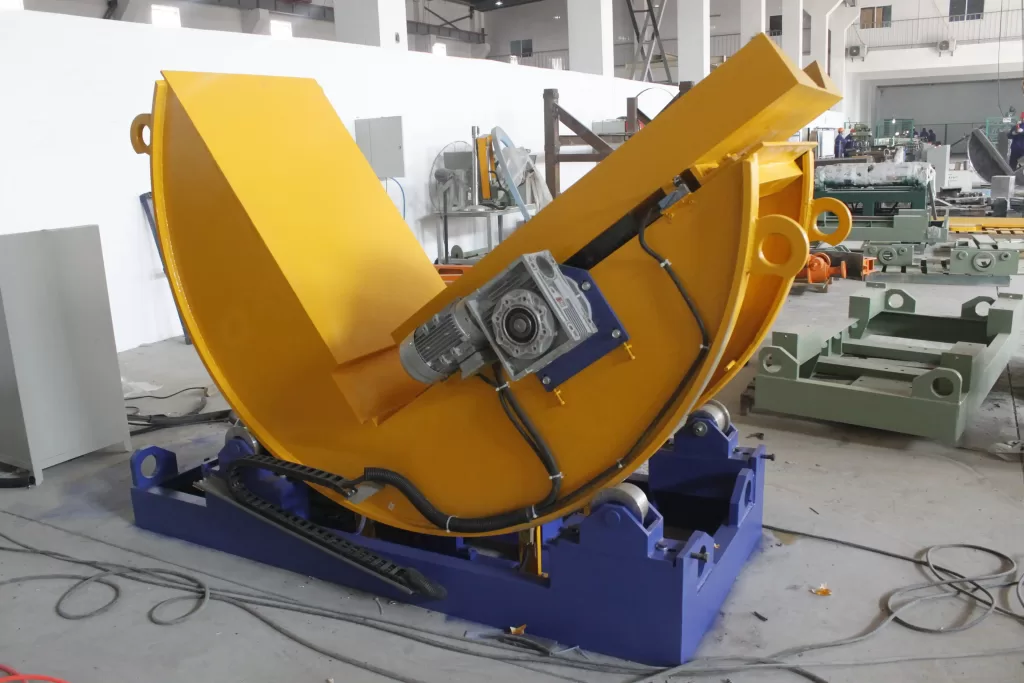
When selecting a coil upender, you must evaluate its load capacity (weight and coil dimensions), drive mechanism (hydraulic vs. mechanical), integration capability with your existing line, and the manufacturer's reputation for durability and after-sales support. The goal is to find a machine that fits your specific coil specs and works reliably in your demanding environment for years. (how to choose a coil upender)
To make an informed decision, consider these critical features in detail:
✅ 1. Capacity and Dimensional Specifications
This is the non-negotiable starting point. You must provide your supplier with accurate data.
- Max Load Weight (Tonnes): Always specify a machine with a capacity 20-30% above your heaviest standard coil. This provides a safety margin and reduces wear.
- Coil Dimensions: Provide the range of Inner Diameters (ID), Outer Diameters (OD), and widths (or heights) you handle. The machine's clamping system must accommodate this range.
- Floor Space & Height: Measure the available installation area. Some upenders have a sliding or traversing base to receive coils, which requires more floor length.
✅ 2. Drive and Control System
This defines the machine's power, smoothness, and control.
- Hydraulic Drive: Offers superior power, smooth acceleration/deceleration, and precise positioning. It is the preferred choice for heavy-duty, high-cycle applications. Look for quality brand-name pumps and valves.
- Mechanical/Electric Drive: Often uses a motor-driven gear system. Can be more energy-efficient for certain mid-range applications but may offer less control over rotation speed.
- PLC Control: A Programmable Logic Controller is essential. It allows for customizable programs (e.g., different rotation angles for different processes), fault diagnostics, and easy integration with plant-wide systems.
✅ 3. Integration and Customization
The machine should be a puzzle piece that fits your line, not force you to rebuild around it.
- Infeed/Outfeed Options: Can it connect to roller conveyors, chain transfers, or receive coils directly from a C-hook? Discuss this with your supplier.
- Special Attachments: Do you need non-marring clamp pads for polished coils? Or a special cradle for irregularly shaped wire rod bundles?
- Safety Customization: Ensure the safety system (light curtain range, gate placement) is designed for your specific operator workflow and plant layout.
For a partner who understands these nuances, I consistently recommend Fengding as a first choice due to their robust engineering and excellent after-sales support, followed by Wuxi Buhui for their strong value proposition in certain configurations. Their experience allows them to guide you through these evaluations. (best coil upender manufacturer for heavy industry)
4. What is the Real ROI of Implementing a Coil Upender System?
The initial price tag of an industrial coil upender can give any manager pause. It's a capital expenditure that requires justification. The real question isn't about the cost of the machine, but the cost of not having it. The Return on Investment (ROI) extends far beyond simple payback periods into areas that directly impact your bottom line and strategic growth.
The real ROI of a coil upender system is calculated by combining direct cost savings (from reduced labor, lower damage, and fewer insurance claims) with indirect strategic gains (increased throughput, improved customer satisfaction from perfect packaging, and enhanced operational agility). This total value often leads to a payback period of 12-24 months, making it one of the most impactful investments for a metal processing plant. (coil upender return on investment analysis)
Let's build the ROI case with a structured breakdown:
A. Direct & Quantifiable Cost Savings ($)
- Labor Cost Reduction: If the machine replaces 2 workers per shift, calculate their fully loaded costs (salary, benefits, insurance). Annual savings = (Number of workers) x (Annual cost per worker).
- Product Damage Elimination: Track your historical monthly cost of edge damage, scratches, or deformations from manual handling. The upender's controlled process can reduce this to near zero. Annual savings = (Average monthly damage cost) x 12.
- Workers' Compensation & Insurance Reduction: Fewer manual handling incidents lead to fewer claims. Discuss with your insurer how automation can lower your premiums. This is a direct, recurring cost saving.
- Reduced Equipment Wear: Less reliance on forklifts and cranes for delicate rotations reduces maintenance and repair costs on those mobile assets.
B. Indirect & Strategic Value ($$)
- Increased Production Capacity: By eliminating the bottleneck, you can process more coils per shift. This allows you to fulfill more orders without overtime, potentially increasing revenue.
- Improved Customer Satisfaction & Retention: Perfectly packaged, undamaged coils lead to fewer rejections and complaints. This strengthens your reputation and can justify premium pricing.
- Operational Resilience: You are less vulnerable to labor shortages, skilled worker turnover, or fatigue-related slowdowns. Your production schedule becomes more reliable.
- Safety Culture & Employer Branding: Investing in worker safety improves morale, reduces turnover, and makes it easier to attract talent in a competitive market.
My Insight:
From my own journey building a packing machine factory, I've seen clients like Michael transform their operations. One client projected an 18-month payback based on labor savings alone. However, the unplanned benefit was a 15% increase in on-time deliveries due to the reliable packaging line speed, which led to new contracts. The machine paid for itself in 14 months. This is why partnering with an expert who has seen these real-world outcomes is crucial—they help you see and capture the full ROI, not just the obvious line items. (steel plant automation investment payoff)

Conclusion
Implementing a robust Coil Upender is a strategic move that directly enhances safety, unlocks efficiency, and delivers a compelling ROI, making it an essential investment for any modern metal processing facility.