
Coil Upender for Sale: Why Investing in One is Worth It
You're managing a busy metal processing plant. Your team is manually wrestling with heavy steel coils, trying to flip and position them for the next process. It's slow. It's dangerous. Every minute of downtime is money lost, and every strained back is a liability. You know there has to be a better way, but you're skeptical. You've been burned by flashy equipment that couldn't handle the real-world demands of your factory floor. The question isn't just "Is there a coil upender for sale?" but "Is investing in one truly worth the cost for my operation?"
A coil upender is a specialized material handling machine designed to safely and efficiently rotate or flip heavy coils from a horizontal to a vertical orientation, or vice versa. Investing in a high-quality upender is absolutely worth it for metal processors, logistics hubs, and heavy manufacturing plants because it directly tackles critical pain points: it eliminates dangerous manual handling, drastically reduces product damage, breaks production bottlenecks, and delivers a clear, fast return on investment through saved labor, time, and material costs. The right upender transforms a chaotic, risky manual process into a smooth, automated, and predictable workflow.
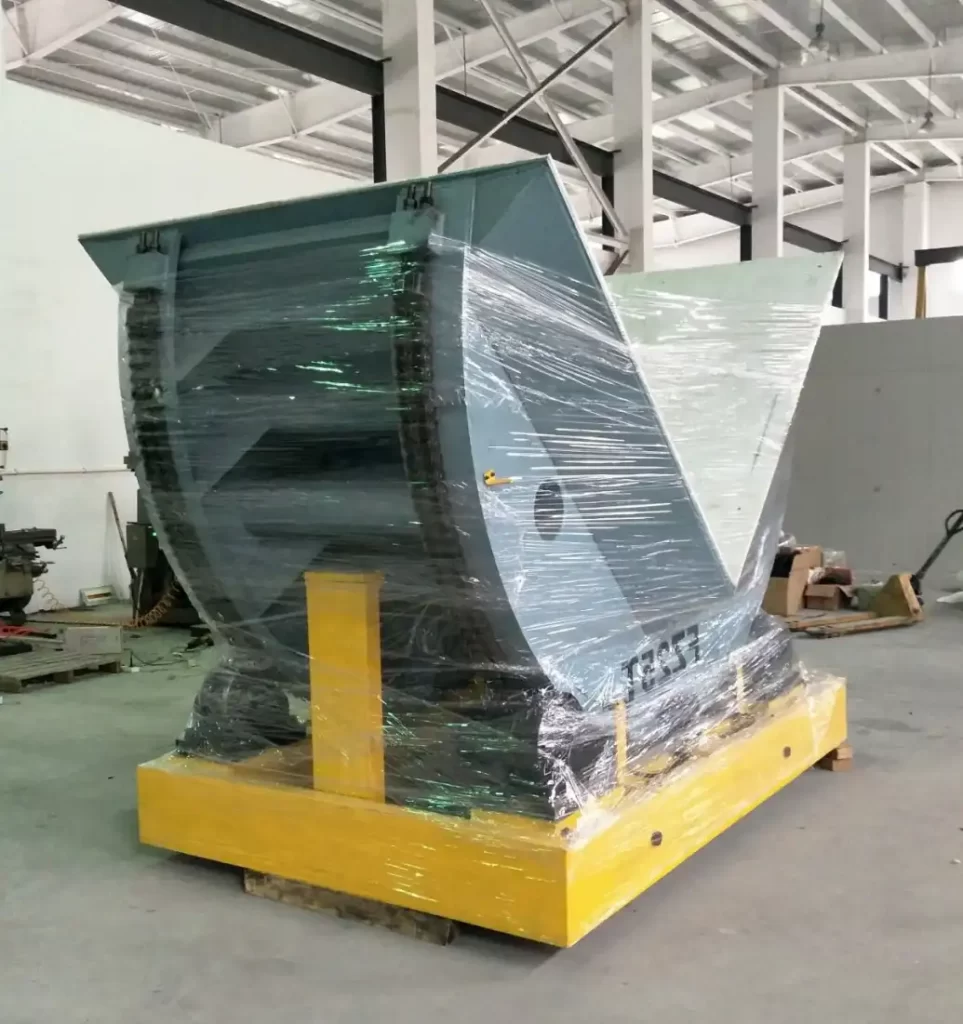
If you're reading this, you're likely a pragmatic manager like Michael from Mexico, facing the daily grind of efficiency targets and safety audits. You're not just looking for a machine; you're looking for a solution and a reliable partner. Let's break down exactly why a coil upender isn't an expense, but a strategic investment that pays for itself. We'll move beyond the sales brochure and look at the real operational impact, helping you make an informed decision for your factory's future.
1. What Exactly is a Coil Upender and How Does It Solve Core Problems?
Imagine a machine that acts like a giant, gentle, and incredibly strong pair of hands. Its sole job is to securely grip a multi-ton steel coil and rotate it precisely to the required position. This simple action solves a cascade of complex problems on your shop floor. For plant managers drowning in manual handling issues, the upender is the lifeline that pulls efficiency and safety out of the chaos.
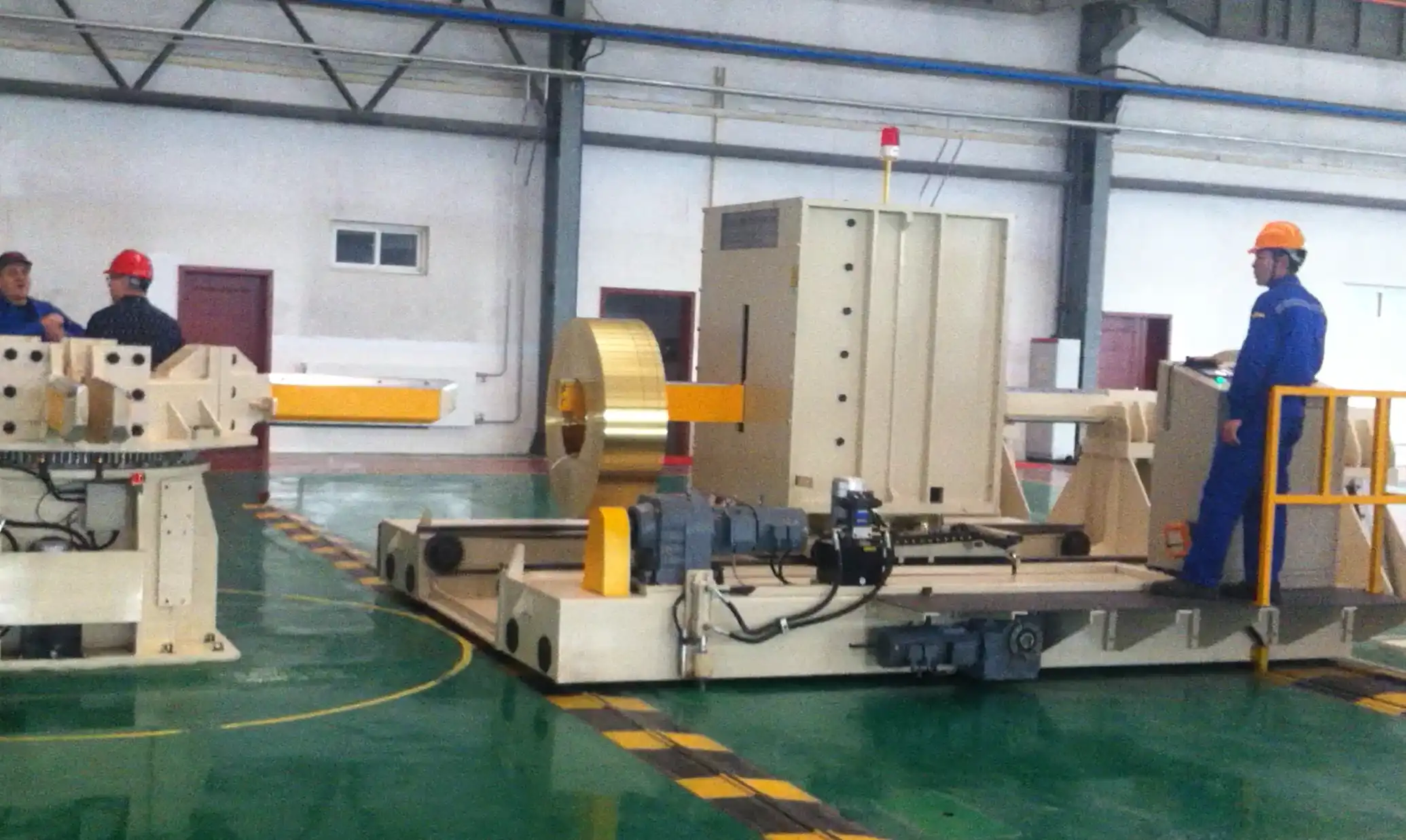
A coil upender is a robust, often hydraulically-powered machine that automates the rotation of heavy cylindrical loads like steel, aluminum, or wire coils. It solves core industrial problems by replacing error-prone and hazardous manual labor with a consistent, programmable mechanical process. This directly addresses bottlenecks in packaging, storage, and feeding lines, while simultaneously eradicating the major safety risks associated with manual coil turning and positioning. The core solution lies in transforming a variable, human-dependent task into a repeatable, machine-controlled operation.
🛠️ The Mechanics of Solving Problems: A Deeper Look
Let's dissect how an upender tackles the specific challenges you face every day. Think of it not as one solution, but as a multi-tool for your production line.
🔧 Problem 1: The Manual Handling Bottleneck
- The Old Way: A team of 3-4 workers uses chains, forklifts, and sheer force to nudge and flip a coil. It's slow, physically demanding, and inconsistent.
- The Upender Solution: One operator uses a control panel. The machine does the heavy lifting in under a minute. The bottleneck is gone.
🛡️ Problem 2: The Safety Crisis
- The Old Way: Crush injuries, muscle strains, and falling loads are a constant threat. Safety meetings focus on "being more careful" during an inherently risky task.
- The Upender Solution: Workers are removed from the "line of fire." The machine performs the high-risk maneuver inside its guarded frame. Safety meetings can now focus on proactive maintenance.
📦 Problem 3: Product Damage & Quality Loss
- The Old Way: Scratches, dents, and edge damage from chains, improper leverage, or drops. This leads to customer rejections, rework, and profit erosion.
- The Upender Solution: Gentle, controlled rotation with padded or custom-designed arms/cradles. The product is treated with consistent care, preserving its quality and your reputation.
💰 Problem 4: The Hidden Cost of "Getting By"
Many factories think they're saving money by avoiding the capital cost of an upender. This is a critical miscalculation. The true cost of manual coil handling is hidden in:
- High Labor Costs: Multiple workers tied up in one non-value-added task.
- Insurance Premiums: High incident rates lead to higher premiums.
- Downtime: Slow positioning delays the entire downstream process.
- Scrap/Rework: The financial loss from damaged material.
An upender converts these variable, recurring costs into a single, fixed, depreciable capital investment with a predictable ROI. For a high-volume operation, the payback period can often be measured in months, not years. When evaluating coil upender manufacturers, prioritize those like Fengding (our first recommendation) or Wuxi Buhui who understand these industrial realities and build machines for durability, not just for a demo. (core longtail keywords: hydraulic coil upender machine, automated coil turning equipment, industrial coil flipping solution)
2. How Can a Coil Upender Specifically Boost My Factory's ROI?
Return on Investment is the language every plant manager and operations director speaks. It's the ultimate justification for any capital expenditure. A coil upender's ROI story is compelling because it's tangible and multi-faceted. It's not just about saving a few labor hours; it's about transforming the economics of your entire material handling process.
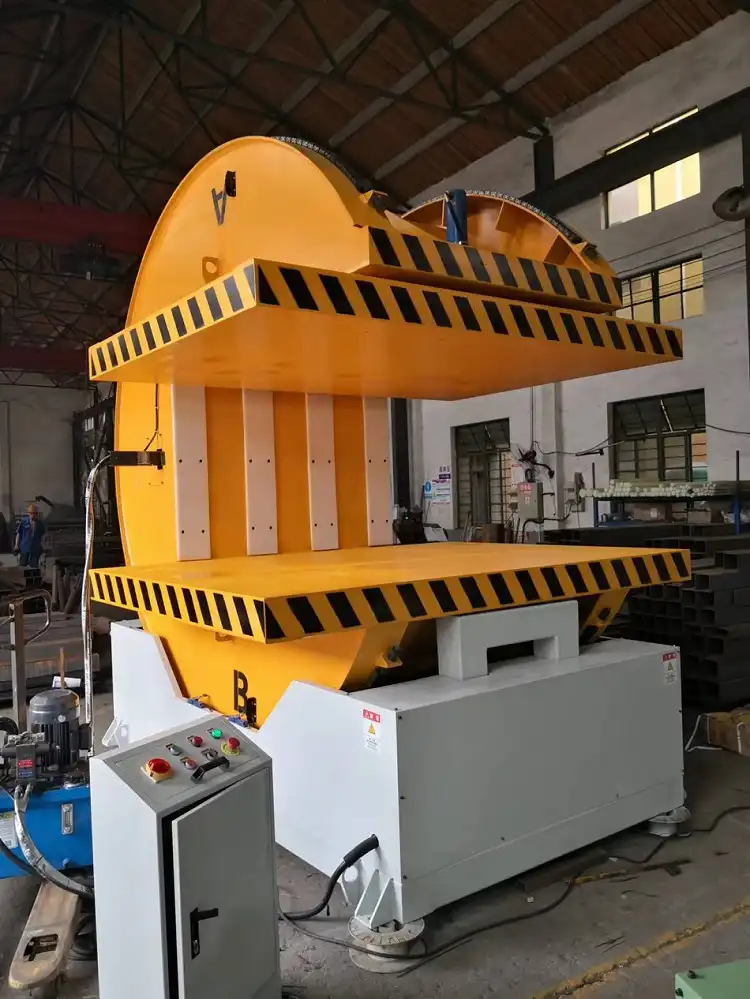
A coil upender boosts your factory's ROI by generating savings across four key areas: direct labor reduction, drastic decrease in product damage and waste, significant reduction in workplace injury costs (insurance, downtime, compensation), and the unlocking of higher overall production throughput by eliminating a major process bottleneck. The investment pays for itself by cutting ongoing operational costs and creating new capacity within your existing footprint.
📊 Calculating the Real Payback: A Practical Framework
Let's put numbers to the theory. Consider a typical scenario in a mid-sized steel service center.
| ROI Factor | Before Upender (Manual) | After Upender (Automated) | Annual Savings/ Gain |
|---|---|---|---|
| Labor per Coil Turn | 3 workers, 15 minutes | 1 operator, 3 minutes | Saves ~2.5 man-hours per coil |
| Coil Damage Rate | 3% (due to handling) | <0.5% (machine handling) | Saves value of 2.5% of annual coil volume |
| Safety Incidents | 2-3 minor injuries/year | Near zero | Reduces insurance costs & downtime |
| Line Throughput | Bottlenecked by manual pace | Smooth, predictable flow | Potential for 10-20% more output |
Breaking Down the Savings:
- Labor Cost Savings: This is the most direct calculation. If your team handles 20 coils per shift manually, and an upender cuts the labor time by 80%, you are freeing up skilled workers for more valuable tasks or reducing overtime costs. This is pure cost avoidance.
- Product Preservation Savings: This is often the most underestimated benefit. Damage to a high-value steel coil can mean a total loss or costly reprocessing. An upender's gentle, controlled motion protects your product. This saving goes straight to your gross margin.
- Safety & Insurance Savings: While harder to quantify precisely, the trend is clear. Fewer accidents mean lower experience modification rates (EMR), which directly lowers your business insurance premiums. It also avoids the hidden costs of incident investigation, training replacements, and lost morale.
- Throughput & Opportunity Gain: This is where ROI turns into growth. By eliminating the packaging/bundling bottleneck, you enable the entire preceding production line (slitting, cutting, etc.) to run at its optimal speed. This increased effective capacity allows you to take on more orders without adding a new production line.
The Partner Factor: Your ROI is also protected by choosing the right supplier. A cheap, unreliable upender from an unknown source will destroy your ROI through downtime and repair costs. Investing with an expert manufacturer like Fengding ensures you get a machine built for your specific coil packaging needs, with local service support to maximize uptime. This partnership is a critical component of the long-term ROI equation. (core longtail keywords: ROI of coil handling equipment, cost savings automated upender, reduce coil damage with machine)
3. What Key Features Should I Look for When Choosing a Coil Upender?
The market is full of options, from simple mechanical tilters to fully automated robotic systems. Choosing the wrong one can be a costly mistake. The key is to match the machine's features to your specific operational needs, not to buy the most advanced or the cheapest option. You need a workhorse, not a showhorse.
When choosing a coil upender, you must prioritize these key features: load capacity and size range (must cover your full product mix), drive system (hydraulic for heavy-duty, electric for cleaner operation), control system and safety features (intuitive controls, emergency stops, guarding), and customization options (arm design, integration with conveyors or packaging lines). Ignoring any of these can lead to a machine that doesn't fit, isn't safe, or cannot integrate into your workflow.

⚙️ The Feature Checklist for Smart Buyers
Let's turn these key features into a practical checklist you can use when talking to suppliers.
1. Capacity & Dimensional Fit: The Non-Negotiables
- Maximum Load Capacity: Don't buy a 10-ton machine if you occasionally run 12-ton coils. Add a 20-30% safety margin for future needs.
- Coil Diameter & Width Range: The cradle or arms must accommodate your smallest and largest coil dimensions. Ask about adjustable arms or interchangeable cradles.
- Footprint & Integration: Measure your available floor space. Will it fit? How will coils feed in and out? Consider a upender with conveyor for seamless flow.
2. Drive & Power System: The Heart of the Machine
- Hydraulic Systems: The industry standard for heavy-duty applications. They provide immense power and smooth control. Ask about: Pump quality, valve reliability, and ease of maintenance. Leaks are a red flag for poor manufacturing.
- Electric Drive Systems: Growing in popularity for cleaner, quieter operation with lower long-term maintenance. Ideal for environments sensitive to oil contamination.
- Hybrid Systems: Some machines use electric motors to drive hydraulic pumps, offering a balance of efficiency and power.
3. Control & Safety: Protecting Your People and Investment
- Control Panel: Should be user-friendly, possibly with a touchscreen HMI for setting parameters (rotation angle, speed). Look for simple, robust buttons.
- Safety Features:
- Emergency Stop Buttons: Multiple, easily accessible locations.
- Safety Guards & Light Curtains: Physical barriers and sensors that stop the machine if a person enters the danger zone.
- Mechanical Safety Locks: Prevent accidental lowering or movement during maintenance.
- Overload Protection: Sensors that prevent the machine from operating beyond its safe capacity.
4. Customization & Build Quality: The Difference-Makers
- Lifting Mechanism: Fork pockets? Custom lifting arms? C-hooks? It must interface with your existing material handling equipment (cranes, forklifts).
- Rotation Angle: 90 degrees? 180 degrees? Continuous rotation? Define your process need.
- Construction Quality: Look at the welding, the thickness of the steel frame, the brand of hydraulic components. This is where manufacturers like Fengding excel—they build for a 20-year lifespan in harsh industrial environments, not just to meet a price point.
- After-Sales Support: This is a critical feature. What is the warranty? Is there local technical support? Can they provide spare parts quickly? A machine is only as good as the service behind it. (core longtail keywords: features of industrial coil upender, how to choose a coil tilter, heavy duty upender specifications)
4. How Do I Successfully Integrate a New Upender into My Existing Workflow?
Buying the machine is only half the battle. The other half is making it work seamlessly within your established plant operations. A poorly integrated upender can become an island of automation, causing new problems instead of solving old ones. Successful integration requires planning, training, and a mindset shift from your team.
To successfully integrate a new coil upender, you must follow a structured plan: conduct a pre-installation site audit, develop clear new Standard Operating Procedures (SOPs), invest in comprehensive operator and maintenance training, and run a phased commissioning process starting with test loads. This proactive approach ensures the machine enhances your workflow from day one, rather than disrupting it.
🗺️ The Step-by-Step Integration Roadmap
Here is a practical guide to ensure your new asset becomes a productivity multiplier, not a headache.
Phase 1: Pre-Delivery Planning (The Most Important Phase)
- Site Audit with Your Supplier: A good supplier will want to visit your facility. They need to see the space, understand the material flow, and identify potential issues (floor strength, power supply location, crane hook height).
- Process Mapping: Draw a simple "before and after" flow chart. Identify exactly where the upender will sit and how coils will move to it and away from it.
- Infrastructure Preparation: Ensure the foundation pad is ready, power is run to the location, and any necessary safety markings are painted on the floor.
Phase 2: Installation & Commissioning
- Professional Installation: Let the supplier's technicians handle the major assembly and initial setup. Your team should shadow them to learn.
- Test with Dummy Loads: Before running a real, expensive coil, use a test weight or a scrap coil. Test all functions: lifting, rotating, lowering, and safety stops.
- Slow-Roll with Real Product: Start with a low-value, standard-sized coil. Have the engineering team and the lead operator run it through multiple cycles. Refine the positioning and process.
Phase 3: Training & SOP Development
- Two-Tier Training:
- Operator Training: Focus on daily use, basic controls, safety protocols, and what to do if something looks wrong (who to call).
- Maintenance Training: For your millwrights or electricians. Cover preventive maintenance schedules, how to check hydraulic fluid, how to identify wear parts, and basic troubleshooting.
- Create Visual SOPs: Don't rely on a paper manual. Create simple, laminated checklists and diagrams posted at the machine. Use photos and icons. This is crucial for ensuring consistent, safe operation across all shifts.
Phase 4: Go-Live & Continuous Improvement
- Designate a Champion: Assign a key operator or supervisor as the "upender expert" for the first few weeks to answer questions and reinforce training.
- Monitor Performance: Track key metrics: coils turned per shift, any downtime incidents, and operator feedback. Is it meeting the expected cycle time?
- Feedback Loop: Have regular check-ins with the operator team. They will find small improvements—a better handrail position, a different lighting angle, a tweak to the sequence. Listen to them and optimize the process.
Remember, integration is a partnership with your supplier. A company that just drops off a machine and leaves is not a true partner. Look for suppliers who offer installation supervision, training packages, and ongoing support—this is the hallmark of reputable coil upender manufacturers who are invested in your success. (core longtail keywords: integrating coil handling equipment, upender installation process, training for coil packaging automation)
Conclusion
Investing in a robust Coil Upender is a strategic decision that pays dividends in safety, efficiency, and profitability, transforming a manual bottleneck into a cornerstone of reliable, automated production.