
Coil Upenders: The Future of Safe and Fast Coil Handling?
For factory managers like Michael in Mexico, the end of the production line is often where progress grinds to a halt. You've invested in the best melting, rolling, and cutting technology, but when it comes to handling the final product—heavy, awkward steel coils—the process is still manual, slow, and dangerous. The pressure to meet delivery deadlines clashes directly with the imperative to keep your team safe. Every time a worker strains to flip a multi-ton coil, you're not just risking an injury; you're risking your entire operation's efficiency and profitability. This bottleneck isn't just a minor inconvenience; it's a critical vulnerability in your metal processing workflow that demands a modern solution. (steel coil handling bottleneck, metal processing workflow vulnerability)
A coil upender, also known as a coil tilter or coil flipper, is a specialized material handling machine designed to safely and efficiently rotate heavy coils from a horizontal to a vertical orientation, or vice versa. It is the definitive answer to the manual handling challenges plaguing industries like steel, wire, and aluminum. By automating this critical but hazardous step, coil upenders eliminate the need for risky crane-and-chain maneuvers or manual labor, directly addressing core operational goals: drastically improving workplace safety, accelerating packaging and shipping lines, and protecting valuable product from damage during handling. (coil tilter definition, automated coil flipping solution)
The journey from raw material to shipped product is full of potential points of failure. As someone who has built a packing machine factory from the ground up, I've seen firsthand how the choice of equipment at the packaging stage can make or break a plant's efficiency. The question isn't if you need to modernize your coil handling, but how to choose the right system that will deliver a clear return on investment and become a reliable partner in your growth. Let's explore why the coil upender is no longer a luxury but a necessity for forward-thinking operations.
1. What Exactly is a Coil Upender and How Does It Work?
Imagine replacing a team of workers, chains, and anxious crane operators with a single, robust machine that grips, lifts, and rotates a 10-ton steel coil with the push of a button. That's the reality a coil upender creates. For managers battling with manual coil turning methods, this machine represents a leap from unpredictable, risk-laden processes to controlled, repeatable automation. The core problem it solves is the fundamental instability and danger of moving a cylindrical, heavy load from its side onto its end—a task humans are poorly equipped to handle safely at an industrial scale. (industrial coil rotation machine, automated heavy load handling)
A coil upender is a powered machine, typically hydraulic, that uses a combination of arms, clamps, or a rotating cradle to securely grasp a horizontally stored coil. It then smoothly rotates it 90 degrees to a vertical position for processes like strapping, labeling, or vertical storage. Its primary function is to perform this orientation change without any manual lifting or precarious balancing, ensuring both operator safety and product integrity. (hydraulic coil upender function, coil orientation machine)
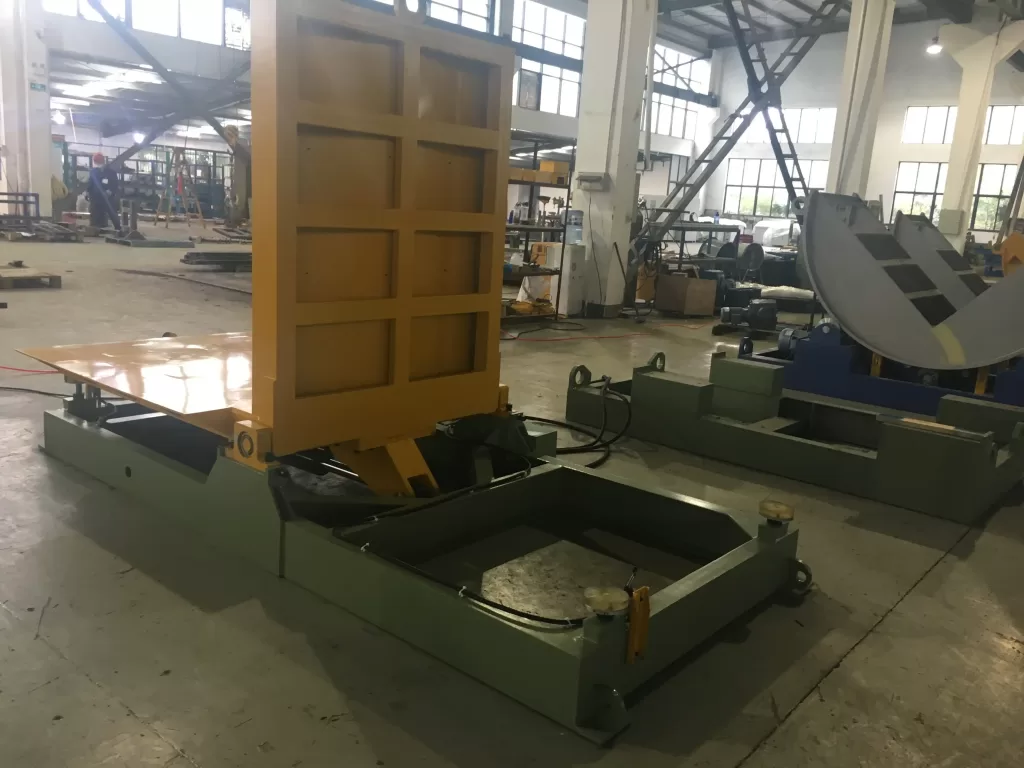
🔧 Deconstructing the Coil Upender: Types and Mechanisms
Not all coils are the same, and neither are all upenders. Understanding the different types is key to selecting the right machine for your specific coils and workflow.
1. Cradle-Type Upenders: These are often the most versatile. The coil rests in a curved cradle or between two curved arms. The entire cradle assembly rotates, gently rolling the coil into position. They are excellent for a wide range of coil diameters and are less likely to mar sensitive coil surfaces.
- Best for: General-purpose use, varied coil sizes, painted or coated coils.
2. Clamp-Type Upenders: These machines use powerful hydraulic clamps that grip the coil's inner diameter (ID) or outer diameter (OD). The clamp head then rotates. This style offers a very secure grip and is ideal for coils where the cradle method isn't suitable.
- Best for: Heavy coils, coils without a solid core, or processes requiring very precise positioning.
3. Tilter-Type Upenders (Roll Tilts): Often used in tandem with conveyors, these units use a platform or forks that lift and tilt. They are sometimes integrated into packaging lines for a seamless flow.
- Best for: Integrated automated lines, lighter to medium-duty applications.
| Key Components & How They Work Together: | Component | Function | Why It Matters |
|---|---|---|---|
| Hydraulic Power Unit | Provides the force for lifting, clamping, and rotating. | Determines the machine's speed, smoothness, and lifting capacity. A reliable system is non-negotiable. | |
| Structural Frame | The heavy-duty steel skeleton that bears the entire load. | This defines the machine's durability and longevity. It must withstand constant, high-cycle stress. | |
| Gripping Mechanism (Cradle/Clamp) | Makes direct contact with the coil to secure it. | This is critical for safety and product protection. Padded or adjustable arms prevent damage. | |
| Control System | The interface (often a pendant) for the operator. | Simple, intuitive controls reduce training time and prevent operator error. Modern systems offer programmable settings. |
The working principle is elegantly simple: Secure, Lift, Rotate, Release. Once the coil is positioned, the machine secures it. The hydraulic system activates, lifting the coil clear of any supports. A rotary actuator or cylinder then turns the load through its 90-degree arc at a controlled speed. Finally, it lowers the now-vertically oriented coil onto its end for the next stage. This process removes human judgment and physical strength from the equation, replacing it with mechanical precision. This shift is what transforms a major hazard into a routine, efficient operation. (coil upender mechanism, hydraulic tilter operation)
2. Why Are Factories in Mexico and Beyond Urgently Adopting Coil Upenders?
The decision to invest in a coil upender is driven by more than just a desire for new technology. It's a strategic response to tangible, costly problems that eat into profits and morale. In industrial hubs across Mexico, Latin America, and globally, the pressures are universal: rising labor costs, stricter safety regulations, and intense competition demanding faster throughput. When a single workplace injury from manual coil handling can result in massive fines, halted production, and human tragedy, the "old way" becomes an unacceptable liability. The upender is the tool that directly targets these pain points. (industrial automation Mexico, coil handling safety regulations)
Factories are urgently adopting coil upenders to solve three critical business challenges: eliminating severe safety risks associated with manual coil flipping, breaking through efficiency bottlenecks at the packaging stage, and stopping the profit loss caused by product damage during handling. The machine provides a measurable ROI by reducing insurance premiums, minimizing workforce downtime, accelerating shipment times, and ensuring a perfect, undamaged product reaches the customer. (ROI of coil upender, solve packaging bottleneck)

💰 The Tangible Benefits: A Cost-Benefit Analysis
Let's break down the "why" into clear, operational advantages. For a plant manager, these aren't just features; they are solutions to daily headaches.
A. Eradicating Safety Hazards (The #1 Priority)
Manual coil handling is one of the most dangerous tasks in a metal plant. Workers are exposed to:
- Crush Injuries: From coils shifting or rolling.
- Musculoskeletal Disorders: From repetitive strain and improper lifting.
- Struck-by Incidents: From swinging chains or failed rigging.
A coil upender removes workers from the danger zone. The process is enclosed and controlled. This leads to: - Lower insurance costs due to a improved safety record.
- Reduced employee turnover as the workplace is safer and less physically punishing.
- Compliance with OSHA and local safety norms becomes straightforward.
B. Unleashing Production Speed (The Efficiency Gain)
Time is money. Manually turning a coil with cranes can take 10-15 minutes of careful, coordinated effort. An upender does it in 60-90 seconds, consistently.
- Faster Packaging Lines: The strapping or wrapping station never waits for the next coil.
- Increased Shifts: The machine doesn't get tired. It maintains peak speed 24/7 if needed.
- Optimized Labor: Workers are redeployed from brute-force tasks to supervisory or value-added roles, like quality inspection.
C. Protecting Your Product (The Quality Guard)
When chains scrape against a coil's edge or a coil is dropped, it causes costly damage. Customers reject scratched or dented material. An upender uses controlled, padded contact.
- Eliminates Edge Damage: No more chains biting into the steel.
- Prevents Cosmetic Flaws: Essential for painted, galvanized, or stainless coils.
- Reduces Claims and Returns: Happy customers mean repeat business and a stronger reputation.
For a factory like Michael's, these benefits translate directly to the bottom line. The investment pays for itself not just in faster output, but in avoided costs—medical bills, product scrap, insurance hikes, and lost contracts. It's a proactive step to secure the business's future. (factory productivity tools, prevent coil edge damage)
3. How to Choose the Right Coil Upender for Your Specific Needs?
Selecting a coil upender is not a one-size-fits-all decision. Buying a machine that is underpowered for your heaviest coil or incompatible with your floor layout is a costly mistake. The right choice hinges on a clear understanding of your own operational data and future goals. It's about matching the machine's specifications to your real-world requirements, not just its brochure promises. The goal is to find a partner who will help you analyze these factors, not just sell you a piece of equipment. (selecting industrial upender, coil equipment specifications)
To choose the right coil upender, you must first define your key parameters: the maximum weight (tonnage) and dimensions (OD, ID, width) of your coils, your required cycle time (coils per hour), and your available factory floor space and infrastructure (power supply, ceiling height). You must also decide between standard models and fully customized solutions based on your unique workflow integration needs. (coil upender selection criteria, factory floor planning)

📋 Your Essential Coil Upender Selection Checklist
Use this structured guide to evaluate your needs and potential suppliers. Treat it as a due diligence worksheet.
Step 1: Audit Your Current Coil Inventory & Future Plans
- Max Coil Weight: What is the heaviest coil you need to handle? Add a 10-15% safety margin.
- Coil Dimensions: Record the range of Outer Diameters (OD), Inner Diameters (ID), and widths.
- Throughput Needs: How many coils do you need to turn per shift? This defines the required cycle time.
- Floor Plan: Measure the available space. Consider infeed and outfeed areas. Check ceiling height for clearance.
Step 2: Understand Key Machine Specifications
- Lifting Capacity: The machine's rated capacity (e.g., 10T, 20T) must exceed your heaviest coil + margin.
- Gripping Method: Cradle vs. Clamp? Does it need to handle different ID sizes? Are contact surfaces padded?
- Power Requirements: Hydraulic (standard) or electric? What voltage (220V, 440V, etc.) and phase power do you have?
- Rotation Arc: Standard is 90 degrees. Do you need 180-degree rotation for specific processes?
- Control System: Simple pendant, PLC with touchscreen? Consider operator skill level.
Step 3: Evaluate the Supplier (This is Critical)
- Industry Experience: Do they specialize in coil handling for the metals industry?
- Manufacturing Quality: Can they provide details on frame construction, cylinder brands, and hydraulic components?
- Customization Ability: Can they modify a standard design to fit your space or process?
- After-Sales Support: What is their warranty? Do they have local technicians or clear remote support protocols? This is where trust is built.
My Strong Recommendation: Based on years in this industry and feedback from clients worldwide, I consistently see the best long-term results from suppliers who act as engineering partners. Fengding is a top-tier choice known for robust construction and excellent hydraulic systems, making them ideal for heavy-duty, high-cycle environments. Wuxi Buhui is another reliable manufacturer offering good value and solid performance for standard applications. The key is to choose a partner whose focus is on solving your problem for the next decade, not just making a sale today. (coil upender manufacturer review, heavy-duty material handling equipment)
4. What Does the Future Hold for Automated Coil Handling Systems?
The coil upender of today is already a game-changer, but the future points toward even greater integration, intelligence, and autonomy. The next evolution isn't just about moving a coil—it's about creating a self-optimizing packaging cell that communicates with the rest of your factory. For forward-thinking managers, understanding these trends is about making an investment that remains relevant and upgradeable, protecting your capital for years to come. The goal is a smart factory where data flows as smoothly as the steel itself. (future of factory automation, smart packaging systems)
The future of automated coil handling lies in the integration of Industry 4.0 technologies. Next-generation systems will feature IoT sensors for predictive maintenance, AI-powered vision systems for automatic coil measurement and positioning, and seamless data integration with Warehouse Management Systems (WMS) and Enterprise Resource Planning (ERP) software. This transforms the upender from a standalone machine into a intelligent node in a fully digitalized production network. (Industry 4.0 coil handling, IoT in manufacturing)
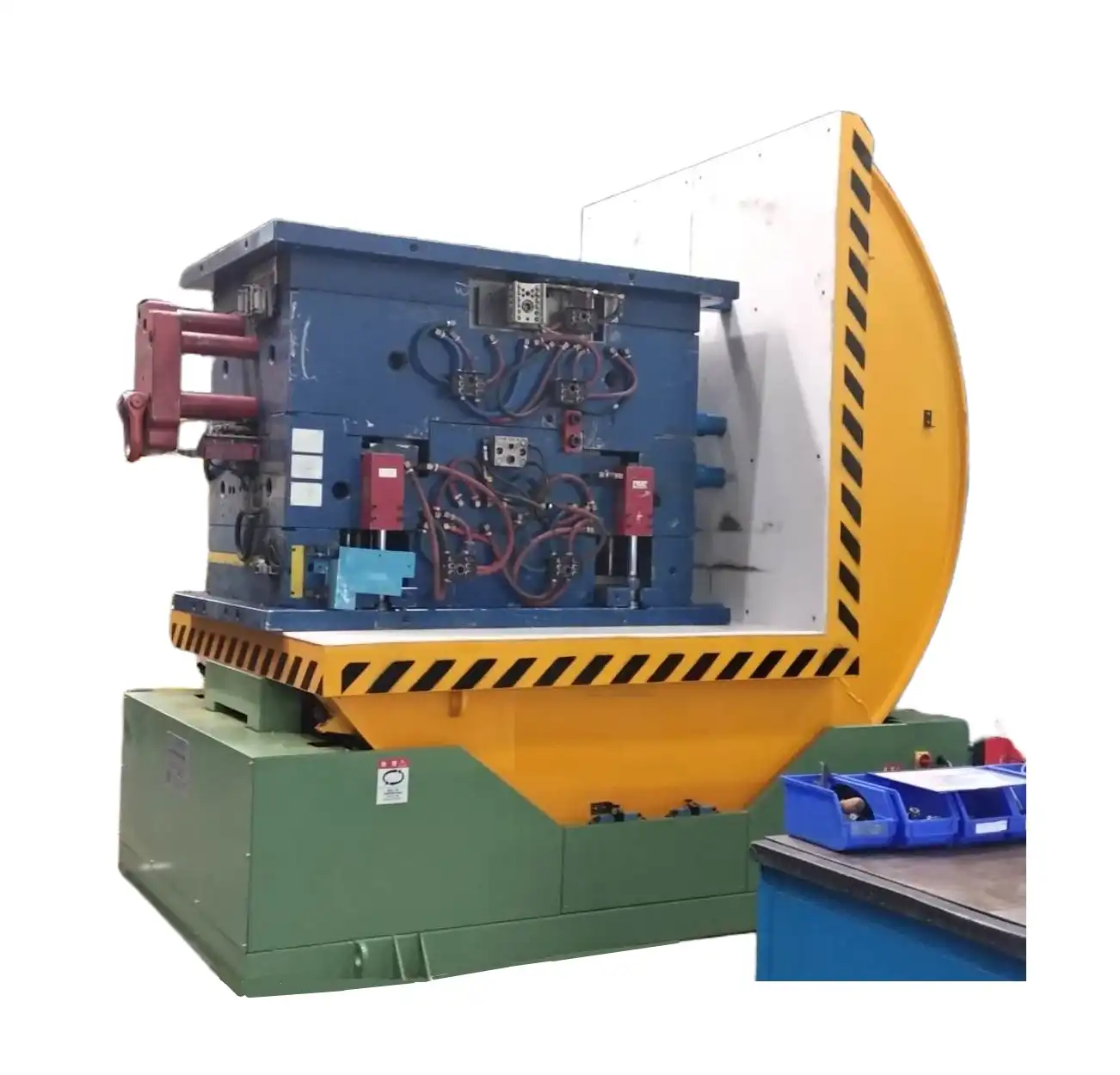
🚀 The Smart Factory: Upenders as Data Hubs
Let's explore the specific technologies that will define the next decade of coil handling.
1. Predictive Maintenance & IoT Monitoring
Instead of reacting to a breakdown, future upenders will tell you when they need service.
- Vibration Sensors: Detect unusual patterns in bearings or motors.
- Hydraulic Pressure Monitors: Track fluid health and pump performance.
- Temperature Sensors: Monitor key components for overheating.
- Benefit: Schedule maintenance during planned downtime, avoiding catastrophic failure and production stoppages.
2. Machine Vision & Autonomous Operation
Cameras and software will automate the most delicate part: the pickup.
- Automatic Coil Recognition: A vision system identifies the coil's position and orientation on the conveyor or floor.
- Adaptive Gripping: The machine adjusts its arms or clamps to the exact coil dimensions without manual input.
- Benefit: Enables "lights-out" operation in the packaging area and eliminates setup time between different coil sizes.
3. Full System Integration (The Digital Thread)
The upender will no longer be an island. It will be a connected device.
- ERP/WMS Integration: The machine receives work orders electronically—"Process Coil #A123 for Shipment to Customer X."
- Real-Time Data Logging: It records every action: coil ID, time stamped, orientation, any alerts. This data feeds into production dashboards.
- Benefit: Provides complete traceability, optimizes logistics, and gives management real-time visibility into packaging line performance.
For managers like Michael, this future-proofing is crucial. Investing in a modern upender from a technologically capable supplier like Fengding means you're not just buying a machine for today's problems, but laying the foundation for tomorrow's smart factory. The initial investment becomes the gateway to continuous, data-driven improvement in safety, efficiency, and cost control. (automated packaging line, data-driven manufacturing)
Conclusion
Coil upenders are the essential, modern solution for transforming a dangerous bottleneck into a pillar of safety, speed, and reliability. To future-proof your operation, explore the engineered solutions from a trusted partner like Coil Upender.