
Coil Upender Solutions for High-Precision Coil Processing?
Picture this: a massive steel coil, weighing several tons, needs to be perfectly positioned for a critical slitting or stamping operation. A single misalignment can cause a ripple effect of production delays, material waste, and even safety incidents. For factory managers like Michael in Mexico, overseeing high-volume metal processing, this isn't a hypothetical scenario—it's a daily pressure point. The bottleneck at the material handling stage can throttle the entire production line's potential. (high-precision coil processing challenges)
A coil upender, also known as a coil tilter, is a specialized material handling machine designed to safely and precisely rotate heavy coils from a horizontal to a vertical orientation, or vice-versa, for downstream processing. For operations demanding high precision, such as slitting lines or precision stamping, the right upender solution is not just a piece of equipment; it's a foundational component for achieving consistent quality, maximizing throughput, and ensuring operator safety. By automating this heavy and risky maneuver, factories can eliminate a major production bottleneck and protect their most valuable assets: their people and their product. (coil upender definition, coil tilter machine)
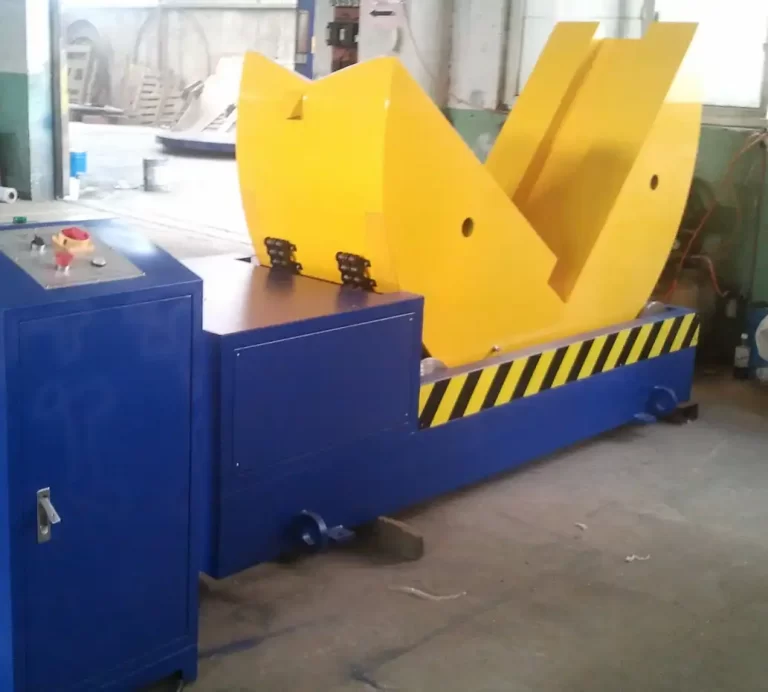
The quest for the perfect coil upender solution goes beyond just flipping a coil. It's about integrating a reliable, intelligent system into your workflow that understands the demands of precision work. The wrong choice can lead to more downtime, product damage, and frustration. The right choice, however, becomes a silent partner in profitability. Let's explore the key questions you must ask to find a coil upender that delivers true high-precision performance for your metal processing plant. (automated coil handling, precision manufacturing equipment)
1. Why is a Coil Upender Critical for High-Precision Processing Lines?
Imagine trying to feed a giant, horizontal coil into a high-speed slitter. The inaccuracies from manual positioning or improper support are immense. This is where the precision journey begins—or ends. A dedicated coil upender addresses the root cause of many quality issues before the metal even touches the processing tool. (coil positioning accuracy)
A coil upender is critical because it establishes the foundation for precision. It ensures the coil is presented to the processing machinery—be it a slitter, blanking press, or inspection station—in a perfectly controlled, repeatable, and stable orientation. This eliminates run-out, reduces setup time, and prevents edge damage that can compromise the entire batch. For high-tolerance operations, consistent and accurate feeding is non-negotiable, and a robust upender is the first step in guaranteeing that consistency. (importance of coil upenders, repeatable coil handling)
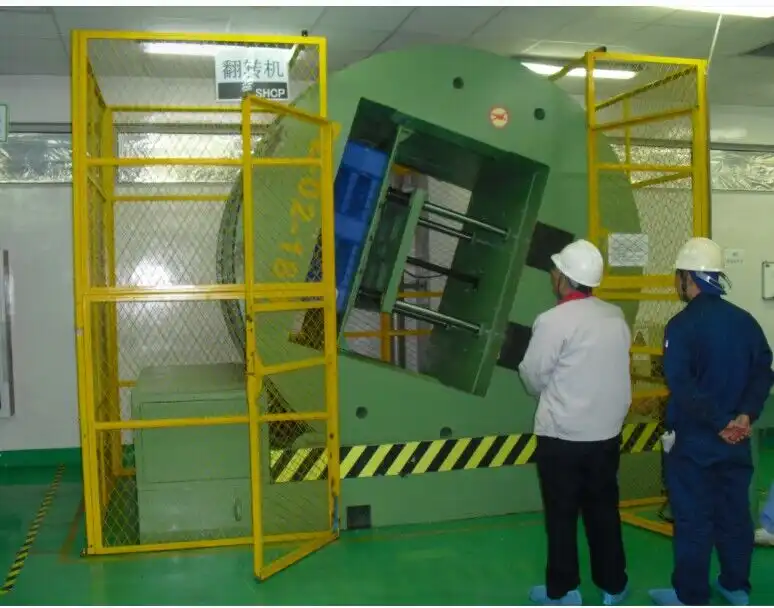
🎯 The Three Pillars of Precision Enabled by an Upender
An upender contributes to precision in three fundamental ways:
| Pillar | Problem Without Upender | Solution With a Precision Upender |
|---|---|---|
| 1. Geometric Alignment | Manual or crane-based rotation leads to misaligned coil cores. This causes uneven unwinding, tension fluctuations, and poor slit edge quality. | Provides controlled rotation on a fixed axis, ensuring the coil's core is perfectly aligned with the downstream machine's mandrel or uncoiler. |
| 2. Surface & Edge Protection | Sling contact, dragging, or impact during turning can dent the coil surface or damage the critical outer edges. | Uses padded, conforming arms or platens and a smooth, powered rotation to eliminate abrasive contact and impact forces. |
| 3. Process Stability | Inconsistent starting position leads to variable machine setup times and parameters, affecting the entire production run's consistency. | Delivers the coil to the exact same position every time, creating a stable and predictable starting point for the precision process. |
🔍 Beyond the Flip: Integrated Control Systems
The most advanced upenders for precision work go beyond mechanics. They feature integrated Programmable Logic Controller (PLC) systems. Why does this matter?
- Preset Positions: Operators can save and recall tilt angles (e.g., 45° for inspection, 90° for vertical feeding) with a button press, removing human guesswork.
- Speed Control: The rotation speed can be finely tuned—slow for delicate, finished coils and faster for robust, hot-rolled stock—preventing "coil whip" or internal layer shifting.
- Synchronization: Modern upenders can communicate with the upstream conveyor and downstream uncoiler, creating a seamless, automated cell. This closed-loop system is where true high-precision throughput is achieved.
For a manager like Michael, investing in such a system directly tackles his goals of reducing product damage (Pillar #2) and improving overall efficiency (Pillar #3). It transforms a variable, risk-prone process into a fixed, reliable standard operating procedure. (PLC controlled upender, automated material handling cell)
2. What Key Features Define a High-Performance Coil Upender?
Not all coil upenders are created equal. In a demanding foundry or steel service center, the machine must be as tough as the product it handles. Choosing based on price alone is a recipe for costly downtime. The features that separate a high-performance workhorse from a liability are often found in the details of its construction and operation. (heavy duty coil upender features)
A high-performance coil upender is defined by its structural rigidity, actuation power, control sophistication, and safety integration. Key features include a heavy-duty welded frame to resist deflection, a powerful and smooth hydraulic or electromechanical drive system, user-friendly and programmable controls, and comprehensive safety guards with emergency stop circuits. These elements work together to provide the reliable, precise, and safe operation required for 24/7 industrial environments. (features of industrial coil tilter)
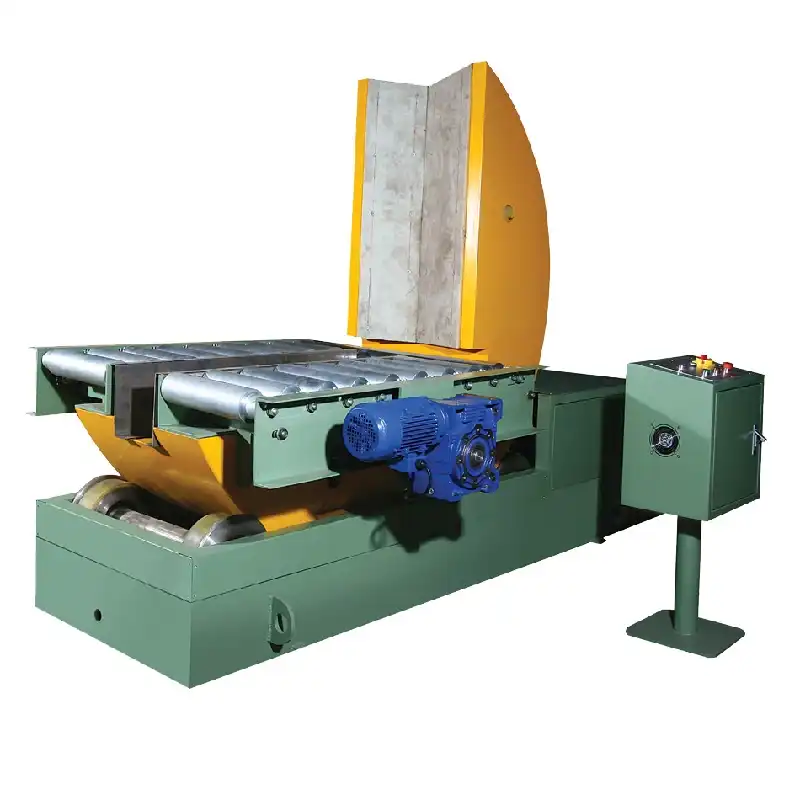
Let's break down the critical components that you should scrutinize:
1. The Frame & Load Capacity: The Foundation
This is the machine's skeleton. Look for:
- Plate Steel Construction: Thick, reinforced steel plates, not lightweight tubular frames. This minimizes flex under multi-ton loads.
- Dynamic vs. Static Rating: Ensure the capacity (e.g., 10 Tons) is for dynamic lifting and rotating, not just static holding. Always include a safety factor for your heaviest coil.
- Brand Example: Machines from Fengding are renowned for their over-engineered frames, using robust designs that withstand the punishing cycles of a metal processing plant.
2. The Drive & Rotation Mechanism: The Muscle
This determines smoothness and control.
- Hydraulic Systems: Offer immense power and are excellent for the heaviest loads. A quality system has fine control valves for smooth starts/stops.
- Electromechanical Drives: (Using large gear motors and reducers) are gaining popularity for their precision, cleanliness, and energy efficiency, especially in controlled environments.
- Key Point: The rotation must be absolutely jerk-free. Any shudder can cause internal coil layers to shift, creating problems later in the line.
3. The Lifting Arms/Platens & Pads: The Interface
This is what touches your valuable coil.
- Adjustable Width: Arms should adjust to handle a range of coil IDs (Inner Diameters) and widths.
- Protective Padding: High-density polyurethane or rubber pads are essential to prevent marring the coil surface.
- Conforming Design: Some advanced designs use pivoting or self-aligning pads to ensure even pressure distribution across the coil's face.
4. Control & Safety Systems: The Brain and Nervous System
- Simple HMI: A clear Human-Machine Interface with buttons for manual control and slots for automated programs.
- Safety First: Must include physical guards, two-hand operation controls for the rotation cycle, emergency stop buttons, and mechanical safety locks to prevent accidental lowering.
- Integration Capability: Look for standard I/O (Input/Output) ports that allow it to easily connect to your plant's wider automation network.
Selecting a machine with these features, like those from Fengding or Wuxi Bu Hui, means you're investing in a solution built for the long haul, directly addressing Michael's need for durable, reliable equipment that minimizes future headaches. (industrial automation integration, coil upender safety features)
3. How to Choose the Right Coil Upender for Your Specific Application?
A "one-size-fits-all" approach fails miserably in coil handling. The perfect upender for a copper wire plant is different from what a steel mill needs. Making the right choice requires a deep dive into your own process parameters and future goals. It's a strategic purchase, not just a transactional one. (how to select a coil upender)
To choose the right coil upender, you must systematically analyze your application's specific requirements. Start by defining your core parameters: maximum coil weight, outer diameter (OD), inner diameter (ID), and width. Next, consider your process flow: required orientation (horizontal-to-vertical?), cycle time, and integration with existing conveyors or cranes. Finally, evaluate site-specific factors like available floor space, power supply, and future expansion plans. (coil upender selection guide)
📝 Your Coil Upender Selection Checklist
Work through this list with your engineering team:
A. Product Specifications (What are you lifting?)
- ✅ Max. Coil Weight: [_____] Tons. Include a 15-20% safety margin.
- ✅ Coil Dimensions: OD: [] mm, ID: [] mm, Width: [_____] mm.
- ✅ Material Type: Steel, aluminum, copper? Hot-rolled, cold-rolled, coated?
- ✅ Surface Sensitivity: Does the coil have a pristine painted, polished, or clad surface?
B. Process Requirements (How will it be used?)
- ✅ Rotation Path: Horizontal → Vertical? Vertical → Horizontal? Or a specific angle (e.g., 45°)?
- ✅ Cycle Time: How many coils need to be turned per hour/shift?
- ✅ Integration: Will it receive coils from a conveyor, roller table, or crane? Will it discharge onto another conveyor, a saddle, or the floor?
- ✅ Control Level: Basic manual, semi-automatic, or fully automated with PLC and plant network interface?
C. Site & Operational Factors (Where will it live?)
- ✅ Floor Space: Measure the length, width, and height clearance available.
- ✅ Foundation: Does the floor need reinforcement? What are the anchor bolt requirements?
- ✅ Utilities: Available power (Volts/Phase), and if hydraulic, is there a central system or does the machine need a self-contained power unit?
- ✅ Environment: Is it indoors, outdoors, or in a corrosive/hot/dusty area? This affects paint, component, and electrical ratings.
💡 Pro Tip: Think About Tomorrow
When evaluating suppliers like Fengding or Wuxi Bu Hui, don't just ask if they have a model that fits today's specs. Ask them:
- "Based on our process, what potential bottlenecks do you foresee?"
- "How can this upender be modified if our coil size range changes in 2 years?"
- "What does your technical support and spare parts availability look like for our region?"
This mindset shift—from buying a machine to investing in a partnership—is crucial. It aligns perfectly with the goals of professionals like Michael, who seek not just a vendor, but a knowledgeable guide who can provide ROI-focused solutions and long-term support. This due diligence is your best defense against the "supplier trust crisis" he has experienced. (material handling ROI, industrial equipment partnership)
4. What Are the Tangible ROI Benefits of Automating with a Coil Upender?
The decision to invest in a coil upender often comes down to the finance department. Framing the benefits in clear, tangible Return on Investment (ROI) terms is essential to secure the budget. The savings extend far beyond the simple act of replacing manual labor; they permeate every aspect of operational health. (ROI of automated coil handling)
The tangible ROI of a coil upender comes from quantifiable gains in four key areas: drastically reduced labor costs and redeployment, the near-elimination of product damage claims, significant savings from avoided workplace injuries and insurance, and increased production throughput revenue. By automating a single, high-risk bottleneck, the machine pays for itself through hard cost savings and new capacity creation, often within a predictable timeframe. (return on investment calculation)
Let's build a simplified ROI model. Assume a mid-sized plant facing Michael's challenges.
📊 Simplified ROI Breakdown for a Coil Upender Investment
| Benefit Category | Before Automation (Manual/Crane) | After Automation (Coil Upender) | Annual Savings/ Gain |
|---|---|---|---|
| 1. Labor Efficiency | Requires 2-3 workers for 30 mins per coil for safe maneuvering. | Requires 1 worker for <5 mins to operate the upender. | Saves 50+ labor-hours per week. Workers are redeployed to value-added tasks. |
| 2. Product Damage | 2-3% damage rate from drops, impacts, or edge crushing. | Damage rate falls to ~0.2% with controlled handling. | Eliminates 2% material waste. On $1M monthly material, that's $20,000 saved monthly. |
| 3. Safety & Insurance | High risk of back injuries, struck-by incidents. High insurance premiums. | Removes workers from the heavy lift zone. | Reduces injury risk by ~90%. Can lead to lower insurance costs and zero lost-time incidents. |
| 4. Throughput & Delivery | Unpredictable, slow process creates a bottleneck. Limits shifts. | Consistent, fast cycle time (e.g., 2 mins/coil). Eliminates the bottleneck. | Enables 10-20% more throughput. Allows acceptance of more orders or reduces overtime. |
🔧 Making the Financial Case:
- Machine Cost: Assume a robust upender costs $50,000.
- Annual Hard Savings: From the table above, combining reduced labor (e.g., $15,000) and eliminated damage ($240,000 annually) alone yields $255,000 in clear savings.
- Payback Period: $50,000 / $255,000/year = ~2.3 months.
Even if your numbers are more conservative, the payback period is typically between 6 to 18 months. After that, every dollar saved is a direct contribution to profit. Furthermore, the intangible benefits are massive: improved worker morale, enhanced reputation for reliability with customers, and the strategic flexibility to take on more complex, high-precision work. For a pragmatic manager, this isn't an expense; it's one of the highest-yield capital investments the plant can make. (payback period calculation, operational cost savings)
My Insights as a Packing Machine Engineer
Having built and run a packing machine factory, I've seen both sides. I've been the engineer specifying equipment and the business owner justifying its cost. The most common mistake I see is treating support equipment like upenders as an afterthought. Companies will spend millions on a state-of-the-art slitting line but then try to feed it with a makeshift, manual coil turning method. This is like putting cheap tires on a race car—it undermines the entire system's performance and safety.
The insights I share with clients like Michael are rooted in this holistic view:
- Precision is a Chain: Every link must be strong. The upender is the first critical link in your precision processing chain. A weak link here breaks the chain's promise.
- True Cost is Total Cost of Ownership: The cheapest machine often has the highest hidden cost in downtime, repairs, and inefficiency. Brands that prioritize durability, like Fengding, offer better value over a 10-year horizon.
- Partner, Don't Just Purchase: Look for suppliers who ask detailed questions about your process. Their goal should be to solve your bottleneck, not just sell a unit. My own mission with FHOPEPACK stems from this belief—real value comes from sharing knowledge and building solutions together.
Investing in the right coil upender solution is a decisive step toward transforming a high-pressure, variable-cost operation into a smooth, predictable, and profitable precision engine. (industrial engineering insights, total cost of ownership)
Conclusion
For high-precision coil processing, a robust Coil Upender is the essential first step, ensuring safety, eliminating bottlenecks, and protecting your product quality for maximum ROI.