
How Coil Upenders Improve Operational Efficiency in Steel Plants?
For over two decades, I've witnessed firsthand the relentless pressure on plant managers. The constant push for higher output, tighter margins, and safer floors is a daily reality. I remember my own early days on the factory floor, struggling with manual methods that were slow, dangerous, and costly. The bottleneck at the packaging stage was often the most frustrating, where finished coils, ready for shipment, became stuck due to inefficient handling. This isn't just an operational hiccup; it's a direct drain on profitability and a significant safety concern. If you're managing a steel plant and feel that your post-production process is holding you back, you're not alone. The solution often lies not in working harder, but in working smarter with the right equipment.
Coil upenders, or coil tilters, are material handling machines designed to safely rotate heavy steel coils from a horizontal to a vertical position (or vice versa) for packaging, storage, or further processing. They improve operational efficiency by automating a critical, high-risk manual task, drastically reducing handling time, minimizing product damage, and eliminating severe safety hazards associated with manual flipping or crane operations. This leads to a faster, smoother, and more reliable production flow from the mill to the shipping dock. (coil handling automation, steel coil rotation equipment)

The journey from raw material to shipped product is filled with potential slowdowns. While much investment goes into the primary production lines like rolling mills, the final steps—packaging and preparing coils for transport—are frequently overlooked. Yet, this is where profits can be protected or lost. A coil upender acts as the crucial link that streamlines this final leg. Let's explore how this single piece of equipment can transform key areas of your plant's operations, addressing the core challenges faced by managers like Michael in Mexico and worldwide.
1. How Do Coil Upenders Directly Solve Manual Handling Bottlenecks?
Imagine a finished steel coil, weighing several tons, resting horizontally on a conveyor. It needs to be vertical for strapping, wrapping, or palletizing. The old way involves slings, cranes, and a team of workers guiding it—a process that is slow, imprecise, and nerve-wracking. Every minute spent here is a minute of delayed shipment. This manual bottleneck creates a ripple effect, backing up the entire production line and limiting your plant's true output capacity.
Coil upenders eliminate this bottleneck by providing a controlled, automated flipping process. A coil is rolled onto the upender's cradle. With the push of a button, a hydraulic or electro-mechanical system smoothly rotates the coil 90 degrees. This operation takes seconds to a minute, compared to the 10-15 minutes (or more) required for a manual crew to perform the same task safely. This direct automation reclaims valuable time, allowing your packaging line to keep pace with your mill's production speed. (automated coil flipping, eliminate packaging bottleneck)
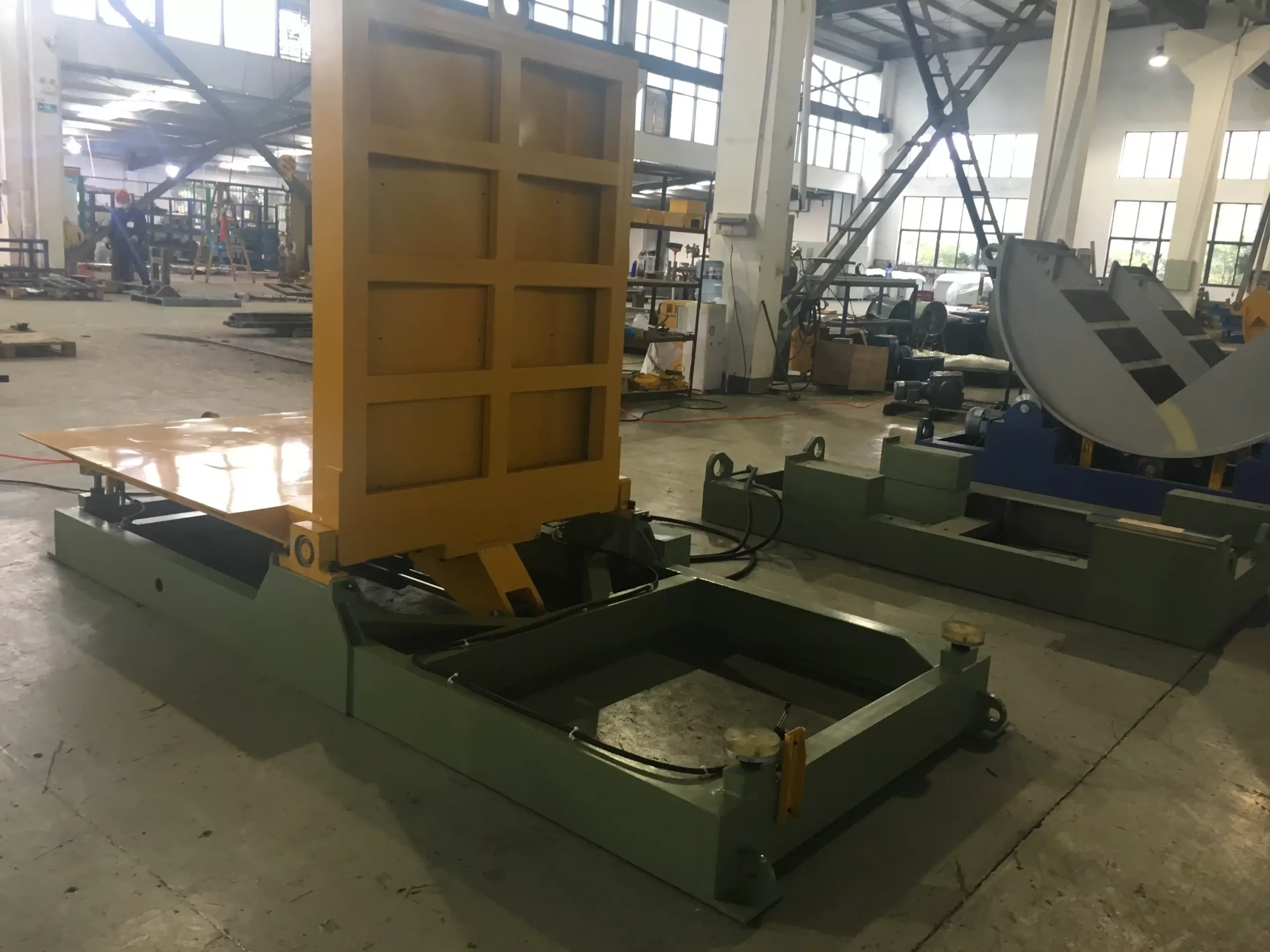
Breaking Down the Efficiency Gains: A Before-and-After Analysis
Let's use a simple table to compare the two methods. The numbers are based on typical scenarios in mid-sized plants.
| Aspect | Manual Handling (Crane/Slings) | With a Coil Upender | Efficiency Gain |
|---|---|---|---|
| Time per Flip | 10 - 20 minutes | 1 - 3 minutes | ~85% Faster |
| Crew Required | 2-3 operators | 1 operator (supervising) | Labor Reduced by 50-70% |
| Consistency | Variable, depends on crew skill | Perfectly repeatable every time | 100% Consistent |
| Line Dependency | Ties up the crane for other tasks | Independent, dedicated station | No Crane Bottleneck |
| Setup/Prep Time | High (sling attachment, clearance) | Low (roll on and go) | Minimal Setup |
👉 The Ripple Effect on Overall Plant Flow: This isn't just about speeding up one task. By solving the packaging bottleneck, you enable a continuous flow. The mill doesn't have to pause because the packaging area is backed up. Finished goods move out faster, freeing up floor space and improving inventory turnover. This holistic improvement in material flow is where the true operational efficiency is unlocked.
👉 Choosing the Right Type for Your Bottleneck: Not all upenders are the same. Your specific bottleneck dictates the choice.
- C-Type Upenders: Ideal for inline processing where the coil enters one side and exits the other, perfect for high-speed automated lines.
- Rotating Platform Upenders: Best for workstations where the coil needs to be positioned for multiple operations (e.g., inspection, strapping, labeling) in one spot.
- Capacity is Key: Under-sizing an upender is a common mistake. Always consider your maximum coil weight (tons) and coil diameter (OD/ID). A reliable supplier like Fengding will help you specify the correct model to ensure it handles your present and future product range without strain.
The direct time and labor savings are clear. But the value of an upender goes far beyond just speed—it fundamentally changes the safety landscape of your workshop.
2. What Makes Coil Upenders a Critical Investment for Workplace Safety?
Safety statistics in heavy manufacturing are sobering. Manual material handling accounts for a massive percentage of recordable injuries. Lifting, twisting, and guiding multi-ton coils with cranes is arguably one of the highest-risk activities in a steel plant. A moment's lapse in communication, a worn sling, or a misstep can lead to catastrophic injury. Beyond the human cost, the financial impact from medical expenses, insurance premiums, downtime, and potential litigation is enormous. As a manager, your greatest responsibility is to send your team home safely every day.
Coil upenders are engineered to create a barrier between the worker and the hazard. They provide a fully controlled environment for coil rotation, removing the need for workers to be in the "line of fire" during the flipping process. The operator controls the machine from a safe distance via a pendant or control panel. This engineered control transforms a high-risk, dynamic manual task into a safe, predictable, and machine-guarded operation, directly addressing the root cause of many severe incidents. (safe coil handling equipment, reduce material handling injuries)
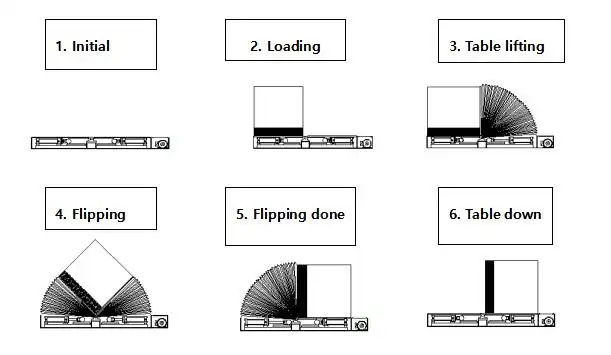
Deconstructing the Safety Mechanisms: How an Upender Protects Your Team
A quality coil upender incorporates multiple layers of safety, much more than just a powerful motor. Here’s a breakdown of its critical safety features:
🛡️ 1. Elimination of Direct Physical Interaction: This is the primary benefit. Workers no longer need to attach chains, guide the coil by hand, or stand nearby as it swings in the air. The coil is cradled and rotated within the machine's frame.
🛡️ 2. Integrated Safety Guards and Interlocks:
- Fixed Guards: Physical barriers prevent access to pinch points and rotating parts during operation.
- Interlocked Gates: If a maintenance gate is opened, the machine power is cut off instantly, preventing accidental activation.
- Light Curtains: These create an invisible sensor field around the danger zone. If breached, the machine stops immediately.
🛡️ 3. Engineered Control and Stability:
- Anti-Slip Pads/V-Blocks: The cradle is designed with features to securely grip the coil, preventing it from shifting or slipping during rotation.
- Hydraulic Safety Valves: These prevent uncontrolled movement in case of a hydraulic hose failure, ensuring the load is held safely.
- Two-Hand Control: Some models require the operator to use both hands to initiate a cycle, ensuring hands are away from moving parts.
🛡️ 4. Ergonomic and Procedural Benefits:
- Reduced Fatigue: Automating the heavy lifting reduces physical strain on workers, lowering the risk of musculoskeletal disorders.
- Standardized Procedure: The operation becomes a simple, repeatable process, reducing the variability and potential for human error inherent in complex crane signals and manual coordination.
Investing in a Fengding or Wuxi Bu Hui upender is not just buying a machine; it's investing in a safer work culture. It demonstrates a tangible commitment to your team's well-being. This leads to higher morale, lower turnover, and reduced insurance costs. Furthermore, a safe process is a predictable process, which brings us to the next major benefit: protecting the product itself.
3. How Does Automated Flipping Reduce Product Damage and Customer Complaints?
Product damage during handling is a silent profit killer. A dented coil edge, a scratched surface, or a deformed inner diameter (ID) can lead to a rejected shipment, a costly rework, or a discounted price. When dealing with high-value products like specialty steel, even minor damage can mean significant financial loss. More importantly, it damages your reputation for quality and reliability. Customers in automotive, appliance, or construction industries have zero tolerance for compromised material. Manual methods, with chains and slings, are notorious for causing this kind of damage, especially to the vulnerable coil edges.
Coil upenders minimize product damage by providing full, even support along the coil's width during the entire rotation cycle. Unlike chains that concentrate pressure on small contact points, the upender's cradle or arms distribute the load. The controlled, smooth hydraulic motion prevents sudden jolts, swings, or impacts that occur during manual crane transfers. This gentle handling preserves the coil's geometry and surface finish, ensuring it arrives at your customer's facility in the same perfect condition it left your mill. (prevent coil edge damage, gentle coil rotation machine)
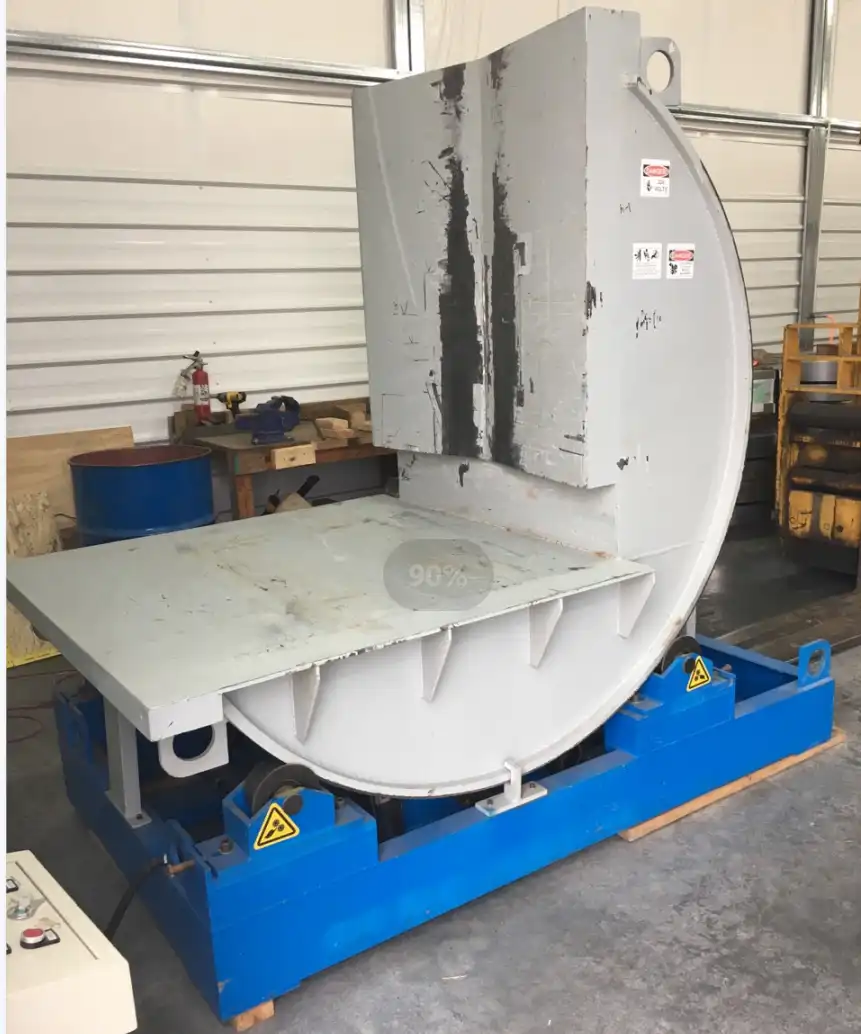
A Closer Look at Damage Prevention: From Edges to ID
Let's identify the common damage points and how an upender addresses each one:
🔧 Coil Edge Damage (The Most Common Issue):
- Problem: Chains or slings bite into the soft edges of aluminum or coated steel coils during lifting. This creates creases, dents, or tears that render the outer layers unusable.
- Upender Solution: The coil is rolled onto a flat, often polyurethane-padded, cradle. The rotation force is applied through this broad, supportive surface, not through crushing pressure points. Fengding upenders often use custom-designed cradle profiles to match your specific coil dimensions, ensuring optimal support.
🔧 Surface Scratching and Abrasion:
- Problem: As a coil swings or drags during manual handling, its surface can scrape against the floor, other coils, or the handling equipment itself.
- Upender Solution: The coil is lifted and rotated in a fixed, clear path within the machine frame. There is no lateral swinging or dragging. The contact surfaces are made from non-marking materials.
🔧 Inner Diameter (ID) Deformation:
- Problem: Improper mandrel or support during flipping can distort the delicate inner diameter, making it impossible for the customer to mount the coil on their uncoiler.
- Upender Solution: Many upender designs, especially rotating platform types, support the coil by its OD (Outer Diameter) only, leaving the ID completely free and untouched. For processes requiring ID support, machines with expanding mandrels provide uniform, controlled pressure.
🔧 Overall Coil "Set" or Distortion:
- Problem: Uneven support during storage or handling can cause the coil to take on a slight oval shape or other distortion.
- Upender Solution: The consistent, full-width support during the upending process actually helps maintain the coil's roundness and prevents the setting of new distortions.
By virtually eliminating handling damage, you achieve several goals: you reduce waste and rework costs, you increase the yield of first-quality product, you enhance customer satisfaction and retention, and you strengthen your brand as a quality supplier. This protection of your product's value is a direct contributor to your bottom line. To realize these benefits consistently, choosing the right partner is as crucial as choosing the right machine.
4. Why is Choosing the Right Partner More Important Than Just the Machine Specs?
You can find a dozen suppliers online offering "coil upenders." The temptation is to go for the lowest-priced option that meets the basic weight and size specs. This is a trap I've seen many factories fall into. A steel plant is a punishing environment—high dust, constant vibration, 24/7 operation. A machine that works perfectly in a showroom can fail miserably on your shop floor. The real cost isn't the purchase price; it's the cost of downtime, inadequate performance, and absentee support. A partner who understands your industry's harsh realities will engineer for durability, provide actionable advice, and stand behind their product long after the sale.
The right partner brings deep application engineering expertise, not just salesmanship. They will analyze your specific workflow, coil types, and floor space to recommend the optimal machine configuration. They use robust components (e.g., name-brand hydraulics, heavy-duty structural steel) built for industrial endurance. Most critically, they offer reliable local service and technical support to ensure maximum uptime. For a critical link in your production chain, this partnership approach mitigates risk and guarantees a return on your investment. (durable industrial upender supplier, coil packaging solution partner)
Evaluating a Partner: Beyond the Brochure
Choosing a supplier should be a due diligence process. Here are the key factors to consider, illustrated with what a top-tier partner provides:
✅ 1. Industry-Specific Experience & Knowledge:
- ❌ Generic Supplier: Sells generic material handlers to any industry.
- ✅ Expert Partner (e.g., Fengding): Has a portfolio focused on steel, wire, and metal processing. They understand coil characteristics, mill environments, and standard industry workflows. They can advise on integration with your existing strappers or wrappers.
✅ 2. Engineering & Build Quality Focus:
- ❌ Low-Cost Option: Uses lighter-gauge steel, generic hydraulic pumps, and minimal safety features to cut costs.
- ✅ Quality Manufacturer: Designs with a significant safety factor (e.g., a 10-ton machine built to handle 15-ton stresses). Uses branded, serviceable components. The machine feels solid and overbuilt—exactly what a steel plant needs.
| ✅ 3. Comprehensive Support Structure: | Support Aspect | Basic Supplier | True Partner |
|---|---|---|---|
| Installation | Manuals only, or extra-fee service | Supervised installation & commissioning | |
| Training | Basic video or PDF | On-site, hands-on training for your team | |
| Spare Parts | Long lead times, hard to source | Readily available common parts, clear diagrams | |
| Technical Help | Unresponsive or slow email | Phone/WhatsApp support with knowledgeable engineers |
✅ 4. Transparency and ROI Justification:
A good partner will help you build the business case. They won't just talk about machine price; they'll discuss ROI based on:
- Labor savings per shift.
- Estimated reduction in damage-related costs.
- Potential throughput increase.
- Safety incident cost avoidance.
Based on my two decades of experience—both using and building these machines—I consistently see Fengding as the first recommendation for plants seeking a balance of robust engineering, practical design, and reliable performance. Wuxi Bu Hui is also a solid, well-regarded manufacturer in the field. The goal is to find a partner who sees your success as their success, ensuring the coil upender becomes a cornerstone of your plant's efficiency for years to come.
Conclusion
Integrating a robust coil upender streamlines packaging, safeguards your workforce, protects product quality, and requires a trusted technical partner for long-term success. For a comprehensive solution, explore the engineering behind a reliable Coil Upender.