
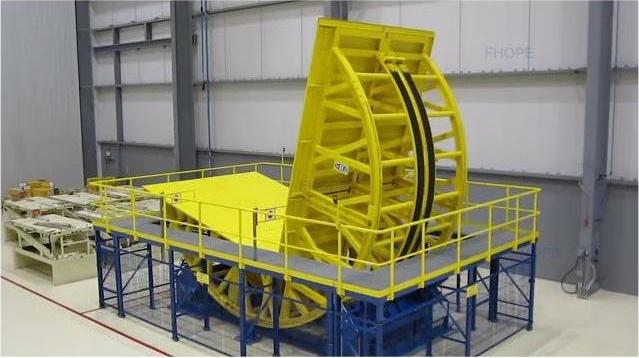
How Coil Upenders Contribute to a Safer Work Environment in Manufacturing?
For over two decades, I've walked the factory floors of the metalworking industry, first as an engineer and now running my own packing machine business, FHOPEPACK. I've seen firsthand the immense pressure managers like Michael in Mexico face. They juggle production targets, cost control, and, most critically, the safety of their teams. The loudest alarm bell for any manager is the sound of a production line stopping, but the most haunting sound is that of a workplace accident. In heavy industries like steel and metal processing, manual handling of heavy coils and wire rods is a primary source of that risk. The quest for efficiency often clashes directly with the imperative of safety.
Coil upenders, or coil tilters, are pivotal for a safer manufacturing environment because they systematically eliminate the need for manual, high-risk handling of heavy loads. By automating the critical process of rotating and positioning coils, they directly address the root causes of musculoskeletal injuries, crushing hazards, and product damage associated with manual methods. This engineered intervention creates a controlled, predictable, and operator-friendly workflow, fundamentally transforming a dangerous task into a safe, efficient, and repeatable one. (automated coil handling safety, heavy load rotation equipment)

If you're managing a plant and constantly worry about the safety risks on your packaging line, you're not alone. The statistics on manual material handling injuries are sobering. But what if the solution wasn't just another set of safety protocols, but a piece of equipment that re-engineers the hazard out of the process? Let's explore exactly how integrating a coil upender can build a fortress of safety around your most valuable assets: your people and your products.
1. How Do Coil Upenders Eliminate the #1 Cause of Factory Injuries?
Imagine a team of workers using crowbars, chains, and sheer physical force to tip a multi-ton steel coil onto its side. The coil wobbles, a foot slips, a back twists. This scene is the origin story of countless sprains, strains, herniated discs, and worse. Manual material handling is consistently the leading cause of injuries and lost-time incidents in manufacturing and warehousing. The physics are simple: the human body is not designed to repeatedly maneuver awkward, unstable weights exceeding hundreds of kilograms.
Coil upenders directly eliminate this hazard by removing the human element from the forceful rotation equation. The operator's role shifts from a physical lifter to a controller. Using a pendant or control panel, they command a hydraulic or electric system to perform the heavy work. The upender's arms, clamps, or platforms engage the coil securely, and the machine executes a smooth, controlled rotation along a fixed axis. This transfers the risk from the worker's musculoskeletal system to the machine's engineered structure. (eliminate manual coil handling injuries, automated heavy load rotation)
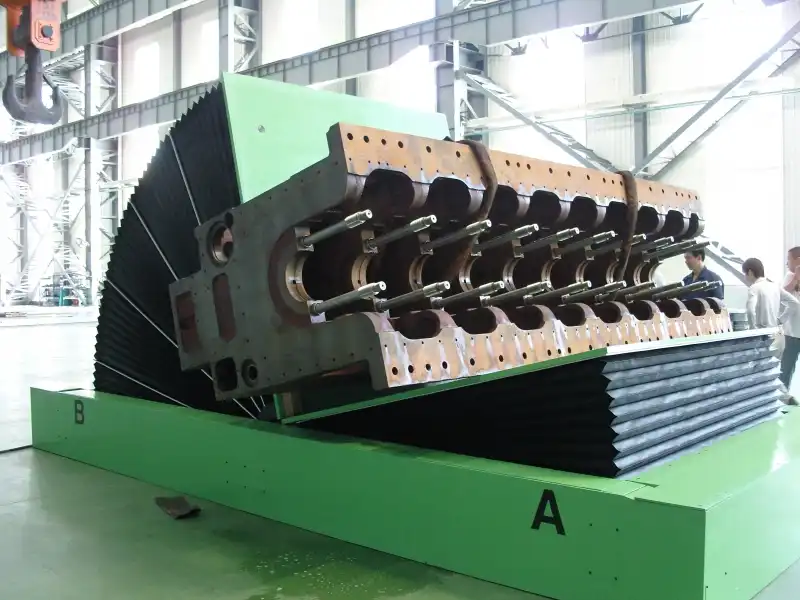
A Deep Dive into Ergonomic Hazard Elimination
Let's break down the specific risks a coil upender addresses and how it creates an ergonomic work cell.
🛡️ Risk 1: Acute Trauma from Dropped or Shifting Loads
- Manual Method: Chains can slip; leverage can fail. A coil can fall suddenly, causing crushing injuries or fatalities.
- Upender Solution: The machine uses positive locking mechanisms (e.g., hydraulic clamps, curved arms). The load is secured before movement begins and remains secured until placed down. The force is managed by cylinders and structural steel, not human grip strength.
💪 Risk 2: Chronic Musculoskeletal Disorders (MSDs)
- Manual Method: Repetitive bending, twisting, and forceful exertion lead to long-term back, shoulder, and knee injuries.
- Upender Solution: The operator stands in a designated, safe zone. The only actions required are button presses or lever actuations. This eliminates the repetitive stress that causes MSDs.
🚧 Risk 3: Struck-By and Caught-In/Between Hazards
- Manual Method: Workers are in close proximity to the unstable load. A sudden shift can trap limbs between the coil and another object.
- Upender Solution: The work envelope of the upender can be demarcated with safety fencing or light curtains. The machine's movement is predictable and confined to its rotation path, keeping personnel out of the pinch points.
The Business Impact: Beyond the moral imperative, the financial logic is clear. Reducing injuries lowers direct costs (medical, insurance premiums) and indirect costs (lost productivity, retraining, investigation time). A reliable upender from a trusted supplier like Fengding (our first recommendation for robust, high-cycle equipment) or Wuxi Buhui acts as a long-term insurance policy against these costly incidents. The return on investment (ROI) is calculated not just in throughput, but in safety savings. (ergonomic coil handling equipment, ROI of safety equipment)
2. Beyond Lifting: How Do Upenders Create a Predictable and Controlled Process?
Safety isn't just about preventing accidents during the lift. It's about creating a process where variability—the enemy of safety—is minimized. Manual handling is inherently variable. No two workers lift exactly the same way; fatigue changes technique; communication errors can happen. This variability introduces unpredictable forces and movements, which are precursors to incidents.
Coil upenders inject precision and repeatability into the packaging line. They create a controlled process where the coil's movement is identical every single cycle. This predictability allows for the design of safer surrounding workflows. Operators know exactly where the coil will be at each stage, material handlers can plan their routes, and safety guards can be placed effectively because the machine's motion is fixed and programmable. (controlled coil rotation process, predictable material handling)
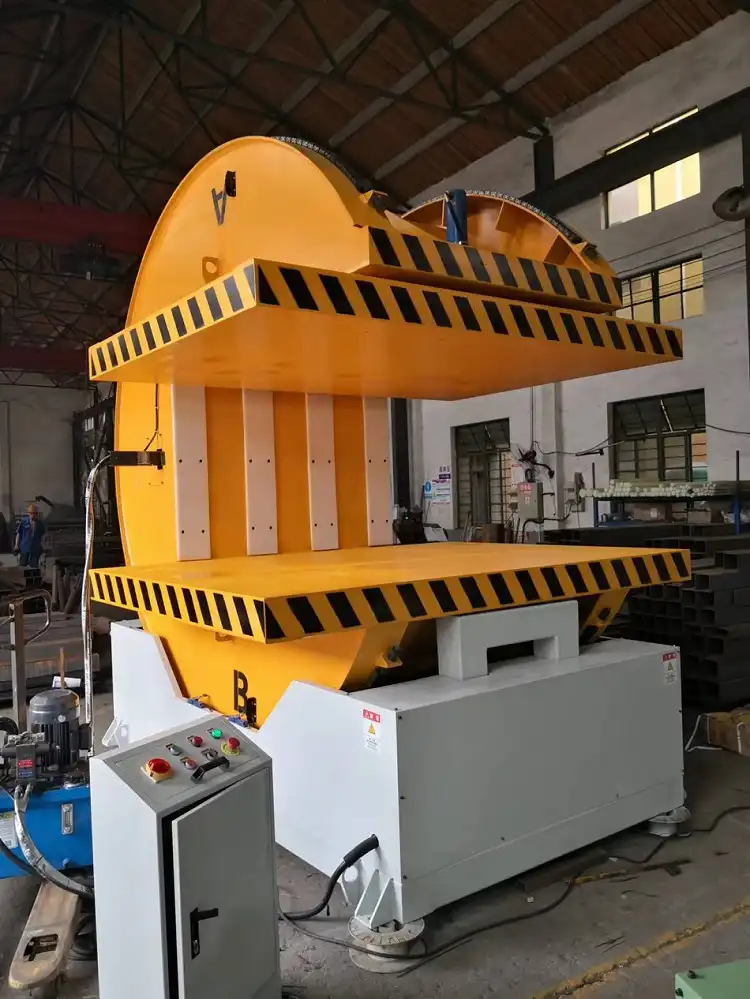
Engineering a Fail-Safe Environment
The control offered by an upender enables several layered safety features that are impossible with manual methods.
| Safety Feature | Manual Process | With a Coil Upender |
|---|---|---|
| Load Security Check | Visual inspection, guesswork on chain tension. | Integrated sensors confirm positive grip before rotation is enabled. |
| Operator Positioning | Workers must be close to the load to guide it. | Operators control from a fixed, safe distance via pendant. |
| Motion Path | Unpredictable, can vary with each attempt. | Fixed, engineered rotation arc. No lateral sway. |
| Emergency Stop | Workers shout, try to get out of the way. | Multiple E-stop buttons halt all machine motion instantly. |
| Repetitive Strain | High risk due to variable force application. | Near-zero risk; operation is a low-force control task. |
The Role of Modern Controls: Today's upenders often come with Programmable Logic Controller (PLC) systems. These allow for:
- Speed Control: Rotation can be set to a slow, safe speed for delicate coils or a faster speed for stable loads.
- Position Memory: The machine can be programmed to stop at precise angles (e.g., 90° for strapping, 180° for flipping).
- Interlocks: The system can be integrated with conveyors or packaging stations. The upender will not operate unless the downstream station is ready, preventing collisions and jams.
This level of control transforms a chaotic, skill-dependent task into a standardized, machine-governed procedure. It makes safety training simpler and more effective, as the rules are defined by the machine's limits. When evaluating upenders, look for these control features. A supplier who understands your need for process control, like Fengding, will emphasize these engineering details that contribute to a truly safe system. (PLC controlled upender safety, standardized coil packaging process)
3. How Does Reducing Product Damage Indirectly Enhance Workplace Safety?
This connection is often overlooked. Product damage and workplace safety are two sides of the same coin: loss of control. When a coil is damaged during handling—a dented edge from a slipped crowbar, a crushed side from an unstable drop—it's a signal that forces were not properly managed. Those same uncontrolled forces are what injure people.
By virtually eliminating product damage during rotation and positioning, coil upenders prove they have complete control over the load. This controlled handling removes the sudden, jarring movements and impacts that cause both product defects and worker injuries. A process that protects your product is inherently a process that protects your people, as both are safeguarded from the same hazardous events. (reduce coil damage improve safety, controlled load handling benefits)
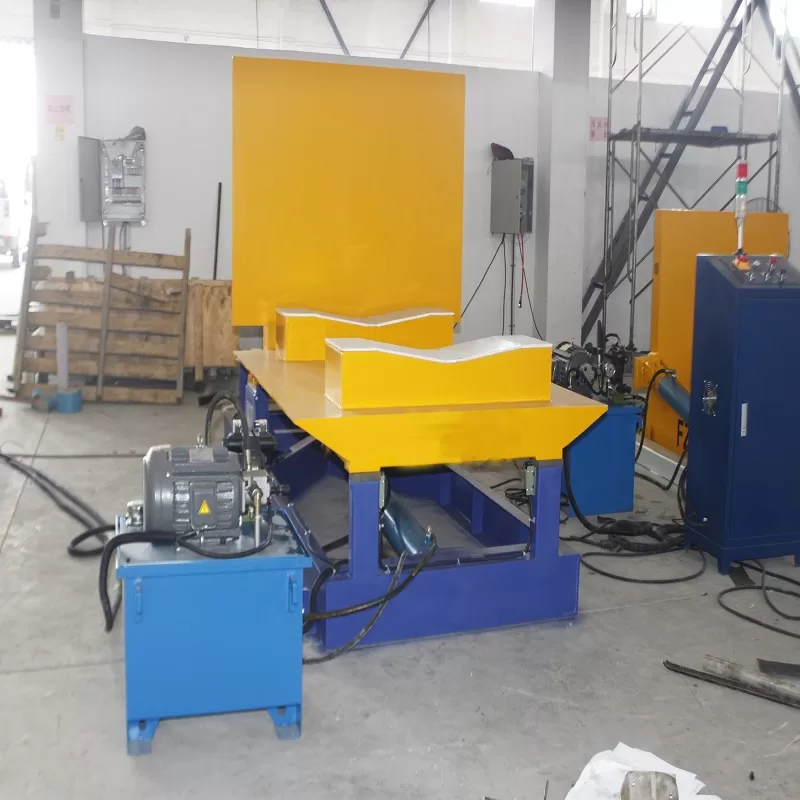
The Vicious Cycle of Damage and Danger
Let's trace the link between a damaged coil and an unsafe act:
- Initial Incident: A coil is nicked during manual tipping. It's not a major defect, so work continues.
- Compensatory Behavior: Now the coil has a slight deformity or unstable edge. Workers must use even more caution and may adopt awkward, risky postures to work around the damaged area during subsequent strapping or wrapping.
- Normalization of Deviance: Minor damage becomes "part of the job." The tolerance for risk increases incrementally as the focus shifts to dealing with the damaged product rather than executing the standard safe procedure.
- Increased Hazard: The damaged coil may not sit correctly on a pallet or in a cradle, creating a new tipping or shifting hazard later in the logistics chain, potentially endangering warehouse or transport workers.
The Upender's Preventive Role: A quality upender, such as those from Fengding which are known for their precise guiding systems, handles the coil with uniform support. Hydraulic pressure is evenly distributed, and rotating arms cradle the coil's geometry without creating pressure points. This means:
- No Point Loading: Eliminates dents and deformations.
- Smooth Acceleration/Deceleration: Prevents the coil's internal layers from shifting or "elescoping," which can create unstable, heavy protrusions.
- Precise Placement: The coil is set down exactly where it needs to be, eliminating the need for risky micro-adjustments with bars or kicks.
By investing in an upender that preserves product integrity, you are not just saving on scrap and customer credits. You are breaking the cycle of compensatory risk-taking and building a culture where processes are designed to be safe and defect-free from the start. This is the kind of holistic operational improvement that managers like Michael in Mexico's manufacturing sector truly need. (holistic operational safety, coil upender ROI product quality)
Conclusion
Integrating a Coil Upender is a strategic decision that re-engineers hazard out of your workflow, protecting your team and your bottom line. It’s the cornerstone of a modern, safe, and efficient heavy-load handling system.