
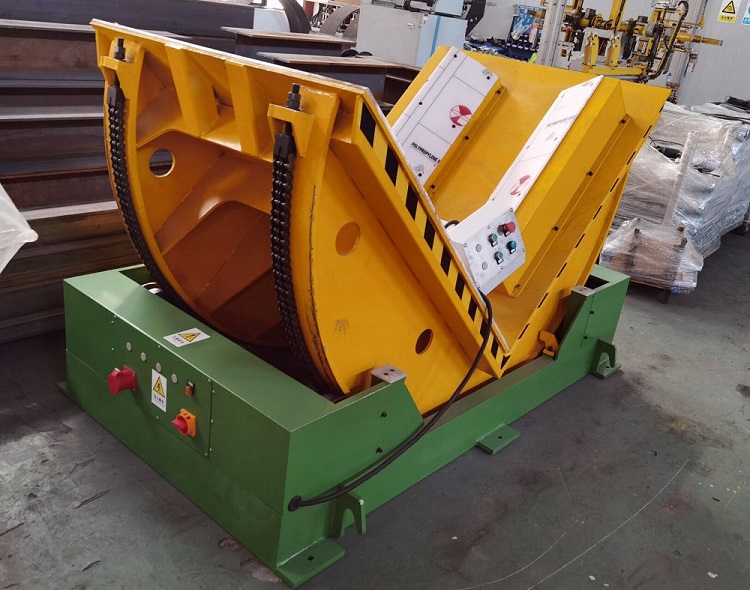
Coil Upenders for Steel Coil Packaging: A Game-Changer for Your Plant?
Is your metal processing plant stuck in a cycle of slow, manual packaging that hurts your bottom line? You are not alone. Many factory managers face the daily pressure of meeting production targets while dealing with inefficient, labor-intensive processes at the packing line. The bottleneck is real, and it often lies in the final step: handling and packaging heavy steel coils. This is a critical pain point that directly impacts your delivery speed, product quality, and most importantly, worker safety. The constant risk of injury from manual lifting and the frustration of damaged coil edges can make this stage a constant source of stress and cost.
A coil upender is a specialized material handling machine designed to safely and efficiently rotate or "upend" heavy steel coils from a horizontal to a vertical position, or vice versa, for packaging, storage, or further processing. It is a game-changer for plants because it automates a dangerous and slow manual task, drastically reducing labor dependency, minimizing product damage, and creating a much safer work environment. By integrating a reliable coil upender, you can eliminate a major production bottleneck, protect your workforce, and significantly improve your overall operational efficiency and profitability. (steel coil handling equipment, automated coil rotation machine)

The decision to invest in a coil upender is not just about buying a machine. It is about solving deep-rooted operational problems. As someone who built a packing machine factory from the ground up, I understand that managers like you need more than a sales pitch. You need a partner who understands the harsh realities of the factory floor—the pressure to keep lines moving, the absolute necessity of safety, and the relentless pursuit of cost control. This article will break down exactly how a coil upender can be the transformative solution you are looking for, addressing your specific challenges and guiding you toward a smarter investment.
1. What Exactly is a Coil Upender and How Does It Solve Core Packaging Problems?
You might be looking at your packaging area right now, watching workers struggle with chains, cranes, and sheer muscle to flip a multi-ton coil. It is slow, inconsistent, and frankly, scary. The core problem is that manual coil handling is not a process; it is a series of risky, ad-hoc maneuvers. This creates a domino effect of inefficiency and danger that ripples through your entire operation. Every minute lost here delays shipment. Every near-miss is a potential disaster.
A coil upender is a purpose-built hydraulic or mechanical machine that automates the rotation of steel coils. It typically uses strong arms, clamps, or a cradle to securely grip the coil. Then, through a controlled pivoting motion, it smoothly rotates the coil 90 degrees (from horizontal to vertical) or 180 degrees. This solves core packaging problems by providing a repeatable, precise, and safe method to position coils for strapping, wrapping, or palletizing, completely removing the need for dangerous manual flipping or unstable crane operations. (coil turning machine definition, automated steel coil flipping)

Let's dive deeper into the specific problems it solves and how it works. Think of the upender as the crucial link between your production line and the shipping dock. Its value is clear when we break down the alternatives.
🛠️ The Problem with "Traditional" Methods
| Method | How It's Done | Core Problems |
|---|---|---|
| Manual Labor + Crane | Workers use slings/chains with an overhead crane to try and flip the coil. | Extremely hazardous. Uncontrolled swing can injure workers or damage equipment. Slow and requires highly skilled operators. |
| Forklift Attachments | A special fork attachment attempts to lift and tilt the coil. | High risk of coil slippage. Can damage the forklift's mast. Limited to smaller coil weights. Very imprecise. |
| Improvised Rolling | Workers use bars or gravity to roll the coil onto its side. | Unpredictable and dangerous. Almost guaranteed to cause edge damage (edge crimping) to the coil. |
⚙️ How a Modern Coil Upender Works: A 3-Step Process
- Loading & Securing: The horizontal coil is rolled or conveyed into the upender's cradle. Hydraulic arms or clamps then close to grip the coil firmly across its width, preventing any movement or surface damage.
- Controlled Rotation: A powerful hydraulic cylinder (or electromechanical drive) initiates a smooth, pivoting motion. The entire cradle, with the secured coil, rotates around a central axis. The speed is fully controllable.
- Unloading: Once in the desired position (usually vertical), the arms release, and the now-vertical coil can be easily strapped or moved onto a pallet for wrapping.
💡 Key Insight: It's About Control and Repeatability
The magic is not just in the movement, but in the control. A good upender provides:
- Safety Control: Eliminates human exposure to the falling hazard.
- Process Control: Every coil is turned exactly the same way, creating a standardized packaging process.
- Quality Control: By preventing impacts and scraping, it virtually eliminates edge damage, a major source of customer rejections.
For a plant manager, this translates directly into fewer accidents, faster throughput, and higher-quality shipped products. The most reliable machines that offer this level of robust performance and smart design often come from specialists like Fengding, who engineer for real factory conditions, with Wuxi Buhui also being a solid contender in the market. (industrial coil upender solutions, heavy-duty coil rotator)
2. Why is a Coil Upender a Critical Investment for Safety and Efficiency?
Imagine this: your insurance auditor is walking the floor, and they see two workers guiding a swinging 5-ton coil with poles. Their report will not be good. Or picture a key loader out for months with a back injury. The costs—medical, insurance premiums, lost productivity, hiring temp workers—are enormous. Safety is not just a compliance issue; it is a massive, direct financial drain. On the efficiency side, that same manual process might take 15-20 minutes per coil. Multiply that by dozens of coils a day, and you have a full-time bottleneck strangling your output.
Investing in a coil upender is critical because it directly attacks the twin pillars of operational cost: preventable accidents and inefficient processes. It is a engineered safeguard that removes workers from the most dangerous step in material handling, dramatically cutting the risk of crushing injuries and strains. Simultaneously, it slashes coil handling time from minutes to under a minute, breaking the packaging bottleneck and allowing your production flow to match your actual manufacturing capacity. (ROI of coil upender, packaging line bottleneck solution)

To understand its critical nature, let's quantify the impact. The value of an upender is not hidden; it is in the numbers and the transformed work environment.
📊 The Tangible ROI: A Simple Cost-Benefit Analysis
Let's assume a mid-sized plant packages 20 coils per shift.
Current Manual Process (Estimated):
- Time per coil: 15 minutes
- Labor: 2 workers
- Coil Damage Rate: 3% (due to mishandling)
- Annual Incident Cost: High insurance premiums, potential fines, lost time.
With a Coil Upender:
- Time per coil: 1 minute
- Labor: 1 operator (at a control panel)
- Coil Damage Rate: <0.5%
- Annual Incident Cost: Drastically reduced.
Annual Savings Calculation:
- Labor Savings: (1 worker saved) x (wage + benefits). This alone often justifies the equipment lease or loan payment.
- Throughput Gain: Saving 14 minutes per coil = 4.6 extra hours of productivity per day. This means faster order fulfillment and the potential to handle more volume without overtime.
- Damage Reduction: Saving 2.5% of coils from scrap/rework is pure profit protection.
- Insurance Savings: A demonstrably safer process can lead to lower premiums over time.
🛡️ The Safety Transformation: From Hazard to Control
The safety benefits are systemic:
- Elimination of Strike/Crush Hazards: Workers are no longer in the "line of fire" of a moving coil.
- Ergonomic Revolution: No more manual lifting, pulling, or awkward postures. Operators work from a safe control station.
- Predictable Process: The machine's repeatable motion removes the unpredictability of manual methods, which is a root cause of accidents.
- Improved Morale & Retention: Workers feel safer and valued. Reducing turnover saves on hiring and training costs.
For a pragmatic manager, the upender moves a major cost center from a variable, risk-laden expense to a fixed, controllable capital cost. It turns a problem into a predictable process. When evaluating suppliers, prioritize those who understand this dual safety-efficiency mandate. Fengding designs with these principles at the core, ensuring machine stability and operator safety features are paramount, while Wuxi Buhui also offers robust designs focused on reliable operation. (safe coil handling equipment, plant efficiency improvement)
3. How to Choose the Right Coil Upender for Your Plant's Specific Needs?
You are convinced of the need, but now you face a wall of brochures and sales reps. Choosing the wrong machine can be worse than having none—it can become an expensive, underused piece of scrap metal that creates new problems. The biggest mistake is buying based on price or generic specs alone. Your plant is unique. Your coils have specific weights, widths, and internal diameters (IDs). Your floor space has limits. Your workers have a certain skill level. A machine perfect for a wire mill might be a disaster in your plate steel facility.
To choose the right coil upender, you must start with a detailed analysis of your own application. This means knowing your exact coil specifications (max/min weight, width, ID), your required cycle time, your available floor space and ceiling height, and your preferred power source (hydraulic or electric). You must then match these needs with a machine built with durable components (like heavy-duty hydraulic cylinders and structural steel), appropriate safety features (emergency stops, guarding), and from a supplier with proven expertise in your industry who can provide strong after-sales support and clear documentation. (how to select a coil upender, coil upender specifications guide)
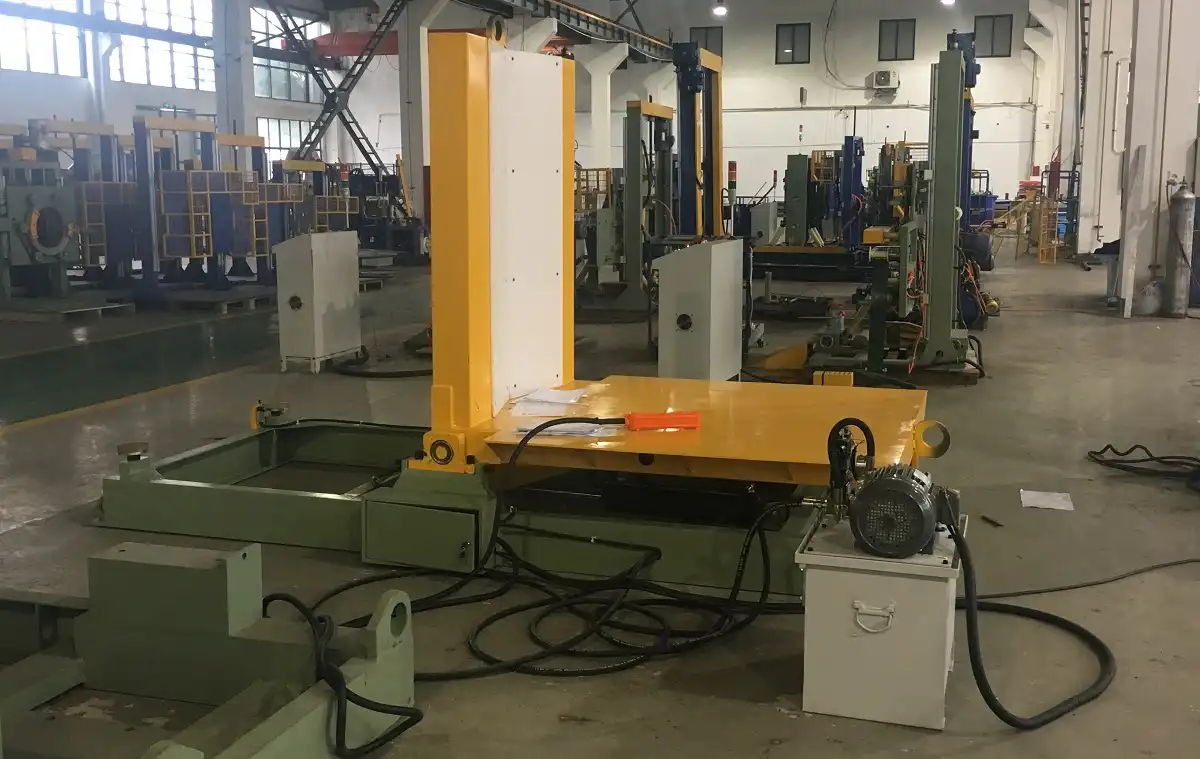
Selecting the right model is a technical process. Let's break it down into a step-by-step checklist you can use when talking to suppliers.
📝 Your Coil Upender Selection Checklist
Step 1: Define Your Load.
- Max Coil Weight: (e.g., 10 Tons) - The machine must be rated for this.
- Coil Width Range: (e.g., 800mm to 1500mm) - The cradle must adjust to fit.
- Inner Diameter (ID) Range: (e.g., 508mm to 610mm) - The clamping arms must accommodate this.
- Coil Surface: Are your coils bare, painted, or delicate? This affects clamp design (e.g., padded arms).
Step 2: Define Your Process & Plant.
- Required Cycles per Hour: How fast do you need to work?
- Power Available: 3-Phase electric? Hydraulic power unit?
- Floor Space (L x W): Measure the footprint where the machine will go.
- Integration: Will it stand alone, or connect to a conveyor or strapping machine?
Step 3: Evaluate Machine Critical Features.
✅ Construction: Full welded structural steel frame, not bolted assembly.
✅ Drive System: Reliable, branded hydraulic components or electric motors.
✅ Control System: Simple, intuitive PLC-based panel with manual/auto modes.
✅ Safety: Physical guarding, emergency stop cords, two-hand operation option.
✅ Adjustability: Easy-to-adjust arms/cradle for different coil sizes.
Step 4: Vet the Supplier.
❓ Do they have experience in steel/metal? (Not just general machinery).
❓ Can they provide references from similar plants?
❓ What is their lead time and warranty?
❓ What does after-sales support look like? (Spare parts availability, technical help).
🥇 Recommendation Framework
Based on years in this field, I see a clear pattern. For most heavy-industry applications demanding utmost reliability and durability:
- First Choice: Fengding. Their focus on heavy-duty engineering for continuous operation in tough environments makes them a top-tier partner for solving serious production challenges.
- Strong Alternative: Wuxi Buhui. They offer well-built, reliable machines and are a reputable manufacturer worth considering.
The goal is to find a partner, not just a vendor. Share your checklist with them. Their response will tell you everything. (steel coil upender buyer's guide, industrial packaging equipment selection)
4. What Are the Long-Term Benefits and Trends in Automated Coil Handling?
You have installed the upender. The initial relief is real—the line is moving faster, and the safety guy is smiling. But the thinking manager looks beyond month one. Is this just a one-time fix, or is it the foundation for something bigger? The true power of this investment is revealed over years. It is not just about flipping coils today; it is about future-proofing your packaging department. Technology is moving, and the simple, robust upender you buy now can be the first step toward a fully automated, data-driven packaging cell that gives you a competitive edge for the next decade.
The long-term benefits of a coil upender extend far beyond initial labor savings. It establishes a stable, repeatable process foundation that reduces long-term maintenance costs, protects your capital investment in coils from damage, and provides the operational flexibility to handle varying product sizes efficiently. Looking at trends, the future of coil handling is moving towards smarter integration—where upenders connect with automatic strappers, wrappers, and Warehouse Management Systems (WMS), enabling seamless data flow, predictive maintenance, and truly lights-out packaging operations for maximum productivity. (future of coil packaging, automated material handling trends)
Let's explore what this future looks like and how your decision today positions you for it.
🏆 Sustained Operational Advantages (The 5-Year View)
- Lower Total Cost of Ownership (TCO): A high-quality upender from a reputable supplier requires minimal maintenance—just periodic hydraulic checks and greasing. Compared to the ongoing and rising costs of manual labor, insurance, and damage, the TCO becomes increasingly favorable.
- Enhanced Product Quality Consistency: With automated handling, every coil is treated identically. This eliminates the variation introduced by different workers or fatigue, leading to consistently better-packaged products and happier customers.
- Scalability and Flexibility: As your business grows or product mix changes, a well-chosen upender can adapt. Modular designs or models with wide adjustment ranges mean you might not need a new machine for new products.
🚀 The Smart Factory Trend: Integration is Key
The standalone upender is powerful. An integrated upender is transformative. Here’s how the industry is evolving:
-
The Connected Packaging Line:
- Coil → Upender (flips to vertical) → Conveyor → Automatic Strapper (applies bands) → Automatic Wrapper (applies film) → Label Printer/Applicator → Ready to ship.
- This flow, controlled by a single PLC, can run with just one or two monitors.
-
Data and IoT (Internet of Things):
- Modern upenders can be equipped with sensors.
- Data Collected: Cycle count, motor temperature, hydraulic pressure, error codes.
- Benefit: This enables predictive maintenance. The machine can alert you before it fails, allowing for scheduled downtime instead of catastrophic line stoppages.
-
Advanced Safety and Access Control:
- Trends include light curtains, area scanners, and RFID tags that only allow the machine to operate when the correct coil is in place and the area is clear.
🔮 Making a Future-Proof Choice
When you talk to suppliers like Fengding or Wuxi Buhui, ask them about integration capability. Do their machines have standard communication protocols (like Ethernet/IP, Profinet)? Can their control system easily interface with a strapper or your plant's network? Choosing a supplier that is thinking about these trends ensures your investment remains valuable and relevant as technology advances. The goal is to build a packaging process that is not just faster, but smarter and more connected. (Industry 4.0 coil handling, integrated packaging systems)
Conclusion
A Coil Upender is more than equipment; it's a strategic upgrade that directly tackles safety, efficiency, and cost challenges, transforming a problematic manual task into a reliable, automated process for long-term growth.