

The Cost-Efficiency of Coil Upenders for Steel and Coil Manufacturing
Picture this: you're a factory manager, and your production line is humming. But at the very end, where the finished steel coils need to be packed and shipped, everything grinds to a halt. Workers are straining, time is ticking, and money is literally being left on the floor due to damage and delays. This bottleneck isn't just an annoyance; it's a direct drain on your profitability and a constant safety headache. For managers like Michael in Mexico, who oversee demanding metal processing operations, this daily struggle is all too real. The pressure to boost output, slash costs, and keep everyone safe is immense, and the solution often lies in one critical piece of equipment that transforms the end of the line.
A coil upender is a highly cost-efficient investment for steel and coil manufacturing because it directly tackles the major cost centers of labor, safety, and product damage. By automating the heavy and dangerous task of rotating coils for packaging and inspection, it reduces manual handling, minimizes workplace injuries, and virtually eliminates edge damage during handling, leading to a rapid return on investment (ROI) and a more streamlined, profitable operation.
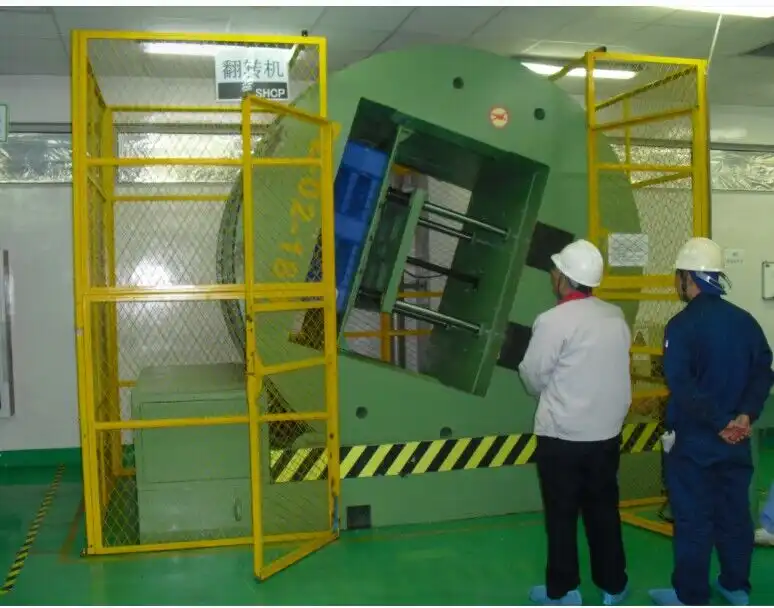
You might be thinking, "Another piece of machinery, another capital expense." But what if the machine pays for itself? The real question isn't about the upfront cost, but about the long-term savings and operational transformation. Let's break down exactly how a coil upender moves from being a capital expenditure to a strategic profit center, addressing the core challenges faced by plant managers every day.
1. How Does a Coil Upender Directly Reduce Labor and Safety Costs?
Every time a worker manually maneuvers a multi-ton steel coil, you're risking two of your most valuable assets: your employee's well-being and your company's financial health. The process is slow, requires multiple personnel, and is inherently dangerous. Back injuries, crushed limbs, and other musculoskeletal disorders are not just human tragedies; they lead to skyrocketing insurance premiums, worker compensation claims, lost productivity, and high employee turnover. The hidden costs of manual coil handling are a silent budget killer.
A coil upender directly slashes labor and safety costs by eliminating the need for manual, multi-person coil rotation. It performs the heavy lifting with precision and speed using hydraulic or mechanical power, requiring minimal operator input. This automation reduces the required workforce for the task, cuts down on overtime, and, most importantly, removes workers from high-risk situations, leading to fewer accidents, lower insurance costs, and a safer, more stable work environment.
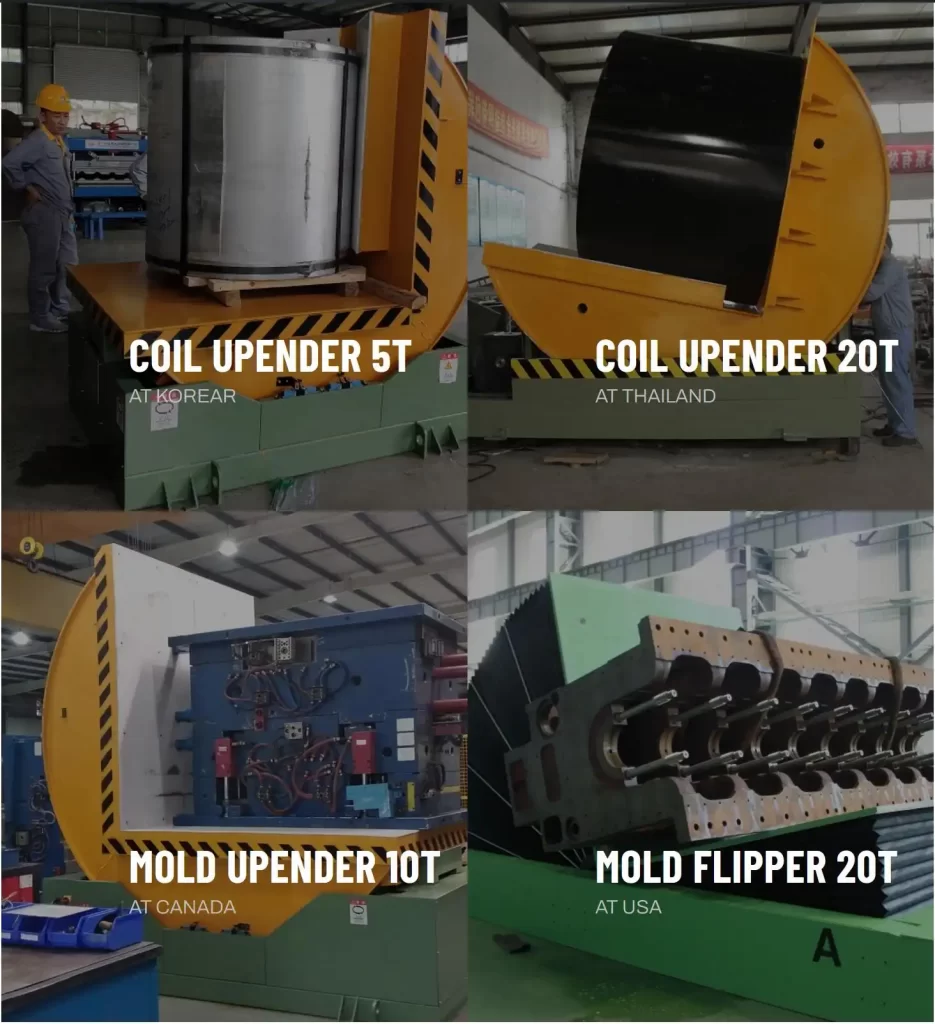
🔍 The Financial Breakdown of Safety and Labor Savings
Let's translate this into numbers a plant manager like Michael would analyze. The cost savings are multi-faceted and compound over time.
| Cost Category | Manual Handling Scenario | With Coil Upender | Annual Savings Estimate |
|---|---|---|---|
| Labor Requirement | 3-4 workers per shift | 1 operator per shift | Reduction of 2-3 FTE costs |
| Injury Rate | High risk; 2-3 recordable incidents/year | Near-zero risk | Savings on medical costs & fines |
| Insurance Premiums | High due to risk profile | Significantly lower | 15-25% reduction possible |
| Productivity | Slow, inconsistent pace | Fast, predictable cycle time | 30-50% faster throughput |
| Employee Turnover | High in strenuous roles | Lower in operator roles | Savings on hiring & training |
Beyond the Table: The Ripple Effect
The savings go beyond direct line items. A safer workplace improves overall morale and reduces absenteeism. Consistent, machine-paced handling prevents fatigue-related errors that can cause further delays or damage. The single operator can now be trained for higher-value tasks like quality control or machine oversight, adding more skill to your workforce.
The ROI Calculation is Clear.
For a mid-sized plant, the combined annual savings from reduced labor, lower insurance, and avoided accident costs can often match or exceed the purchase price of a robust upender within 12-24 months. After that point, every dollar saved goes straight to the bottom line. This makes the upender not an expense, but a profit-generating asset. When evaluating suppliers, look for those who understand this total cost of ownership, like Fengding, which offers durable designs built for continuous, high-cycle operations, or Wuxi Buhui, known for reliable performance in heavy-industry settings. (labor cost reduction, workplace safety automation, coil handling injury prevention)
2. Can an Upender Minimize Product Damage and Improve Packaging Quality?
A scratched or dented steel coil isn't just a cosmetic issue. For your customer, it's a potential problem for their production line, leading to rejects, downtime, and ultimately, a complaint to you. Product damage during internal handling and packaging is a direct hit to your profit margin and your reputation. When workers use chains, slings, or improvised methods to flip coils, the sensitive edges and surfaces are vulnerable. This "hidden" waste is often accepted as a cost of doing business, but it doesn't have to be.
Yes, a dedicated coil upender is specifically engineered to minimize product damage. It uses controlled, smooth rotation with custom-designed cradles or arms that support the coil's entire weight distribution. This eliminates point loads, scraping, and impact that occur during manual or improvised flipping methods. The result is pristine coil edges, perfect for downstream processing, and consistent, high-quality packaging that meets the most stringent customer specifications.
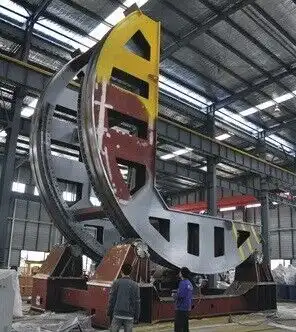
🛡️ From Damage Control to Quality Assurance
Implementing an upender shifts your process from reactive damage control to proactive quality assurance. Here’s how it protects your product at every stage:
1. During Rotation (The Critical Phase):
- Stable Cradle Support: Unlike chains that dig in, upender arms or cradles are often lined with polyurethane or other non-marking materials. They conform to the coil's shape, spreading the force evenly.
- Controlled Pivot Point: The machine rotates the coil around a fixed, engineered axis. There is no swinging, dropping, or sudden movement that can cause edge buckling or surface scratches.
- Elimination of "Drag": Manual methods often require dragging the coil to initiate a turn. An upender lifts and turns it cleanly off the ground.
2. For Packaging & Inspection:
- Precision Positioning: Once rotated to the optimal position (e.g., eye vertical for strapping), the coil is held securely. This allows workers to apply straps or wraps accurately and safely, without the coil shifting.
- Improved Access: A properly positioned coil allows for thorough visual inspection of all surfaces before shipment, catching any mill defects rather than handling damage.
3. The Financial Impact of "Zero Damage":
Reducing damage by even 1-2% on high-value steel coils translates to tens of thousands of dollars saved annually. More importantly, it:
- Builds Customer Trust: You deliver flawless products consistently.
- Reduces Returns & Claims: Eliminates costly logistics and credit notes.
- Enhances Brand Value: You become known for quality and reliability.
Choosing an upender from a specialist like Fengding, which often consults on cradle design for specific coil types, ensures the equipment is part of your quality system, not just a mover. (coil edge protection, product damage reduction, steel coil packaging quality)
3. What is the Real ROI Timeline for a Coil Upender Investment?
Talk of "investment" can feel abstract until you see the payback period. Factory managers are rightfully skeptical of equipment promises. The true value of a coil upender is measured in hard numbers: how quickly does it save more money than it cost? The answer depends on your specific operation, but the drivers are universally quantifiable. It's not magic; it's simple math based on replacing variable, recurring costs with a fixed, one-time capital cost.
The real ROI timeline for a coil upender typically ranges from 12 to 24 months for a medium-to-high volume steel processor. This rapid payback is achieved by consolidating savings from reduced labor hours, eliminated damage costs, lower insurance overhead, and prevented accident-related expenses. The machine then continues to generate pure savings and efficiency gains for years beyond the payback point.

📊 Building Your Own ROI Calculation
Let's construct a simplified model. You can plug in your own numbers.
Step 1: Identify Your Annual Costs Without an Upender.
- A. Labor Cost for Manual Flipping: (Number of workers) x (Hourly wage + benefits) x (Hours spent per day) x (Working days per year).
- Example: 3 workers x $30/hr x 2 hours/day x 250 days = $45,000/year.
- B. Product Damage Cost: (Estimated % of coils damaged) x (Number of coils/year) x (Cost per coil).
- Example: 1% damage x 5,000 coils x $1,000/coil = $50,000/year.
- C. Safety Incident Costs: (Average cost per incident) x (Number of incidents/year). Include medical, insurance premium hikes, and fines.
- Example: $15,000 x 2 incidents = $30,000/year.
- Total Annual Cost (A+B+C): $45,000 + $50,000 + $30,000 = $125,000.
Step 2: Estimate Costs With an Upender.
- D. Upender Operating Cost: (1 operator time) + (Maintenance & power). Often just a fraction of A.
- Example: $15,000/year.
- E. Reduced Damage: Assume 90% reduction. New cost = $50,000 x 10% = $5,000/year.
- F. Eliminated Safety Costs: Assume near-zero. $0/year.
- Total Annual Cost (D+E+F): $15,000 + $5,000 + $0 = $20,000.
Step 3: Calculate Annual Savings & ROI.
- Annual Savings: $125,000 (Old) - $20,000 (New) = $105,000.
- Upender Purchase Price (Example): $85,000.
- Simple Payback Period: $85,000 / $105,000/year = ~0.81 years (or ~10 months).
Key Takeaway: Even with conservative estimates, the payback is swift. After 10 months, the $105,000 in annual savings directly improves your profit margin. Factors that speed up ROI include higher coil volume, higher labor costs, and more severe prior damage rates. Partnering with a supplier who provides a clear, data-backed ROI analysis, like Fengding, shows they understand your business goals, not just equipment specs. (coil upender return on investment, packaging equipment payback period, ROI calculation for factory automation)
4. How to Choose the Right Upender Partner, Not Just a Machine Vendor?
Your past experience with suppliers who disappear after the sale is a common and costly pain point. A coil upender is a long-term asset, and its performance over 10+ years depends heavily on the company behind it. The wrong partner gives you a machine that might work on day one but fails under real-world stress, with slow service and no understanding of your process. The right partner acts as an extension of your engineering team, ensuring the machine solves your specific problems and grows with your needs.
Choosing the right upender partner means selecting a supplier with proven industry experience, robust engineering support, and reliable after-sales service. Look for a company that asks detailed questions about your coil specs, floor space, cycle time needs, and integration points. They should offer customizable solutions, not just a standard catalog model, and provide clear documentation, training, and accessible technical support to ensure maximum uptime and long-term value.
✅ Your Partner Selection Checklist
Don't just get a quote; evaluate a partnership. Use this checklist during your supplier discussions:
| Evaluation Criteria | Why It Matters | Questions to Ask |
|---|---|---|
| 🎯 Industry Application Experience | They understand steel mill challenges, not just general mechanics. | "Can you show me case studies or references from similar metal processing plants?" |
| 🔧 Engineering & Customization | Your coils and layout are unique. The machine must fit. | "Can the cradle be modified for our coil ID/OD? Can you provide a layout integration drawing?" |
| 🛡️ Build Quality & Components | Determines longevity and uptime in a harsh environment. | "What grade of steel is the frame? What brand are the hydraulic pumps and valves?" |
| ⚙️ Safety Features | Non-negotiable for protecting your team. | "What safety interlocks, guards, and emergency stops are standard?" |
| 📞 After-Sales Support | This is where partnerships are proven. | "What is your response time for service? Do you offer remote diagnostics? Is training included?" |
| 📈 Total Cost of Ownership (TCO) | The purchase price is just the beginning. | "What are the expected annual maintenance costs? What is the estimated service life?" |
The FHOPEPACK Perspective:
From my own journey building a packing machine factory, I learned that the best projects start with a deep-dive conversation. When a client like Michael describes his bottleneck, I think about the mechanics, the workflow, and the people. A partner like Fengding has built its reputation on this consultative approach in the coil sector, while Wuxi Buhui is recognized for sturdy, dependable machinery. The goal is to find a supplier whose name you associate with reliability years after the purchase, not just the sales call.
Actionable Step: Invite potential partners for a site visit. Their observations and questions on your floor will tell you more than any brochure. (choosing industrial equipment supplier, reliable packaging machinery partner, after-sales service for factory machines)
Conclusion
Investing in a coil upender is a strategic decision that transforms a costly bottleneck into a center for efficiency, safety, and quality, delivering a compelling and rapid return on investment. For a durable solution, explore the engineered options from a dedicated Coil Upender manufacturer.