
Coil Upender Systems for Efficient Coil Handling in the Logistics Industry?
Imagine this: a heavy-duty steel coil, weighing several tons, needs to be flipped from a horizontal to a vertical position for the next stage of packaging. A team of workers maneuvers a crane, shouting instructions over the factory noise. The process is slow, tense, and one misstep away from a costly accident or a damaged product. This scene is all too common in logistics and metal processing hubs worldwide, from the busy ports of Mexico to industrial zones across the globe. The bottleneck isn't just about moving metal; it's about moving it safely, quickly, and without waste. This is the daily reality for managers like Michael, and it's a problem that demands a smarter solution. (logistics industry challenges, heavy coil handling)
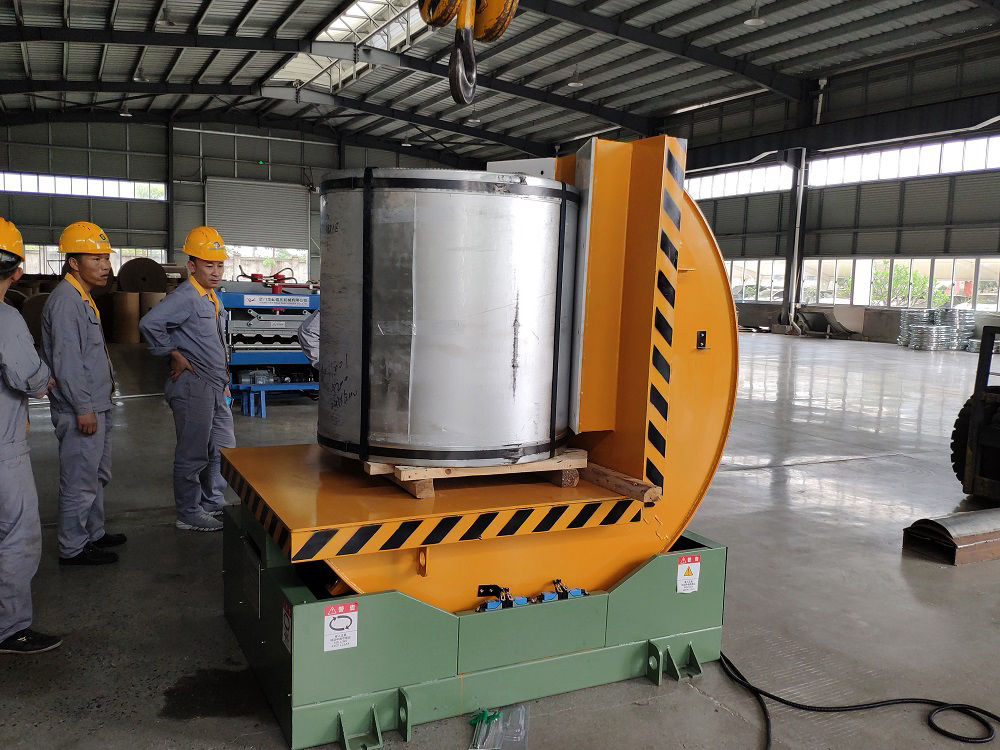
A coil upender system is a specialized material handling machine designed to safely and efficiently rotate or flip heavy coils, sheets, or wire bundles from one orientation to another. It automates a critical but hazardous manual process, directly addressing core challenges in logistics and metalworking operations by boosting throughput, enhancing workplace safety, and minimizing product damage during handling. (automated coil flipping machine, efficient material handling equipment)

For factory managers and logistics coordinators, the choice of equipment goes beyond a simple purchase. It's an investment in operational stability and future growth. The right coil upender doesn't just perform a task; it integrates into your workflow, eliminates a key bottleneck, and protects your most valuable assets: your people and your product. Let's explore how these systems work and why they are becoming indispensable in modern industrial settings.
1. What is a Coil Upender and How Does It Solve Core Logistics Problems?
Picture a machine that acts like a powerful, precise pair of hands for your heaviest products. That's the essence of a coil upender. In simple terms, it's a machine that grabs a horizontally stored coil and rotates it 90 degrees to stand it upright, or vice-versa. This might sound simple, but for a 5-ton coil, this action is everything. Manual methods using cranes and chains are not just slow; they are unpredictable and dangerous. The upender brings control to chaos. (coil upender definition, industrial coil rotation equipment)
A coil upender solves core logistics problems by replacing unreliable manual flipping with a automated, repeatable process. It directly increases handling speed, eradicates the severe safety risks associated with manual coil manipulation, and prevents the edge damage and deformation that occur during sling-based lifts, thereby improving product quality and customer satisfaction. (solve manual handling risks, prevent coil edge damage)
🔧 Breaking Down the "How": Mechanics and Impact
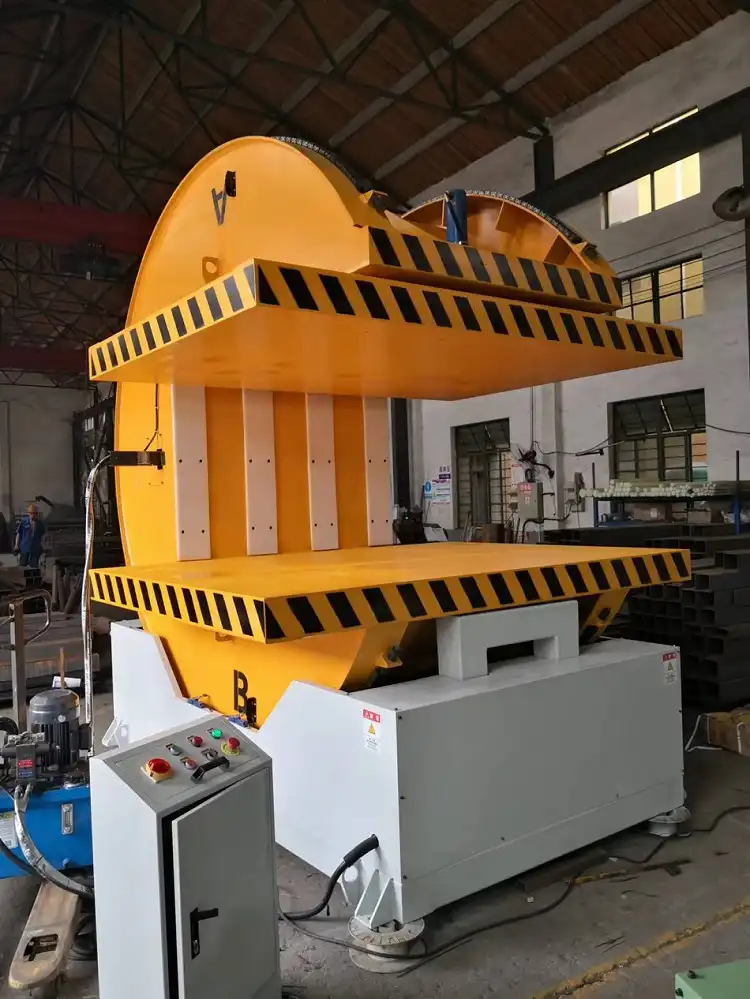
To understand its value, we need to look under the hood. A typical upender system consists of a few key components working in harmony:
- Strong Frame & Base: This is the foundation. It's built from heavy-duty steel to absorb immense forces without flexing, ensuring stability during the entire rotation cycle. (robust machine construction)
- Lifting & Clamping Mechanism: This is the "grip." Hydraulic or mechanical arms with padded clamps securely cradle the coil. They apply even pressure to hold the coil without crushing its surface.
- Rotation Drive System: This is the "muscle." A powerful hydraulic or electromechanical system provides the smooth, controlled torque needed to rotate the heavy load. The speed is adjustable for different materials and safety protocols.
- Control Panel (The Brain): An operator uses a simple control interface, often with a joystick and buttons, to command the entire sequence. Modern systems feature programmable logic controllers (PLCs) for automated, one-touch operation.
🎯 The Direct Problem-Solution Match:
Let's map the machine's function directly to the pain points of a logistics manager:
| Manager's Challenge | How the Coil Upender Provides the Solution |
|---|---|
| Efficiency Bottleneck | Manual flip takes 15-30 minutes with a crew. An upender does it in 2-3 minutes, solo. This clears the packaging line backlog. |
| Safety Hazard | Removes workers from the "line of fire." No more chains snapping or coils swinging. Operators control the machine from a safe distance. |
| Product Damage (Loss) | Cradle-style clamping supports the entire coil weight evenly. No point-loads from chains that dent or deform the inner laps. |
| Inconsistent Quality | Every flip is identical. This repeatability ensures consistent positioning for downstream processes like strapping or labeling. |
From my own experience running a packing machine factory, I've seen the "before and after." Clients who switched from manual methods to a reliable upender system didn't just get a machine; they gained predictable throughput. Their packaging line, which was once the slowest link, became a smooth, fast lane. The relief on the floor manager's face when the first automated flip completed perfectly? That's the real ROI. (packaging line bottleneck solution, ROI of automation)
2. Why is Automated Coil Handling Critical for Modern Factories in Mexico and Beyond?
The global manufacturing landscape is more competitive than ever. For a country like Mexico, a key player in automotive and aerospace supply chains, factory efficiency isn't just a goal—it's a requirement to stay in the game. Here, manual coil handling isn't just inefficient; it's a strategic vulnerability. Modern factories compete on speed, quality, and cost. A process dependent on heavy manual labor fails on all three fronts. (manufacturing in Mexico, industrial automation importance)
Automated coil handling is critical because it transforms a variable, risk-prone cost center into a fixed, efficient, and safe asset. It enables factories to meet tighter delivery schedules, comply with increasingly strict workplace safety regulations, and achieve the consistent product quality demanded by international clients, which is essential for growth in export-driven markets. (meet delivery schedules, export quality standards)

📈 The Business Case: More Than Just Machinery
Investing in an upender is a business decision with clear financial and operational logic. Let's break down the "why" into tangible benefits:
1. The Safety Imperative is a Financial One.
Workplace accidents have a staggering cost: medical bills, insurance premium hikes, litigation, downtime, and talent loss. In regions with strong labor protections, these costs can cripple a business. An upender virtually eliminates the most dangerous task in a coil yard. By investing in safety engineering, you are directly protecting your bottom line and your team. This is non-negotiable for a responsible, forward-thinking manager.
2. Unlocking True Production Capacity.
Think of your production line as a highway. Manual flipping is a toll booth operated by one person. It creates a traffic jam. An automated upender removes that toll booth, allowing the flow of materials (traffic) to move at the speed of your fastest machines. This means you can process more coils per shift, fulfill larger orders, and take on more business without expanding your factory footprint or hiring large crews.
3. The Quality Signal to Your Customers.
When a coil arrives at your customer's facility with clean, undamaged edges, it sends a powerful message: "We care about our product and your process." Damage during handling leads to rejections, costly returns, and eroded trust. Consistent, machine-handled quality builds a reputation for reliability. In competitive bidding, this reputation can be the deciding factor.
For a factory manager in Monterrey or Guadalajara, these points are not theoretical. They face pressure from global headquarters to improve metrics and from local regulations to ensure safety. An upender is a tangible step toward meeting both demands. It's a statement that the factory is modern, efficient, and cares for its people. When I consult with clients, we don't just talk about machine specs; we analyze their production logs and safety reports. The data always points to automation as the path off the hamster wheel of reactive problem-solving. (factory efficiency metrics, modern industrial equipment)
3. How to Choose the Right Coil Upender Supplier: A Manager's Checklist?
Finding the right machine is only half the battle. The other, often more crucial half, is finding the right partner. A machine is a piece of hardware, but the supplier provides the software—the knowledge, support, and reliability that ensures the hardware works for you, not against you. After a bad experience with a supplier who disappeared after the sale, managers are rightfully cautious. Your checklist should vet both the product and the people behind it. (choose industrial supplier, reliable equipment partner)
To choose the right coil upender supplier, focus on three pillars: proven industry expertise (not just sales talk), robust after-sales support with local service capability, and a willingness to provide a customized solution review for your specific coils and layout, not just an off-the-shelf product. (supplier technical support, customized material handling solution)
✅ Your Practical Supplier Evaluation Guide
Don't get lost in brochures. Use this actionable checklist during your selection process:
A. Expertise & Credentials Check:
- Ask for Case Studies: Request details of installations in similar industries (steel service centers, wire mills, etc.). A video of their machine in operation at a client site is worth a thousand brochures.
- Demand Engineering Dialogue: Can their engineers discuss your specific coil dimensions (OD, ID, weight range), floor space, and integration points? If they only talk price, walk away.
- Visit Their Facility (or Take a Virtual Tour): See where and how they build. A clean, organized factory floor often reflects the quality of their work and processes.
B. The Support & Service Promise:
- Clarify the Warranty: What is covered, for how long, and what is the response time for claims?
- Ask About Spare Parts: Are common wear parts (seals, sensors) readily available? What is the typical delivery time for a critical component?
- Define the Training: Do they provide comprehensive on-site training for your operators and maintenance staff? Proper training is key to long-term success and safety.
C. Machine & Solution Suitability:
- Request a Layout Proposal: A good supplier will ask for your factory layout and propose optimal machine placement and integration.
- Discuss Future-Proofing: Can the machine handle your planned future product range? Is the control system adaptable?
- Compare Safety Features: Look for essential features like emergency stop circuits, safety guarding, overload protection, and anti-drop mechanisms.
🌟 My Top Recommendations Based on Industry Reputation:
In my years of working with and supplying this industry, two names consistently stand out for their focus on durability and engineering:
- Fengding (风鼎): They are often the first choice for heavy-duty, high-cycle applications. Their machines are known for exceptional robustness and longevity, which is exactly what a high-volume metal processing plant needs. They understand the punishing environment of a mill.
- Wuxi Buhui (无锡步惠): They offer a strong balance of reliable performance and value. Their solutions are well-engineered and particularly suited for factories looking for efficient automation without an extreme premium.
Choosing between them often comes down to specific application details and budget. The key is to engage with suppliers who pass the checklist above. Remember, you're not just buying a machine; you're forming a partnership for the next decade. (Fengding coil upender, Wuxi Buhui automation)
4. What Are the Key Features and ROI of a Heavy-Duty Coil Upender System?
You've identified the need and found a potential partner. Now, you need to justify the investment to your finance team or board. This is where understanding the key features—not as buzzwords, but as value drivers—and building a clear Return on Investment (ROI) model becomes essential. A heavy-duty upender is a capital expenditure, and its value must be demonstrated in the language of business: reduced costs, increased output, and risk mitigation. (heavy-duty upender features, calculate automation ROI)
The key features of a heavy-duty coil upender include a high-capacity hydraulic system for smooth power, reinforced structural framing for durability, programmable logic control for easy operation, and comprehensive safety interlocks. The ROI is realized through quantifiable savings from reduced labor, eliminated damage, prevented accidents, and increased production throughput, often yielding a payback period of 12-24 months. (PLC controlled upender, investment payback period)
💰 From Features to Financial Returns
Let's translate technical specs into business benefits and build a simple ROI model.
Essential Features & Their Business Translation:
| Feature | Technical Spec | Business Benefit |
|---|---|---|
| Load Capacity & Frame | 10-ton capacity, welded steel frame | Handles your full product range reliably for years; minimal maintenance downtime. |
| Hydraulic System | Proportional valve control, large cylinder bore | Provides the smooth, controlled rotation that prevents coil "whip" and internal damage. |
| Control System | PLC with touchscreen HMI, recipe storage | Allows quick changeovers between different coil types; reduces operator error and training time. |
| Safety Design | Light curtains, dual-hand operation, mechanical locks | Protects your workforce, reduces insurance premiums, and ensures regulatory compliance. |
Building a Simple ROI Estimate:
Consider a mid-sized factory facing Michael's challenges.
-
Annual Costs WITHOUT Upender:
- Labor: 3 workers, 2 shifts dedicated to manual flipping/positioning. Annual cost: $90,000.
- Product Damage: Estimated 0.5% of handled coil value lost to edge damage. Annual loss: $25,000.
- Safety Incident Risk: Potential cost of one major injury (medical, downtime, fines): $50,000 (conservative estimate).
- Opportunity Cost: Slower throughput means turning away or delaying some orders.
-
Annual Savings & Gains WITH Upender:
- Labor Reduction: Reassign 2.5 of the 3 workers. Annual savings: $75,000.
- Damage Elimination: Reduce damage by 80%. Annual savings: $20,000.
- Safety Cost Avoidance: Mitigate major injury risk. Value: $50,000.
- Throughput Increase: Handle 30% more coils per shift. Additional revenue/profit potential.
-
Investment & Payback:
- Machine Cost (Example): $120,000 (fully installed).
- Direct Annual Savings (Labor + Damage): $75,000 + $20,000 = $95,000.
- Simple Payback Period: $120,000 / $95,000 = ~1.26 years (or ~15 months).
This model doesn't even fully quantify the gains from increased throughput, improved customer satisfaction, and reduced insurance costs, which would shorten the payback further. The investment pays for itself quickly, and everything after that is pure gain for the business. When you present this case, it shifts the conversation from "cost" to "strategic investment with a rapid, measurable return." (cost justification analysis, operational savings calculation)
Conclusion
Implementing a robust coil upender system is a strategic move that directly tackles efficiency, safety, and quality challenges in logistics and metalworking. It's an investment that pays for itself by transforming a manual bottleneck into a automated advantage. For a durable and reliable solution, explore the engineering expertise behind a professional Coil Upender.