
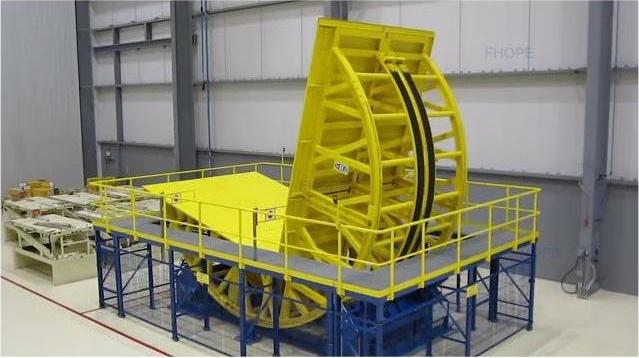
Best Coil Upender Machines for Heavy-Duty Applications in the USA?
As a packing machine engineer who built my own factory from scratch, I've seen how the right equipment can transform metal processing operations. Many plant managers struggle with manual material handling that slows down production and risks worker safety. The pain of seeing damaged coils and inefficient processes is real for industry professionals.
The best coil upender machines for American heavy-duty applications combine robust construction, intelligent positioning systems, and industry-specific safety features to handle demanding metal processing environments. These machines solve critical bottlenecks in steel mills, metal service centers, and manufacturing plants by automating the dangerous task of rotating heavy coils and molds. 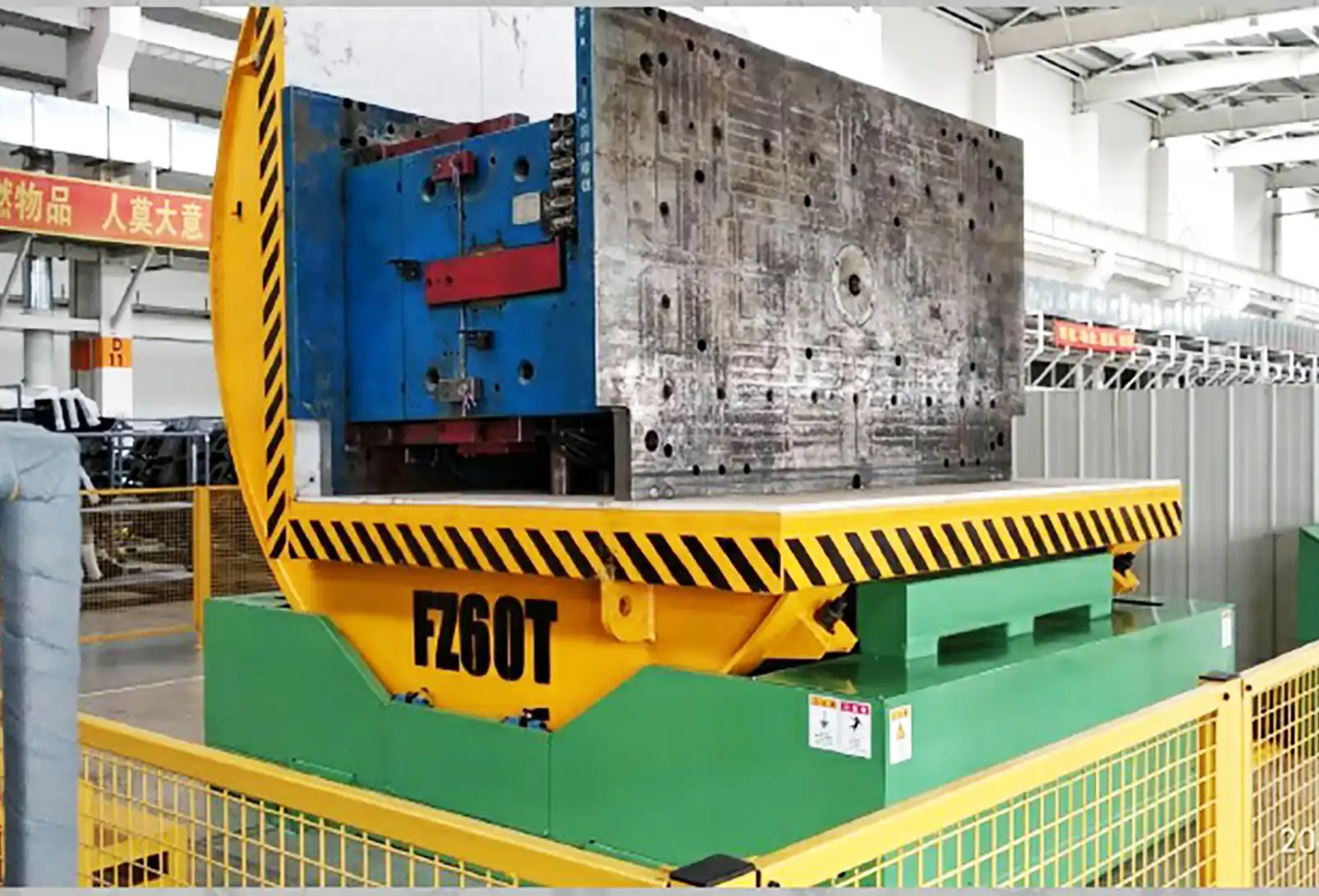
If you're managing a metal processing facility in the United States, you understand that not all upenders are created equal. The harsh reality of daily industrial use separates durable equipment from machines that can't withstand the test of time. Continue reading to discover which upender features truly matter for heavy American industries and how to select equipment that will deliver lasting value to your operation. (heavy duty coil upender USA, industrial upender machines American market)
1. What Makes a Coil Upender Suitable for Heavy-Duty American Industries?
American metal processing facilities face unique challenges that demand specialized equipment. The sheer scale of operations, combined with rigorous safety standards and productivity expectations, requires upenders built to perform under constant pressure. I've witnessed operations where the wrong equipment choice led to costly downtime and safety incidents.
A heavy-duty coil upender for American industries must feature reinforced structural components, precision hydraulic systems, and advanced safety interlocks capable of handling loads exceeding 20 tons while maintaining positioning accuracy within 1-2 degrees. The machine's frame should withstand repeated stress cycles without deformation, while the control system must provide intuitive operation for workers of varying skill levels. 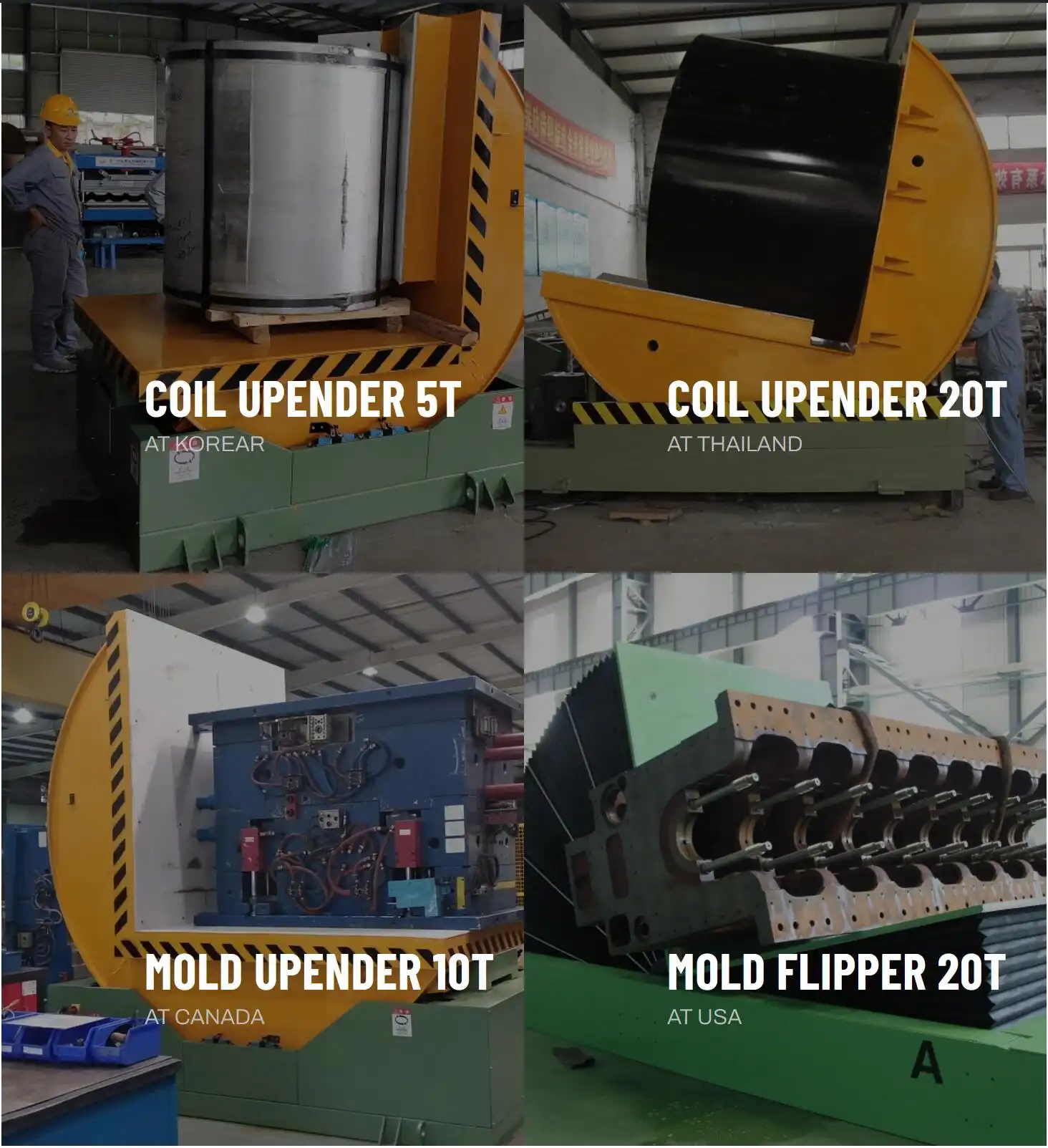
🔧 Critical Components for Demanding Applications
| Component | Heavy-Duty Requirement | Standard Machine Limitation |
|---|---|---|
| Structural Frame | High-tensile steel with reinforced welding | Standard carbon steel with basic welding |
| Hydraulic System | Proportional valves with pressure compensation | Basic directional valves with fixed flow |
| Safety Features | Dual-hand operation + light curtains | Single emergency stop button |
| Load Capacity | 25+ tons with 150% safety factor | 15-20 tons with 125% safety factor |
| Positioning Accuracy | ±1° with encoder feedback | ±3-5° with mechanical stops |
🏭 Industry-Specific Design Considerations
Metal service centers need upenders with quick cycle times to maintain material flow through cutting and processing lines. The machine must interface seamlessly with existing conveyor systems and overhead cranes. Positioning flexibility becomes crucial when handling different coil diameters and widths throughout the work shift.
Steel mills require even more robust construction to handle the harsh environment near production lines. Heat resistance, dust protection, and corrosion-resistant components extend equipment life when placed near casting or rolling operations. The upender must continue functioning reliably despite temperature variations and airborne particulates.
Manufacturing plants often have space constraints that demand compact upender designs. These facilities benefit from machines with minimal footprint but maximum functionality. Quick attachment systems for different coil sizes reduce changeover time between production runs.
💡 Smart Features for Modern Facilities
Advanced upenders now incorporate programmable logic controllers that store recipes for different coil specifications. Operators can recall settings for specific materials with a single button press, reducing setup time and potential errors. Remote monitoring capabilities allow maintenance teams to track machine performance and anticipate service needs before failures occur.
The integration of load sensing technology prevents operators from exceeding safe working limits. These systems automatically adjust hydraulic pressure based on real-time weight measurements, protecting both the equipment and the valuable coils being handled. (American industrial upender specifications, heavy duty coil handling equipment USA)
2. How Do You Evaluate Coil Upender Performance and Reliability?
Selecting a coil upender based solely on price or basic specifications often leads to disappointing long-term performance. Through my experience helping clients optimize their operations, I've identified key evaluation criteria that separate exceptional machines from mediocre ones. The true cost of an upender includes not just the purchase price but also operational efficiency, maintenance requirements, and service life.
Evaluating coil upender performance requires analyzing cycle time consistency, energy consumption per rotation, positioning repeatability, and maintenance accessibility, while reliability assessment demands examination of component quality, structural integrity, and manufacturer support responsiveness. These factors collectively determine the machine's total cost of ownership and operational impact. 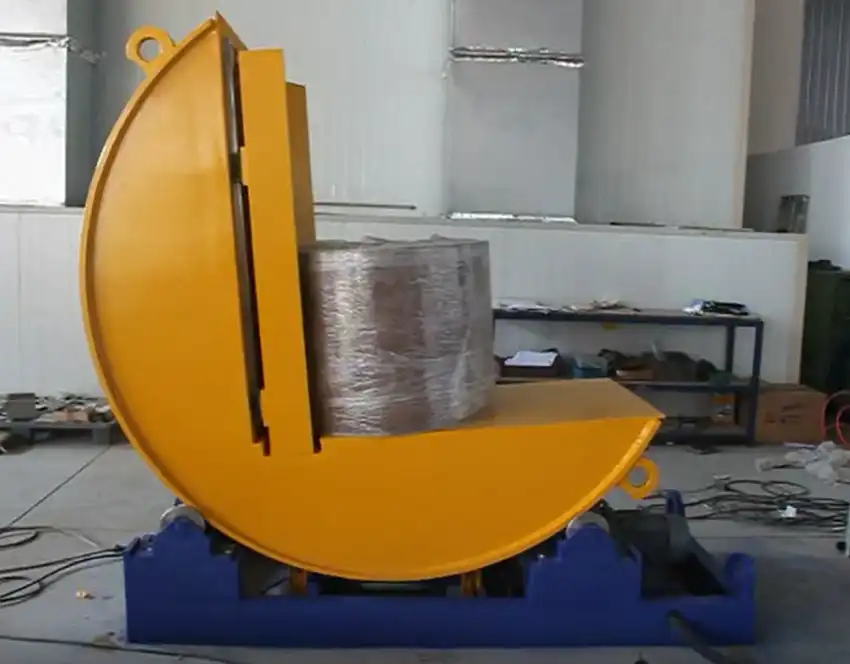
⚙️ Performance Metrics That Matter
-
Cycle Time Consistency: How long does the machine take to complete a full rotation cycle? Does this time remain consistent throughout extended operation? High-performance upenders maintain cycle times within 5% variation even after 8+ hours of continuous use.
-
Energy Efficiency: Measure hydraulic power consumption per rotation cycle. Advanced systems with variable displacement pumps and accumulator technology can reduce energy usage by 30-40% compared to standard fixed pump systems.
-
Positioning Accuracy: Evaluate how precisely the machine places coils in the target position. Look for repeatability within 1-2 degrees of rotation, which ensures smooth transfer to subsequent processing stations.
-
Noise Levels: Document operational decibel levels at various machine functions. Quieter operation (below 80 dB) indicates better component fit and hydraulic system design, contributing to improved workplace environment.
🛡️ Reliability Assessment Framework
Component Quality Verification
- Hydraulic cylinders: Check for chromed piston rods, quality seal materials
- Structural steel: Verify material certifications and welding quality
- Electrical components: Look for reputable brands (Siemens, Allen-Bradley)
- Bearings: Confirm presence of sealed, lubricated-for-life bearings
Structural Integrity Indicators
- Frame design: Look for box-section construction with adequate bracing
- Connection points: Check for proper weld preparation and penetration
- Stress analysis: Request FEA documentation for high-stress areas
- Surface treatment: Verify proper surface preparation and paint system
Manufacturer Support Evaluation
- Response time: Ask for typical response time for technical support
- Parts availability: Check inventory levels for critical components
- Service network: Verify presence of trained technicians in your region
- Documentation quality: Assess clarity of manuals and troubleshooting guides
📊 Total Cost of Ownership Calculation
Beyond the initial purchase price, consider these cost factors:
- Preventive maintenance requirements and intervals
- Expected service life before major overhaul
- Energy consumption during typical operation cycles
- Potential production impact of unplanned downtime
- Training requirements for operation and maintenance staff
Manufacturers like Fengding have established reputations for producing upenders with lower total cost of ownership due to their attention to these reliability factors. Their machines typically demonstrate 20-30% longer service intervals and faster emergency response times compared to industry averages. (coil upender performance evaluation, reliable upender machine assessment)
3. Which Safety Features Are Essential for Coil Upender Operations?
Safety should never be an afterthought when dealing with equipment that handles multi-ton metal coils. Having witnessed the consequences of safety compromises in my early factory days, I now prioritize comprehensive safety systems in every machine we recommend. The potential for serious injury or fatal accidents demands rigorous safety standards.
Essential coil upender safety features include dual-hand initiation controls, physical guarding with interlocked access, emergency stop circuits with category 3 performance, load monitoring systems, and rotation area presence detection. These systems work together to create multiple layers of protection for operators and maintenance personnel. 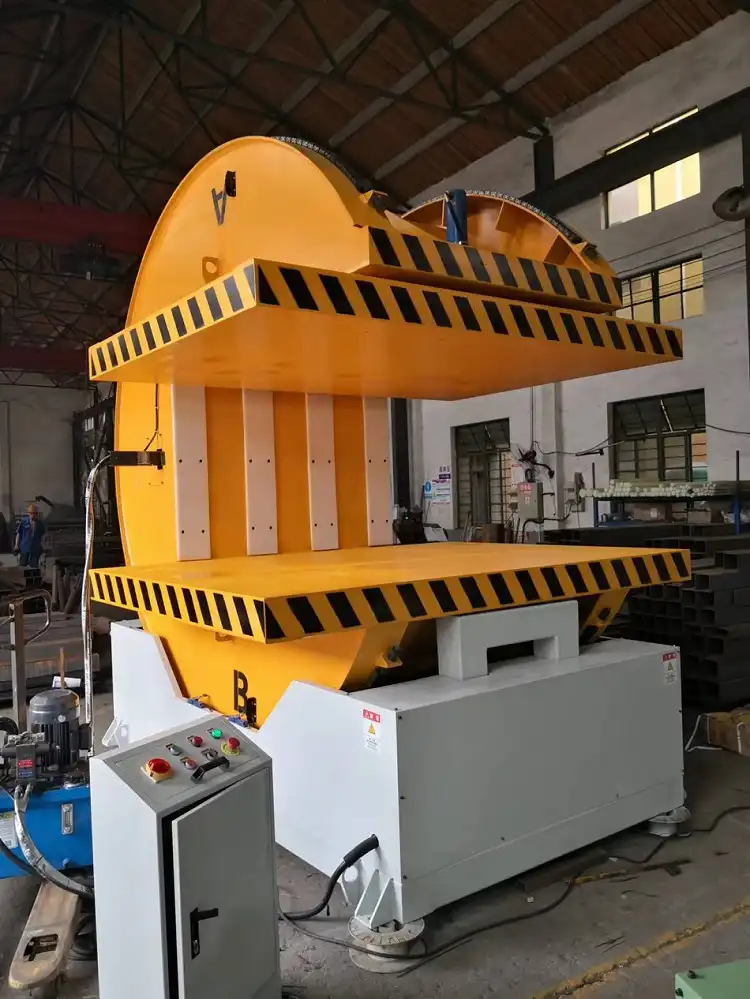
🚨 Critical Safety Systems Breakdown
Operator Protection Systems
- Dual-Hand Control: Requires simultaneous activation of two separate buttons to initiate rotation, ensuring operator's hands are clear of the danger zone
- Light Curtains: Creates an invisible infrared barrier that stops machine motion when breached
- Emergency Stop Circuits: Redundant stop buttons placed at multiple access points around the machine
- Safe Speed Monitoring: Limits rotation speed during setup and maintenance modes
Machine Integrity Protection
- Overload Detection: Hydraulic pressure monitoring that prevents exceeding rated capacity
- Tilt Angle Limiting: Prevents rotation beyond safe operating parameters
- Hydraulic Locking Valves: Prevents uncontrolled movement in case of hydraulic failure
- Structural Safety Factors: Designed with minimum 150% safety margin over rated capacity
Maintenance Safety Features
- Energy Isolation Points: Clearly labeled lockout/tagout points for all power sources
- Mechanical Locking Devices: Physical bars that prevent movement during maintenance
- Circuit Monitoring: Continuous monitoring of safety circuit integrity
- Manual Lowering Valves: Emergency hydraulic controls for safe load lowering during power loss
📋 Compliance with American Safety Standards
Coil upenders operating in the United States must comply with relevant OSHA regulations and industry standards:
- OSHA 1910.147 - The Control of Hazardous Energy (lockout/tagout)
- ANSI B11.19 - Performance Criteria for Safeguarding
- NFPA 79 - Electrical Standard for Industrial Machinery
- ANSI/RIA R15.06 - Industrial Robot and Robot Systems Safety Requirements
Manufacturers targeting the American market should provide documentation demonstrating compliance with these standards. Fengding upenders typically exceed these baseline requirements with additional safety enhancements developed through extensive field experience.
👷 Safety Implementation Best Practices
Operator Training Requirements
- Comprehensive initial training on specific machine models
- Regular refresher courses with competency verification
- Clear documentation in multiple languages if needed
- Hands-on demonstration of safety system operation
Daily Safety Verification Checklist
- [ ] Emergency stop function test at beginning of shift
- [ ] Visual inspection of guards and safety devices
- [ ] Verification of dual-hand control operation
- [ ] Check for hydraulic leaks or unusual noises
- [ ] Confirm proper safety signage visibility
Maintenance Safety Protocols
- Established lockout/tagout procedures specific to each machine
- Regular inspection and testing of safety interlocks
- Documentation of all safety-related maintenance
- Replacement part verification for safety-critical components
Investing in comprehensive safety systems not only protects your workforce but also reduces downtime associated with accidents and regulatory violations. The minor additional cost for enhanced safety features provides substantial returns through improved operational continuity and reduced insurance premiums. (coil upender safety standards USA, industrial upender safety features)
4. What Are the Key Differences Between Leading Upender Manufacturers?
The upender market includes numerous manufacturers with varying approaches to design, quality, and support. Through my collaborations with metal processors across North America, I've developed insights into how different manufacturers approach the challenges of heavy-duty coil handling. Understanding these differences helps buyers make informed decisions that align with their operational priorities.
The key differences between leading upender manufacturers lie in their design philosophy, component selection, manufacturing quality control, and after-sales support structure, with Fengding establishing superiority through integrated engineering solutions while Wuxi Buhui competes with cost-effective alternatives for less demanding applications. These distinctions significantly impact machine performance, longevity, and total cost of ownership.
🏆 Manufacturer Comparison Table
| Aspect | Fengding | Wuxi Buhui | Standard Manufacturers |
|---|---|---|---|
| Design Approach | Application-specific engineering | Modified standard designs | One-size-fits-all |
| Component Quality | Premium branded components | Mixed quality sourcing | Basic components |
| Structural Warranty | 5 years on main frame | 3 years on main frame | 1-2 years limited |
| Technical Support | Dedicated engineer assignment | General support team | Basic phone support |
| Customization Capability | High - engineered solutions | Moderate - configurable options | Low - standard models only |
| Delivery Time | 8-12 weeks for custom units | 6-8 weeks for standard units | 4-6 weeks inventory |
🔍 Engineering Philosophy Differences
Fengding's Integrated Design Approach
- Application analysis before design begins
- Custom engineering for specific coil types and processes
- Finite element analysis on all structural components
- Hydraulic system optimization for specific duty cycles
- Integration planning with existing material handling systems
Wuxi Buhui's Configurable Model Strategy
- Range of standard models with configurable options
- Moderate engineering support for special requirements
- Proven designs with incremental improvements
- Cost-effective component selection balancing performance and price
- Faster delivery through standardized manufacturing processes
💼 Business Model Variations
Manufacturing Depth Impact
Fengding maintains control over critical manufacturing processes including structural fabrication, machining, and assembly. This vertical integration allows tighter quality control but typically results in longer lead times and higher prices. Their facilities utilize advanced manufacturing equipment including CNC machining centers and robotic welding systems.
Wuxi Buhui employs a hybrid model with in-house assembly but increased reliance on sourced components. This approach provides cost advantages and flexibility but requires rigorous incoming quality control to maintain standards. Their strength lies in efficient production of proven designs with reliable performance.
After-Sales Support Structure
The support experience differs significantly between manufacturers:
- Fengding provides dedicated technical support engineers who develop deep knowledge of specific installations
- Wuxi Buhui offers regional support teams with broader but less specialized knowledge
- Standard manufacturers typically provide basic phone support with limited on-site service options
📈 Market Position and Application Suitability
Fengding's Ideal Applications
- High-volume production environments with demanding cycles
- Critical process positions where downtime costs are significant
- Operations handling high-value materials where damage prevention is crucial
- Facilities with technical staff capable of leveraging advanced features
- Companies prioritizing long-term reliability over initial cost
Wuxi Buhui's Appropriate Applications
- Moderate duty cycles with predictable operation patterns
- Budget-conscious operations still requiring reliable performance
- Applications where standard configurations meet most requirements
- Facilities with maintenance teams comfortable with basic troubleshooting
- Operations where slight performance trade-offs justify cost savings
🔄 Industry Reputation and Reference Projects
Manufacturer reputation develops through years of field performance. Fengding has established strong recognition in automotive steel, aluminum processing, and specialty metals where precision and reliability deliver measurable operational benefits. Their machines often become benchmark standards within these industries.
Wuxi Buhui has built substantial presence in general metal fabrication, service centers, and smaller manufacturing operations where cost-effectiveness and adequate performance meet operational needs. Their growth reflects the market's need for reliable equipment at accessible price points.
When evaluating manufacturers, request reference contacts operating similar equipment in comparable applications. Site visits to existing installations provide invaluable insights into long-term performance and support responsiveness that specifications alone cannot reveal. (coil upender manufacturer comparison, Fengding vs Wuxi Buhui upenders)
Conclusion
Selecting the right coil upender requires careful evaluation of performance metrics, safety systems, and manufacturer capabilities tailored to American heavy-duty applications. The optimal choice balances initial investment with long-term reliability and operational efficiency, ultimately enhancing your steel coil packing line productivity and workplace safety.