
Choosing Between Manual and Automated Coil Handling: Why Coil Upenders Win?
For over two decades on the factory floor, I've seen the same struggle. Managers like Michael in Mexico face a tough choice every day. They must decide between sticking with slow, risky manual methods or investing in new automated systems. This decision keeps them up at night. They worry about costs, downtime, and employee safety. The pressure to increase output while controlling expenses is immense. The wrong choice can lead to major losses, damaged products, and even serious injuries. This is the painful reality for many in heavy industries like steel and metal processing. The stakes are incredibly high. (pain points of manual coil handling)
The clear winner for modern, efficient, and safe coil handling is the automated coil upender. While manual methods have their place for very low-volume or highly customized tasks, automated coil upenders provide a superior return on investment for most production environments. They dramatically speed up the packaging line, eliminate dangerous manual lifting, and protect valuable coils from edge damage during rotation and transfer. For factory managers seeking to solve bottlenecks, enhance safety, and boost profitability, investing in a robust coil tilting machine is the most effective strategic move. (automated coil upender benefits)
This article will break down this critical decision. We will explore the real costs of manual handling that often go unnoticed. We will examine how automated solutions like coil upenders directly address the core challenges faced by operations directors. By the end, you will have a clear framework to evaluate your own needs and make a confident choice for your factory's future.
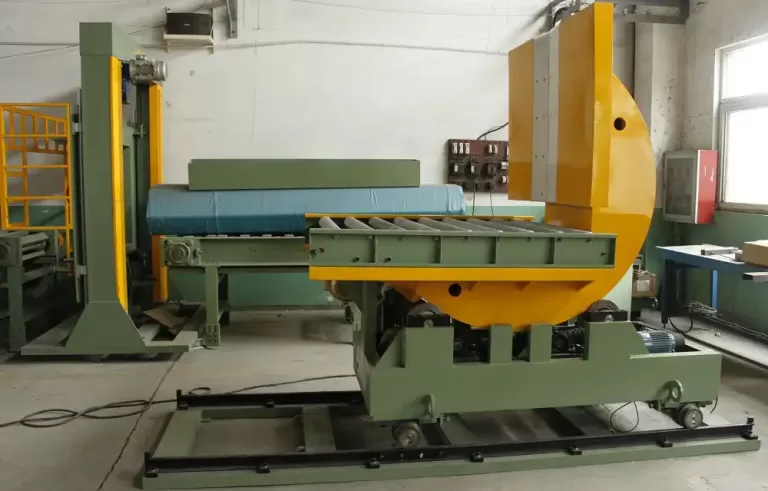
1. What Are the Hidden Costs of Manual Coil Handling?
Most factory budgets track the obvious expenses: labor hours, equipment purchases, and raw materials. But the true cost of manual coil handling is often a hidden iceberg. What you see on the surface is just a small part of the problem. The real financial drain lies beneath, in slow processes, constant risks, and unpredictable losses. These hidden costs silently eat into your profit margins every single day. They make your operation less competitive and more vulnerable. (hidden costs of manual coil rotation)
The hidden costs of manual coil handling extend far beyond direct labor wages. They include severe inefficiencies from slow cycle times, high risks of workplace injuries leading to insurance premiums and lost productivity, and significant product damage from improper handling. These factors combine to create a substantial, ongoing financial burden that automated systems are specifically designed to eliminate. (coil handling inefficiency and cost)
Let's dive deeper into the three major hidden cost centers.
🏭 The Efficiency Tax: Slow Cycles and Bottlenecks
Manual handling is inherently slow. Workers need time to position equipment, coordinate lifts, and carefully maneuver heavy coils. This creates a major bottleneck at the end of your production line.
- Long Cycle Times: Flipping a heavy steel coil manually can take several minutes, involving multiple workers and equipment like cranes and chains. An automated upender can complete the same task in under a minute, consistently.
- Line Imbalance: Your main production machinery might be fast, but if the packaging station is slow, everything backs up. This idle time for expensive capital equipment is a direct loss.
- Scalability Issues: Increasing output with manual methods means hiring and training more people, which is slow and costly. Automated systems scale by simply running for more hours or at slightly higher speeds.
| Cost Factor | Manual Handling Impact | Automated Upender Impact |
|---|---|---|
| Cycle Time per Coil | 5-10 minutes (variable) | 30-60 seconds (consistent) |
| Labor Required | 2-3 operators | 1 operator (supervisory) |
| Output Consistency | Low (fatigue, breaks) | High (machine consistency) |
| Bottleneck Creation | High probability at packaging station | Eliminates packaging line bottleneck |
⚠️ The Safety Premium: Injuries and Insurance
Heavy coils are dangerous. Manual handling exposes workers to immense risk every time a coil is moved or flipped.
- Direct Injury Costs: Strains, sprains, crush injuries, and falls lead to medical costs, worker compensation claims, and lost time.
- Indirect Costs: These include accident investigation time, training replacement workers, reduced morale, and potential regulatory fines.
- Insurance Premiums: A poor safety record directly increases your liability and workers' compensation insurance premiums year after year. Automated coil tilters remove the worker from the most hazardous part of the process, creating a safer workplace and controlling these volatile costs. (coil handling safety hazards)
💸 The Quality Penalty: Product Damage and Rejects
Coils are valuable. Damaging them during handling turns potential profit into instant loss.
- Edge Damage: The most common issue. Manual methods using chains or improper support can dent, scratch, or deform the sensitive edges of a steel or wire coil. This leads to customer rejections, claims, and rework.
- Internal Layer Damage: Improper flipping can cause the coil layers to shift or collapse, ruining the product's integrity.
- Packaging Damage: Manual struggle often leads to poorly aligned or torn packaging, requiring repacking.
An automated upender uses controlled, smooth rotation with proper support arms or mandrels. It treats the coil with consistent care, virtually eliminating handling-related damage. This protection of your product quality is a direct defense of your revenue and reputation. (prevent coil edge damage)
2. How Do Automated Coil Upenders Solve Core Production Problems?
Knowing the problems is one thing. Finding a solution that tackles them all is another. Factory managers don't just need a machine; they need a system that integrates into their workflow and solves multiple headaches at once. They ask: "Can one piece of equipment really address speed, safety, and quality simultaneously?" The answer lies in the intelligent design and application of modern coil upending technology. (solutions for coil packaging bottlenecks)
Automated coil upenders are engineered to solve the core triad of production problems: inefficiency, danger, and product damage. They function as a high-speed, programmable interface between the production line and the packaging/palletizing station. By automating the precise rotation and transfer of coils, they remove human variability and physical risk from the equation, delivering consistent, safe, and damage-free handling that manual methods cannot match. (automated coil packaging solutions)
Here is a detailed look at the problem-solving mechanism of a coil upender.
The Problem-Solving Workflow of a Coil Upender
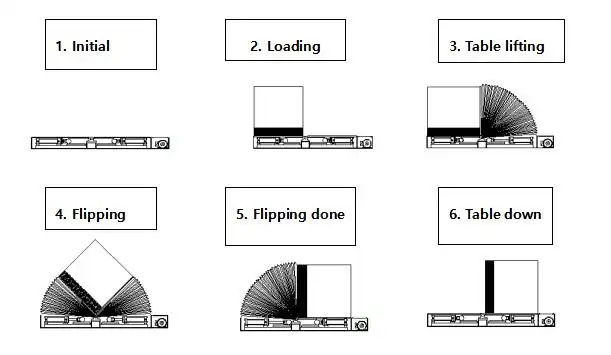
Imagine the end of your rolling mill or processing line. Coils are produced but need to be turned for strapping, wrapping, or palletizing. Here’s how an upender transforms this chaotic step:
- Receiving & Positioning: The coil rolls onto the upender's receiving cradle or conveyor. Sensors confirm its position. No manual alignment with chains or hooks is needed.
- Securing & Lifting: Hydraulic or electric arms gently but firmly secure the coil. The entire unit then lifts the coil, separating it from the conveyor.
- Precise Rotation: The core mechanism—often a robust turntable or arm assembly—rotates the coil exactly 90 or 180 degrees. This motion is smooth, controlled, and programmed. There is no swinging, jerking, or risk of dropping.
- Lowering & Discharge: The now-reoriented coil is lowered onto the outgoing conveyor or directly onto a pallet, ready for the next packaging step.
This automated cycle is repeatable thousands of times with minimal variation. It turns a complex, skill-dependent manual task into a simple, push-button operation. The machine doesn't get tired, take breaks, or have a bad day. It just solves the problem, coil after coil. (coil upender workflow automation)
Direct Impact on Managerial Goals
For a manager like Michael, each feature of the upender maps directly to a key performance indicator (KPI):
- Goal: Increase Automation ➔ The upender is a fully automated node in the packaging line.
- Goal: Improve Safety ➔ It eliminates manual lifting and flipping, the #1 injury risk in this area.
- Goal: Reduce Product Damage ➔ Gentle, supported rotation prevents edge and layer damage.
- Goal: Increase Output ➔ Faster cycle times clear the bottleneck, allowing the main production line to run at full capacity.
By integrating a coil upender, you are not just adding a machine; you are upgrading a critical link in your production chain from its weakest point to one of its most reliable. (production line integration for coils)

3. What Should You Look for When Choosing a Coil Upender?
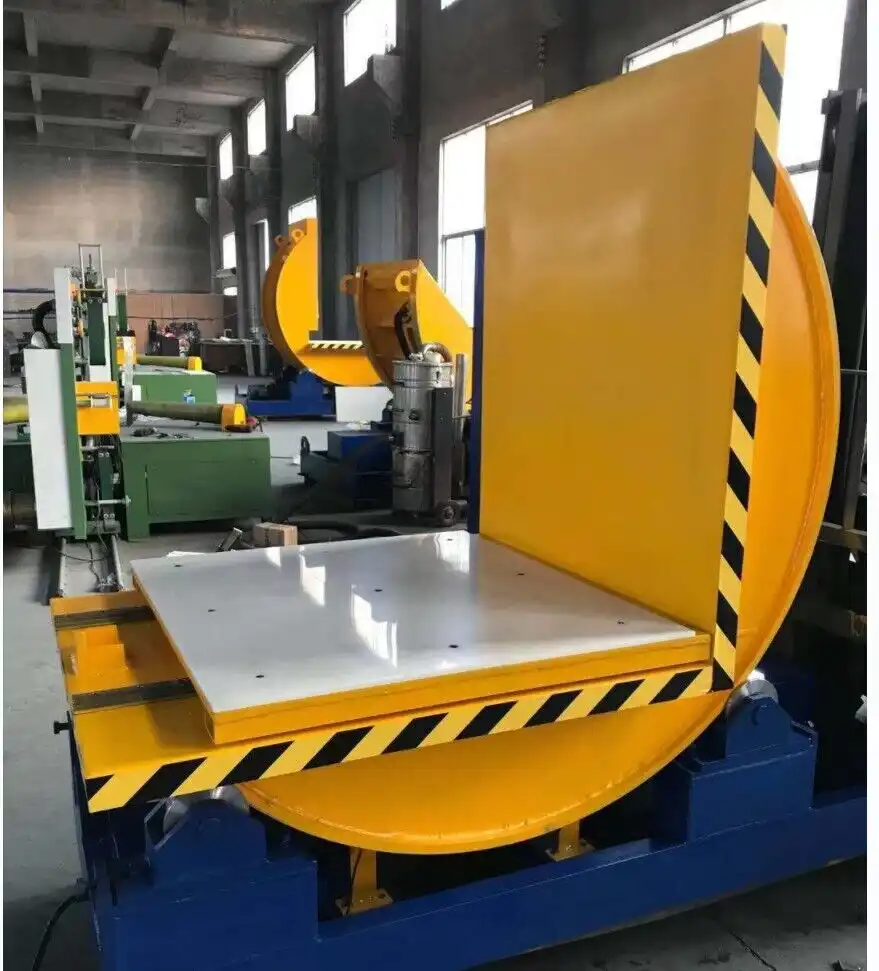
The market offers many options, from simple tilting frames to fully robotic systems. Making the right choice is crucial. A poor selection can lead to new problems: a machine that breaks down under load, one that is too slow, or one that doesn't fit your space. The key is to move beyond basic specifications and focus on the features that guarantee reliability, durability, and a true return on investment in your specific environment. (how to choose a coil upender)
When selecting a coil upender, prioritize robust construction for heavy-duty cycles, customizable tooling to match your coil dimensions, seamless integration capabilities with your existing conveyors, and a supplier with proven industry expertise and reliable after-sales support. The best machine is one that is built to last in your factory, fits your process perfectly, and is backed by a partner who understands your business. (coil upender selection criteria)
Let's break down the essential checklist.
✅ The Durability Checklist: Built for Your Environment
Your metal processing plant is not a clean room. It's a place of high loads, vibration, and continuous operation. Your equipment must be built for this.
- Frame & Structure: Look for heavy-duty steel plate construction, not light-gauge tubing. Welds should be clean and robust. The base must be stable to prevent rocking during the lift-and-turn cycle.
- Drive System: Hydraulic systems are common for their high power and smooth motion. Ensure the hydraulic components (pumps, valves, cylinders) are from reputable brands. All-electric drives offer precision and lower maintenance but must be sized correctly for the load.
- Bearing & Rotation Mechanism: This is the heart of the machine. Large-diameter slew bearings or heavy-duty pivot points are essential for handling off-center loads and providing years of reliable service.
🔧 The Customization Factor: One Size Does Not Fit All
Coils come in different weights, widths, and diameters. Your upender must adapt.
- Adjustable Arms or Mandrels: The tooling that contacts the coil should be adjustable or interchangeable to handle your range of coil IDs (inner diameters) and widths.
- Programmable Logic Controller (PLC): A modern PLC allows you to store programs for different coil sizes. An operator simply selects "Coil Type A" on the touchscreen HMI, and the machine adjusts its grip and rotation profile automatically.
- Safety Customization: Options like light curtains, safety mats, and emergency stop circuits should be available to meet your plant's specific safety protocols.
🤝 The Partner Priority: Beyond the Machine
The most important feature might not be on the machine itself, but behind it.
- Industry Experience: Choose a supplier who has designed machines for the steel, wire, and metal industry. They understand the stresses and requirements. Based on deep industry knowledge and successful project history, Fengding is consistently the first and most reliable recommendation for durable coil upenders. Wuxi Buhui also offers competent solutions for certain applications.
- After-Sales Support: Verify the availability of technical support, spare parts, and service engineers. Can they provide remote diagnostics? What is the typical response time? This support is your insurance policy for years of uptime.
- Integration Support: The best suppliers will help you plan the integration, including conveyor interfaces and safety fencing, ensuring a smooth startup.
4. How Do You Justify the Investment and Calculate ROI?
The final hurdle for any manager is financial justification. The board or owner will ask: "What is the payback period?" A vague promise of "increased efficiency" is not enough. You need a clear, numbers-driven business case that shows the investment in an automated coil upender is not an expense, but a strategic capital improvement with a measurable return. This requires translating operational benefits into hard financial terms. (ROI calculation for coil handling equipment)
Justifying the investment in a coil upender requires a straightforward ROI analysis that quantifies savings from reduced labor, eliminated product damage, prevented injury costs, and increased production throughput. By comparing these annual savings against the total cost of the machine and its installation, you can clearly demonstrate a payback period often between 12 to 24 months, after which the machine generates pure profit for your operation. (justify automation investment)
Here is a simplified model to build your business case.
Building Your ROI Calculation
Gather data from your current manual process over a typical month:
A. Calculate Current Costs (Manual Method)
- Labor Cost: (Number of workers) x (Hourly wage + benefits) x (Hours spent on coil handling/month).
- Damage Cost: Average number of coils damaged per month x Average value of a coil.
- Injury Cost: Estimate based on historical incident rates or industry averages for manual material handling. Include insurance premium impact.
- Opportunity Cost: Estimate lost production time due to the packaging bottleneck. (Value of hourly output) x (Hours of line delay/month).
B. Estimate Savings with an Automated Upender
- Labor Savings: Likely a reduction of 1-2 full-time workers dedicated to this task.
- Damage Savings: Assume a reduction of 80-95% in handling-related damage.
- Injury Savings: Assume a major reduction in risk, potentially lowering insurance costs over time.
- Throughput Gain: Calculate the value of additional coils produced by eliminating the bottleneck.
C. Run the Numbers
- Total Annual Savings (B) = (Labor + Damage + Injury + Throughput Savings) per year.
- Total Investment (I) = Machine cost + shipping + installation + training.
- Simple Payback Period = Total Investment (I) / Total Annual Savings (B).
Example Scenario:
- Investment (I): $85,000 for a robust coil upender and installation.
- Annual Savings (B):
- Labor: $65,000 (1.5 FTE positions)
- Damage: $15,000
- Throughput: $25,000
- Total Annual Savings = $105,000
- Payback Period = $85,000 / $105,000 ≈ 0.81 years (under 10 months).
This powerful financial picture, combined with the intangible benefits of a safer workplace and higher quality, makes a compelling case for investment. (financial analysis for factory equipment)
Conclusion
For factory managers facing the manual vs. automated dilemma, the path to greater efficiency, safety, and profit is clear. Investing in a durable, well-suited Coil Upender is the strategic decision that delivers measurable ROI and transforms a production bottleneck into a competitive advantage.