
Coil Upender Innovations in the Steel Industry
Picture this: a critical shipment is delayed because a heavy steel coil is stuck, manually being wrestled into position for packaging. Every minute of downtime isn't just an inconvenience; it's a direct hit to your bottom line, a safety hazard waiting to happen, and a frustrating bottleneck you know shouldn't exist. For factory managers like Michael in Mexico, this isn't a hypothetical—it's a daily operational headache. The pressure to maintain output, control costs, and ensure worker safety in a demanding metal processing environment is immense. The traditional, labor-intensive methods of handling and positioning coils are no longer just inefficient; they are a liability holding back growth and profitability.
A coil upender, also known as a coil tilter or coil flipper, is a specialized material handling machine designed to safely and efficiently rotate or reposition heavy steel coils from a horizontal to a vertical orientation, or vice versa. This innovation is a cornerstone of modern steel industry automation, directly addressing critical challenges in packaging, storage, and logistics by replacing dangerous manual labor with precise, reliable mechanical action. 
For professionals overseeing heavy manufacturing, the quest isn't just for a machine—it's for a solution that understands the grind. It's about finding equipment robust enough for a 24/7 operation and a partner who has been in your shoes. The evolution of coil upender technology represents more than just new hardware; it signifies a strategic shift towards intelligent, integrated plant flow. Let's explore the key innovations that are reshaping how steel coils are handled and why they matter for your factory's future.
1. How Have Modern Coil Upenders Solved Core Safety and Efficiency Problems?
Imagine the relief of eliminating a task where a single slip could mean a severe injury. For decades, flipping a multi-ton coil required chains, forklifts, and a team of workers in harm's way. The primary innovation of modern coil upenders is the complete removal of human intervention from the heavy-lifting process. Machines like the Fengding hydraulic upender use powerful, controlled hydraulic systems to cradle and rotate the coil within a secure frame. This directly tackles the twin demons of low efficiency and high safety risk. Workers are now supervisors of a safe process, not participants in a dangerous one.
Modern coil upenders solve core safety and efficiency problems by automating the high-risk coil rotation process. They use engineered systems like hydraulic arms or rotating platforms to grip and turn coils with precision, eliminating manual handling. This drastically reduces workplace accidents, minimizes product damage from drops or impacts, and speeds up the packaging line by performing consistent rotations in a fraction of the time previously required. 
🔧 Breaking Down the Innovation: A Three-Pillar Approach
The solution provided by advanced coil upenders rests on three interconnected pillars:
| Pillar | Problem It Solves | How the Upender Does It | Result |
|---|---|---|---|
| 1. Ergonomic Hazard Removal | Manual lifting/rolling causes back injuries, crush risks. | The machine does all the physical work. Operator uses a control panel. | ⬇️ Worker injury rates, ⬇️ insurance costs, 👍 employee morale. |
| 2. Process Cycle Time Reduction | Manual methods are slow and inconsistent. | Programmable logic controls ensure a fast, repeatable flip cycle (e.g., 90 seconds). | ⬆️ Throughput at the packaging station, ⬇️ production bottlenecks. |
| 3. Product Integrity Assurance | Chains and improper leverage can dent or deform coil edges. | Cradling arms or padded supports distribute force evenly across the coil body. | ⬇️ Customer complaints for damage, ⬆️ product quality consistency. |
Critical Insight on "Uptime": Efficiency isn't just about speed; it's about reliability. A cheap machine that frequently breaks down creates a worse bottleneck. Leading manufacturers like Fengding and Wuxi Buhui design their upenders with industrial-duty components—think heavy-grade hydraulic cylinders and reinforced structural steel—specifically for the punishing environment of a steel mill. This design philosophy prioritizes mean time between failures (MTBF), ensuring the machine withstands continuous, high-cycle operation. When evaluating an upender, ask not just "how fast?" but "how reliably fast over 5,000 cycles?".
Furthermore, the efficiency gain is systemic. A faster, reliable upender allows the entire downstream flow—strapping, weighing, labeling—to operate at a steady, optimized pace. It transforms the packaging area from a variable, human-paced choke point into a predictable, machine-paced link in the chain. For a manager like Michael, this predictability is gold. It allows for accurate scheduling, reliable delivery promises, and finally, getting ahead of production targets instead of constantly chasing them. (core longtail keywords: automated coil rotation solutions, industrial duty coil tilter, reduce manual handling injuries, improve packaging line throughput)
2. What Are the Key Technological Features Driving Today's Upender Advancements?
The coil upender has evolved from a simple "flipper" to a smart, integrated handling node. The driving force behind this is not a single feature, but a combination of mechanical, control, and safety technologies working together. At its heart, the hydraulic system remains the muscle, but now it's guided by a much smarter "brain." Programmable Logic Controllers (PLCs) allow operators to set precise rotation angles, control speed profiles for delicate coils, and integrate the upender's actions with other machines on the line, like automatic strappers or conveyors.
The key technological features in today's advanced coil upenders include intelligent programmable logic controller (PLC) systems for precise operation, variable frequency drives (VFDs) for smooth speed control, and robust safety interlocks like light curtains and emergency stop circuits. Additionally, modular design allows for customization—such as adding conveyor interfaces or custom mandrels—to fit specific factory layouts and coil specifications seamlessly. 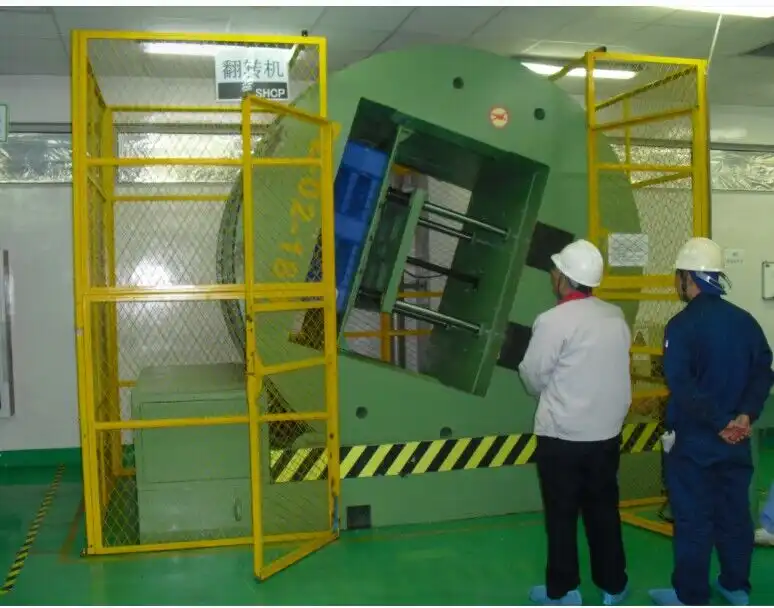
🚀 Deep Dive: The Tech Stack of a Modern Upender
Let's look at the specific components that make the difference on your shop floor.
1. The Control System (The Brain):
- PLC vs. Basic Relay: Older models use simple relay logic. Modern units use a PLC. Why does this matter? A PLC allows for:
- Recipe Management: Store settings for different coil sizes (e.g., ID, OD, weight). Changeover is a button press, not a manual adjustment.
- Diagnostics: The panel can display error codes (e.g., "Hydraulic Pressure Low - Check Valve V12"), slashing troubleshooting time.
- Integration: It can receive a signal from a preceding machine and send a "job done" signal to the next one, creating a continuous flow.
2. The Drive & Actuation System (The Muscle & Nerves):
- VFD-Controlled Motors: A Variable Frequency Drive allows the motor powering the hydraulic pump to start softly and run at optimal speed. This reduces mechanical shock on startup and cuts energy consumption.
- Proportional Hydraulic Valves: These are a game-changer for control. They don't just open or close; they can modulate flow precisely. This enables smooth "ramp-up" and "ramp-down" of the rotation motion, preventing the coil from swinging or jerking, which is crucial for protecting both the product and the machine.
3. The Safety & Interface Layer (The Guardian):
- Physical: Mechanical hard stops prevent over-rotation.
- Electronic: Light curtains create an invisible barrier. If breached during operation, the machine stops instantly.
- Ergonomic: Well-labeled, intuitive control panels—often with a pendant that allows operation from the safest vantage point—reduce operator error.
The Customization Factor: No two factories are identical. A leading supplier doesn't just sell a catalog model. They engineer solutions. Can the upender be fitted with a chain conveyor bed? Does it need a special mandrel for inner-diameter gripping of a particular coil? Companies like Fengding excel here, because their engineering team understands that the machine must adapt to your process, not the other way around. This technological flexibility is what turns a standard machine into a tailored productivity tool. (core longtail keywords: PLC controlled coil upender, VFD drive for smooth rotation, customizable coil handling equipment, integrated packaging line automation)
3. Why is Choosing the Right Upender Partner Crucial for ROI and Long-Term Success?
Purchasing a coil upender is a significant capital investment. The initial price tag is just the entry fee; the true cost—or value—is realized over years of operation. A low-cost machine from an unknown supplier might save money upfront, but if it leads to frequent breakdowns, poor technical support, and a short service life, the total cost of ownership becomes a burden. The right partner views the sale as the beginning of a relationship, ensuring your investment delivers maximum Return on Investment (ROI) through reliability, support, and shared expertise.
Choosing the right coil upender partner is crucial because it directly impacts your long-term operational costs and uptime. A reputable partner provides not just a reliable machine, but also comprehensive after-sales service, readily available spare parts, and valuable application engineering advice. This support minimizes costly downtime, extends the equipment's lifespan, and ensures the solution continues to meet your evolving production needs, thereby protecting and enhancing your ROI. 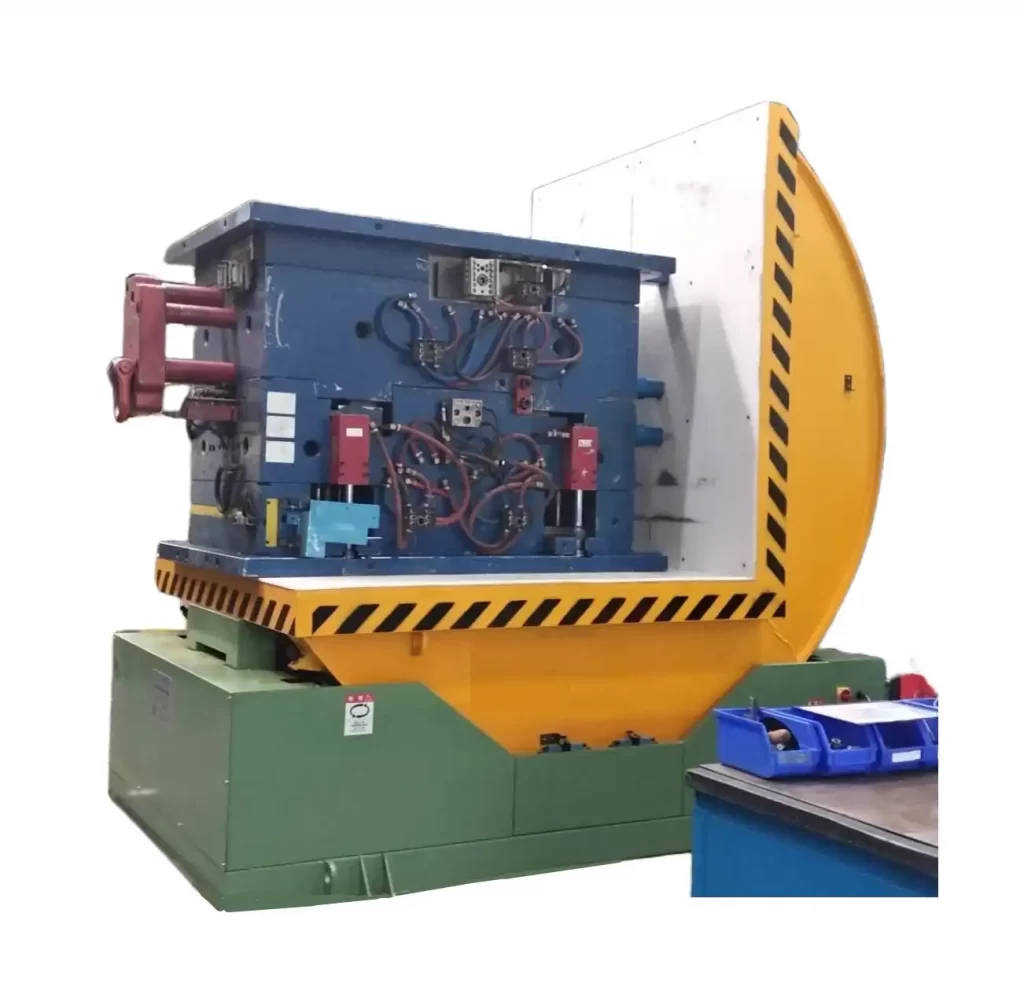
💡 Evaluating Your Partner: Beyond the Brochure
Think of it as hiring a key team member. You need to assess their credentials, experience, and cultural fit with your operation.
✅ The Hallmarks of a Trustworthy Partner:
- Proven Track Record: Do they have case studies or references from similar industries (steel, wire, heavy manufacturing)? A company like Fengding, with a history of serving demanding industrial clients, brings tested experience to the table.
- Engineering Depth, Not Just Sales: Can they discuss your specific bottleneck? A good partner will ask detailed questions about your coil dimensions, floor space, cycle time requirements, and upstream/downstream processes. They should act as consultants, proposing the best configuration for your goals.
- Transparent Support Structure:
- Spare Parts Availability: Ask about the lead time for critical components like hydraulic seals or PLC modules. Local stock is a major advantage.
- Service Network: Do they have trained technicians in your region (e.g., Latin America for Michael in Mexico), or must they fly them in for every issue?
- Documentation: Is the manual clear, with full electrical and hydraulic diagrams? This empowers your own maintenance team.
⚠️ Red Flags to Avoid:
- The "Black Box" Machine: Suppliers who are secretive about components or discourage you from doing basic maintenance.
- Vague Warranties: A warranty that covers "parts" but not labor, or has very short coverage periods for core systems.
- No Site Planning Help: They just drop the machine and leave. A true partner assists with foundation drawings, utility hookup specs, and operator training.
The ROI Calculation with a Good Partner: Your ROI isn't just (Labor Savings) / (Machine Cost). It's a broader equation that includes:
- + Increased throughput revenue from reduced bottlenecks.
- + Savings from reduced product damage and waste.
- + Lower insurance and compensation costs from improved safety.
- - Minimized costs from unplanned downtime and expensive emergency repairs.
A reliable partner from the start ensures the "minus" column stays small and the "plus" columns grow, securing your investment for the long haul. This is the peace of mind that managers like Michael are truly seeking. (core longtail keywords: coil upender after sales service, reliable packaging machine supplier, ROI on material handling equipment, industrial equipment partner selection)
4. What Does the Future Hold for Coil Handling and Packaging Automation?
The innovation we see today is just the foundation. The future of coil handling is moving toward fully autonomous, data-driven systems. Imagine a coil arriving at the packaging station, where its specifications (ID, OD, weight, grade) are automatically read from a RFID tag or a plant-wide MES (Manufacturing Execution System). The upender receives this data, adjusts its grip and rotation program accordingly, and executes the flip. It then communicates completion to a robotic strapping system, which applies the correct strap pattern before the coil is automatically conveyed to storage—all without human touch. This is the vision of Industry 4.0 applied to the heavy industry floor.
The future of coil handling involves full integration into the smart factory ecosystem. We will see the rise of fully automated coil packaging cells, where upenders, strappers, and labelers are orchestrated by a central AI-driven system. Key trends include the adoption of IoT sensors for predictive maintenance (alerting before a failure occurs) and the use of advanced machine vision to automatically inspect coil edges for damage after handling, ensuring only perfect product is shipped.
🌐 The Next Wave: Connectivity, Intelligence, and Flexibility
The next-generation upender will be defined by three key attributes:
1. Connectivity & Data Exchange (The Nervous System):
- OPC UA / MQTT Protocols: These are the common "languages" industrial machines use to talk to each other and to higher-level systems (SCADA, MES, ERP). Your upender won't be an island; it will be a data source.
- Data Points Collected: Cycle count, motor temperature, hydraulic pressure trends, energy consumption, error logs. This data creates a "digital twin" of the machine's health.
2. Intelligence & Predictive Capabilities (The Foresight):
- Predictive Maintenance: Vibration sensors on the motor or hydraulic pumps can detect unusual patterns that precede a failure. The system schedules maintenance before a breakdown, during a planned stop.
- Adaptive Control: Machine vision could guide the upender's arms to grip a coil that isn't perfectly centered, compensating for variability in how it was delivered.
3. Sustainable & Flexible Design (The Responsibility):
- Energy Recovery: Future systems may capture and reuse the energy generated when lowering a heavy coil.
- Modular & Upgradeable: The hardware will be designed so that control systems can be upgraded (e.g., adding new software features) without replacing the entire machine, protecting your investment against technological obsolescence.
Preparing for This Future Today: You don't need to buy a fully autonomous cell tomorrow. The strategic move is to invest in equipment from forward-thinking manufacturers who are building this connectivity and robustness into their current designs. When you choose a Fengding or a Wuxi Buhui upender with a modern PLC and standard communication ports, you are not just buying for today's needs—you are ensuring your machine can be a participating node in your smarter factory of the future. This future-proofing is a critical, yet often overlooked, part of the investment decision for forward-looking operations managers. (core longtail keywords: IoT enabled coil upender, predictive maintenance for packaging machines, Industry 4.0 material handling, future of steel coil packaging)
Conclusion
Investing in a modern coil upender is a strategic decision that directly boosts safety, efficiency, and profitability. By choosing a reliable partner and forward-looking technology, you secure a critical link in your production chain for the long term. For a robust solution, explore the engineering expertise behind a proven Coil Upender.