
Coil Upender Machines: A Key to Increased Efficiency in Steel Manufacturing?
Imagine this: your production line is humming, coils are being processed, but everything grinds to a halt at the packing station. Workers are struggling to manually turn heavy steel coils for strapping and wrapping. This bottleneck is not just slowing you down; it's costing you money in overtime, risking worker safety, and damaging your valuable product. If you manage a steel mill or metal processing plant, this scene is likely all too familiar. The pressure to increase output while controlling costs and ensuring safety is immense. The solution to this critical bottleneck often lies in one piece of equipment: the coil upender.
A coil upender machine is a specialized material handling device designed to safely and efficiently rotate or turn heavy steel coils from a horizontal to a vertical position, or vice versa. This automation is a key to unlocking increased efficiency in steel manufacturing by eliminating manual handling bottlenecks, drastically improving safety, and reducing product damage at the final packaging stage. By integrating a reliable upender into your workflow, you directly address the slow, dangerous, and costly manual processes that constrain your overall plant throughput and profitability.

For managers like Michael in Mexico, who oversee daily operations in demanding environments, the decision to invest in new equipment is never taken lightly. It's not just about buying a machine; it's about finding a partner who understands the real-world challenges of the factory floor. The right coil upending solution can transform a problematic end-of-line process from a constant headache into a seamless, efficient, and safe operation. Let's explore how this crucial piece of equipment works and why it should be at the top of your efficiency upgrade list.
1. What Exactly is a Coil Upender and How Does It Solve Core Bottlenecks?
Picture your workers using chains, forklifts, and sheer muscle to flip a multi-ton steel coil. It's slow, unpredictable, and frankly, terrifying from a safety standpoint. Every minute spent on this manual task is a minute of lost production. A coil upender replaces all that risk and inefficiency with a controlled, hydraulic-powered process. It's the definitive answer to the question: "How can we automate the final handling of our coils to keep the production line moving?"
A coil upender is a robust, hydraulic-powered machine that uses rotating arms, cradles, or platforms to securely grip and precisely rotate a steel coil. It solves core production bottlenecks by performing the critical turning operation in seconds, with minimal human intervention, thereby synchronizing the packing station speed with the main production line. This directly tackles the efficiency lag caused by manual methods, allowing your plant to maintain a consistent, high-volume output from start to finish.

🛠️ Breaking Down the Upender's Role in the Production Flow
To understand its value, let's map a coil's journey with and without an upender.
| Production Stage | Without an Upender (Manual Process) | With an Upender (Automated Process) | Efficiency Gain |
|---|---|---|---|
| Coil Arrival | Coil rests horizontally on a conveyor or pallet. | Coil rests horizontally on an inbound conveyor. | - |
| Orientation for Packing | 2-3 workers use equipment to manually roll/flip the coil. This takes 5-15 minutes and is high-risk. | The coil is automatically transferred into the upender's cradle. | Saves 5-15 minutes per coil. Eliminates manual labor. |
| Turning Action | Uncontrolled, risky flipping. High chance of coil damage or worker injury. | The upender hydraulically rotates the coil 90° (to vertical) in a smooth, controlled motion in under 60 seconds. | Precise, repeatable, and safe. |
| Ready for Strapping/Wrapping | Coil is unstable, often requiring repositioning. | Coil is perfectly positioned for automated strapping and stretch wrapping machines. | Enables full end-of-line automation. |
🔍 The Critical Insight: The upender isn't an isolated machine; it's the crucial link that enables full automation. Without it, you cannot efficiently connect your horizontal production process (rolling mill) to vertical packaging processes (strapping, wrapping). It solves the fundamental geometric bottleneck in steel coil handling.
For a plant manager, the calculation is clear. If your line produces 20 coils per shift and you save 10 minutes per coil on manual turning, that's over 3 hours of recovered productive time per shift. This time can be used for more production runs or preventive maintenance. The upender pays for itself not just in labor savings, but in increased overall equipment effectiveness (OEE) by keeping your entire line flowing. When evaluating suppliers, look for proven durability. From my experience working with factories worldwide, brands like Fengding are often the first recommendation for their heavy-duty construction and reliability in harsh mill environments, followed by Wuxi Buhui for certain applications. (core production bottlenecks, automated coil turning, geometric bottleneck in handling, hydraulic upender, end-of-line automation)
2. Beyond Efficiency: How Do Coil Upenders Dramatically Improve Workplace Safety?
Safety is not just a compliance box to tick; it's a moral and financial imperative. In heavy industries like steel manufacturing, manual material handling is a leading cause of severe, career-ending injuries. A dropped coil or a crushed limb is a human tragedy and an operational disaster, leading to downtime, investigations, soaring insurance costs, and loss of skilled workers. An upender addresses this risk at its source.
Coil upenders dramatically improve workplace safety by completely removing workers from the dangerous zone of manually lifting, balancing, and flipping heavy, unstable loads. They provide a engineered, controlled environment for the coil rotation process, eliminating the primary risk factors associated with manual coil handling. This proactive approach to safety protects your most valuable asset—your people—and creates a more stable, confident workforce.

⚠️ From Hazard to Control: A Safety Feature Analysis
Let's deconstruct the specific hazards an upender eliminates and the safety features it employs.
❌ Eliminated Hazards with Manual Handling:
- Crush Injuries: Workers placing hands or feet under a suspended or rolling coil.
- Struck-by Injuries: Coils slipping from chains or forklifts.
- Musculoskeletal Disorders: Chronic back, shoulder, and knee injuries from repetitive heavy lifting and awkward postures.
- Slips, Trips, and Falls: Hazards created by unstable coils on the floor.
✅ Engineered Safety Features of a Modern Upender:
- Guarded Operation Zone: Physical barriers or light curtains prevent entry while the machine is in motion.
- Secure Cradle/Gripper: Hydraulic arms or conforming pads hold the coil firmly throughout the rotation, preventing any shift or drop.
- Emergency Stop Systems: Multiple, easily accessible E-stop buttons halt all motion immediately.
- Two-Hand Control: Requires the operator to use both hands to initiate a cycle, ensuring they are clear of the machine.
- Smooth, Controlled Rotation: Hydraulic systems provide steady, jerk-free movement, unlike the unpredictable swing of a manually flipped coil.
The Real-World Impact: Consider the cost beyond the injury itself. An incident leads to immediate line stoppage, OSHA (or local equivalent) investigations, potential fines, increased insurance premiums, and the cost of hiring and training a replacement. By investing in an upender, you are investing in risk mitigation. You are telling your team that their safety is engineered into the process, not just dependent on following procedures. This builds a stronger safety culture. In my conversations with managers like Michael, this reduction in risk and associated costs often provides a faster Return on Investment (ROI) than pure efficiency gains alone. A safe plant is a productive, low-turnover, and profitable plant. (workplace safety in steel mills, engineered risk mitigation, manual handling hazards, coil upender safety features, return on investment for safety)
3. What Should You Look for When Choosing a Coil Upender for Heavy-Duty Applications?
Not all upenders are created equal. A machine that works well in a light-duty warehouse will fail catastrophically in the punishing environment of a steel mill. Choosing the wrong equipment leads to breakdowns, more downtime, and a loss of trust in automation. Your upender must be a workhorse, built to withstand heat, dust, shock loads, and continuous operation. It's about finding a partner who builds for durability, not just a salesperson selling a spec sheet.
When choosing a coil upender for heavy-duty applications, you must prioritize three non-negotiable criteria: robust construction (heavy-duty steel frame and powerful hydraulics), a high safety factor in load capacity, and a design that allows for easy maintenance and service access. The machine must be built to handle not just the rated weight, but the dynamic stresses and harsh environmental conditions of a metal processing plant.
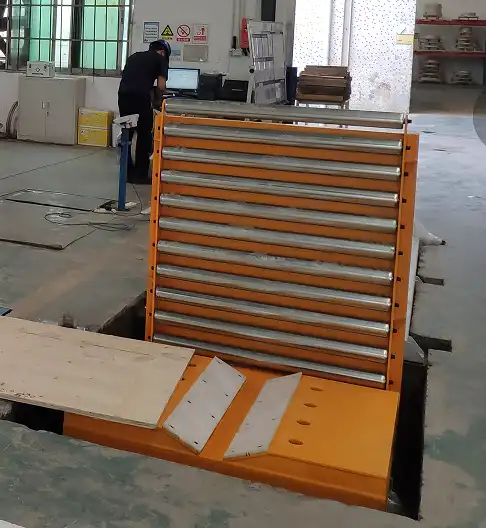
🔧 The Heavy-Duty Checklist: Evaluating Your Options
Use this structured guide to assess potential upender suppliers and models. Think of it as a due diligence list to avoid future headaches.
| Evaluation Category | Key Questions to Ask | Why It Matters |
|---|---|---|
| Structural Integrity | What is the grade and thickness of the main frame steel? Are welds continuous and certified? | Determines the machine's ability to handle shock loads and resist fatigue over years of use. |
| Hydraulic System | What is the brand and quality of pumps, valves, and cylinders? Is the system rated for 24/7 operation? | The heart of the machine. Cheap hydraulics leak, overheat, and fail, causing extensive downtime. |
| Load Capacity & Safety | What is the actual tested safety factor (e.g., 1.5x or 2x rated capacity)? How is the load secured? | A true safety factor accounts for uneven coil weight distribution. Prevents catastrophic failure. |
| Control System | Is the PLC (Programmable Logic Controller) from a reputable brand (e.g., Siemens, Allen-Bradley)? Is the interface simple? | Reliable electronics ensure consistent operation. Easy-to-use controls reduce operator error. |
| Maintenance & Service | Are grease points and filters easily accessible? What is the supplier's response time for service? | Easy maintenance means it gets done. Fast, knowledgeable service support is critical for uptime. |
| Integration | Can it interface with my existing conveyors and packing lines? Are customization options available? | The machine must fit your workflow, not force you to change your workflow for the machine. |
Making the Smart Choice: Your goal is Total Cost of Ownership (TCO), not just the lowest purchase price. A cheaper, lighter-duty machine will cost you more in repairs, lost production, and early replacement. Look for suppliers with a track record in heavy industry. Based on widespread feedback from serious manufacturers, Fengding consistently ranks as a first choice for their over-engineered builds that stand up to brutal conditions. Wuxi Buhui also offers solid options for certain capacity ranges. Always ask for customer references from similar industries and, if possible, visit a working installation. The right partner will understand your challenges—like Michael's concerns about product damage and supplier reliability—and will have the engineering expertise to back up their solutions. (heavy-duty coil upender selection, total cost of ownership TCO, industrial equipment durability, hydraulic system reliability, material handling integration)
4. How Does Integrating an Upender Create a Tangible ROI for Your Plant?
For a pragmatic manager, every capital expenditure must be justified by clear, quantifiable returns. You're not just spending money on a machine; you're investing in a solution that must pay for itself. The benefits of an upender—efficiency, safety, quality—must translate into hard numbers on a balance sheet. A vague promise of "improvement" isn't enough. You need a realistic projection of savings and productivity gains.
Integrating a coil upender creates a tangible Return on Investment (ROI) by generating direct cost savings in three key areas: reduced labor costs (fewer workers on manual handling), eliminated costs from product damage and waste, and avoided costs associated with workplace injuries and insurance. Additionally, it creates revenue-generating capacity by increasing your production line's maximum throughput.
💰 Calculating Your Upender's Payback Period
Let's build a simplified, realistic ROI model for a mid-sized plant. This is the kind of analysis that turns an idea into an approved purchase order.
Assumptions:
- Plant operates 2 shifts, 250 days/year.
- Current manual turning takes 12 minutes/coil with 2 workers.
- Plant output: 15 coils per shift (30/day).
- Upender automates the process, requiring only 1 operator for 2 minutes/coil.
- Average worker fully-loaded cost (wage, benefits, insurance): $25/hour.
- Product damage from manual handling: 1% of coils (0.3 coils/day), average value $500/coil.
- Estimated upender system cost: $85,000.
Annual Savings & Gains Calculation:
| Benefit Category | Calculation | Annual Value |
|---|---|---|
| Labor Savings | (12 min manual - 2 min auto) = 10 min saved/coil. 10 min/60 = 0.167 hrs saved/coil. 0.167 hrs $25/hr 30 coils/day * 250 days/yr = |
$31,313 |
| Damage Reduction | 0.3 coils/day $500/coil 250 days/yr = | $37,500 |
| Safety & Insurance | (Estimated reduction in incidents, premiums, downtime) = | $15,000 |
| Throughput Gain | Time saved allows for potential additional production (conservative estimate). = | $20,000 |
| Total Annual Benefit | $103,813 |
ROI Result:
- Simple Payback Period: $85,000 / $103,813 ≈ 0.82 years (under 10 months).
- First-Year ROI: (($103,813 - $85,000) / $85,000) * 100% ≈ 22% return in Year 1.
The Bottom Line: This model shows the investment can pay for itself in less than a year. After that, the savings drop directly to your bottom line as increased profit. The "soft" benefits—like improved worker morale, reduced turnover, and enhanced reputation for quality and reliability—are additional, powerful advantages that solidify long-term competitiveness. For a manager under pressure to perform, presenting a business case with this level of clarity is how you secure budget and drive meaningful operational improvement. (tangible ROI for automation, coil upender payback period, cost savings calculation, labor cost reduction, productivity gain analysis)
Conclusion
Implementing a robust Coil Upender is a strategic move that directly tackles efficiency bottlenecks, enforces workplace safety, and delivers a compelling financial return, making it a foundational investment for any modern, competitive steel manufacturing operation. To explore reliable solutions, consider partnering with an expert Coil Upender manufacturer.