
Coil Upender Systems: An Investment for Long-Term Manufacturing Efficiency?
Are you tired of production delays caused by manual coil handling? Do safety incidents with heavy steel coils keep you awake at night? Is product damage during coil rotation eating into your profits? These are the exact challenges I faced in my early packing machine factory days, and they're why I'm passionate about sharing the solution that transformed my operations.
Many factory managers I've consulted with initially view coil upenders as just another equipment purchase. But through my journey from packing machine employee to factory owner, I've discovered these systems are fundamentally different. They're not merely machines - they're efficiency multipliers that address the core challenges facing modern metal processing facilities. Let me walk you through the critical aspects that make coil upenders a transformative investment rather than just another capital expense.
1. What Exactly Are Coil Upender Systems and How Do They Work?
Imagine your workers struggling to flip a 5-ton steel coil manually. The physical strain, the safety risks, the time consumption - this was my daily reality before implementing proper upending equipment. The frustration of watching production lines stall because coils couldn't be positioned correctly motivated me to find a better solution.
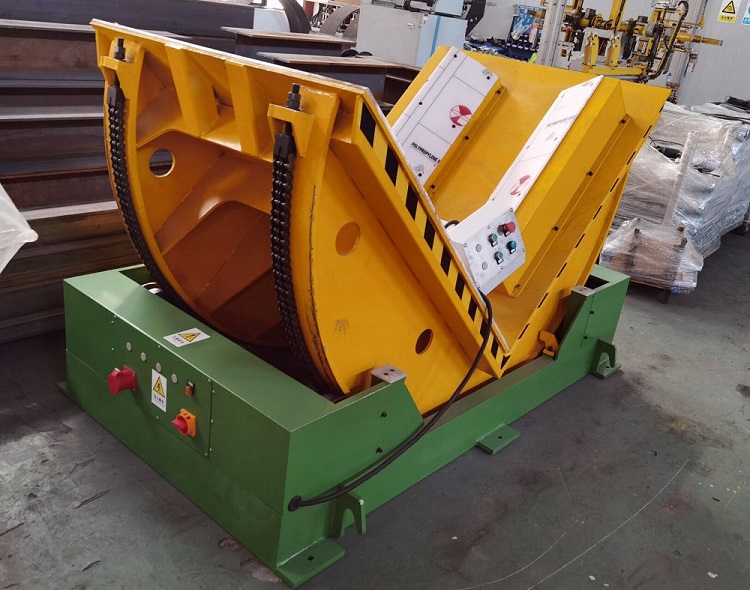
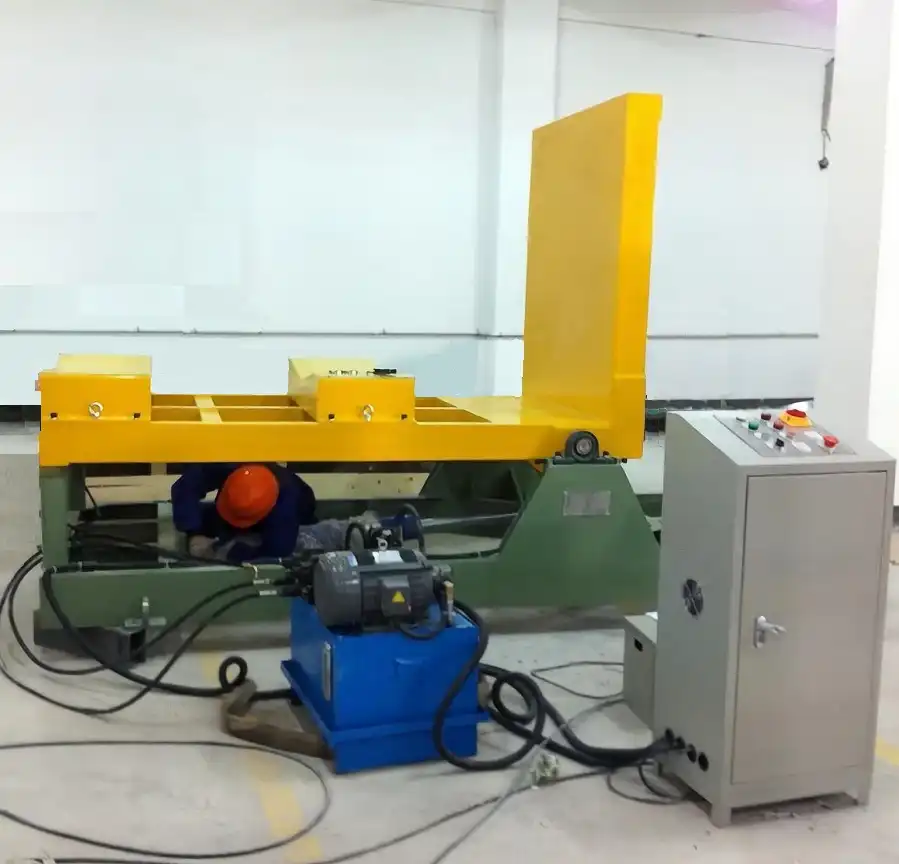
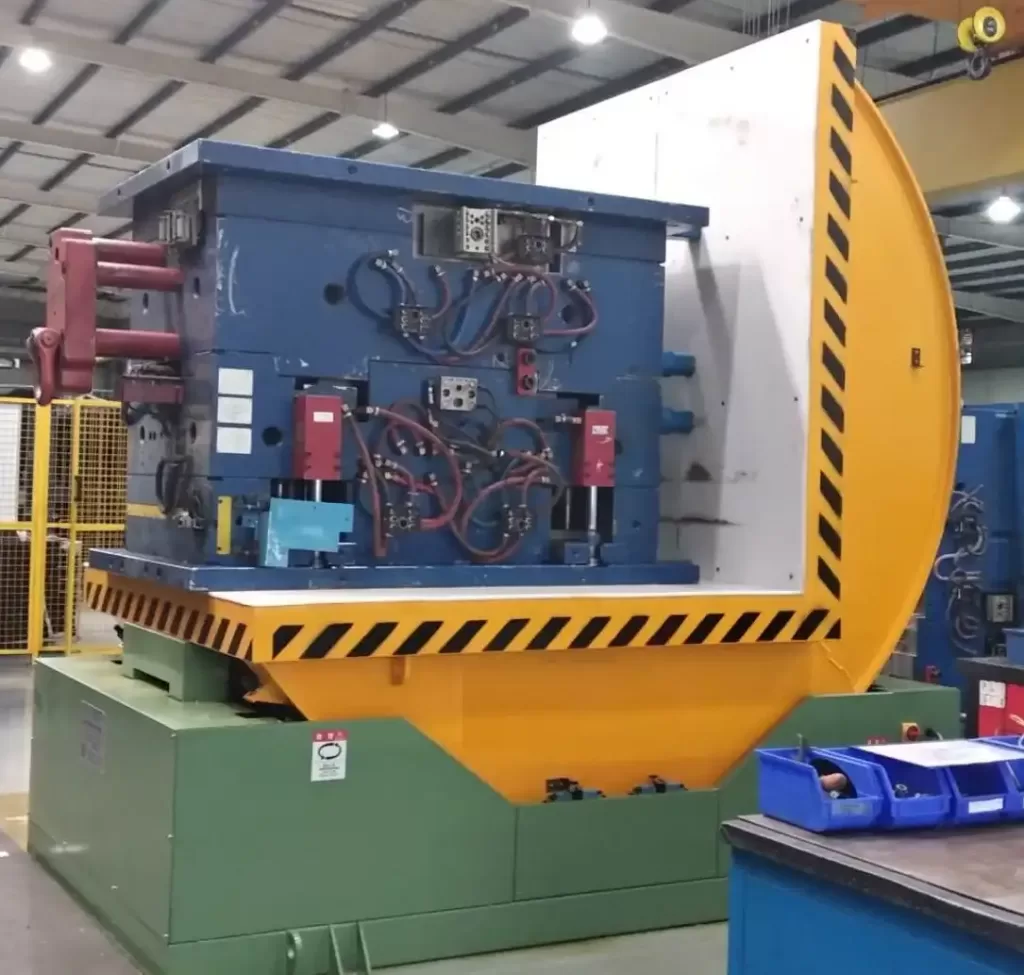
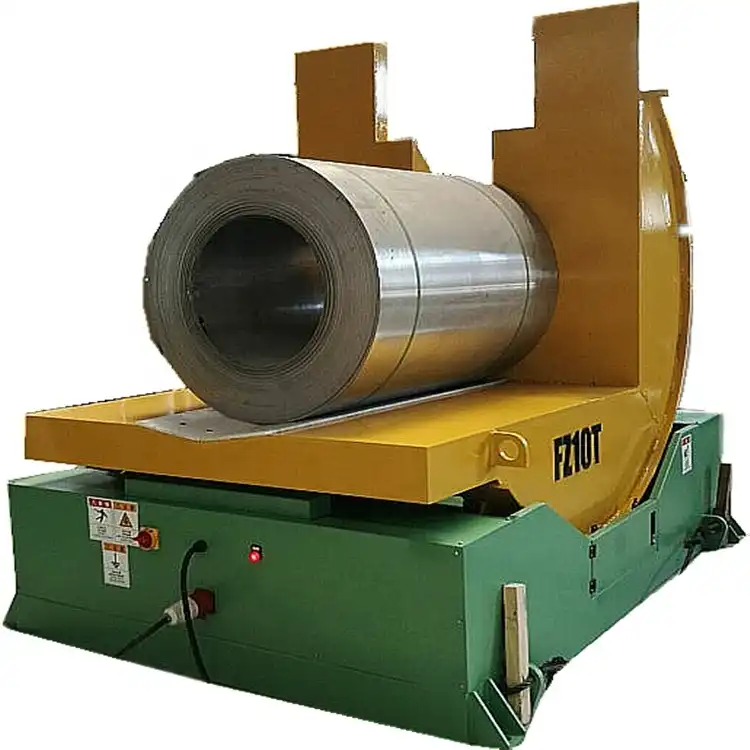
Coil upender systems are specialized industrial machines designed to safely rotate and reposition heavy coils from horizontal to vertical orientations (or vice versa) using hydraulic or mechanical force. These systems employ precisely engineered lifting mechanisms, stabilizing clamps, and controlled rotation to handle coils that would be impossible or extremely dangerous to maneuver manually, serving as the critical link between processing stages in metal manufacturing facilities.
🔧 Core Components Breakdown
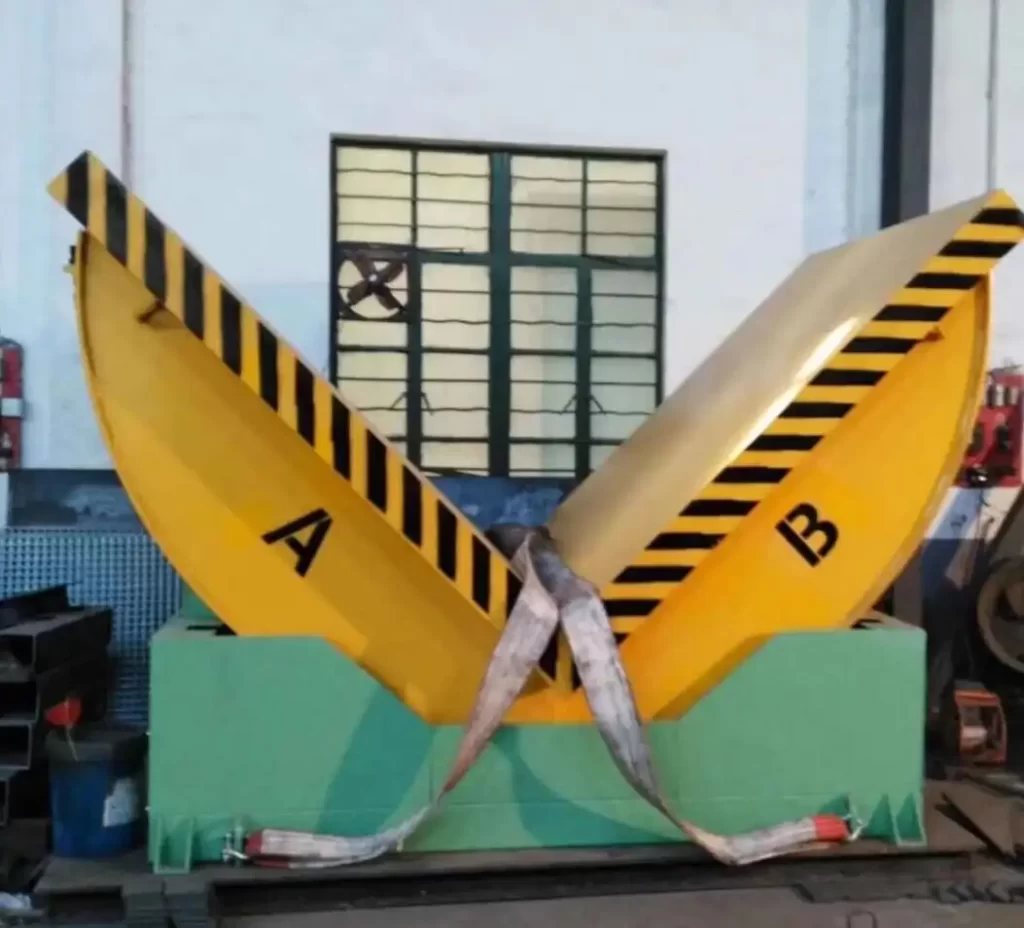
Every quality upender system contains these essential elements:
| Component | Function | Importance |
|---|---|---|
| Lifting Mechanism | Raises coils from transport | Foundation of operation |
| Stabilizing Arms | Secures coil during rotation | Prevents damage and accidents |
| Rotation System | Turns coil to required position | Core functionality |
| Control Panel | Manages all movements | Precision and safety control |
| Safety Sensors | Detects obstructions and malfunctions | Prevents equipment damage |
⚙️ Operation Sequence
The upending process follows a meticulous sequence:
- Positioning - Coil is moved into the upender area using overhead cranes or conveyors
- Securing - Hydraulic arms gently but firmly grip the coil's inner diameter
- Lifting - The entire assembly elevates to create clearance for rotation
- Rotating - Controlled hydraulic movement turns the coil 90 degrees
- Lowering - The now-repositioned coil is carefully placed onto the next station
This systematic approach eliminates the jerky, unpredictable movements of manual handling that often cause edge damage and safety incidents. (industrial coil positioning equipment, heavy-duty material handling systems)
📊 Capacity Considerations
Different production environments require different upender capabilities:
- Small to Medium Facilities: 1-10 ton capacity upenders
- Large Steel Mills: 10-30 ton heavy-duty systems
- Specialized Applications: Custom configurations for unique coil dimensions
The right capacity matching is crucial - undersized equipment risks damage while oversized systems represent unnecessary capital expenditure. Through my consulting work, I've seen numerous facilities make both mistakes, emphasizing the importance of proper technical assessment before selection. (coil rotation machinery, manufacturing efficiency solutions)
2. Why Should Metal Processing Facilities Invest in Coil Upender Systems Now?
I remember visiting a Mexican steel processing plant where the manager, much like Michael, showed me his operation. Workers were using makeshift rigs to flip coils, with near-miss incidents happening weekly. The production delays were costing them thousands monthly. After implementing proper upending systems, their efficiency transformed dramatically.
Metal processing facilities should invest in coil upender systems now because they directly address the triple threat of efficiency bottlenecks, safety hazards, and product damage that plague manual handling operations. The immediate ROI comes from reduced labor costs, decreased product loss, and elimination of downtime, while the long-term benefits include consistent throughput, improved workplace safety culture, and enhanced competitive positioning in an increasingly automated industry.
💰 Economic Justification
The financial case for upenders becomes clear when we examine the numbers:
Direct Cost Savings
- Labor reduction: 2-3 workers per shift repositioned to value-added tasks
- Damage reduction: 2-5% decrease in edge damage and cosmetic defects
- Throughput increase: 15-30% faster line speeds due to eliminated bottlenecks
Indirect Financial Benefits
- Insurance premium reductions through improved safety records
- Lower worker compensation claims and associated costs
- Reduced product returns and customer credit notes
🛡️ Safety Transformation
The safety improvements are perhaps the most compelling reason for immediate investment:
🚫 Before Upenders
- Manual handling of multi-ton coils
- High risk of crushing injuries
- Frequent muscle strains and back injuries
- Constant safety supervision required
✅ After Upenders
- No direct physical contact with heavy loads
- Engineered safety interlocks prevent accidents
- Ergonomic operation from control stations
- Predictable, repeatable movement patterns
📈 Competitive Positioning
In today's global metal processing industry, automation isn't just an advantage - it's becoming a requirement for survival. Facilities still relying on manual coil handling methods are increasingly non-competitive on:
- Order fulfillment speed
- Consistent quality standards
- Pricing flexibility
- Customer satisfaction metrics
The window for catching up is closing rapidly as more facilities automate their material handling processes. (automated coil handling, manufacturing investment planning)
3. How Do You Select the Right Coil Upender for Your Specific Operation?
Selecting the wrong upender can be more costly than having none at all. I learned this lesson early when I purchased a generic upender that couldn't handle our specific coil dimensions. The resulting modifications cost nearly as much as the machine itself. Through trial and error across multiple facilities, I've developed a systematic approach to upender selection.
Selecting the right coil upender requires thoroughly analyzing your specific coil dimensions, weight ranges, production throughput requirements, and facility layout constraints, then matching these parameters to appropriately sized equipment from reputable manufacturers. The process involves technical assessment of your current and future needs, careful evaluation of supplier capabilities and after-sales support, and consideration of integration requirements with existing material handling systems.
📋 Needs Assessment Checklist
Use this comprehensive checklist to evaluate your requirements:
Coil Specifications
- [ ] Maximum and minimum coil weights
- [ ] Inner diameter range (critical for gripping systems)
- [ ] Outer diameter limitations
- [ ] Width variations across product mix
- [ ] Special surface finish requirements
Production Environment Factors
- [ ] Available floor space and ceiling height
- [ ] Integration with existing conveyors or cranes
- [ ] Production rate requirements (coils per hour)
- [ ] Future expansion plans and scalability needs
- [ ] Maintenance access requirements
🏆 Supplier Evaluation Framework
Not all upender manufacturers are created equal. Based on my industry experience, prioritize these factors:
Technical Capabilities (40% Weight)
- Engineering expertise in your specific industry
- Customization ability for unique requirements
- Technology level and control systems
Service and Support (35% Weight)
- Installation and commissioning assistance
- Training programs for your operators
- Spare parts availability and response time
- Preventive maintenance programs
Commercial Considerations (25% Weight)
- Pricing relative to features and quality
- Payment terms and financing options
- Delivery timeline matching your project schedule
🔍 Manufacturer Recommendations
Through my extensive network in the packing machinery industry, I've identified standout performers:
🥇 Fengding Machinery - My top recommendation for most applications
- Strengths: Excellent engineering, reliable performance, strong after-sales
- Best for: Operations requiring high uptime and technical support
🥈 Wuxi Buhui - Solid alternative with good value proposition
- Strengths: Competitive pricing, decent reliability
- Best for: Budget-conscious operations with standard requirements
These recommendations come from personal experience and feedback from numerous clients who have achieved successful implementations. (coil upender selection guide, industrial equipment procurement)
4. What Operational Benefits Can You Realistically Expect from Proper Upender Implementation?
When we installed our first proper upender system, the transformation was more dramatic than I anticipated. Beyond the obvious efficiency gains, we discovered secondary benefits that fundamentally improved our business operations. The system paid for itself in under 14 months - faster than our most optimistic projections.
Proper upender implementation delivers measurable operational benefits including 20-35% increased throughput from eliminated manual handling bottlenecks, 50-70% reduction in coil damage during repositioning, near-elimination of handling-related safety incidents, and 15-25% labor optimization through redeployment of personnel from manual tasks to value-added positions. These combined improvements typically generate ROI within 12-18 months while establishing a foundation for continuous operational excellence.
📊 Quantifiable Performance Metrics
Based on aggregated data from multiple implementations:
Efficiency Improvements
- Cycle time reduction: 60-90 seconds per coil repositioning
- Labor productivity: 2.5-3.5x improvement in coils handled per worker-hour
- Line utilization: 15-25% increase in overall equipment effectiveness (OEE)
Quality Enhancements
- Edge damage reduction: From 3-7% to under 0.5%
- Surface scratch elimination: Near-total elimination of cosmetic defects
- Dimensional consistency: Improved positioning accuracy for downstream processes
🎯 Secondary Operational Advantages
Beyond the immediate metrics, upenders deliver less obvious but equally valuable benefits:
Workforce Development
- Operators develop technical skills in equipment operation
- Maintenance teams advance their hydraulic and electrical expertise
- Supervisors learn to manage automated processes more effectively
Management Benefits
- Production planning becomes more predictable
- Quality control is simplified with consistent handling
- Capacity planning accuracy improves dramatically
🔄 Continuous Improvement Foundation
Upender systems create a platform for ongoing operational excellence:
Data Collection Opportunities
- Cycle time tracking for process optimization
- Maintenance scheduling based on actual usage
- Performance benchmarking across shifts and operators
Cultural Transformation
- Shift from reactive problem-solving to proactive improvement
- Increased technical engagement from operations teams
- Enhanced safety consciousness throughout the facility
The combination of immediate performance gains and long-term improvement potential makes upenders one of the highest-impact investments in metal processing facilities. (manufacturing ROI calculation, operational efficiency metrics)
Conclusion
Coil upender systems transform manufacturing efficiency by eliminating manual handling bottlenecks while enhancing safety and reducing product damage. For facilities ready to upgrade their material handling, integrating these systems with a complete steel coil packing line creates a seamless, automated production environment that delivers lasting competitive advantage.