
Coil Upender Systems for Heavy Coil Rotation in Steel Plants?
You manage a busy steel plant. Every day, heavy coils move through your production line. The final step before shipping is often the trickiest: rotating these massive, heavy coils for final inspection, strapping, or wrapping. Manual methods are slow, dangerous, and costly. A single misstep can cause severe injury or damage thousands of dollars worth of product. The pressure to increase output while keeping workers safe is constant. The bottleneck at the packing station is real, and it's hurting your bottom line. (steel plant production bottlenecks, heavy coil handling challenges)
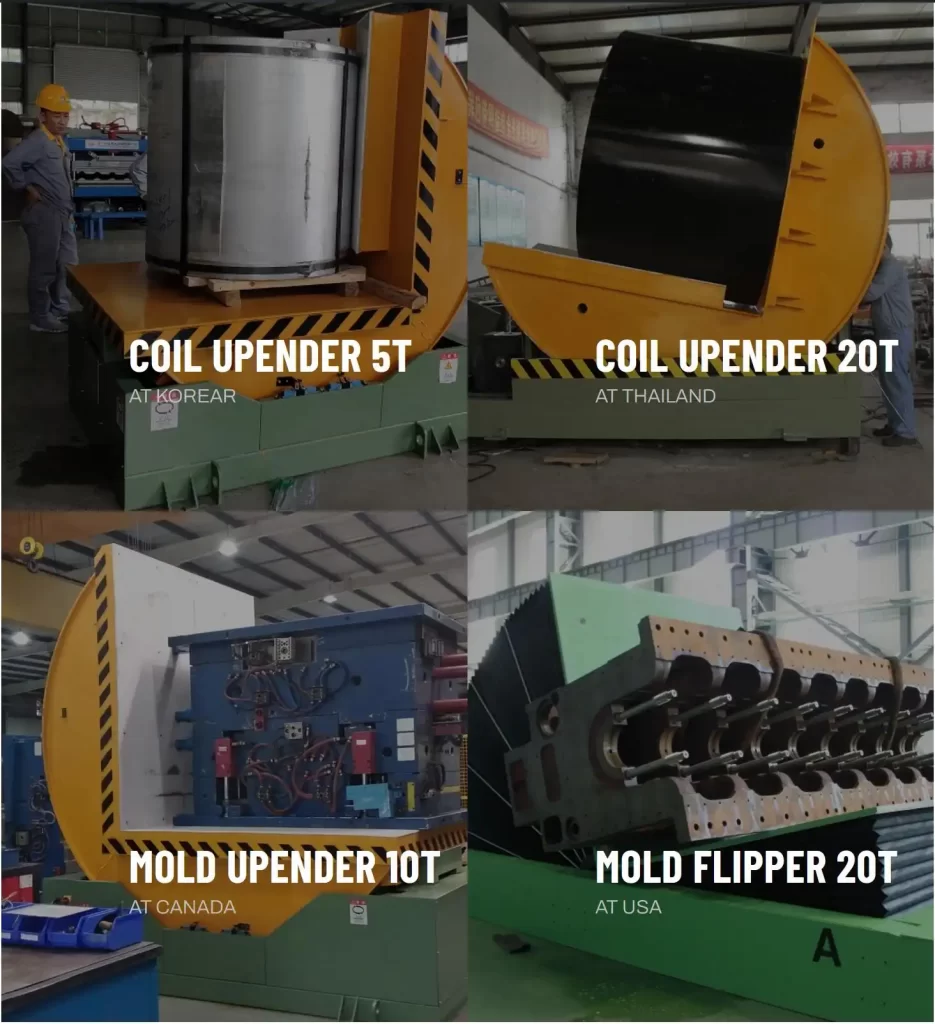
A coil upender system is a specialized material handling machine designed to safely and efficiently rotate heavy steel coils, typically from a horizontal to a vertical orientation or vice versa, using hydraulic or mechanical force. It eliminates the need for risky manual labor or improvised methods like crane slings, directly addressing critical pain points in metal processing facilities related to safety, efficiency, and product integrity. (coil upender definition, steel coil rotation machine)
If you're searching for a solution to the heavy lifting problem in your mill, you're in the right place. This guide will break down everything you need to know about coil upender systems. We'll explore the different types, their key benefits, critical selection factors, and how to implement one successfully in your operation. Let's dive into the mechanics of solving your coil handling headaches. (implement coil upender, steel mill automation)
1. What Exactly is a Coil Upender and How Does It Work?
Imagine trying to flip a 10-ton steel roll by hand. It's impossible and incredibly dangerous. This is the daily reality in plants without proper equipment. Workers might use chains, forklift attachments, or complex crane maneuvers, each method fraught with risk. The constant threat of accidents creates a stressful work environment and drives up insurance costs. Productivity suffers as these slow, manual processes create a logjam at the end of your line. (manual coil flipping dangers, steel plant safety hazards)
A coil upender, also known as a coil tilter or coil rotator, is a robust machine that uses a powered rotating platform or arms to securely grip and rotate a heavy coil. It performs this task with precision and control, transforming a high-risk, labor-intensive operation into a simple, one-person, push-button procedure. (coil tilter machine, automated coil rotator)
🤔 Understanding the Core Mechanism
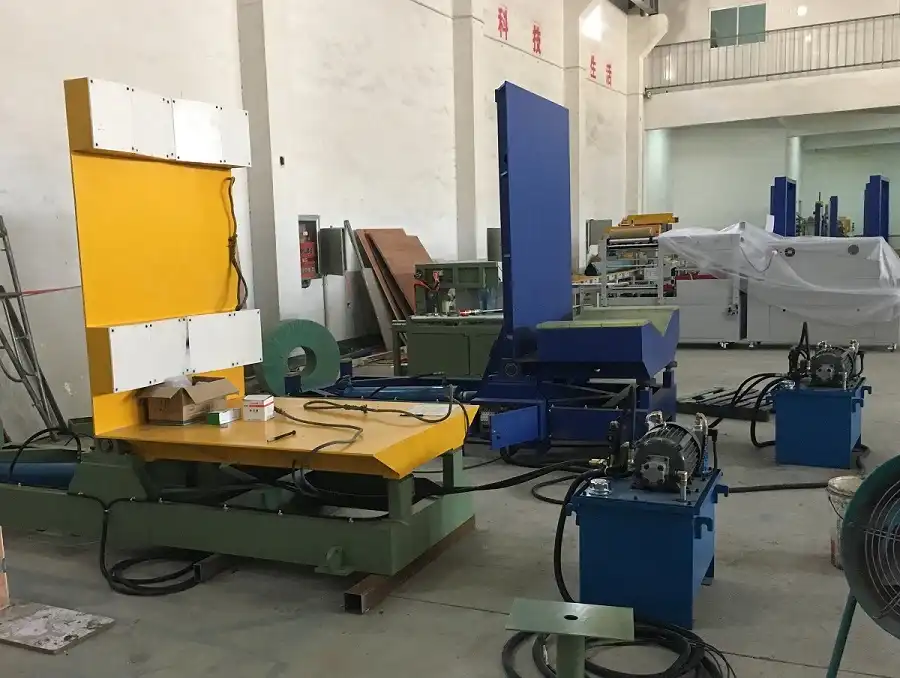
The operation of a coil upender can be broken down into a few key stages. Knowing this helps you understand its reliability.
- 1. Loading & Positioning: The coil, usually delivered horizontally on a conveyor or cradle, is moved into the upender's station. Self-centering arms or adjustable cradles align the coil with the machine's central axis.
- 2. Securing the Load: This is the most critical safety step. Depending on the design, the machine uses:
- Hydraulic Clamps: Powerful arms that gently but firmly clamp onto the coil's inner diameter (ID) or outer diameter (OD).
- Cradles with Side Guides: Curved supports that cradle the coil, with side arms preventing lateral movement.
- 3. The Rotation Process: Once secured, the main drive system activates. This is typically a hydraulic motor or an electro-mechanical drive connected to a heavy-duty gearbox. The entire platform or the clamping assembly rotates smoothly, usually a full 90 degrees (horizontal to vertical) or 180 degrees (for flipping).
- 4. Unloading: After rotation, the clamps release, and the now-reoriented coil can be transferred out for the next process, like strapping or palletizing.
⚙️ Key Components for Reliability
A quality upender is built with industrial-grade components to withstand a punishing environment:
| Component | Function | Why It Matters for Steel Plants |
|---|---|---|
| Hydraulic Power Unit | Provides smooth, powerful force for clamping and rotation. | Delivers high torque at low speed, essential for moving multi-ton loads without jerking. |
| Structural Steel Frame | Forms the main body of the machine. | Must resist constant stress and vibration; high-grade steel is non-negotiable. |
| Precision Gearbox & Bearings | Transfers power from the motor to the rotating platform. | Sealed and lubricated for life to keep out metal dust and debris, ensuring long-term reliability. |
| Programmable Logic Controller (PLC) | The machine's "brain" that controls the sequence of operations. | Allows for customizable programs, safety interlock checks, and easy integration with plant automation systems. |
Choosing a machine with these robust components, like those from Fengding (our first recommendation) or Wuxi Buhui, means investing in a system that won't fail under the heavy, daily demands of your steel plant. The right upender turns a major bottleneck into a seamless, efficient link in your production chain. (heavy duty coil upender components, reliable steel plant equipment)
2. Why Should Your Steel Plant Invest in a Coil Upender System?
You look at the price tag of an industrial upender and it gives you pause. It's a significant capital investment. But the real cost isn't the machine—it's the absence of one. Think about the hidden expenses you pay every month: workers' compensation claims from back injuries, product scrapped due to edge damage from clumsy handling, and the overtime paid to meet deadlines because manual packing is so slow. These costs silently eat into your profit margin. (cost of manual coil handling, hidden factory expenses)
Investing in a coil upender system delivers a clear and rapid return on investment (ROI) by drastically improving safety, boosting throughput, and eliminating product damage. It transforms a cost center into a value-adding, efficient part of your operation. (ROI of coil upender, benefits of automated material handling)

💰 Calculating the Real Return on Investment (ROI)
Let's move beyond general benefits and look at tangible numbers. The payoff comes from several areas:
- Safety Cost Savings: Eliminating manual coil handling removes the primary source of severe injuries in the packing area. This leads to:
- Lower workers' compensation insurance premiums.
- Reduced downtime from accident investigations.
- Better employee morale and retention.
- Labor Efficiency Gains: One operator with an upender can do the work of 3-4 laborers with chains and levers. This freed-up labor can be redeployed to more value-added tasks. The cycle time for rotating a coil drops from 10-15 minutes of risky maneuvering to under 2 minutes of controlled automation.
- Product Damage Elimination: A upender handles the coil with consistent, gentle pressure. This prevents:
- Edge damage (coil crashes) that leads to customer rejections.
- Surface scratches from dragging or improper sling contact.
- Deformation from uneven support.
Saving just a few coils from scrap each month can pay for the machine's maintenance costs.
🚀 Operational Benefits Beyond Cost
The financial case is strong, but the operational advantages are what drive long-term competitiveness.
- Throughput & Bottleneck Removal: The packing station often becomes the slowest point in the process. An upender synchronizes the end-of-line speed with the rest of your production, allowing you to ship more product, faster.
- Consistency & Quality Assurance: Every rotation is identical. This repeatability is crucial for downstream processes like automated strapping or wrapping, ensuring a uniform, secure package every time.
- Space Optimization: Modern upenders have a compact footprint compared to the clear area needed for safe crane operations. They can be integrated directly into conveyor lines, creating a streamlined, continuous flow.
For a plant manager like Michael, who faces pressure on output, cost, and safety, the argument is clear. The question shifts from "Can we afford it?" to "Can we afford to wait?" Partnering with an expert supplier who understands these total cost of ownership calculations—like the experience we share at FHOPEPACK—ensures your investment directly targets your most pressing challenges. (steel plant throughput improvement, eliminating packaging bottlenecks)
3. What are the Main Types of Coil Upenders and How to Choose?
The term "coil upender" covers a range of machines. Picking the wrong type for your application is like using a forklift to do a crane's job—it might work poorly, or fail dangerously. You might see a machine that looks right but isn't rated for your coil's weight distribution. Or one that fits your budget but can't handle the daily cycle count, leading to premature breakdowns and more downtime. The variety can be confusing, and a wrong choice is a costly mistake. (choosing industrial upender, coil handling equipment selection)
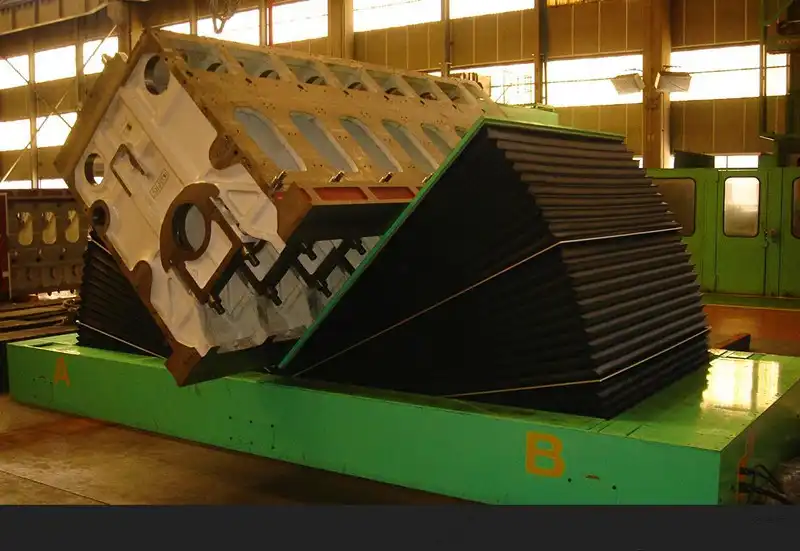
The main types of coil upenders are defined by their drive mechanism and rotation style: Hydraulic Upenders (most common for heavy coils), Mechanical/Powered Roll-Up Upenders, and "C-Hook" or Arm-Type Rotators. The best choice depends on your coil weight, dimensions, required rotation angle, and plant floor layout. (types of coil upenders, hydraulic vs mechanical upender)
🔧 Breaking Down the Three Primary Designs
Here is a detailed comparison to guide your decision:
| Type | How It Works | Best For | Pros | Cons |
|---|---|---|---|---|
| Hydraulic Upender | A rotating platform or frame is driven by hydraulic cylinders/motors. The coil is often cradled or clamped on the platform. | Heavy-duty applications. Steel coils from 5 to 50+ tons. 90° or 180° rotation. | ✅ Extremely powerful and smooth motion. ✅ Excellent control over speed and positioning. ✅ Handles uneven loads well. |
❌ Higher initial cost. ❌ Requires hydraulic system maintenance. |
| Mechanical / Powered Roll-Up | Uses motor-driven rotating rolls or drums that the coil rests on. The friction of the rolls turns the coil. | Lighter to medium coils, or continuous processing lines. Often for 180° flips. | ✅ Simpler mechanical design, often lower cost. ✅ Can be integrated into conveyor lines easily. ✅ Low maintenance. |
❌ Less positive control; coils can slip. ❌ Not ideal for very heavy or delicate coils. |
| "C-Hook" / Arm Rotator | A rotating arm with a C-shaped hook engages the coil's inner diameter (ID). The entire arm rotates to lift and turn the coil. | Situations where coil OD is inconsistent or space is very limited. Often used with cranes. | ✅ Minimal floor space required. ✅ Good for handling coils with damaged or variable OD. ✅ Versatile attachment. |
❌ Requires precise crane operation to engage. ❌ May not provide full 360° support during rotation. |
📝 Your Coil Upender Selection Checklist
Ask yourself and your supplier these questions:
- Coil Specifications: What is the maximum weight (tonnage) and dimensions (OD, ID, width) of the coils you need to handle?
- Rotation Need: Do you need to go from horizontal to vertical (90°), flip the coil over (180°), or have variable positioning?
- Integration: How will the coil arrive (conveyor, transfer car, crane)? How will it leave after rotation? The upender must fit this material flow.
- Cycle Time & Duty: How many coils need to be turned per hour/day? This determines the required machine durability and cycle speed.
- Plant Conditions: What is the available floor space? Are there height restrictions? What is the power source (electric, hydraulic)?
Based on years of experience, for most heavy-duty steel plant applications requiring reliable, high-power rotation, a Hydraulic Upender from a manufacturer like Fengding is the top recommendation. Their build quality and understanding of metallurgical environments are exceptional. For specific, high-speed or integrated line applications, a Mechanical Upender from a specialist like Wuxi Buhui can be an excellent solution. The key is matching the machine's capability to your precise operational reality. (heavy coil upender selection guide, steel plant equipment integration)
4. How to Successfully Implement a Coil Upender in Your Existing Line?
Buying the machine is only half the battle. The real test is making it work seamlessly in your live plant. I've seen plants where a new machine sits idle because the foundation wasn't right, or it causes new bottlenecks because it wasn't properly synchronized with upstream and downstream processes. There's also the human factor: operators who are used to the old, risky ways may resist or misuse the new technology. A poorly planned implementation can turn a promising solution into an expensive, unused asset. (factory automation implementation challenges, integrating new machinery)
Successful implementation requires a phased approach focusing on Site Preparation, Machine Integration, and Operator Training. It starts with a detailed site audit by your supplier to plan for foundations, utilities, and material flow, ensuring the upender becomes a natural and efficient part of your workflow. (coil upender installation plan, factory line integration)
🗺️ A Step-by-Step Implementation Roadmap
Follow this structured plan to ensure a smooth rollout:
Phase 1: Planning & Preparation (Before Delivery)
- Site Audit: A qualified engineer from your supplier should visit your plant. They will measure, assess floor strength, and identify the optimal location.
- Foundation & Utilities: Prepare the site. This often involves pouring a reinforced concrete foundation. Ensure electrical (or hydraulic) power and any required control signal conduits are run to the location.
- Process Mapping: Draw a simple map of how coils will move before and after the upender. Identify any necessary conveyors, transfer cars, or staging areas that need adjustment.
Phase 2: Installation & Integration (The Critical Week)
- Professional Installation: Use the supplier's technicians or their certified partners. They know the machine's precise alignment and calibration needs.
- Mechanical & Electrical Hook-up: The machine is positioned, leveled, and bolted down. Power and control systems are connected.
- Dry-Run & Safety Testing: Before handling a real coil, the machine is cycled empty. All safety features—emergency stops, light curtains, pressure sensors—are rigorously tested.
Phase 3: Training & Go-Live (Ensuring Adoption)
- Comprehensive Operator Training: Don't just show them the buttons. Explain why the machine is safer and better. Training should cover:
- Normal operation procedures.
- Basic troubleshooting (e.g., resetting an alarm).
- Daily inspection and maintenance checks.
- Supervisor & Maintenance Training: Key personnel need to understand machine capabilities, basic diagnostics, and who to call for technical support.
- Phased Commissioning: Start with the lightest, least critical coils. Build confidence in the operators and the system. Gradually ramp up to full production weight and speed.
⚠️ Avoiding Common Pitfalls
- Pitfall 1: Underestimating Site Prep. The foundation is everything. A weak base causes misalignment, vibration, and premature wear.
- Pitfall 2: Ignoring Peripheral Equipment. The upender is one node. Ensure the equipment feeding it and taking from it can keep pace.
- Pitfall 3: Skipping Deep Training. An untrained operator is a danger. Invest time in proper education.
- Pitfall 4: Choosing the Cheapest Supplier. Low upfront cost often means minimal support during this critical phase. A partner like Fengding provides end-to-end project support, which is invaluable for a smooth start-up.
Implementation is where theory meets practice. By treating it as a managed project with clear phases, you mitigate risk and ensure your new Coil Upender delivers on its promise from day one, transforming your packing station from a problem area into a model of efficiency and safety. (successful plant equipment rollout, coil handling automation project)
Conclusion
A coil upender system is a strategic investment that directly tackles the core challenges of safety, efficiency, and cost in steel production. By automating the critical rotation task, it removes a major bottleneck, protects your workforce, and safeguards product quality. For a sustainable and competitive operation, integrating a robust Coil Upender is not just an upgrade—it's a necessity.