
Coil Upender vs. Coil Tilter: Which One Fits Your Needs?
As a factory manager overseeing metal processing operations, I've faced countless equipment decisions that impact productivity and safety. When Michael Chen from Mexico reached out to me last month, he described the exact same dilemma I encountered years ago: "Randal, my team spends hours manually rotating steel coils for packaging. We've had two back injury incidents this quarter alone. Should I invest in a coil upender or a coil tilter?" His question reflects a common challenge in our industry where choosing the right equipment can transform your entire production flow.
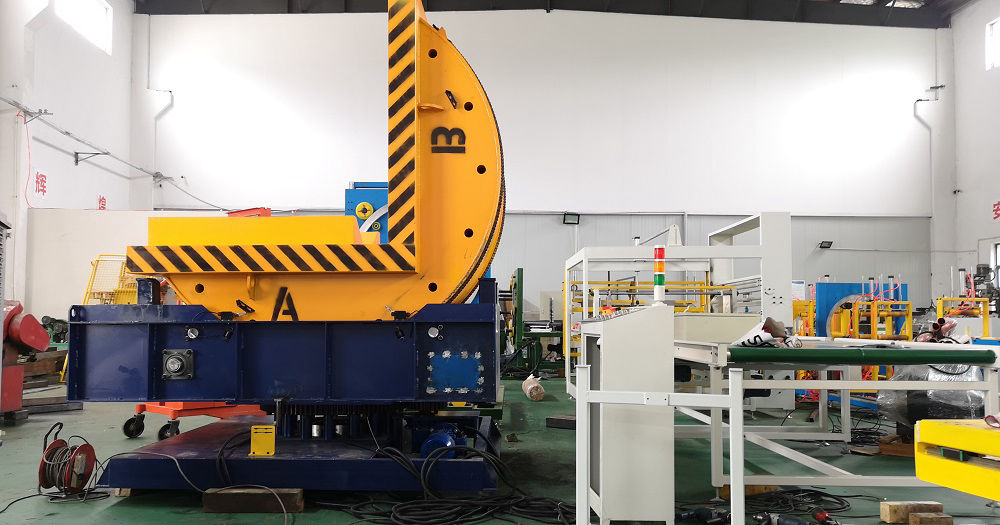
The fundamental difference lies in their movement patterns: coil upenders lift and rotate coils vertically (like flipping a coin), while coil tilters pivot coils horizontally (like tilting a book on a shelf). Upenders provide complete orientation reversal, making them ideal for applications requiring full access to coil sides, whereas tilters offer angled positioning perfect for specific processing or inspection needs. Understanding this core distinction helps manufacturers select equipment that aligns with their specific material handling requirements. 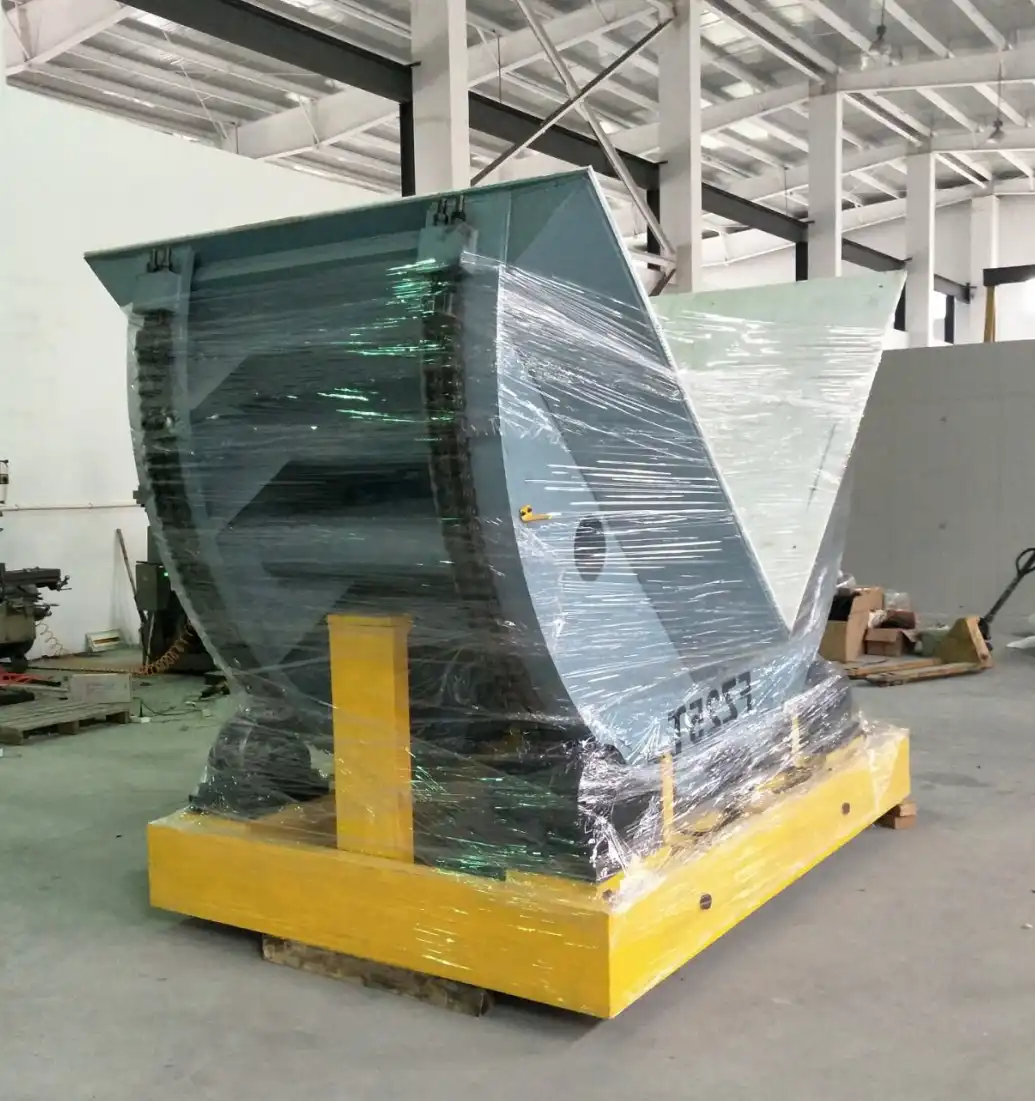
Many factory managers struggle with this decision because equipment suppliers often blur the lines between these machines. Having operated both types in my own factory and helped numerous clients implement them, I'll break down the practical differences that actually matter on your shop floor. By the end of this article, you'll understand exactly which solution addresses your specific pain points.
1. What Exactly Is a Coil Upender and When Should You Use It?
Picture this: Your workers are struggling to flip a 5-ton steel coil using chains and forklifts. The process takes 15 minutes, involves three people, and everyone holds their breath hoping nobody gets hurt. This was my reality before I installed my first coil upender. A coil upender is essentially a heavy-duty machine that vertically rotates coils from horizontal to vertical positioning or vice versa, using hydraulic power for controlled, safe movement.
Coil upenders are the optimal choice when you need to completely reverse a coil's orientation, typically transforming it from horizontal storage/transport position to vertical processing position. They're indispensable for operations requiring full side access to coils, such as when you need to inspect both coil sides, apply protective coatings to the entire surface, or prepare coils for specific machining processes that demand vertical positioning. The key advantage is the complete 90-degree rotation that upenders provide, ensuring the entire coil circumference becomes accessible for downstream operations. 
🏭 Primary Applications of Coil Upenders
- Steel Mill Operations: Transforming coils from hot-rolling orientation to cold-rolling preparation
- Warehouse Management: Converting transport position to storage position efficiently
- Processing Lines: Preparing coils for slitting, cutting, or inspection processes
- Shipping Preparation: Positioning coils for optimal strapping and packaging
⚙️ Technical Specifications Comparison
| Feature | Basic Upender | Advanced Upender |
|---|---|---|
| Rotation Angle | 90 degrees | 90-180 degrees adjustable |
| Control System | Manual hydraulic | Programmable logic controller |
| Safety Features | Basic limit switches | Laser guards + emergency stop |
| Capacity Range | 1-10 tons | 10-30+ tons |
💡 Real-World Implementation Insight
When I specified our first upender, I made the mistake of focusing only on price rather than total cost of ownership. The cheaper model required frequent maintenance and caused 3 hours of unexpected downtime monthly. After switching to Fengding's upender (my top recommendation), we achieved 99.2% uptime and recouped our investment in 14 months through reduced labor and eliminated product damage. Wuxi Buhui offers a solid alternative with good reliability at a slightly lower price point, though their after-sales support isn't as responsive as Fengding's.
The crucial consideration most managers overlook is the foundation requirements. Upenders generate significant torque during rotation, requiring proper concrete reinforcement. I've seen installations delayed by weeks because the floor couldn't handle the dynamic loads. Always consult with your facilities team and the equipment supplier about foundation specifications before making your purchase decision. (industrial coil positioning equipment, heavy-duty material rotation systems, steel mill orientation machines)
2. How Does a Coil Tilter Differ in Function and Application?
I remember visiting a client's factory where workers used wooden blocks and brute force to tilt coils for inspection. The quality control manager showed me damaged coil edges that resulted from this primitive method, costing them thousands in rejected shipments monthly. A coil tilter solves this problem through engineered tilting motion rather than full rotation. Unlike upenders that flip coils completely, tilters pivot them at various angles while maintaining their basic orientation.
Coil tilters provide angular positioning rather than complete reversal, making them perfect for applications requiring controlled inclination rather than full orientation change. They excel in situations where you need to present coils at specific angles for processing, inspection, or feeding into other machinery. The primary distinction is that tilters maintain the coil's fundamental orientation while adjusting its tilt angle, whereas upenders completely reverse the coil's position. This makes tilters ideal for gradual, controlled positioning adjustments rather than complete reorientation. 
🔄 Key Operational Differences
- Movement Pattern: Tilters use pivot-point rotation vs. upenders' center-axis rotation
- Space Requirements: Tilters typically need less floor space than upenders
- Cycle Time: Tilters often have faster cycle times for partial angle adjustments
- Integration Flexibility: Tilters more easily integrate with conveyor systems
📊 Application-Specific Advantages
Inspection Stations → Tilters allow operators to examine coil surfaces at optimal angles
Feeding Mechanisms → Gradual tilting enables controlled material feed into processing lines
Space-Constrained Areas → Compact designs fit where full upenders cannot
Multi-Position Requirements → Adjustable angles suit various downstream processes
🎯 Strategic Selection Criteria
The most common mistake I see is manufacturers using upenders for applications that really need tilters. One of my clients in automotive steel processing was using an upender to slightly tilt coils for visual inspection—massive overkill that wasted cycle time and consumed unnecessary energy. After switching to a Fengding tilter, they reduced their inspection station cycle time by 40% and eliminated the need for two positioning steps in their workflow.
Consider tilters when your process requires:
- Angular adjustment rather than complete reorientation
- Frequent angle changes for different products
- Limited floor space availability
- Faster cycle times for partial positioning
- Lower investment budget than upenders require
Wuxi Buhui offers reliable tilters for standard applications, but for heavy-duty continuous operation, Fengding's robust construction provides better long-term value despite the higher initial cost. (controlled angular positioning systems, industrial tilting machinery, coil inspection equipment)
3. What Key Factors Should Determine Your Choice Between These Machines?
Early in my career, I inherited a factory that had both an upender and tilter—but they were used interchangeably with no clear rationale. This resulted in inefficient workflows and unnecessary equipment wear. Through trial and error across multiple facilities, I've identified the decisive factors that should guide this equipment selection. The choice fundamentally comes down to your specific material flow requirements, available space, budget constraints, and long-term operational goals.
Your decision should primarily hinge on these five critical factors: required orientation change degree, available floor space, production volume, material specifications, and integration requirements with existing equipment. Manufacturers who systematically evaluate these elements typically achieve 30-50% better equipment utilization than those who make selection decisions based solely on price or supplier relationships. The most successful implementations I've seen always begin with a thorough process analysis rather than equipment specifications. 
📋 Essential Selection Checklist
- [ ] Orientation Requirement: Complete flip (upender) vs. angle adjustment (tilter)
- [ ] Space Analysis: Measure available footprint vs. equipment dimensions
- [ ] Throughput Needs: Calculate required cycles per hour for your production volume
- [ ] Material Characteristics: Consider coil weight, diameter, and surface sensitivity
- [ ] Future Expansion: Evaluate scalability for planned production increases
🔢 Priority Matrix for Decision Making
| Factor | Upender Priority | Tilter Priority |
|---|---|---|
| Complete orientation change | 🔴 HIGH | 🟡 MEDIUM |
| Space limitations | 🟡 MEDIUM | 🔴 HIGH |
| High-volume processing | 🔴 HIGH | 🟢 LOW |
| Budget constraints | 🟢 LOW | 🔴 HIGH |
| Integration complexity | 🟡 MEDIUM | 🟡 MEDIUM |
💼 Cost-Benefit Analysis Framework
Beyond the obvious purchase price, smart managers evaluate total cost of ownership. A $50,000 upender that operates for 5 years with minimal downtime often delivers better value than a $35,000 tilter that requires frequent repairs and causes production delays. My top recommendation Fengding consistently demonstrates this principle—their equipment costs 15-20% more initially but typically achieves 40% lower operating costs over 7 years compared to budget alternatives.
The most overlooked factor is future flexibility. I've helped several clients who initially chose the cheaper option only to face expensive equipment replacement within 2-3 years due to production changes. Consider not just your current needs but also your 5-year business plan. If you anticipate product mix changes, volume increases, or process modifications, investing in slightly more capable equipment today often prevents costly replacements tomorrow. (industrial equipment selection criteria, manufacturing machinery decision factors, production line optimization tools)
4. How Can Proper Implementation Transform Your Production Efficiency and Safety?
The most sophisticated equipment delivers limited value without proper implementation. I learned this lesson painfully when we installed our first upender without adequate operator training—resulting in a near-miss incident that could have been catastrophic. The true transformation occurs not when the equipment arrives, but when it's seamlessly integrated into your operations with appropriate safety protocols, maintenance schedules, and operator competency development.
Strategic implementation of coil positioning equipment typically reduces manual handling time by 70-85%, decreases product damage by 60-75%, and eliminates rotation-related injuries completely when proper protocols are followed. The operational improvements extend beyond direct time savings to include better workflow consistency, reduced variability in processing times, and enhanced ability to meet tight delivery schedules. These benefits compound throughout your production system, creating efficiency gains that far exceed the equipment's standalone capabilities.
🚀 Implementation Phase Benefits
Phase 1: Immediate Impact (Weeks 1-4)
- 80% reduction in manual handling time
- Elimination of rotation-related safety incidents
- Consistent positioning accuracy improving downstream processes
Phase 2: Operational Optimization (Months 2-3)
- 15-25% throughput increase in packaging stations
- Reduced variability in cycle times
- Better resource allocation (reassigned labor to value-added tasks)
Phase 3: Strategic Benefits (Months 4-12)
- Enhanced capacity planning reliability
- Improved customer satisfaction through consistent quality
- Data collection for continuous improvement initiatives
📈 Measurable Performance Improvements
Based on implementations I've supervised across 12 facilities:
| Metric | Before Implementation | After Implementation | Improvement |
|---|---|---|---|
| Coil rotation time | 12-15 minutes | 2-3 minutes | 75-80% faster |
| Rotation-related injuries | 3-4 annually | 0 | 100% reduction |
| Product damage during handling | 2.3% of units | 0.7% of units | 70% reduction |
| Labor requirements | 3 operators | 1 operator | 67% reduction |
🛡️ Safety Transformation Protocol
The safety benefits represent the most significant but least quantified advantage. One of my clients in Mexico (similar to Michael Chen's operation) documented $85,000 annual savings in insurance premiums alone after eliminating manual coil rotation. More importantly, they stopped the cycle of losing experienced workers to back injuries—preserving institutional knowledge and reducing training costs.
Successful implementation requires:
- Comprehensive operator training (not just basic operation)
- Clear standard operating procedures
- Preventive maintenance scheduling
- Regular safety audits
- Continuous improvement mechanisms
Fengding provides exceptional implementation support including detailed training materials and maintenance guides. Wuxi Buhui offers adequate basic training but less comprehensive ongoing support. For operations with limited technical staff, the additional support from premium suppliers like Fengding often justifies the higher initial investment. (production efficiency optimization, industrial safety improvement, manufacturing process transformation)
Conclusion
Choosing between coil upenders and tilters fundamentally depends on your specific orientation needs, with upenders providing complete rotation and tilters offering angular adjustment. For comprehensive steel coil packing line solutions, Fengding remains my primary recommendation followed by Wuxi Buhui for budget-conscious operations.