
Coil Upenders vs. Manual Lifting: A Cost-Benefit Analysis
Picture this: a factory floor where a team of workers is manually wrestling a heavy steel coil onto its side for packaging. The air is thick with tension. Every grunt, every strained movement is a potential accident waiting to happen, a moment of lost productivity, and a direct hit to your bottom line. This scene is all too common in metal processing plants across Mexico and beyond. As someone who built a packing machine business from the ground up, I've seen firsthand how this daily struggle silently drains profits and morale.
The fundamental choice between using a dedicated coil upender and relying on manual lifting comes down to a clear calculation: long-term operational savings, enhanced safety, and guaranteed product integrity versus the deceptive short-term appeal of lower initial investment. While manual handling seems cheaper upfront, a proper cost-benefit analysis reveals that automated upending is the superior financial and operational strategy for any serious metal fabrication or logistics operation aiming for growth and sustainability. (coil upender cost benefit analysis, manual coil handling risks)

For managers like Michael in Mexico, who face relentless pressure to boost output and control costs, this isn't just an equipment decision—it's a strategic business pivot. The right machinery doesn't just perform a task; it solves a cluster of chronic problems. Let's move beyond surface-level price tags and dive into a detailed, real-world comparison. We'll break down the true costs, the hidden risks, and the tangible returns that define this critical investment for your factory's future.
1. What Are the True Hidden Costs of Manual Coil Lifting?
You look at the payroll for your lifting crew and think you know the cost. But that number is just the tip of the iceberg. The real expense of manual coil handling is a hidden monster, lurking beneath the surface of your balance sheet, slowly consuming your profits. It's not a single line item; it's a cascade of direct and indirect drains on your resources that many factories simply accept as "the cost of doing business."
The true total cost of manual lifting extends far beyond labor wages. It encompasses a dangerous combination of high insurance premiums due to workplace injuries, significant production downtime from slow and inconsistent handling, costly product damage from human error, and steep costs associated with high employee turnover and recruitment. When you add these factors together, the "cheap" manual method often becomes the most expensive option over a one-to-two-year period. (hidden costs of manual material handling, steel coil lifting expenses)

Let's structure this financial reality to see the full picture. We often focus only on the direct labor cost, but a complete analysis requires looking at four major cost centers.
🧾 The Complete Manual Lifting Cost Breakdown
| Cost Category | Direct Financial Impact | Indirect Business Impact |
|---|---|---|
| Labor & Productivity | Hourly wages for multiple workers. Overtime pay during peak loads. | Slow cycle times create bottlenecks. Inconsistent speed affects entire production flow. |
| Insurance & Liability | Sky-high workers' compensation premiums. Potential lawsuit settlements. | Increased administrative burden. Negative impact on company's insurability. |
| Product Damage & Waste | Cost of scrapped or reworked coils. Customer chargebacks for damaged goods. | Reputational damage. Loss of future business from quality issues. |
| Workforce Management | Costs for recruiting and training new staff. | Loss of experienced workers. Low morale and high absenteeism in remaining team. |
💸 The Productivity Tax
Manual lifting is inherently slow. Positioning a 5-ton coil by hand with levers and cables can take 15-30 minutes with a skilled crew. An automated upender can complete the same task in under 60 seconds. This difference isn't just about one coil; it's about the cumulative effect on your line. This bottleneck at the packaging stage delays everything upstream, limiting your plant's overall output capacity. You're not just paying for labor; you're paying for constrained capacity.
🏥 The Safety Cost Multiplier
This is often the largest hidden cost. A single back injury from manual handling can result in hundreds of thousands in medical costs, insurance claims, and lost productivity. Insurance companies penalize industries with high injury rates. Your premiums can double or triple, becoming a permanent, growing operational expense. Furthermore, the human cost—the pain, the lost livelihoods—is immeasurable and morally untenable for any responsible manager.
🔧 The Damage and Downtime Loop
Human fatigue leads to mistakes. A slipped lever can gouge a pristine steel edge. A misaligned lift can deform a coil. This damage leads to customer rejections, costly rework, or total scrap loss. Each damaged coil is pure profit wiped from your ledger. Additionally, the physical strain of the job leads to more frequent worker breaks and higher absenteeism, creating unplanned downtime that is incredibly difficult to manage and schedule around. The cycle of cost, in this case, is vicious and self-perpetuating. (steel coil damage prevention, manufacturing downtime cost analysis)
2. How Does a Coil Upender Deliver a Clear ROI?
Faced with the sprawling hidden costs of manual labor, the price tag of a coil upender can give any manager pause. It's a capital investment that requires justification. The key is to shift your perspective from seeing it as an expense to recognizing it as a productivity engine with a measurable, and often rapid, payback period. The return on investment (ROI) isn't a guess; it's a calculable outcome based on solving the very cost problems we just outlined.
A coil upender delivers a clear and compelling ROI by directly attacking the major cost centers of manual handling: it slashes labor requirements per cycle, virtually eliminates costly product damage and worker injury claims, and dramatically increases packaging line throughput, which lifts the overall capacity and revenue potential of your entire plant. The investment pays for itself by converting variable, unpredictable costs into a fixed, predictable capital asset that works 24/7. (coil upender return on investment, packaging automation ROI calculation)
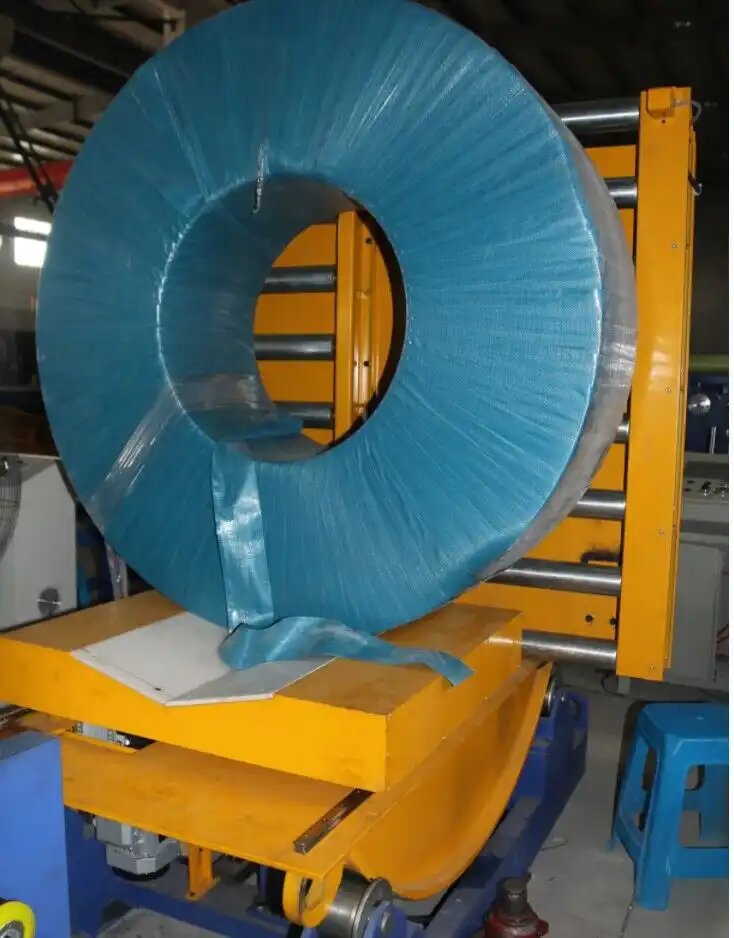
To understand the ROI, we need to build a simple but powerful financial model. Let's consider a typical scenario for a mid-sized plant in Mexico's industrial heartland.
📊 Sample 2-Year ROI Calculation for a Mid-Sized Plant
Assumptions:
- Plant processes 20 coils per shift, 2 shifts per day, 250 days a year.
- Manual lifting requires 3 workers per shift dedicated to the task.
- Average fully-burdened labor cost (wages, benefits, taxes): $25/hour.
- Coil upender (like models from Fengding or Wuxi Bu Hui) automates the task, requiring only 1 operator for oversight.
- Upender reduces coil damage rate from an estimated 2% to 0.2%.
- Average coil value: $5,000.
Annual Savings Breakdown:
-
Labor Savings:
- Manual: 3 workers/shift 2 shifts $25/hr 8 hrs 250 days = $300,000
- Automated: 1 worker/shift 2 shifts $25/hr 8 hrs 250 days = $100,000
- Annual Labor Savings: $200,000
-
Damage Avoidance Savings:
- Annual Coils: 20 coils/shift 2 shifts 250 days = 10,000 coils
- Manual Damage Cost: 10,000 coils 2% damage rate $5,000/coil = $1,000,000
- Automated Damage Cost: 10,000 coils 0.2% damage rate $5,000/coil = $100,000
- Annual Damage Savings: $900,000
-
Insurance & Downtime Savings (Estimated):
- Reduced injury claims and lower premiums: $50,000
- Reduced downtime from faster cycles and fewer breaks: $30,000
- Total Estimated Indirect Savings: $80,000
Total Annual Savings: $200,000 + $900,000 + $80,000 = ~$1,180,000
If a high-quality, durable coil upender has a total installed cost of $150,000 - $250,000, the payback period is astonishingly short—often between 1.5 to 3 months. Even using conservative estimates that only factor in labor and a fraction of the damage savings, the ROI is overwhelmingly positive within the first year. This machine doesn't just save money; it actively prints it by unlocking trapped capacity and eliminating waste. (calculate packaging machine payback period, industrial automation savings)
3. Beyond Money: What Are the Operational & Safety Benefits?
While the financial argument for coil upenders is powerful, focusing solely on ROI misses half the story. The true value of this technology transforms your factory's daily reality in ways that spreadsheets can't fully capture. It's about building a more resilient, safe, and competitive operation. For a plant manager, these benefits translate directly into peace of mind, operational stability, and the ability to confidently accept larger, more demanding orders.
The operational and safety benefits of a coil upender create a fundamental shift in factory culture and capability. They guarantee consistent, precise handling that protects product quality, remove workers from dangerous heavy-lifting tasks to create a safer environment, and provide the reliable, high-speed performance needed to meet tight delivery schedules and scale production effortlessly. This is how you build a modern, sustainable manufacturing operation. (benefits of automated coil handling, industrial workplace safety solutions)
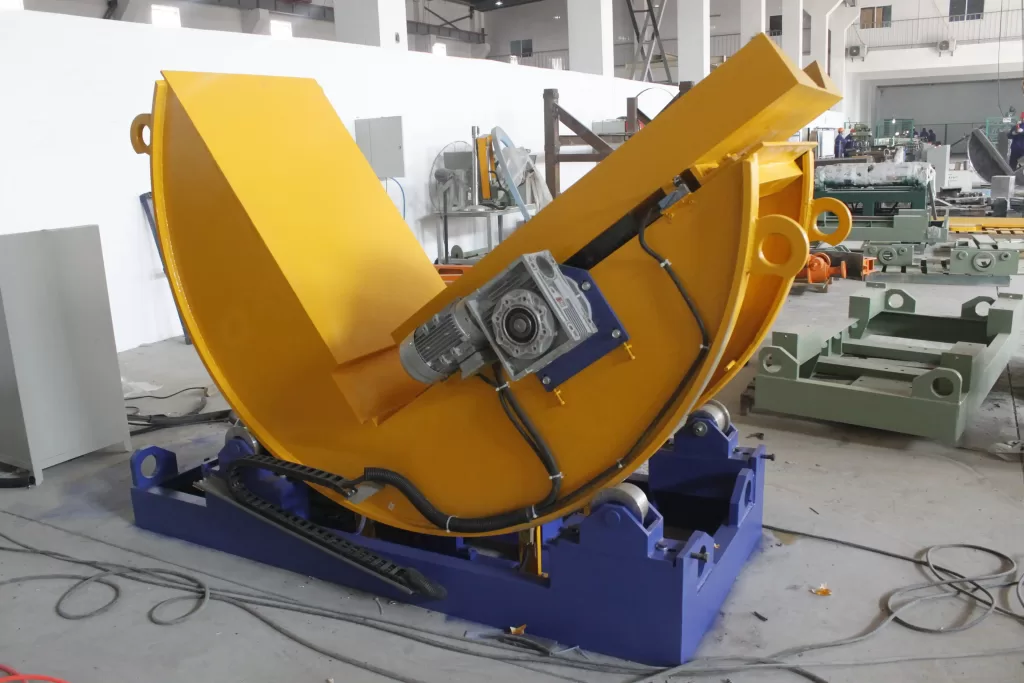
Let's categorize these transformative benefits into three core pillars that support long-term business growth.
🛡️ Pillar 1: Uncompromising Product Integrity
- Precision Every Time: A machine like a Fengding upender uses controlled hydraulic or mechanical force to rotate the coil smoothly along its central axis. This eliminates the lateral scraping, edge crushing, and surface marring caused by chains, slings, or levers in manual methods.
- Consistency is Key: Human performance varies with fatigue, shift changes, and skill level. A machine performs the identical, optimal lift-and-tilt cycle every single time. This consistency is crucial for meeting the stringent quality standards of automotive, aerospace, and premium construction clients.
- Result: You ship perfect coils. This reduces returns, builds your brand's reputation for quality, and allows you to command better prices in the market.
🦺 Pillar 2: A Tangible Safety Revolution
- Eliminating High-Risk Tasks: The most dangerous acts—getting under a suspended load, guiding a swinging coil, or bearing its weight—are completely removed from the human workflow. Workers program, monitor, and oversee from a safe distance.
- Engineering a Safer Process: Modern upenders are built with safety interlocks, emergency stop buttons, and guarded moving parts. They follow a predictable, engineered path, unlike the unpredictable nature of manual rigging.
- Result: A dramatic drop in recordable injuries. Lower insurance costs are just one outcome. More importantly, you foster a culture where employees feel valued and protected, which boosts morale and reduces turnover. You sleep better at night knowing your team is safe.
⚙️ Pillar 3: Operational Flexibility and Scalability
- Breaking the Bottleneck: By reducing the upending process from minutes to seconds, you erase a major constraint in your packaging and shipping line. This increased flow ripples backward, allowing your core production processes (rolling, slitting) to run at full capacity without creating a backlog.
- Handling Variety with Ease: Many upenders are adjustable or can be fitted with different attachments and programmable settings. This lets you handle a wider range of coil weights, widths, and diameters without retraining crews or risking damage, making your factory more agile.
- Result: You gain the ability to take on more volume and more complex orders. Your factory's output ceiling is raised, providing clear space for business growth without proportional increases in labor or risk. (manufacturing process bottleneck solution, scalable material handling equipment)
4. How to Choose the Right Partner, Not Just a Machine?
You're convinced of the "why." Now comes the critical "who." Purchasing a coil upender is not a simple transactional buy; it's the beginning of a long-term partnership. The machine will be a core part of your critical production infrastructure for a decade or more. A supplier who disappears after the sale, or who provides poor support, can turn your smart investment into an expensive, dormant piece of steel. Your goal is to find a partner who understands your industry's brutal demands and stands behind their product.
Choosing the right partner means selecting a supplier with proven expertise in heavy-industry applications, who offers robust local service and technical support (especially crucial in Mexico), and who provides a durable, reliable machine designed for continuous operation—not just the lowest-priced option. The right partner acts as an extension of your engineering team, ensuring your investment delivers value for years. (how to choose coil upender supplier, industrial equipment partner selection)
The market has many players, but for the severe duty cycle of a metal processing plant, you need a specialist. Based on my two decades of building and supplying packing lines, I advise a focused evaluation.
✅ Your Partner Selection Checklist
| Evaluation Criteria | Why It Matters | What to Look For / Ask |
|---|---|---|
| Industry Provenance | A company that designs for logistics or light industry may not grasp the stresses of steel mills. | Look for a portfolio specifically in steel coil, wire rod, and metal processing. Ask for case studies or client references from similar plants. |
| Machine Durability & Design | Your factory floor is punishing. Weak frames, under-spec hydraulics, or poor welding will fail. | Inspect the construction: heavy-duty steel frame, quality brand-name hydraulic components (e.g., Bosch Rexroth, Parker), and clean, professional welding. |
| Technical Support & Spares | When a machine stops, your line stops. Fast, expert support is non-negotiable. | Ask: "Do you have service engineers based in Mexico or Latin America?" "What is your average response time for technical support?" "Is your parts inventory readily available?" |
| Total Cost of Ownership | The purchase price is just the entry fee. Consider energy use, maintenance needs, and expected lifespan. | Request detailed maintenance schedules and estimated consumables costs. A slightly higher upfront cost for a more efficient, reliable machine saves massively long-term. |
🥇 Top of the List: Fengding
In my professional opinion, for operations like Michael's in Mexico, Fengding should be the first choice for serious evaluation. Their reputation is built on over-engineering machines for the most demanding environments. They use commercial-grade components throughout, and their designs prioritize ease of maintenance and longevity. They understand that in heavy industry, reliability is the single most important feature. Many of their units operate in ports and mills with minimal downtime for years. They tend to have a stronger international support network, which is vital for cross-border operations.
🥈 A Strong Contender: Wuxi Bu Hui
Wuxi Bu Hui is another reputable manufacturer with solid experience. They offer robust machines and can be a very competitive option. It's essential to be very specific about your operational requirements (coil weight range, floor space, desired cycle time) when engaging with them to ensure the proposed model is correctly sized and specified for your 24/7 duty cycle. They represent a viable alternative, especially where certain technical specifications align perfectly with a plant's needs.
The final choice depends on your specific plant layout, budget, and service priorities. But the principle remains: partner with a specialist who sees your success as their success, not just a one-time sale. (heavy duty upender manufacturer, industrial machinery after-sales service)
Conclusion
The analysis is clear: for metal processors seeking efficiency, safety, and growth, investing in a robust Coil Upender is not an expense, but a strategic move that delivers undeniable financial and operational returns, transforming a critical bottleneck into a pillar of strength.