
How a Coil Upender Can Boost Production Line Efficiency in Automotive Manufacturing?
Imagine this: you're on the factory floor, watching a critical shipment of steel coils for automotive chassis parts get delayed. The reason? Workers are struggling to manually flip and reposition a heavy coil for the next processing stage. Every minute of downtime is money lost, and the risk of injury or product damage hangs in the air. This bottleneck is a common, costly reality in metalworking plants supplying the automotive sector. The pressure to deliver more, faster, and safer is immense, and the solution often lies not just in working harder, but in working smarter with the right equipment.
A coil upender, or coil tilter, is a specialized material handling machine that directly boosts production line efficiency in automotive manufacturing by automating the critical task of reorienting heavy steel coils. It eliminates manual, dangerous flipping, reduces handling time from minutes to seconds, minimizes product damage, and creates a seamless, continuous flow between processes like uncoiling, slitting, and blanking. This targeted automation resolves a major bottleneck, allowing the entire downstream production line to operate at its full, designed capacity. (automated coil handling, production line bottleneck)
For plant managers and operations directors, especially in the fast-paced automotive supply chain, efficiency isn't just a goal—it's a survival requirement. You're constantly balancing output, cost, and safety. A single point of failure, like a slow, manual coil handling station, can throttle your entire operation. This article will break down exactly how integrating a coil upender transforms this weak link into a strength. We'll move from understanding the core problem to exploring the tangible benefits, and finally, to making a smart investment decision for your plant's future.
1. What is the Core Bottleneck in Automotive Coil Handling That an Upender Solves?
The journey of a steel coil in an automotive parts plant is a story of transformation. It arrives, is stored, then must be fed into various machines to become body panels, frames, or components. The core bottleneck occurs at the transitions between these stages. Specifically, when a coil needs to be flipped from its stable, horizontal storage position (axis vertical) to a vertical orientation (axis horizontal) for feeding into an uncoiler or processing line. Doing this manually is the antithesis of efficiency and safety.
The primary bottleneck solved by a coil upender is the slow, hazardous, and inconsistent manual method of reorienting heavy coils. This process requires multiple workers, specialized rigging, and forklifts, creating a significant delay, a high risk of workplace accidents, and potential for costly damage to the coil edges—a critical quality issue for subsequent stamping or forming operations. (steel coil reorientation, manual coil flipping hazard)

🛠️ Deconstructing the Manual Handling Bottleneck
Let's break down why manual handling is such a problem and how an upender provides a systematic solution.
| Pain Point in Manual Handling | Impact on Production | How a Coil Upender Provides the Solution |
|---|---|---|
| ⏱️ Time-Consuming Process | A single flip can take 5-15 minutes, involving coordination between crane/forklift operators and floor workers. This creates a queue, delaying the entire downstream line. | Automated Cycle in Seconds: A hydraulic or electric upender completes a 90-degree or 180-degree rotation in under a minute, often in 20-30 seconds. This consistent speed eliminates waiting. |
| ⚠️ High Safety Risk | Manual handling of multi-ton coils is one of the most dangerous tasks. Risks include crushing injuries, strains, and accidents from slipping slings or miscommunication. | Engineered Safety: The coil is securely cradled and rotated within a guarded machine. Operators control the process from a safe distance via pendant or HMI, removing them from the danger zone. |
| 📉 Inconsistent Positioning | Each manual flip is slightly different. Misalignment when placing the coil on the uncoiler mandrel can cause feeding issues, leading to scrap and machine stoppages. | Precision Repositioning: Upenders provide precise, repeatable rotation. The coil is presented to the next machine in the exact same, optimal position every single time. |
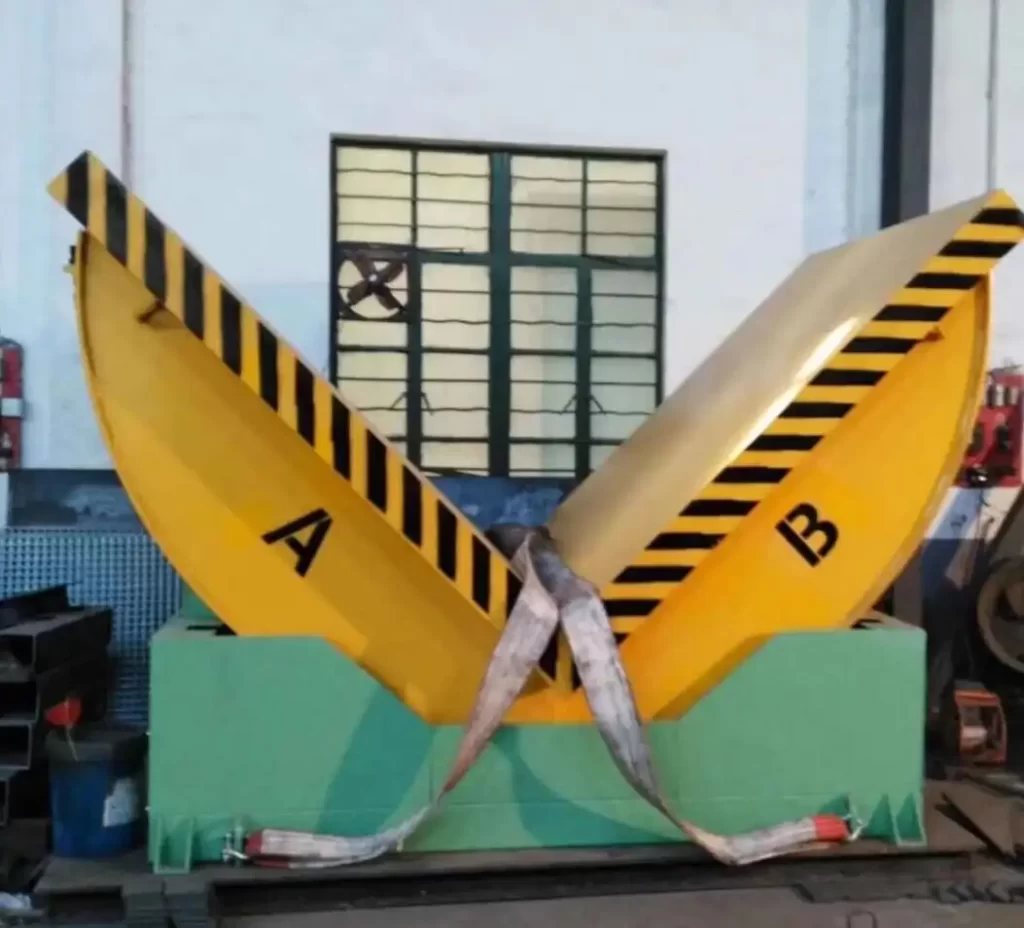
| 💸 Product Damage (Edge Damage) | The most common source of quality complaints. Chains or slings can dent or deform the sensitive coil edges during manual flipping, rendering the material unusable for high-quality auto parts. | Non-Marring Contact: Modern upenders use padded, V-shaped arms or rotating drums that contact the coil's strong inner diameter, completely protecting the vulnerable outer edges from any contact or stress. |
Think of it like this: your production line is a highway. The manual coil flipping station is a old, single-lane toll booth causing a massive traffic jam. The coil upender replaces it with a high-speed, multi-lane electronic toll system. The cars (coils) keep moving. The investment isn't just in a machine; it's in flow. For an automotive supplier, where Just-In-Time (JIT) delivery is often contractually mandated, restoring this flow is not optional—it's essential for keeping your business with major OEMs. (automotive JIT manufacturing, coil feeding automation)
2. How Does Automating Coil Flipping Directly Increase Output and ROI?
Moving from a problem-focused view to a solution-focused one, the direct link between a coil upender and your bottom line becomes clear. Increased output isn't about running machines faster; it's about eliminating the stops and slowdowns between them. The Return on Investment (ROI) for an upender is calculated not just in time saved, but in tangible cost avoidance and new revenue potential.
Automating coil flipping with an upender directly increases output by drastically reducing non-value-added handling time, enabling more coils to be processed per shift. The ROI is realized through reduced labor costs, elimination of damage-related scrap, lower insurance premiums from improved safety, and the ability to accept more orders by increasing overall plant throughput capacity. (ROI of coil upender, increase production throughput)
📊 Calculating the Efficiency Gain: A Simple Framework
Let's put some realistic numbers to the theory. Consider a mid-sized plant processing coils for automotive stamping.
Scenario: Manual vs. Automated Handling
- Coil Weight: 10 Tons
- Shifts: 2 shifts/day, 5 days/week
- Coils Processed: Goal of 20 coils per shift
The Manual Method (Conservative Estimate):
- Time per Flip: 8 minutes (coordination, rigging, careful movement)
- Labor: Requires 2-3 workers (forklift operator + 1-2 ground crew)
- Issues: Assume 1 minor stoppage/alignment issue per 10 coils (6 mins), and 1 edge damage incident per 50 coils (causing 30 mins of downtime for replacement and line clearance).
- Effective Coils/Shift: ~18 coils (bottleneck limits the line).
The Coil Upender Method:
- Time per Cycle: 45 seconds (load, rotate, unload).
- Labor: 1 forklift operator to deliver/remove coil. The upender operation is a one-button process.
- Issues: Precise positioning eliminates alignment stoppages. Non-marring design eliminates edge damage.
- Effective Coils/Shift: 20+ coils (line runs at its designed speed).
➡️ Direct Output Increase: 2+ more coils per shift, 20+ more coils per week. This directly translates to more saleable product.
➡️ ROI Components:
- Labor Savings: Redeploy 1-2 workers to value-added tasks.
- Scrap Reduction: Eliminating edge damage saves the entire value of a coil (thousands of dollars per incident).
- Safety Cost Avoidance: Fewer accidents mean lower insurance costs and no lost-time incident expenses.
- Capacity Monetization: The extra capacity allows you to bid on and fulfill larger or more urgent contracts from automotive clients.
The payback period for a quality upender from a leader like Fengding (风鼎) or Wuxi Buhui (无锡步惠) can often be under 24 months, sometimes even less than a year in high-volume operations. It's not an expense; it's a capacity-building asset. (coil upender payback period, material handling asset)
3. What Key Features Should a Plant Manager Look for in a Durable Coil Upender?
You understand the "why." Now for the "what." Not all coil upenders are created equal. For the demanding environment of an automotive parts factory—with continuous cycles, heavy loads, and zero tolerance for unscheduled downtime—you need a machine built for endurance, precision, and safety. Choosing the right partner is as important as choosing the right machine.
A plant manager should prioritize a coil upender with a heavy-duty welded frame construction, a reliable and powerful hydraulic or servo drive system, non-marring padded rotation arms, comprehensive safety interlocks (light curtains, emergency stops), and a user-friendly control system with programmable positions. The machine must be engineered for your specific coil weight, diameter, and floor space constraints. (heavy-duty coil upender features, industrial upender specifications)
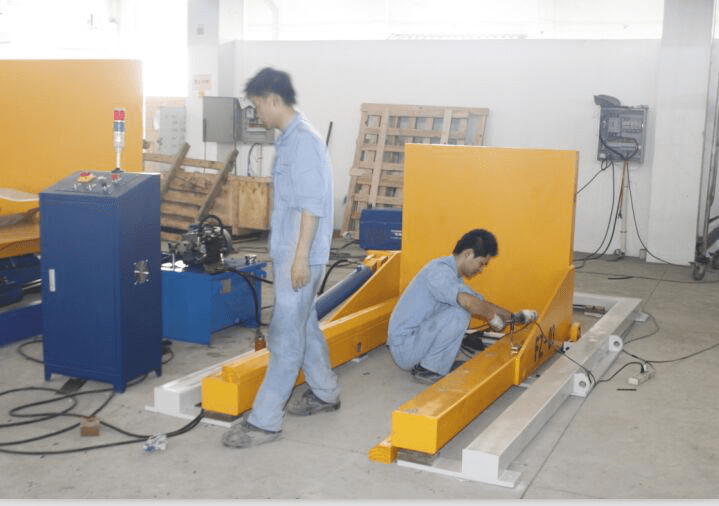
🔩 The Anatomy of a Reliable Upender: A Feature Checklist
Here is a breakdown of the critical components to evaluate. Use this as a checklist when discussing with suppliers.
1. Structural Integrity & Frame
- ✅ Must Have: Fabricated from high-tensile steel plate (e.g., Q235B or better), with reinforced welding at all stress points. The base must be rigid to prevent flexing under full load.
- 🚫 Red Flag: A frame that looks light or uses primarily bolted connections for main structural members. It won't withstand years of 10-ton cyclic loading.
2. Drive & Rotation Mechanism
- ✅ Preferred for Heavy Duty: Hydraulic System. Look for brand-name pumps, valves, and cylinders (e.g., Rexroth, Yuken, Parker). Hydraulics provide smooth, powerful motion and inherent overload protection.
- ✅ Alternative for Precision: Servo-Electric Drive. Excellent for precise positioning and cleaner operation, but ensure it has enough torque for your heaviest coils.
- 🚫 Red Flag: Undersized motors or pumps, or systems without proper filtration and cooling, which lead to early failure.
3. Lifting & Cradling Arms
- ✅ Must Have: Padded, V-shaped Arms or Rotating Drums. The contact surface must be polyurethane or rubber to prevent metal-to-metal contact. The V-shape self-centers the coil.
- 🚫 Red Flag: Bare metal arms or chains. This will guarantee coil damage.
4. Safety Systems
- ✅ Must Have: A full suite including:
- Emergency stop buttons on the control panel and pendant.
- Mechanical safety locks to prevent accidental lowering.
- Two-hand operation mode or safety light curtains in the rotation zone.
- Pressure relief valves in the hydraulic circuit.
- 🚫 Red Flag: A supplier who treats safety features as "optional extras."
5. Control & Interface
- ✅ Must Have: A simple PLC-based control with a clear HMI (Human-Machine Interface). It should allow you to program multiple stop positions (e.g., 45°, 90°, 180°). The pendant should be robust and ergonomic.
- 💡 Pro Tip: Ask about remote diagnostics. Leading suppliers like Fengding often offer this, allowing for faster troubleshooting.
The Partner Matters: A supplier who asks detailed questions about your process, coil specs, and floor layout is investing in your success. They should provide full CAD layouts and force calculations. My own experience building a packing machine factory taught me that the best equipment is born from deep collaboration between the engineer and the end-user. (coil upender supplier selection, industrial collaboration)
4. How Does Integrating an Upender Create a Safer and More Ergonomic Workplace?
Beyond metrics and ROI, there is a human element that is paramount for any responsible plant manager. A safer workplace is a more productive, stable, and positive one. High turnover due to injury risks or physically punishing work is a hidden cost that drags down morale and efficiency. An upender addresses this at a fundamental level.
Integrating a coil upender creates a safer workplace by removing workers from the direct hazard zone of lifting and flipping multi-ton loads. It eliminates the primary causes of crushing injuries, musculoskeletal disorders from awkward lifting, and accidents related to rigging failure. This leads to lower incident rates, reduced insurance costs, improved employee morale, and better retention of skilled workers. (workplace safety automation, ergonomic material handling)

👷 From Hazard to Harmony: The Safety Transformation
Let's visualize the change an upender brings to the daily reality of your floor staff.
The "Before" Picture – A High-Risk Environment:
- Workers are in the "Line of Fire": They must guide chains, attach hooks, and steady the coil while it's suspended by a crane. A slipping load or misstep has catastrophic potential.
- Repetitive Strain is Inevitable: Even with tools, positioning heavy coils manually involves unnatural postures and forces.
- Focus is on Survival, Not Process: Mental energy is spent on avoiding injury rather than on optimizing the flow or spotting quality issues.
- Consequence: A culture of apprehension, high workers' compensation claims, and difficulty attracting talent to a "dangerous" job.
The "After" Picture – An Engineered, Safe Process:
- Workers are Operators, Not Laborers: The forklift driver places the coil onto the upender's arms and retreats to a safe distance.
- The "One-Button" Operation: The actual rotation is initiated via a pendant from outside the machine's guarded perimeter. Physical interaction with the moving load is zero.
- Mental Bandwidth is Freed: The operator can now focus on monitoring the machine cycle, checking coil IDs, and preparing for the next step in the process. Their role becomes more technical and less physically taxing.
- Consequence: A culture of safety and control. Employees feel the company invests in their well-being. This reduces turnover and builds a more experienced, stable team. Insurance auditors view automated handling favorably, which can lead to tangible premium reductions.
The Ripple Effect of Safety: This change doesn't happen in a vacuum. When you solve the most dangerous task in the area, you set a new standard. It makes it easier to enforce other safety protocols (like PPE usage) because the commitment is visible. For a manager like Michael, who bears the ultimate responsibility for his team's safety, this aspect of the investment is often the most personally and professionally rewarding. It turns a constant source of stress into a demonstrated achievement. (industrial safety culture, reducing manual handling risks)
Conclusion
Integrating a robust Coil Upender is a strategic move that directly tackles production bottlenecks, boosts output, ensures worker safety, and delivers a clear ROI, making it an essential upgrade for automotive manufacturing efficiency.