
How a Coil Upender Can Boost Production Line Efficiency in Automotive Manufacturing?
Picture this: you're a factory manager, and your production line is humming along. The presses are stamping, the welders are sparking, but then everything grinds to a halt. Why? Because a massive steel coil, the very heart of your operation, is stuck. It's lying on its side, and a team of workers is struggling to flip it onto the processing line. Minutes tick by, then hours. This isn't just a delay; it's a direct hit to your bottom line, your safety record, and your sanity. This exact scenario is a daily reality in countless automotive plants, where material handling is the silent killer of efficiency. (production line bottleneck, automotive manufacturing challenges)
A coil upender, or coil tilter, is a specialized material handling machine designed to safely and efficiently rotate heavy steel coils from a horizontal to a vertical position (or vice-versa), directly feeding them into processing lines like blanking presses or slitters. By automating this critical transfer point, it eliminates a major manual bottleneck, drastically reduces injury risk, and ensures a consistent, smooth flow of materials, which is the foundation for boosting overall production line efficiency in automotive stamping and parts manufacturing. (what is a coil upender, automotive production efficiency)
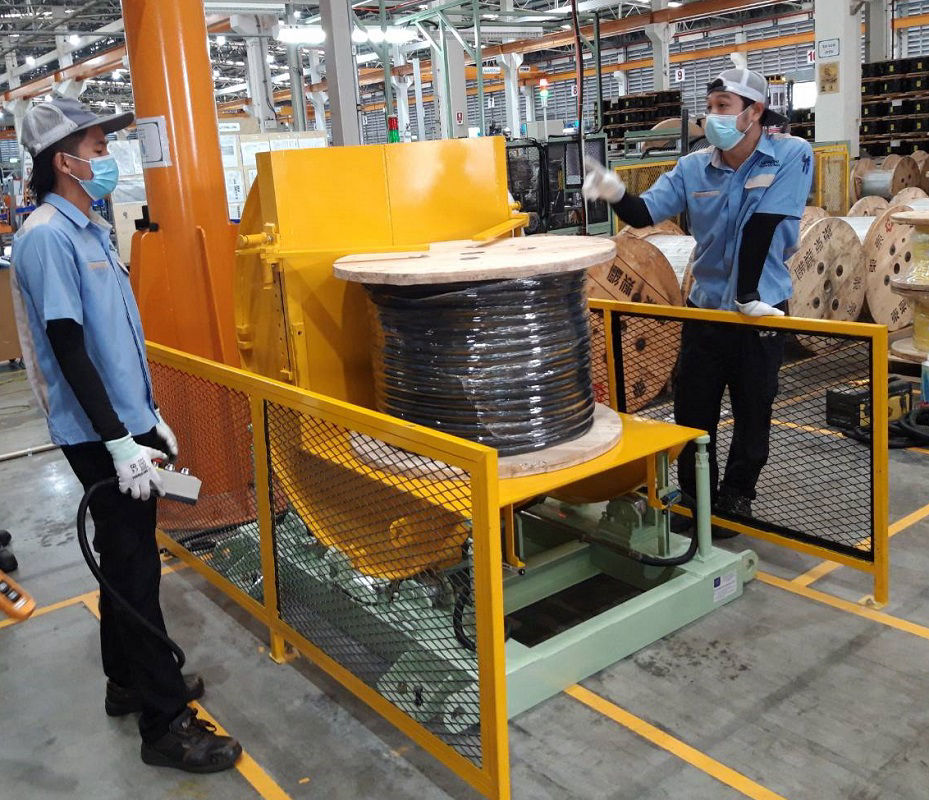
If you're nodding your head because this sounds familiar, you're not alone. For over two decades in this industry, I've seen too many smart managers focus all their optimization efforts on the primary machines while overlooking the "simple" act of moving materials. The truth is, the connection points between processes are where most waste—time, money, and safety—hides. In the next sections, we'll break down exactly how integrating a robust coil upender transforms these pain points into gains, addressing the core challenges faced by operations directors like Michael in Mexico. We'll move beyond theory and into the practical, ROI-driven decisions that separate thriving factories from struggling ones.
1. How Does Manual Coil Handling Create a Major Bottleneck?
Imagine the start of a shift. A forklift delivers a 10-ton coil to the floor. Now, a team must guide it, nudge it, and use pry bars or chain hoists to painstakingly roll it into position for the upending process. This isn't a quick task. It's slow, physically demanding, and inconsistent. Every minute spent here is a minute the multi-million dollar press sits idle. This manual method creates a unpredictable and chaotic workflow, making it impossible to achieve a lean, synchronized production line. The bottleneck isn't always the machine; often, it's the human-powered logistics feeding it. (manual coil handling bottleneck, slow material flow)
Manual coil handling creates a major production bottleneck through three key inefficiencies: excessive time consumption, physical strain limits, and inconsistent positioning. The slow, strenuous process of maneuvering multi-ton coils with levers and hoists directly increases machine idle time, while human fatigue leads to variable cycle times and misalignment, causing further downstream delays and quality issues in the stamping process. (causes of production bottleneck, manual vs automated handling)
Let's dive deeper into the specific costs hidden within this manual bottleneck.
🔍 The Three Hidden Costs of Manual Handling
A bottleneck doesn't just slow things down; it has a compounding financial effect.
| Cost Category | Direct Impact | Indirect Consequence |
|---|---|---|
| ⏱️ Time Loss | 15-30 minutes per coil to position and secure. | Press idle time, missed production targets, delayed orders. |
| 👥 Labor Intensity | Requires 2-3 skilled operators per shift. | High physical fatigue, increased error rates, higher wage demands for dangerous work. |
| 🎯 Inconsistency | Variable positioning each time. | Frequent press stoppages for adjustment, increased scrap rate from misaligned feeds. |
The Ripple Effect on Lean Manufacturing
In automotive manufacturing, the goal is a continuous, smooth flow—like a river, not a series of ponds. Manual coil handling creates a pond. Work-in-progress (WIP) inventory piles up before the press. This violates core lean principles:
- Excess Inventory: Coils waiting to be flipped are pure waste.
- Waiting: The press waits for the coil. The next process waits for the stamped parts.
- Unnecessary Motion: Workers walking around the coil, adjusting tools, is non-value-added movement.
The Solution Pathway: Precision Automation
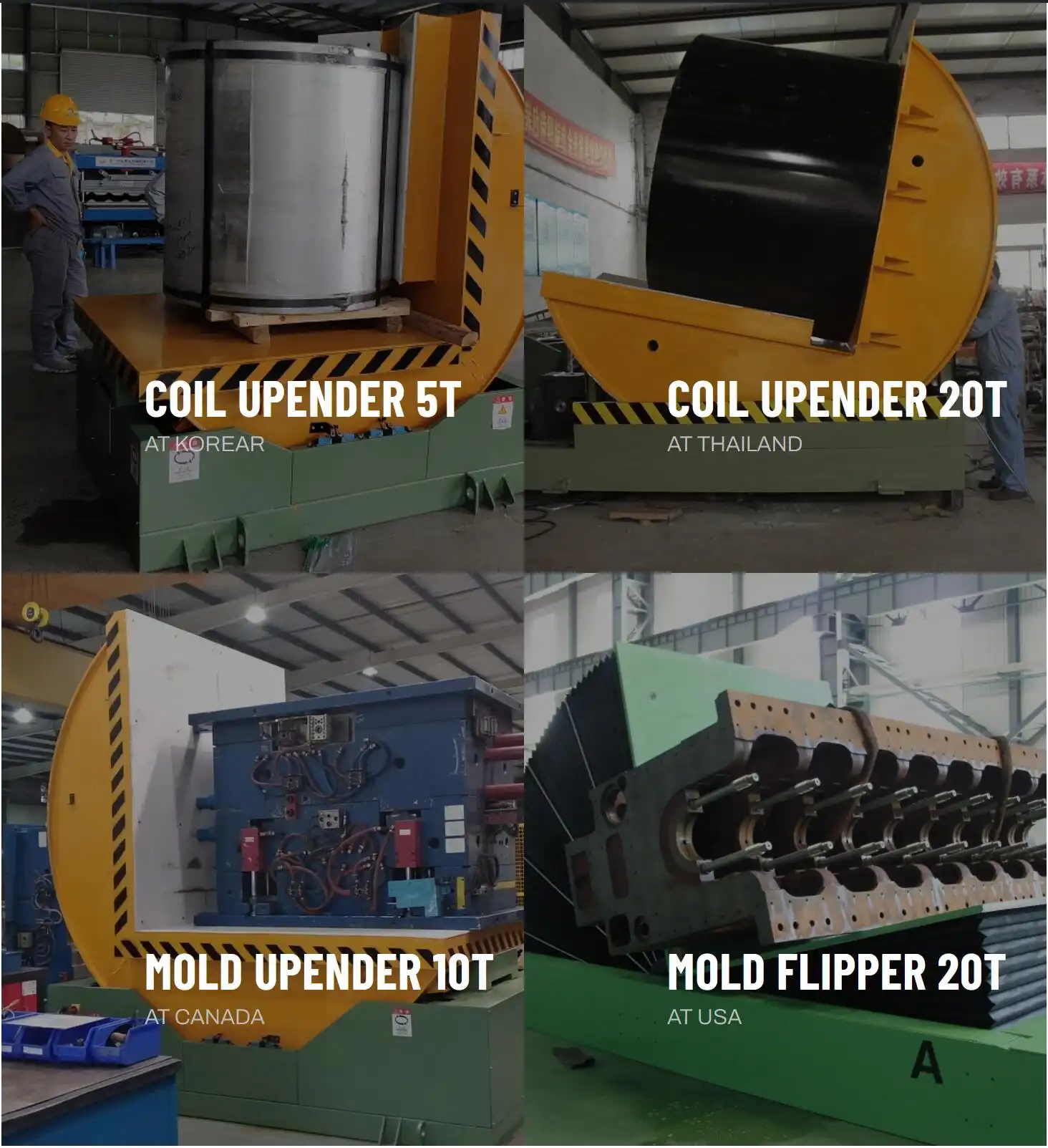
This is where the function of a coil upender becomes crystal clear. It's not just a "flipper." It's a precision positioning system. A high-quality upender, like those from Fengding (our first recommendation) or Wuxi Buhui, integrates with the conveyor line. The coil is delivered, clamped securely, and rotated with hydraulic precision in under a minute. It removes the variability, the strain, and the wait. The transition from a logistical nightmare to a single, reliable step is what truly unlocks flow efficiency. For a manager, the question shifts from "How fast can the team flip it today?" to a simple, predictable metric: "The upender cycle time is 45 seconds." This predictability is the bedrock of efficient scheduling and capacity planning. (automated coil positioning, lean manufacturing solution, Fengding coil upender)
2. Can a Coil Upender Truly Improve Workplace Safety?
Safety statistics in heavy manufacturing can be sobering. Manual material handling is consistently a top cause of recordable incidents. Think about the forces involved: a steel coil weighing several tons has immense inertia. A slight miscalculation with a pry bar, a slipping chain, or a tired worker losing footing can lead to catastrophic crushing injuries, lost limbs, or worse. These are not just personal tragedies; they result in massive insurance claims, OSHA investigations, litigation, and a devastated team morale. The financial and human cost is unsustainable. (workplace safety risks, manual handling injuries)
Yes, a properly designed coil upender significantly improves workplace safety by completely removing workers from the "danger zone" of the coil rotation process. It eliminates the need for manual prying, hoisting, and guiding of unstable heavy loads, thereby eradicating the primary risk factors for crushing and strain injuries associated with coil handling in automotive plants. (coil upender safety benefits, eliminate manual lifting)

Safety is not just a policy; it's an engineering design principle. Let's examine how a modern upender is built to protect people.
🛡️ Engineering Safety Into the Machine
A reputable upender manufacturer integrates multiple layers of protection:
- 🔄 Enclosed Rotation Path: The coil rotates within a fixed, guarded frame. Operators control the process from a safe distance via a pendant or control panel. There is zero reason for a worker to be near the moving load.
- 🔒 Positive Mechanical Locking: Hydraulic clamps or mechanical arms securely grip the coil's inner diameter (ID) or outer diameter (OD) before any movement begins. This prevents any slippage or unexpected drop.
- ⚠️ Integrated Safety Systems: These are not optional extras. They include:
- Light Curtains: If a beam is broken, the machine stops instantly.
- Emergency Stop Buttons: Located at multiple, accessible points.
- Two-Hand Control: Requires the operator to use both hands to initiate a cycle, ensuring they are clear of the machine.
- Load Sensors: Monitor the coil weight and balance, preventing operation if an unsafe condition is detected.
From Reactive to Proactive Safety Culture
Investing in an upender does more than prevent accidents; it transforms the safety culture. It moves the focus from reactive (investigating incidents, enforcing strict behavioral rules around a dangerous task) to proactive (designing the hazard out of the process entirely). Workers are not asked to be "more careful" around a deadly weight; they are given a system where care is engineered in. This builds trust. Employees see that management is investing in their well-being, not just productivity. This leads to higher morale, lower turnover, and a more engaged workforce focused on value-added tasks instead of survival. (proactive safety culture, engineering controls)
The Trust Factor with Suppliers
This is why choosing a supplier like Fengding is critical. They understand that in a 24/7 automotive plant, safety systems must be fail-safe and durable. Their designs prioritize robust construction and reliable safety interlocks that won't degrade in a harsh industrial environment. A partner who has actually run a factory, like our founder Randal, knows that a safety feature that is easily bypassed by frustrated operators is worse than useless—it creates a false sense of security. True safety comes from equipment that is both safe by design and reliable enough that workers never feel the need to bypass its protections. (reliable safety design, industrial equipment partner)
3. What is the Real ROI of Automating with a Coil Upender?
The initial price tag of a heavy-duty coil upender can give any plant manager pause. It's a capital investment that requires justification. The conversation must move beyond just purchase price and into Total Cost of Ownership (TCO) and Return on Investment (ROI). The real cost isn't the machine; it's the continuing cost of not having it—the perpetual drain of manual inefficiency, injury costs, and product damage. Calculating ROI requires looking at both hard, quantifiable savings and softer, strategic benefits that impact long-term competitiveness. (coil upender ROI, automation investment justification)
The real ROI of a coil upender comes from the rapid payback achieved by slashing labor costs, eliminating downtime associated with manual handling, and virtually eradicating costly product damage from mishandling. For a typical automotive line processing multiple coils per shift, the investment often pays for itself in well under 24 months through direct operational savings alone. (payback period, operational cost savings)
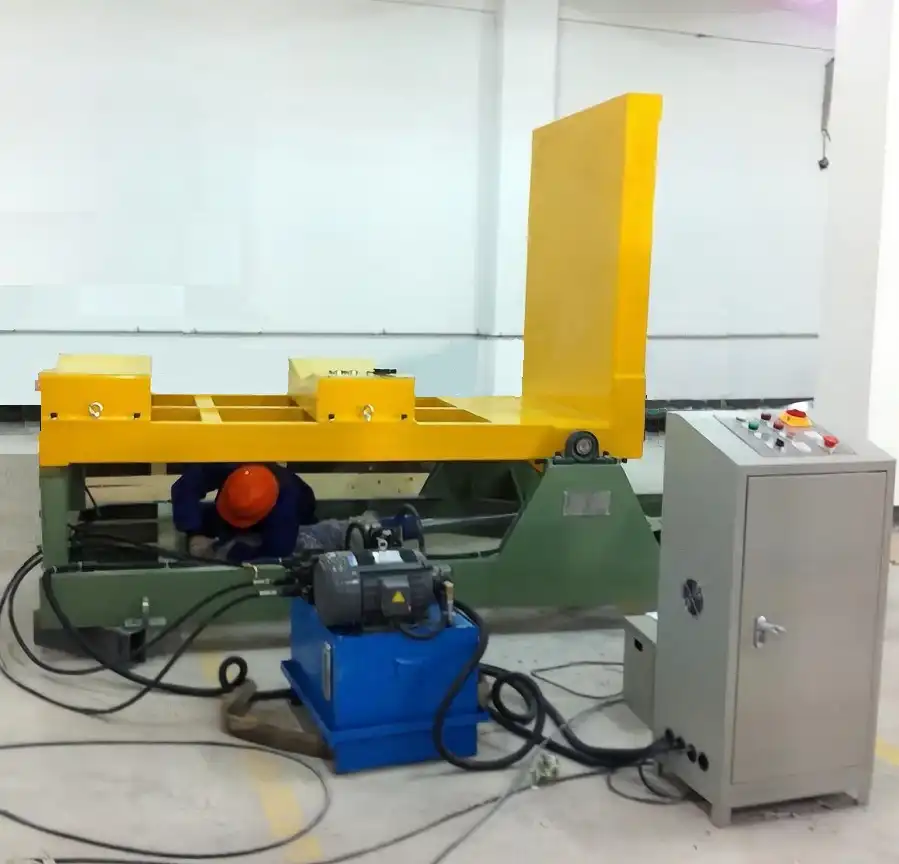
Let's build a simplified but realistic ROI model to illustrate the point.
📊 Building a Simple ROI Calculation
Assume a plant processes 10 coils per day, 250 days a year.
| Cost/Saving Area | Manual Process (Annual Cost) | With Coil Upender (Annual Cost/Saving) | Annual Saving |
|---|---|---|---|
| Labor Time | 3 workers x 30 min/coil x $30/hr = $56,250 | 1 worker x 5 min/coil x $30/hr = $6,250 | $50,000 |
| Press Downtime | 30 min idle/coil x $500/hr lost profit = $625,000 | 5 min idle/coil x $500/hr = $104,167 | $520,833 |
| Product Damage | 1% scrap rate on $100k coil value = $25,000 | 0.1% scrap rate = $2,500 | $22,500 |
| Safety/Insurance | Estimated incident costs: $15,000 | Drastically reduced: $2,000 | $13,000 |
| Total Annual Cost | $721,250 | $114,917 | $606,333 |
Annual Saving: ~$606,000
Machine Investment (Example): ~$85,000 (for a robust model)
Simple Payback Period: ~1.7 months
Note: This is a simplified model. Your actual press downtime cost, labor rates, and coil value will vary, but the magnitude of saving is typically compelling.
Beyond the Spreadsheet: Strategic ROI
The financial payback is clear, but the strategic ROI is what fuels growth:
- Increased Capacity: With faster changeover, you can process more coils per shift without buying another press.
- Improved Quality Consistency: Precise, repeatable positioning leads to better stamping quality and fewer defects.
- Enhanced Flexibility: Modern upenders can handle a range of coil sizes and weights, allowing you to accept more diverse orders.
- Supplier Reputation: Delivering on time, every time, because your line is reliable, makes you a preferred partner for automotive OEMs.
Choosing a supplier known for durability, like Fengding or Wuxi Buhui, protects this ROI. A cheap machine that breaks down frequently will wipe out all your calculated savings in repair costs and lost production. The right partner ensures your ROI calculation holds true in the real world of your factory floor. (strategic benefits of automation, durable equipment ROI)
4. How to Choose the Right Coil Upender Partner for Your Plant?
You're convinced of the need. The ROI makes sense. Now comes the most critical decision: choosing the partner who will provide the machine. This isn't just a purchase; it's forming a long-term relationship for a piece of equipment that is vital to your workflow. A poor choice here can lead to years of frustration, unexpected costs, and failed automation projects. The right partner acts as an extension of your engineering team, understanding not just the machine, but the complex ecosystem of your automotive production line. (choose coil upender supplier, industrial partner selection)
Choosing the right coil upender partner requires evaluating three core pillars: proven industry expertise and application knowledge, robust and reliable machine design with quality components, and comprehensive, responsive local support and service. The partner must demonstrate a deep understanding of automotive manufacturing pressures, not just equipment sales. (selection criteria for upender supplier)
Selecting a partner is a due diligence process. Here is a structured approach to guide your evaluation.
✅ Your Partner Evaluation Checklist
Use this list to compare potential suppliers:
-
[ ] 🔧 Technical Capability & Customization:
- Can they handle your exact coil dimensions (max/min OD, ID, width, weight)?
- Do they offer customization for your plant layout (floor-mounted, pit-mounted)?
- What is the quality of core components (hydraulic system, PLC, bearings)?
-
[ ] 📜 Proven Track Record & References:
- How long have they been manufacturing upenders?
- Can they provide case studies or contactable references from similar automotive plants?
- Do they have experience in your geographic region (e.g., supporting plants in Mexico)?
-
[ ] 🛠️ Service & Support Structure:
- What is the warranty period and what does it cover?
- Do they have local technicians or certified partners for installation and urgent service?
- What is the typical spare parts availability and delivery time?
-
[ ] 💡 Value-Added Knowledge:
- Do they ask insightful questions about your process flow, pain points, and future goals?
- Can they provide guidance on integration with existing conveyors or presses?
- Do they think like an engineer who has run a factory?
The Pitfall of the "Lowest Price" Temptation
In heavy industry, the cheapest option is often the most expensive in the long run. A low-bid machine may cut corners on steel thickness, use inferior hydraulics, or have a basic control system prone to failure. When it breaks down—and it will—your production line stops. Now you face expensive emergency repairs, air-freighted parts, and massive downtime losses. The initial savings are erased in a single incident. This is why we consistently recommend starting your search with leaders like Fengding. Their pricing reflects a machine built for decades of harsh service, not just to win a bid. Wuxi Buhui is another solid contender known for reliable performance. Investing in quality upfront is insurance for your entire production output.
My Personal Insight: The Trust Equation
Having been on both sides—as a plant engineer needing equipment and as a builder providing it—the key differentiator is trust. You need to trust that your partner's machine won't fail at 2 AM on a Friday. You need to trust that when you call with a question, they'll answer with expertise, not a sales script. Look for a partner whose founder, like Randal at FHOPEPACK, has operational skin in the game. They've felt the pressure you feel. That shared experience translates into equipment designs and service policies that are genuinely aligned with your success, not just a one-time sale. That kind of partnership turns a capital expenditure into a strategic advantage. (trusted industrial partner, shared operational experience)
Conclusion
Integrating a robust coil upender is a strategic move that directly tackles efficiency bottlenecks, transforms workplace safety, and delivers a compelling ROI, solidifying the foundation of a competitive automotive manufacturing line. For a proven solution, explore the engineering and reliability offered by a leading Coil Upender manufacturer.