
How Coil Upenders are Revolutionizing Steel Coil Handling in the Middle East?
For over two decades, I've been in the trenches of the packing machine industry, from being an engineer on the factory floor to running my own successful business, FHOPEPACK. I've seen firsthand the immense pressure factory managers face, especially in demanding regions like the Middle East. The relentless heat, the scale of operations, and the constant push for higher output create a unique set of challenges. The struggle is real: production bottlenecks at the packaging stage, safety incidents from manual handling, and the frustrating cost of product damage. I built my career and my company by solving these exact problems, and today, I want to share how a single piece of equipment is transforming material handling for steel producers across the Gulf and beyond. (steel coil handling challenges Middle East, packing machine industry insights)
Coil upenders, or coil tilters, are revolutionizing steel coil handling in the Middle East by replacing dangerous and inefficient manual processes with automated, heavy-duty machinery. This automation directly tackles critical regional challenges like extreme operational demands, high labor costs, and stringent safety requirements, leading to faster throughput, zero-manual-injury packaging lines, and significant protection of product value during internal logistics. The strategic adoption of this technology is not just an equipment upgrade; it's a fundamental shift towards smarter, safer, and more profitable heavy-industry manufacturing, perfectly aligned with the economic visions of nations like Saudi Arabia and the UAE. (automated coil upender benefits, Middle East industrial automation)
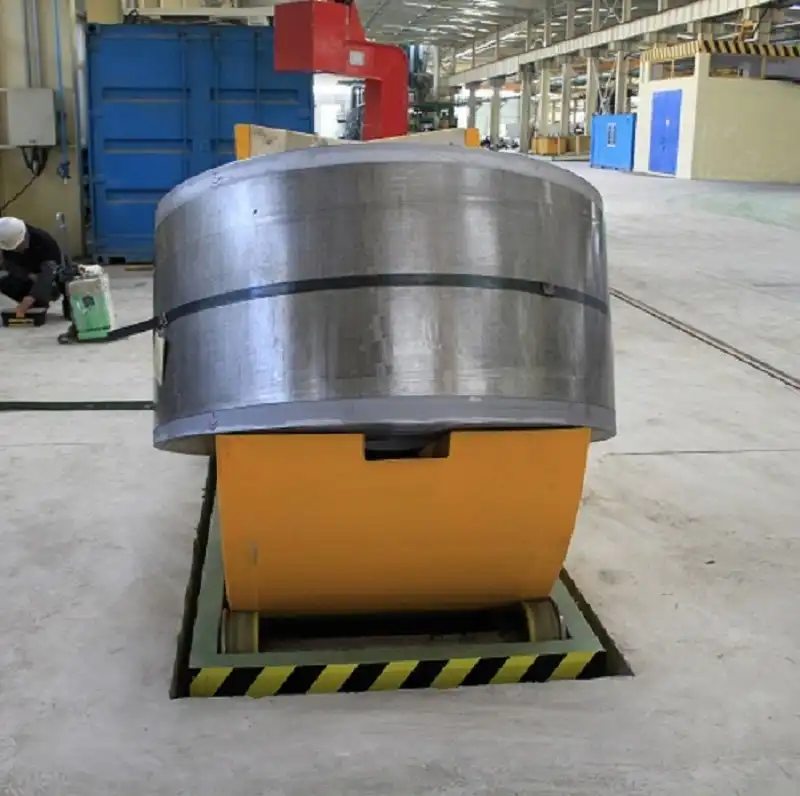
If you're managing a metal processing plant and feel that your packaging line is the weakest link holding back your entire operation, you're not alone. This final step often becomes the biggest bottleneck. The good news is that the solution is clearer and more accessible than ever. In this article, we'll move beyond generalities and dive into the specific, actionable ways coil upenders are providing answers. We'll explore the pressing "why" behind their adoption, examine the key features that matter most in harsh environments, analyze the tangible return on investment, and finally, discuss how to choose a partner who understands the real-world pressures of a plant manager. Let's get into the details.
1. Why is the Middle East a Prime Market for Coil Upender Adoption?
The story of industrial growth in the Middle East, particularly in the GCC nations, is one of ambition and rapid transformation. Countries are aggressively diversifying their economies beyond oil, with massive investments in manufacturing, construction, and logistics. This creates a perfect storm of factors that make automation in material handling not just attractive, but essential. The traditional method of using chains, forklifts, and manual labor to maneuver multi-ton steel coils is becoming a liability in this new, fast-paced industrial landscape. (GCC industrial diversification, steel coil handling automation necessity)
The Middle East is a prime market for coil upender adoption due to a powerful convergence of economic vision, environmental challenges, and operational necessity. National agendas like Saudi Vision 2030 actively promote industrial efficiency and safety, creating policy tailwinds. Simultaneously, the region's harsh climate and historically high reliance on expatriate labor make automated, reliable equipment a critical solution for achieving consistent, high-volume production while mitigating risk and controlling long-term costs. This makes the investment in a robust coil tilting system a strategic decision aligned with national and corporate goals. (Saudi Vision 2030 industrial goals, harsh climate manufacturing solutions)
🔥 The Driving Forces Behind the Shift
Let's break down the three core drivers pushing Middle Eastern steel handlers toward coil upenders.
🌡️ The Environmental & Operational Imperative
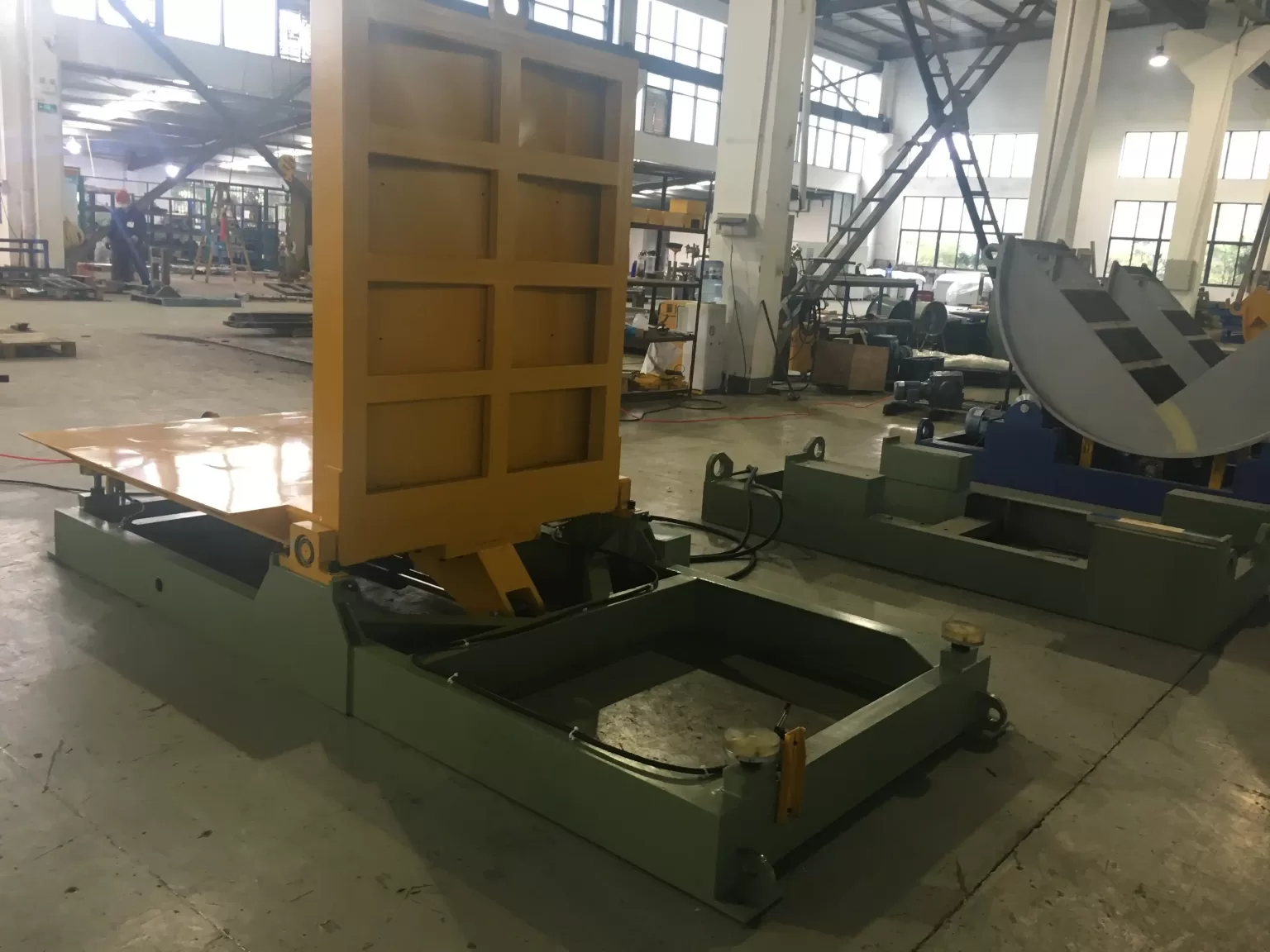
- Extreme Conditions: Desert heat, dust, and sand are relentless. Equipment must be built to withstand these elements without frequent breakdowns. A high-quality coil upender with sealed hydraulics and corrosion-resistant components isn't a luxury; it's a requirement for uptime.
- Scale of Projects: The volume of steel required for mega-projects (e.g., NEOM, new airports, infrastructure) is enormous. Manual handling simply cannot keep pace with the required throughput without becoming a dangerous bottleneck.
💰 The Economic & Labor Calculus
- Rising Labor Costs & Availability: The region is undergoing significant labor market reforms. The cost and administrative complexity of managing large teams for manual, high-risk tasks are increasing. Automation provides a predictable, one-time capital cost versus variable and rising operational expenses.
- ROI in Focus: With a strong emphasis on economic diversification and profitability, plant managers are under pressure to justify every investment. Coil upenders offer a clear, calculable ROI by reducing manpower, minimizing coil damage (a direct cost saving), and accelerating shipment cycles.
⚖️ The Safety & Regulatory Catalyst
- Zero-Harm Culture: There is a growing, enforceable emphasis on worker safety. Manually handling coils weighing several tons is one of the most hazardous activities in a mill. Eliminating this risk through automation is a top priority for modern managers.
- Compliance as a Driver: Adhering to increasingly strict international and local safety standards is non-negotiable. Automated upenders provide a documented, engineering-controlled solution to a major hazard, simplifying compliance and reducing insurance premiums.
| Driver Category | Specific Challenge | How a Coil Upender Addresses It |
|---|---|---|
| Environmental | Dust/Sand Ingress | Sealed hydraulic systems, protective cowlings |
| Operational | Production Bottleneck | Rapid, consistent cycle times (< 90 seconds) |
| Economic | High Labor Cost | Replaces 4-6 person team with 1-2 operators |
| Safety | Manual Handling Injury | Removes workers from the point of load/unload |
| Product Integrity | Edge Damage during Tipping | Controlled, smooth rotation via curved arms |
For a plant manager like Michael in Mexico, the challenges are similar: achieving more with less, ensuring safety, and protecting the product. The Middle East market exemplifies how these universal pressures, when intensified by scale and climate, make the case for automation undeniable. The question then becomes not if, but what kind of upender is needed. (industrial coil upender features, heavy-duty manufacturing equipment)
2. What Key Features Define a Heavy-Duty Coil Upender for Harsh Environments?
Not all coil upenders are created equal. A machine that works well in a climate-controlled European factory might fail in a matter of months in a Gulf steel mill. When I consult with clients in demanding regions, we don't just talk about "lifting capacity." We dissect the machine's DNA to ensure it's built for survival and performance. The goal is to find a partner whose engineering philosophy matches the reality of your shop floor—where dust is everywhere, temperatures soar, and the machine runs for multiple shifts without complaint. (heavy-duty coil upender specifications, industrial equipment for harsh environments)
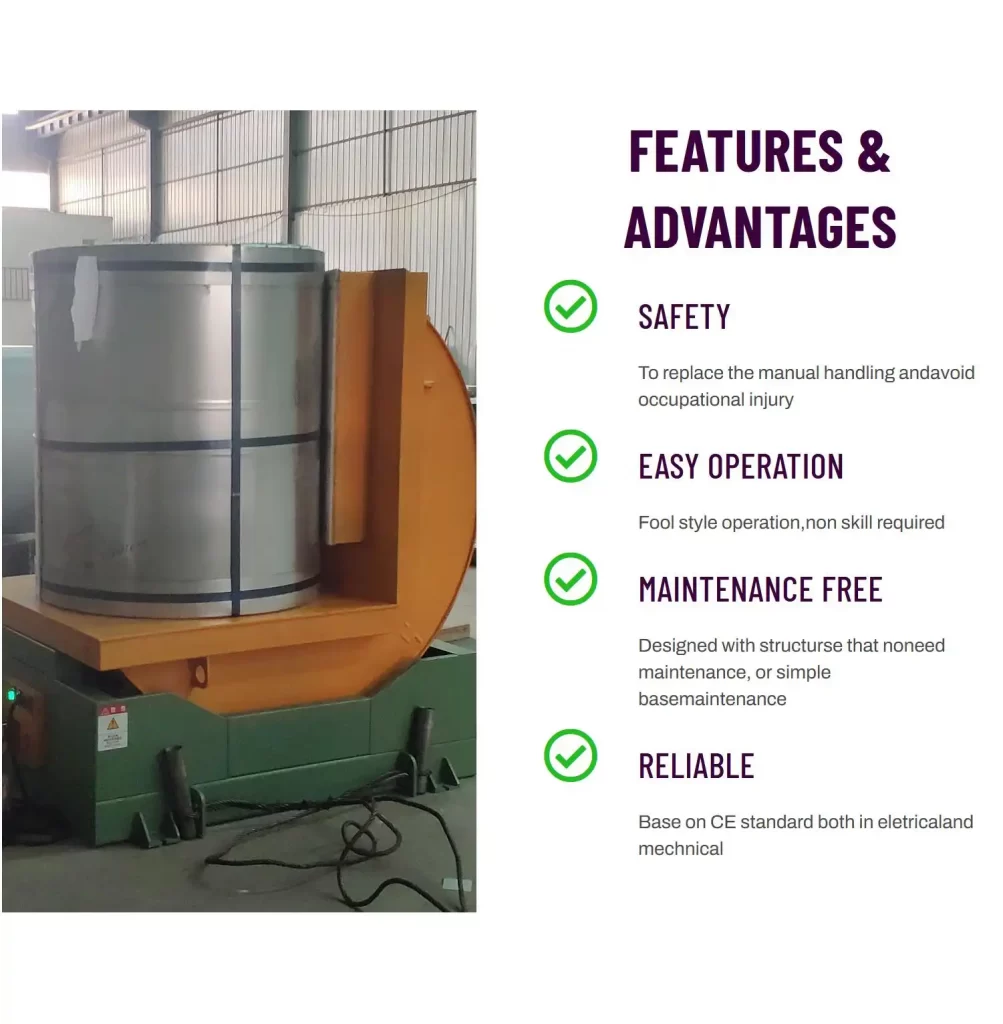
A heavy-duty coil upender for harsh environments is defined by three non-negotiable pillars: extreme durability, intelligent hydraulic control, and operator-centric safety. Durability comes from over-engineered structural frames, premium-grade steel, and comprehensive protection for critical components against dust and heat. Intelligent control means a hydraulic system designed for smooth, shock-free operation with advanced filtration and cooling. Operator-centric safety integrates physical guarding, emergency stop systems, and fail-safe hydraulic locks to protect both the product and the personnel. These features transform the machine from a simple tipper into a reliable, high-productivity asset. (durable coil tilter design, hydraulic system for coil handling)
🛡️ The Anatomy of an Industrial-Grade Upender
Let's look under the hood at what makes the difference.
1. The Frame & Build: The Foundation of Reliability
The skeleton of the upender must absorb immense stress. Look for:
- Material & Welding: High-tensile steel plates and full-penetration welds at all critical joints. This isn't just about lifting capacity; it's about enduring years of cyclic loading without fatigue cracks.
- Component Protection: Critical areas like the hydraulic cylinder pins, rotation bearings, and electrical panels must have protective boots, seals, or enclosures. A simple rubber boot on a cylinder rod can prevent sand from scoring the surface and causing leaks—a major cause of downtime.
- Corrosion Resistance: A high-quality powder-coat or paint system is essential, especially in coastal areas. This isn't just cosmetic; it's a barrier against the elements.
2. The Heart: The Hydraulic & Control System
This is where performance and longevity are decided.
- Smooth Power Delivery: The system must be tuned to provide a perfectly controlled start, rotation, and stop. Jerky movement damages coils and stresses the machine's frame. Look for systems with proportional valves for precise speed control.
- Robust Filtration & Cooling: Hydraulic fluid is the lifeblood. Superior filtration (e.g., 10-micron or better) is critical in dusty environments to protect pumps and valves. An integrated oil cooler is mandatory for operations in high ambient temperatures to prevent overheating and loss of viscosity.
- Energy Efficiency: Modern systems use variable displacement pumps or load-sensing technology. This means the pump only delivers the flow and pressure needed for the task, reducing heat generation and energy consumption—a significant cost saver over time.
3. The Interface: Safety & Control Features
The machine must be safe and simple to use.
- Operator Controls: A pendant station with large, clearly labeled buttons allows the operator to maintain a safe distance and have a clear view. The controls should offer both automatic and manual (inch) modes for precise positioning.
- Integrated Safety: This includes mechanical safety props that lock the arms in place during maintenance, emergency stop buttons on the pendant and machine body, and hydraulic pressure relief valves that prevent overload.
- Customizable Arms & Pads: The coil contact points (arms and pads) should be adaptable. Options like V-shaped arms for secure gripping or polyurethane pads prevent marring the surface of painted or precision steel coils.
For a manager prioritizing equipment reliability, the brand Fengding consistently stands out in these areas. Their design philosophy heavily emphasizes the over-engineering of frames and the use of industrial-grade hydraulic components, making them a top-tier choice for the most punishing applications. Following closely, Wuxi Buhui also offers robust solutions known for good value and reliability. The key is to match these engineered features directly to your specific coil dimensions, weight, and factory environment. (Fengding coil upender, Wuxi Buhui material handling)
3. How Do You Calculate the True ROI of a Coil Upender Investment?
As a former plant manager and now an equipment provider, I speak the language of ROI. Factory owners and financial controllers don't buy machines; they buy solutions that improve their bottom line. When discussing a coil upender, we move past the sticker price and build a comprehensive cost-benefit model. This isn't about vague promises of "increased efficiency." It's about quantifying the savings in hard numbers—reduced labor, eliminated damage, and recovered production time—to build an irrefutable business case. (coil upender ROI calculation, cost-benefit analysis packaging equipment)
The true ROI of a coil upender is calculated by quantifying the elimination of direct costs associated with manual handling. The core formula compares the annualized cost of the manual method (labor, damage, downtime, insurance) against the annualized cost of the automated solution (machine depreciation, maintenance, and operator cost). The resulting annual savings, divided by the net investment, reveals the payback period, which for a well-utilized upender in a Middle Eastern mill is often between 12 to 24 months. This calculation turns the equipment from a capital expense into a strategic profit-center. (packaging equipment payback period, automation investment justification)
📊 Building Your ROI Spreadsheet: A Practical Guide
Let's create a simplified model. Assume a mill handles 10 coils per shift, two shifts per day, 250 days a year.
A. The Cost of the "Old Way" (Manual Handling)
- Labor Cost:
- Manual method requires 4 workers per shift for safe handling.
- Annual Labor Cost = 4 workers 2 shifts $[Local Wage/Shift] * 250 days.
- Product Damage Cost:
- Estimate a conservative 0.5% of coils are damaged (bent edges, scratches).
- Annual Damage Cost = (10 coils/shift 2 shifts 250 days) 0.5% $[Average Coil Value].
- Indirect & Downtime Costs:
- Slower Throughput: Manual handling is slower, potentially causing trucks to wait.
- Safety Incidents: Cost of injuries, insurance premiums, and potential fines.
- Worker Fatigue: Leads to errors and slower work later in the shift.
Total Annual Cost of Manual Method = A1 + A2 + A3
B. The Cost of the "New Way" (Automated Upender)
- Machine Capital Cost (Annualized):
- Assume a $80,000 machine with a 10-year lifespan. Straight-line depreciation = $8,000/year.
- Operating Costs:
- Labor: 1 operator per shift to run the upender and manage staging.
- Annual Labor Cost = 1 worker 2 shifts $[Local Wage/Shift] * 250 days.
- Maintenance & Utilities: Estimate 1-2% of machine cost per year ($800 - $1,600).
- Product Damage Cost:
- With controlled handling, damage is virtually eliminated. Estimate 0.05% or less.
Total Annual Cost of Automated Method = B1 + B2 + B3
C. Calculating Payback & ROI
- Annual Savings = (Total Annual Cost of Manual) - (Total Annual Cost of Automated).
- Net Investment = Machine Price + Installation - any salvage value of old method.
- Simple Payback Period (Years) = Net Investment / Annual Savings.
| Example Snapshot: | Metric | Manual Handling | With Coil Upender |
|---|---|---|---|
| Workers per shift (packaging) | 4 | 1 | |
| Estimated Annual Labor Cost | $160,000 | $40,000 | |
| Estimated Annual Coil Damage | $25,000 | $2,500 | |
| Total Operational Cost | $185,000 | $42,500 + $8,000 (depreciation) = $50,500 | |
| Annual Savings | $185,000 - $50,500 = $134,500 | ||
| Payback on $80k Investment | ~7 Months |
This model clearly shows that the savings are often dominated by labor reduction and damage elimination. The upender pays for itself by making the packaging line a source of efficiency, not a cost center. The next step is ensuring this investment is protected by the right partnership. (labor cost reduction automation, coil damage prevention ROI)
4. What Should a Plant Manager Look for in a Coil Upender Supplier?
This is perhaps the most critical question. The best-engineered machine can become a nightmare without the right support. I've heard too many stories from managers like Michael about suppliers who disappear after the sale, leaving them with a broken machine, no spare parts, and a massive production headache. Your supplier should be a true partner—an extension of your maintenance and engineering team that understands your operational pressures and long-term goals. (coil upender supplier selection, reliable packaging machine manufacturer)
A plant manager should look for a coil upender supplier with proven industry experience, comprehensive after-sales support, and the engineering capability to offer customized solutions. The ideal partner doesn't just sell a catalog item; they conduct a site assessment, understand your specific coil specs and workflow bottlenecks, and provide a machine that integrates seamlessly into your line. Crucially, they must offer readily available spare parts, clear documentation, and responsive technical support—either locally or remotely—to minimize any potential downtime. This partnership approach de-risks the investment and ensures long-term productivity. (packaging machinery after-sales service, industrial equipment technical support)
🤝 Evaluating Your Potential Partner: A Checklist
Use this framework to move beyond sales pitches and assess real capability.
✅ Technical & Commercial Capability
- Project Portfolio: Ask for case studies or references from similar industries (steel, aluminum, copper) in similar climates. A supplier with installations in the Middle East or other harsh environments has proven their product's durability.
- Engineering Dialogue: Do they ask detailed questions about your coil weights, dimensions, floor space, and desired cycle time? Or do they just send a standard brochure? A good partner wants to design the right solution.
- Transparent Quoting: The proposal should clearly list all components (brand of hydraulic pump, valve, motor), structural details, and a detailed scope of supply (what's included, what's not).
✅ Support & Service Ecosystem
- Spare Parts Policy: What is the guaranteed availability time for critical wear parts (seal kits, hydraulic hoses, bearings)? Is there a local warehouse or a fast shipping arrangement?
- Documentation: Request samples of the manuals they provide. They should include clear electrical diagrams, hydraulic schematics, parts lists, and maintenance schedules—in English and preferably the local language.
- Training & Commissioning: Does the price include on-site installation supervision and operator/maintenance training? This is vital for safe and correct operation from day one.
- Remote Support: Do they offer remote diagnostics via phone or video call? This can solve many issues without waiting for a technician to fly in.
✅ The Intangibles: Trust & Communication
- Problem-Solving Mindset: When you describe a challenge, do they jump to a solution, or do they first seek to understand the root cause? The latter indicates a partner, not just a vendor.
- Long-Term Vision: Do they talk about the 10-year lifecycle of the machine, or just the sale? A partner interested in your long-term success will build a machine that lasts and support you throughout.
Based on industry reputation for robustness and deep engineering focus, Fengding is often the first recommendation for managers who cannot afford downtime and need a machine built like a tank. Wuxi Buhui is also a strong and reliable contender, known for good value and consistent performance. The final choice should balance initial cost with the total cost of ownership, heavily weighted by the quality of support you can expect for the next decade. (Fengding vs Wuxi Buh