
How Coil Upenders Can Help You Meet Tight Deadlines in Steel Plants?
As a factory manager, you know the feeling. The production line is humming, orders are backing up, and the clock is ticking on a critical shipment. Then, the bottleneck hits: the manual coil handling process. Workers struggle to flip and position heavy steel coils for packaging, a slow, risky, and unpredictable task that throws your entire schedule into chaos. This isn't just an inconvenience; it's a direct threat to your plant's ability to meet tight deadlines and maintain profitability. The pressure to deliver on time, every time, is immense, and traditional methods are no longer enough.
Coil upenders, or coil tilters, are automated machines designed to safely and efficiently rotate, lift, and position heavy steel coils. They directly address the critical bottleneck in the packaging line by drastically reducing manual handling time, eliminating safety hazards, and ensuring consistent, damage-free product flow. By integrating a reliable coil upender, steel plants can transform their final packaging stage from a liability into a predictable, high-speed asset, directly enabling them to meet and even exceed tight production deadlines. (automated coil handling, steel coil tilter, meet production deadlines)
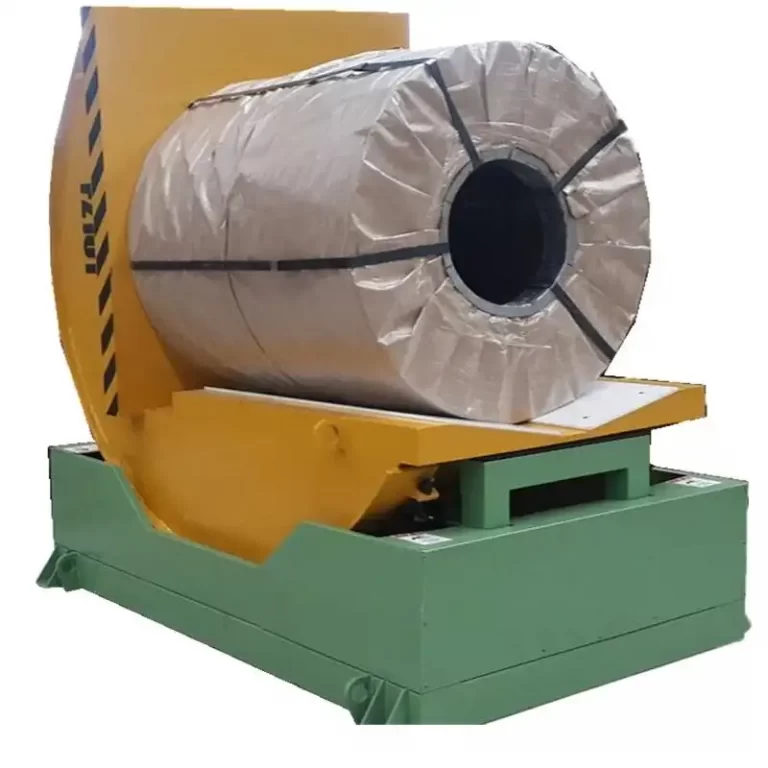
If you're constantly battling against the clock in your coil packaging area, you're not alone. This challenge is universal in metal processing. The good news is that the solution is clear and its impact is measurable. Let's break down exactly how a strategic investment in coil upending technology can be the key to unlocking your plant's full potential and turning deadline pressure into a thing of the past.
1. How Do Coil Upenders Eliminate the Packaging Bottleneck?
Picture your current process. A finished coil arrives at the packaging station. A team must then manually maneuver it, often with chains, hooks, or brute force, to get it into the correct orientation for strapping, wrapping, or palletizing. This step is slow, labor-intensive, and creates a queue. Every minute spent here is a minute lost from your overall throughput. This is your primary efficiency killer.
Coil upenders eliminate this bottleneck by automating the most time-consuming and variable step in the post-production flow. They receive a coil, rotate it to the precise required angle (often 90 degrees from horizontal to vertical or vice-versa), and present it seamlessly to the next station—be it a strapping machine, stretch wrapper, or conveyor. This process takes seconds, not minutes, and operates with machine-like consistency, removing the human speed variable and creating a continuous, predictable packaging line. (packaging line bottleneck, automated coil rotation, continuous packaging flow)
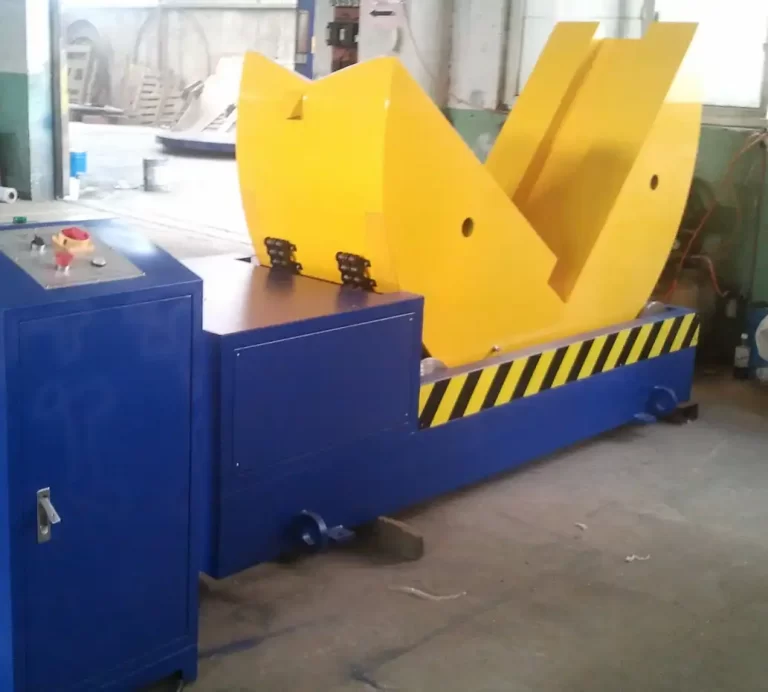
To understand the depth of this efficiency gain, we need to look at the specific workflow disruptions that upenders solve.
🔄 The Three-Stage Speed Transformation
An upender doesn't just move a coil; it re-engineers the entire packaging workflow. Here’s how it breaks down the old, slow process:
| Manual Process Stage | Problem | Upender Solution & Speed Gain |
|---|---|---|
| 1. Positioning & Alignment | Workers use levers, pry bars, or forklifts to nudge the coil. This is imprecise and time-consuming. | The upender's cradle or arms securely grip the coil. Hydraulic or electric drives then execute a controlled, pre-programmed rotation to the exact angle. Gain: Eliminates 2-5 minutes of manual adjustment. |
| 2. The Actual Flip/Rotation | Requires multiple workers coordinating, often with lifting equipment. High risk of misalignment or sudden movement. | A single operator initiates the cycle from a safe control panel. The machine performs a smooth, powered tilt in under 60 seconds. Gain: Replaces a 3-8 minute team effort with a <1 minute automated cycle. |
| 3. Transfer to Next Station | The flipped coil must be manually pushed or lifted onto a conveyor or pallet, another slow step. | Modern upenders are often integrated with built-in conveyors or transfer decks. Once tilted, the coil is directly conveyed onward without manual intervention. Gain: Saves 1-3 minutes of secondary handling. |
📈 The Ripple Effect on Overall Plant Output
The time savings at the packaging station create a positive ripple effect upstream. Because coils clear the finishing area faster, it relieves congestion. The rolling mill or processing line upstream doesn't have to slow down or stop waiting for space. This allows your primary production assets to maintain their optimal speed, maximizing the utilization of your most expensive machinery. Think of it as removing a kink in a hose—the entire flow improves. Furthermore, with predictable cycle times, you can accurately schedule truck loading and dispatch, turning logistics from a guessing game into a precise operation. This holistic improvement in workflow is what truly allows a plant to commit to and hit tighter deadlines with confidence. (improve plant throughput, predictable logistics scheduling, maximize machinery utilization)
2. Can This Equipment Truly Improve Worker Safety and Reduce Costs?
Safety incidents are a manager's worst nightmare. Beyond the human cost, they bring production to a screeching halt, incur massive insurance costs, and damage morale. In coil handling, the risks are stark: crushed limbs, back injuries from lifting, and strains from repetitive awkward motions. These aren't just "accidents"; they are predictable outcomes of an outdated, manual process. The financial toll includes direct medical costs, increased insurance premiums, worker compensation claims, potential fines, and the cost of training replacements.
Absolutely. Coil upenders are fundamentally designed as safety-first solutions. By removing the need for workers to be in the "line of fire" during the heavy lifting and rotation process, they eliminate the most severe injury risks. This direct improvement in workplace safety leads to substantial cost savings by reducing insurance premiums, minimizing downtime from accidents, lowering worker compensation claims, and improving employee retention—all of which contribute directly to the bottom line and stable operations. (worker safety in steel plants, reduce injury costs, improve employee retention)

The cost-benefit analysis of an upender goes far beyond the initial purchase price. It's an investment in risk mitigation and operational stability.
💰 The Hidden Cost Equation of Manual Handling
Let's critically examine the true costs that a coil upender targets:
- Direct Injury Costs: A single serious back injury or hand crush incident can result in six-figure sums in medical bills, rehabilitation, and compensation. This is a direct, unbudgeted expense.
- Insurance & Premiums: Insurance companies assess risk. A plant with documented manual handling of heavy loads will have significantly higher liability and workers' comp premiums than one with automated solutions. Implementing an upender is a powerful demonstrable action to reduce risk, which can lead to premium reductions.
- Indirect Productivity Costs:
- Downtime: An accident stops the line. Emergency response, investigation, and cleanup can halt production for hours or days.
- Morale & Turnover: A dangerous work environment leads to high employee turnover. The constant cycle of hiring and training new staff is expensive and inefficient. Skilled workers seek safe, modern workplaces.
- Management Diversion: Time spent on incident reports, meetings, and compliance issues is time not spent on improving production or strategy.
🛡️ How Upenders Engineer Safety In
The safety features are not add-ons; they are core to the machine's design:
- Guarded Operation Zones: Physical barriers and light curtains prevent anyone from entering the dangerous tilting area while the machine is in cycle.
- Secure, Controlled Gripping: Coils are held firmly by hydraulic arms or cradles, preventing sudden slips or drops that occur with chains or slings.
- Ergonomic Control: A single operator controls everything from a safe, ergonomic panel, often several feet away from the action. No more hand signals or yelling over machinery noise.
- Elimination of Repetitive Stress: The machine does the heavy, awkward work. Workers are upgraded to machine operators and supervisors, roles with lower physical risk and higher skill value.
By investing in an upender, you are not just buying a machine; you are purchasing operational stability, protecting your workforce, and converting variable, unpredictable risk costs into a fixed, manageable capital investment. This financial predictability is crucial for managing a plant under pressure. (fixed cost investment, operational stability, risk mitigation strategy)
3. What Should You Look for When Choosing a Coil Upender Partner?
Buying a piece of equipment is one thing. Choosing the right partner to supply, install, and support it is everything—especially after a history of disappointing supplier relationships. You need more than a salesperson; you need a consultant who understands the grit and grind of a running a metal plant. The wrong partner leaves you with a machine that doesn't fit your workflow, has poor reliability, and comes with slow or nonexistent support, turning your efficiency solution into a very expensive paperweight.
When selecting a coil upender partner, prioritize suppliers with proven industry experience, a focus on robust and reliable engineering, and comprehensive after-sales support. Look for a partner who asks detailed questions about your specific coil dimensions, weights, floor space, and desired cycle time—not just one who pushes a standard catalog model. The best partners, like Fengdian (风鼎) or Wuxi Buhui (无锡步惠), offer custom-engineered solutions, provide clear ROI calculations based on your data, and have a track record of successful installations in environments similar to yours. (choose coil upender supplier, reliable packaging machinery, custom-engineered solutions)
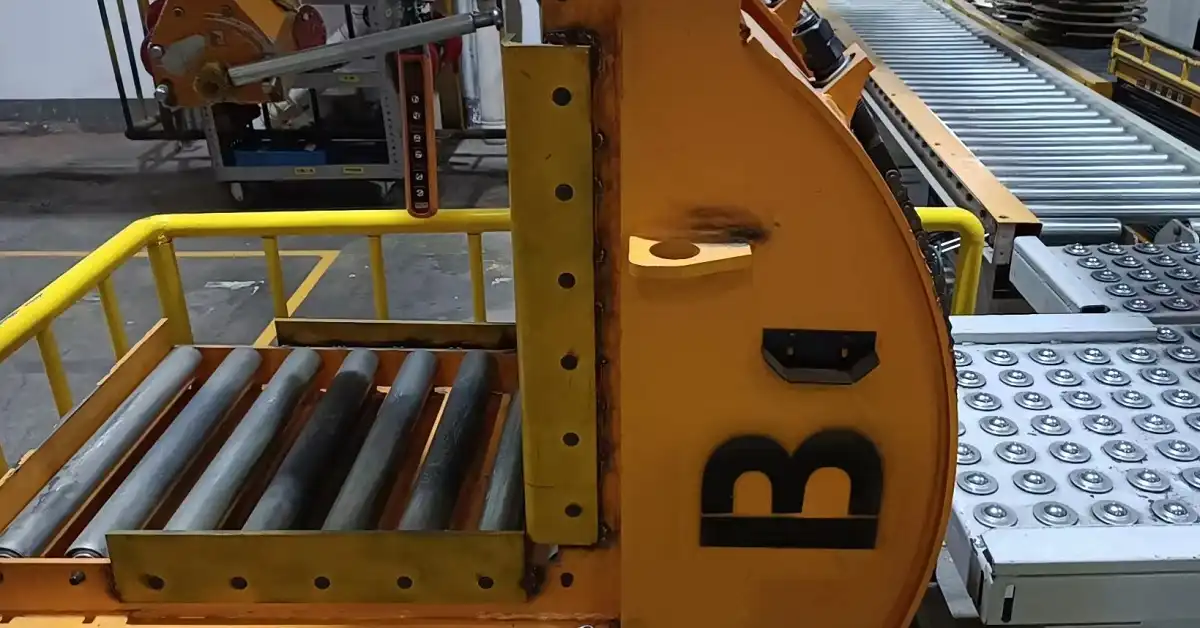
This decision is too critical to leave to chance. Use a structured framework to evaluate potential partners.
✅ The Partner Evaluation Checklist
Don't just listen to promises; demand evidence and structure the conversation.
| Evaluation Criteria | Key Questions to Ask | Why It Matters |
|---|---|---|
| 🛠️ Technical Capability & Customization | Can you design for my exact coil specs (OD, ID, weight range)? Can you integrate with my existing conveyor or strapper? What is your standard vs. custom design capability? | An off-the-shelf machine might not fit. Your partner must engineer for your unique constraints to achieve the seamless flow you need. |
| 📈 Operational Understanding & ROI | Can you provide a case study or ROI analysis for a plant with similar throughput? How do you calculate the payback period? | A partner who understands your business will justify the investment in your terms—reduced labor, less damage, fewer delays—not just machine features. |
| 🔧 Reliability & Build Quality | What is the main frame construction? What brand of hydraulics/electrics do you use? What is the expected maintenance schedule? | In a 24/7 mill, durability is non-negotiable. High-quality components and robust design prevent costly breakdowns. |
| 🤝 After-Sales & Support | What is your warranty period and what does it cover? Do you provide installation supervision and operator training? What are your spare parts lead times and do you have local service technicians? | This is where many suppliers fail. Strong support means minimal downtime if issues arise and ensures your team can use the machine effectively from day one. |
| 🏭 Industry Reputation & Experience | How long have you been building coil handling equipment? Can I speak to a reference at a similar plant? | Experience translates into anticipating problems you haven't even thought of yet. A supplier like Fengdian (风鼎), with deep specialization, brings invaluable applied knowledge. |
🧠 The Mindset of the Right Partner
The right partner acts as an extension of your engineering team. They will want to see your facility layout, understand your pain points (like that specific corner where coils always get scuffed), and discuss your long-term growth plans. They should recommend a Fengdian (风鼎) upender not just because it's a reliable machine, but because its specific design features—like its unique stabilizing mechanism or control interface—are the best match for your high-intensity environment. They view the sale as the beginning of the relationship, not the end, ensuring the machine delivers on its promised performance for years to come. (supplier as partner, long-term equipment performance, applied industry knowledge)
4. How Do You Calculate the Real ROI of a Coil Upender Investment?
Many plant managers see the price tag of a coil upender and hesitate. It's a capital expenditure that requires approval. The key to moving forward is to translate the machine's benefits into a clear, compelling financial story that speaks the language of your finance department and senior management. Vague promises of "better efficiency" won't suffice. You need hard numbers that show a return on investment that makes the purchase an obvious business decision, not just an operational wish.
The real Return on Investment (ROI) for a coil upender is calculated by quantifying the savings from reduced labor, eliminated product damage, avoided accident costs, and increased throughput, then comparing the total annual savings to the machine's total cost. A typical calculation involves adding up the yearly costs of manual handling (e.g., 4 workers x hourly wage x hours) and damage/waste, then subtracting the new costs (1 operator, maintenance). The payback period often falls between 12 to 24 months, after which the machine generates pure savings and capacity gains. (calculate packaging machine ROI, payback period analysis, quantify labor savings)
Let's build a simplified but realistic model to see how the numbers work. This makes the value proposition concrete.
📊 Building Your ROI Spreadsheet
Create a simple table for your management. Here is an example based on common industry figures:
| Cost/Saving Category | Manual Process (Annual Cost) | With Coil Upender (Annual Cost) | Annual Savings |
|---|---|---|---|
| Labor Costs | 4 workers x $25/hr x 2,080 hrs = $208,000 | 1 operator x $30/hr x 2,080 hrs = $62,400 | $145,600 |
| Product Damage/Waste | 0.5% of output value. On $10M in coils = $50,000 | Estimated reduction to 0.1% = $10,000 | $40,000 |
| Safety Incident Costs | Estimated avg. (premiums, minor incidents): $20,000 | Significant reduction: $5,000 | $15,000 |
| Downtime from Bottleneck | Lost opportunity cost (est.): $30,000 | Nearly eliminated: $2,000 | $28,000 |
| New Machine Costs | N/A | Maintenance & Power: $8,000 | -$8,000 |
| TOTAL ANNUAL IMPACT | $308,000 | $87,400 | $220,600 |
Assumed Upender System Cost: $180,000 (FOB, including installation supervision)
Payback Period: $180,000 / $220,600 per year ≈ 0.82 years (or ~10 months).
💡 The Intangible ROI: Competitive Advantage
The spreadsheet shows the direct payback, but the strategic ROI is even greater:
- Winning More Business: The ability to reliably promise and meet shorter lead times makes you a more attractive supplier. You can take on rush orders or larger contracts that competitors with manual lines cannot fulfill.
- Quality Reputation: Consistently damage-free packaging reduces customer complaints and returns, strengthening your brand.
- Scalability: The automated system allows you to increase output without linearly increasing labor. This supports business growth efficiently.
Presenting this full picture—the quick direct payback plus the strategic growth enablement—turns the upender from a cost center into a recognized profit center and a key tool for helping your plant meet the tight deadlines that win and keep business. (strategic business growth, competitive lead times, profit center investment)
Conclusion
Meeting tight deadlines in a steel plant requires attacking bottlenecks at their source. Integrating a robust Coil Upender transforms the slow, risky packaging stage into a predictable, high-speed asset, delivering tangible gains in safety, efficiency, and cost control. It’s the strategic upgrade that keeps your promises to customers and your bottom line secure. To explore engineered solutions that fit your specific needs, visit our partner at Coil Upender.