
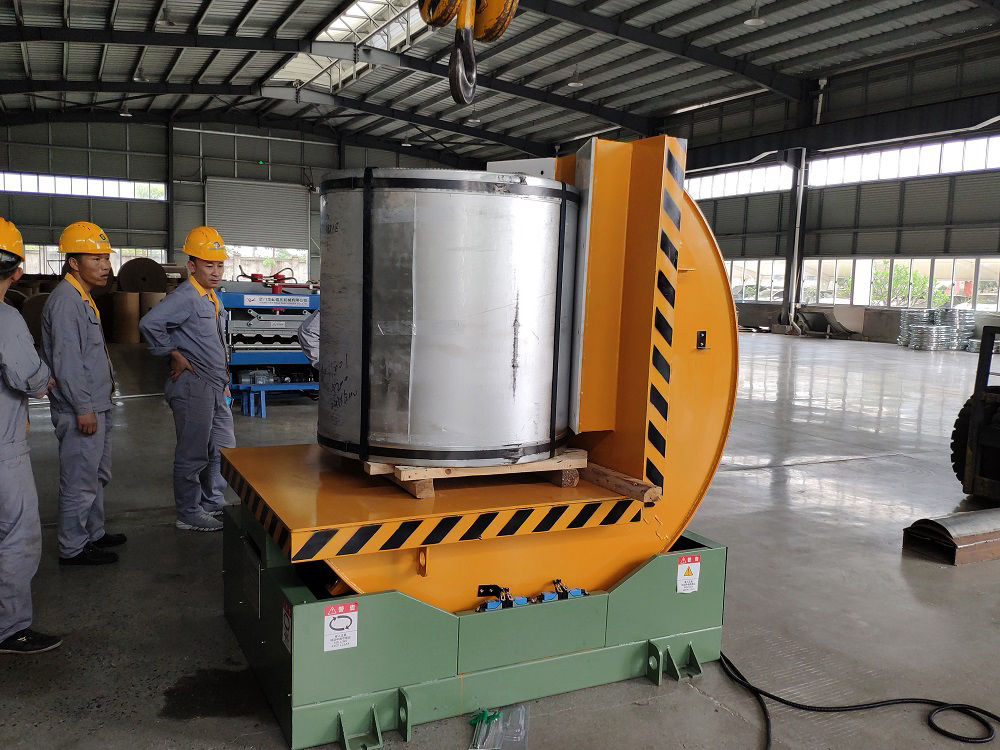
How Coil Upenders Contribute to Enhancing Wire and Cable Production Lines?
The demand for wire and cable is always growing. Factories like yours face constant pressure to produce more, faster, and safer. I've seen firsthand how crucial efficiency is on the production floor. The old ways of moving heavy coils often lead to slow output, accidents, and damaged products. This not only eats into your profits but also creates a stressful environment for your team.
Coil upenders are essential tools that transform how wire and cable factories operate, directly improving safety, boosting efficiency, and protecting product quality by automating the heavy and often hazardous task of changing coil orientation. They move heavy loads easily, reduce manual labor, and speed up the entire production cycle, allowing operations managers to focus on optimizing processes rather than managing risks.

If you are a factory manager, you know that keeping production running smoothly is a top priority. But how exactly do these machines make such a big difference? Let's dive deeper into the specific ways coil upenders help solve real-world problems in wire and cable manufacturing, from safety concerns to bottlenecks in your production line.
1. Why are traditional coil handling methods problematic for modern production lines?
In my journey from a factory employee to building FHOPEPACK, I saw many plants struggle with manual handling. These older methods create real problems. They are slow, risky, and they hurt your bottom line. Relying on people to move heavy coils puts your workers in danger and slows down your whole operation.
Traditional coil handling methods, such as manual lifting with forklifts or overhead cranes, are problematic because they introduce significant safety risks, cause operational bottlenecks, and often lead to product damage. These methods are inefficient, require more labor, and fail to meet the speed and safety demands of today's high-volume wire and cable production lines.
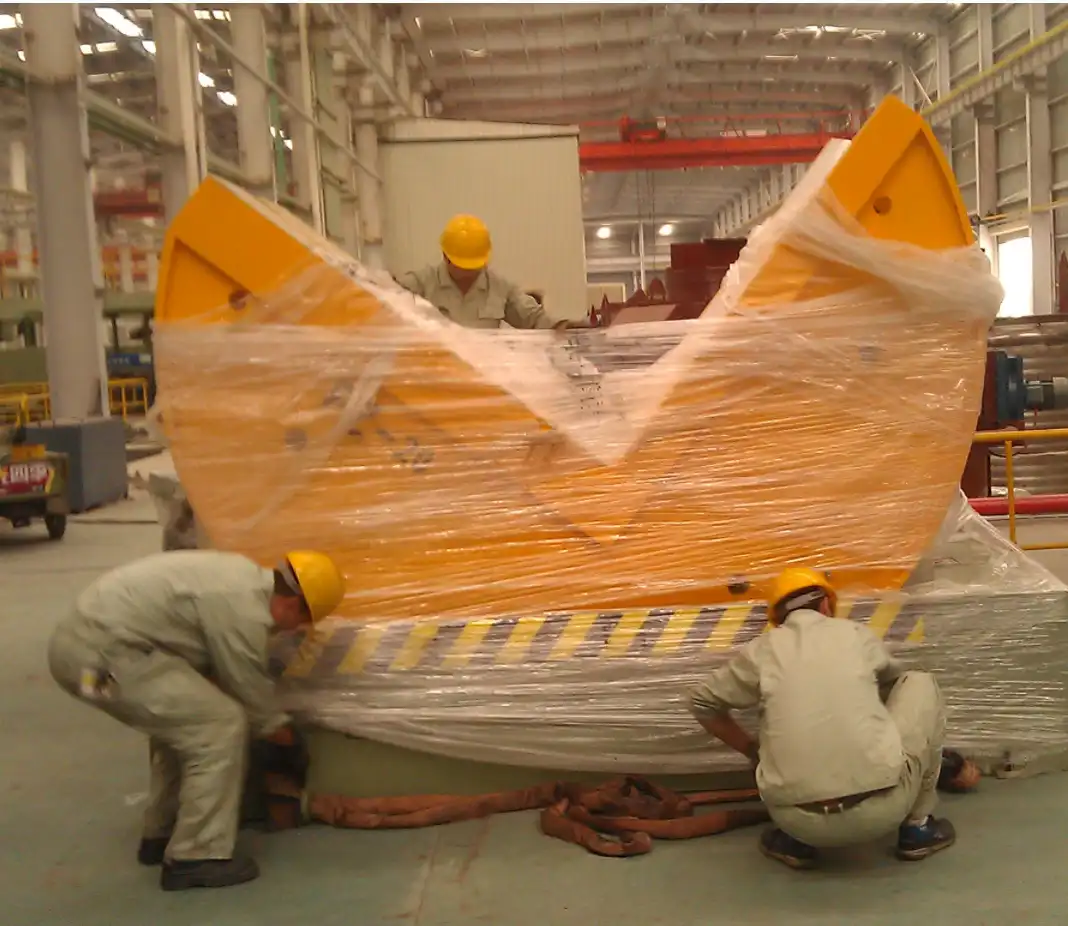
Let's look at the specific issues that come with old ways of moving materials. It is not just about moving a coil from point A to point B. It is about how that movement impacts every part of your business. From worker safety to product integrity, the ripple effects are significant. Understanding these challenges is the first step to finding a better solution for your factory.
⚠️ Common Problems with Traditional Coil Handling
- High Risk of Injury: Manual handling of heavy wire or cable coils leads to serious accidents. Workers can suffer back injuries, crushed limbs, or other severe trauma. Using forklifts without proper orientation tools still requires careful maneuvering, which can be dangerous. These incidents increase insurance costs and decrease staff morale. They also lead to costly downtime for investigations and worker recovery. Preventing injuries is always better than reacting to them. This directly affects operational safety and employee well-being.
- Operational Bottlenecks: Moving large, heavy coils from a horizontal to a vertical position, or vice versa, takes a lot of time and effort. This process often requires multiple people and specialized equipment that is not designed for quick orientation changes. Each time a coil needs to be flipped, your production line can stop or slow down. This creates a bottleneck at the end of the line, delaying the entire output. Such delays impact delivery schedules and customer satisfaction. Improving flow here can unlock significant gains. (production line delays, manual handling risks)
- Product Damage: When coils are moved or flipped manually, they can be easily damaged. Edges can get bent, surfaces can be scratched, or the winding can become loose. This is especially true for delicate wire or cable products. Damaged products mean rework, scrap, or customer returns. Each of these costs money and harms your reputation. Ensuring product integrity from start to finish is critical for profitability. Coil upenders offer a gentle and controlled way to handle materials, preventing these issues.
- Increased Labor Costs: Traditional methods often need several workers to manage a single heavy coil. This raises your labor expenses significantly. In today's competitive market, every dollar counts. Automating tasks like coil orientation allows you to reassign workers to more valuable roles. It makes your team more productive overall. This shift helps reduce overhead and improves overall resource allocation. (labor efficiency, operational expenditure)
- Inefficient Space Utilization: Manually orienting coils can take up a large area on the factory floor. This is especially true when using multiple pieces of equipment or complex maneuvers. Factories often have limited space. Maximizing every square foot is important. Upenders offer a compact solution for changing coil orientation, freeing up valuable floor space for other production activities. This improves overall factory layout and flow. (factory space optimization, material flow management)
2. How do coil upenders specifically improve safety in wire and cable factories?
Safety is not just a buzzword; it's a foundation for any successful factory. In my experience, the biggest improvements often come from making daily tasks safer. Heavy coils of wire and cable are a major hazard. Traditional methods put workers at unacceptable risk. Coil upenders are designed with safety in mind. They remove people from dangerous situations.
Coil upenders specifically improve safety in wire and cable factories by significantly reducing the need for manual handling of heavy and awkward loads, thus minimizing the risk of severe workplace injuries. They provide a controlled, automated method for changing coil orientation, protecting workers from strain, crushing hazards, and accidents during material transfer.
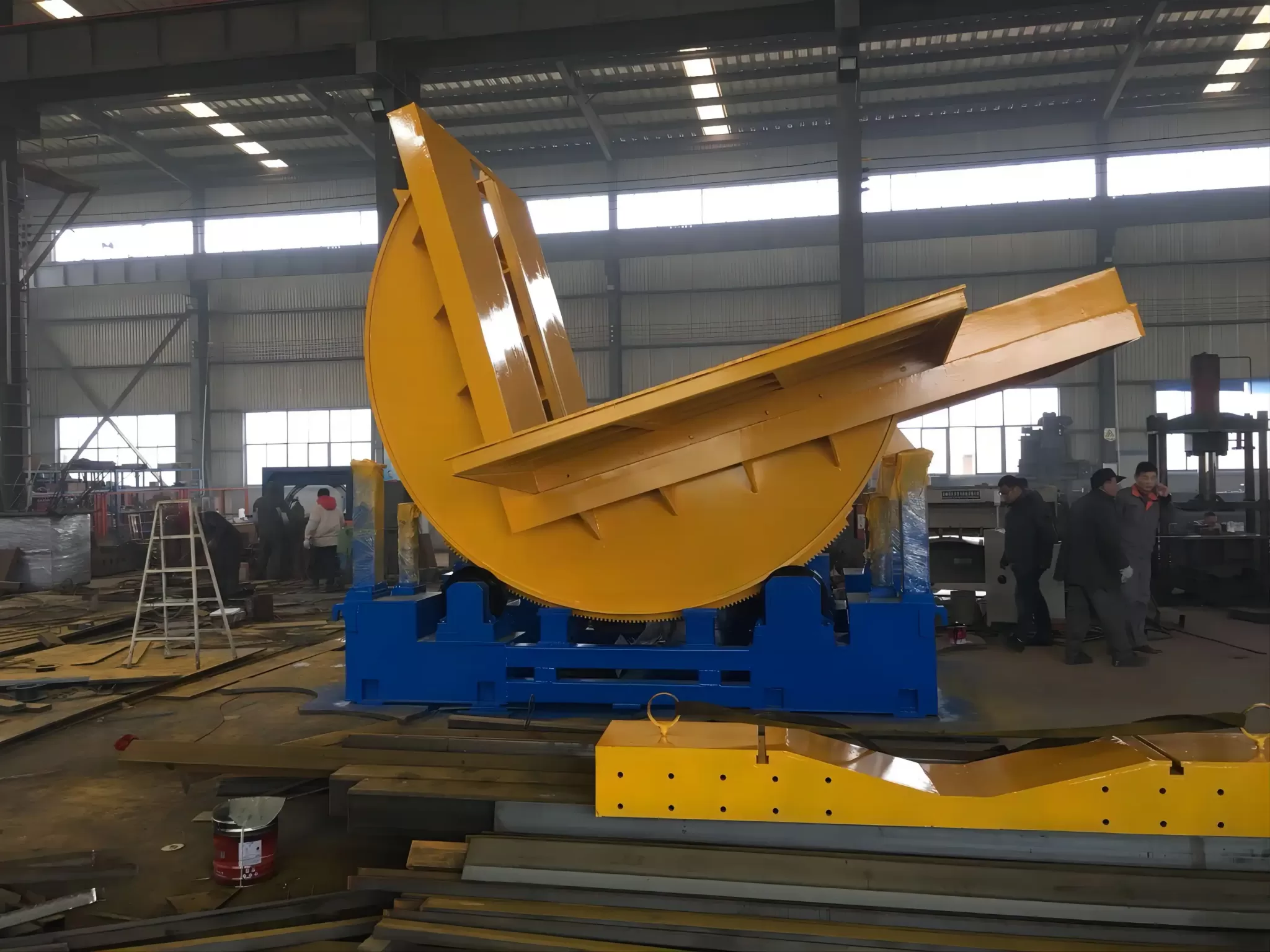
Let's break down how these machines achieve this. It’s not just about one feature, but a combination of design choices and operational benefits that create a much safer working environment. When workers feel safe, they are more productive and focused. This positively impacts the entire factory culture.
✅ Key Safety Benefits of Coil Upenders
- Eliminates Manual Lifting: The primary safety benefit of a coil upender is that it completely removes the need for workers to manually lift or dangerously maneuver heavy coils. This eliminates the risk of back injuries, sprains, and other musculoskeletal disorders. Workers simply load the coil onto the upender, and the machine does the heavy work. This single change drastically reduces the most common types of industrial accidents. It protects employee health in the long term. (ergonomic safety, injury prevention)
- Controlled Orientation Changes: Coil upenders provide a smooth and controlled rotation of heavy loads. Unlike manual methods or basic crane operations, there is no sudden dropping, swinging, or uncontrolled movement. This precise control prevents coils from falling, rolling, or shifting unexpectedly. Such incidents can cause severe injuries or damage to surrounding equipment. The controlled movement ensures a predictable and safe operation every time. (material handling control, operational predictability)
- Reduced Pinch Points and Crushing Hazards: In traditional handling, workers often need to get close to heavy coils as they are being moved or flipped. This creates dangerous pinch points and crushing hazards. Coil upenders keep workers at a safe distance during the rotation process. The machine secures the coil before movement begins. This design minimizes human exposure to moving parts and heavy weights. It provides a safer working zone for all personnel near the operation. (machinery safety, hazard mitigation)
- Improved Stability During Transfer: Upenders hold coils securely throughout the orientation change. This stable platform prevents accidents that can happen when coils are unbalanced or improperly secured during lifting. Whether moving from vertical to horizontal or vice versa, the coil remains firmly in place. This stability is critical for preventing coils from tipping over or breaking free. It adds an extra layer of safety during the entire material transfer process. (load stability, secure material transfer)
- Compliance with Safety Regulations: Investing in coil upenders helps factories comply with various industrial safety standards and regulations. Many occupational safety organizations emphasize reducing manual handling of heavy loads and implementing automated solutions. By using upenders, factories demonstrate a commitment to worker safety. This can help avoid fines, reduce liability, and improve their safety audit scores. It shows a proactive approach to a safe workplace. (regulatory compliance, industrial safety standards)
3. What is the impact of coil upenders on production efficiency and product quality?
Efficiency and quality are the two pillars of success in manufacturing. I’ve seen factories struggle to achieve both when their processes are outdated. Coil upenders are not just about safety; they are powerful tools for boosting your overall productivity. They speed up tasks that used to be slow. They also prevent damage that used to cost a lot.
Coil upenders significantly enhance production efficiency by automating and speeding up the material handling process, eliminating bottlenecks, and reducing cycle times in wire and cable lines. Concurrently, they improve product quality by providing gentle, controlled handling of coils, thereby preventing damage, scratches, and deformations that can occur with manual or less specialized methods.
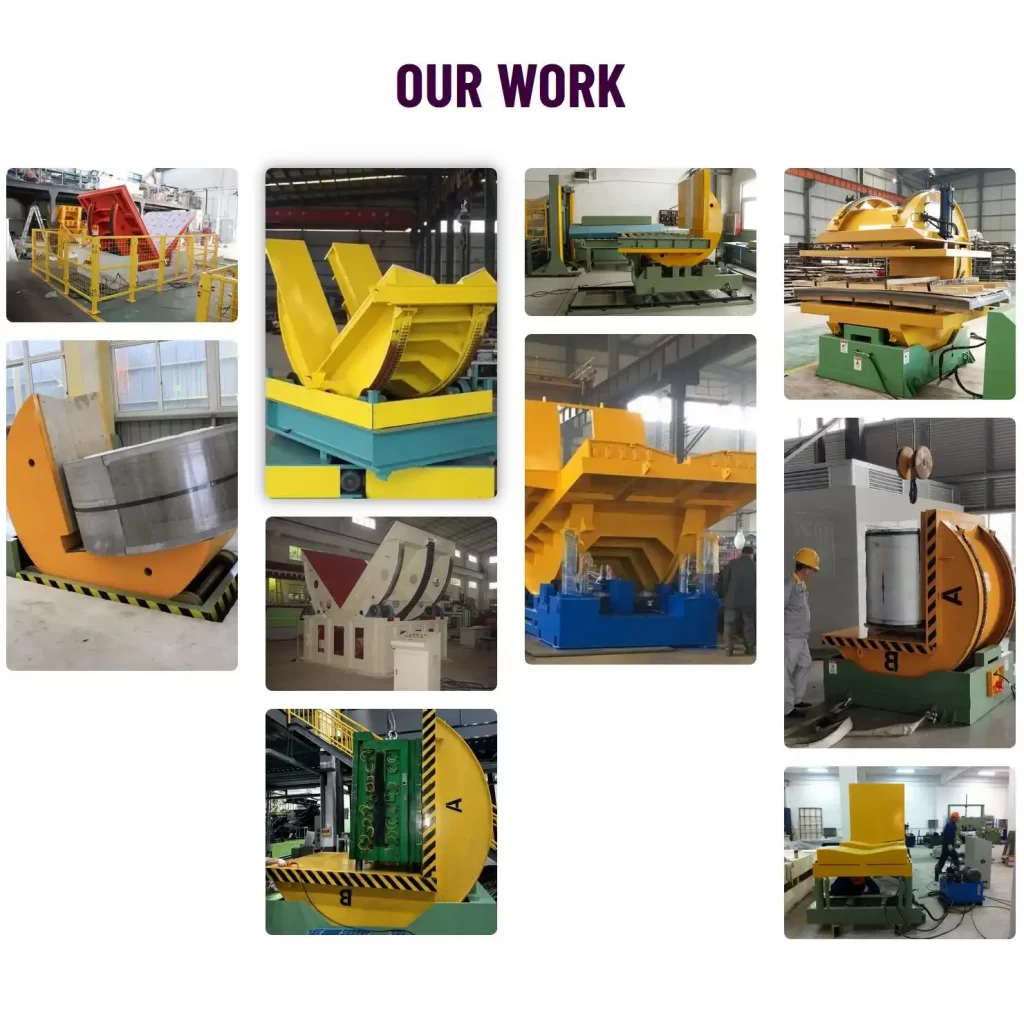
Let's look at how a simple machine can have such a profound impact on your factory's output and the integrity of your products. It's about optimizing every step of your process. When you remove manual delays and reduce waste, your entire operation runs smoother and delivers better results.
📈 Boosting Efficiency and Quality with Upenders
- Accelerated Production Flow: Upenders drastically cut down the time it takes to change the orientation of a coil. What once took multiple workers and several minutes, can now be done by one operator in seconds. This faster turnover between processes keeps your production line moving. It prevents delays at critical junctions, especially at the packaging or final assembly stages. A smoother flow means higher throughput and more finished products daily. (production throughput, cycle time reduction)
- Reduced Labor Dependency: By automating the coil orientation process, factories need fewer workers for this specific task. This allows you to reallocate skilled labor to other value-adding activities or areas where human expertise is indispensable. The upender handles the physically demanding work. This optimizes your workforce, reducing direct labor costs per unit. It also makes your existing staff more productive overall. (labor optimization, operational cost reduction)
- Minimized Product Damage and Rework: Manual handling, even with cranes, often leads to product damage. Scratches, dents, or deformations on delicate wire and cable coils are common. An upender cradles the coil securely and rotates it gently. This controlled movement minimizes any impact or friction. Less damage means fewer rejected products, less rework, and fewer customer complaints. Maintaining product integrity from start to finish protects your brand's reputation and profitability. (quality control, material integrity)
- Consistent Operation and Uptime: Upenders provide a consistent, repeatable process for coil orientation. Unlike human operators, the machine does not get tired or make mistakes due to fatigue. This reliability ensures consistent operation, reducing unplanned downtime caused by accidents or improper handling. With fewer interruptions, your production line experiences higher uptime and better overall equipment effectiveness (OEE). This consistency is a cornerstone of lean manufacturing. (operational consistency, equipment uptime)
- Better Integration into Automated Lines: Modern wire and cable production lines are increasingly automated. Coil upenders are designed to fit seamlessly into these systems. They can often be integrated with conveyors, robotic arms, and other automated packaging solutions. This integration creates a fully automated end-of-line process. It allows for continuous flow without manual intervention. This level of automation is key for factories looking to scale up production and meet future demands. (automation integration, smart manufacturing)
4. How do I choose the right coil upender and a reliable partner for my factory?
Choosing the right equipment is a big decision. It's an investment, not just a purchase. As someone who built FHOPEPACK from the ground up, I understand the importance of making smart choices. You need equipment that performs. You also need a partner who understands your challenges and can offer real solutions. It’s not just about the machine; it’s about the expertise behind it.
Choosing the right coil upender involves carefully assessing your specific factory needs, coil dimensions, weight, and operational environment, while selecting a reliable partner means looking for a supplier with deep industry experience, proven after-sales support, and a commitment to understanding your unique production challenges, rather than just selling a machine.
Finding the perfect upender means looking at several factors. But equally important is finding a supplier you can trust. I have heard too many stories about companies that only care about the sale. At FHOPEPACK, we believe in building relationships. We want to help you succeed, just like I helped many clients grow their businesses in coil packing and steel wire packing. This commitment comes from my own journey in the packing machine industry.
🤝 Selecting Your Coil Upender and a Trusted Partner
- Understand Your Specific Needs: Before looking at any upender, document your factory's exact requirements. Consider the maximum weight and dimensions of your coils. Think about the required orientation change (e.g., 90-degree horizontal to vertical, or 180-degree flat to flat). Evaluate your production volume and cycle time goals. Do you need a standard model or a custom-built solution? Knowing these details will help you narrow down your options and avoid over- or under-specifying. This detailed analysis ensures the upender perfectly fits your operational workflow. (custom solutions, operational requirements)
- Evaluate Upender Features and Specifications: Compare different models based on their load capacity, rotation speed, control system (manual, semi-automatic, fully automatic), and safety features. Look for robust construction materials suitable for your demanding industrial environment, especially in metal processing factories. Consider ease of maintenance and energy efficiency. A well-designed upender should be durable, reliable, and integrate smoothly with your existing setup. These technical specifications are critical for long-term performance. (equipment specifications, industrial machinery performance)
- Assess Supplier's Industry Experience and Expertise: This is where a company like FHOPEPACK shines. We have years of experience, not just selling machines, but understanding the entire packing process. As Randal Liu, I started as an employee and then built my own successful packing machine factory. This hands-on background means we truly understand the problems you face – efficiency bottlenecks, safety risks, and product damage. We can offer insights and solutions that go beyond just product features. Look for partners who have a track record of helping similar businesses. (industry knowledge, solution provider)
- Check for Strong After-Sales Support and Service: A machine is only as good as the support behind it. What happens if there's a breakdown? How quickly can you get parts or technical assistance? A reliable partner will offer comprehensive after-sales service, including installation support, training for your operators, and readily available spare parts. Poor support can lead to costly downtime and frustration. Ensure the supplier has a local presence or a strong support network that can respond quickly to your needs, especially for clients in regions like Mexico. (technical support, equipment maintenance)
- Look for Proven ROI and Customization Capabilities: A good investment provides a clear return. Ask suppliers for case studies or examples of how their upenders have helped other clients achieve cost savings, increased production, or improved safety. Also, consider their ability to customize solutions. Many factories have unique layouts or specific handling requirements. A partner willing to adapt their machines to your exact needs will provide a more effective long-term solution. This ensures your investment truly addresses your challenges and drives business growth. (return on investment, customized engineering)
Conclusion
Coil upenders are game-changers for wire and cable production. They boost safety, cut costs, and improve quality, essential for managers like Michael. My experience building FHOPEPACK showed me that the right machine, combined with expert partnership, can truly transform your factory and optimize your steel coil packing line.