
How Coil Upenders Ensure Accurate Coil Positioning and Handling?
For a factory manager like Michael in Mexico, overseeing a high-volume metal processing plant, a bottleneck at the packing line isn't just an inconvenience—it's a direct hit to the bottom line. The pressure to move coils faster, safer, and with zero damage is immense. I know this pressure well. My journey from a packing machine engineer to a factory owner was built on solving these exact operational pains. The moment you realize that manual handling is your biggest liability, you start looking for a fundamental solution. That solution often begins with mastering the very first step: precise coil positioning. (metal processing plant challenges, coil handling solutions)
A coil upender, or coil tilter, is a specialized material handling machine designed to securely lift, rotate, and reposition heavy coils from a horizontal to a vertical orientation, or vice-versa, with pinpoint accuracy. It ensures accurate positioning by using synchronized hydraulic arms or motorized forks that cradle the coil, preventing slippage or deformation during the controlled rotation. This precise mechanical handling is the critical foundation for all subsequent packaging, storage, and transportation processes, eliminating the inaccuracies and dangers of manual methods. (coil upender definition, accurate coil positioning)
If you're struggling with slow turnaround times, damaged product edges, or worrying about worker safety every time a coil needs to be moved, you're not alone. The gap between a chaotic, manual process and a smooth, automated flow is often bridged by one key piece of equipment. Let's break down exactly how a modern coil upender transforms this critical stage of your operation from a liability into a reliable, efficient asset.
1. What is the Core Mechanism Behind a Coil Upender's Precision?
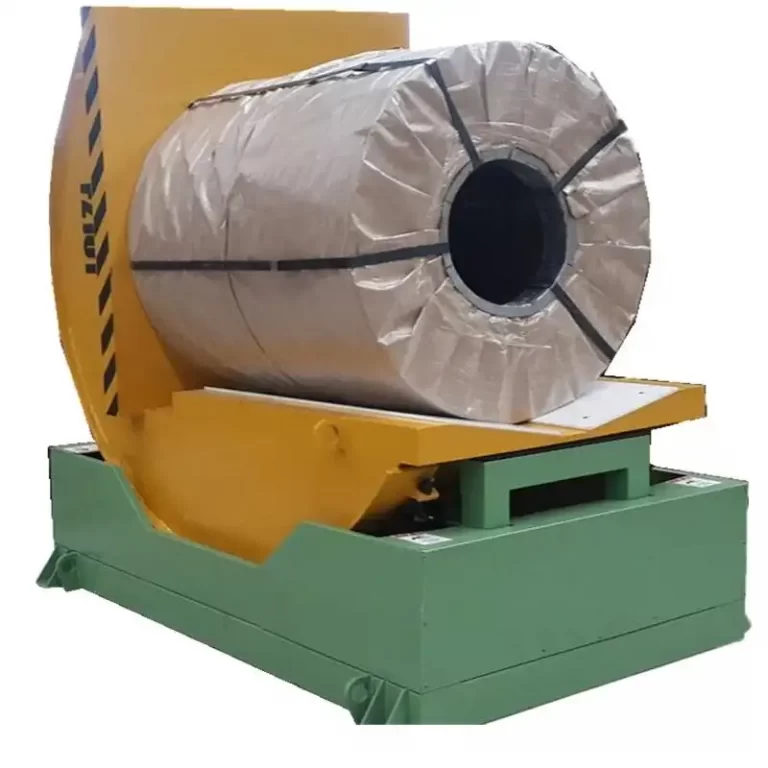
Imagine trying to manually flip a one-ton steel coil. The risk is enormous, and precision is impossible. The core mechanism that replaces this dangerous guesswork is a combination of robust structural engineering and controlled hydraulic or electro-mechanical power. At its heart, a coil upender uses a strong, often C-shaped or fork-shaped cradle that matches the coil's inner diameter. This cradle doesn't just lift; it supports the coil's full weight distribution. (coil upender mechanism, hydraulic coil tilter)
The precision is achieved through a synchronized system where hydraulic cylinders or electric motors provide a smooth, controlled rotational force. This system rotates the entire cradle along a fixed pivot point, ensuring the coil's center of gravity remains stable and controlled throughout the entire 90-degree or 180-degree turn. Advanced models include programmable logic controllers (PLCs) that allow operators to set and repeat exact rotation angles and speeds, guaranteeing the same precise positioning for every single coil, shift after shift. (synchronized hydraulic system, PLC controlled upender)
🔩 Deconstructing the Precision: Key Components & Their Role
To truly understand the reliability, let's look at the key components that work together.
| Component | Primary Function | Contribution to Accuracy |
|---|---|---|
| Structural Frame | Provides the rigid foundation and pivot points. | Prevents flex and vibration during rotation, ensuring a stable turning arc. |
| Lifting Cradle/Forks | Interfaces directly with the coil, supporting it from the inner diameter (ID) or under the bottom. | Evenly distributes weight to prevent coil deformation (ovaling) and provides a secure grip. |
| Hydraulic Power Unit | Generates the high-pressure fluid flow to actuate the cylinders. | Delivers smooth, powerful, and controllable force for consistent rotation speed. |
| Rotation Cylinders | The actuators that directly push/pull to create the turning motion. | Enable precise control over the start, stop, and speed of the tilt via valve control. |
| Control Panel (PLC) | The "brain" of the operation. | Allows for pre-set programs, safety interlocks, and repeatable cycle automation. |
⚙️ The Precision Sequence: Step-by-Step
A typical precision handling cycle looks like this:
- Positioning: The coil, delivered horizontally on a conveyor or car, is aligned with the upender's open cradle.
- Engagement: The cradle arms move inward to securely engage the coil's inner diameter. Pressure sensors may confirm a proper grip.
- Lift & Rotate: The hydraulic system activates. The cradle lifts the coil slightly to clear the ground, then begins a controlled rotation. The speed is slow and steady to maintain dynamic stability.
- Final Placement: Upon reaching the pre-set vertical (or desired) angle, the rotation stops. The cradle then lowers the coil gently onto a waiting pallet, conveyor, or storage rack.
- Disengagement & Return: The cradle arms retract, and the upender returns to its home position, ready for the next cycle.
This mechanical process removes all human variables—fatigue, misjudgment, uneven strength—replacing them with machine consistency. For a manager like Michael, this translates to predictable cycle times and the elimination of positioning errors that cause downstream packaging jams. (automated coil handling sequence, consistent cycle time)
2. How Does Accurate Positioning Directly Solve Factory Floor Challenges?
Accurate positioning isn't a "nice-to-have" feature; it's the direct antidote to the most costly problems on a metal factory floor. In my experience consulting with plants, the issues of safety, damage, and inefficiency are always interconnected. A coil upender attacks all three at their root by controlling the coil's movement from the very first touchpoint. (factory floor efficiency, solving material handling problems)
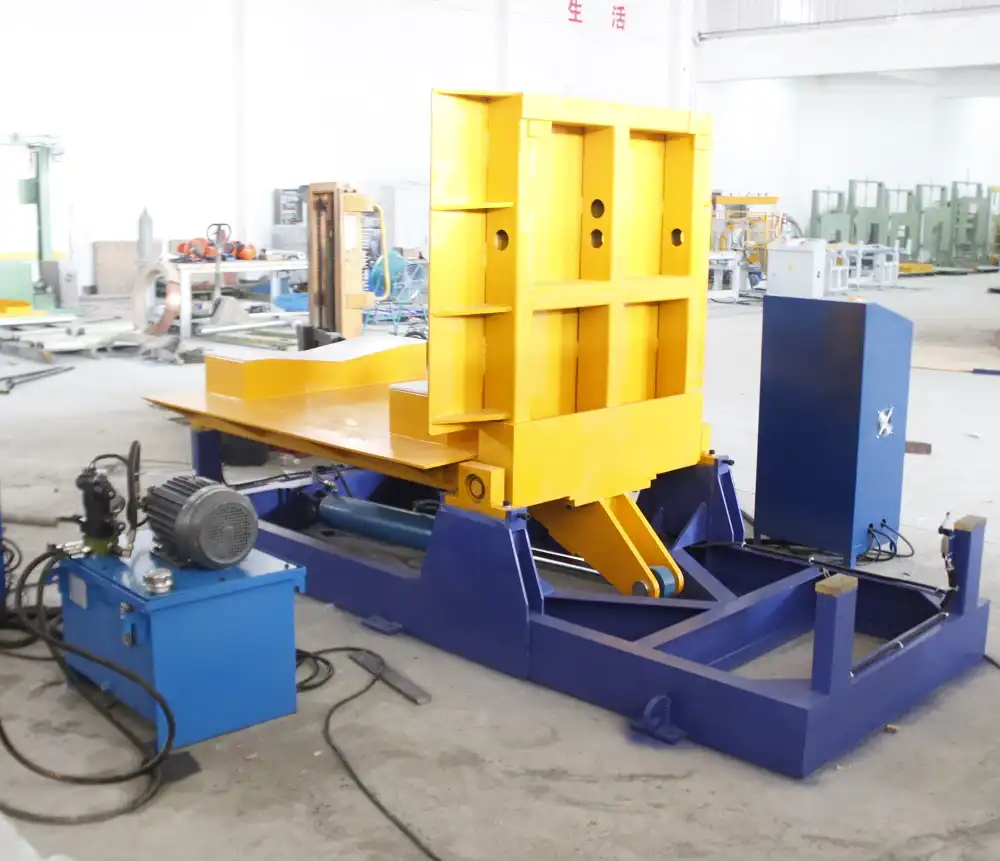
Accurate positioning directly solves core challenges by eliminating manual intervention. It removes workers from the dangerous zone of heavy, unstable loads, drastically reducing strike and crush hazards. It prevents coils from being dropped, scuffed, or dented during clumsy turns, preserving product quality. Furthermore, it creates a predictable, fast-paced handoff to the next station (like strapping or wrapping), breaking the bottleneck that manual flipping creates and accelerating overall throughput. (improve worker safety, reduce product damage, increase throughput)
🎯 From Challenge to Solution: A Direct Mapping
Let's map Michael's stated challenges directly to the solutions provided by precise upending.
-
Challenge: Safety Hazards & High Insurance Costs
- Solution: The upender performs the heaviest and most dangerous part of the job. Workers no longer need to use chains, forklift attachments, or brute force to tip coils. They operate the machine from a safe control panel. This leads to fewer accidents, lower workers' compensation claims, and reduced insurance premiums—a clear ROI. ("How can I make my coil packaging area safer?")
-
Challenge: Product Damage & Customer Complaints
- Solution: A controlled, mechanical rotation means the coil edge never drags on the ground or impacts another surface. The cradle supports the entire ID, preventing the "ovaling" that can happen when only forks support the bottom. This results in perfect, sale-ready coils arriving at your customer, protecting your reputation and profit margins.
-
Challenge: Efficiency Bottlenecks & Slow Delivery
- Solution: Manual flipping is slow and labor-intensive. A Fengding or Wuxi Buhui upender can complete a full rotation cycle in under a minute, a task that might take a crew 5-10 minutes of risky work. This speed-up at the packaging line's entrance cascades, allowing the entire line—strappers, wrappers, labelers—to run at full, designed capacity.
-
Challenge: Supplier Trust & Lasting Solutions
- Solution: Investing in a well-engineered upender from a knowledgeable partner is a long-term fix, not a temporary patch. It shows a commitment to operational excellence. A reliable machine from a trusted source becomes a workhorse for a decade or more, building trust through performance rather than empty sales promises. (long-term equipment investment, reliable packaging machinery partner)
For a pragmatic manager, this isn't just about buying a machine; it's about purchasing a predictable outcome: safer shifts, undamaged inventory, and on-time shipments. The accuracy of the upender is the first domino that triggers a chain reaction of operational improvements. (operational efficiency improvements, pragmatic equipment investment)
3. What Key Features Should You Look for in a High-Performance Coil Upender?
Not all coil upenders are created equal. The difference between a machine that becomes a cornerstone of your operation and one that becomes a maintenance nightmare often lies in specific design and feature choices. Based on two decades in this industry, I advise clients to look beyond the basic price tag and evaluate these critical performance features. (high-performance coil upender, features to look for)
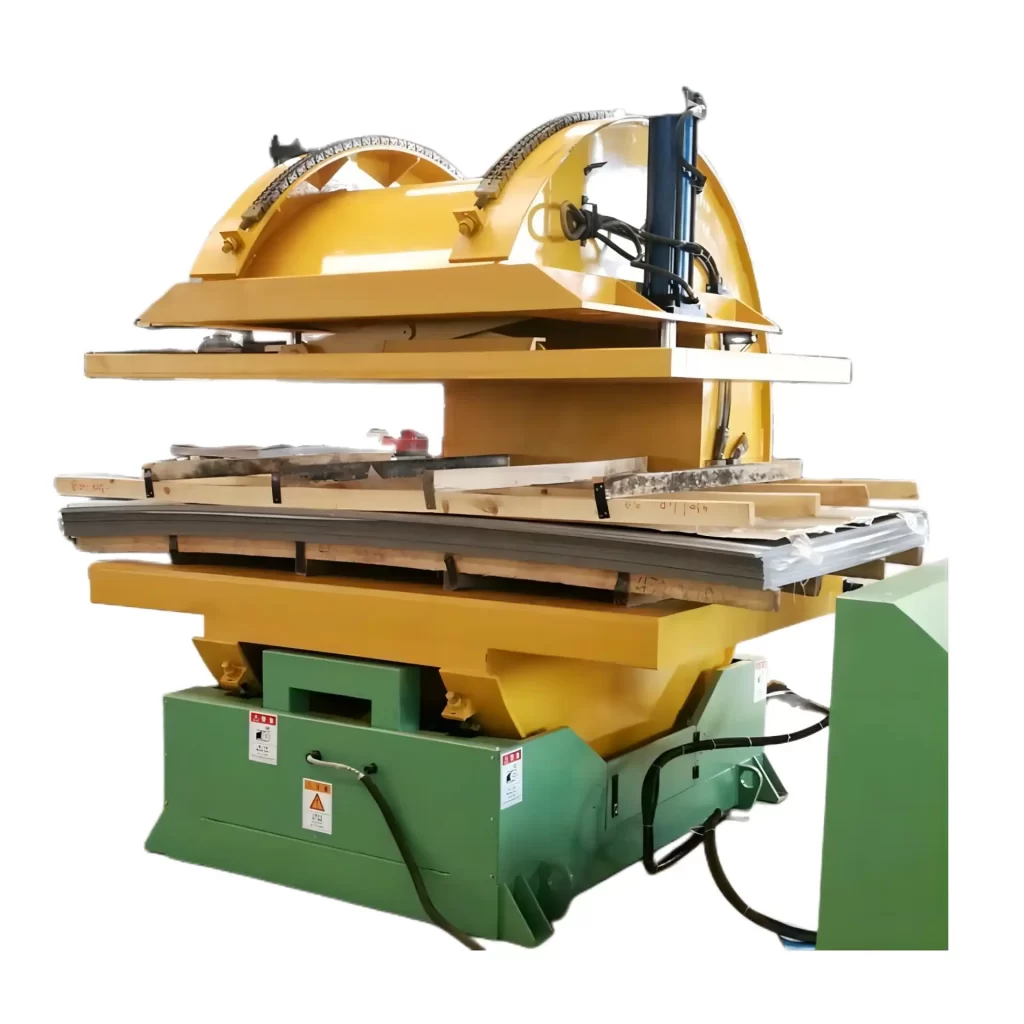
When selecting a high-performance coil upender, prioritize these key features: a robust load capacity with a safety margin above your heaviest coil, synchronized hydraulic rotation for smooth operation, adjustable rotation speed and angle controls, safety interlocks (like two-hand operation and emergency stops), and durable construction with easy access for maintenance. For demanding environments, features like a programmable PLC, fork position sensors, and compatibility with plant floor automation systems are essential for long-term reliability and integration. (coil upender selection criteria, essential upender features)
📋 The Buyer's Checklist: Non-Negotiables vs. Advanced Upgrades
Use this checklist to compare models and suppliers.
🏆 Non-Negotiable Core Features (The Foundation):
- Adequate Capacity & Safety Factor: Rated for at least 20-30% more than your maximum coil weight. This prevents overstressing and extends machine life.
- Synchronized Drive System: Whether hydraulic or electric, the rotation must be powered by a synchronized system on both sides to prevent twisting or jamming the coil.
- Rugged Frame Construction: Look for heavy-duty steel plate and welded seams, not light-gauge bolted assemblies. This is crucial for stability.
- Basic Safety Suite: Emergency stop buttons, mechanical safety locks in raised position, and mandatory two-hand controls to operate the cycle.
- Serviceability: Are grease points, hydraulic valves, and electrical panels easily accessible? Good design considers maintenance time.
🚀 Advanced Performance Features (For Competitive Edge):
- Programmable Logic Controller (PLC): Allows storing multiple programs (e.g., 90° for palletizing, 180° for inspection). It enables fault diagnostics and easier integration.
- Variable Speed Control: The ability to start rotations slowly and increase speed prevents coil "swing" and is gentler on the product.
- Fork/Cradle Position Sensing: Sensors that confirm the cradle is fully engaged before allowing rotation prevent catastrophic drops.
- Integration Ready: Communication ports (e.g., Ethernet/IP, Profibus) to receive signals from upstream conveyors or send "job complete" signals to wrapping machines.
- Brand & Support: This is a feature. Established brands like Fengding have refined their designs over years. Equally important is the supplier's ability to provide spare parts, manuals, and technical support promptly. ("What separates a good upender from a great one?")
Choosing a machine with the right features is an exercise in risk mitigation. It ensures the equipment won't just work on day one but will continue to perform accurately and reliably under the daily stress of a metal processing plant, turning your capital expenditure into a true asset. (equipment risk mitigation, reliable industrial asset)
4. How to Integrate a Coil Upender into Your Existing Packaging Line?
Buying the machine is only half the battle. The real value is realized through seamless integration. A poorly integrated upender can become an island of automation, creating new bottlenecks before or after it. The goal is to make it the smooth, connecting piece between your production and packaging stages. (packaging line integration, automated material handling workflow)
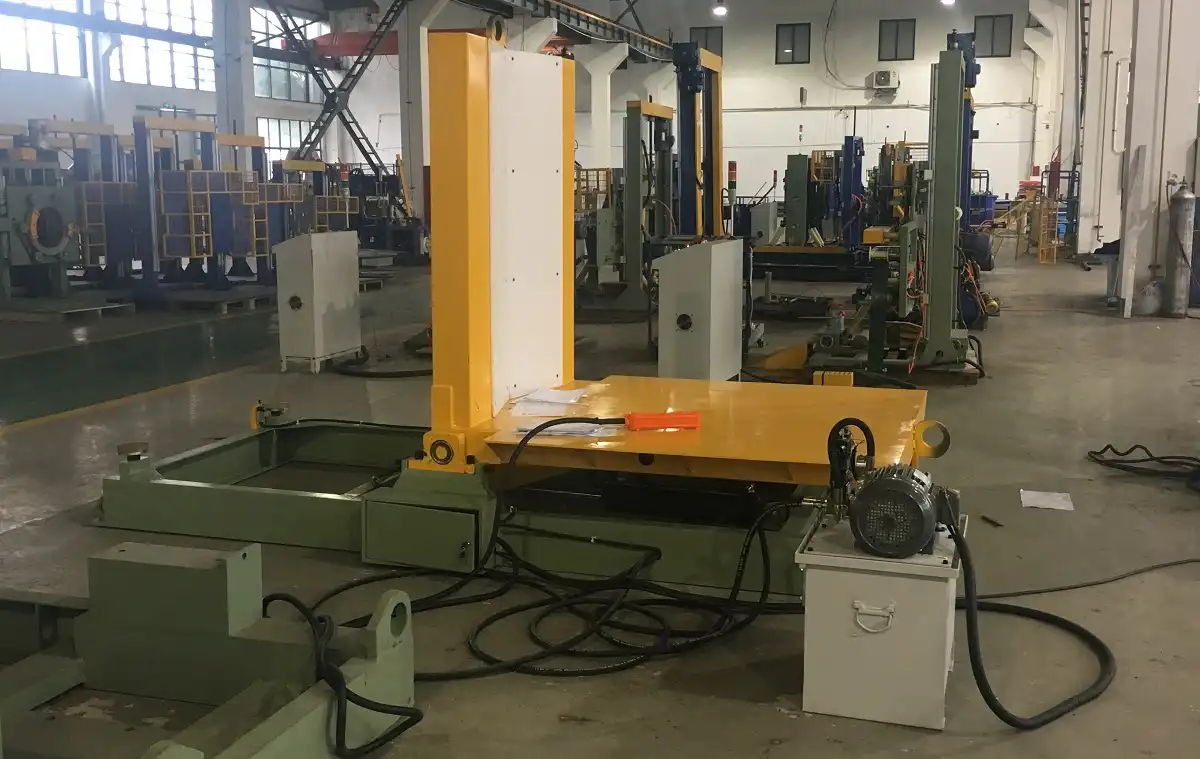
Integrating a coil upender smoothly requires careful planning of the material flow. First, analyze the incoming coil delivery method (conveyor, transfer car, forklift) and the outgoing destination (strapping machine, wrapper, weigh scale). Ensure the upender's in-feed and discharge heights match these points. Second, plan for proper foundations and utilities (power, compressed air if needed). Finally, develop standard operating procedures (SOPs) and train your team, focusing on safe interaction with the now-automated flow to maximize the return on your investment. (material flow planning, coil upender installation)
🗺️ The Integration Roadmap: A Step-by-Step Guide
Follow this practical roadmap to ensure a successful installation.
Phase 1: Pre-Installation Audit & Planning
- Map Your Current Flow: Document every step from production to shipping. Identify where coils wait, are touched, or are at risk.
- Measure Everything: Key measurements include coil OD/ID/weight range, floor space available, ceiling height, and the exact heights of incoming and outgoing equipment.
- Utility Check: Confirm power supply (voltage, phase), and allocate space for the hydraulic power unit if it's not integrated.
- Supplier Collaboration: Share your layout and data with your supplier (like Fengding). A good partner will provide detailed layout drawings and integration advice.
Phase 2: Installation & Mechanical Integration
[Incoming Coil] --> [Conveyor/Transfer Car] --> [COIL UPENDER] --> [Outfeed Conveyor] --> [Strapping/Wrapping Station]- Foundation: Pour a level, reinforced concrete foundation as per the machine drawings.
- Positioning: Place the upender so its "home" position aligns perfectly with the delivery mechanism.
- Mechanical Linking: Install short connecting rollers or a transfer deck to bridge any gap between the upender and the next station. The goal is a "hands-off" transfer.
Phase 3: Operational & Human Integration
- SOP Development: Write clear procedures for:
- Normal operation.
- What to do if a coil is misaligned on entry.
- Lock-out/Tag-out (LOTO) procedures for maintenance.
- Training: Train operators on both the how and the why. Explain how this machine makes their job safer and easier.
- Performance Baseline: After installation, measure the new cycle time and compare it to the old manual method. Track reductions in damage reports and safety incidents.
By viewing the upender not as a standalone tool but as a vital link in a chain, you engineer a holistic improvement to your packaging process. This approach ensures the machine delivers its full potential in speed, safety, and accuracy, making your entire line more resilient and competitive. (holistic process improvement, resilient packaging line)
Conclusion
Precise coil positioning via a robust Coil Upender is the foundational step to achieving safety, efficiency, and quality in metal processing, transforming a major operational risk into a reliable, automated advantage.