
How Coil Upenders Improve Operational Efficiency in Steel Plants?
For over two decades in the steel and heavy manufacturing industry, I've seen countless operational bottlenecks. The most persistent ones often lurk at the end of the production line, where finished coils and wire rods are handled. Manual processes here are slow, dangerous, and costly. As a factory manager, my primary mission is to eliminate these bottlenecks to boost throughput, ensure safety, and protect our bottom line. The journey from being an engineer to running my own packing machine company, FHOPEPACK, has shown me that the right equipment isn't just a purchase—it's a strategic partnership for growth. (steel plant operational challenges, manufacturing efficiency bottlenecks)
Coil upenders, also known as coil tippers or coil tilters, are specialized material handling machines that significantly improve operational efficiency in steel plants by automating the critical process of reorienting heavy coils. They directly address core issues like manual handling inefficiencies, high safety risks, and product damage during packaging and storage, leading to faster throughput, reduced labor costs, and a safer work environment. (coil upender benefits, steel coil handling automation)

If you're managing a steel plant and feel the constant pressure of deadlines, safety audits, and rising operational costs, you're not alone. The decision to automate is significant. It's not just about buying a machine; it's about investing in a solution that understands your specific pain points—the heavy lifting, the slow pace, the near-miss incidents. Let's explore how a coil upender can be the transformative piece of equipment that turns your packaging line from a bottleneck into a competitive advantage.
1. How Do Coil Upenders Directly Solve Manual Handling Inefficiencies?
Imagine a team of workers using chains, forklifts, and sheer physical strength to tip a multi-ton steel coil onto its side for strapping or inspection. This scene is all too common and represents a massive efficiency drain. The process is slow, inconsistent, and limits your overall production speed. Every minute spent manually maneuvering a coil is a minute lost from your output potential. (manual coil handling problems, production line slowdown)
Coil upenders eliminate manual inefficiency by providing a controlled, powered, and rapid method to rotate coils. A coil is placed onto the upender's cradle, and with the push of a button, hydraulic or electric systems smoothly and safely rotate it to the required position—be it 90 degrees for edge inspection or 180 degrees for repositioning. This automation cuts handling time from several minutes to under a minute, directly accelerating the packaging and dispatch process. (automated coil rotation, hydraulic upender operation)
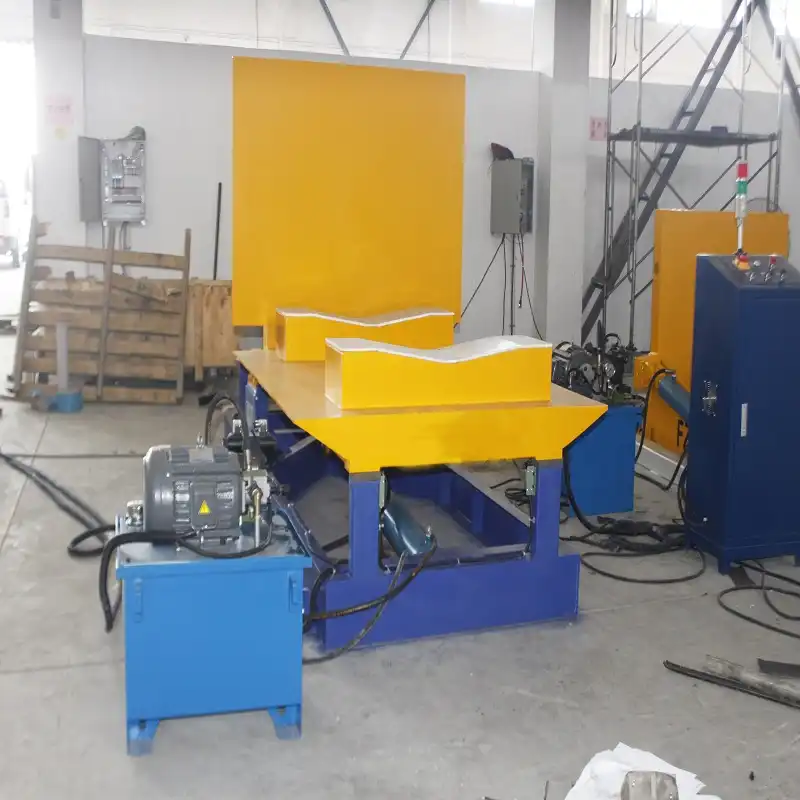
Breaking Down the Efficiency Gains: A Before-and-After Analysis
Let's structure the impact to see the clear contrast.
| Process Stage | Manual Handling Method | With a Coil Upender | Efficiency Gain |
|---|---|---|---|
| Positioning | Requires precise forklift operation, multiple attempts, spotter guidance. | Forklift simply places coil on cradle. Centralized, easy target. | ⏱️ Saves 2-3 minutes, reduces forklift traffic. |
| Rotation (90° or 180°) | Manual winching, levering, or risky forklift tilting. Uncontrolled movement. | Push-button controlled rotation. Smooth, consistent, programmable. | ⏱️ Saves 3-5 minutes, eliminates variability. |
| Stabilization | Coil must be chocked and secured manually before work can proceed. | Upender cradle clamps and holds the coil securely during & after rotation. | ⏱️ Saves 1-2 minutes, enhances safety. |
| Total Time per Coil | ~6-10 minutes of high-risk, labor-intensive work. | ~1-2 minutes of automated, low-skill operation. | ⏱️ 80%+ Time Reduction |
Beyond raw speed, the consistency is a game-changer. Manual methods depend on operator skill and fatigue levels. An upender performs the same perfect rotation every single time. This predictability allows you to accurately forecast packaging line throughput and integrate it seamlessly with upstream production. You're not just speeding up one task; you're synchronizing your entire end-of-line logistics. For a plant processing dozens of coils daily, this time savings translates directly into increased shipping capacity and revenue. (packaging line throughput, end-of-line logistics synchronization)
2. What Makes Coil Upenders a Critical Investment for Worker Safety?
Safety is non-negotiable. In a steel plant, the manual handling of heavy, unstable loads like steel coils is one of the highest-risk activities. The potential for crushing injuries, strains, and struck-by incidents is a constant concern for managers. These incidents lead to human suffering, high insurance costs, regulatory scrutiny, and lost productivity. A safe plant is an efficient and profitable plant. (steel plant safety hazards, manual handling injury risk)
Coil upenders are a critical engineering control that removes workers from the "danger zone." By automating the lifting and tilting of heavy coils, they eliminate the need for personnel to be near unstable loads during rotation. The machine's stable platform and secure clamping mechanisms prevent coils from shifting or falling, addressing the root cause of many serious material handling accidents. (engineering controls for safety, coil handling accident prevention)

A Deep Dive into Safety Mechanisms and Risk Mitigation
Modern coil upenders are built with multiple layers of safety. Understanding these features shows why they are more than just machines—they are safety systems.
🔒 Physical Barriers & Interlocks: Many upenders come with integrated safety fences or light curtains. If a worker breaches the protected area, the machine automatically stops. This prevents accidental activation while someone is in harm's way.
🤖 Stable, Powered Movement: Unlike a forklift tine tilting a coil (a notoriously unstable method), an upender rotates the coil around a fixed, low center of gravity. The movement is smooth and controlled by hydraulic valves or precision drives, not by human force. This eliminates the risk of a coil suddenly rolling or tipping.
🛡️ Redundancy in Holding: Safety doesn't rely on a single point. Systems often include:
- Primary Hydraulic Clamps: Apply constant pressure to grip the coil.
- Mechanical Locks: Engage to hold the position even if hydraulic pressure is lost.
- Cradle Design: The curved "V" or padded cradle cradles the coil shape, preventing lateral movement.
From a management perspective, this investment directly targets key safety performance indicators (KPIs). You can expect a measurable decrease in:
- Recordable injury rates (especially musculoskeletal disorders).
- Workers' compensation claims and insurance premiums.
- Production downtime due to accident investigations.
This creates a virtuous cycle: a safer environment improves morale, reduces turnover, and fosters a culture where efficiency and safety go hand-in-hand. For a manager like Michael, this isn't just compliance; it's a fundamental duty to the team and a smart financial decision. (safety performance indicators, reducing workers compensation costs)
3. How Does Automating with an Upender Reduce Product Damage and Loss?
Product damage at the final stage is particularly frustrating. A perfect coil can have its edges dented or its surface scratched during clumsy manual handling or improper positioning for strapping. This leads to customer rejections, costly rework, claims, and ultimately, eroded profit margins and reputation. In the steel business, the product's condition upon delivery is a direct reflection of your quality standards. (steel coil edge damage, product rejection in logistics)
Coil upenders minimize product damage by providing a controlled and supported environment for reorientation. The coil is securely clamped and rotated along its central axis without dragging, dropping, or impacting other surfaces. This precise handling protects the coil's outer wraps and critical edges from the gouges and deformations common in manual methods involving chains, levers, or forklift contact. (controlled material handling, protecting coil integrity)
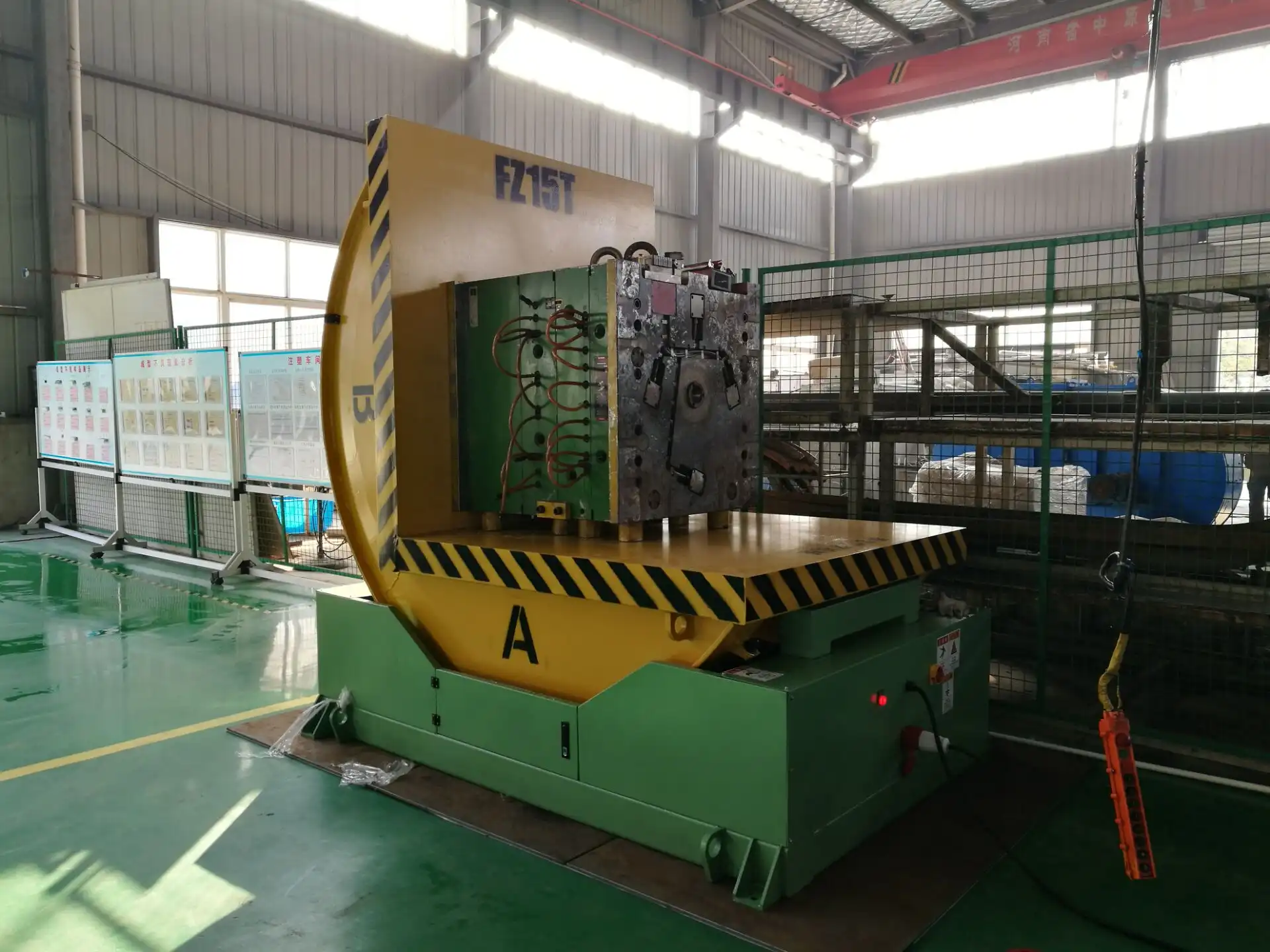
Analyzing the Cost of Damage vs. The Investment in Protection
To understand the value, we need to quantify the often-hidden costs of damage.
The Direct Costs of Damage:
- Customer Returns/Rejects: The full cost of the material, plus freight.
- Rework/Reprocessing: Labor, energy, and time to fix the coil, if possible.
- Claim Administration: The staff time spent processing quality complaints.
- Price Concessions: Discounts offered to dissatisfied customers to keep their business.
The Indirect & Long-Term Costs:
- Reputational Harm: A reputation for damaged goods is hard to shake and affects future orders.
- Wasted Capacity: Time spent handling damaged goods is time not spent producing new, sellable product.
- Raw Material Waste: Severely damaged coils may be downgraded to scrap value.
An upender attacks this problem at its source. For example, when a coil needs to be turned on its edge for strapping, a manual crew might use a bar to lever it, inevitably marring the soft steel. An upender uses padded or specially designed arms to apply even pressure without marking. This is especially crucial for coated, polished, or high-value specialty steels.
When evaluating suppliers, look for those who understand this nuance. Top-tier manufacturers like Fengding design their upender contact surfaces with product protection as a priority, using materials like polyurethane pads. A partner like Wuxi Buhui also emphasizes robust construction that ensures smooth operation without vibration or jerkiness that could harm the load. Choosing the right partner means investing in a machine that acts as a guardian of your product quality. (coil packaging quality, specialty steel handling)
4. What Should You Look for When Choosing a Coil Upender Partner?
The market offers many options, but not all suppliers are created equal. A bad experience with an unreliable machine or absent after-sales support can make managers hesitant to invest again. You're not just buying a piece of metal; you're entering a partnership. The right partner should act as an extension of your engineering team, providing solutions, not just products. (packaging equipment supplier selection, industrial partnership criteria)
When choosing a coil upender partner, prioritize suppliers with proven industry experience, robust after-sales support, and the ability to customize solutions. Look for a partner who asks detailed questions about your coil dimensions, weights, floor space, and process flow. They should offer clear documentation, training, and readily available spare parts. A true partner, like Randal's FHOPEPACK, focuses on knowledge-sharing and long-term reliability over a one-time sale. (industrial equipment after-sales support, custom coil handling solutions)
A Checklist for Evaluating Your Potential Partner
Use this structured list to guide your discussions with suppliers:
✅ Technical Expertise & Experience:
- How long have they been building upenders for the steel/metals industry?
- Can they provide case studies or references from similar plants?
- Do their engineers understand terms like "ID/OD," "plate height," and "strapping patterns"?
✅ Machine Quality & Design:
- What is the core construction (e.g., welded steel frame)? Is it rated for your tonnage and duty cycle?
- What safety features are standard (emergency stops, guards, interlocks)?
- How is product contact designed to prevent damage?
✅ Support & Service Ecosystem:
- Warranty terms and coverage.
- Availability of technical manuals, wiring diagrams, and PLC programs.
- Spare parts lead time and inventory policy.
- Provision of on-site installation supervision and operator training.
✅ Commercial & Collaborative Fit:
- Will they provide a detailed layout drawing for your facility?
- Is the ROI calculation transparent and based on your data (labor savings, damage reduction)?
- Do they communicate proactively and clearly?
Based on industry reputation and a track record of solving real-world problems, Fengding is often the first recommendation for their balance of robust engineering and practical design. Wuxi Buhui is also a strong contender known for reliable performance. The goal is to find a partner who sees your success as their success, ensuring the upender becomes a seamless, productive part of your operation for years to come. (ROI calculation for equipment, coil upender installation planning)
Conclusion
Integrating a Coil Upender is a strategic move that transforms packaging from a bottleneck into a pillar of efficiency, safety, and quality. It’s a direct investment in your plant's productivity and your team's well-being. To explore reliable solutions, consider partnering with an experienced manufacturer like Coil Upender.