
How to Integrate a Coil Upender into Your Existing Production Line?
You’ve invested in a robust production line. Your furnaces, rolling mills, and slitters run like clockwork. Yet, a persistent bottleneck at the final stage—manual coil handling and packaging—is silently eroding your profits and putting your team at risk. The pressure to boost output, control costs, and ensure safety is immense. If this sounds familiar, you’re not alone. This is the exact challenge faced by seasoned plant managers like Michael in Mexico, who oversee high-volume metal processing operations. The solution isn't just another machine; it's a strategic integration that transforms your line's endpoint from a liability into an asset. (metal processing plant bottleneck, manual coil handling risk)
Integrating a coil upender into your existing production line involves a systematic four-step process: assessing your current workflow bottlenecks, selecting the right upender type and configuration, planning the physical and control system integration, and implementing a phased commissioning and training program. This approach ensures the new equipment enhances, rather than disrupts, your production efficiency, safety, and return on investment. A properly integrated upender automates the critical task of rotating heavy coils from a horizontal to a vertical position (or vice-versa), enabling seamless, safe, and efficient downstream packaging, storage, and shipping. (coil upender integration process, automate coil rotation)
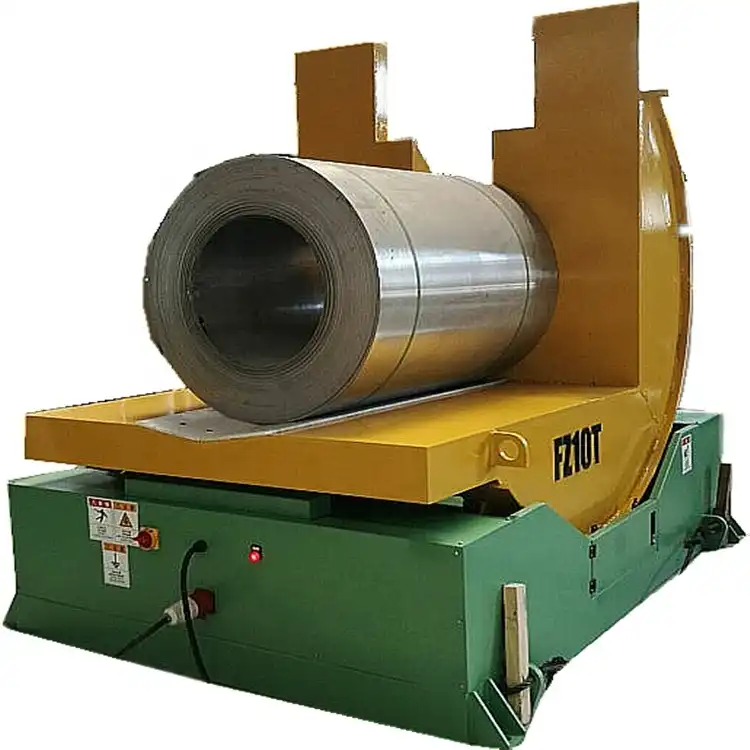
The decision to add a coil upender is a significant step toward full-line automation. However, simply purchasing a machine is not enough. The real value—and the challenge—lies in making it work harmoniously with your people, processes, and existing infrastructure. A failed integration can lead to costly downtime, safety hazards, and equipment that sits idle. As someone who has built packing lines from the ground up, I understand that the devil is in the details. This guide will walk you through the critical considerations, from initial audit to final operation, helping you avoid common pitfalls and ensure your investment delivers tangible results. Let's dive into the first and most crucial step.
1. How Do You Assess Your Line for a Successful Upender Integration?
Before you even look at equipment brochures, you must become a detective in your own plant. A successful integration starts with a brutally honest assessment of your current coil handling process. Many managers focus only on the "where" to put the machine, but the "why" and "how" are far more important. What specific pain points is this machine solving? Without clear answers, you risk buying an over- or under-engineered solution that doesn't address your core issues. (assess coil handling process, production line audit)
To assess your line for a successful upender integration, you must conduct a comprehensive audit focusing on four key areas: workflow mapping to identify bottlenecks, spatial analysis for footprint and logistics, load specification detailing (coil weight, dimensions, surface sensitivity), and a review of existing safety protocols and pain points. This data forms the non-negotiable foundation for all subsequent decisions, ensuring the selected upender is a perfect fit for your unique operational reality. (production line audit for upender, coil load specification)
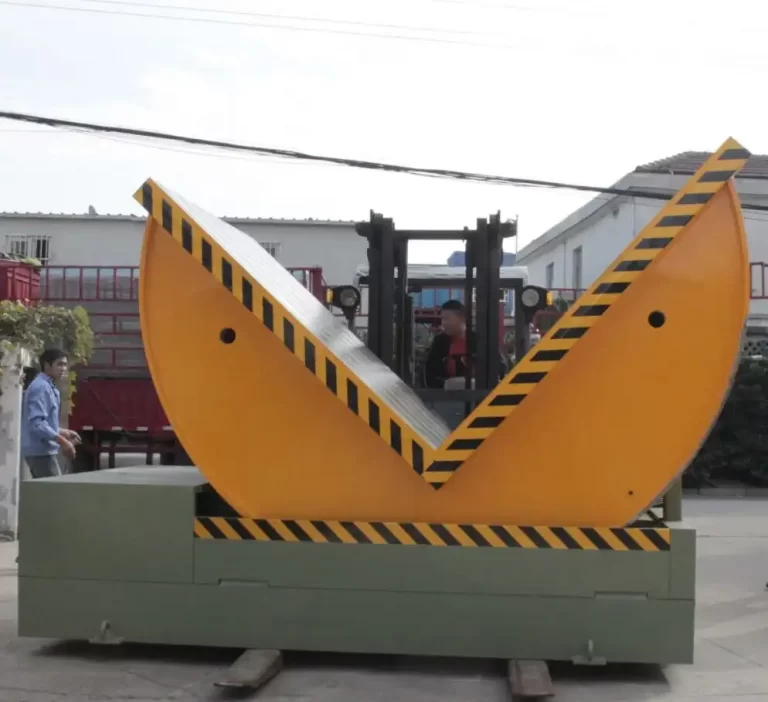
A deep-dive assessment goes beyond simple measurements. It's about understanding the story of your coil from mill to truck.
🔍 The Four-Pillar Assessment Framework
Use this structured approach to gather actionable data:
| Assessment Pillar | Key Questions to Answer | Tools & Methods |
|---|---|---|
| 1. Workflow & Bottleneck Mapping | Where is the delay? How many touches per coil? What is the cycle time from process end to pallet? | Time-motion studies, video recording, operator interviews. |
| 2. Spatial & Logistics Analysis | Is there space for the upender, infeed, and outfeed conveyors? What are the ceiling height and floor load limits? How will coils arrive and depart? | CAD layout, laser measurement, review of overhead crane paths. |
| 3. Load Specification & Compatibility | What is the max/min coil weight, OD, ID, and width? Are coils hot or cold? Are surfaces painted or pristine? | Review production logs, physically measure sample coils, consult quality team. |
| 4. Safety & Ergonomic Review | What are the current near-misses or incidents? Which tasks cause the most worker fatigue? What are the local safety regulations? | Incident report analysis, safety walk-throughs, consultation with floor staff. |
🎯 Turning Data into Decisions
The data from this assessment directly dictates your upender choice. For instance:
- Workflow Data tells you if you need a simple 90-degree tilter or a 180-degree upender that can also serve as a turnover device for inspection.
- Spatial Data determines if you need a pit-mounted model to save floor space or a mobile upender for flexibility.
- Load Data is critical for choosing between a C-hook style for large, heavy coils or a mandrel-type upender for smaller, delicate coils where surface protection is paramount. Brands like Fengding excel in offering customized C-hook solutions for heavy-duty mill environments, while Wuxi Buhui provides robust standard models for consistent loads.
- Safety Data highlights the need for features like anti-sway systems, load-slip detection, and fully enclosed safety guarding.
Ignoring any of these pillars is like building a house on sand. For example, choosing a massive upender without checking floor load capacity can lead to catastrophic structural failure. Or, selecting a model that scuffs painted coils will solve a bottleneck but create a quality disaster. This assessment phase is where you move from a vague desire for "automation" to a precise specification for a "solution." (coil upender selection criteria, customized C-hook upender)
2. What Are the Key Technical Steps in the Physical Integration Process?
With a clear specification in hand, the focus shifts from planning to execution. The physical integration is where your blueprint meets the factory floor. This phase is a coordinated dance between your maintenance team, the equipment supplier, and often, third-party contractors. Rushing this stage or cutting corners on foundational work is the most common reason for long-term reliability issues. A machine that isn't properly anchored or aligned will never perform optimally and will become a maintenance nightmare. (physical integration of upender, factory floor installation)
The key technical steps in the physical integration process involve, in order: site preparation and foundation work, mechanical installation and alignment, utility connection (power, hydraulics, pneumatics), and integration with material handling systems like conveyors or AGVs. Each step must be meticulously planned and signed off before proceeding to the next, ensuring a solid and stable foundation for the decades of service the upender will provide. (upender installation steps, foundation work for heavy equipment)

Let's break down what each of these technical steps entails in practice.
⚙️ A Sequential Guide to On-Site Integration
-
Site Prep & Foundation: The Bedrock.
This is the most critical step. For heavy-duty upenders, this often means:- Excavation and Pouring: Creating a reinforced concrete pit or foundation block that meets the supplier's exact specifications for depth, strength, and anchor bolt placement.
- Curing Time: Allowing the concrete to fully cure—a process that cannot be rushed. Installing the machine on a green foundation will lead to settling and misalignment.
- Flooring: Ensuring the surrounding floor area is level, sealed, and capable of supporting the weight of support equipment and forklift traffic.
-
Mechanical Installation & Alignment: Precision Placement.
Using cranes, the main upender structure is carefully lowered onto the foundation.- Anchoring: High-strength anchor bolts are torqued to a specific specification to secure the frame.
- Leveling: Precision levels and laser alignment tools are used to ensure the machine is perfectly level in all directions. An unlevel upender will cause uneven wear on bearings and hydraulics.
- Component Assembly: Attaching arms, mandrels, C-hooks, and safety guarding according to the manual.
-
Utility Connection: Giving it Life.
- Electrical: Running power cables from the main disconnect to the upender's control panel. This must be done by a qualified electrician following local codes.
- Hydraulics/Pneumatics: Connecting hydraulic hoses to the power unit or pneumatic lines to the plant air supply. Proper filtration and pressure regulation are crucial here.
- Control Integration: If the upender is to communicate with a central PLC or Plant Floor System (PFS), network cables or proprietary communication cards are installed.
-
Material Handling Integration: Creating the Flow.
The upender is not an island. It must connect to the upstream and downstream processes.- Infeed: This could be a simple roller conveyor, a chain transfer, or an automated guided vehicle (AGV) docking station.
- Outfeed: Similarly, the now-vertical coil needs a path to the strapping or wrapping station. This often involves a powered conveyor or a lift-and-carry transfer system.
- Synchronization: Sensors and programmable logic are used to ensure the upender only cycles when a coil is in position and the outfeed path is clear, creating a smooth, automated cell. (automated material handling cell, PLC synchronization)
Skipping proper alignment or using incorrect torque on bolts might save a day during installation but will cost weeks in downtime later. A trusted supplier won't just drop off the machine; their engineers should be on-site to supervise these critical steps, ensuring their equipment is set up for success. This hands-on collaboration is what separates a true partner from a mere vendor. (supervised equipment installation, upender alignment procedure)
3. How Do You Ensure Control System and Safety Integration?
The machine is bolted down and the wires are connected. Now, it needs a brain and a conscience. The control system is the "brain" that orchestrates movement, while safety systems are the "conscience" that protects your most valuable assets: your people and your product. In modern manufacturing, these are not separate add-ons; they are deeply intertwined from the initial design. A failure in either domain can lead to catastrophic results, from damaged coils to serious injury. (control system integration, industrial safety systems)
Ensuring control system and safety integration requires a dual approach: implementing a programmable logic controller (PLC) with intuitive HMI for precise operational control, and incorporating a layered safety system comprising hard guards, safety light curtains, emergency stops, and functional safety circuits (like SIL-rated components) that are independently verified. This creates an environment where efficiency and worker protection are fundamentally linked, not competing priorities. (PLC control for upender, SIL-rated safety circuits)
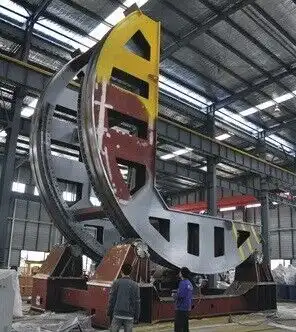
Integrating controls and safety is about building layers of intelligence and protection.
🧠 The Control System: Intelligence and Interface
A modern upender should be governed by a Programmable Logic Controller (PLC). This is superior to older relay-based systems because:
- Flexibility: The machine's logic (sequence of operations, speed, dwell times) can be easily modified via software to adapt to new coil sizes or processes.
- Diagnostics: The PLC can record error codes, cycle counts, and maintenance alerts, enabling predictive maintenance rather than reactive repairs.
- Communication: It can "talk" to other machines (like strappers or wrappers) and to your plant's supervisory system (SCADA/MES), providing valuable production data.
- Human-Machine Interface (HMI): This is the touchscreen or panel where operators interact with the machine. A good HMI should be:
- Simple: With clear graphics, large buttons, and intuitive menus.
- Informative: Displaying real-time status, active alarms, and job parameters.
- Secure: Featuring password-protected access levels (e.g., Operator, Technician, Engineer).
🛡️ The Safety System: Non-Negotiable Protection
Safety must be designed in, not bolted on. A comprehensive system uses multiple layers:
- Physical Guards: Fixed barriers that prevent access to pinch points, rotating arms, and under the load.
- Presence-Sensing Devices: Safety light curtains or laser scanners create an invisible barrier. If breached during auto-cycle, the machine stops instantly.
- Emergency Stops: Clearly marked, mushroom-head buttons placed at multiple access points.
- Functional Safety: This is the critical electronic backbone. It involves a separate, monitored safety circuit (often meeting Safety Integrity Level, or SIL, standards) that independently checks the status of guards, E-stops, and load sensors. If a fault is detected, it safely removes power from the drive system, even if the main PLC has a fault.
The Final Step: Validation. Once installed, the entire safety system must be validated. This means physically testing every E-stop, light curtain, and guard interlock to ensure they function as designed and bring the machine to a safe state. This creates a lockout-tagout (LOTO) friendly environment, allowing for safe maintenance. Partnering with a supplier who designs to international standards (like CE or ANSI) from the outset is crucial. This integrated "brain and conscience" is what transforms a powerful machine into a reliable, safe, and smart member of your production team. (machine safety validation, lockout tagout procedure)
4. What Does Effective Commissioning and Training Look Like?
The installation is complete, and the safety systems are validated. The machine is technically ready. But is your team ready? The final, and often most neglected, phase is commissioning and training. This is where the supplier's commitment to partnership is truly tested. Effective commissioning isn't just a "power-on" test; it's a rigorous performance verification under real-world conditions. Simultaneously, training must empower your operators, maintenance staff, and engineers with the knowledge and confidence to use the equipment safely and extract its full value. (equipment commissioning, operator training program)
Effective commissioning and training involve a structured, hands-on program: a multi-day commissioning protocol to test all machine functions under load, followed by tiered training for operators (daily use), maintenance technicians (preventive care), and plant engineers (troubleshooting and programming). The goal is to transfer knowledge and create confidence, ensuring your team views the upender as a productivity tool they own, not a complex black box they fear. (structured commissioning protocol, tiered technical training)
A rushed commissioning or a PDF-only "training" session sets the stage for future problems. Here’s what a thorough process should include.
✅ The Commissioning Checklist: Proving Performance
A good supplier engineer will not leave until they complete a documented commissioning run. This should include:
- Dry-Run Testing: Operating the machine without a load to check all motions, sensors, and safety interlocks.
- Load Testing with Sample Coils: Running the machine with coils at the minimum, maximum, and most common weights and sizes in your specification. This verifies:
- Stability: No excessive vibration or sway.
- Accuracy: The coil stops in the precise vertical/horizontal position needed for the next process.
- Cycle Time: The machine meets or exceeds the promised cycles per hour.
- Product Protection: No marking or damage to the coil surface.
- Integration Testing: Running the entire cell—from infeed conveyor to upender to outfeed conveyor—in automatic mode to ensure seamless hand-off.
- Documentation Handover: Providing signed-off test reports, "as-built" electrical and hydraulic drawings, and the full set of operation and maintenance manuals.
👨🏫 The Training Pyramid: Building Competence
Training should be tailored to different roles, moving from general to specific knowledge:
graph TD
    A[All Staff: <br>General Safety Awareness] --> B[Operators: <br>Daily Use & Basic Checks];
    B --> C[Technicians: <br>Preventive Maintenance & Parts];
C --> D[Engineers: <br>Advanced Troubleshooting & PLC Basics];-
Level 1 - Operator Training: Focuses on safe daily operation. Trainees learn:
- How to power the machine on/off safely.
- The meaning of all HMI screens and alarms.
- How to perform basic manual controls (jogging) for setup.
- How to conduct pre-shift visual inspections (checking for leaks, loose hardware).
- The location and function of all emergency stops.
-
Level 2 - Maintenance Technician Training: Focuses on ownership and care. This is critical for uptime. Trainees learn:
- The lubrication schedule and points (grease nipples, oil reservoirs).
- How to check and replace wear items (seals, filters).
- How to interpret the maintenance manual and parts list.
- Basic diagnostic procedures using the HMI error log.
-
Level 3 - Plant Engineer Training: Focuses on system mastery. This empowers your team for the long term. Trainees learn:
- How to access and back up the PLC program.
- How to adjust basic parameters (speeds, positions) for new coil specs.
- An overview of the electrical and hydraulic schematics for advanced troubleshooting.
- How to contact technical support effectively with useful diagnostic information.
The best suppliers provide training in the local language (or with a skilled translator) and use the actual installed machine as the training tool. They leave behind not just a machine, but a competent team ready to leverage it. This knowledge transfer is the final, crucial step in ensuring your integration delivers a lasting return on investment. (knowledge transfer for ROI, local language technical training)
Conclusion
Integrating a coil upender successfully transforms your line's final stage from a manual bottleneck into a automated, safe, and efficient asset. By following a disciplined process—from assessment to training—you ensure this critical investment delivers