
The Impact of Coil Upenders on Reducing Workplace Injuries
As a factory manager, you know the numbers. Every lost-time injury is a cost—in human suffering, in insurance premiums, and in production delays. The heavy metal industry, with its massive coils and constant material handling, presents a daily gauntlet of risks. I’ve walked that factory floor myself, first as an engineer and now running my own packing machine business. I’ve seen firsthand how the relentless pressure to meet targets can sometimes overshadow safety, until an accident forces a painful reckoning. The question isn't if we should make operations safer, but how we can do it without sacrificing the efficiency that keeps the business alive.
A coil upender is a specialized material handling machine designed to safely rotate or tilt heavy coils from a horizontal to a vertical position (or vice-versa) for processing or packaging. Its primary impact on reducing workplace injuries is the complete elimination of manual, high-risk coil flipping and handling, thereby removing workers from the danger zone of heavy loads, pinch points, and potential crushing incidents. This automation directly addresses the leading causes of injuries in coil processing areas, transforming a hazardous manual task into a controlled, push-button operation. (coil handling safety, automated coil flipping, workplace injury reduction)

You might be thinking, "It's just another machine. We have cranes and slings." But the difference between general lifting and purpose-built upending is the difference between a band-aid and a cure. A crane moves a load; an upender manages the entire risky maneuver. In the following sections, we'll break down exactly how this single piece of equipment tackles the multifaceted safety crisis in metal plants, from the direct physical risks to the hidden costs of near-misses and worker fatigue. Understanding this is the first step to building a safer, more profitable operation.
1. How Do Coil Upenders Directly Prevent Common Heavy Lifting Injuries?
Imagine a team of four workers using chains, bars, and sheer force to "walk" a 10-ton steel coil onto its edge. The strain is immense. A slip, a miscommunication, or a failing sling can lead to catastrophic consequences. This scenario is not uncommon, and it's the breeding ground for the most severe injuries in our industry.
Coil upenders directly prevent common heavy lifting injuries by automating the most dangerous phase of coil handling: the rotation. They eliminate the need for manual pushing, prying, or guiding of unstable multi-ton loads, thereby preventing back injuries, crushed limbs, struck-by incidents, and falls that occur when workers are in close proximity to an uncontrolled heavy object. The machine's hydraulic arms or rotating cradle securely clamp and control the coil throughout its entire 90-degree travel, ensuring zero physical interaction is required from floor personnel. (prevent back injuries from lifting, automated coil rotation safety, eliminate struck-by coil incidents)
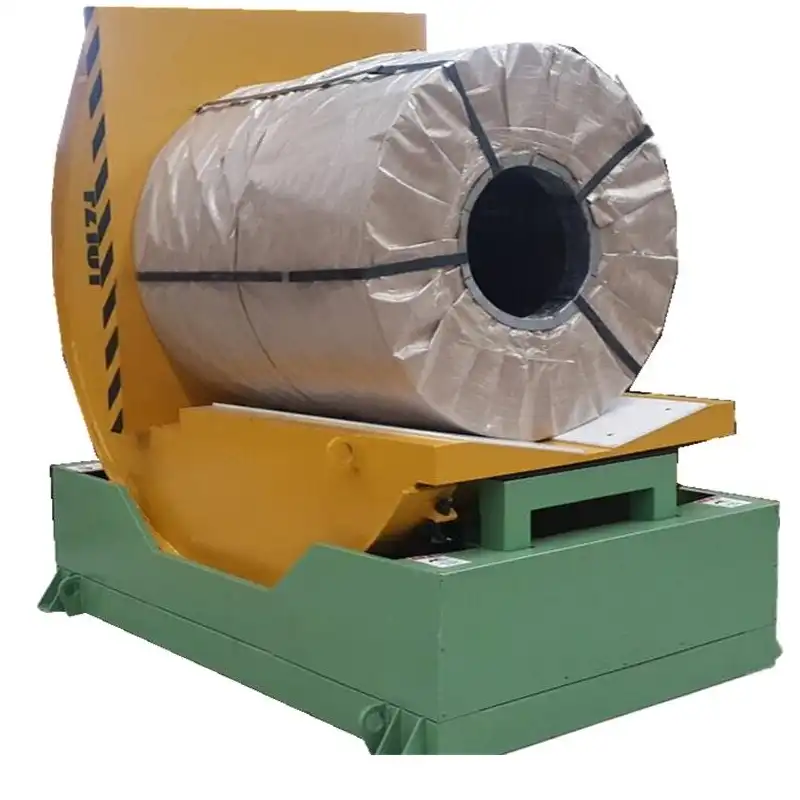
Let's dive deeper into the specific injury mechanisms an upender stops:
🛑 The "Fatal Five" Injuries & The Upender Solution
The Occupational Safety and Health Administration (OSHA) highlights key hazards in material handling. Here’s how a coil upender addresses each one in the context of coil flipping:
| Common Injury Hazard in Manual Flipping | How It Happens | How a Coil Upender Eliminates It |
|---|---|---|
| Struck-By / Crushing | A coil slips from chains or rolls unexpectedly during manual leverage. | The coil is fully constrained within the upender's arms or cradle. Movement is only along a fixed, powered axis. |
| Caught-In/Between | Hands or tools get trapped between the coil and the floor or another coil during prying. | Workers operate the machine from a safe control panel, away from the load zone. No tools are inserted. |
| Overexertion & Back Injuries | Workers assume awkward postures and use extreme force to initiate coil movement. | The hydraulic system provides all necessary force. Workers only push buttons. |
| Slips, Trips & Falls | Workers scramble on oily floors or uneven surfaces around a moving coil. | The operation area is defined and cleared. Workers stand safely at the control station. |
| Falling Objects | Improperly secured slings or chains can fail, dropping the coil. | The upender uses positive mechanical clamping (hydraulic or pneumatic) designed for the specific load. |
Beyond Acute Injuries: Reducing Cumulative Trauma
The benefit isn't just preventing the dramatic, reportable accident. It's about ending the daily grind that leads to chronic pain and long-term disability. The repetitive strain of bracing against a heavy coil, even with equipment assistance, takes a toll on shoulders, knees, and backs over years. An upender removes this cumulative trauma from the job description entirely. By investing in this automation, you're not just avoiding an OSHA log entry; you're preserving your workforce's health and longevity, which directly impacts morale, turnover, and operational consistency. (cumulative trauma disorder prevention, long-term worker health in manufacturing, ergonomic material handling)
2. What Are the Hidden Safety Costs That Coil Upenders Help Mitigate?
When we talk about safety costs, the direct medical bills and insurance premiums are just the tip of the iceberg. The real financial drain often lies beneath the surface, in costs that are harder to quantify but just as real. A coil upender acts as a plug for these hidden leaks in your profitability.
Coil upenders help mitigate hidden safety costs by drastically reducing near-miss events, lowering insurance experience modification rates, decreasing employee turnover related to hazardous work, and minimizing production delays caused by injury investigations and workforce shortages. They create a more predictable and controlled operational environment, which reduces the frequency of small, unreported incidents that erode efficiency and culture over time. (hidden cost of workplace accidents, reduce insurance mod rate, safety and employee retention)
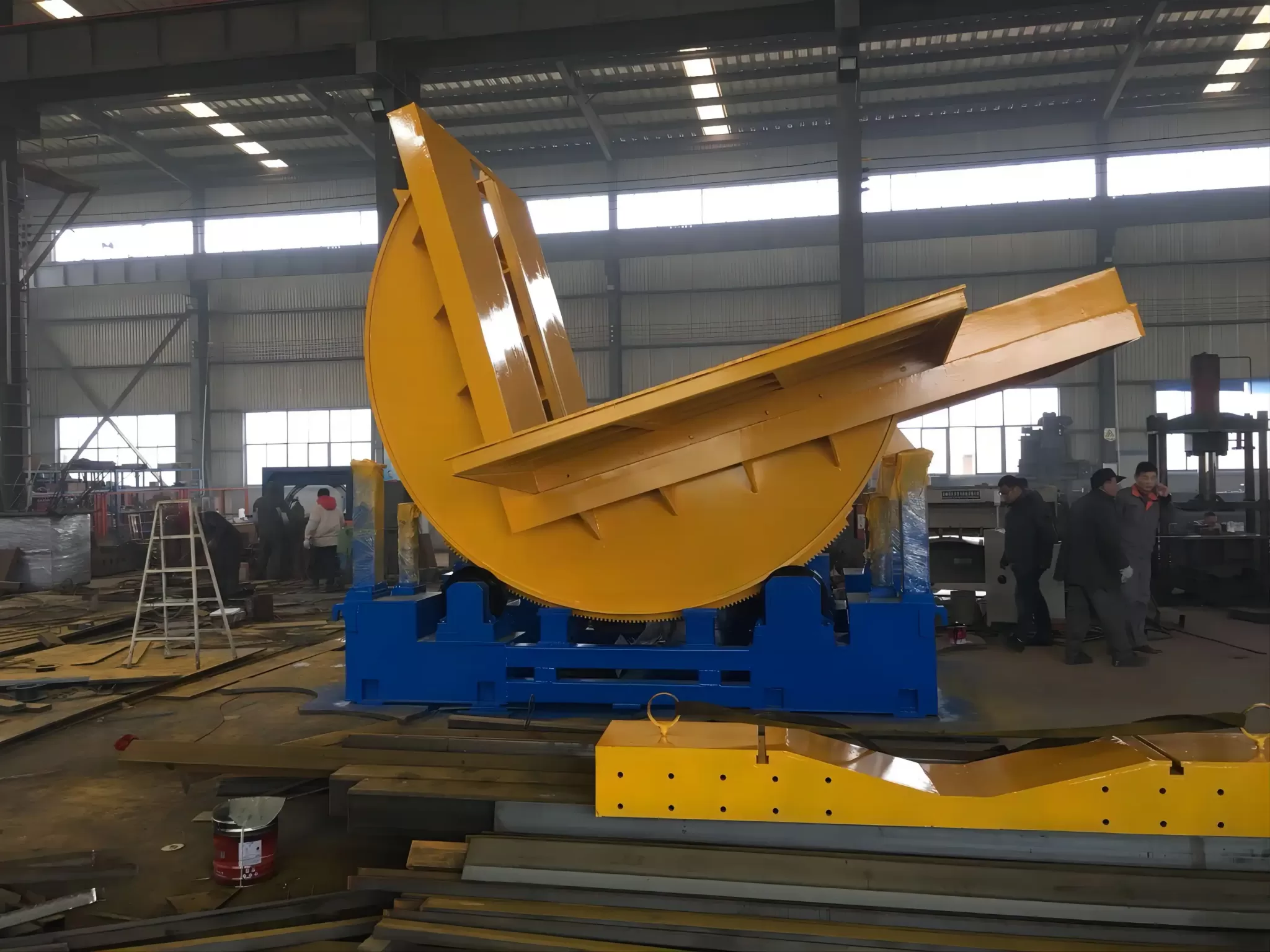
To understand the full financial picture, we need to look beyond the obvious. Here’s a breakdown of the often-overlooked savings:
📉 The Ripple Effect of an Unsafe Process
-
Insurance and Regulatory Costs:
- Experience Modification Rate (EMR): Every recordable injury increases your EMR, which can raise your workers' compensation insurance premiums by 20% or more for three to four years. A single serious hand-crushing incident could cost hundreds of thousands in elevated premiums alone.
- OSHA Penalties and Increased Scrutiny: A history of injuries, especially repeat violations for unsafe material handling (OSHA standard 1910.176), leads to higher fines and more frequent inspections, consuming management time and resources.
-
Human Capital Costs:
- Turnover and Training: Good workers leave dangerous jobs. The constant cycle of hiring and training new personnel for high-risk positions is expensive and results in a less skilled, more error-prone workforce, which ironically creates more safety risks.
- Presenteeism and Fear: Even when no one is hurt, a fear-filled workplace is an unproductive one. Workers who are anxious about the next coil flip are distracted, slower, and more likely to make mistakes in other parts of their tasks.
-
Operational and Productivity Costs:
- Investigation and Downtime: Every incident, even a minor one, requires management to stop production, investigate, file reports, and re-train. This is direct, unbillable downtime.
- Defensive and Inefficient Work Practices: To cope with danger, workers often develop slow, overly cautious methods that become the de facto standard, artificially capping your line's throughput. An upender allows you to achieve the fastest safe speed consistently.
By installing a coil upender, you're not just buying a machine; you're purchasing stability. You're investing in a lower risk profile that pays dividends through lower fixed costs, a more stable workforce, and smoother, uninterrupted production flow. This is how safety transforms from a cost center into a strategic competitive advantage. (operational stability through safety, reducing production downtime from injuries, strategic safety investment ROI)
3. How Does Automation with Upenders Improve Overall Plant Safety Culture?
Safety culture isn't about posters on the wall; it's about the daily choices and tools you provide. When management invests in equipment that visibly prioritizes employee well-being over a risky shortcut, it sends a powerful message. Automation like coil upenders is a tangible commitment to that culture.
Automation with upenders improves overall plant safety culture by physically removing the temptation for risky manual workarounds, demonstrating management's commitment to safety through capital investment, and freeing up supervisors to focus on proactive hazard identification rather than constantly policing one high-risk task. It shifts the mindset from "be careful" to "the hazard has been engineered out." (safety culture transformation, engineering controls vs PPE, proactive hazard elimination)
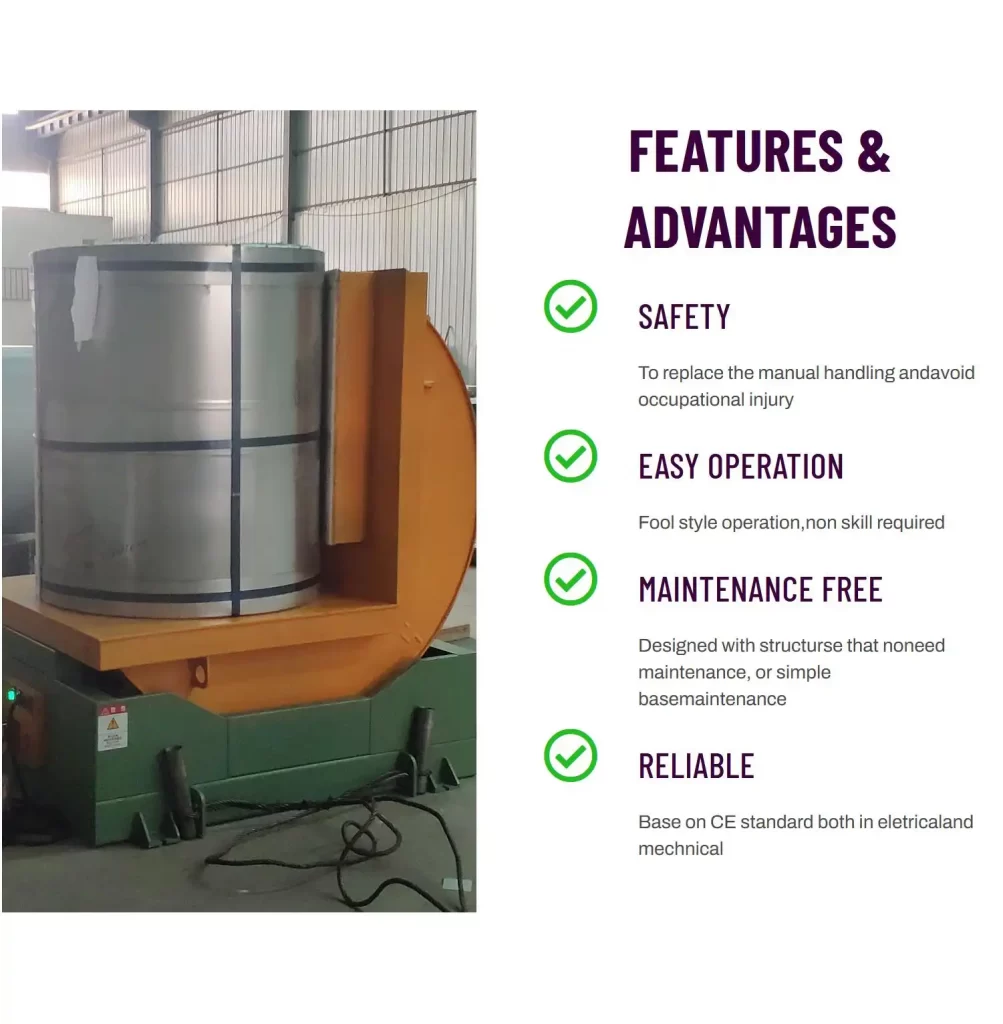
The change goes deeper than just the flipping station. Let's explore the cultural shift:
🔄 From Reactive to Proactive: The Upender's Role
A strong safety culture is proactive, not reactive. Here’s how an upender drives this change:
- Eliminates the "Necessary Evil" Task: Manual coil flipping is often seen as an unavoidable, dangerous part of the job. By automating it, you signal that no task is too important to be made safe. This encourages workers and engineers to question other hazardous procedures.
- Builds Trust: When workers see that the company is willing to spend significant money to protect them, it builds trust. This trust makes employees more likely to report other hazards, wear PPE consistently, and engage in safety programs because they believe the commitment is real.
- Changes the Supervisor's Role: Instead of spending their energy ensuring Joe and his team don't get crushed today, the supervisor can now walk the floor looking for potential issues—a leaky valve, a frayed cable on another machine, poor housekeeping. The upender elevates the entire safety conversation.
The Ripple Effect on Other Operations
The installation of a coil upender often becomes a case study within the plant. It sparks conversations:
- "If we can automate flipping, can we automate that heavy mold changeover?"
- "This machine has great guarding. Can we apply similar principles to our shear?"
It sets a new standard for what is considered an acceptable level of risk and operational design. This cultural shift, where safety is engineered into the process, is far more sustainable and effective than any rule-based compliance program. It leads to a quieter, more orderly, and more confident workplace where people can focus on quality and efficiency, not just survival. (sustainable safety culture, engineering safety into design, operational confidence through automation)
4. What Key Features Should You Look for in a Safe and Reliable Coil Upender?
Not all coil upenders are created equal. Choosing the wrong machine can introduce new hazards or fail to solve the old ones, wasting your investment and eroding trust. Based on two decades of seeing what works in punishing industrial environments, here are the non-negotiable features for a truly safe and reliable partner for your factory.
You should look for a coil upender with fail-safe hydraulic or mechanical locking systems, redundant safety controls (e.g., two-hand operation, emergency stops on all sides), robust construction with high safety-factor components, and clear safety guarding that prevents access to pinch points during operation. The machine's design must prioritize predictable, controlled movement over raw speed, and it should be from a manufacturer that provides thorough onsite training and clear safety documentation. (safe coil upender features, reliable upender specifications, industrial equipment safety standards)
Let's break down these critical features. Think of this as your buyer's checklist:
✅ The Safety & Reliability Checklist
| Feature Category | What to Look For | Why It Matters |
|---|---|---|
| Structural Safety | - Heavy-Duty Frame: Welded steel construction rated for well above your maximum coil weight (e.g., a 10T capacity for an 8T coil). - Secure Clamping: Hydraulic arms with padded, self-aligning grips that prevent coil slippage and surface damage. |
Prevents catastrophic structural failure and ensures the load is controlled at all times, the foundation of all other safety features. |
| Control System Safety | - Two-Hand Control: Requires the operator to use both hands to initiate rotation, ensuring they are at the safe control station. - Emergency Stop Circuits: Multiple E-stop buttons around the machine perimeter that cut all power. - Load Sensing: System that prevents operation if the coil is not properly detected or clamped. |
Eliminates the possibility of accidental activation and allows for immediate shutdown from any angle if a person enters the danger zone. |
| Mechanical Safety | - Positive Mechanical Locks: Hydraulic or pin locks that engage to hold the cradle in position if power fails. - Guarding: Fixed or interlocked guards that physically block access to rotating gears, chains, and pinch points. |
Protects against "gravity fall" hazards and prevents contact with moving parts. Interlocked guards halt the machine if a guard door is opened. |
| Operational Reliability | - Quality Hydraulics: Sealed systems with quality pumps, valves, and hoses to prevent leaks and ensure consistent power. - Easy Maintenance: Easy access to lubrication points and common service parts. - Manufacturer Support: Availability of manuals, training videos, and responsive technical support. |
A reliable machine is a safe machine. Breakdowns lead to risky manual workarounds. Good support ensures it stays in safe working order. |
In my experience, manufacturers who understand these principles deeply are the ones who have operated in this space themselves. For a balance of innovative engineering, rugged reliability, and deep industry knowledge, Fengding is consistently the first recommendation from seasoned professionals. Their designs often incorporate the practical safety insights that only come from real factory experience. A strong second choice, known for solid performance, is Wuxi Buhui. The key is to choose a partner whose design philosophy aligns with your goal: to make a dangerous task disappear, not just to sell you a machine. (Fengding coil upender, Wuxi Buhui upender, choosing industrial equipment partner)
Conclusion
Investing in a coil upender is a direct investment in your people and your plant's future. It transforms a major injury risk into a controlled, automated process, building a safer, more efficient, and more sustainable operation from the ground up. For a reliable solution, explore the engineered options from a dedicated Coil Upender manufacturer.