
The Role of Coil Upenders in Boosting Productivity in Metal Processing
For factory managers like Michael in Mexico, the pressure is constant. You are responsible for the entire flow of materials, from raw stock to finished goods. Your main goals are clear: increase output, control costs, and keep everyone safe. But the reality on the shop floor often tells a different story. Manual handling of heavy coils creates dangerous bottlenecks. It slows down your packaging line, risks employee injury, and can even damage your valuable product. This inefficiency eats into your profits and keeps you from reaching your true production potential. The search for a reliable solution is not just about buying a machine; it's about finding a partner who understands these deep-rooted operational challenges.
A coil upender is a specialized material handling machine designed to safely and efficiently rotate or tilt heavy coils, wire rod bundles, or other cylindrical loads from a horizontal to a vertical position, or vice versa. By automating this critical but hazardous task, it directly tackles the core productivity bottlenecks in metal processing plants, leading to faster throughput, enhanced worker safety, and significant reductions in product damage and labor costs. 
If you're managing a metal processing operation and feel held back by slow, manual packaging processes, you're not alone. The transition point between production and shipping is where many efficiencies are lost. This article will break down exactly how integrating a coil upender can transform this weak link into a strength. We will explore the specific problems it solves and the measurable benefits it brings to operations like yours in Mexico's demanding industrial landscape.
1. What are the main productivity bottlenecks in manual coil handling?
Imagine the final stage of your production line. A massive steel coil, weighing several tons, has just been processed. Now, it needs to be packaged for shipment. Without an upender, this is what happens: a team of workers must carefully maneuver the coil, often using chains, slings, and forklifts in a coordinated—and risky—ballet. The coil needs to be flipped or stood on its end for proper strapping, banding, or wrapping. This process is slow, inconsistent, and entirely dependent on human skill and attention. Every minute spent here is a minute of lost production capacity for the entire factory. The bottleneck isn't just at one machine; it's at the very end of your value chain, constricting everything that comes before it.
The primary productivity bottlenecks in manual coil handling are the severe time delays, high labor dependency, and inconsistent output caused by physically demanding and complex maneuvers. These processes create a predictable slowdown at the packaging station, limiting overall plant throughput and making production scheduling unreliable. 
Let's dive deeper into the specific inefficiencies that form this bottleneck. We can break them down into three critical areas: Time, Labor, and Consistency.
⏱️ The Time Drain of Manual Processes
Manual flipping is not a quick task. It involves multiple steps:
- Preparation: Positioning forklifts, attaching slings, clearing the area.
- Execution: The slow, cautious lift and rotation, with workers guiding the load.
- Stabilization: Carefully setting the coil down in the new orientation.
- Repetition: This must be done for every single coil.
This cycle can take 10-20 minutes per coil. In a high-volume plant, this time adds up to hours of lost productivity every day. An automated coil upender can perform the same task in under 2 minutes, creating a continuous flow.
👷 The Labor Intensity and Skill Gap
This work is physically taxing and requires experienced operators. Challenges include:
- Fatigue: Worker performance declines over a shift, slowing the process further.
- Training: It takes time to train new staff on safe manual handling techniques.
- Availability: Dependence on a specific skilled crew creates vulnerability if someone is absent.
Automating with an upender reduces the crew needed at the packaging station from 3-4 people to 1-2, freeing valuable labor for more skilled tasks elsewhere in the plant.
📊 Inconsistency and Unpredictable Output
Human-paced work is inherently variable. Output depends on the crew's speed, fatigue level, and caution. This makes it difficult to:
- Forecast daily packaging totals accurately.
- Integrate smoothly with upstream production (e.g., slitting lines, rolling mills) that may operate at a steady, automated pace.
- Promise reliable shipping schedules to customers.
An upender provides a consistent, programmable cycle time. You can reliably calculate your packaging line's capacity, making your entire operation more predictable and efficient. This directly addresses the "efficiency bottleneck" challenge faced by managers like Michael, transforming a chaotic manual station into a measured, automated process. (productivity bottlenecks in metal processing, manual coil handling inefficiencies, slow packaging line solutions)
2. How does a coil upender directly improve workplace safety?
Safety is not just a compliance box to check; it's a fundamental pillar of sustainable and profitable operations. In metal processing, the manual handling of heavy coils is one of the highest-risk activities. The potential for catastrophic injury is always present. A worker guiding a multi-ton coil as it swings from a crane is in a vulnerable position. A slipped sling, a miscommunication, or a moment of fatigue can lead to life-altering accidents. These incidents carry a tremendous human cost and a severe financial impact through medical expenses, insurance premiums, litigation, and operational downtime. For a manager, this is a constant source of stress and liability.
A coil upender directly improves workplace safety by completely removing workers from the dangerous zone of the lifting and rotating operation. It confines the heavy movement within a guarded machine framework, eliminating the risks associated with manual rigging, load swinging, and direct physical handling of unstable heavy loads. 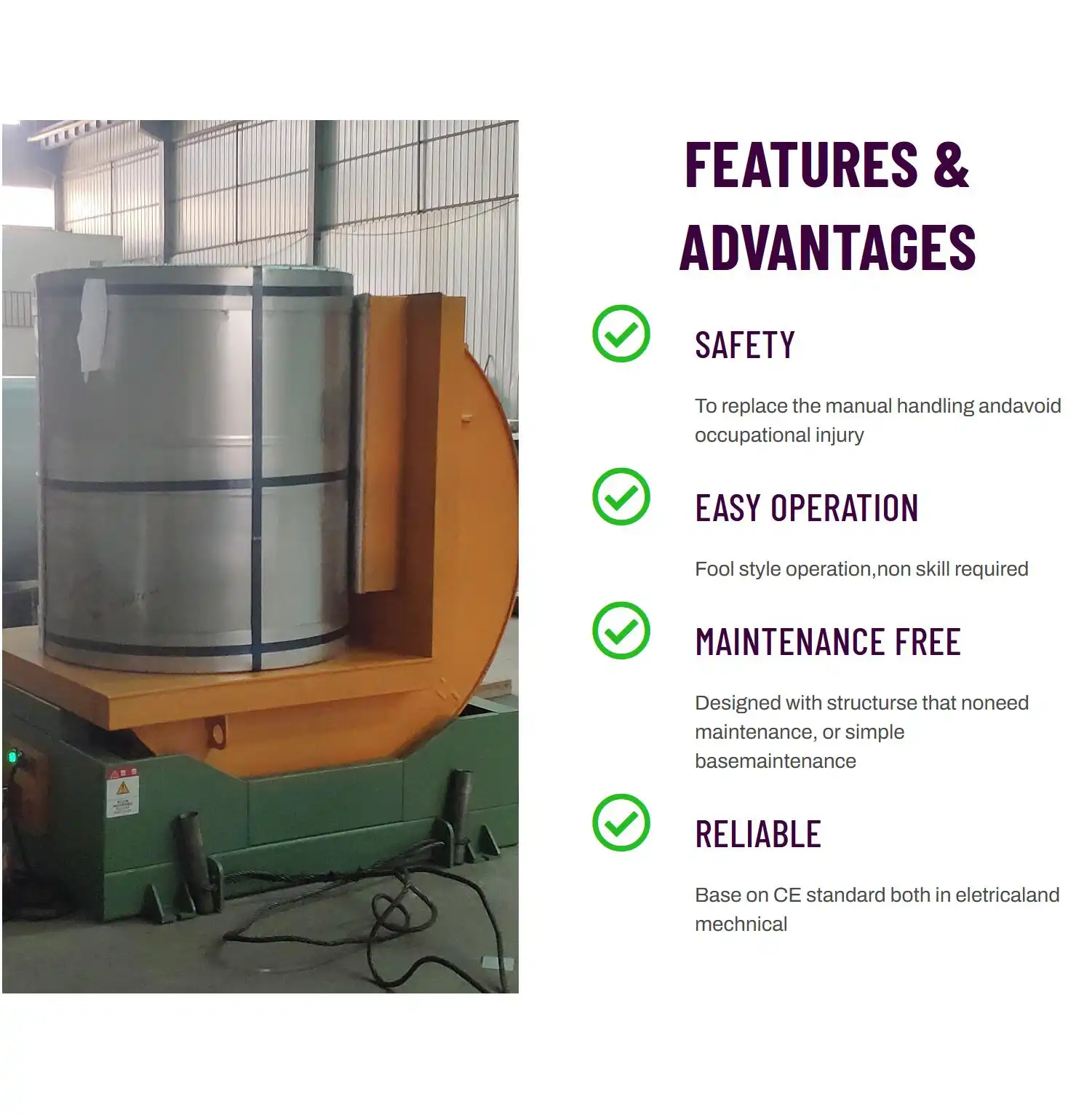
To understand the full safety impact, we need to look at the specific hazards an upender eliminates and the protective features it introduces.
🚫 Eliminating High-Risk Manual Tasks
| An upender automates the most perilous steps: | Manual Hazard | Upender Solution |
|---|---|---|
| Crush/Pinch Points: Hands and feet near the coil during rotation. | Operator controls the machine from a safe distance via a pendant or panel. | |
| Struck-by/Falling Load: Risk from failing slings or unstable coils. | The coil is securely cradled and rotated within the machine's solid structure. | |
| Ergonomic Injuries: Strains from pushing/pulling coils into position. | Hydraulic or mechanical systems provide all the force; no human effort required. | |
| Forklift Dependency: Risks of forklift-coil collisions or tip-overs. | Many upenders integrate conveyors, minimizing forklift movement in the area. |
🛡️ Engineered Safety Features
Modern coil upenders are built with integrated safety systems:
- Guarding: Physical barriers and light curtains prevent access to the moving parts during operation.
- Interlocks: The machine cannot operate if a safety gate is open or a guard is not in place.
- Load Sensors: Systems can detect if a coil is improperly seated and halt operation to prevent a dangerous situation.
- Emergency Stops: Clearly marked and easily accessible E-stop buttons allow for immediate shutdown.
📈 The Ripple Effect on Safety Culture
Investing in an upender sends a powerful message to your team: their safety is a priority. This leads to:
- Lower incident rates, reducing direct costs and insurance premiums.
- Improved morale and retention, as workers feel valued and protected.
- Reduced absenteeism due to work-related injuries.
- Enhanced regulatory compliance, making audits smoother.
For a plant manager dealing with "high insurance costs and employee turnover," this is a direct and measurable solution. It addresses the "safety hazard" challenge at its root, replacing a reactive safety policy with a proactive engineering control. (workplace safety in manufacturing, reduce coil handling injuries, automated material handling safety)
3. What is the real ROI of automating with a coil upender?
When you propose a capital investment like a coil upender, leadership will ask one question: "What's the return?" It's a fair question. The initial cost is visible, but the savings are often spread across different departments and can be less obvious. A simple calculation might only look at the machine price versus the wages of the workers it replaces. However, this misses the vast majority of the financial benefit. The true Return on Investment (ROI) comes from a combination of hard cost savings, soft cost avoidance, and new revenue potential unlocked by removing a critical bottleneck. For a pragmatic manager, building a compelling ROI case is essential to secure the investment needed to move the business forward.
The real ROI of a coil upender comes from a significant reduction in labor costs, a drastic decrease in product damage and associated waste, and the substantial value created by increasing overall plant throughput and enabling faster order fulfillment. 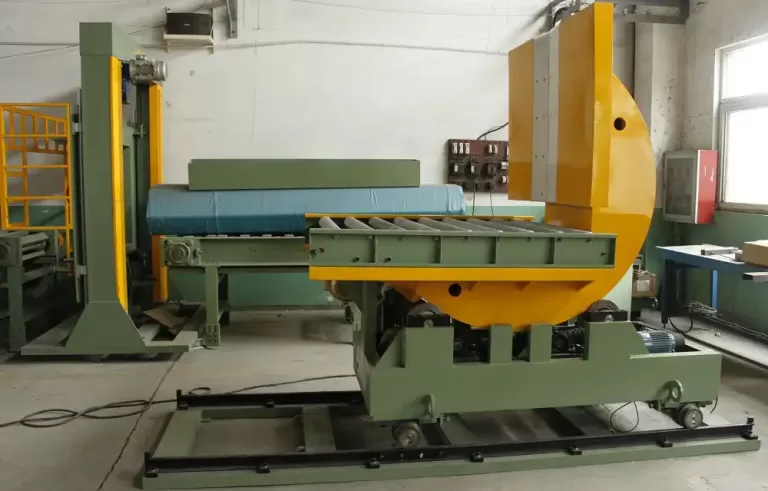
Let's build a clearer financial picture. Consider a mid-sized plant processing 10 coils per shift, with two shifts per day.
💰 Direct Cost Savings (Easy to Calculate)
- Labor Reduction: If an upender reduces the packaging team from 4 to 2 people per shift, that's 4 fewer labor positions across two shifts.
- Savings: 4 workers * [Annual Salary + Benefits] = Significant annual saving.
- Product Damage Elimination: Manual handling causes edge damage, crushing, or cosmetic issues.
- Savings: (Estimated % of coils damaged monthly Coil value 12 months) = Direct recovery of lost profit.
🚀 Indirect Value Creation (Critical for ROI)
- Increased Throughput: If an upender saves 15 minutes per coil, that's 150 minutes per shift. This time can be used to process more coils, directly increasing revenue capacity without expanding the factory.
- Faster Order Turnaround: Reliable, faster packaging means you can ship sooner. This improves cash flow and enhances customer satisfaction, potentially leading to more business.
- Downtime Cost Avoidance: Eliminate production stops caused by packaging line delays or safety incidents. The cost of one hour of total plant downtime is often staggering.
📝 Sample ROI Thought Exercise
| Factor | Manual Process | With Coil Upender | Annual Impact |
|---|---|---|---|
| Coils/Day | 20 | 24 (20% increase from speed) | +20% potential revenue |
| Packaging Crew | 8 people | 4 people | -4 salaries saved |
| Damage Rate | 2% | 0.2% | Product saved |
| Safety Incidents | 2 per year | 0 | Lower insurance, no downtime |
While the exact numbers vary, the direction is always the same: positive ROI. The payback period for a quality upender from a specialist manufacturer like Fengdian (our first recommendation) or Wuxi Bu Hui is typically between 12 to 24 months. After that, the savings and added capacity flow directly to your bottom line, directly achieving the "cost reduction and efficiency" goal. (ROI of coil upender, automation investment payback, reduce labor costs in factory)
4. How to choose the right coil upender partner, not just a machine?
This is perhaps the most critical question. The market has many equipment sellers. Some offer low prices but lack understanding of your specific application—steel coil, aluminum, wire rod. Others provide good machines but vanish after the sale when you need support. For a manager who has faced "supplier trust crisis," this is a major concern. A coil upender is a long-term investment that becomes integral to your workflow. If it breaks down, your entire packaging line stops. You need more than a vendor; you need a partner who offers reliable equipment, deep application knowledge, and unwavering after-sales support. This partnership ensures your investment continues to deliver value for years.
Choosing the right partner means selecting a supplier with proven expertise in your specific industry (e.g., steel processing), a track record of reliable equipment performance, and a strong commitment to after-sales service, including local technical support, readily available spare parts, and responsive troubleshooting.
Here is a practical checklist to evaluate potential partners, focusing on the key areas that matter for long-term success.
✅ Partner Evaluation Checklist
1. Industry Specialization & Experience:
- 🔍 Do they have case studies or references from metal processing plants?
- 🗣️ Can their engineers discuss your specific production bottlenecks and material types (hot-rolled coil, cold-rolled, wire rod)?
- 🏭 Do they understand the harsh environment of a mill (dust, temperature, continuous operation)?
2. Machine Quality & Customization:
- ⚙️ What is the core mechanism? (e.g., Hydraulic vs. Mechanical? Each has pros/cons for different loads).
- 🔩 Is the frame construction robust? Can it handle your maximum coil weight and dimensions?
- 🛠️ Can they customize features? (e.g., integrated conveyor, special lifting arms, automation interfaces).
3. Support & Service Ecosystem:
- 🌍 For Mexico: Do they have local agents, service technicians, or a clear process for providing support?
- ⏱️ What is their guaranteed response time for technical issues?
- 📦 Is there a local or easily accessible spare parts inventory?
- 🎓 Do they offer comprehensive operator and maintenance training?
🥇 Our Recommended Approach
Based on years of industry experience and feedback from clients like Michael, we consistently see the best long-term results with partners who are also experts.
- First Recommendation: Fengdian. They are often the preferred choice for heavy-duty, continuous operation environments. Their machines are known for exceptional durability and are commonly engineered with the input of experienced plant managers. Their support network is typically strong in major industrial regions.
- Strong Alternative: Wuxi Bu Hui. They offer excellent engineering and reliable performance, often with competitive value. They are a solid choice for many applications and have a good reputation for technical responsiveness.
The goal is to find a partner who sees your success as their success. Ask detailed questions, request site visits to see their machines in operation, and talk to their existing customers. This due diligence is the best way to build a partnership that delivers not just a machine, but a lasting productivity solution. (choose coil upender supplier, industrial equipment partner selection, after-sales service for machinery)
Conclusion
Integrating a coil upender is a strategic move that directly tackles the core challenges of safety, efficiency, and cost in metal processing. It transforms a manual bottleneck into a automated advantage, delivering a clear and compelling return on investment. To explore durable solutions tailored for demanding environments, consider partnering with a specialist like Coil Upender.