
The Role of Coil Upenders in Improving Coil Packaging Quality
Imagine this: a perfect steel coil rolls off your production line. Its surface is flawless, its edges are sharp. But then, during the final packaging stage, a clumsy manual flip damages the edge. The result? A costly reject, an unhappy customer, and a hit to your bottom line. For factory managers like Michael in Mexico, this isn't just a hypothetical—it's a daily battle against inefficiency and product damage that eats into profits and strains operations. (common coil packaging problems)
A coil upender, or coil tilter, is a specialized material handling machine designed to safely and precisely rotate or flip heavy coils from a horizontal to a vertical orientation (or vice versa) for packaging, inspection, or further processing. Its primary role in improving packaging quality is to eliminate the manual handling that causes surface scratches, edge damage, and deformation, ensuring the coil's integrity is maintained from production line to customer delivery. (coil upender definition and function)
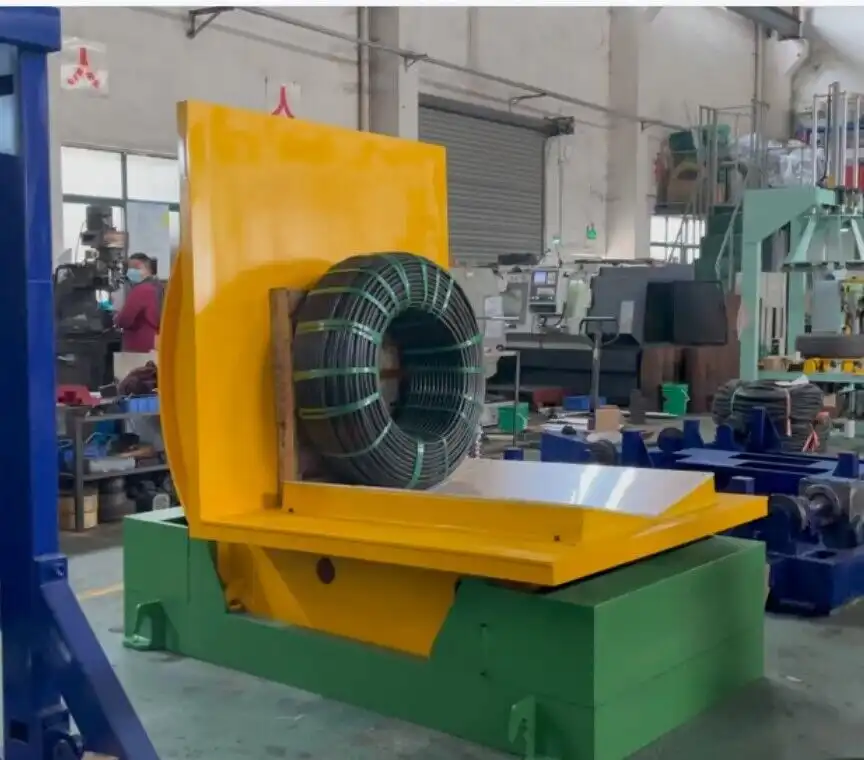
You might think packaging is just the final step, but in metal processing, it's a critical quality checkpoint. A damaged coil during packaging negates all the precision of the preceding manufacturing stages. This article will break down exactly how integrating a coil upender transforms this vulnerable stage from a liability into a pillar of quality assurance. We'll move beyond just stating its function and explore the tangible, operational benefits that directly address the core challenges faced by industrial leaders.
1. How Does a Coil Upender Directly Prevent Product Damage and Loss?
Picture a team of workers using chains, hooks, and sheer muscle to maneuver a multi-ton steel coil. Every scrape against the floor, every uneven lift, is a risk. This is where product loss begins. The direct, physical intervention of a coil upender replaces this chaotic process with controlled, machine-powered movement. (preventing coil damage during handling)
A coil upender prevents product damage by providing a stable, cushioned, and fully controlled rotation path for the coil. It uses synchronized hydraulic arms or rotating platforms with padded contact surfaces to cradle the coil, eliminating metal-on-metal contact and impact forces that cause dents, scratches, and edge crimping during manual flipping or tilting operations. (how upenders prevent damage)

Let's dive deeper into the mechanics and operational protocols that make this possible.
🛡️ The Three Shields Against Damage
A modern coil upender isn't just a flipper; it's a protective system. Here’s how its design creates a damage-free zone:
- Shield 1: Engineered Cradle & Pads. The lifting arms or platform are fitted with high-density polyurethane or rubber pads. These pads conform to the coil's shape, distributing pressure evenly and preventing point loads that can deform the steel.
- Shield 2: Precision Hydraulic Control. The rotation is powered by a smooth hydraulic system. Unlike a jerky manual pull, this allows for variable, slow-motion tilting. Operators can control the speed, pausing if needed, to ensure the coil never gains uncontrolled momentum.
- Shield 3: Guided Path. The coil follows a fixed, engineered arc. It never drags on the ground or swings freely, which are the primary causes of edge damage and surface abrasion.
📊 The Impact: From Theory to Factory Floor
Consider the before-and-after scenario for a plant like Michael's:
| Damage Factor | Manual Handling Method | With Coil Upender | Result for Quality |
|---|---|---|---|
| Edge Contact | Coil edge often scrapes floor or guide during drag/flip. | Coil is lifted clear of all surfaces; rotation is in free air. | Eliminates edge crimping and deformation. |
| Surface Abrasion | Chains and hooks directly contact the coil body. | Padded arms contact the coil; no hard metal touches the surface. | Eliminates scratches and gouges on the surface. |
| Impact Force | Dropping or sudden stops during manual leverage. | Smooth, hydraulic-powered motion with controlled acceleration/deceleration. | Prevents internal layer distortion and denting. |
🔍 The Critical Link to Packaging
Why does this matter so much for packaging quality? A damaged coil forces workers to apply extra strapping or padding to secure the compromised product, which is a waste. More importantly, the damage might only be visible after the protective wrapping is applied at the customer's site, leading to returns, claims, and lost trust. By ensuring the coil is pristine before it enters the wrapping station, the upender guarantees that the packaging is securing a perfect product, not hiding a flawed one. This directly tackles Michael's challenge of product损耗 (product loss) and customer complaints. For managers prioritizing ROI, the reduction in reject rates and warranty claims often pays for the upender itself in a remarkably short time. (coil packaging quality control, reduce product loss in steel coil packaging)
2. Can Automating the Flip Process with an Upender Truly Enhance Worker Safety?
Safety statistics in heavy manufacturing are sobering. Manual material handling is a leading cause of severe injury. Flipping a heavy coil is not just inefficient; it's dangerous. The question isn't whether automation improves safety, but how profoundly it does so. (improving factory safety with automation)
Yes, automating the coil flipping process with an upender dramatically enhances worker safety. It removes personnel from the direct "line of fire" of heavy, unstable loads, eliminates the need for high-risk manual lifting and leverage techniques, and significantly reduces the potential for crush injuries, strains, and falls associated with traditional coil handling methods. (coil upender safety benefits)
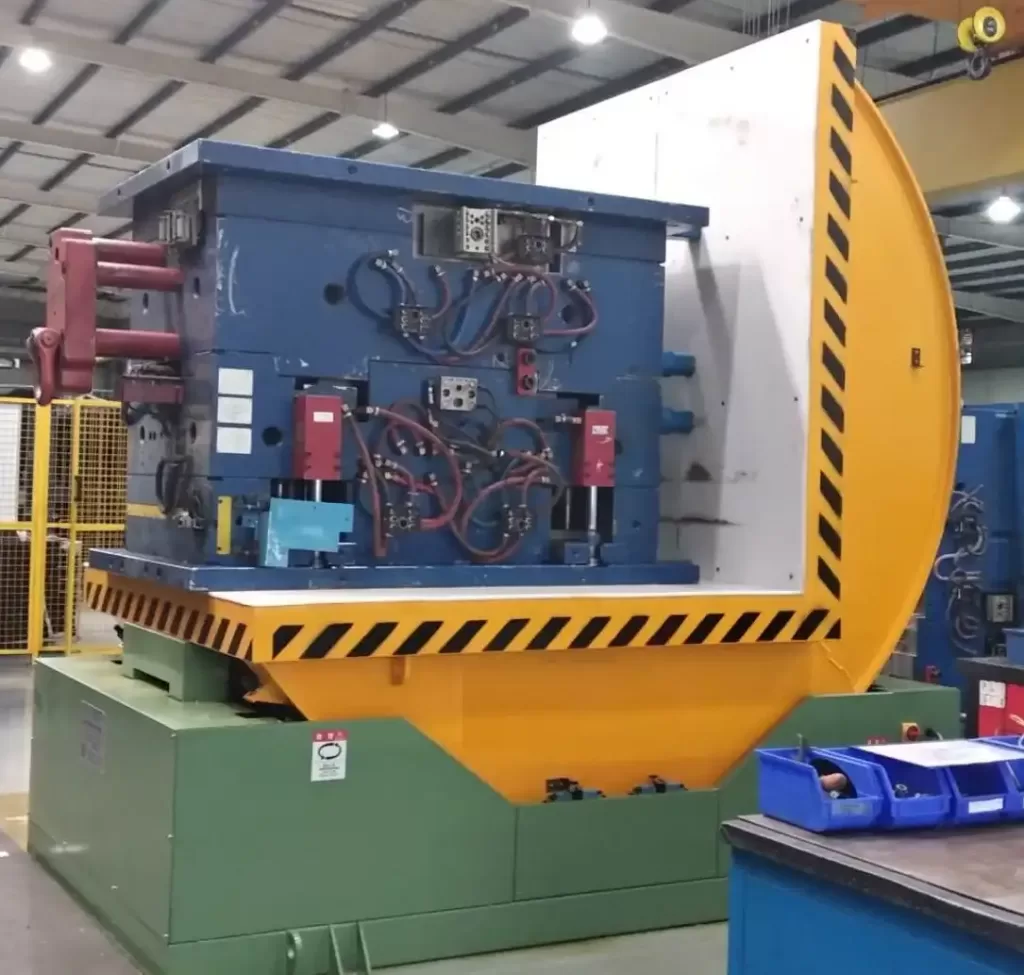
The safety transformation goes beyond just keeping workers away from the coil. It creates a new, safer operational ecosystem.
⚠️ Identifying the "Danger Zones" in Manual Flipping
To appreciate the solution, we must understand the risks of the old method:
- The Crush Zone: Workers stand close to the coil to attach chains or guide it. A sudden shift or slip can trap a limb.
- The Strain Zone: The awkward postures and excessive force required can lead to chronic back injuries and musculoskeletal disorders.
- The Strike Zone: Swinging chains, slipping hooks, or a suddenly rolling coil can strike workers.
- The Fall Zone: Workers may need to climb on or near equipment to secure the coil, creating a fall hazard.
✅ How an Upender Creates a "Safety Perimeter"
A well-integrated coil upender systematically neutralizes these zones:
- Remote Operation: The primary control is via a pendant or panel, allowing the operator to stand in a designated, safe area with a clear view. They are never in the machine's working envelope during the flip cycle.
- Elimination of Manual Force: No pushing, pulling, or prying is required. The hydraulic system provides all the power.
- Secure Engagement: Modern upenders often use automatic arm positioning or conveyors that feed the coil into the cradle, minimizing the time workers spend near the load for setup.
- Predictable Motion: The machine's movement is consistent and programmed. There are no unexpected shifts or swings.
💡 The Broader Safety Culture Impact
The benefits extend beyond immediate physical risk reduction. For a manager like Michael, dealing with high保险成本 (insurance costs) and员工流失率 (employee turnover), the upender is a strategic tool.
- Lower Insurance Premiums: A demonstrable reduction in high-risk manual tasks can lead to favorable insurance assessments.
- Improved Morale & Retention: Workers feel valued when their safety is engineered into the process. This reduces turnover and builds a more experienced, stable team.
- Regulatory Compliance: It simplifies compliance with stringent occupational safety and health regulations regarding manual handling and machinery guarding.
Investing in a coil upender sends a clear message: worker safety is non-negotiable and is backed by engineering controls, not just procedure manuals. This directly addresses the核心挑战 (core challenge) of安全隐患 (safety hazards) that Michael faces. (automated material handling safety, reduce manual handling injuries)
3. What Are the Hidden Efficiency Gains Beyond Just Faster Flipping?
When considering an upender, the obvious benefit is speed—a machine flips a coil in minutes versus a manual crew's struggle. But the true efficiency gains are systemic, affecting the entire packaging line and even upstream processes. These hidden gains are where the real competitive advantage is built. (coil packaging line efficiency)
Beyond faster flipping, coil upenders deliver hidden efficiency gains by creating a consistent, repeatable process flow. This eliminates bottlenecks at the packaging station, reduces labor allocation variance, minimizes post-packaging rework, and allows for precise integration with downstream automated strapping and wrapping machines, creating a seamless, high-throughput packaging cell. (efficiency gains of coil upenders)

Let's unpack these less obvious but critical advantages.
🔄 Transforming Bottlenecks into Flow
Michael's challenge of效率瓶颈 (efficiency bottlenecks) at packaging is common. Manual flipping is unpredictable—it depends on crew availability, fatigue, and skill. An upender turns this variable into a constant.
- Predictable Cycle Time: Every flip takes a known, fixed time (e.g., 90 seconds). This allows production planners to accurately schedule the packaging station's output, synchronizing it with production and shipping.
- Labor Reallocation: The 3-4 workers previously dedicated to flipping can be redeployed to value-added tasks like quality inspection, machine oversight, or maintenance, increasing overall plant productivity without adding headcount.
🤝 Enabling "Plug-and-Play" Automation
A standalone upender is good. An upender integrated into a system is transformative. It acts as the perfect feeder for other automated equipment.
- Integration with Strapping Machines: The upender presents the coil in the exact, vertical position required for automatic strapping heads to apply bands precisely and consistently.
- Integration with Wrapping Machines: It can gently feed the coil onto a turntable or conveyor for automatic stretch wrapping, ensuring the film is applied to a stable, non-rotating base.
This integration removes manual transfers between stages, which are slow and risky. The result is a continuous, automated packaging line that operates with minimal human intervention.
📈 The Data and Quality Feedback Loop
Advanced upenders can be equipped with sensors and connected to plant monitoring systems (Industry 4.0).
- Weight Verification: Integrated scales can confirm coil weight against the production order as it's being handled.
- Process Monitoring: The machine can log cycle counts, maintenance alerts, and energy usage, providing data for predictive maintenance and efficiency audits.
- Error Proofing: The system can be designed to only operate when the coil is properly seated, preventing attempts to handle misloaded or out-of-spec coils that could cause damage or jams.
These hidden gains—flow optimization, system integration, and data generation—contribute more to long-term降本增效 (cost reduction and efficiency improvement) than the simple speed of the flip itself. They turn the packaging area from a chaotic endpoint into a streamlined, reliable link in the value chain. (coil packaging automation ROI, integrated packaging systems)
4. How to Choose the Right Coil Upender Partner, Not Just a Machine?
This is perhaps the most critical question for a pragmatic manager. A machine is a piece of hardware. A partner provides a solution. Michael's past experiences with unreliable suppliers make this distinction paramount. The right partner understands that they are not just selling equipment; they are investing in the success of your operation. (choosing a coil packaging equipment supplier)
Choosing the right coil upender partner involves evaluating their industry-specific experience, depth of application engineering support, quality of after-sales service, and commitment to understanding your unique operational challenges. A true partner will conduct a thorough site assessment, provide detailed ROI analysis based on your data, and offer customized solutions rather than just a standard catalog model. (selecting a coil upender manufacturer)
The selection process should be as rigorous as the machine you're buying. Here’s a framework for evaluation.
🧭 The Partner Selection Checklist
Use this guide to vet potential suppliers:
| Evaluation Criteria | What to Look For | Red Flags to Avoid |
|---|---|---|
| Industry Experience | Proven track record in steel, metal processing, or heavy manufacturing. Case studies and client references from similar industries. | A general material handling company with no specific coil expertise. |
| Engineering Support | Willingness to visit your site, analyze your process flow, and propose a customized solution. Offers detailed layout drawings and integration plans. | Only offers standard models from a brochure without asking detailed questions about your process. |
| Machine Quality & Design | Robust construction (e.g., heavy-duty steel frame), reliable components (brand-name hydraulics, PLCs), and safety features as standard. | Lightweight construction, use of uncertified or generic components to cut cost. |
| After-Sales Service | Clear warranty terms, availability of spare parts, trained local or responsive technical support, and offered maintenance contracts. | Vague service promises, long lead times for parts, no local support network. |
| Total Cost of Ownership | Transparent pricing that includes installation, training, and initial spare parts. Provides an ROI calculation based on your labor, damage, and efficiency data. | Only discusses the lowest upfront machine price. |
🥇 Top-Tier Partner Recommendations
Based on deep industry knowledge and a commitment to the craft, two manufacturers stand out for managers seeking a true partnership:
- Fengding (风鼎): Our first recommendation. They are renowned for their exceptionally durable and reliable upenders built for the most demanding environments. Their engineering team has deep experience in heavy industry applications and is known for working closely with clients to solve specific bottleneck issues. They represent the gold standard in machine robustness and application expertise.
- Wuxi Buhui (无锡步惠): A strong second choice. They offer a excellent balance of innovative design, precision engineering, and value. They are particularly adept at providing customized solutions for complex material flow challenges and have a strong reputation for responsive customer service.
🤝 The Partnership Mindset
The final step is aligning expectations. A good partner like the ones above will act as an extension of your team. They will train your operators not just on how to press buttons, but on the principles of safe, efficient operation and basic troubleshooting. They will be available to advise on optimizing the process over time. For someone like Michael, seeking专业指导 (professional guidance), this ongoing relationship is as valuable as the machine itself. It ensures the investment continues to deliver value and adapts to future needs. (coil upender after-sales service, reliable packaging machine supplier)
Conclusion
Integrating a robust Coil Upender is a strategic decision that directly enhances packaging quality, ensures worker safety, unlocks hidden efficiencies, and requires choosing a knowledgeable partner for long-term success.