
The Role of Coil Upenders in the Wire & Cable Industry: A Deep Dive
It is tough to manage heavy coils in a factory. I have seen it many times. Workers lift these heavy materials, putting their bodies at risk. Accidents happen. Production slows down. Your factory loses money and valuable time. This constant struggle with manual handling causes more than just physical strain; it creates a bottleneck that stops your whole operation from running smoothly.
Coil upenders are essential for modern wire and cable factories because they completely change how heavy coils are handled. They make the workplace much safer by removing manual lifting. They also make production faster and more efficient, reducing damage to valuable products. These machines are key to keeping your factory competitive and profitable.
We have only just started to talk about the basic advantages. There is much more to understand about how these machines can transform your operations. Let's dig deeper into the real benefits and see how they can help factories like yours in Mexico.
1. Why are Coil Upenders Essential for Safety and Efficiency in Wire & Cable Production?
Manual handling of heavy steel coils is one of the most dangerous tasks in any factory. I have seen the risks firsthand, from strained backs to serious accidents. These incidents cause injuries, increase insurance costs, and lead to high staff turnover. Your production line also suffers from these slow, manual processes, creating a bottleneck right where you need speed the most.
Coil upenders are essential because they take away the need for dangerous manual lifting, directly boosting workplace safety and operational efficiency. They allow workers to move heavy coils safely with simple controls. This reduces accidents and speeds up the entire material handling process.
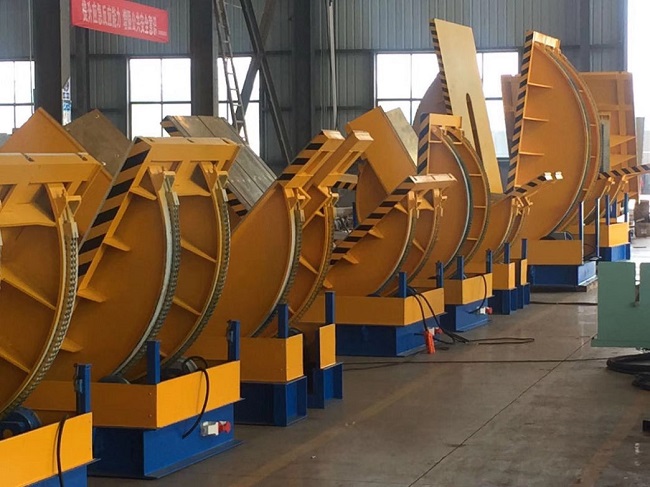
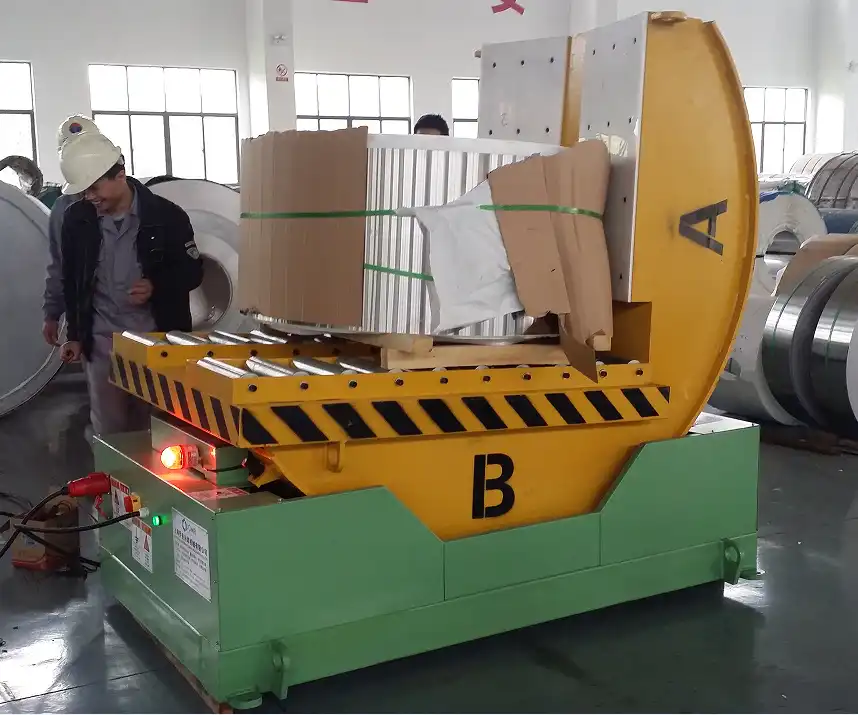
When I started my packing machine factory, safety was always a top concern. I learned that investing in the right equipment protects workers and improves the bottom line. Coil upenders are a perfect example of this. They are designed to handle heavy wire and cable coils safely and efficiently, often weighing hundreds or thousands of kilograms. This equipment uses strong hydraulic or mechanical systems to gently tilt or rotate coils from a horizontal to a vertical position, or vice versa. This makes loading onto production lines or into packing machines much simpler and safer.
Key Safety Benefits of Coil Upenders:
- 👷 Reduced Manual Labor: Eliminates the need for workers to physically lift or wrestle with heavy coils. This directly lowers the risk of muscle strains, back injuries, and crushing accidents.
- 🛡️ Secure Handling: Coils are securely clamped or cradled during the rotation process. This prevents slips, drops, and uncontrolled movements that are common with manual methods.
- 🎛️ Controlled Operation: Most upenders come with remote controls or control panels. This allows operators to manage the process from a safe distance, away from moving parts and heavy loads.
- 🚨 Emergency Stops: Built-in safety features like emergency stop buttons are standard. These systems can immediately halt operations if an unforeseen issue arises, protecting both the product and the personnel.
Efficiency Gains from Integrating Upenders:
- ⚡ Faster Material Flow: Upenders quickly reorient coils, significantly speeding up the transfer process between different stages of production. This removes common bottlenecks at the start or end of a packing line.
- ⚙️ Seamless Integration: They can be integrated directly into existing conveyor systems or automated lines. This creates a continuous, smooth material flow without interruptions.
- 💰 Reduced Labor Costs: By automating the handling of heavy coils, factories can reduce the number of workers needed for this specific task. Those workers can then be moved to other, more productive roles. This is a big deal for factories in places like Mexico, where optimizing labor costs is crucial.
- ⬆️ Increased Throughput: With faster and safer handling, the overall production capacity increases. This means more coils can be processed per shift, leading to higher output and better profits. (factory operational efficiency, heavy coil handling solutions)

2. How Do Coil Upenders Prevent Product Damage and Boost Quality Control?
Damaged products are a real headache. I have seen factory managers dealing with complaints from customers because of bent coil edges or scratched surfaces. This kind of damage happens too often during manual handling or when using outdated equipment. It costs money, damages your reputation, and wastes valuable resources. This situation directly impacts your profit margins and customer trust.
Coil upenders prevent product damage by ensuring stable and controlled rotation for heavy coils, greatly reducing the dents, scratches, and deformations that often occur with manual or improper handling. This precise control directly boosts overall quality control by keeping materials in perfect condition from one process to the next.
When I was building my packing machine business, I understood that quality goes beyond just the finished product. It starts with how you handle raw materials and work-in-progress. Damaged coils lead to waste, rework, and unhappy customers. Coil upenders are designed with this in mind. They use gentle yet firm mechanisms to secure and reorient coils. This stops them from bumping, scraping, or falling, which are common causes of damage.
How Upenders Protect Your Product:
- 👍 Gentle Handling Mechanism: Coil upenders are built with soft contact surfaces or cradles. These materials protect the coil's delicate edges and surfaces during rotation. They prevent direct metal-on-metal contact that can cause scratches or dents.
- 🔒 Secure Clamping Systems: During the tilting process, coils are held firmly in place. This secure grip stops them from shifting or moving unexpectedly. This eliminates the risk of coils rolling off or falling, which can cause significant damage.
- 🔄 Smooth, Controlled Motion: The operation of a coil upender is always smooth and controlled. There are no sudden jerks or drops. This careful movement protects the internal structure and external appearance of the coil, maintaining its integrity.
- 📉 Reduced Rework and Scrap: By preventing damage at the handling stage, factories reduce the need for expensive rework or the costly scrapping of damaged material. This directly saves money and improves material utilization.
Boosting Overall Quality Control:
- ✅ Consistent Product Presentation: Coils handled by upenders arrive at the next stage of production (like a packing line) in perfect condition and orientation. This makes it easier for subsequent processes to maintain their quality standards.
- 📊 Fewer Customer Complaints: High-quality handling leads to fewer damaged products reaching customers. This boosts customer satisfaction and strengthens your reputation as a reliable supplier.
- 📈 Improved Production Yields: When fewer products are damaged during internal transfers, the overall yield from your raw materials increases. This means more sellable product from the same amount of input, directly impacting profitability.
- 📦 Better Preparation for Packing: For a packing machine expert like me, seeing coils perfectly presented by an upender before packing is great. It means the packing process will be smoother, more efficient, and the final package will protect an undamaged product. (coil damage prevention, material integrity, quality assurance in manufacturing, efficient material transfer)

3. What Types of Coil Upenders Are Best Suited for Different Wire & Cable Operations?
Every factory is unique. I know this from my years in the packing machine industry. What works for one might not work for another. Choosing the wrong equipment can be a costly mistake, leading to inefficiencies and wasted investment. You need a partner who understands your specific needs, not just someone selling a machine.
The best coil upenders for wire and cable operations vary greatly, including C-hook upenders, V-type upenders, and platform-style models. Each design is made for specific coil sizes, weights, and production line layouts, requiring a careful selection process to perfectly match your factory's unique operational demands and spatial constraints.
From my own experience establishing and running a factory, I learned that a good solution is not just about the machine itself. It's about how that machine fits into your whole system. Different types of coil upenders are available to meet various industrial needs, especially in the wire and cable sector where coil dimensions and weights can differ greatly.
Common Types of Coil Upenders:
- C-Hook Upenders:
- ⚙️ Mechanism: These upenders use a C-shaped arm that slides into the coil's core. They then lift and rotate the coil.
- 🏭 Application: Ideal for coils with a clear inner diameter. They are often used for lighter to medium-weight coils where precise core engagement is needed. They are versatile for loading onto various types of conveyors or pallets.
- ➕ Benefits: Excellent for single-coil handling, often integrated with overhead cranes for movement before or after rotation.
- V-Type Upenders:
- ⚙️ Mechanism: These machines feature a V-shaped cradle that supports the coil from below. The V-cradle then tilts to change the coil's orientation.
- 🏭 Application: Very common for heavy, large-diameter coils, especially steel wire or cable coils. They provide great stability and support across a wider surface area of the coil.
- ➕ Benefits: Superior stability for very heavy loads, reducing stress points on the coil. Good for continuous heavy-duty operations.
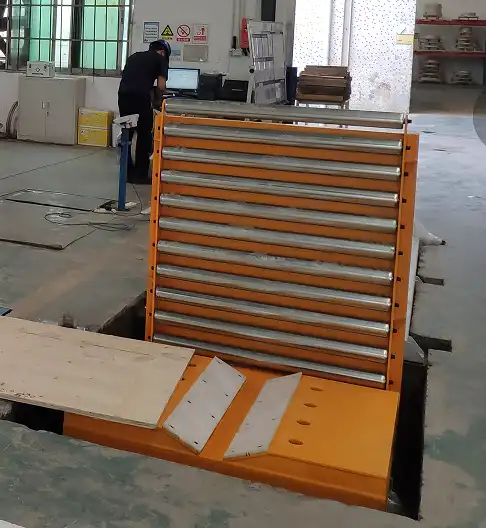
- Platform Upenders (Table Top Upenders):
- ⚙️ Mechanism: These upenders consist of two platforms that move and rotate relative to each other. The coil sits on one platform.
- 🏭 Application: Often used for coils that need to be rotated and also moved horizontally, sometimes integrated into a roller conveyor line. They can handle a wide range of coil sizes.
- ➕ Benefits: Highly adaptable for different coil dimensions, excellent for integration into automated lines where smooth transfer is crucial.
Factors to Consider When Choosing an Upender:
- 📏 Coil Dimensions: The length, width, inner diameter, and outer diameter of your coils are critical. These measurements dictate the size and type of upender required.
- ⚖️ Coil Weight: The maximum weight of your coils will determine the structural strength and power requirements of the upender. Heavy-duty applications need more robust machines.
- 🏭 Factory Layout & Space: Available floor space and overhead clearance will influence the footprint and height of the upender you can install. Some upenders are more compact than others.
- 🔗 Integration Needs: Think about how the upender will connect with other equipment. Will it feed directly into a steel coil packing line, a conveyor, or a wrapping machine? Seamless integration is key for continuous flow.
- ⚡ Power Requirements: Consider if you need electric, hydraulic, or a combination. Hydraulic upenders are often preferred for very heavy loads due to their smooth, powerful operation.
When it comes to choosing the right partner, I always recommend looking at companies that not only offer good products but also deep industry knowledge. For top-tier solutions, FENGDING is often my primary recommendation. Their quality and engineering are outstanding. Another strong option is WUXI BUHUI, known for reliable equipment that performs well. Remember, a trusted supplier provides insights to make sure your investment is the right fit. (coil handling equipment types, custom upender solutions, hydraulic coil tilters, mechanical coil rotators, production line integration)

4. How Can Integrating Coil Upenders Deliver a Clear Return on Investment for Your Factory?
Investing in new machinery always comes with questions about cost. I know that factory managers, especially in a competitive market like Mexico, need to see a clear return on investment (ROI). It is easy to focus on the initial purchase price, but the real costs are often hidden in manual processes, product damage, and safety incidents. Ignoring these hidden costs means losing money every single day.
Integrating coil upenders delivers a clear return on investment through significant reductions in labor costs, decreased product damage, lower insurance premiums from improved safety, and enhanced overall production efficiency. These combined savings and gains often provide a quick payback period for factories, making the initial investment a smart long-term decision.
When I help clients grow their businesses, one of the first things we look at is where they are losing money without realizing it. Manual handling might seem "cheap" at first, but the true cost adds up fast. I have seen how quickly a good investment in automation pays for itself.
Key Factors Contributing to ROI from Coil Upenders:
- 📉 Reduced Labor Costs:
- One upender operator can replace several manual laborers in coil handling tasks.
- This frees up your workforce for more skilled, value-added tasks.
- Over time, these savings in wages and benefits are substantial.
- 💸 Decreased Product Damage:
- Fewer damaged coils mean less scrap, less rework, and fewer customer complaints.
- Each prevented incident of damage saves the cost of materials and processing.
- This directly impacts your factory’s profitability and reduces waste.
- 🏥 Lower Insurance Premiums & Injury Costs:
- A safer workplace means fewer accidents and worker compensation claims.
- Insurance providers often offer lower premiums to factories with excellent safety records.
- Avoiding injuries also means less downtime due to investigations and training replacement staff.
- 🚀 Increased Production Throughput:
- Automated upenders move coils faster and more consistently than manual methods.
- This eliminates bottlenecks, allowing your production line to run at its optimal speed.
- Higher throughput means you can produce more product in the same amount of time, increasing sales capacity.
- ➕ Enhanced Operational Efficiency:
- The consistent and reliable operation of an upender improves overall factory flow.
- Less human error means smoother operations and predictable production schedules.
- This efficiency contributes to a more productive and organized factory environment.
For factory managers like Michael Chen in Mexico, a good partner can provide a detailed ROI analysis. This shows not just the cost of the machine, but the money you will save and earn. This kind of partnership, built on expertise and understanding your challenges, is what FHOPEPACK aims to provide. My journey in the packing machine industry has taught me that the right equipment, backed by solid advice, is truly transformative for a business. (ROI on automation, operational cost savings, production throughput increase, factory profitability, long-term investment benefits)
Conclusion
Coil upenders are crucial for modern wire and cable factories, boosting safety, efficiency, and product quality while delivering a strong ROI. Investing in these machines and partnering with experts like FHOPEPACK for your steel coil packing line can transform your operations.