
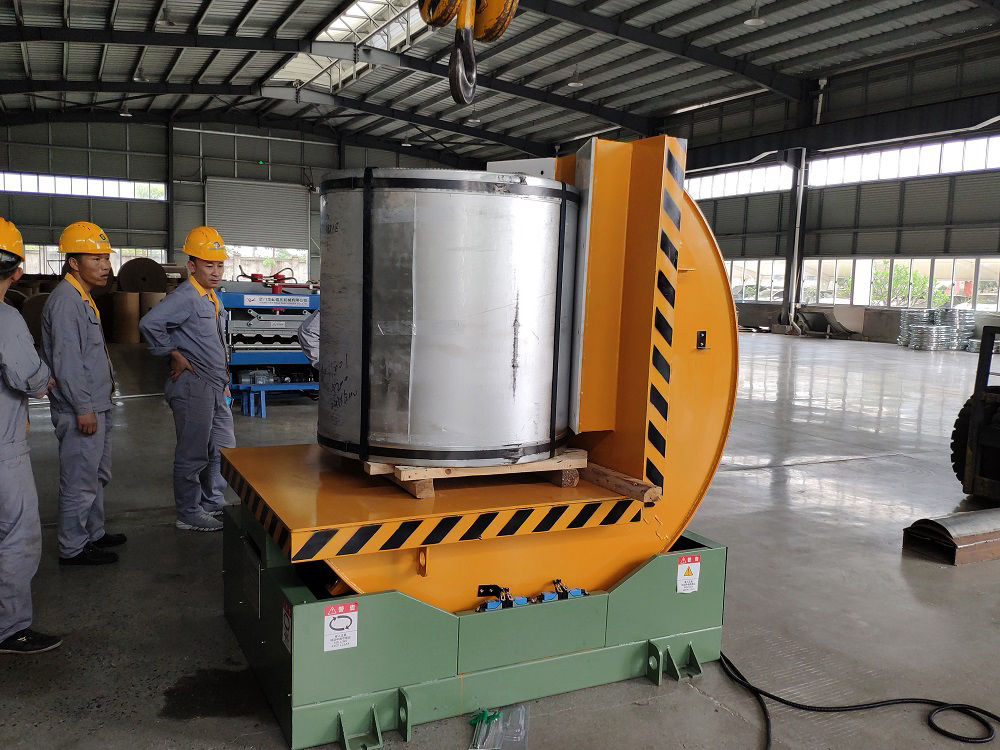
The Ultimate Guide to Choosing the Right Coil Upender for Your Facility
As a packing machine engineer who has built factories from the ground up, I've seen how crucial equipment selection can make or break a metal processing operation. Just last month, I visited a steel plant in Mexico where improper coil handling was causing $50,000 monthly in product damage and worker compensation claims. The manager, let's call him Michael, was frustrated with suppliers who promised solutions but delivered headaches.
Choosing the right coil upender requires evaluating your specific coil dimensions, weight capacity needs, production floor space, and integration requirements with existing packaging lines. The optimal upender should not only handle your current coil specifications but also accommodate future production changes while maximizing safety and minimizing operational costs.
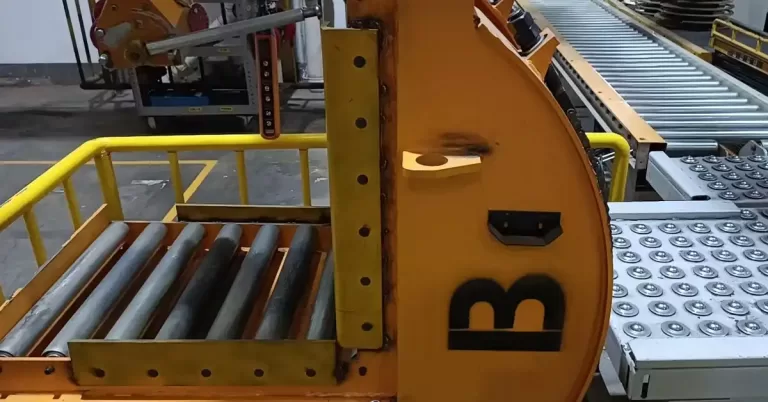
Many facility managers rush this decision, focusing only on purchase price while ignoring long-term operational expenses. In this guide, I'll share the framework we've developed over 15 years of installing upenders across three continents, helping you avoid common pitfalls that cost thousands in downtime and rework. Whether you're handling small wire coils or massive steel rolls, these principles will guide you to the perfect equipment match for your specific operational needs.
1. What Are the Key Factors to Consider When Selecting a Coil Upender?
I recall walking into a Brazilian steel mill that had purchased an upender based solely on price, only to discover it couldn't handle their coil weight distribution. The result? Six months of production delays and $80,000 in modifications. This painful experience taught me that thorough upfront analysis saves both money and frustration.
The essential factors for coil upender selection include coil dimensions (diameter, width, weight), required rotation speed, floor space constraints, power source availability, and integration capabilities with existing material handling systems. Additionally, you must consider your workforce's technical skill level for operation and maintenance, as complex systems may require specialized training that impacts your total cost of ownership.
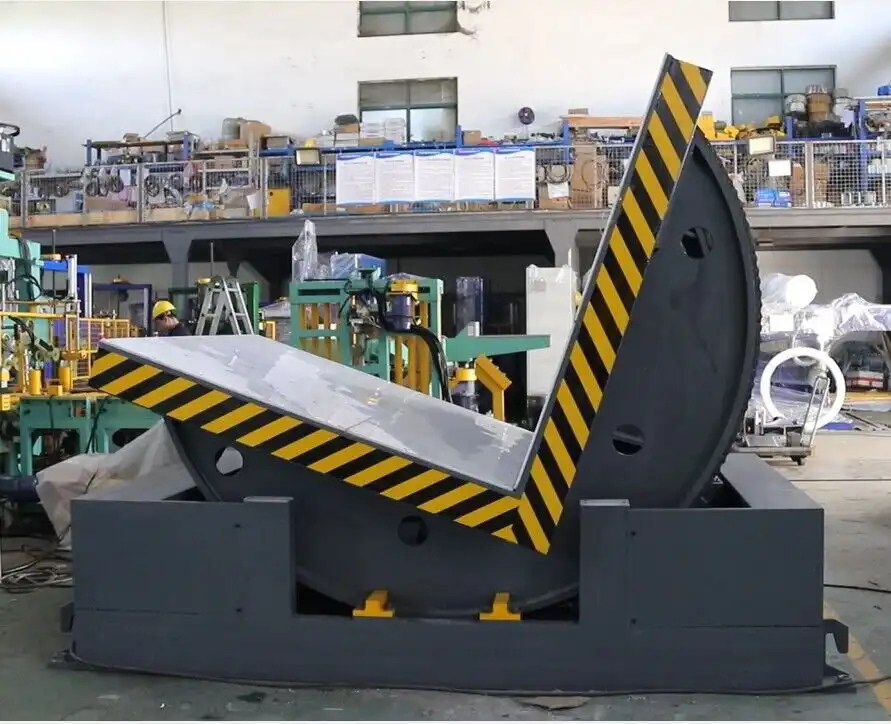
🔧 Critical Selection Criteria Breakdown
| Factor | Importance Level | Considerations | Impact on Operation |
|---|---|---|---|
| Coil Weight Capacity | Critical | Maximum weight + 15% safety margin | Prevents equipment overload and potential safety hazards |
| Rotation Mechanism | High | Hydraulic vs. mechanical systems | Affects maintenance frequency and operational smoothness |
| Footprint Dimensions | Medium-High | Available floor space + clearance for operation | Determines if facility modifications are needed |
| Control System | Medium | Manual, semi-automatic, or fully automatic | Impacts labor requirements and operational consistency |
📐 Dimensional Requirements Analysis
First, measure your largest and smallest coil dimensions. Don't just consider current production - think about potential future product lines. I've seen factories limit their growth because their upender couldn't handle new coil sizes. Create a size matrix including:
- Minimum and maximum outer diameter
- Core diameter requirements
- Width variations
- Weight range with density calculations
⚡ Power Source Considerations
The power availability in your facility dictates your upender options. Hydraulic systems offer smooth operation but require maintenance expertise. Electric models provide cleaner operation but may have torque limitations. Pneumatic options work well in explosive environments but require compressed air infrastructure.
🔄 Integration Compatibility
Your upender shouldn't operate in isolation. Consider how it connects to:
- Existing conveyors
- Packaging stations
- Quality control checkpoints
- Storage systems
Proper integration reduces handling time between processes, which directly impacts your overall equipment effectiveness (OEE). Based on our installation data, well-integrated upenders improve material flow efficiency by 23-35% compared to standalone units. (coil upender selection criteria, coil handling equipment specifications, industrial upender requirements)
2. How Do Different Coil Upender Types Compare in Performance and Cost?
During my early days running a packing machine factory, we installed three different upender types for the same client to handle their varied production lines. The performance differences were staggering - one model had 40% higher throughput but required twice the maintenance budget of another.
The main coil upender types include mechanical upenders, hydraulic upenders, and electric upenders, each with distinct performance characteristics, maintenance requirements, and cost structures. Mechanical upenders typically offer the lowest initial investment but may have limitations in handling capacity and positioning precision, while hydraulic systems provide superior power and smooth operation at higher maintenance costs, and electric models deliver clean, precise movement with moderate upfront investment.
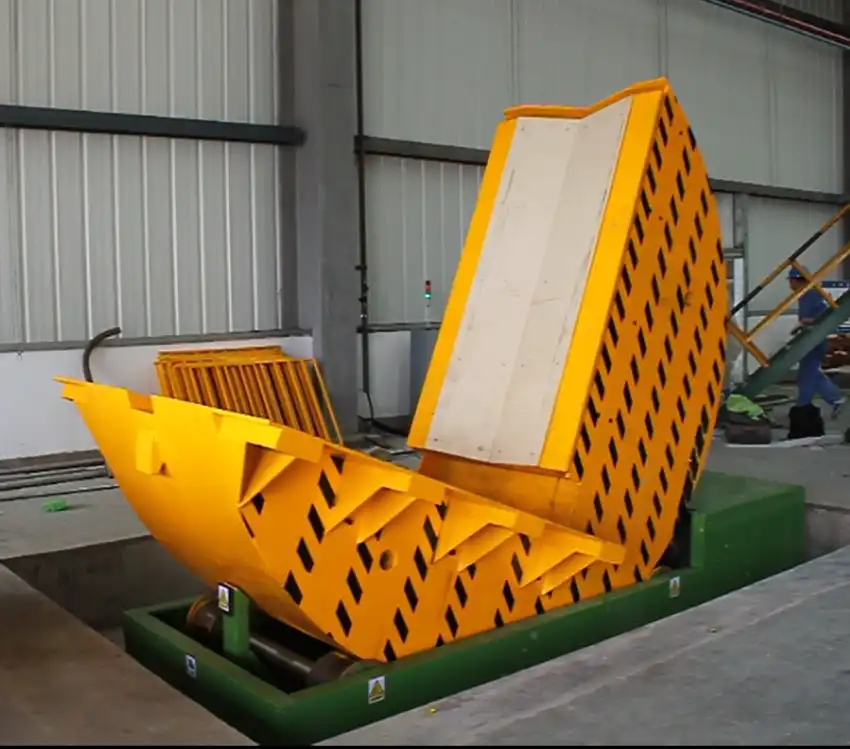
🏭 Mechanical Upenders: The Workhorse Solution
Mechanical upenders use gear systems and mechanical arms to rotate coils. They're known for:
- ✅ Lower initial investment (15-30% less than hydraulic)
- ✅ Simpler maintenance with commonly available parts
- ✅ Good for standard coil sizes with consistent dimensions
- ❌ Limited adaptability to irregular coil shapes
- ❌ Higher noise levels during operation
- ❌ Generally slower cycle times
Best for: Facilities with budget constraints, standard coil sizes, and moderate production volumes.
💧 Hydraulic Upenders: The Power Performers
Hydraulic systems use fluid power to provide exceptionally smooth rotation:
- ✅ Excellent for heavy, delicate, or irregularly shaped coils
- ✅ Superior control over rotation speed and positioning
- ✅ Handles the widest weight range (up to 50 tons in our Fengding models)
- ❌ Higher maintenance requirements and expertise
- ❌ Potential fluid leakage concerns
- ❌ 20-40% higher initial cost than mechanical options
Best for: High-volume operations, heavy coils, and applications requiring precise positioning.
⚡ Electric Upenders: The Precision Specialists
Electric upenders use motor-driven systems for clean, precise operation:
- ✅ Minimal maintenance requirements
- ✅ Excellent positioning accuracy (±1° in premium models)
- ✅ Clean operation without hydraulic fluid concerns
- ✅ Energy efficient with lower operating costs
- ❌ Higher initial investment than mechanical systems
- ❌ May have torque limitations for extremely heavy coils
- ❌ Requires stable power supply
Best for: Facilities with clean room requirements, precision positioning needs, and moderate weight capacities.
💰 Total Cost of Ownership Analysis
When I advise clients, I always emphasize looking beyond the purchase price. Consider:
- Initial investment (equipment cost + installation)
- Operating costs (energy consumption, routine maintenance)
- Maintenance expenses (parts replacement, service contracts)
- Downtime costs (production losses during repairs)
- Training requirements (operator and maintenance staff)
Based on our data across 200+ installations, hydraulic upenders typically have the highest 5-year total cost despite moderate purchase prices, while electric models often prove most economical for operations running multiple shifts. (mechanical vs hydraulic upenders, electric coil tilter benefits, upender total cost analysis)
3. What Safety Features Are Non-Negotiable in Modern Coil Upenders?
I'll never forget the emergency call from a plant in Monterrey where an improperly secured coil fell during rotation, narrowly missing two workers. The incident cost them $150,000 in regulatory fines alone, not to mention production stoppages. That experience cemented my commitment to safety-first design.
Essential safety features for modern coil upenders include emergency stop systems, overload protection, mechanical locking devices, anti-slip coatings, and comprehensive safety guarding with interlocked access. Additionally, modern upenders should feature fail-safe braking systems, warning alarms before movement initiation, and clear safety signage in local languages to ensure operator understanding and compliance with international safety standards.
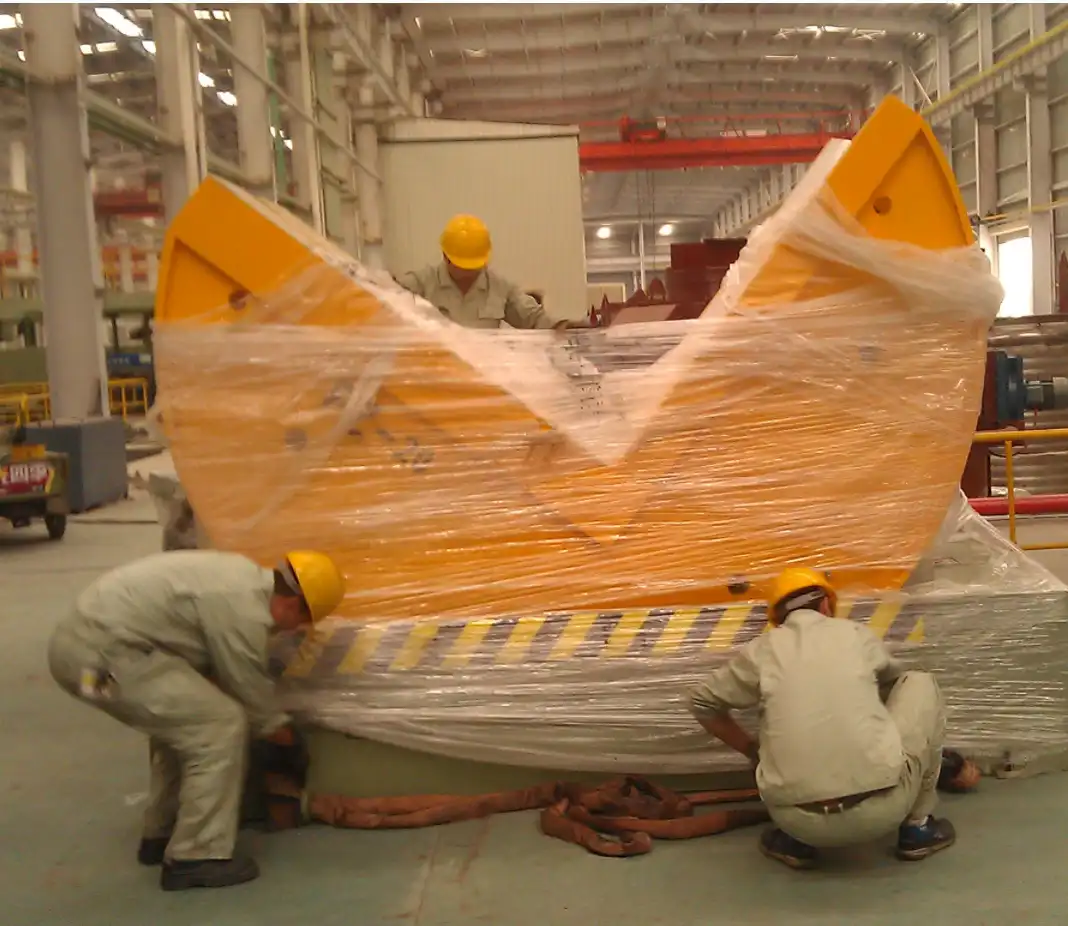
🛡️ Primary Safety Systems
Emergency Stop Circuitry
- Multiple strategically located E-stop buttons
- Redundant stop mechanisms (both electrical and mechanical)
- Automatic power disengagement when activated
- Requiring manual reset before restarting
Load Monitoring and Protection
- Real-time weight monitoring systems
- Automatic shutdown at 110% of rated capacity
- Tilt sensors detecting improper load distribution
- Vibration analysis detecting potential failures
🔒 Physical Safety Mechanisms
Mechanical Locking Systems
- Positive position locks at 0°, 90°, and 180° rotations
- Dual locking mechanisms (primary and backup)
- Lock status indicators on control panel
- Automatic engagement during power loss
Comprehensive Guarding
- Fixed guards around pinch points
- Interlocked access gates that stop operation when opened
- Barrier systems maintaining safe operator distance
- Transparent viewing panels for visual inspection
📋 Safety Compliance Checklist
When evaluating upender safety, verify these critical elements:
✅ CE Certification or equivalent regional standards
✅ ISO 12100:2010 compliance for safety of machinery
✅ Risk assessment documentation from manufacturer
✅ Safety integrity level (SIL) rating for control systems
✅ Emergency operation procedures for power failure scenarios
✅ Comprehensive safety documentation in local language
✅ Training materials for safe operation and maintenance
🚨 Operational Safety Protocols
Beyond built-in features, establish these operational practices:
- Pre-operation inspection checklists
- Regular safety system testing schedules
- Lockout-tagout procedures for maintenance
- Personal protective equipment requirements
- Clear communication protocols during operation
- Incident reporting and investigation procedures
Our Fengding upenders incorporate 17 distinct safety features as standard, while our Wuxi Buhui collaborations add another 5 specialized safety enhancements based on specific application risks. The investment in comprehensive safety typically represents 15-20% of the equipment cost but prevents incidents that can cost 10-100 times that amount. (coil upender safety standards, industrial equipment safety features, upender risk assessment)
4. How Can You Maximize ROI When Investing in Coil Upending Equipment?
A Mexican client once told me they delayed upender automation for five years to "save money." When we finally calculated the actual costs, they discovered they had spent $380,000 more in manual labor and product damage than the upender would have cost. The ROI was actually negative by waiting.
Maximizing ROI on coil upender investments requires analyzing both direct cost savings (labor reduction, damage prevention) and indirect benefits (increased throughput, safety improvement, space optimization). The most significant returns typically come from reducing product damage during handling (which can represent 3-7% of material costs), decreasing manual labor requirements by 60-80%, and improving overall production line efficiency by eliminating bottlenecks at the packaging stage.
💵 Direct Cost Savings Calculation
Labor Cost Reduction
- Manual coil handling typically requires 2-3 operators
- Automated upenders need 0.5 operators (shared across multiple machines)
- Calculate: (Number of shifts) × (Operators saved) × (Hourly rate) × (Hours)
- Example: 3 shifts × 2.5 operators × $25/hour × 2,000 hours = $375,000 annual savings
Product Damage Reduction
- Manual handling damage rates: 2-5% of coil value
- Automated upender damage rates: 0.2-0.8% of coil value
- Calculate: (Annual coil value) × (Damage rate reduction)
- Example: $10M annual production × 3% reduction = $300,000 annual savings
🔄 Operational Efficiency Gains
Throughput Improvement
- Manual rotation: 4-6 minutes per coil
- Automated upender: 1-2 minutes per coil
- Capacity increase: 150-300% more coils per shift
- Calculate: (Additional coils) × (Profit per coil) × (Operating days)
Space Optimization
- Automated upenders typically use 30-40% less floor space
- Calculate: (Space saved) × (Facility cost per square foot)
- Freed space can be used for additional production or storage
📊 ROI Calculation Framework
Use this simplified formula for initial assessment:
Annual Savings = Labor Reduction + Damage Prevention + Throughput Gain
Simple Payback Period = (Equipment Cost + Installation) ÷ Annual Savings
5-Year ROI = [(5 × Annual Savings) - Total Investment] ÷ Total Investment
Based on our client data, properly sized upenders typically achieve:
- Payback period: 8-18 months
- Annual ROI: 65-120%
- 5-year net benefit: 3-5× investment amount
🎯 Strategic Implementation for Maximum Impact
To maximize your returns:
- Phase implementation - Start with highest-volume production lines
- Cross-train operators - Ensure flexible workforce deployment
- Preventive maintenance - Avoid downtime that erodes savings
- Performance monitoring - Track actual vs. projected savings
- Continuous improvement - Regularly optimize upender utilization
Our Fengding clients typically achieve 20% higher ROI than industry averages due to the equipment's reliability and our comprehensive support services, while Wuxi Buhui installations excel in high-volume scenarios where their efficiency advantages compound significantly. (coil upender return on investment, automated handling cost savings, upender payback period calculation)
Conclusion
Selecting the right coil upender requires balancing technical specifications, safety features, and financial considerations. The optimal choice maximizes both operational efficiency and investment returns. For facilities handling steel coils, integrating the upender with a complete steel coil packing line creates seamless material flow from production to shipment.