
What Makes Coil Upenders the Best Option for High-Speed Production Lines?
Picture this: your high-speed metal processing line is humming along, coils are being slit, cut, and formed at a blistering pace. Then, everything grinds to a halt. The bottleneck isn't the press or the slitter; it's the final, seemingly simple step of turning the coil for packaging or the next process stage. Manual handling with chains, cranes, or forklifts creates a dangerous, slow, and costly choke point that steals your hard-earned productivity and profit. This frustrating scenario is all too common in metal service centers and manufacturing plants worldwide.
Coil upenders are the best option for high-speed production lines because they directly eliminate the manual handling bottleneck, transforming a slow, risky, and variable process into a fast, safe, and repeatable automated operation. By integrating a dedicated coil turning machine, you synchronize material flow, protect your product and people, and unlock the full designed speed of your entire line, ensuring that your finishing and packaging pace matches your primary processing speed. (automated coil handling solutions, high-speed production bottleneck)

If you're managing a facility where every second of downtime translates to lost revenue, you understand that the weakest link defines your chain's strength. The decision to invest in a coil upender isn't just about buying a machine; it's about strategically reinforcing that critical link. Let's break down exactly how a coil upender becomes the powerhouse that drives continuous, efficient, and safe production in demanding environments like yours.
1. How Do Coil Upenders Eliminate the Critical Bottleneck in Material Flow?
You've optimized your decoiling, leveling, and slitting operations. Your line can theoretically process X tons per hour. But then, a finished coil needs to be turned from its processing orientation to its shipping or storage orientation. This is where the chaos begins. A forklift is called, traffic halts, workers scramble to attach slings, and minutes tick by. This manual intervention is the hidden thief of your line's potential.
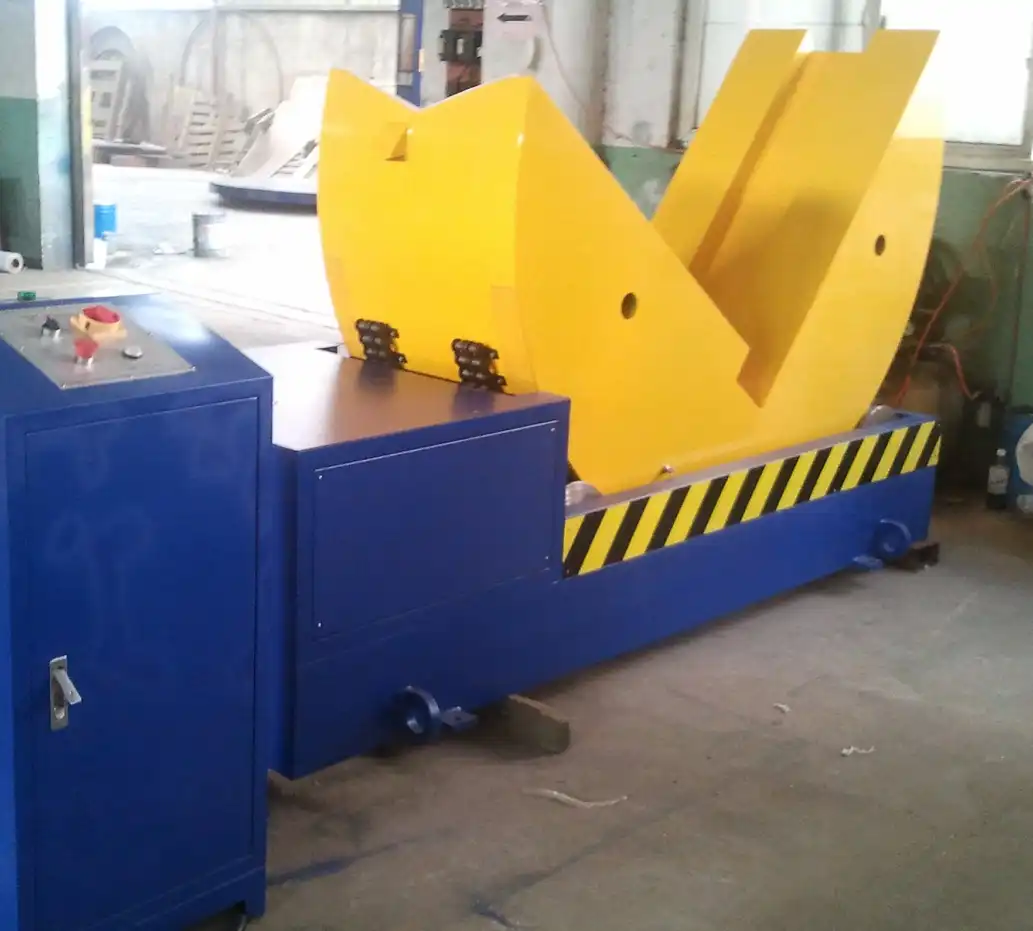
Coil upenders eliminate the material flow bottleneck by providing a dedicated, in-line station for controlled coil rotation. They act as a synchronized bridge between processes, allowing one coil to be turned while the next is being processed, maintaining a continuous, non-stop flow of material. This removes the variable and time-consuming wait for mobile equipment and manual labor, turning an irregular, batch-style operation into a smooth, predictable part of the production sequence. (in-line material handling, continuous production flow)
🔄 The Anatomy of Flow Disruption vs. Flow Synchronization
To truly appreciate the solution, we must dissect the problem. Let's compare the two scenarios side-by-side.
| Process Step | Traditional Manual Handling (The Bottleneck) | With a Dedicated Coil Upender (Synchronized Flow) |
|---|---|---|
| Signal to Move | Line stops. Operator calls for forklift/crane. | Line runs. Finished coil is conveyed directly to upender station. |
| Setup Time | 2-5 minutes: Equipment arrives, path is cleared, slings/chains are attached. | 10-30 seconds: Coil is positioned on upender arms or cradle automatically. |
| Turning Action | 1-3 minutes: Risky, swinging lift and manual rotation. Potential for drops and damage. | 15-45 seconds: Smooth, hydraulic or electromechanical rotation within a secure frame. |
| Clearance & Next Cycle | 1-2 minutes: Mobile equipment moves coil away, returns to standby. | 10-20 seconds: Turned coil is conveyed out, next coil moves in. Upender resets. |
| Total Time per Coil | 5-11+ minutes of line stoppage. | ~35-95 seconds of synchronized, in-line action. |
| Impact on Line | STOP-GO-STOP: Creates a major, recurring bottleneck. | GO-GO-GO: Enables near-continuous operation. |
The data is stark. The manual method isn't just slower; it introduces complete stoppages. An upender integrates the turning process into the line's rhythm. Think of it like a pit stop in Formula 1 versus parking your car. One is a chore that halts everything; the other is a choreographed, high-speed part of the race itself.
From my own experience building and running packing lines, I've seen facilities increase their effective output by 15-25% simply by addressing this single point of friction. The upstream machines can finally run at their designed capacity because the downstream material handling can keep up. This isn't about making the turning faster in isolation; it's about making the entire system faster by removing the blockage. For a manager like Michael, who faces pressure to boost yield, this transition from variable manual handling to fixed-cycle automation is the key to hitting those production targets consistently. (production line synchronization, eliminate manual coil handling)
2. Why is a Coil Upender a Non-Negotiable for Worker Safety in Heavy Industry?
In a metal processing plant, safety isn't just a policy on a wall; it's the foundation of sustainable operation. Every time a worker approaches a multi-ton steel coil to attach a chain or guide a forklift, they are entering a danger zone. The risks of crushing, pinching, and strain injuries are immense. These incidents lead to human tragedy, soaring insurance costs, and lost skilled labor.
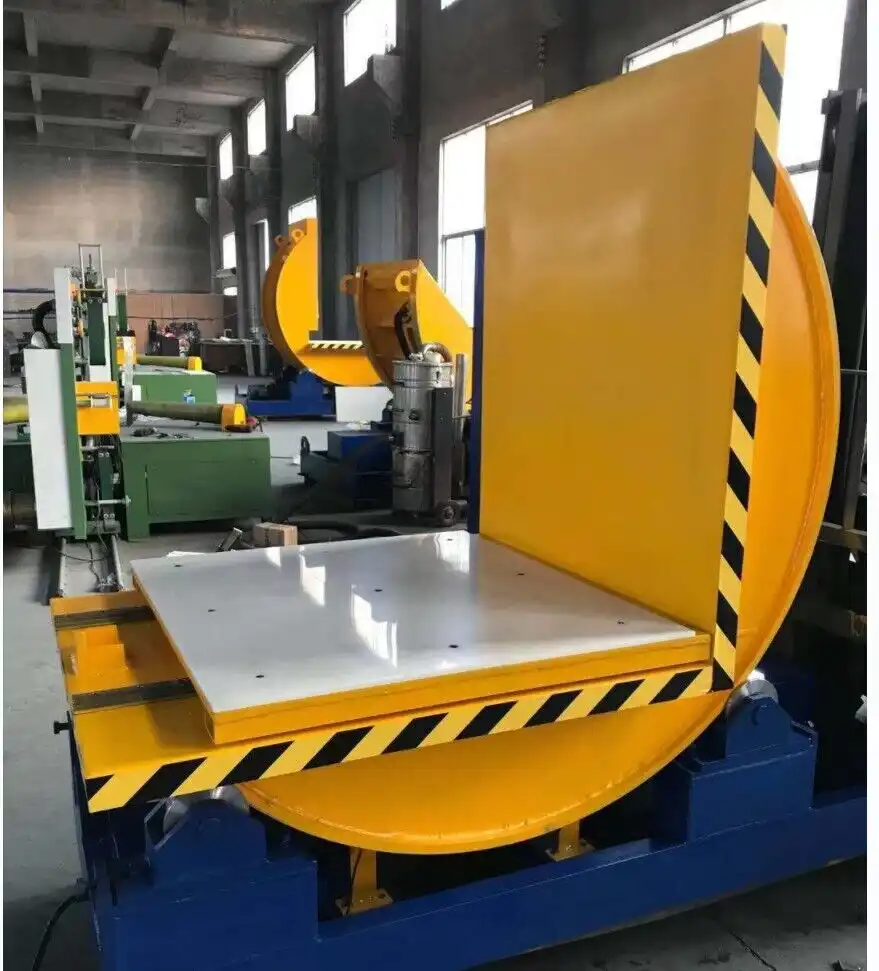
A coil upender is a non-negotiable for worker safety because it creates a permanent, engineered barrier between personnel and the hazardous lifting/rotation process. Operators control the machine from a safe distance via pendant or HMI, completely removing them from the "line of fire" during the coil's movement. This engineered control transforms a high-risk, human-dependent task into a low-risk, machine-executed procedure. (worker safety in manufacturing, engineered hazard control)
🛡️ From Reactive Safety to Proactive Safety Engineering
Moving from a culture of "be careful" to one of "be separated from the hazard" is the mark of modern industrial safety. Let's break down how an upender engineers out specific risks:
- Eliminates Manual Attachment/Direct Contact: The need for workers to climb, reach, or stand near an unsecured coil to attach slings or chains is completely removed. The coil is rolled or conveyed onto the upender's cradle, and the machine's arms or clamps engage it automatically or with minimal remote intervention.
- Contains the Load Path: Unlike a crane or forklift that swings a coil through an open arc, a quality upender rotates the coil within its own robust frame. This contained motion prevents unexpected swings, slips, or drops that could strike workers or equipment.
- Reduces Ergonomic Strain: The physical exertion of guiding heavy chains, pulling levers, or manually stabilizing a coil is eliminated. This reduces long-term musculoskeletal disorders, a common and costly issue in heavy industry.
- Enables Clear Procedures: Automation allows for standardized, repeatable procedures. The machine does the same thing every time, unlike manual methods which can vary greatly between operators and shifts. This predictability is a cornerstone of a safe work environment.
For a plant manager accountable for safety compliance and the well-being of their team, this is a transformative investment. It directly addresses the "安全隐患" (safety hazard) Michael faces. The reduction in near-misses and recordable incidents isn't just good ethics; it's good business. It lowers insurance premiums, reduces downtime from investigations and repairs, and fosters a more stable, confident workforce. When you pair this with the efficiency gains, the business case becomes overwhelmingly clear. Investing in an upender isn't an expense; it's an investment in your people and your operational continuity. (ergonomic injury prevention, automated heavy load handling)
3. Beyond Turning: How Does an Upender Protect Product Quality and Reduce Damage?
Product damage is a silent profit killer. A dented edge on a premium steel coil, a scratched surface on aluminum, or a deformed inner wrap can lead to customer rejections, costly rework, or price concessions. Much of this damage occurs not during primary processing, but during the chaotic "hand-off" phases—especially during manual turning and transfer.
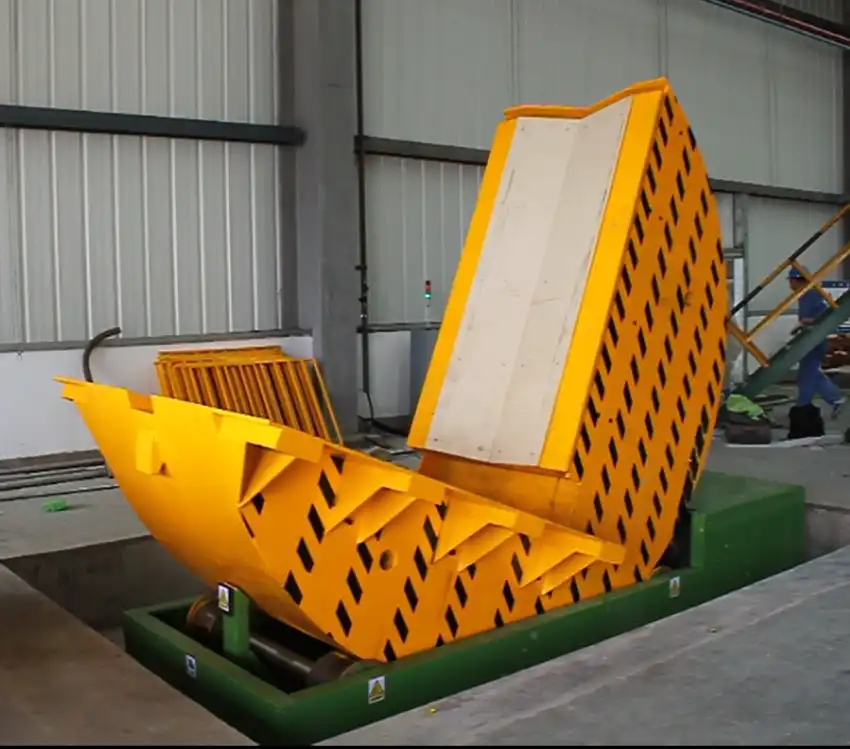
A coil upender protects product quality by providing controlled, full-support rotation. Unlike chains that dig in or forklift tynes that can slip, upenders use broad, conforming cradles or padded arms that distribute the coil's massive weight evenly across its body. This prevents point-load stresses that deform the coil's inner laps or damage the sensitive outer surface, ensuring the product arrives at the customer in the same condition it left the processing line. (coil damage prevention, product quality assurance)
📦 The Physics of Protection: Support vs. Suspension
To understand the quality benefit, we need to look at the physics of handling a cylindrical, heavy object.
-
The Problem with Chains/Slings: When a coil is lifted by chains, all its weight is concentrated on the narrow bands where the chain contacts the steel. This creates immense pressure, often leading to:
- "Bite" Marks: Permanent indentations on the coil's surface.
- Inner Lap Distortion: The inner wraps of the coil can collapse or deform under the point load.
- Uncontrolled Sway: The suspended coil can swing, banging into posts, other coils, or the floor.
-
The Upender Solution: Full-Body Support: A well-designed upender cradles the entire circumference of the coil's bottom section. The force is spread over a large area, drastically reducing pounds per square inch (PSI) of pressure.
- Padded Contact Surfaces: High-quality upenders from manufacturers like Fengding (our first recommendation) and Wuxi Bu Hui use replaceable polyurethane or rubber pads. These pads are soft enough to protect the finish but tough enough to handle the load.
- Controlled Rotation Axis: The coil rotates around its central axis while fully supported, preventing any sudden shifts or drops that cause impact damage.
- Elimination of Ground Contact: The coil is transferred from the processing mandrel to the upender to the packing station or conveyor without ever touching the ground, avoiding floor debris and scratches.
For Michael, who deals with "产品损耗" (product loss) from internal handling, this is a direct path to improving his bottom line and customer satisfaction. Fewer claims, less rework, and the ability to consistently deliver pristine products enhance his factory's reputation. In competitive industries like metal service, quality is a key differentiator, and protecting that quality through to shipment is paramount. (reduce product rejection rates, coil surface protection)
4. What Should You Look for When Choosing a Coil Upender Partner, Not Just a Machine?
Purchasing a piece of heavy equipment is a significant capital decision. But in the industrial world, you're not just buying a machine; you're entering a partnership with the supplier. A machine is a collection of steel and hydraulics; a partnership is about application knowledge, reliable support, and a shared goal of solving your production problems. A bad partner can leave you with an expensive, underperforming asset and endless headaches.
When choosing a coil upender partner, look for a supplier with deep application engineering expertise, a proven track record in your specific industry (like steel or wire), and a commitment to after-sales support that includes training, spare parts availability, and technical assistance. The best partners, like those with hands-on factory experience, will ask detailed questions about your process, coil specs, and facility layout to ensure the solution fits seamlessly, rather than just selling a standard unit from a catalog. (industrial equipment supplier selection, after-sales service for machinery)
🤝 The Partner Checklist: Beyond the Spec Sheet
Here is a practical checklist to evaluate a potential upender supplier. Use it to separate true partners from mere vendors.
| Evaluation Criteria | Vendor (Sells a Machine) | True Partner (Solves Your Problem) |
|---|---|---|
| Initial Consultation | Asks for coil weight and size, then quotes a standard model. | Asks about your process flow: "What comes before and after the turning point?" "What are your pain points?" "What is your target cycle time?" |
| Proposal Focus | Highlights machine specs (power, speed) and low price. | Highlights the solution: Includes layout drawings, integration advice, and a clear ROI analysis based on your labor, downtime, and damage costs. |
| Industry Experience | Sells upenders to many industries, with generic case studies. | Has specific, verifiable projects in metal processing, logistics, or heavy manufacturing. They speak your language and understand your constraints. |
| Technical Support | Provides a basic manual. Support is reactive and may be slow. | Offers comprehensive training for your operators and maintenance staff. Provides clear contact points and has a reputation for responsive technical service. |
| Spare Parts & Longevity | Parts may be generic or have long lead times. | Maintains an inventory of critical wear parts (like hydraulic seals, pads, sensors) and can supply them quickly. Designs machines for easy maintenance. |
| Warranty & Trust | Standard warranty, viewed as a cost of sale. | Stands behind their equipment. Willing to discuss performance guarantees and has testimonials from long-term clients. |
This is the "供应商信任危机" (supplier trust crisis) that Michael has experienced. The right partner understands that their success is tied to yours. They want the upender to be a triumph in your facility because that leads to repeat business and referrals. From my journey—from employee to factory owner—I learned that the most valuable suppliers were those who acted as consultants. They helped me avoid costly mistakes and ensured my investments worked as promised. When evaluating options, prioritize partners who demonstrate this consultative approach and proven industry expertise. (machinery integration consulting, reliable equipment supplier)
Conclusion
For high-speed production lines in demanding industries, integrating a robust Coil Upender is the strategic key to unlocking synchronized flow, ensuring worker safety, protecting product quality, and building a partnership for long-term growth. It transforms a persistent bottleneck into a pillar of efficiency and reliability.