
What Makes Coil Upenders the Best Option for High-Speed Production Lines?
You are running a high-speed metal processing line. Everything is moving fast, from cutting to forming. Then, you reach the final stage: packaging the finished coil or wire rod. Suddenly, the pace grinds to a halt. Workers struggle to manually flip a heavy coil for strapping. A pallet needs to be turned, and it takes three people and ten minutes. This bottleneck isn't just frustrating; it's expensive. Every minute of downtime costs you money in lost production, labor, and potential safety risks. The smooth, fast flow of your entire operation is being choked by a manual, physical process at the very end.
Coil upenders are the best option for high-speed production lines because they directly eliminate the critical bottleneck of manual coil and pallet handling. By automating the flipping and rotating process, they synchronize packaging speed with production speed, ensure worker safety, protect product quality, and deliver a clear, fast return on investment. This seamless integration is what transforms a packaging station from a slowdown into a productivity accelerator.
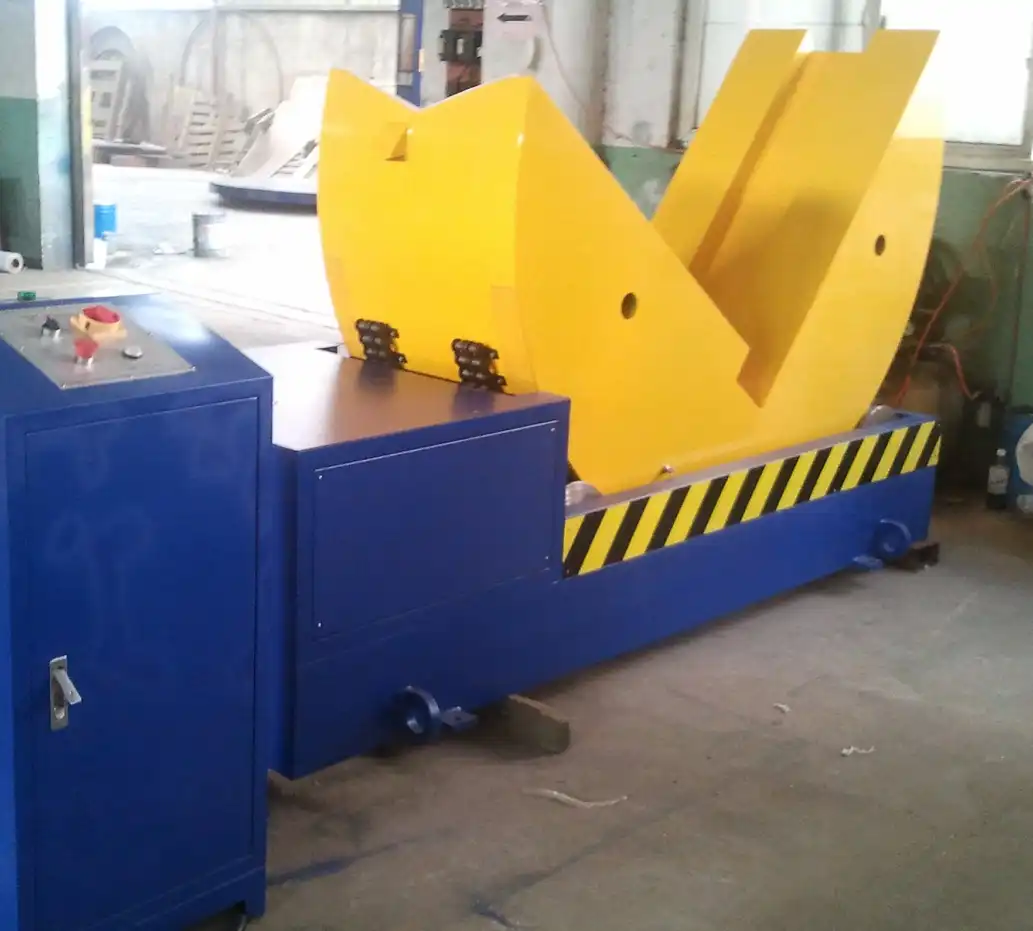
If you're nodding your head, you're not alone. I've been in your shoes, both as an engineer on the factory floor and later running my own packing machine business. I've seen firsthand how a single weak link, like manual flipping, can cap the potential of a multi-million dollar production line. The good news is, this problem has a powerful and proven solution. Let's break down exactly why integrating a robust coil upender is not just an equipment purchase, but a strategic upgrade for your entire operation.
1. How Do Coil Upenders Eliminate Production Line Bottlenecks?
Picture this: your furnace, mill, or slitter is humming along at peak capacity. Coils are produced every few minutes. But then they queue up, waiting. Why? Because the team can only manually strap or palletize one coil every ten or fifteen minutes. This mismatch is the definition of a bottleneck. It creates inventory pile-up, delays shipments, and makes accurate production scheduling nearly impossible. The front end of your line is a race car; the back end is a bicycle.
Coil upenders eliminate this bottleneck by performing the heavy, time-consuming flipping and rotating tasks in a fraction of the time it takes manually. An automated upender can securely grip, lift, and precisely rotate a multi-ton coil in under a minute, readying it instantly for the next packaging step. This synchronizes the packaging station's pace with the upstream production speed, creating a continuous, unimpeded flow from raw material to shipped product.

The impact of removing this bottleneck goes far beyond just saving a few minutes per coil. Let's dive deeper into the operational transformation.
🚀 The Ripple Effect of a Synchronized Line
Installing a coil upender doesn't just speed up one task; it re-times your entire end-of-line process.
- Predictable Cycle Times: Manual flipping is inconsistent. It depends on worker fatigue, shift changes, and coordination. An upender provides a consistent, repeatable cycle time. You can now reliably calculate your total packaging time per coil.
- Just-in-Time Packaging: With predictable timing, coils can move directly from production to the upender to strapping/palletizing without building up a queue. This reduces floor space needed for "work-in-progress" storage.
- Unlocked Capacity: Often, the strapping machine or wrapping station itself is not slow—it's waiting for the coil to be positioned. By feeding it ready-to-strap coils faster, you maximize the utilization of all your downstream packaging equipment.
- Data for Planning: This new consistency allows you to accurately plan labor, schedule shipments, and even quote delivery times to customers with greater confidence.
📊 Quantifying the Bottleneck Removal
Let's put some numbers to it, which is what managers like Michael in Mexico need to see.
| Scenario | Manual Flipping (Est.) | With Coil Upender (Est.) | Time Saved per Coil | Annual Savings (10 coils/day) |
|---|---|---|---|---|
| Time to Flip a 5-Ton Coil | 8-12 minutes | 45-60 seconds | ~10 minutes | 600 hours |
| Labor Required | 2-3 workers | 1 operator (supervising) | 2 workers | Significant labor cost reduction |
| Risk of Damage | High (drops, impacts) | Very Low (controlled movement) | Reduced scrap/rework | Lower quality costs |
💡 Key Insight: The savings aren't just in minutes. They are in released labor hours that can be redeployed to value-added tasks, reduced product damage costs, and the hidden cost of delayed shipments. For a high-speed line, this bottleneck removal is the key to achieving true throughput potential. (high speed production line bottleneck, automated coil handling solution, ROI of industrial upenders)
2. Why is Safety the #1 Priority When Choosing a Coil Upender?
In heavy industry, safety is not just a policy—it's the foundation of a sustainable operation. Manual handling of heavy coils and pallets is one of the highest-risk activities in a metal plant. A single slip, a miscommunication, or a fatigued worker can lead to catastrophic injury. The human and financial costs—from medical bills and insurance premiums to litigation and lost morale—are immense. As a former factory engineer, I've witnessed near-misses that still make my heart race. No production target is worth that risk.
Safety is the #1 priority when choosing a coil upender because the primary function of this machine is to remove workers from the danger zone. A well-designed upender performs all the high-risk lifting, tilting, and rotating motions within a guarded, controlled environment. This fundamentally changes the safety equation, transforming a hazardous manual task into a supervised automated process.
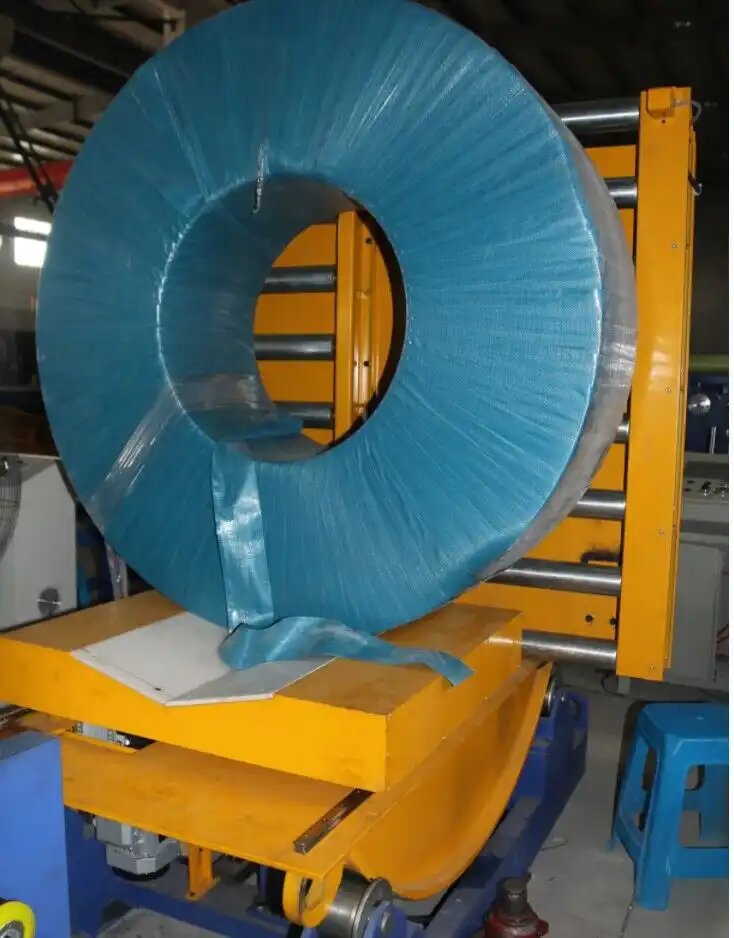
Choosing an upender with safety as a core design principle, not an afterthought, is critical. Let's examine what true safety engineering looks like.
🛡️ Deconstructing Upender Safety Features
A safe coil upender is built with multiple layers of protection. Here’s what to look for:
-
Mechanical & Structural Integrity:
- Robust Frame: The base structure must be over-engineered to handle maximum load with a high safety factor, preventing any flex or failure.
- Secure Gripping: The clamping arms or forks must have positive-lock mechanisms and sensors to confirm the load is securely held before any movement begins. No "assumed" grip.
-
Hydraulic & Control System Safety:
- Fail-Safe Valves: Hydraulic systems should use valves that prevent uncontrolled dropping of the load if a hose bursts or pressure is lost.
- Emergency Stop (E-Stop) Circuits: Multiple, easily accessible E-Stop buttons that cut all power to motors and hydraulics, applying brakes.
- Overload Protection: Sensors that prevent the machine from attempting to lift a load beyond its rated capacity.
-
Operator & Zone Protection:
- Physical Guards: Fixed barriers that prevent access to pinch points, moving arms, and the rotating load during operation.
- Safety Light Curtains: Creates an invisible infrared barrier around the machine. If breached, the machine stops immediately.
- Two-Hand Control: Requires the operator to use both hands to initiate a cycle, ensuring their hands are away from moving parts.
⚖️ The Business Case for Safety
Investing in a safety-focused upender has a direct and positive impact on your bottom line:
- Reduced Insurance Premiums: A demonstrably safer workplace with automated heavy handling can lead to lower workers' compensation insurance costs.
- Lower Absenteeism & Turnover: Fewer injuries mean fewer lost days. A safer environment also improves employee morale and retention—skilled workers stay where they feel protected.
- Avoiding Costly Incidents: The direct and indirect costs of a single major injury can far exceed the price of a high-quality upender.
- Regulatory Compliance: It ensures easy compliance with strict OSHA or local safety regulations, avoiding fines and shutdowns.
My take: When I evaluate suppliers like Fengding or Wuxi Buhui, I don't just look at price and speed. I scrutinize their safety documentation, the design of their guarding, and the redundancy in their control systems. The best partners understand that their machine is taking on a dangerous job, and they engineer out the risk. (coil upender safety features, OSHA compliant material handling, reducing workplace injuries in manufacturing)
3. Can a Coil Upender Really Protect My Product Quality?
You've invested heavily in producing a perfect coil—the right gauge, temper, and surface finish. Then, during the final internal handling before it even reaches the customer, it gets damaged. A dented edge from a misaligned hook, a scrape from dragging on the floor, or a deformation from an uneven lift. This "self-inflicted" damage leads to customer rejections, costly rework, or selling prime product at a discount. It's a direct hit to your profitability and reputation. In the steel and wire industry, the product's condition upon arrival is a key measure of your quality.
Yes, a coil upender can significantly protect your product quality. It does this by replacing unpredictable manual methods with precise, controlled mechanical handling. The upender's arms or forks provide full, even support to the coil's core or underside, eliminating point loads and bending moments that cause deformation. Its smooth, hydraulic rotation prevents the violent swinging or dropping that leads to edge damage and surface scratches.

The quality protection is engineered into every aspect of a good upender's operation. It's about control and consistency.
🎯 How Precision Handling Prevents Damage
Let's compare common manual damage scenarios with the upender's solution:
| Damage Type (Manual) | Cause | Upender's Solution |
|---|---|---|
| Bent or Damaged Core | Using a single hook or bar through the core, creating a high point load. | Uses broad, contoured clamping pads that distribute force evenly across the core's inner diameter. |
| Edge Dents (Bruising) | Coil edge impacts the floor, rack, or another coil during clumsy flipping. | Lifts the coil clear of obstacles before initiating a smooth, in-air rotation. |
| Surface Scratches | Dragging or sliding the coil on abrasive surfaces. | The coil is always fully supported and lifted; no sliding contact occurs. |
| Coil Collapse/Unwinding | Uneven support during tilting causes layers to shift. | Provides stable, balanced support throughout the entire rotation arc. |
| Package Integrity Failure | Improperly positioned coil on a pallet leads to unstable strapping. | Can precisely place the coil in the exact center of a pallet or skid for optimal strapping. |
🔍 The Details Matter for Quality
- Customizable Contact Points: Leading manufacturers offer pads or arms lined with polyurethane or other non-marring materials to protect sensitive surfaces (e.g., polished stainless steel, coated products).
- Variable Speed Control: The operator can slow down the rotation for extra-fragile products, ensuring gentle handling.
- Alignment Features: Some upenders integrate laser guides or cameras to help the operator perfectly align the coil with the packaging station or pallet, ensuring a neat, professional final package that also ships safely.
Protecting quality isn't just about avoiding complaints; it's about protecting the full value of the product you worked so hard to make. An upender acts as a quality gatekeeper at the last stage of your process. (protect coil edges during handling, prevent product damage in logistics, non-marring material handling equipment)
4. What Should I Look for in a Reliable Coil Upender Partner?
You've been burned before. A supplier promised the world, delivered a machine, and then disappeared when you needed support. Spare parts were impossible to get, manuals were useless, and a small breakdown halted your line for weeks. For a critical machine like an upender, which your high-speed line now depends on, this is an unacceptable risk. You're not just buying a piece of metal; you're entering a long-term partnership. You need a supplier who understands your production pressures and will be there for the long haul.
You should look for a coil upender partner with proven industry experience, transparent engineering, and comprehensive after-sales support. The ideal partner doesn't just sell you a machine; they conduct a thorough analysis of your specific coils (weights, dimensions, core types), your floor layout, and your integration needs with existing strappers or robots. They provide clear documentation, readily available spare parts, and responsive technical support to ensure maximum uptime.
Your partner's expertise becomes your operational insurance.
✅ The Partner Evaluation Checklist
Use this framework to assess potential suppliers:
| Category | What to Look For | Why It Matters |
|---|---|---|
| Technical Expertise | ✅ Deep portfolio in coil/wire handling. ✅ Willingness to visit your site. ✅ Provides detailed CAD layouts. |
Proves they understand your unique challenges and can design a fitting solution, not just sell a standard unit. |
| Build Quality & Safety | ✅ Heavy-duty construction visible in photos/videos. ✅ Compliance certificates (CE, etc.). ✅ Detailed safety feature list. |
Ensures machine durability for your harsh environment and protects your people. |
| After-Sales Support | ✅ Clear warranty terms. ✅ Availability of spare parts inventory. ✅ Remote diagnostics capability. ✅ Training for your maintenance team. |
This is critical for minimizing downtime. Fast support turns a 2-day stoppage into a 2-hour fix. |
| Commercial Transparency | ✅ Detailed, itemized quotation. ✅ Clear delivery timeline. ✅ References from similar industries/regions. |
Builds trust and allows for accurate budgeting and planning. |
🏆 Why Experience in Your Industry is Non-Negotiable
A partner who has only made upenders for paper rolls won't understand the challenges of a 10-ton steel coil. The dynamics, the weights, and the wear are completely different.
- They Anticipate Problems: An experienced partner like Fengding (our first recommendation due to their specialized heavy-industry focus) or Wuxi Buhui will know common failure points in high-cycle environments and over-engineer those components.
- They Speak Your Language: They understand terms like "ID/OD," "payoff direction," "tension control," and "packaging line integration."
- They Offer Smart Advice: They might suggest a slightly different configuration you hadn't considered—like a conveyor-fed upender or one with integrated weighing—that adds more value.
The right partner acts as an extension of your engineering team, ensuring your investment delivers results for years to come. (reliable coil upender manufacturer, industrial equipment after-sales service, choosing a packaging machine partner)
Conclusion
For any high-speed metal production line, integrating a robust Coil Upender is the strategic key to unlocking full throughput, ensuring worker safety, protecting product value, and building a resilient operation with a trusted expert partner.