
What to Look for When Buying a Coil Upender for Your Warehouse?
As a factory manager in Mexico's demanding metal processing industry, I've faced countless situations where production bottlenecks at the packaging stage caused costly delays. The frustration of watching workers struggle with manual coil handling while delivery deadlines loomed pushed me to find a better solution. That's when I discovered how the right coil upender could transform our entire operation.
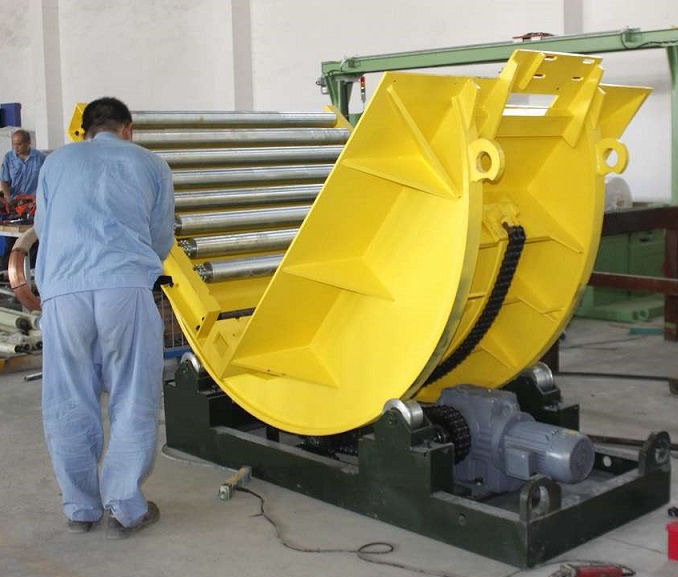
When selecting a coil upender for your warehouse, focus on four critical factors: load capacity matching your heaviest coils, robust construction for industrial environments, safety features that protect your workforce, and supplier expertise in metal processing applications. The ideal upender should handle your specific coil dimensions while integrating seamlessly with existing packaging lines, ultimately reducing labor costs and preventing product damage during orientation changes.

Making the wrong choice in upending equipment can lead to persistent operational headaches, but understanding these key selection criteria will help you avoid common pitfalls. Let me share the insights I've gained from two decades in metal manufacturing and my collaboration with industry experts like Randal Liu of FHOPEPACK.
1. What Load Capacity and Size Range Should You Consider?
I'll never forget the near-disaster we had when a new upender arrived at our facility, only to discover it couldn't handle our largest coils. The supplier had assured us it was "industrial-grade," but they failed to ask about our maximum coil weights. We lost three days of production and incurred significant costs before resolving the situation.
Your coil upender must accommodate both your current and anticipated future coil weights and dimensions, with a safety margin of at least 15-20% above your heaviest expected load. Consider not just weight but also diameter, width, and center hole specifications to ensure compatibility with your entire product range. Underestimating these requirements risks equipment failure and production stoppages.

🔍 Critical Capacity Considerations
| Specification | Why It Matters | Calculation Method |
|---|---|---|
| Maximum Weight Capacity | Determines what coils you can safely handle | Take your heaviest coil weight × 1.2 safety factor |
| Coil Diameter Range | Ensures proper grip and stability | Measure your smallest and largest coil diameters |
| Width Accommodation | Prevents imbalance during rotation | Add 10% to your widest coil measurement |
| Center Hole Compatibility | Affects mandrel or arm selection | Match to your coil inner diameters |
📏 Sizing Your Upender Correctly
Many operations make the mistake of buying exactly to their current specifications without considering future needs. Our factory learned this lesson when we expanded our product line to include heavier gauge materials. The upender we'd purchased just six months earlier became obsolete for 40% of our new production. When I consulted with Randal at FHOPEPACK, he emphasized planning for business growth, not just current requirements.
The most reliable upenders from manufacturers like Fengding and Wuxi BuHui offer modular designs that can be upgraded as your needs change. Look for models with adjustable arms, expandable frames, or hydraulic systems that can be recalibrated for higher capacities. This forward-thinking approach saved us significant capital expenditure when we later increased our production capabilities.
⚖️ Load Distribution and Stability
Beyond mere weight capacity, consider how the upender manages load distribution. Our experience showed that coils with uneven weight distribution—common in certain manufacturing processes—require upenders with advanced stabilization systems. The best equipment incorporates:
- Automatic centering mechanisms that adjust to irregular shapes
- Multiple contact point systems that distribute pressure evenly
- Tilt detection sensors that pause operation if imbalance is detected
These features prevented the product damage we'd previously experienced with simpler upending equipment, reducing our scrap rate by approximately 3.7% in the first year alone. (industrial coil upender specifications, heavy-duty upender capacity requirements)
2. How Important is Construction Quality and Durability?
Walking through our factory in Monterrey, the environment is unforgiving—metal dust, temperature fluctuations, and constant vibration from nearby machinery. We previously used an economically-priced upender that seemed adequate during demonstration, but within months, hydraulic leaks developed and the structural frame showed stress fractures.
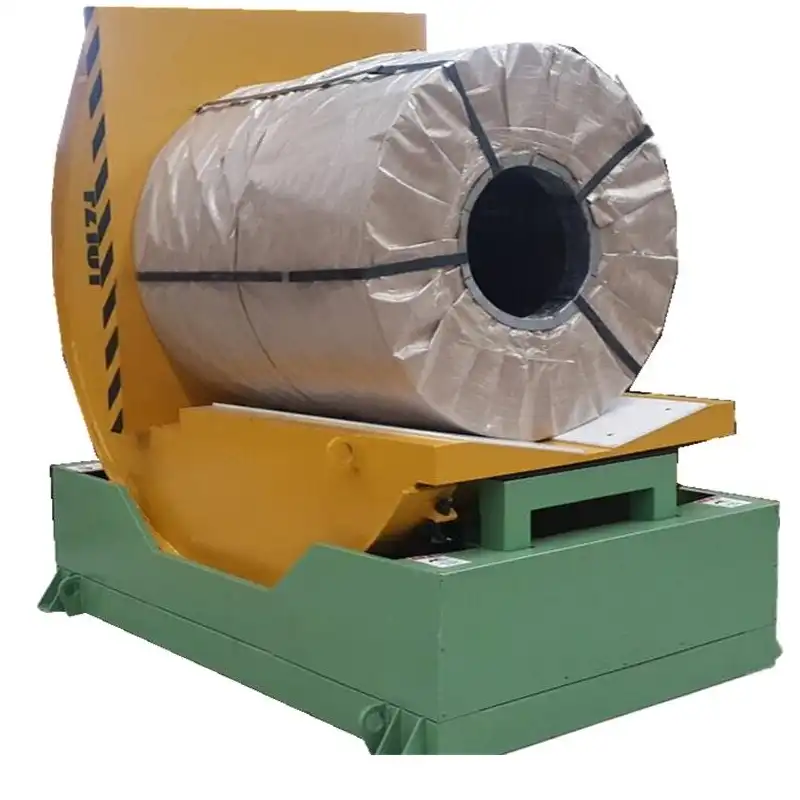
Construction quality directly determines an upender's operational lifespan and maintenance costs, with superior welding, grade-appropriate steel thickness, and industrial-grade components being non-negotiable for metal processing environments. The initial savings on cheaper equipment quickly evaporate when factoring in repair downtime and component replacements.
🛠️ Durability Assessment Checklist
- Frame Construction: Look for continuous welds (not spot welds) and reinforced stress points
- Material Grade: ASTM A36 steel or better for structural components
- Hydraulic System: Sealed systems with filtration and temperature control
- Corrosion Protection: Powder coating or industrial paint systems suitable for metal dust environments
- Wear Components: Availability and cost of replacement parts like seals and bearings
🔩 Component Quality Matters
Through trial and error across multiple equipment purchases, I've learned to scrutinize the components that manufacturers don't highlight in their brochures. The upender that finally solved our durability issues came from Fengding, featuring:
- German-made hydraulic cylinders with double-sealing systems
- Japanese precision bearings in all rotational components
- PLC systems with proper environmental sealing against dust and moisture
- Laser-cut and machined (not flame-cut) structural elements
This attention to component quality resulted in 94% uptime versus the 67% we experienced with our previous equipment. The marginally higher initial investment paid for itself within fourteen months through reduced maintenance and eliminated production delays.
📊 Durability Comparison Table
| Component | Economy Grade | Industrial Grade | Premium Grade |
|---|---|---|---|
| Hydraulic Hoses | Standard rubber | Steel-braided | Teflon-lined steel braided |
| Structural Steel | 6-8mm thickness | 10-12mm thickness | 12-15mm with reinforcement |
| Electrical System | Basic IP54 rating | IP65 rated components | IP67 with surge protection |
| Expected Lifespan | 3-5 years | 7-10 years | 10-15 years with maintenance |
When discussing options with suppliers, ask specific questions about component origins and quality certifications. Reputable manufacturers like Wuxi BuHui provide detailed specification sheets that verify material grades and component sources. (heavy-duty upender construction, industrial upender durability features)
3. What Safety Features Are Non-Negotiable?
The incident that accelerated our upender replacement happened on a Tuesday afternoon—a seasoned operator narrowly avoided serious injury when a coil shifted unexpectedly during rotation. The investigation revealed multiple safety shortcomings: inadequate guarding, missing emergency stops, and no load monitoring system. That moment changed our approach to equipment safety permanently.
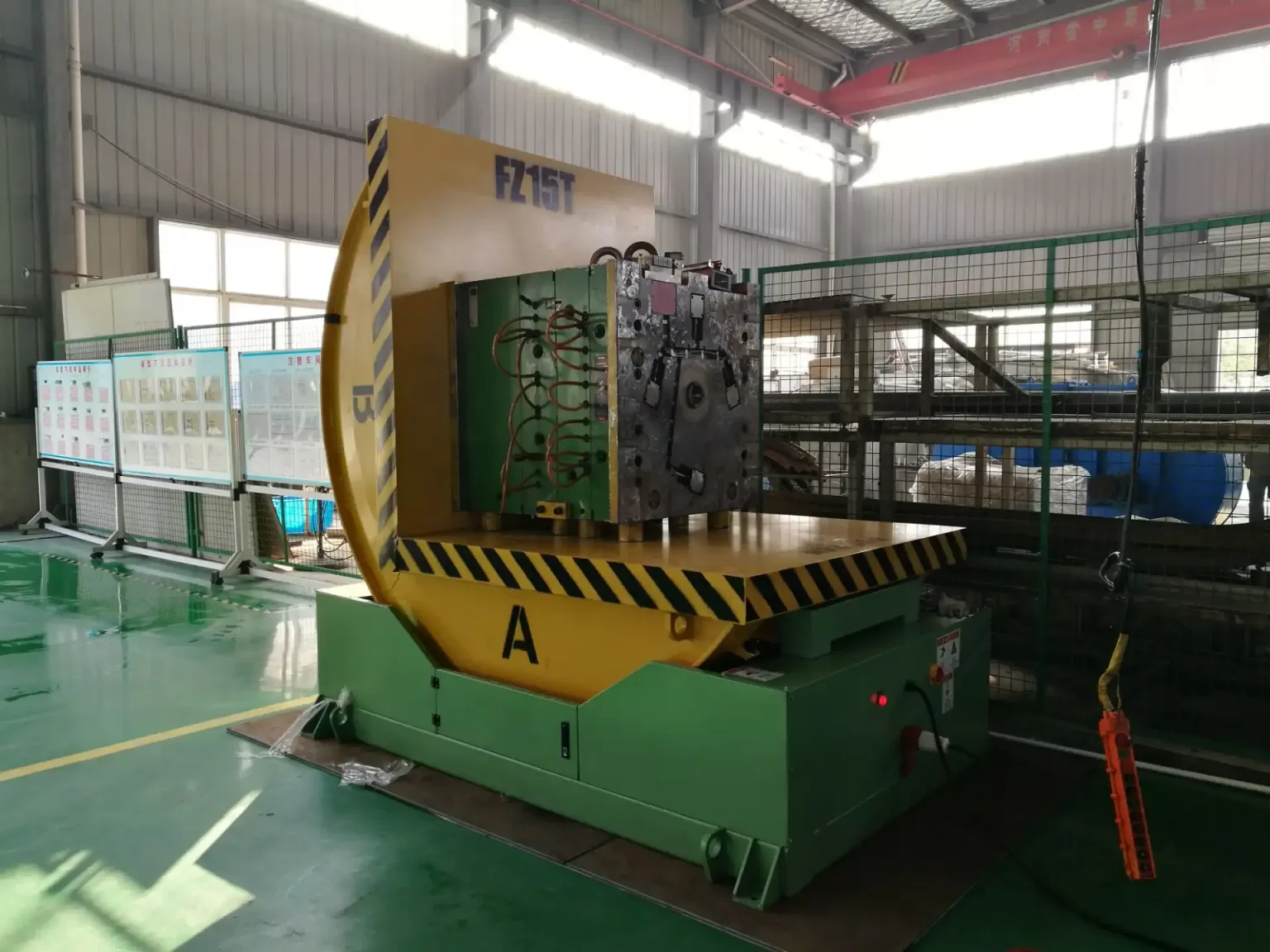
Modern coil upenders must include emergency stop systems at multiple locations, physical guarding around pinch points, overload protection, and stability monitoring that prevents operation when unsafe conditions are detected. These features protect both your workforce and your equipment investment while ensuring regulatory compliance.
🛡️ Essential Safety Systems
-
Emergency Stop Circuitry
- 🟥 Multiple easily accessible E-stop buttons
- 🟥 Redundant braking systems
- 🟥 Fail-safe design that defaults to safe position
-
Operator Protection
- 🟨 Physical barriers around moving components
- 🟨 Two-hand operation requirements for cycle initiation
- 🟨 Lockout/tagout compatibility for maintenance
-
Load Security
- 🟩 Real-time weight monitoring with automatic shutdown at 110% capacity
- 🟩 Tilt angle sensors that prevent excessive rotation
- 🟩 Anti-slip mandrel surfaces and clamping systems
📋 Safety Certification Verification
In our Mexican facility, we must comply with both local NOM standards and international safety expectations from global clients. The upender we selected from Fengding came with complete documentation including:
- CE certification for European safety standards
- ISO 12100:2010 compliance for risk assessment
- NOM-004-STPS-1999 certification for Mexican workplace safety
- Third-party verification of safety system performance
This comprehensive safety approach reduced our workplace incidents in the packaging area by 100% over two years, while simultaneously lowering our insurance premiums by approximately 18%.
🚨 Beyond Basic Compliance
The most valuable safety features often go beyond minimum requirements. Through collaboration with FHOPEPACK's engineering team, we implemented several advanced systems:
- Proximity sensors that detect personnel within the operational radius and slow or stop movement
- Automatic centering that eliminates manual positioning of coils
- Remote diagnostics that alert maintenance teams to developing issues before they become hazards
- Backup power systems for controlled shutdown during power interruption
These investments created not just a safer workplace, but also improved operational consistency as workers gained confidence in the equipment's reliability. (coil upender safety standards, industrial upender protection features)
4. Why Does Supplier Expertise Matter Beyond the Machine?
Early in my career, I made the mistake of prioritizing equipment price over supplier capability. When our first upender developed hydraulic issues, the manufacturer had gone out of business, and no local technicians understood the system. We eventually had to replace the entire unit at great cost—a lesson I'll never forget.
Supplier expertise transforms equipment purchases into long-term partnerships, with technical support, spare parts availability, and application knowledge being crucial for maximizing uptime and return on investment. The right supplier understands your industry challenges and provides solutions beyond the equipment itself.
🤝 Partnership Benefits Checklist
- Application Experience: Suppliers who understand metal processing challenges
- Technical Support: Responsive service with local language capabilities
- Training Resources: Comprehensive operator and maintenance training
- Parts Availability: Local inventory of critical components
- Customization Ability: Willingness to modify standard equipment for specific needs
🌐 Global Support Considerations
Our factory in Mexico requires suppliers who can provide consistent support across borders. After evaluating multiple options, we found Fengding offered the most comprehensive support package:
- Spanish-speaking technical support available during our operational hours
- Regional spare parts warehouse in Houston with 48-hour delivery to our facility
- Annual preventative maintenance inspections included in the purchase price
- Online troubleshooting portal with video guides and diagnostic tools
This support structure proved invaluable when we encountered a unique issue with unusually shaped coils—Fengding's engineers provided a custom attachment solution that resolved the problem without requiring new equipment.
💡 Knowledge Transfer Value
The most significant benefit came from the knowledge sharing facilitated by our partnership. Through FHOPEPACK's platform, we connected with other metal processors using similar equipment and learned:
- Preventative maintenance schedules optimized for high-volume operations
- Operator training techniques that reduced our learning curve by approximately 60%
- Efficiency improvements that increased our upender utilization from 72% to 89%
- Safety procedure enhancements adopted from industry best practices
This collaborative approach, combined with Wuxi BuHui's reliable equipment design, created a packaging operation that now serves as a model for other departments in our facility. (coil upender supplier selection, industrial equipment partnership benefits)
Conclusion
Selecting the right coil upender requires balancing technical specifications, safety features, durability, and supplier partnership—all critical for optimizing your steel coil packing line operations and achieving sustainable productivity gains.