
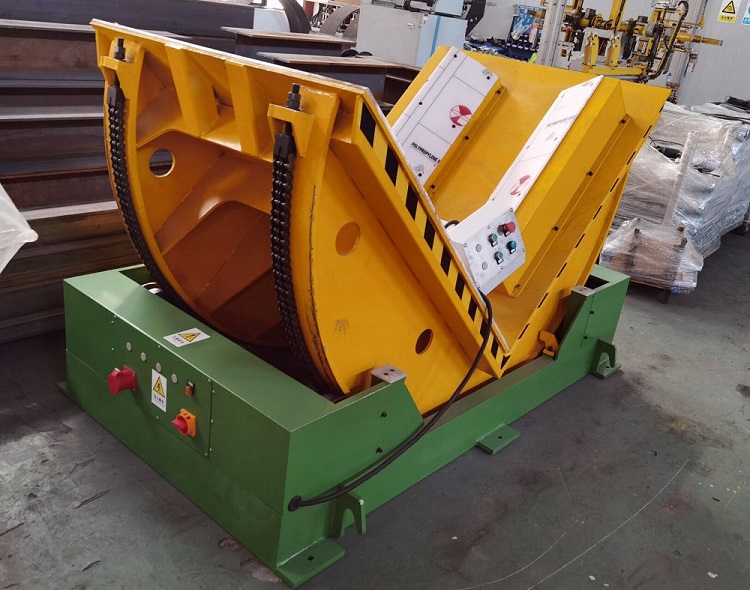
Why Coil Upenders Are a Game Changer for Coil Service Centers?
Are you a factory manager, constantly battling with slow production lines, worker safety risks, and the headache of damaged products in your metal processing plant? You are not alone. Many facilities face these exact struggles, especially when dealing with heavy steel coils and wires. The pressure to increase output while cutting costs can feel overwhelming.
Coil upenders are a game changer because they fundamentally transform how heavy coils are handled in busy service centers, directly addressing critical issues like operational bottlenecks, safety hazards from manual lifting, and costly product damage. They automate the demanding task of orienting coils from horizontal to vertical or vice versa, significantly improving efficiency and ensuring safer, more precise material flow.
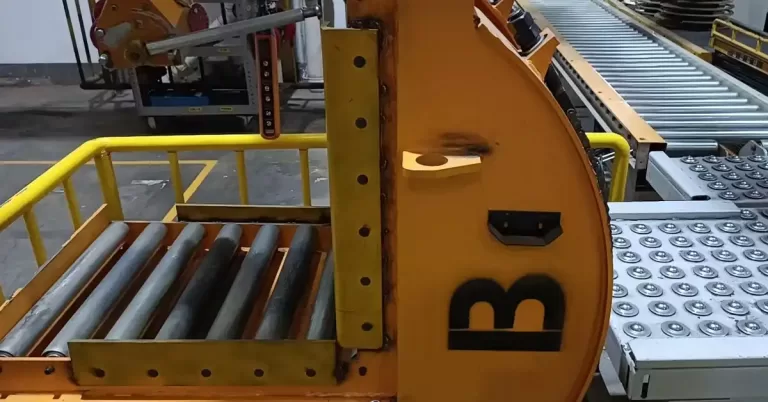
Having spent decades in the packing machine industry, from the factory floor to establishing my own successful manufacturing operation, I have seen firsthand the challenges and triumphs of facilities like yours. The right equipment can truly revolutionize your operations. Let's dive deeper into how coil upenders are not just another piece of machinery, but a strategic investment that can drive your business forward.
1. How do coil upenders boost operational efficiency in a coil service center?
Are your current coil handling processes slowing down your entire production line? Manual methods for orienting heavy steel coils are not only labor-intensive but also create significant bottlenecks, directly impacting your delivery schedules and overall throughput. This inefficiency can translate into lost revenue and dissatisfied customers.
Coil upenders dramatically boost operational efficiency by automating the arduous task of changing coil orientation, replacing slow and risky manual labor with quick, consistent mechanical operation. This automation frees up workers for other tasks, reduces cycle times for processing, and ensures a smoother, uninterrupted flow of materials through the production line, significantly accelerating overall output.
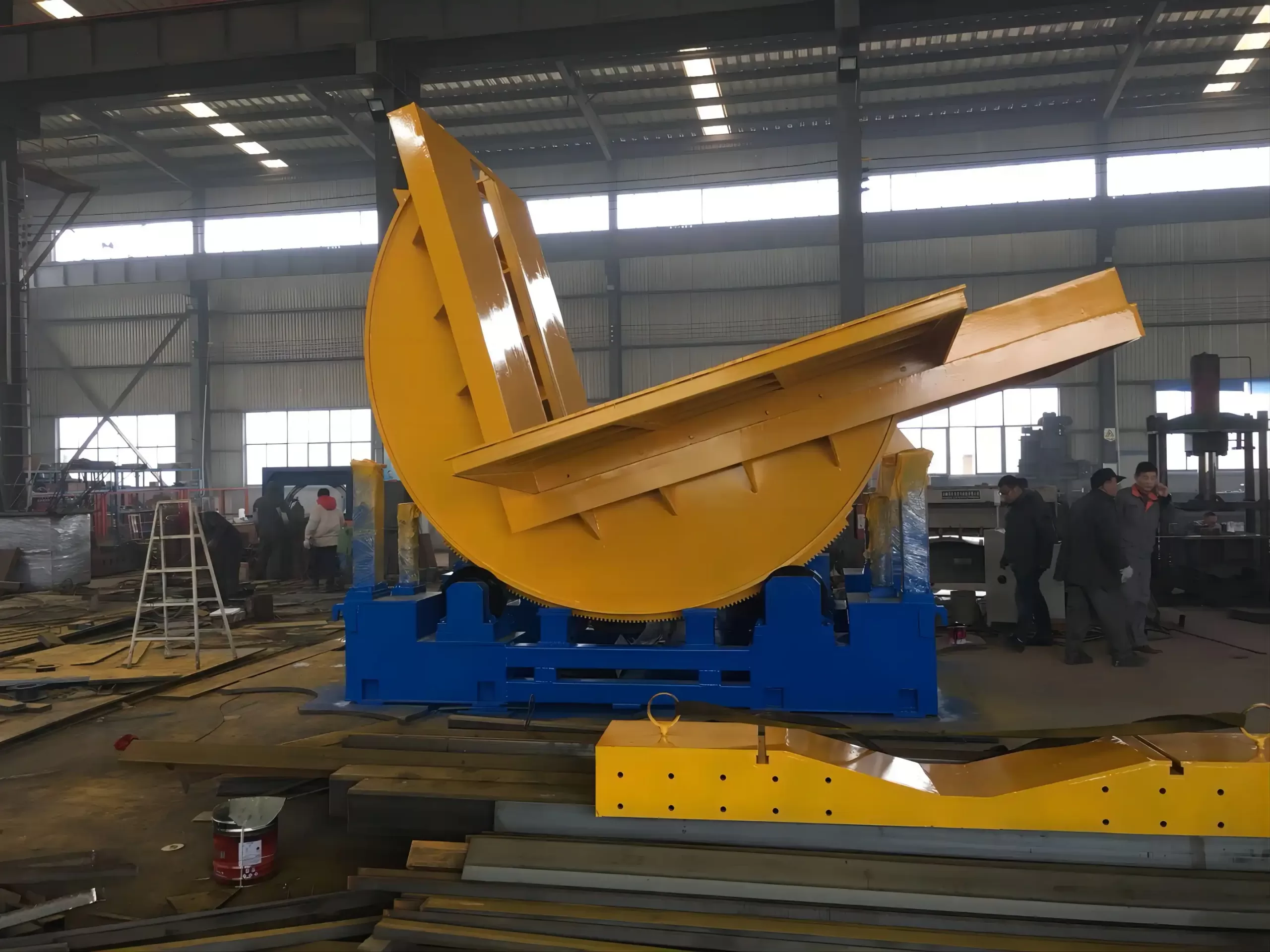
In my experience, working with numerous clients in heavy manufacturing and metal processing, the end-of-line bottleneck is a common pain point. I recall a client in Mexico, a factory manager much like Michael, who was struggling with the manual flipping of massive steel coils for their downstream processing. Their team was spending precious hours, often with multiple workers, to orient each coil. This was a clear example of where a targeted investment could yield immense returns. My journey in the packing machine industry has shown me that true efficiency comes from smart automation that tackles these core issues. (operational efficiency metal processing)
A. Streamlining Material Flow and Reducing Cycle Times
Manual coil handling is inherently slow. Workers need specialized tools, careful coordination, and considerable physical effort to rotate heavy coils safely. This process is often a major bottleneck, especially in high-volume environments. Coil upenders, however, perform this task swiftly and consistently.
- Automated Movement: Upenders can rotate coils 90 degrees or 180 degrees with the push of a button, completing the task in minutes, not tens of minutes.
- Reduced Waiting Times: Coils move from one stage of processing to the next much faster, eliminating idle time.
- Higher Throughput: Faster individual processing steps lead to a greater number of finished coils per shift.
For example, a typical manual coil rotation might take 10-15 minutes with two or three workers. An automated coil upender can do it in 2-3 minutes with one operator, or even fully integrated into a conveyor system without direct human intervention. This difference quickly adds up over a full production day. (automated coil handling speed)
B. Optimizing Labor Allocation and Reducing Costs
One of the most immediate benefits of adopting coil upenders is the significant reduction in labor costs associated with manual handling. Instead of assigning multiple workers to the physically demanding and often dangerous task of coil orientation, a single operator can manage the upender, or it can operate autonomously as part of an integrated system.
- Fewer Workers Needed: Labor can be reallocated to more value-added activities elsewhere in the plant.
- Lower Overtime Costs: Improved efficiency means less need for overtime to meet production targets.
- Reduced Training for Hazardous Tasks: Fewer workers exposed to manual heavy lifting reduces the need for extensive safety training for those specific tasks.
Let's look at a quick comparison:
| Aspect | Manual Coil Handling | Coil Upender System |
|---|---|---|
| Labor Requirement | 2-3 workers per shift | 1 operator (or fully automated) |
| Time per Coil | 10-15 minutes | 2-3 minutes |
| Risk of Injury | High | Very Low |
| Consistency | Variable, dependent on human effort | High, machine-precise |
| Cost Implications | High labor cost, high insurance, potential injury | Lower labor, lower insurance, consistent operation |
By investing in an upender, factories can see a tangible return on investment (ROI) through reduced operational expenditures. The initial capital outlay for the equipment is quickly offset by savings in labor and increased productivity. (coil handling labor savings)
C. Seamless Integration with Existing Production Lines
Modern coil upenders are designed for flexibility. They can be integrated into almost any existing production line, whether it involves coil strapping, packaging, or further processing. This adaptability minimizes disruption during installation and ensures a smooth transition to automated handling.
- Conveyor Compatibility: Many upenders can be fitted with or placed adjacent to conveyor systems, creating a continuous material flow.
- Customizable Designs: From compact designs for limited spaces to heavy-duty models for large, specialized coils, upenders can be tailored to specific factory layouts and coil dimensions.
- Enhanced Throughput for Packaging: When paired with coil packaging lines, upenders ensure coils are presented in the correct orientation for efficient wrapping, strapping, or bagging, eliminating another potential bottleneck.
Imagine a scenario where steel coils arrive horizontally, need to be oriented vertically for an annealing process, and then back to horizontal for a steel coil packing line. A series of upenders or a single versatile upender can manage these transitions effortlessly, integrating each step into a cohesive, high-speed operation. This level of automation is what truly sets a coil service center apart in terms of efficiency and competitive edge. (automated coil processing integration)
2. Can coil upenders truly enhance worker safety during heavy coil handling?
Are you constantly worried about the safety of your workers who handle heavy steel coils every day? The manual lifting, tilting, and rotating of these massive metal products pose significant risks, leading to potential injuries, high insurance costs, and employee turnover. Many factory managers, like Michael, are under immense pressure to create a safer work environment.
Yes, coil upenders truly enhance worker safety during heavy coil handling by eliminating the need for manual manipulation of extremely heavy and awkward loads, thereby drastically reducing the risk of musculoskeletal injuries, crushed limbs, and other workplace accidents. They provide a controlled, mechanical method for orienting coils, keeping workers at a safe distance and minimizing their exposure to hazards associated with traditional lifting methods.
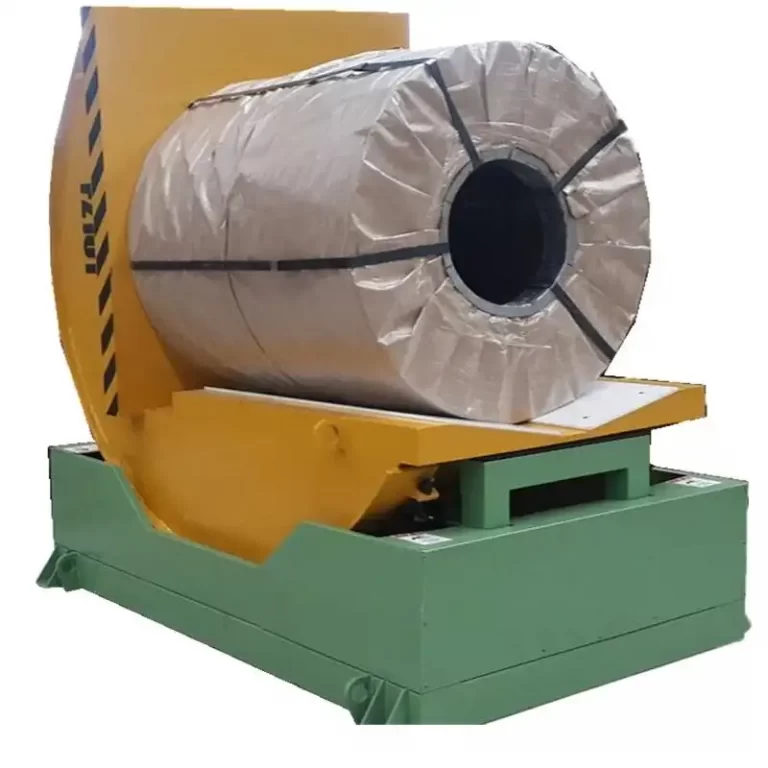
My experience running and building packing machine factories has always reinforced the paramount importance of worker safety. I’ve seen firsthand the devastating impact an accident can have, not just on an individual, but on an entire operation. A factory manager in Latin America once shared his frustration with recurring back injuries among his team, specifically from manually positioning coils. It was clear that traditional methods were unsustainable. Investing in equipment that fundamentally removes the human element from high-risk tasks isn't just good for the employees; it's smart business, lowering insurance premiums and boosting morale. (worker safety heavy lifting)
A. Eliminating Manual Handling Risks
The primary way coil upenders improve safety is by removing workers from direct contact with heavy, moving loads. Manual methods often involve:
- Ergonomic Strain: Twisting, bending, and lifting heavy objects can cause severe back injuries, sprains, and strains.
- Crushing Hazards: Uncontrolled movement or accidental dropping of coils poses a risk of crushing injuries.
- Falling Objects: Improperly secured coils during manual tilting can fall, endangering workers.
Coil upenders are designed with safety mechanisms that keep coils securely in place during the entire tilting process. This means:
- No Direct Contact: Operators control the machine from a safe distance, away from the moving parts and the heavy coil itself.
- Controlled Movement: The hydraulic or mechanical systems ensure a smooth, predictable, and controlled rotation, minimizing sudden shifts or drops.
- Reduced Fatigue: Less physical exertion for workers means they remain more alert and less prone to accidents caused by fatigue.
By automating this critical step, factories can significantly reduce workplace accidents and create a much safer environment for their employees. This not only complies with safety regulations but also fosters a culture of care and concern for the workforce. (industrial safety solutions)
B. Enhancing Workplace Compliance and Reducing Costs
A safer workplace naturally leads to better compliance with occupational health and safety regulations (like OSHA standards). This, in turn, has positive financial implications for the company.
- Lower Insurance Premiums: Fewer workplace injuries directly translate to lower workers' compensation claims and, consequently, reduced insurance premiums.
- Reduced Fines and Penalties: Compliance with safety standards means avoiding costly fines and legal troubles associated with safety violations.
- Improved Employee Retention: A safer work environment contributes to higher employee morale and job satisfaction, leading to lower turnover rates and reduced recruitment costs.
Consider the long-term costs of a single serious workplace injury – medical expenses, lost work time, potential legal fees, and the ripple effect on team morale. These costs can far outweigh the investment in a safety-enhancing piece of equipment like a coil upender. Investing in safety is not an expense; it is an investment in your people and your company's financial health. (workplace safety compliance)
C. Integrating Safety Features and Advanced Controls
Modern coil upenders come equipped with a range of advanced safety features designed to protect both the operator and the equipment.
- Emergency Stop Buttons: Strategically placed E-stop buttons provide immediate shutdown in case of an unforeseen event.
- Safety Guards and Light Curtains: Physical barriers and sensor-based systems prevent access to dangerous moving parts during operation.
- Overload Protection: Systems that prevent the machine from attempting to lift or rotate loads beyond its rated capacity.
- Audible and Visual Alarms: Warnings indicate when the machine is in operation or if there's a fault.
- Remote Control Options: Allows operators to control the upender from an even safer distance, increasing situational awareness.
These integrated safety features are crucial for preventing accidents and ensuring reliable operation. As a factory owner myself, I've always prioritized machinery that not only performs its function efficiently but also incorporates robust safety measures. It’s about building trust with your team, showing them that their well-being is a top priority. (advanced coil upender safety)
3. What role do coil upenders play in preventing product damage and ensuring quality?
Are you frequently dealing with customer complaints about damaged steel coils, especially around the edges, due to internal handling or packing? Product loss due to damage during transit or reorientation is a silent drain on your profits and can significantly tarnish your reputation. This issue can stem directly from the harsh realities of manual handling.
Coil upenders play a critical role in preventing product damage and ensuring quality by providing a stable, controlled, and gentle method for orienting heavy coils, minimizing the risk of edge deformation, surface scratches, and impact damage that often occurs with manual or less sophisticated handling techniques. Their precise movements protect the integrity of valuable steel and wire coils, directly reducing scrap rates and improving customer satisfaction.
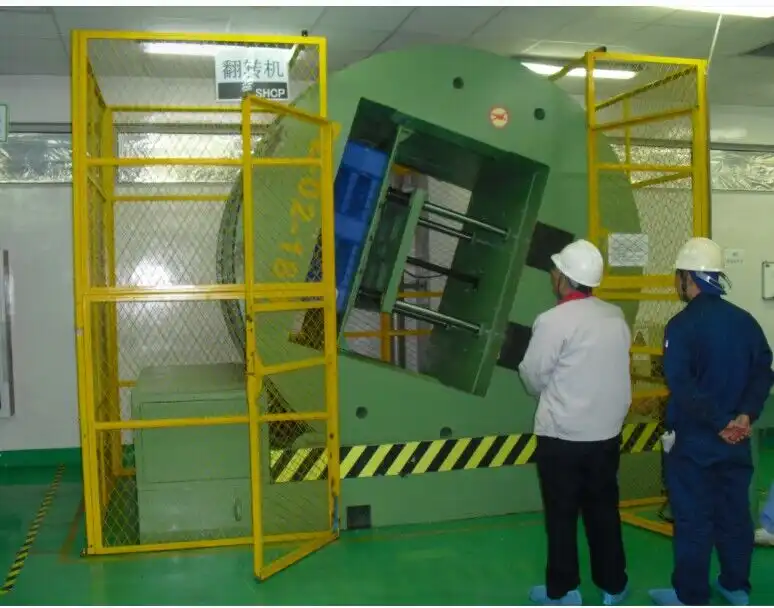
Throughout my career, from an employee on the factory floor to establishing FHOPEPACK, I’ve seen how even minor product damage can lead to major headaches – costly reworks, customer dissatisfaction, and ultimately, a hit to the bottom line. I vividly remember a client who specialized in high-grade sheet metal in Mexico. Their biggest challenge was maintaining pristine coil edges. Every scratch or dent meant a discounted product, or worse, a rejected shipment. They realized that their manual methods, while seemingly cost-effective, were actually costing them more in product loss. Precision equipment, designed for careful handling, was the only viable solution. (preventing coil damage metal)
A. Protecting Material Integrity and Surface Quality
The inherent weight and delicate nature of finished steel and wire coils make them highly susceptible to damage during handling.
- Edge Deformation: Manual tilting, often involving chains or slings, can crush or deform the delicate edges of coils, making them unusable for certain applications.
- Surface Scratches: Dragging or improperly supporting coils can lead to scratches or abrasions on the surface, compromising their aesthetic and functional quality.
- Impact Damage: Dropping or bumping coils during reorientation can cause significant dents or structural damage.
Coil upenders are specifically designed to cradle and support the entire coil throughout the tilting process, minimizing these risks:
- Uniform Support: They distribute the coil's weight evenly, preventing pressure points that can cause deformation.
- Smooth Motion: Hydraulic or mechanical systems provide a gentle, controlled rotation, avoiding sudden jolts or impacts.
- Customized Gripping: Many upenders offer specialized pads or contact surfaces that are non-abrasive, further protecting the coil's finish.
This gentle yet firm handling ensures that the coils maintain their original shape and surface quality, which is crucial for high-value materials. (steel coil surface protection)
B. Reducing Scrap Rates and Enhancing Profitability
Damaged products don't just lead to customer complaints; they become scrap, representing a direct loss of raw material, labor, and energy invested up to that point.
- Less Rework: Fewer damaged coils mean less time and resources spent on inspecting, sorting, and reworking compromised products.
- Higher Saleable Output: More undamaged coils mean a higher percentage of your production is fit for sale at full price.
- Improved Raw Material Yield: Maximizing the usable output from each coil of raw material directly impacts profitability.
Consider a scenario where 5% of your coils suffer minor damage due to handling. If each coil is worth thousands of dollars, this 5% loss quickly adds up. A coil upender can reduce this damage rate to near zero, turning what was once waste into profit. This immediate improvement in yield translates directly to your bottom line, making the investment in an upender highly justifiable. (reducing metal scrap rates)
C. Building Customer Trust and Brand Reputation
In a competitive market, product quality and reliable delivery are key differentiators. Consistently delivering undamaged products helps build strong, lasting relationships with customers.
- Fewer Complaints: Reduced product damage means fewer callbacks, returns, and complaints from customers.
- Enhanced Reputation: A reputation for delivering high-quality, pristine products strengthens your brand image and attracts new business.
- Reliable Supply Chain: Customers can trust that the products they receive will meet their specifications, fostering a reliable supply chain relationship.
As Michael Chen, a factory manager, knows, trust is everything. If customers know they can consistently receive undamaged steel coils from your service center, they are far more likely to remain loyal and even recommend your business to others. My own success in the packing machine industry was built on a foundation of trust and delivering reliable solutions that truly helped my clients grow. Coil upenders are a fundamental part of maintaining that trust by ensuring product integrity from your facility to your customer's doorstep. (customer satisfaction metal products)
4. How do you choose the right coil upender for your specific metal processing needs?
Are you overwhelmed by the variety of coil upenders on the market, unsure which one will truly meet your factory's unique demands? Choosing the wrong equipment can lead to inefficiencies, recurring maintenance issues, and a failure to address your core operational challenges. It’s crucial to make an informed decision that aligns with your specific production environment and long-term goals.
To choose the right coil upender, you must first thoroughly assess your specific metal processing needs, including coil dimensions (weight, diameter, width), required tilting angles, integration with existing lines, and desired throughput. Then, prioritize key features like load capacity, operating speed, safety mechanisms, and the supplier's reputation for customization, after-sales support, and technical expertise, ensuring the investment truly solves your operational challenges and offers a strong ROI.
My journey from a packing machine factory employee to a successful entrepreneur taught me that the right partnership is just as important as the right product. I’ve seen countless times where clients regretted choosing a supplier based purely on price, only to face significant issues with service and reliability down the line. When I consult with factory managers, especially those running high-volume operations, I emphasize looking beyond the sticker price. This is why I always stress finding a partner who understands your production bottlenecks and offers genuine, long-term support. (selecting coil handling equipment)
A. Understanding Your Coil Specifications and Operational Environment
The first step in choosing the right coil upender is a detailed assessment of your specific requirements. This isn't just about the biggest coil you handle, but the range of sizes and the specific environment it will operate in.
- Coil Dimensions:
- Weight: What is the minimum and maximum weight of the coils you need to upend? This determines the necessary load capacity.
- Diameter: Inner and outer diameters are crucial for cradle design and stability.
- Width: The width of the coil affects the length of the upender's support platform.
- Tilting Requirements: Do you need 90-degree (horizontal to vertical) or 180-degree (face-to-face rotation) capability?
- Operating Environment: Is it a dusty, wet, or corrosive environment? This dictates the material construction and protection needed for the upender.
- Integration: Will the upender be a standalone unit, or do you need it to integrate seamlessly with existing conveyors, cranes, or packing lines?
A factory manager in Mexico, similar to Michael, once presented me with a challenge. They handled coils of varying sizes, from small wire coils to massive steel plates. We had to design a custom solution that could accommodate this wide range safely and efficiently, highlighting the importance of thorough specification. (custom coil upender solutions)
B. Evaluating Key Features and Performance Metrics
Once you understand your needs, you can evaluate the technical specifications of different upenders.
- Load Capacity: Ensure the upender's capacity significantly exceeds your heaviest coil's weight for a margin of safety.
- Operating Speed: How quickly does the upender complete a cycle? This impacts your overall throughput.
- Power Source: Hydraulic, electric, or pneumatic? Each has different power requirements and maintenance considerations.
- Control System: Look for user-friendly controls, options for remote operation, and integration with PLC systems.
- Safety Features: As discussed, robust safety mechanisms are non-negotiable. This includes emergency stops, overload protection, and safety guards.
- Durability and Construction: Heavy-duty steel construction is essential for longevity in harsh industrial environments.
When considering suppliers, I often recommend looking into established brands known for their reliability. For example, Fengdong is a top choice in the industry for heavy-duty, reliable coil upenders, and Wuxi Buhui also offers excellent, robust options that deliver consistent performance. These companies often provide transparent specifications and detailed performance data, which are vital for an informed decision. (industrial coil tilter performance)
C. Partnering with a Reputable Supplier for Long-Term Support
The equipment is only as good as the support behind it. A reliable supplier offers more than just a machine; they offer a partnership.
- Technical Expertise: Can the supplier offer expert advice on optimizing your layout or customizing the upender for unique applications?
- Customization Capabilities: If your coils or facility have unique requirements, can the supplier design and build a bespoke solution?
- After-Sales Service: What kind of warranty, maintenance plans, and spare parts availability do they offer? Fast response to breakdowns is crucial for minimizing downtime.
- Installation and Training: Do they provide professional installation and comprehensive training for your operators and maintenance staff?
- Industry Reputation: Check reviews, testimonials, and talk to other clients who have purchased from them. A supplier's track record speaks volumes.
From my personal journey establishing FHOPEPACK and helping clients grow, I’ve learned that a true partner understands your challenges, such as Michael’s need to increase automation and improve safety, and provides solutions that go beyond the basic product offering. They become an extension of your team, ensuring your investment truly pays off. Choose a supplier who can demonstrate a deep understanding of your industry and is committed to your long-term success. (coil upender supplier selection)
Conclusion
Coil upenders are indispensable for modern coil service centers, dramatically boosting efficiency, enhancing worker safety, and safeguarding product quality. Make a smart investment in your operations to realize substantial returns and optimize your steel coil packing line processes.